Chapter 11 - Carbohydrates and Glycoproteins
 Call Kai
 Learn
Learn Practice Test
 Spaced Repetition
 Match
Match Flashcards
 Knowt Play
1/144

There's no tags or description
Looks like no tags are added yet.
Name | Mastery | Learn | Test | Matching | Spaced | Call with Kai | Chat |
|---|
No analytics yet
Send a link to your students to track their progress
145 Terms
Carbohydrates
Carbon-based molecules high in hydroxyl groups
empirical formula: (CH2O)n
Can have additional groups or modifications
Better described as polyhydroxy aldehydes and ketones (and their derivatives)
Monosaccharides
Are the simplest carbohydrates
are aldehydes or ketones that contain two or more hydroxyl groups
The smallest ones are composed of three carbons
Exist in many isomeric forms
Carbohydrates that are three to seven carbons in length
Also called simple sugars
Are joined to alcohols and amines through glycosidic linkages
Monosaccharide biochemical properties can be modified by reactions with:
alcohols.
amines.
phosphates.
Monosaccharide Nomenclature
Based on carbon-chain length:
three carbons: trioses
Four carbons: tetroses
Five carbons: pentoses
Six carbons: hexoses
Seven carbons: heptoses
Also based on the identity of the most oxidized group:
keto group: ketone
Aldehyde group: aldose
Constitutional isomers
molecules with identical molecular formulas that differ in how the atoms are ordered
Stereoisomers
molecules that differ in spatial arrangement but not bonding order
have either D or L configuration
can be enantiomers (mirror images of each other) or diastereoisomers (not mirror images of each other)
number possible = 2n where n is the number of asymmetric carbon atoms
Epimers
Sugars that are diastereoisomers differing in configuration only at a single asymmetric center
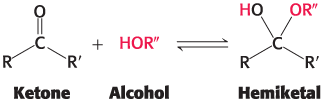
Most monosaccharides exist as interchanging cyclic forms
an aldehyde can react with an alcohol to form a hemiacetal
A ketone can react with an alcohol to form a hemiketal
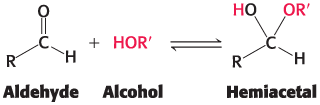
Pyranose Formation
Called pyranose because of similarity to pyran
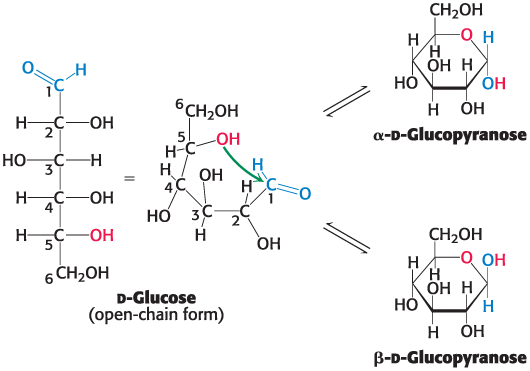
Furanose Formation
Called furanose because of similarity to furan
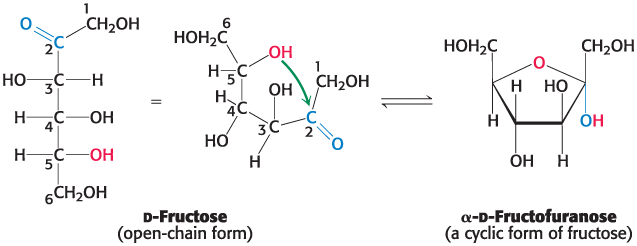
Anomer
a diastereoisomeric form of sugars that forms when a cyclic hemiacetal is formed and an additional asymmetric center is created
In glucose, C-1 (the anomeric carbon atom) becomes an asymmetric center, forming two ring structures:
α-D-glucopyranose (hydroxyl group attached to C-1 is on the opposite side of the ring as C-6)
β-D-glucopyranose hydroxyl group attached to C-1 is on the same side of the ring as C-6)
D-Fructose
Rapidly interchanges between four distinct ring structures
C-2 is the anomeric carbon atom
The pyranose form predominates in solution due to reduced steric hindrances
The furanose form predominates in fructose derivatives
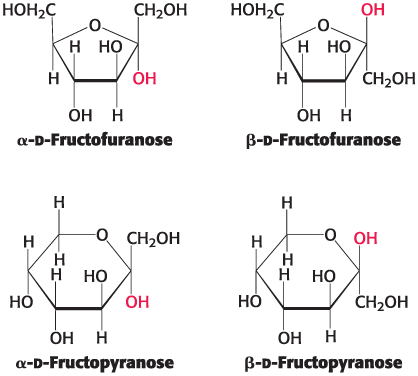
The most common monosaccharides
Exist primarily in their ring forms
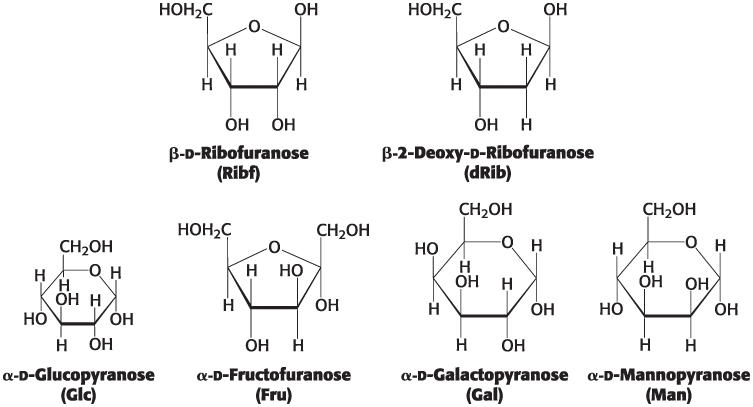
Pyranose and Furanose Rings
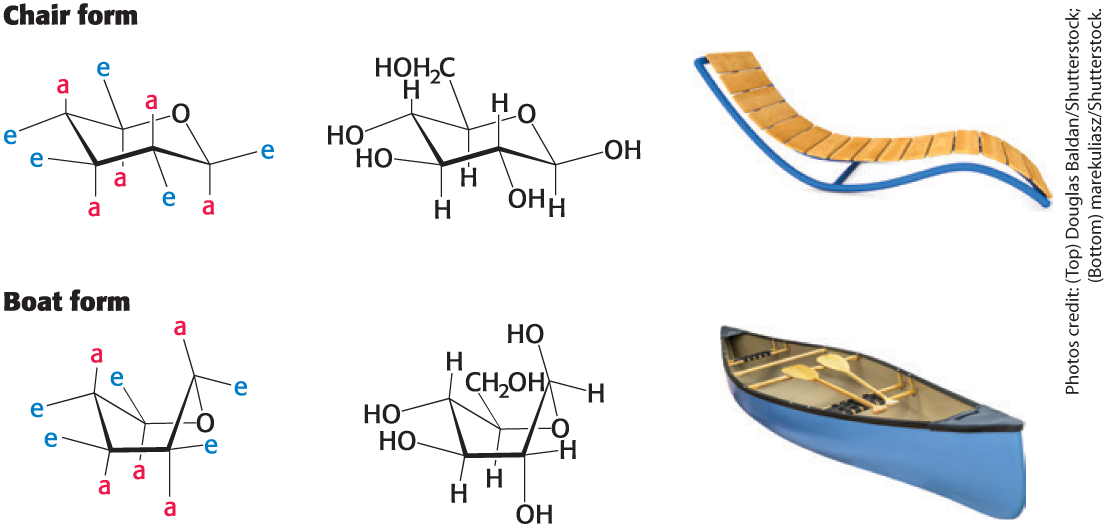
Can assume different conformations
pyranose rings are not planar because of the tetrahedral geometry of its saturated carbon atoms
They can adopt two types of conformation: boat and chair
In chair form, substituents on the carbon ring atoms can be axial (nearly perpendicular) or equatorial (nearly parallel)
Axial substituents sterically hinder each other if on the same side of the ring
Chair and Boat Forms of β-D-Glucose
the chair form predominates because all axial positions are occupied by hydrogens
The boat form is disfavored because it is sterically hindered
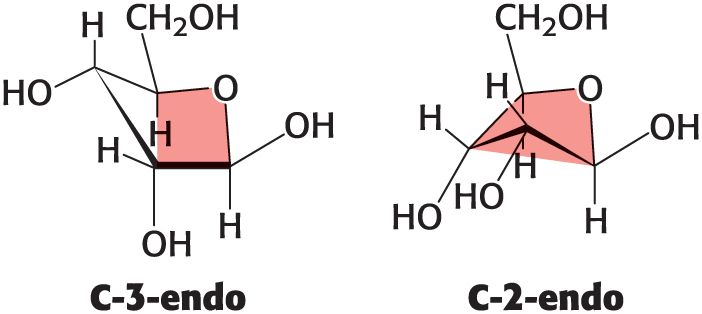
Envelope Conformations of Furanose Rings
Furanose rings are not planar and commonly adopt a conformation called the envelope form
In the ribose moiety of most biomolecules, there are two common confirmations
C-2-endo (C-2 is out of the plane on the same side as C-5)
C-3-Endochondral (C-3 is out of the plane on the same side as C-5)
D-Glucose
Is an important fuel for most organisms
is a reducing sugar and reacts nonenzymatically with hemoglobin
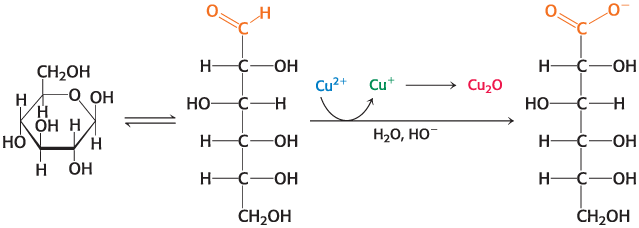
In its linear form, glucose can react with oxidizing agents
example: linear glucose reacts with Cu2+ yielding Cu+and gluconic acid
Blood sugar
D-glucose circulating in the blood
Only fuel used by the brain in non-starvation conditions
Only fuel used by red blood cells
Potential reasons why D-glucose an important fuel
glucose is formed from formaldehyde under prebiotic conditions and may have been available as a fuel source for primitive biochemical systems
Glucose is relatively inert
The most stable ring structures is β-D-glucopyranose
Solutions of Glucose
the two anomeric forms (α and β) are in an equilibrium that passes through the open-chain form
There is a roughly 2:1 ratio of β-to-α anomer conformations for D-glucose in an equilibrium solution.
Fehling’s solution
Solutions of Cu2+ that test for the presence of sugars that adopt an open structure
Reducing sugars
Sugars that react with oxidizing agents
all monosaccharides that can adopt linear structures in solution
Non-reducing sugars
Sugars that do not react with oxidizing agents
Glycation of Sugars
Nonenzymatic addition of a carbohydrate to another molecule
can be benign or detrimental
Example: reducing sugars nonspecifically react with free amino groups on proteins (often Lys or Arg) to form a stable covalent bond
D-glucose has a low tendency to glycation proteins unless concentrations of sugar and protein are very high for long periods of time
Advanced glycation end products (AGEs)
Products resulting from cross-linking following the primary modification
implication in aging, arteriosclerosis, diabetes, and other pathological
Assessing Treatments for Diabetes Mellitus by Monitoring A1C Levels
D-glucose reacts with hemoglobin to form glycated hemoglobin (hemoglobin A1c, A1C)
Has no effect on O2 binding
In nondiabetic individuals, <6% of the hemoglobin is glycated
In patients with uncontrolled diabetes, almost 10% of the hemoglobin is glycated
modifications increase biochemical versatility
can serve as signal molecules
can facilitate metabolism
O-glycosidic linkage
Covalent linkage formed between the anomeric carbon atom of a carbohydrate and the oxygen atom of an alcohol
N-glycosidic linkage
Covalent linkage formed between the anomeric carbon atom of a carbohydrate and the nitrogen atom of an amine
Monosaccharides
Can be modified by the addition of substituents other than hydroxyl groups
linked to form complex carbohydrates
Phosphorylated sugars
Are key intermediates in metabolism
Phosphorylation
Addition of phosphoryl groups
common modification of sugars in metabolic reactions
Purposes of phosphorylation
makes sugars anionic to prevent crossing the lipid-bilayer membranes and interacting with transporters of the unmodified sugar
Blocks the formation of alternative ring conformation
Creates reaction intermediates that more readily undergo metabolism
Several intermediates in the Breakdown of Glucose
Are phosphorylated sugars
Oligosaccharides
Sugars that contain two or more monosaccharides linked by O-glycosidic bonds
have directionality defined by their reducing and nonreducing ends
Reducing end
Has a free anomeric carbon atom that can form the open-chain form
Nonreducing end
Has an anomeric carbon in a glycosidic linkage that cannot covert to the open-chain form
Maltose
Is a disaccharide of D-Glucose
α-1,4-glycosidic linkage
Glycosidic linkage between the α-anomeric form of C-1 on one sugar and the hydroxyl oxygen atom on C-4 of the adjacent sugar
Sucrose, Lactose, and Maltose
Are the common disaccharides
Disaccharide
Two sugars joined by an O-glycosidic linkage
Cleavage products of disaccharides
Can be processed to provide energy in the form of ATP
Sucrose
Disaccharide of sugar can or sugar beets that consists of glucose linked to fructose
the anomeric carbon of glucose is linked to the anomeric carbon of fructose
The configuration is α for glucose and β for fructose
Not a reducing sugar
Can be cleaved by sucrase (invertase)
Lactose
Disaccharide of milk that consists of a galactose linked to a glucose
linked by a β-1,4-glycosidic linkage.
can be hydrolyzed by lactase in human beings and by β-galactosidase in bacteria
Maltose
Disaccharide resulting from the hydrolysis of large oligosaccharides that consists of two linked glucose molecules
joined by an α-1,4-glycosidic linkage
can be hydrolyzed to glucose by maltase (α-glucosidase)
Maltase Inhibitors
Can help to maintain blood glucose homeostasis
after a meal, starch and glycogen are degraded by by α-amylase.
Oligosaccharides generated by α-amylase are further digested by maltase.
Acarbose (Precose) and miglitol (Glyset) are competitive inhibitors of maltase
Glycogen and Starch
Are storage forms of glucose
free glucose cannot be stored because high concentrations will disturb the cell’s osmotic balance
Polysaccharides (glycans)
Large polymeric oligosaccharides formed by the linkage of multiple monosaccharides
plays roles in energy storage and structural integrity
Homopolymer
Polymer in which all the monosaccharide units are the same
Glycogen
Large, branched polymer of glucose residues
most common homopolymer in animal cells
Storage form of glucose
Most glucose units are linked by α-1,4-glycosidic linkages
branches are formed by α-1,6-glycosidic linkages
hydrolyzed by α-amylase
Branching
Increases the surface area to allow better access for enzymes to rapidly breakdown glycogen
Starch
Homopolymer that serves as the nutritional reservoir in plants
two forms: amylose and amylopectin
Amylose
Unbranched type of starch composed of glucose residues in α-1,4 linkage
Amylopectin
branched type of starch with ~1 α-1,6 linkage per 30 α-1,4 linkages
identical structure to glycogen but with a lower degree of branching
Amylose and amylopectin
Are hydrolyzed by α-amylase
Cellulose
Is the main structural polysaccharide of plants
unbranched polymer of glucose residues joined by β-1,4 linkages
serves a structural role instead of a nutritional role
The β configuration
Allows cellulose to form long, straight chains that interact with one other through hydrogen bonds
yields a rigid, supportive structure
The α linkages of starch and glycogen
Form compact hollow cylinders suitable for accessible storage
Glycosidic linkages
Determine polysaccharide structure
Insoluble and soluble fiber
Are an important part of the diet
Mammals
Cannot digest cellulose because they lack cellulases, but plant fibers are still important in the mammalian diet
Insoluble fibers
Increase the rate at which digestion products pass through the large intestine
softens stools and makes them easier to pass
Soluble fibers (e.g., pectin or polygalacturonic acid)
Slow the movement of food through the gastrointestinal tract
facilitates absorption of nutrients from the diet
Chitin
Is the main structural polysaccharide of fungi and arthropods
Homopolymer of β-1,4 linked N-acetylglucosamine
found in fungal cell walls and exoskeletons and shells of arthropods
Fibers are often crosslinked and composited with minerals and proteins to increase rigidity and strength.
can be processed to a molecule with a variety of uses
Could be recovered from the shell fishing industry by processing the shells into the more versatile chitosan through microbial/enzymatic processes
Chitosan
Can be used as:
a carrier to assist in drug delivery
A component of cosmetic and food products
A surgical dressing
Carbohydrates
Can be linked to proteins to form glycoproteins
Glycoprotein
A carbohydrate group covalently attached to a protein
makes up 50% of the human proteome
Glycosylation
Increases the complexity of the proteome
glycoforms = different glycosylated forms
May occur when a protein has several potential glycosylation sites
Three classes of glycoproteins
glycoproteins
Proteoglycans
Mucins (mucoproteins)
Glycoproteins
Predominantly proteins
plays a variety of roles, including cell adhesion
Proteoglycans
Predominantly carbohydrates and the protein component is conjugated to a glycosaminoglycan
function as structural components and lubricants
Mucins (mucoproteins)
Predominantly carbohydrates and the protein components is extensively glycosylated at Ser or Thr residues, usually by N-acetylgalactosamine
key component of mucus
Function as lubricants
Carbohydrates
Can be linked to proteins through N-linked or O-linked
N-linkage
Links the sugars in glycoproteins to the amide nitrogen atom in the side chain of Asn
Asn must be part of an Asn-X-Ser or Asn-X-Thr sequence, where X is any residue expect proline
O-linkage
Links the sugars in glycoproteins to the oxygen atom in the side chain of Ser or Thr
N-linked oligosaccharides
Have a common core
N-linked polysaccharides
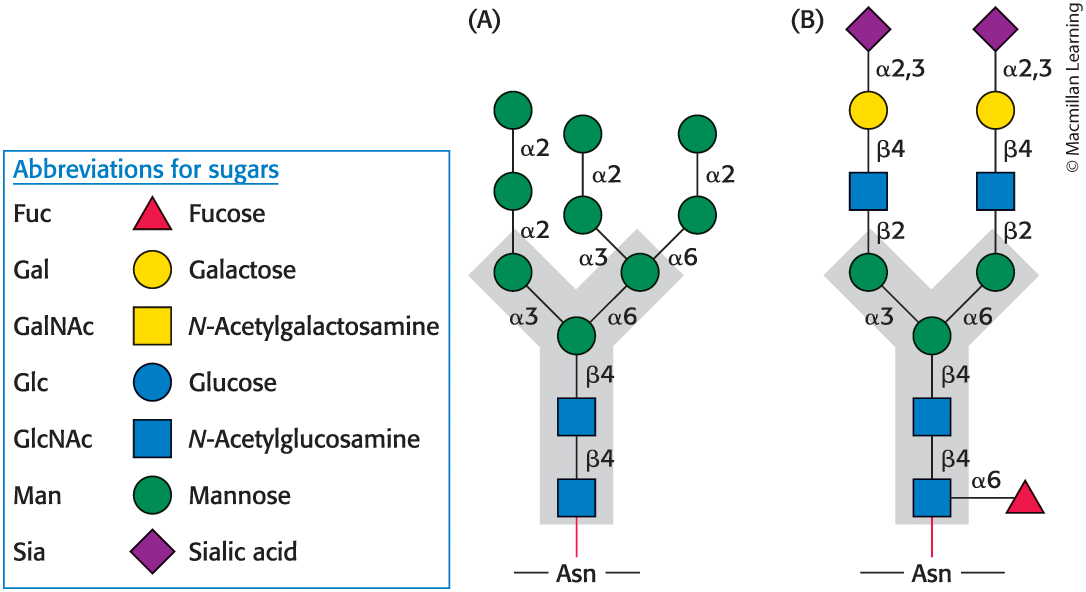
Have a common pentasaccharide core that consists of three mannoses and two N-acetylglucosamine residues
The Glycoprotein Erythropoietin
Is a vital hormone
Erythropoietin (EPO)
A glycoprotein secreted by the kidneys into the blood serum to stimulate production of red blood cells
cloned recombinant form has improved treatment for anemia, but has been abused by some endurance athletes
Glycosylation enhances the stability of the protein in the blood
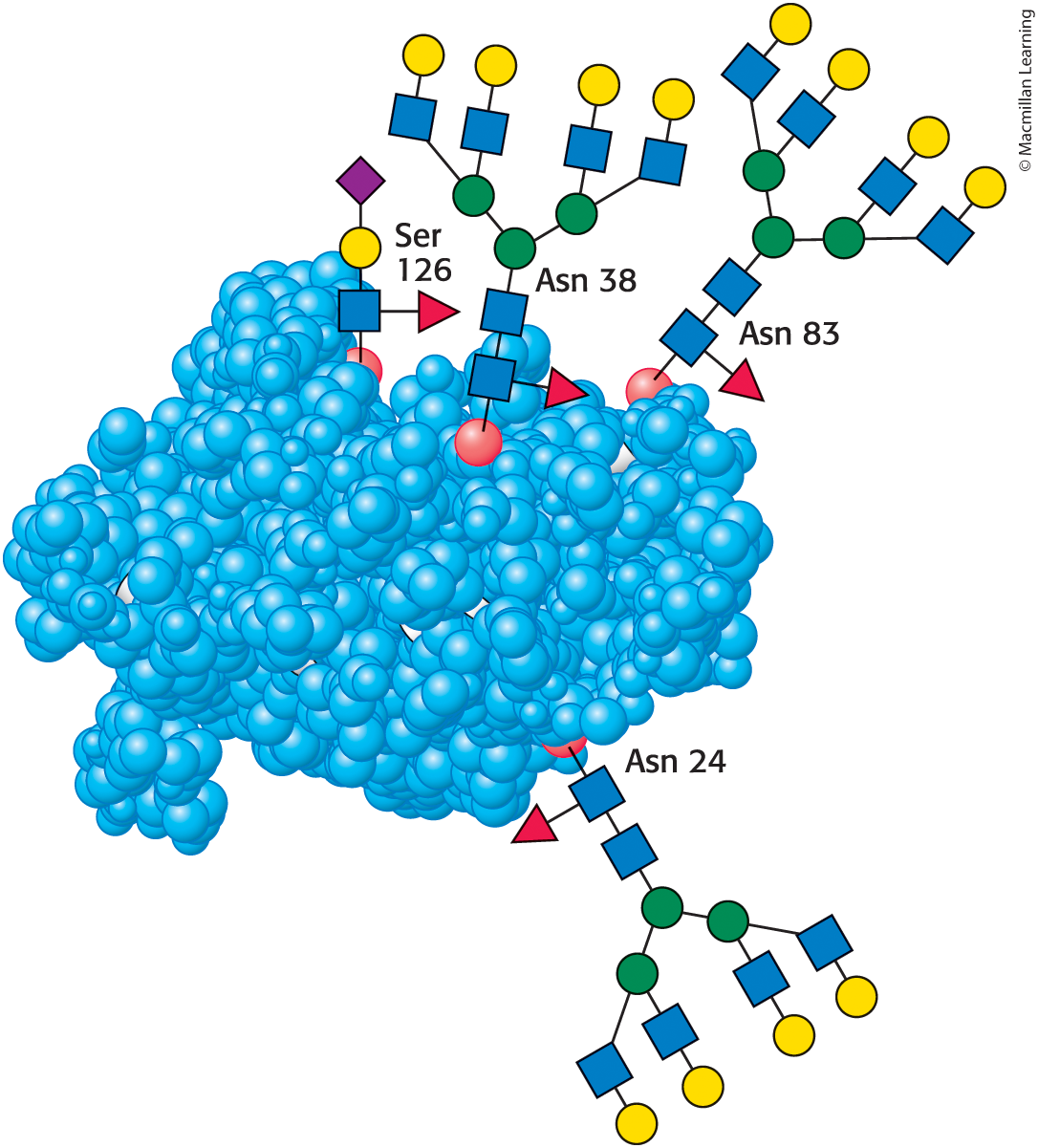
Oligosaccharides attached to erythropoietin
N-glycosylated at three Asn residues
O-glycosylated at Ser residue
40% carbohydrate by weight
Glycosylation
Functions in Nutrient Sensing
GlcNAcylation
The post-translational, covalent attachment of a single N-acetylglucosamine (GlcNAc) to Ser or Thr residues of proteins
catalyzed by O-GlcNAc transferase
Occurs when nutrients are abundant
Reversible
O-GlcNAc Transferase and protein kinases
May be involved in cross talk
GlcNAcylation sites
Are also potential phosphorylation sites
Improper regulation of O-GlcNAc transferase
Has been linked to:
insulin resistance
Diabetes
Cancer
Neurological pathologies
Proteoglycans
Have important structural roles
are up to 95% glycosaminoglycan by weight
Resembles a polysaccharide more than a protein
Function as lubricants and structural components in connective tissue
Mediate adhesion of cells to extracellular matrix
Bind factors that regulate cell proliferation
important components of cartilage
Glycosaminoglycans
Composed of repeating units of disaccharides containing a derivative of an amino sugar
amino sugar derivative is either glucosamine or galactosamine
At least one of the two sugars in the unit has a negatively charged carboxylate or sulfate group
made of repeating units
The inability to degrade glycosaminoglycans
Causes diseases marked by skeletal deformities and reduced life expectancies
Cartilage
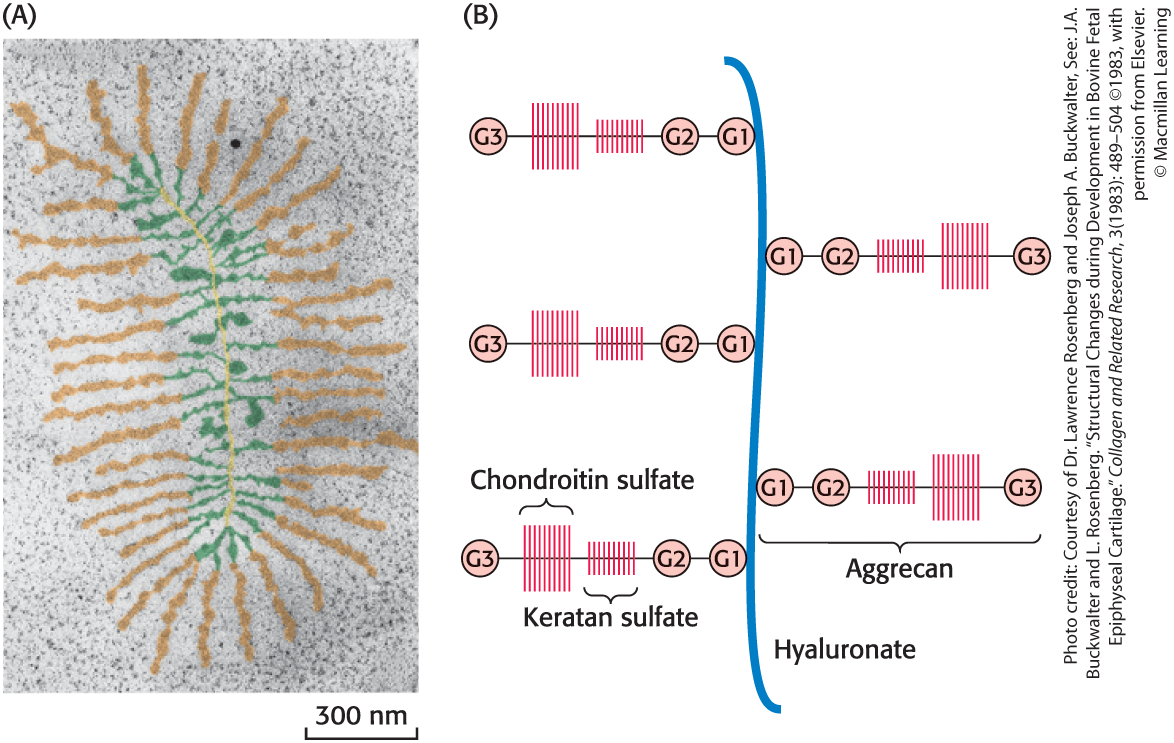
Contains the protein collagen protein and the proteoglycan aggrecan
Aggrecan
Large molecule with three globular domains
site of glycosaminoglycan (keratan sulfate and chondroitin sulfate) attachment is in the extended region between G2 and G3
G1 noncovalently binds to a central polymer of hyaluronate
cushions compressive forces
The Proteoglycan from cartilage
Has an enormous and complex structure
Water
Is bound to the glycosaminoglycans to cushion compressive forces
is squeezed from the glycosaminoglycan under pressure
Rebinds when pressure is released
Osteoarthritis
Form of arthritis that results when water is lost from proteoglycan with aging
Mucins
Are glycoprotein components of mucus
Tandem repeats (VNTR) region
Region of the protein backbone of mucins that is rich in O-glycosylated Ser and Thr residues
Core carbohydrate structures
Are conjugated to the protein component of mucin
Functions of Mucins
adhere to epithelial cells and act as a protective barrier
Hydrate the underlying cells
Play roles in fertilization, the immune response, and cell adhesion
Overexpression occurs in bronchitis, cystic fibrosis, and adenocarcinomas
Protein Glycosylation
Takes Place in the Lumen of the Endoplasmic Reticulum and in the Golgi Complex