Chapter 4 Tissues - Epithelial Tissue
 Call Kai
 Learn
Learn Practice Test
 Spaced Repetition
 Match
Match Flashcards
 Knowt Play
1/41

There's no tags or description
Looks like no tags are added yet.
Name | Mastery | Learn | Test | Matching | Spaced | Call with Kai | Chat |
|---|
No analytics yet
Send a link to your students to track their progress
42 Terms
where can epithelial tissues be found
lining of lungs, lining of stomach and intestines, surface of body, anything that comes into contact with air or fluid
basic functions of epithelial tissue
acts as barrier, protects underlying structures, permits passage of substances, secretion and absorbing substances
characteristics of epithelial tissue
mostly made up of cells, densely packed with little to none extracellular matrix, avascular and innervated
apical surface
top layer that directly communicates with air or water
basal layer
bottom layer that is in direct contact with underlying connective tissue
lateral surface
surface that sticks to other cell
what is the basement membrane made up of and what are its functions?
supports and anchors epithelial cell, highly efficient factories that reproduce at fast rate, permeable, made up of basal lamina and reticular lamina that have proteoglycans and glycoproteins
what are the characteristics of simple squamous epithelium, its functions, and where can it be found?
flat, thin, scale-like used for diffusion; found in the kidneys to get rid of toxins, the alveoli sacs of lungs, heart muscles, and lines all of our serous membranes
what are the characteristics of simple cuboidal epithelium, its functions, and where can it be found?
slightly thicker than simple squamous, helps with absorption and secretion; found in choroid plexus for brain fluid, kidney tubes, ovaries, and sometimes has cilia
what are the characteristics of simple columnar epithelium, its functions, and where can it be found?
thicker cell used for movement, heavy absorption and secretion; has cilia to move fluids and goblet cells to create mucus; found in intestines, bronchioles of lungs, auditory tubes, uterine tubes, fallopian tubes
Pseudostratified Columnar Epithelium
nuclei look like they’re in different layers but just one layer with all cells attached to the basement membrane; usually always have cilia used to move and produce mucus, found in places where we need to move things and where we need moisture and protection like the nasal cavity, auditory tubes, bronchia of lungs
stratified squamous epithelium
has squamous cells near surface but cuboidal cells near basement, can be keratinized or nonkeratinized
keratinized
cells that become dead and flat, dry, waterproof and impermeable with keratin; when it’s created the cytoplasm dries up and nucleus dissolves
nonkeratinized
same protective function but not as excessive, lets thing pass more easily
stratified cuboidal epithelium
multiple cube-shaped layers that function for secretion, absorption, and protection against infection; found in sweat glands, salivary glands, follicles in ovary
stratified columnar epithelium
multiple layers of tall, thin cells used for protection and secretion for its thickness; found in mammary glands, larynx
transitional epithelium
specialized multilayered epithelium that changes shape and thickens whether organ is stretched or relaxed; found in bladder and appears squamous when full but cuboidal when empty
purpose of smooth modification on epithelium
reduces friction, called endothelium
purpose of folds on epithelium
found in transitional epithelium where organ must be able to change shape (urinary bladder)
purpose of microvilli of epithelium
increase surface area for absorption or secretion
specialized microvilli purpose in epithelium
modified as sensory receptors found in inner ear
cilia purpose in epithelium
move mucus across surface of cells, moves oocytes in uterus and uterine tubes
purpose of cell connections
forms layer of permeability, lets cells stick together, mechanism for intracellular communication like passing different things from one cell to another
desmosome
disc-shaped specialized cell-to cell adhesive found in places subject to lots of mechanical stress; provides anchor spot to avoid tears in places that get pulled on
hemidesmosome
attaches epithelial cell to basement membrane so epithelium doesn’t slide off
tight junction
holds cell together, forms permeability barrie, forms seal that prevents absorption or release of substances
adhesion belt
helps anchor epithelial cells to each other and prevents passage of materials between cells
gap junction
between the two cells of epithelial tissue and allows communication and borrowing from one cell to the next; allows for communication like electrical potential in heart to create heart contraction
what is a gland, what are the two types, and how are they categorized?
specialized secretory organs of epithelial tissue with supporting network of connective tissue; can do different kinds of things and has two types; categorized by structure of duct, structure of secretory portion, and method of secretion
endocrine glands
no open contact with exterior, no ducts, has extensive network of blood vessels, produces hormones, highly vascularized so whatever it makes passes through circulatory system
exocrine gland
open contact that communicates with external environment through ducts
simple tubular
unbranched, straight, tube-shaped gland found in stomach and colon

what are the characteristics of simple branched tubular gland and where can it be found?
branched tube-shaped gland found in lower portion of stomach
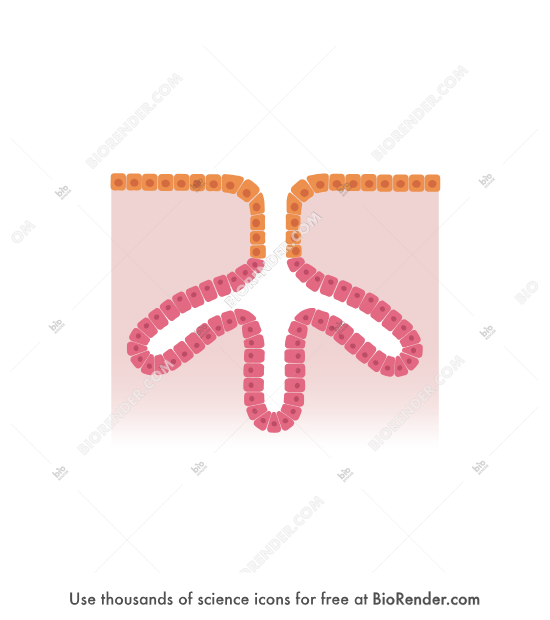
simple acinar gland
unbranched, sac-shaped gland found in sebaceous glands of skin

what are the characteristics of simple branched acinar and where can it be found?
branched, sac-shaped gland found in sebaceous gland of skin
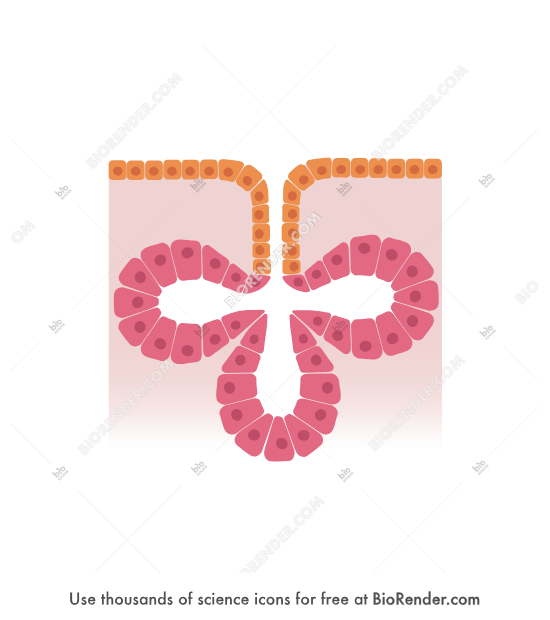
compound gland
gland with branched system of ducts
where can compound tubular gland be found?
found in mucous glands of duodenum

where can compound acinar glands be found?
found in mammary glands

compound tubulacinar
branched duct system shaped as both tubes and rounded clusters

what is merocrine gland and where can it be found?
releases its products via exocytosis without losing any part of the secreting cell; found in sweat glands

what is an apocrine gland and where can it be found?
gland in which part of the cell pinches off in secretion, floats into secondary portion and out of duct; found in mammary glands and earwax
what happens in a holocrine gland and where can it be found
cell itself dislodges and floats into tube or sac and eventually goes to duct, but becomes a problem when cell gets stuck in duct; traffic jam causes sebaceous/oil glands; found in face, scalp, crest, and back
