Macroeconomics: Exam 2
 Call Kai
 Learn
Learn Practice Test
 Spaced Repetition
 Match
Match Flashcards
 Knowt Play
1/74

There's no tags or description
Looks like no tags are added yet.
Name | Mastery | Learn | Test | Matching | Spaced | Call with Kai |
|---|
No analytics yet
Send a link to your students to track their progress
75 Terms
Loanable Funds Market
The market where savers supply funds for borrowers.
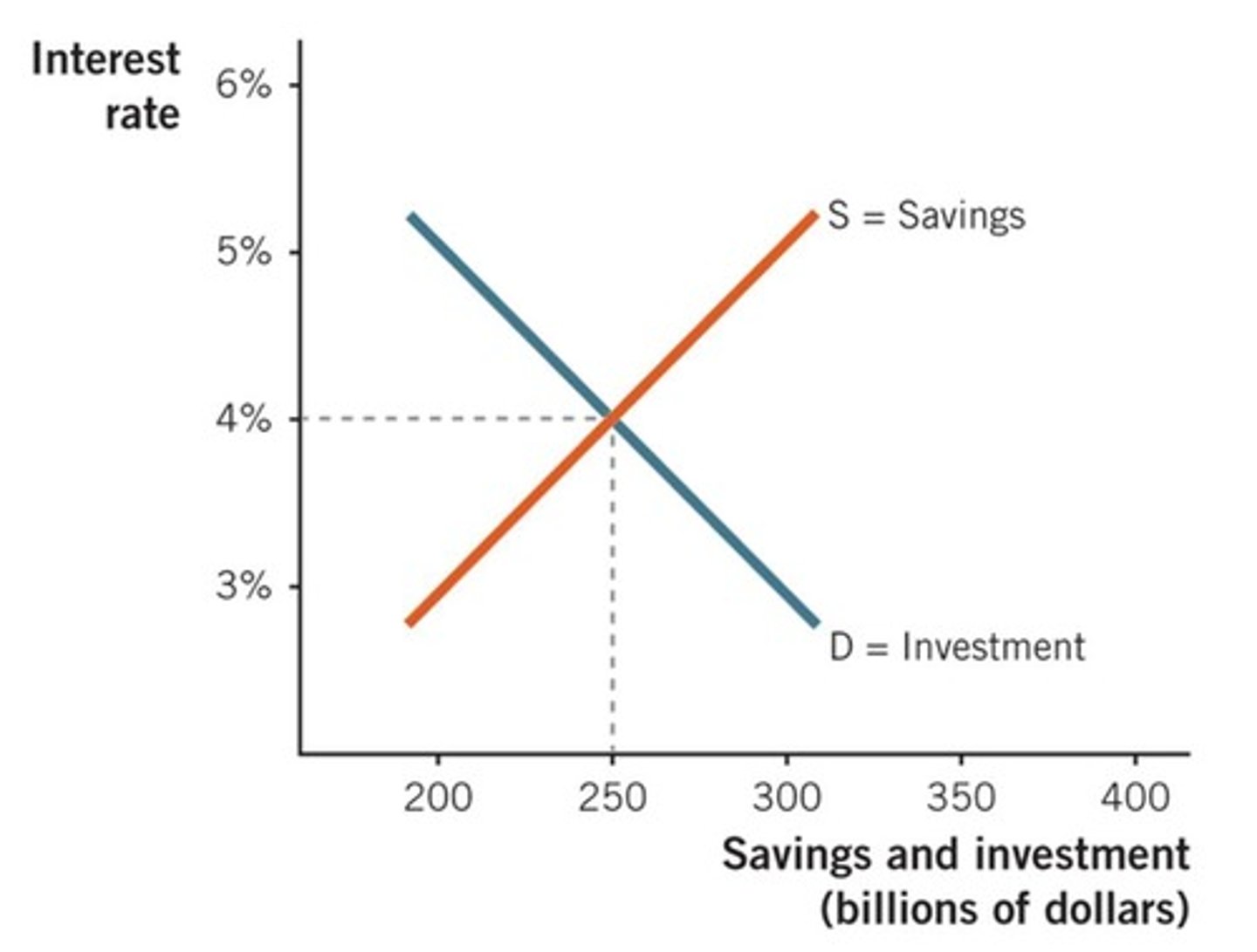
Interest Rate
The price of loanable funds.
Expected Returns
On a capital investment is the anticipated rate of return based on the probabilities of all possible outcomes.
Real Interest Rate
The interest rate corrected for inflation; the rate of return in terms of real purchasing power.
Nominal Interest Rate
The interest rate before it is corrected for inflation; it is the stated interest rate.
Fisher Equation
Real interest rate = nominal interest rate - inflation rate or nominal interest rate = real interest rate + inflation rate.
Equilibrium Interest Rate
The price of borrowing money determined by the interaction between savers and borrowers.
Income and Wealth
Increases in income and wealth generally produce increases in savings.
Time Preferences
Refers to the fact that people prefer to receive goods and services sooner rather than later.
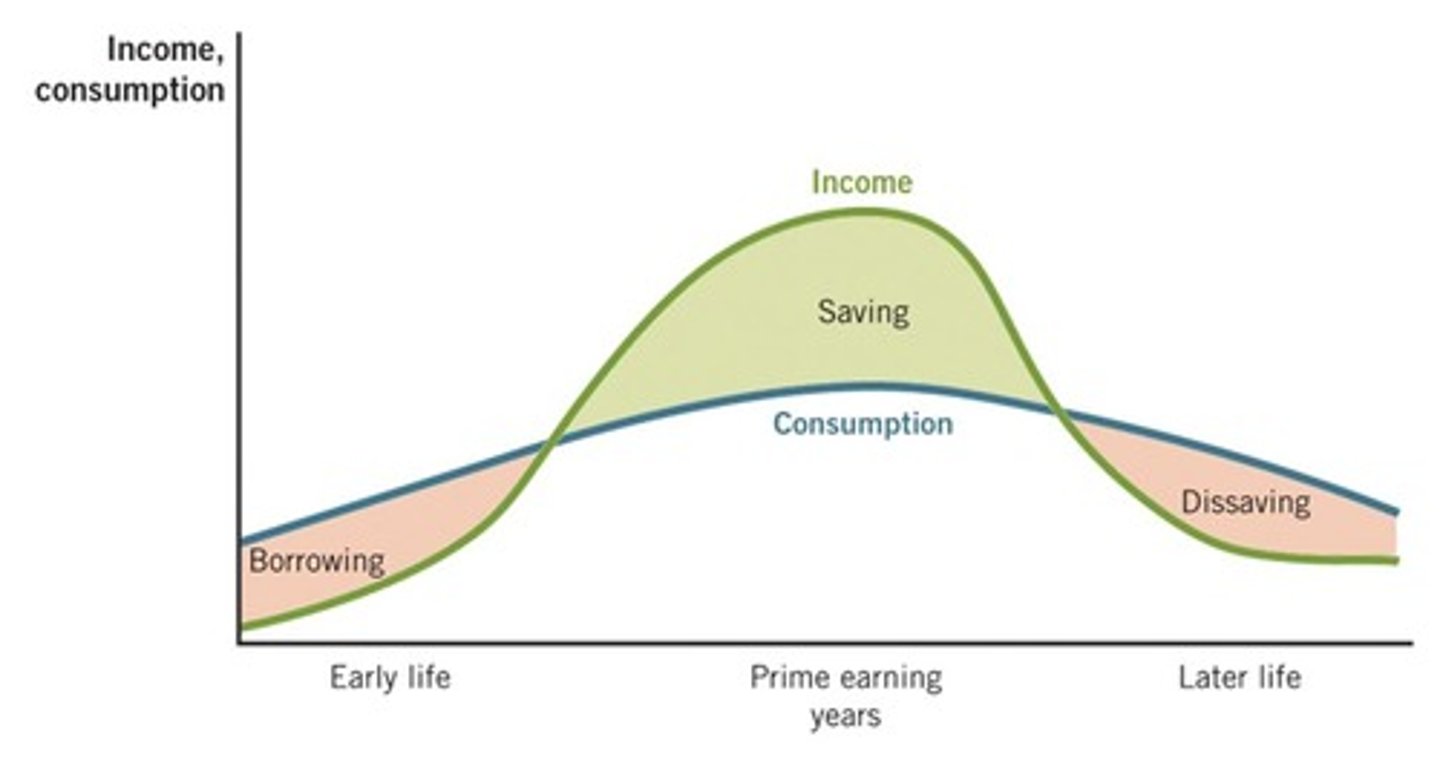
Consumption Smoothing
Occurs when people borrow and save to smooth consumption throughout their lifetime.
Dissaving
Occurs when people withdraw funds from their previously accumulated savings.
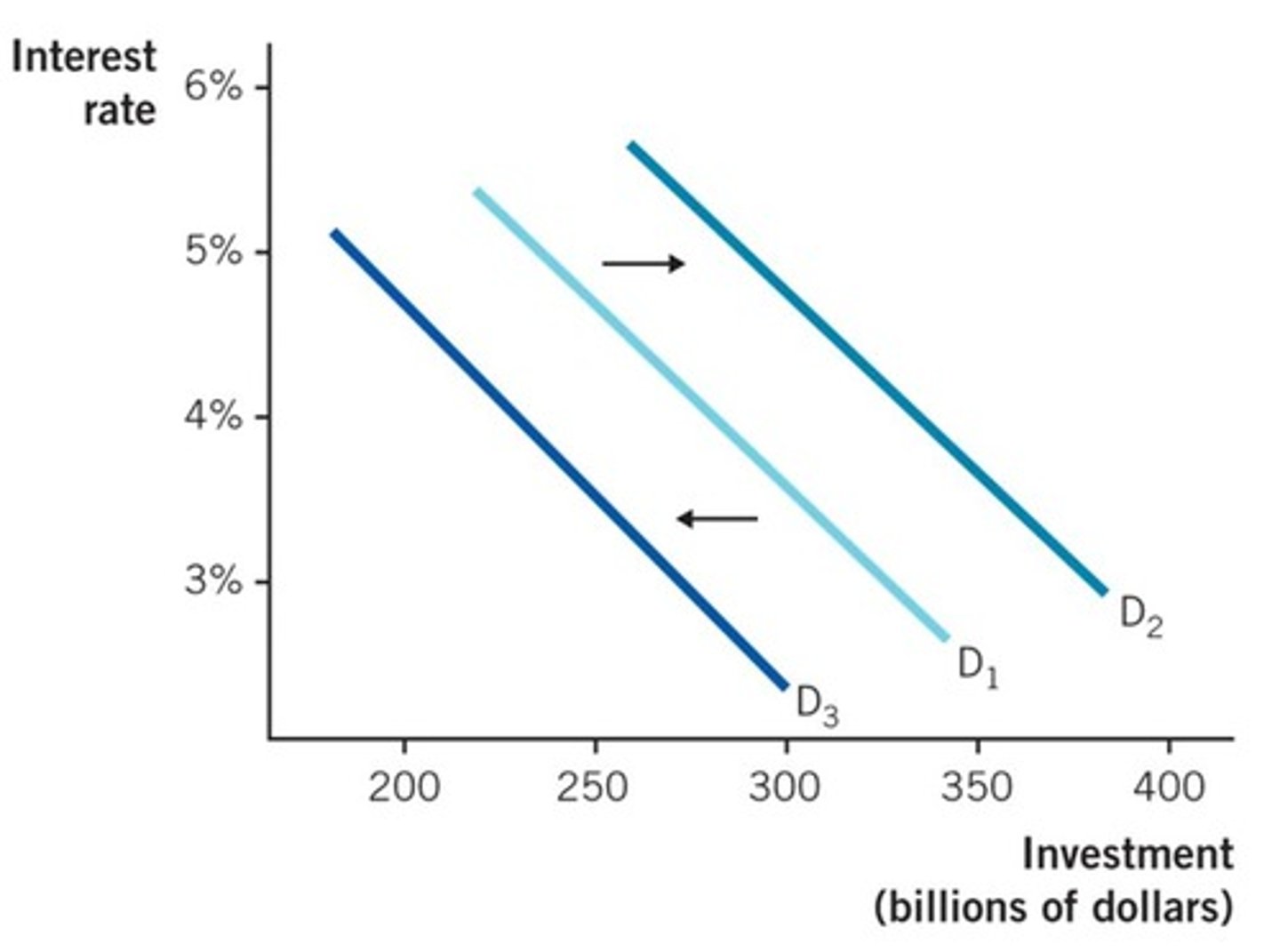
Capital Productivity
If capital becomes more productive, the demand for loanable funds will increase.
Investor Confidence
A measure of what firms expect for future economic activity.
Government Borrowing
Increases in government borrowing are reflected as increases in the demand for loanable funds.
Equilibrium
Occurs at the interest rate where the plans of savers match the plans of borrowers.
Aggregate-Demand Aggregate-Supply Model
A model that economists use to study business cycles (short-run fluctuations in the economy).
Wealth Effect
The change in the quantity of AD that results from wealth changes due to price level changes.
International Trade Effect
Occurs when a change in the price level leads to a change in the quantity of net exports demanded.
Interest Rate Effect
Occurs when a change in the price level leads to a change in interest rates and therefore in the quantity of AD.
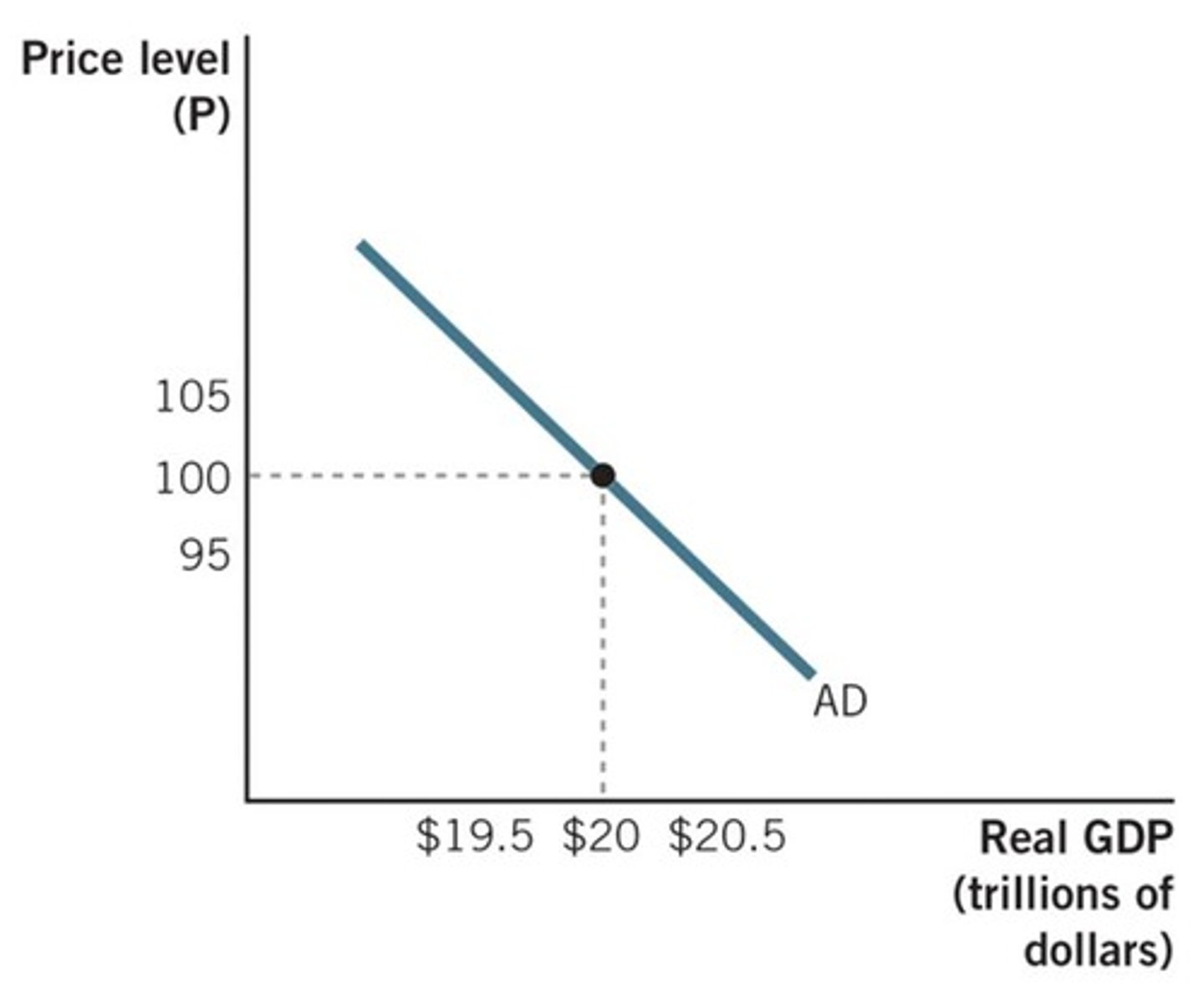
AD Curve
The curve that represents the total demand for final goods and services in an economy.
GDP Components
Consumption, investment, government spending, and net exports.
Decrease in Consumer Confidence
Leads to a leftward shift in the AD curve by reducing consumption.
Crowding Out
A phenomenon where increased government borrowing leads to higher equilibrium interest rates.
Aggregate Demand (AD)
Total demand for goods and services in the economy.
Aggregate Supply (AS)
Total supply of final goods and services in an economy.
Long Run Aggregate Supply (LRAS)
A vertical line at Y*, which is the full employment output.
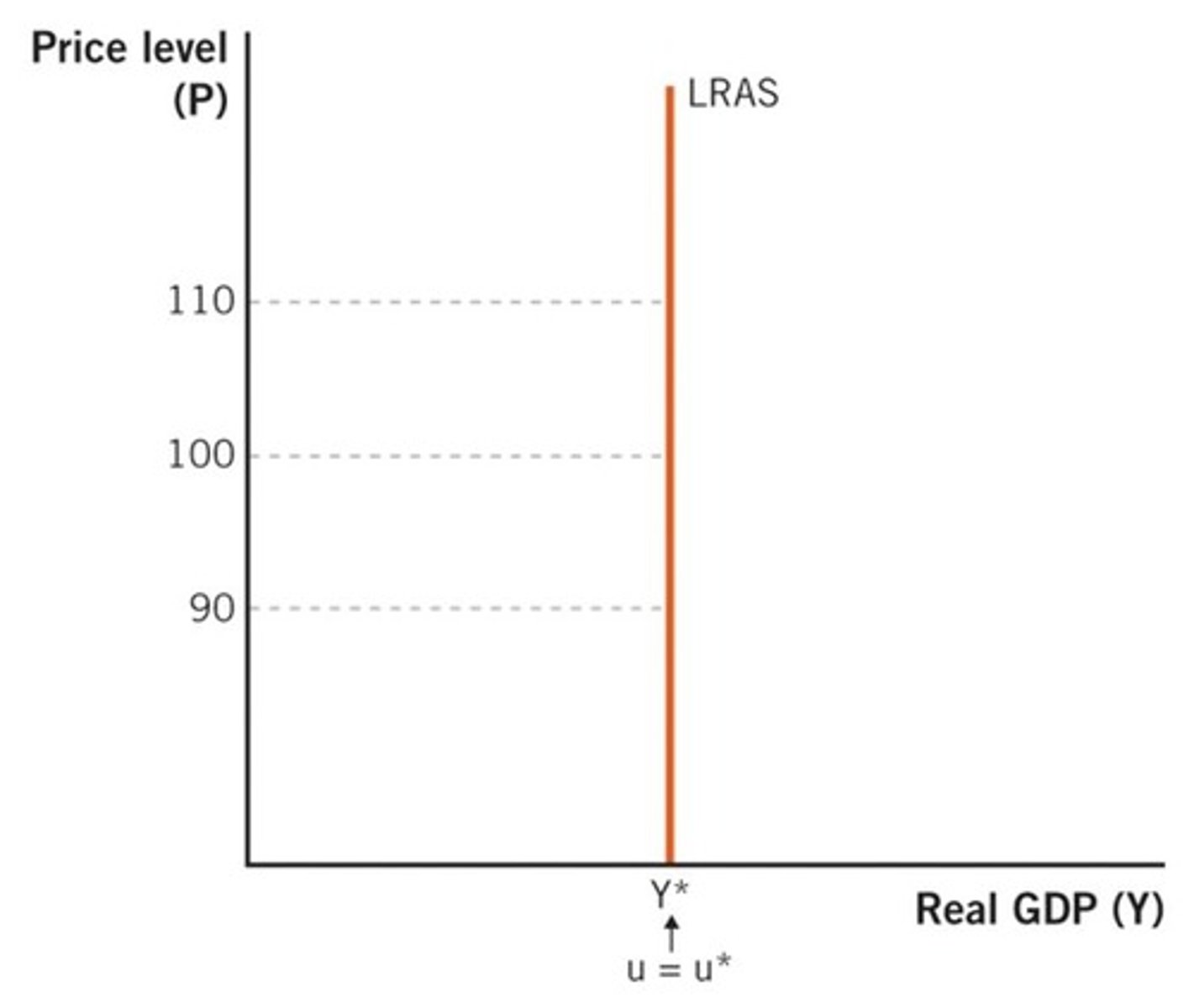
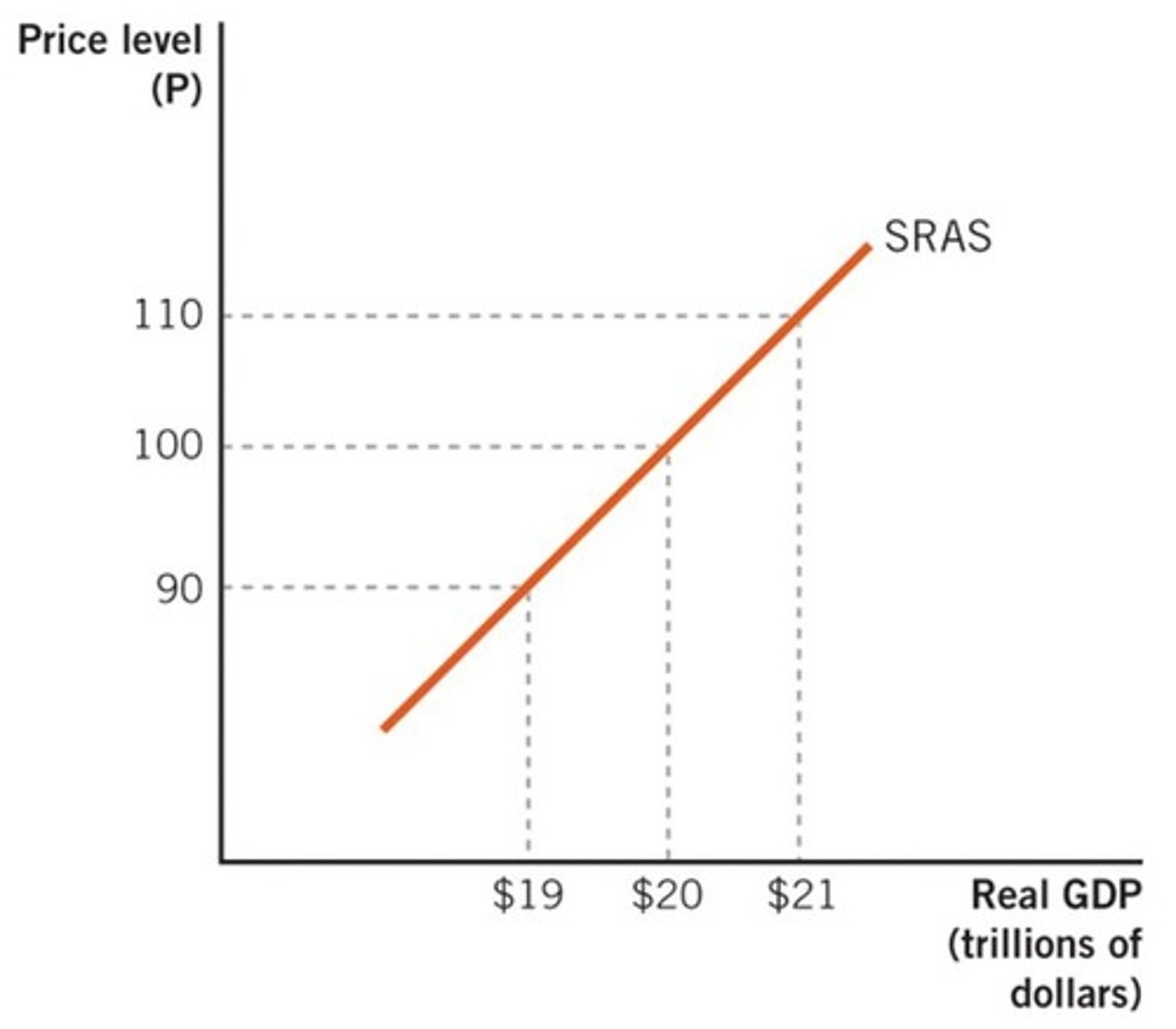
Short Run Aggregate Supply (SRAS)
Indicates a positive relationship between the price level and real output supplied.
Long Run
A period of time sufficient for all prices to adjust.
Short Run
A period of time in which some prices change but others take more time.
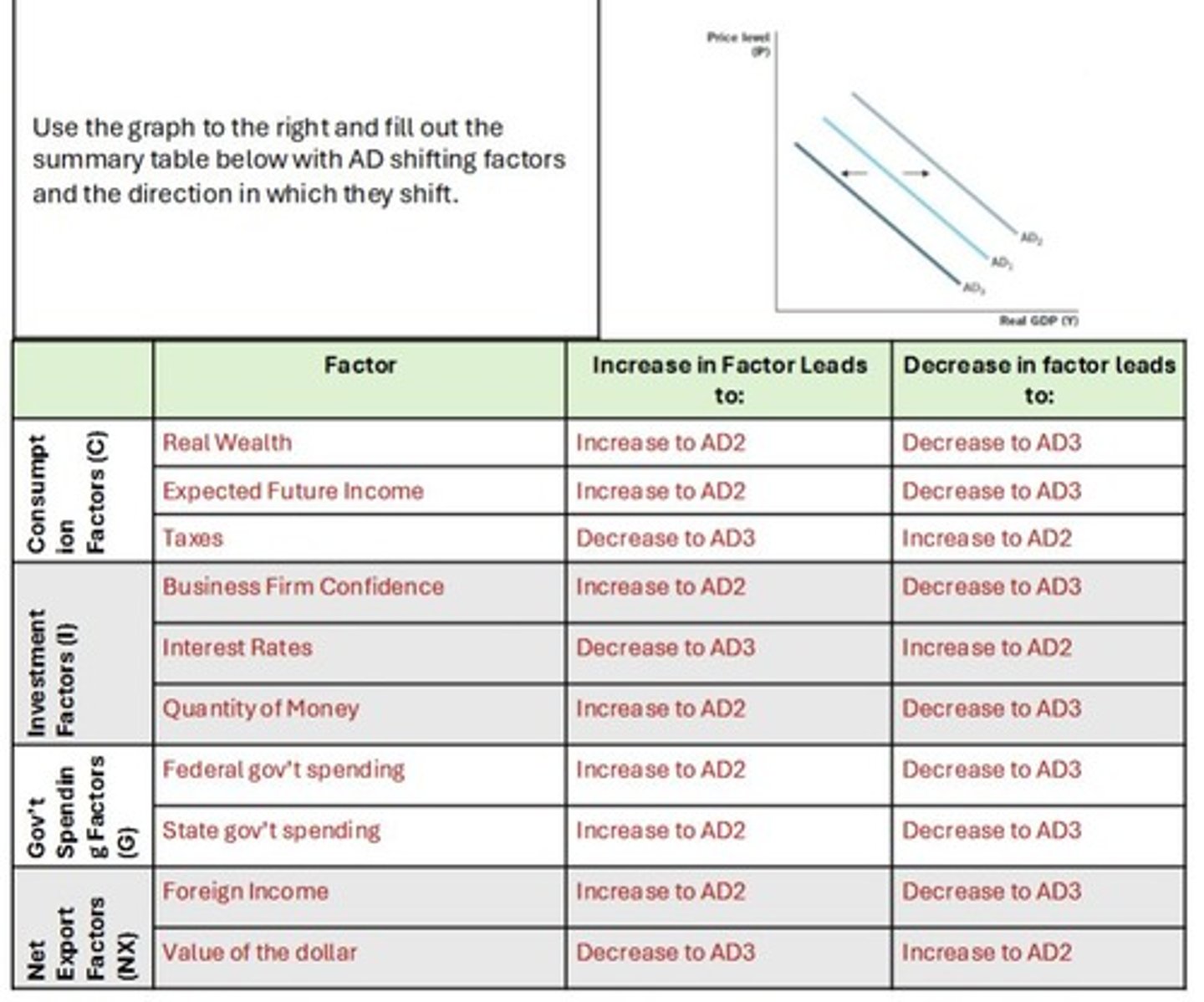
Shifts in Consumption
Factors include National Wealth, Expected future incomes, and Taxes.
Shifts in Investment
Factors include Firm Confidence, Interest Rates, and Quantity of Money Supply.
Shifts in Net Exports
Factors include Foreign Income and Value of the Dollar.
Input Prices
Examples include worker's wages, which do not adjust quickly.
Menu Costs
The extra costs associated with changing prices.
Money Illusion
Occurs when people interpret nominal values as real values.
Supply Shocks
Surprise events that change firms' production costs.
Recession
An economic downturn characterized by declines in real GDP growth and increases in the unemployment rate.
Great Depression
The single biggest economic contraction the US has ever experienced.
Fiscal Policy
Use of government's budget tools - government spending and taxes - to influence the macroeconomy.
Monetary Policy
Involves adjusting the money supply to influence the economy.
Great Recession
Began in December 2007 and lasted 18 months, making it the longest recession in the US since WWII.
Dodd-Frank Act
The primary regulatory response to the financial turmoil that contributed to the Great Recession.
COVID Recession
The economy went into recession 7 weeks post the first diagnosis of the virus in the US.
Declines in Aggregate Demand
AD changes in response to many factors, leading to recessionary periods.
Declines in Aggregate Supply
Shifts in AS can also bring recessionary conditions.
Economic Growth
Illustrated in the AD-AS Model using the LRAS curve.
Negative Supply Shock
Occurs when a sudden increase in input costs causes the SRAS curve to shift leftward.
Positive Supply Shock
An unexpected event that increases production capacity.
AD-AS Model
Used to see how changes in either AD or AS affect real GDP, unemployment, and the price level.
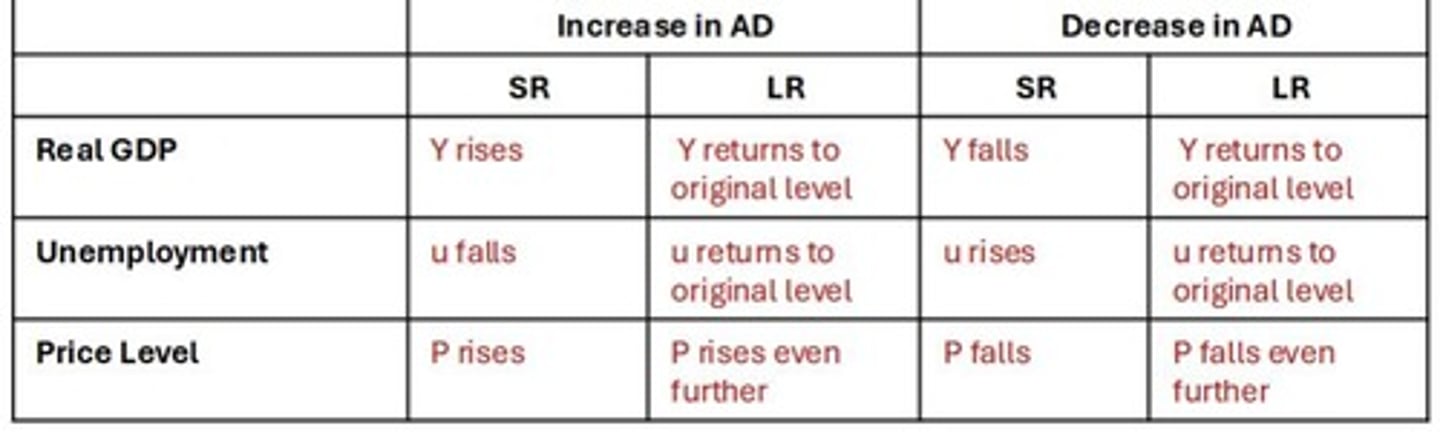
Natural Rate of Unemployment (u*)
The unemployment rate at which the economy is at full employment.
Aggregate Demand Curve Shift
Indicates lower total spending at every price level.
Supply Shock
An unexpected, exogenous event that abruptly shifts SRAS.
Long-Run Aggregate Supply (LRAS)
The long-term output level of an economy that is not significantly impacted by short-term fluctuations.
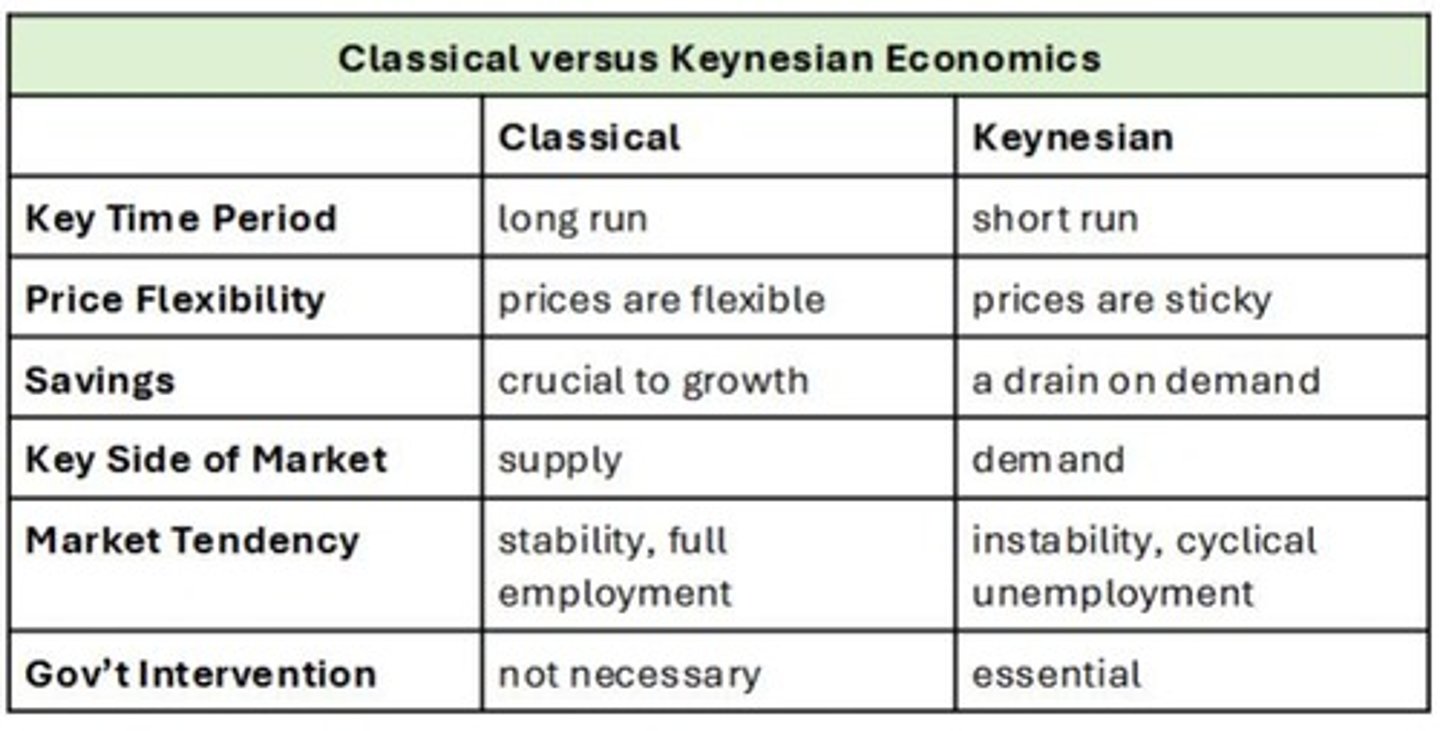
Classical Economics
Stresses the importance of AS and believes the economy can adjust back to full employment equilibrium on its own.
Keynesian Economics
Stresses the importance of AD and believes the economy needs help returning to full employment equilibrium.
Aggregate Expenditures Model (AE Model)
A short-run model of economic fluctuations that holds that prices are completely sticky and that AD determines the economy's level of output and income.
Disposable Income
Income after taxes (Y-T).
Marginal Propensity to Consume (MPC)
The portion of additional income spent on consumption.
Marginal Propensity to Save (MPS)
The portion of additional income saved.
Aggregate Consumption Function
C = A + MPC(Y-T)
Investment
Private spending by firms on tools, plant, equipment, and inventory to produce future output.
Positive Unplanned Investment
Occurs when expected sales exceed actual sales, leading to an increase in inventory.
Aggregate Expenditures without Government Spending
AE = C + PI
Aggregate Expenditures with Government Spending
AE = C + PI + G + NX
Equilibrium in the AE Model
Represented by a series of points that comprise a 45-degree line.
Spending Multiplier
A number that tells us the total impact in spending from an initial change in a given amount.
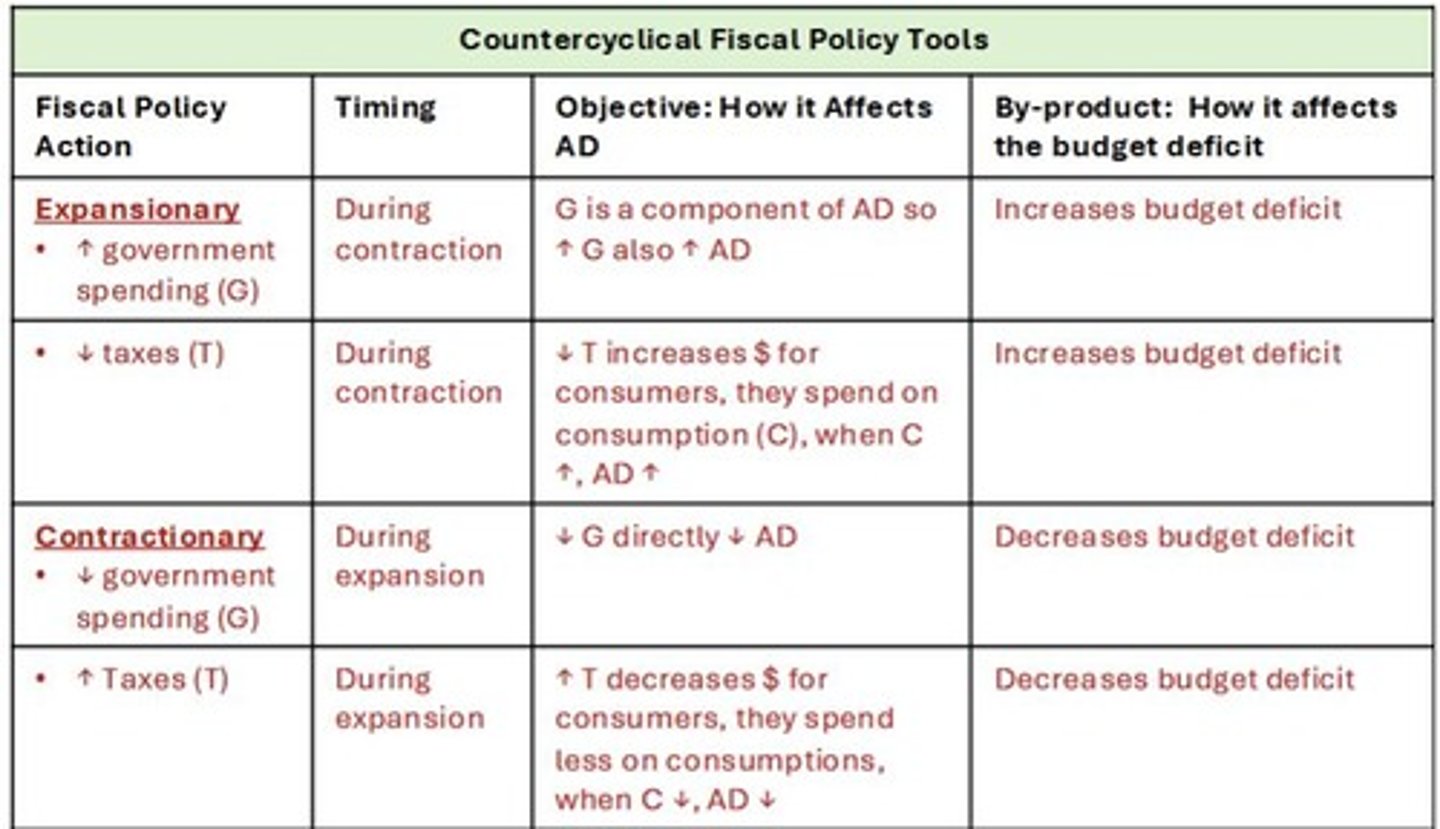
Expansionary Fiscal Policy
Occurs when the government increases spending or decreases taxes to stimulate the economy towards equilibrium.
Contractionary Fiscal Policy
Occurs when the government decreases spending or increases taxes to slow economic expansion.
Countercyclical Fiscal Policy
Seeks to counteract business cycle fluctuations.
Time Lags in Fiscal Policy
Includes recognition lag, implementation lag, and impact lag.
Automatic Stabilizers
Government programs that automatically implement countercyclical fiscal policy in response to economic conditions.
Crowding-Out
Occurs when private spending falls in response to increases in government spending.
Supply-Side Fiscal Policy
Involves the use of government spending and taxes to affect the production side of the economy.
Marginal Income Tax Rates
Lowering marginal income tax rates can affect the supply side of the economy.
The Laffer Curve
An illustration of the relationship between tax rates and tax revenue.

