Oral Pathology 1 Bone Neoplasms
 Call Kai
 Learn
Learn Practice Test
 Spaced Repetition
 Match
Match Flashcards
 Knowt Play
1/89

There's no tags or description
Looks like no tags are added yet.
Name | Mastery | Learn | Test | Matching | Spaced | Call with Kai | Chat |
|---|
No analytics yet
Send a link to your students to track their progress
90 Terms
cell of origin = osteocyte; neoplasm is benign
osteoma
cell of origin = osteoblast; neoplasm is benign
osteoblastoma
cell of origin = cementoblast; neoplasm is benign
cementoblastoma
cell of origin = osteoblast; neoplasm is malignant
osteosarcoma
cell of origin = chondroblast; neoplasm is malignant
chondrosarcoma
cell of origin = primitive neuroectodermal cells (?); neoplasm is malignant
ewing sarcoma
osteoma
benign bone tumor that continues to grow (vs. exostosis)
Osteoma primarily involves the __
craniofacial skeleton
if multiple osteomas are present, consider __ syndrome
Gardner
most common location of osteoma
mandibular body
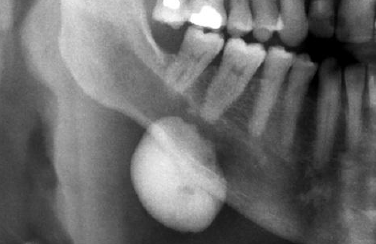
well circumscribed radipaque lesion
osteoma
autosomal dominant, mutation chromosome #5 (APC)
Gardner syndrome
colorectal (adenoma) polyps which can become malignant (100% if not tx); multiple osteoma, 20% have supernumerary teeth
clinical features of Gardner syndrome
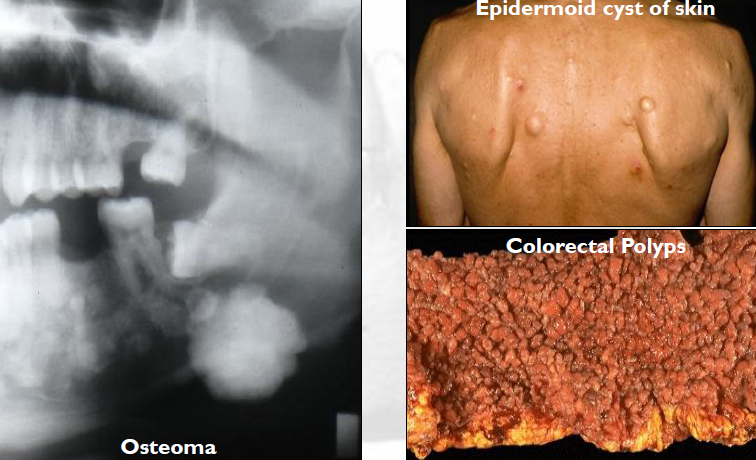
Gardner syndrome
which of the following is CORRECT for osteoma?
typically small, slow-growing, and found in the skull
all of the following are part of Gardner syndrome EXCEPT:
cafe au lait spots
osteoblastoma
benign bone tumors from osteoblasts, rare
larger than 2-4 cm and NOT relieved by aspirin; pain and swelling
osteoblastoma
__% of osteoblastoma occur before the age of 30
85
osteoblastoma is more common in the __
posterior mandible
cementoblastoma
benign odontogenic neoplasm of cementoblasts
__% of cementoblastoma occur before the age of 30
75
__% of cementoblastoma occur in the mandible; almost always in molar/premolar region
75
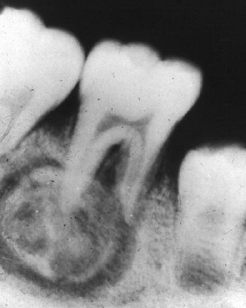
RO mass that is fused to one or more tooth roots; outline of the root or roots is usually obscured; surrounded by a thin RL rim
cementoblastoma
pain and swelling are present in __ of cementoblastoma
2/3
ossifying fibroma
true bone neoplasm with significant growth potential composed of fibrous tissue that contains a variable mixture of bone and cementum (central vs peripheral)
large tumors result in painless swelling
ossifying fibroma
ossifying fibroma most commonly occurs in the __
mandible
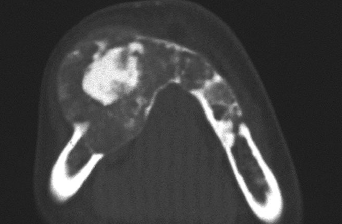
well-defined; commonly mixed RL/ RO; root divergence or resorption of roots can occur
ossifying fibroma
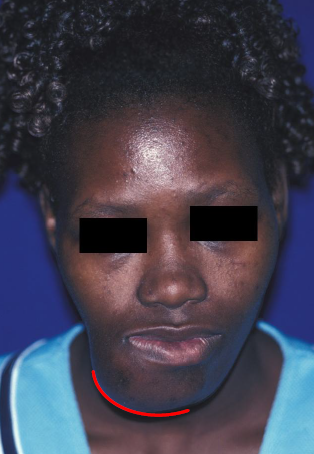
characteristic of ossifying fibroma
downward bowing of the inferior cortex of the mandible
which of the following is INCORRECT for cementoblastoma?
radiolucent mass
which of the following statements about osteoblastoma is FALSE?
relieved by aspirin
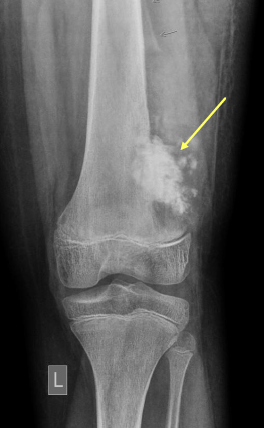
most common location is the distal femur and proximal tibia (60%)
osteosarcoma
osteosarcoma has a __ distribution (10-20, common; after 50)
bimodal age
osteosarcoma is best appreciated with an __ x-ray
occlusal
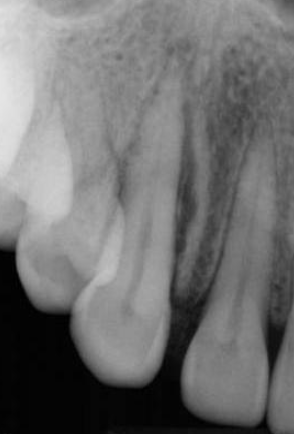
symmetrical widening of the PDL space
important early finding of osteosarcoma
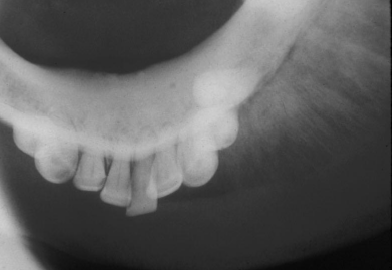
occurs in ~25% of osteosarcoma due to bony projections on the surface of the lesion
sunburst pattern
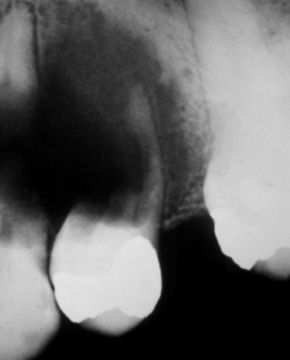
ill-defined peripheral borders seen in osteosarcoma
moth eaten pattern
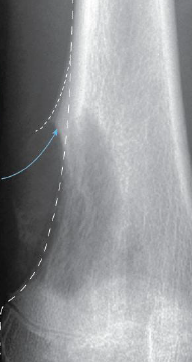
a triangular elevation of periosteum in osteosarcoma
Codman’s triangle
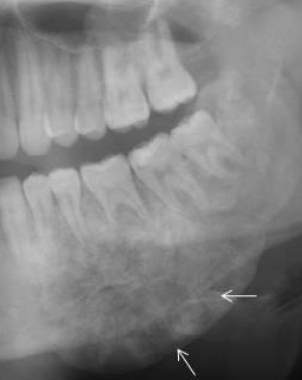
tapered roots seen in osteosarcoma
spiking resorption
which of the following radiographic features is NOT typically associated with osteosarcoma?
radiolucent halo rim
chondrosarcoma
malignant bone tumor of cartilage
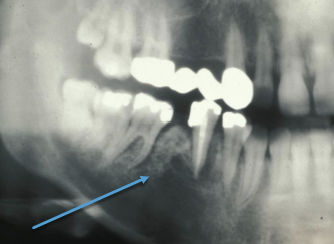
extensive infiltration, poorly defined borders, RL/ RO varies, +/ - root resorption, symmetrical PDL widening
chondrosarcoma
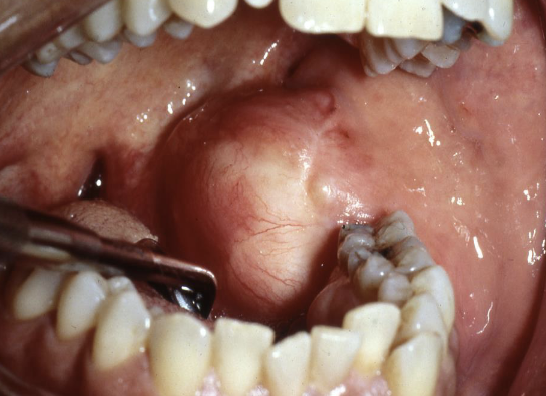
most common in long bones (3% in head and neck); painless mass or swelling of the jaw
clinical manifestation of chondrosarcoma
Ewing sarcoma
primarily malignant tumor of bone
Ewing sarcoma is highly __ and know to __
leathal; metastasize
Ewing sarcoma is the __ most common osseous neoplasm
3rd
Ewing sarcoma is most common in __
white males
Ewing sarcoma occurs in __% less than 20 years old
80
Ewing sarcoma is most commonly located in __
long bones
complete resection (resistant to chemo and radiation)
treatment of chondrosarcoma
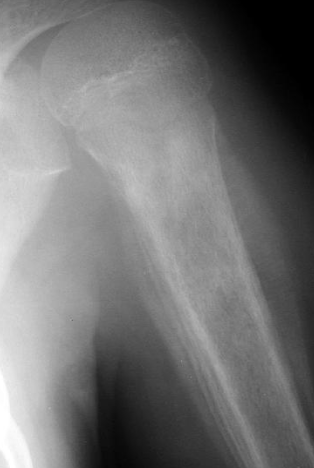
__ radiographic appearance seen in Ewing sarcoma (periosteal reaction “like Garre’s osteomyelitis”)
onion skin
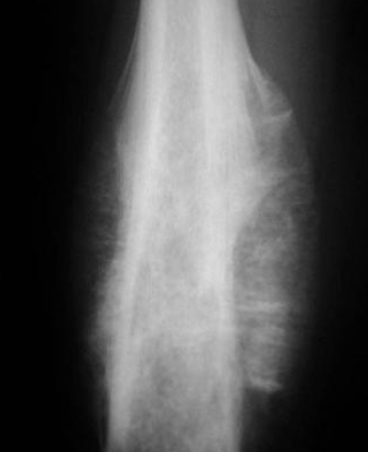
__ radiographic appearance seen in Ewing sarcoma (“like osteosarcoma”)
sunray
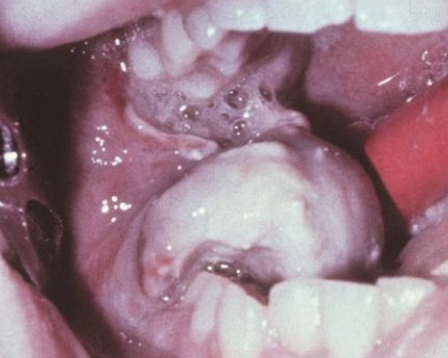
jaws are only involved 2%; mand > max
Ewing sarcoma
post radiation bone sarcoma
arises in bone that has previously been subjected to radiation therapy
post radiation sarcoma may develop 3 yrs after radiation, but the average is __ years after therapy
15
__ is the most common type of post radiation bone sarcoma (50%)
osteosarcoma
__ of metastatic carcinoma are in bone (80% mand > max)
2/3
__ of metastatic carcinoma are in soft tissue
1/3
symptoms of metastatic disease in the mouth mimic a __
toothache
which of the following statements about metastatic disease to the head and neck is FALSE?
more common location is gingiva
focal osteoporotic bone marrow defect
area of hematopoietic marrow that produces a radiolucency
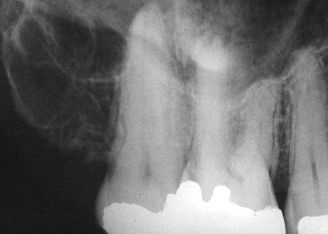
no jaw expansion; NOT pathology, multi-locular RL
focal osteoporotic bone marrow defect
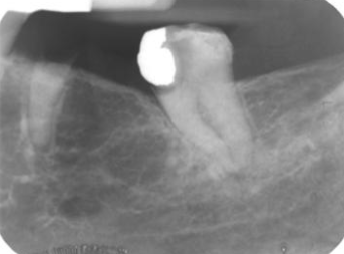
75% in adult women; typically post mand
focal osteoporotic bone marrow defect
focal osteoporotic bone marrow defect may mimic __; biopsy to rule out pathology
botryoid cyst, OKC, ameloblastoma
idiopathic osteosclerosis
focal area of increased radiodensity that is of unknown cause and cannot be attributed to anything else
In idiopathic osteosclerosis affected teeth are __
vital and asymptomatic
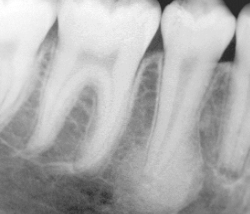
no decay or pulpal involvement, tooth is sound; RO lesion, no RL rim; no cortical expansion
idiopathic osteosclerosis
__% of idiopathic osteosclerosis occurs in the mandible (molar/ premolar)
90
associated with decay or pulpal involvement (infection)
condensing osteitis
will be fused with the tooth and have a radiolucent halo
cementoblastoma
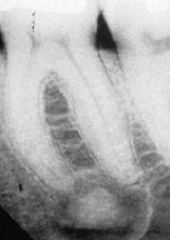
adult F, periapical, florid, focal, no pain, teeth vital
focal COD
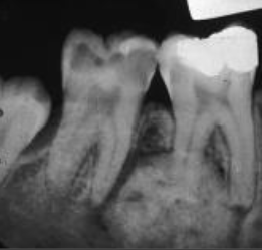
young, 2/3 pain, 1st or 2nd molar, halo rim
cementoblastoma
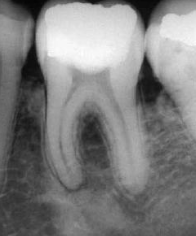
large restoration, infection, borders ill defined
condensing osteitis
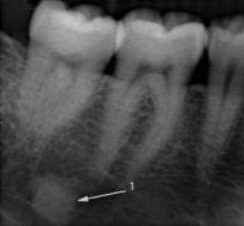
borders ill defined, tooth is vital, does not have to be in a tooth bearing area
idiopathic osteosclerosis
central giant cell granuloma
considered a non-neoplastic lesion of unknown etiology; some demonstrate aggressive behavior and can break through bone
__% of central giant cell granulomas occur before 30 years old
60
__% of central giant cell granuloma occurs in the mandible
70
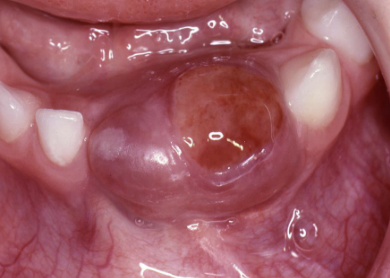
anterior jaw; frequently crosses the midline, expansile
central giant cell granuloma
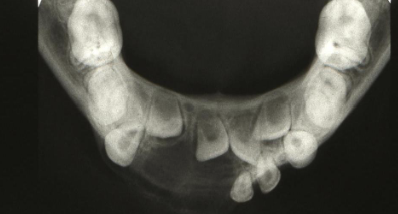
radiolucent lesions; multilocular or unilocular; well defined non-corticated
central giant cell granuloma
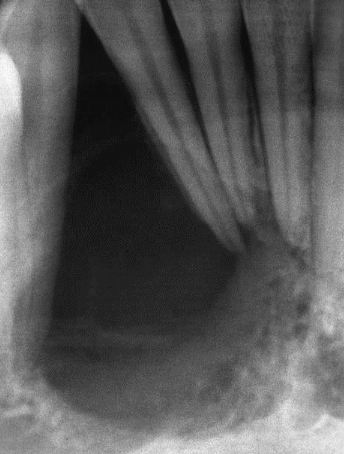
can be seen in central giant cell granuloma
root divergence
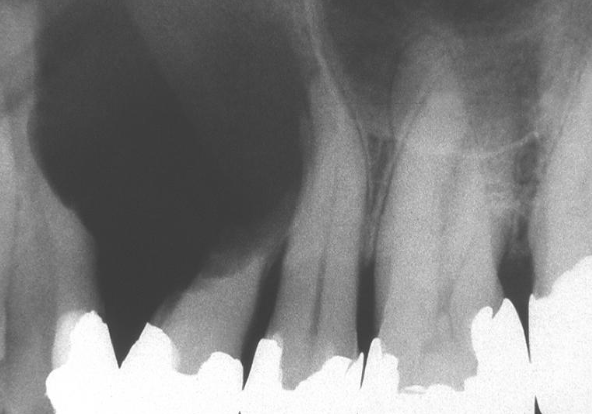
root resorption suggests __ behavior, root divergence suggests __ process (central giant cell granuloma)
aggressive; benign
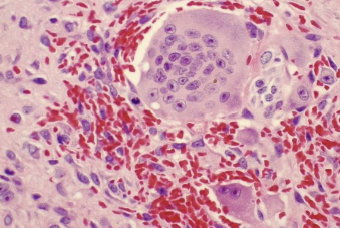
the histopathology of central giant cell granuloma is identical to __
cherubism
recurrence of central giant cell granuloma is __%
20
which of the following is not a multilocular lesion?
cementoblastoma
onion skin is associated with
Ewing sarcoma
which of the following is FALSE regarding ossifying fibroma?
no expansion
which of the following is NOT a neoplasm?
condensing osteitis
All of the following are RO lesions EXCEPT:
focal osteoporotic bone marrow defect
which of the following is TRUE for focal osteoporotic bone marrow defect?
multilocular