6.14: A Return to Naturalism in Gothic Sculpture
 Call Kai
 Learn
Learn Practice Test
 Spaced Repetition
 Match
Match Flashcards
 Knowt Play
1/5

Earn XP
Description and Tags
When Sculpture Starts to Make Holy Figures Look Like Regular People Again
Name | Mastery | Learn | Test | Matching | Spaced | Call with Kai | Chat |
|---|
No analytics yet
Send a link to your students to track their progress
6 Terms
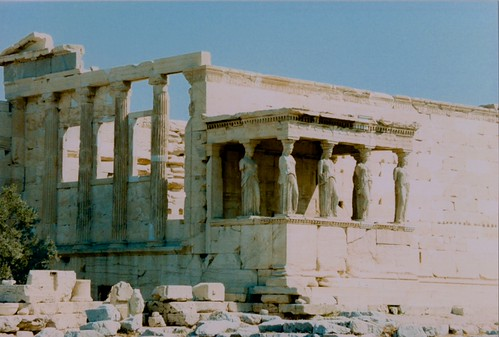
Caryatids at the Acropolis in Athens
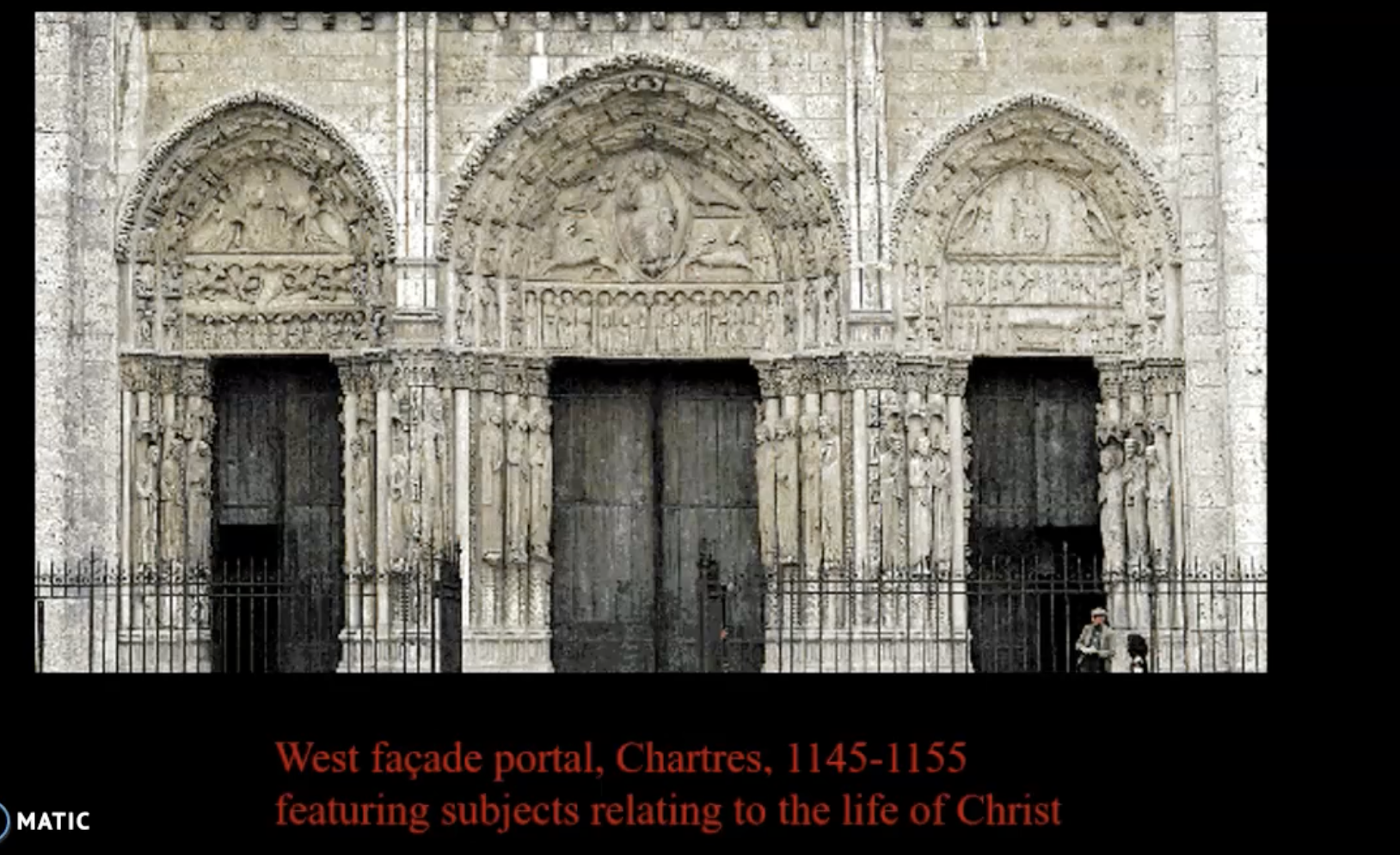
West façade portal, Chartres, 1145-1155 featuring subjects relating to the life of Christ
Tympanums
Like the Romanesque period, exterior tympanums were extremely common.
Almost like exterior billboards for a largely illiterate population, motivating people to go to church.
Three elaborate tympanums:
Christ's Ascension.
Second Coming of Christ (Judgment Day).
Virgin Mary holding baby Jesus.
Second Coming:
Christ judges all souls.
Surrounded by the four evangelists.
Virgin Mary becomes increasingly prominent.
Growing "fandom" for the mother of Christ.

Jamb statues, Chartres portal,
Focus is on the sculpture flanking each doorway.
Called jamb statues.
Mid-12th century.
West façade survived a devastating fire, preserving the sculptural program.
Instead of plain columns or patterned piers:
Slender colonettes.
High-relief figures attached to them.
Depict Old Testament kings and queens.
Considered the ancestors of Christ.
Whole sculptural program:
Old Testament kings and queens = foundation.
Above them: Jesus, Mary, the evangelists = New Testament.
Foundation leading to Jesus, mankind's savior and redemption.

Style
Typical of the period:
Disproportionate.
Elongated figures.
Highly stylized robes.
Unlike the Greco-Roman world:
Drapery no longer describes anatomy accurately.
Figures become long tubular forms.
Robes filled with:
Linear designs.
Cascading arcs.
Wave-like scallops.
Reminiscent of the Old Testament Prophet at Saint-Pierre.
Same elongated, stylized, otherworldly appearance.
Disproportionality separates holy beings from ordinary people.
Return to Naturalism
Faces become:
Softer.
More human.
More naturalistic.
More relatable.
Baby steps toward a return to naturalism.
Less stoic.
Less otherworldly.
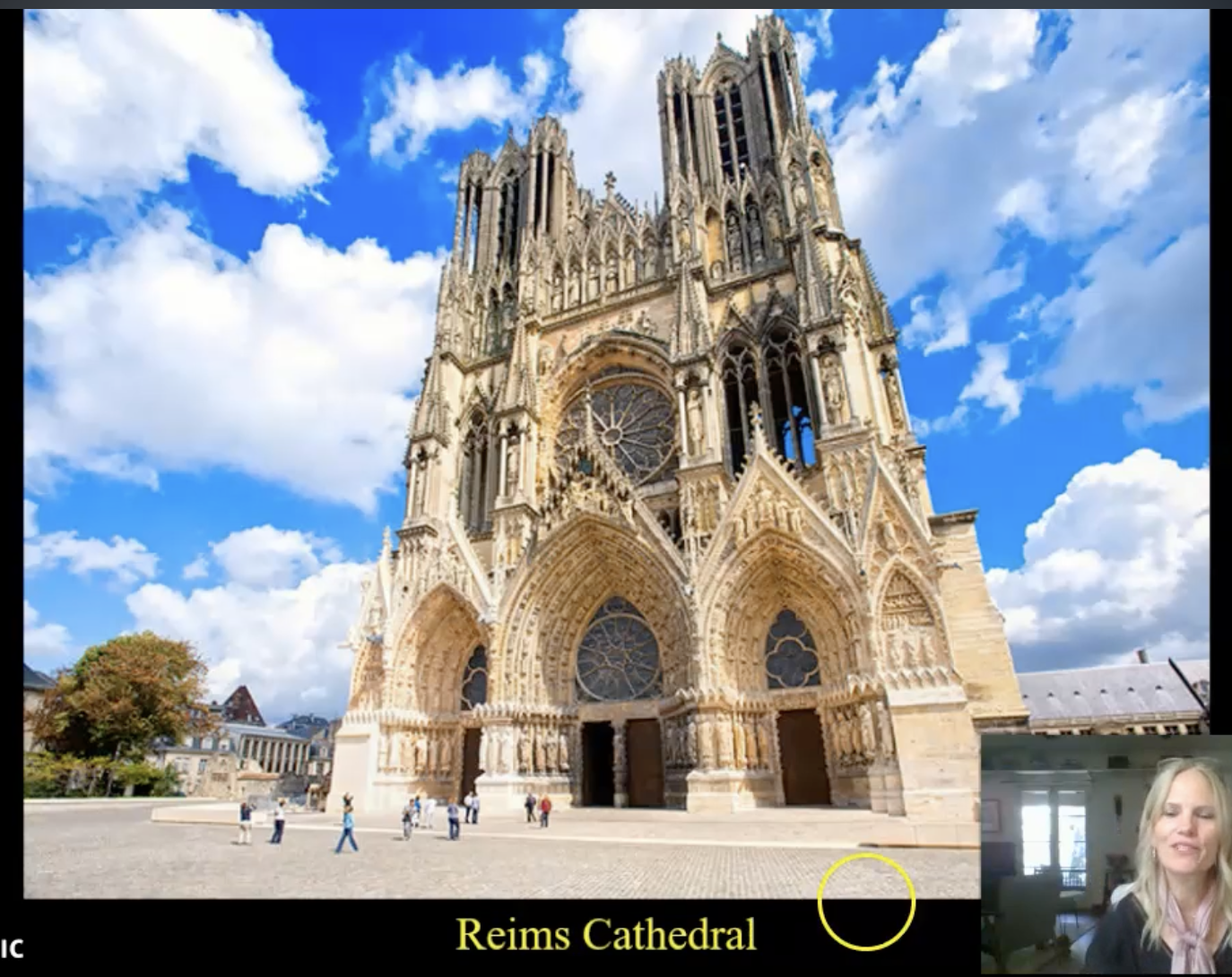
Reims Cathedral
Gothic Features
Typical Gothic cathedral:
Pointed arches.
Rose windows.
Dissolving walls.
Soaring verticality.
Sculpture concentrated around the portal.
Jamb statues replace the emphasis on the tympanum.
Annunciation and Visitation, jamb statues on west façade, Reims Cathedral, France, ca. 1230-1255
-Mid-13th century.
One of the best Gothic jamb statue programs.
Two scenes from the life of the Virgin Mary:
The Annunciation.
The Visitation.
Nearly freestanding, but still attached to the columns.
More independent than the earlier Chartres jamb statues.
The Visitation ( the right)
Mary visits Elizabeth.
Mary pregnant with Jesus.
Elizabeth pregnant with John the Baptist.
Probably carved by the same sculptor.
Strong Greco-Roman influence.
Figures:
Well proportioned.
Contrapposto stance.
Anatomy visible beneath the robes.
Turn toward one another.
Gesture naturally.
Feel like they have a genuine human relationship.
The Annunciation ( the left)
Angel Gabriel tells Mary she will become the mother of Jesus.
Different sculptor.
More stylized medieval approach.
Gabriel:
Slightly elongated.
Small head.
Impish, mischievous expression.
Mary:
Minimalistic.
Frozen.
Anatomy hidden beneath the robes.
Expressionless and wooden.

Transition Toward the Renaissance
Same period shows two different artistic approaches.
Left side:
Earlier French Gothic stylization.
Moving to the right:
Pendulum swings toward Greco-Roman naturalism.
Begins the trend that leads into the Renaissance.
Art history continually moves between:
Abstraction.
Naturalism.
Gothic sculpture marks the beginning of the return to naturalism, even for the holiest figures.
.