Anatomy and Physiology Chapter 1
 Call Kai
 Learn
Learn Practice Test
 Spaced Repetition
 Match
Match Flashcards
 Knowt Play
1/55

There's no tags or description
Looks like no tags are added yet.
Name | Mastery | Learn | Test | Matching | Spaced | Call with Kai | Chat |
|---|
No analytics yet
Send a link to your students to track their progress
56 Terms
Anatomy
study of the structure of body parts and their relationship to one another
physiology
the study of function of body parts and how they work
gross anatomy
large visible functions (the heart)
regional anatomy
looks at all structures in a particular area of the body (organs of abdominal cavity)
System anatomy
Looks at just one system (cardio system)
Microscopic anatomy
structures to small to be seen by the naked eye (cytology: study of cells)
Levels of organization (TEST QUESTION)
Atomic: Carbon, hydrogen, oxygen, nitrogen, phosphorous, sulfur
Molecular: inorganic/organic molecules
Cellular level: single cell (neuron) with organelles
Tissue Level: groups of similar cells (connective)
Organ Level: contains 2 or more types of tissues (heart)
Organ system level: organs that work together (respiratory)
organism level: all organ systems combined (human)
Maintaining boundaries (Requirements for life 1 of 5)
Skin, plasma membranes of cell
Movement (Requirements for life 2 of 5)
skeletal muscles, smooth muscles of intestines, cardiac muscle
Responsiveness (Requirements for life 3 of 5)
Reflexiveness of nervous system, release of hormones, control of bp, etc
Digestion, Metabolism, Excretion (Requirements for life 4 of 5)
Digestion, Metabolism, Excretion
Breakdown food, absorb it, and convert it to energy
Reproduction/ Growth (Requirements for life 5 of 5)
Mitosis and meiosis
Integumentary system
skin, hair, nails, glands
skeletal system
bones and articulations (joints)
Muscular system
Skeletal, smooth and cardiac
Nervous system
Central nervous system- brain and spinal cord
peripheral nervous system- cranial nerves, spinal nerves, enteric nervous system
special senses
vision, hearing, tasting, smell, equilibrium
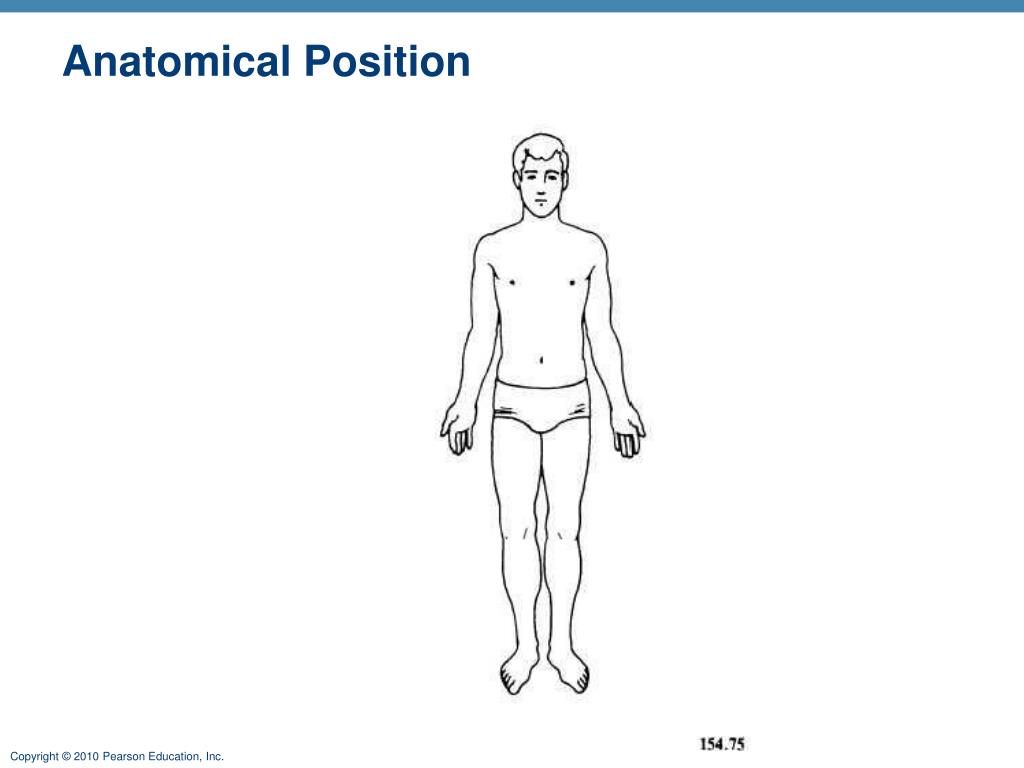
Standard anatomical position (TEST QUESTION)
Body erect, feet slightly apart palms facing forward with thumbs positioning away from body
directional terms (TEST QUESTION)
describe one body structure in relation to another body structure
right and left refer to the patient’s perspective, opposite of you
superior
upper
inferior
lower
Anterior
Front
Posterior (Dorsal)
Back
Medial
Toward the inside of the body
Lateral
Toward the outside of the body
Proximal
closer the center of the body
Distal
Further from center of the body
superficial
closer to the surface
deep
more internal
Head (1 of 6 body regions)
cranial, facial, buccal (cheek)
Neck (2 OF 6 BODY REGIONS)
Cervical
Torso (3 of 6 body regions )
thoracic, mammary, pectoral, abdominal, lumbar, sacral
Arm (4 of 6 body regions )
axillary (armpit), brachial (upper arm), antecubital (front of elbow, IV), carpal (wrist), palmar (palm)
Pelvis (5 of 6 body regions)
groin, inguinal (v’s hips), pubic (form hip bone)
Leg (6 of 6 body regions)
gluteal (butt), femoral (upper thigh), popliteal (back of knee), patellar (kneecap), tarsal (upper foot), peroneal (lower leg), calcaneal (heel), plantar (side of foot), pedal (foot)
Body planes
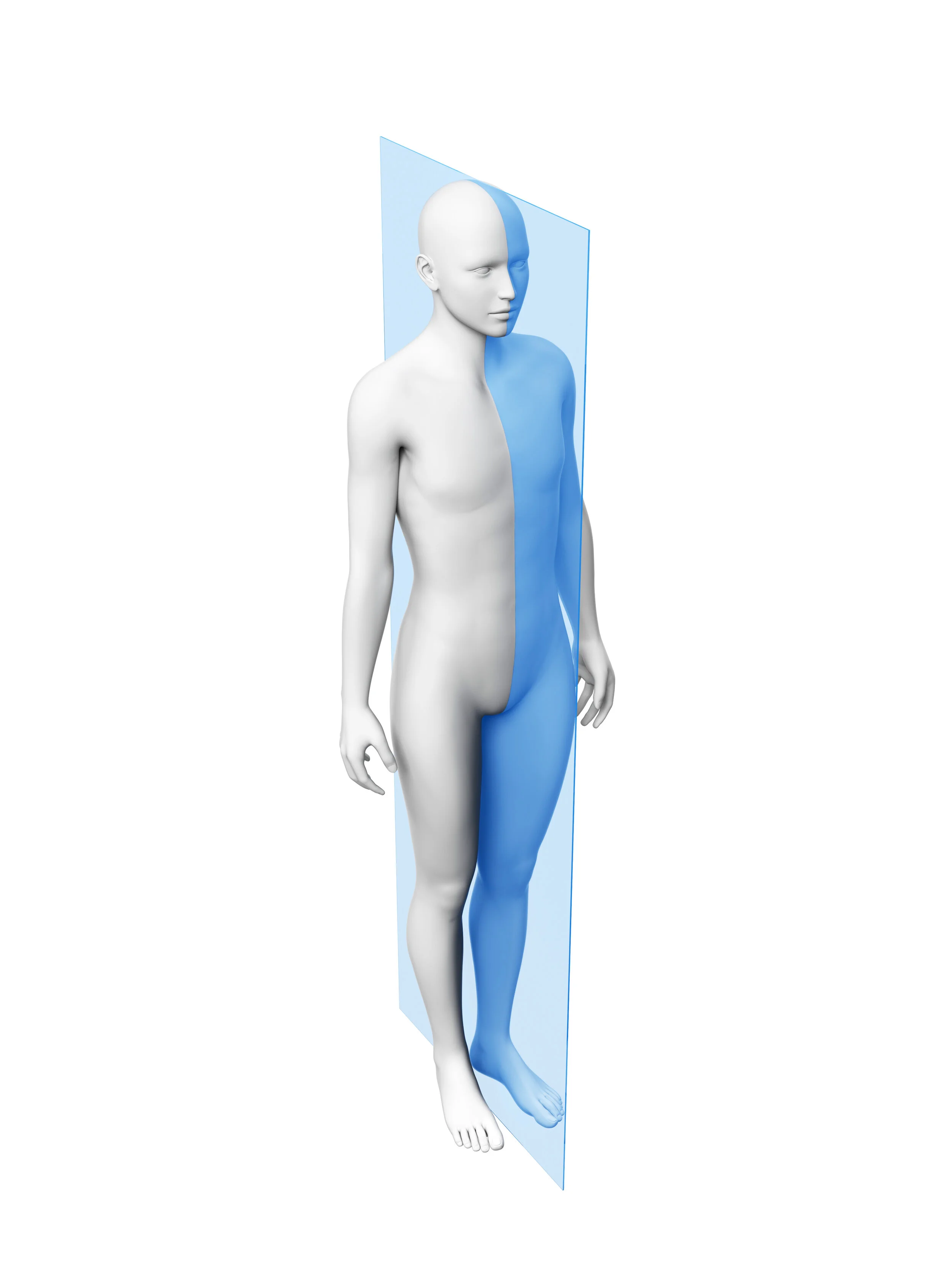
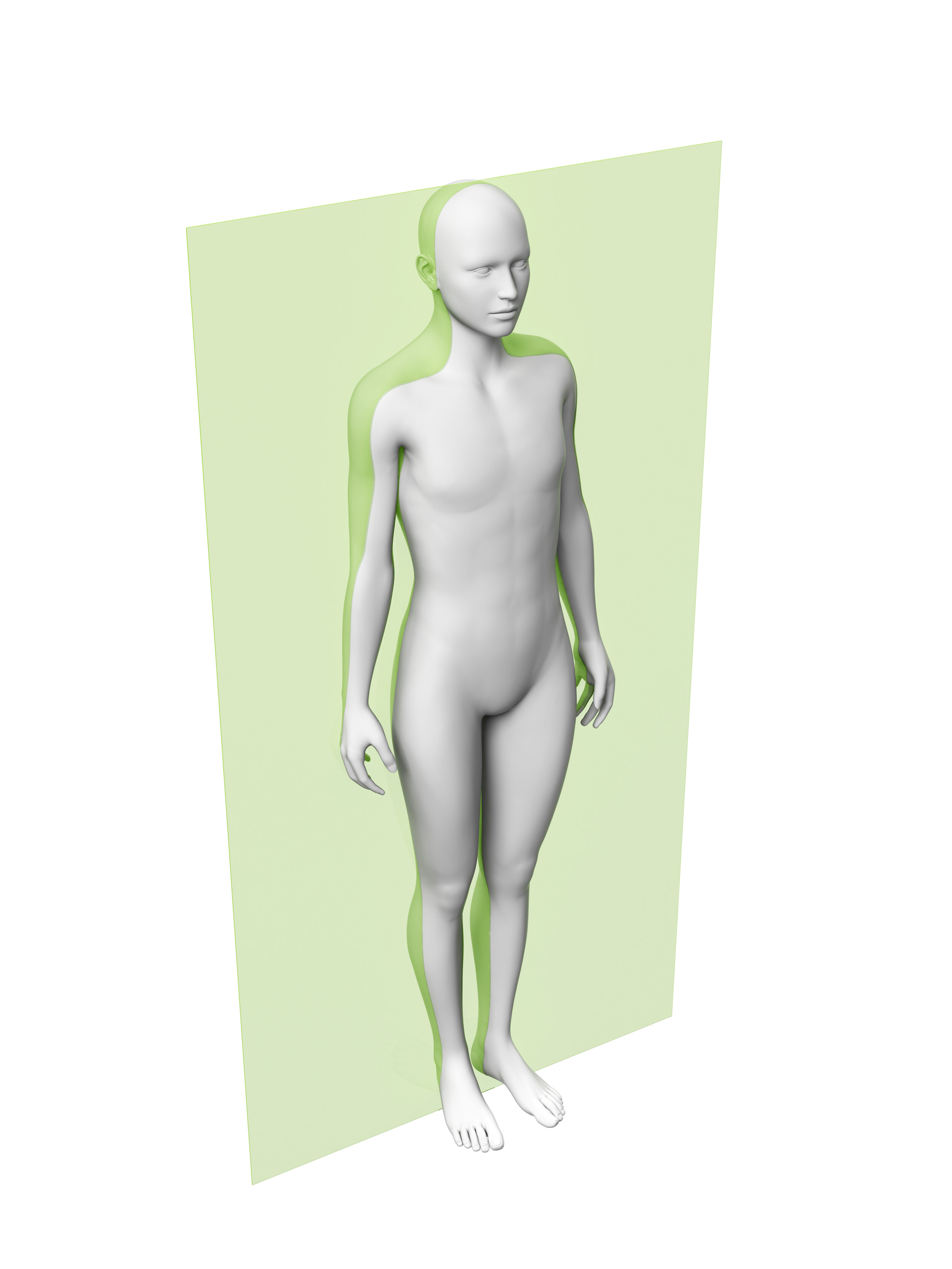
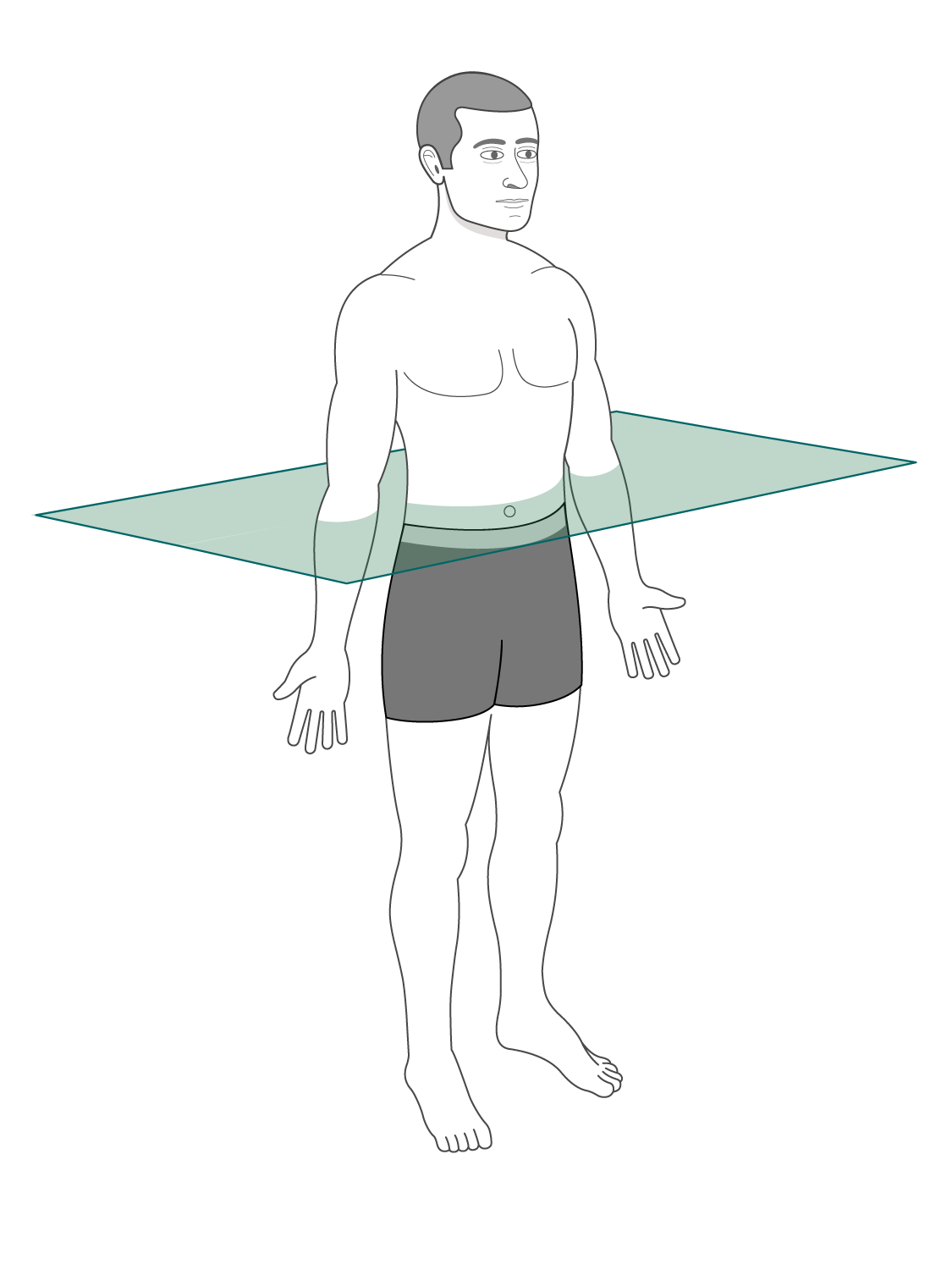
surfaces along which body or structures may be cut for anatomical study
sagittal plane
Divide the body left/right
Frontal (coronal) plane
Divides body front and back (posterior/ anterior)
Transverse (horizontal) plane
Dives top and bottom (superior/ inferior)
Body cavities
contain internal cavities and provide different degrees of protection of internal organs.
Dorsal body cavity
Cranial (brain), and vertebral (spinal cord)
Ventral body cavity
thoracic (Mediastinum, Pericardial, & Pleural)- heart and lungs
abdominal- GI organs
pelvic- urinary and reproductive organs
Homeostasis
a state of equilibrium, always readjusting as needed
maintained by contribution of all organs (esp. endocrine and nervous system)
maintained by positive and negative feedback mechanisms
Variables
factors that can change- vitals such as blood pressure, raspatory rate, temp., and blood glucose.
Receptor (sensor) (1 of three homeostatic controls)
monitors environment
responds to stimuli (skin)
control center: brain (2 of 3 homeostatic controls)
determines setpoint at which variable is maintained
receives input from receptor
determines appropriate response
Effector (3 of 3 homeostatic controls)
Receives output from control center
provides the means to respond
response either reduces stimuli (negative feedback) or enhances stimuli (positive feedback)
negative feedback mechanism
most used feed back mechanism used in body
response shuts off or reduces original stimulus
Examples of negative feedback mechanisms
regulation of body temp (nervous system)
regulation of blood glucose by insulin (endocrine system)
Positive feedback mechanism (TEST QUESTION)
response enhances or exaggerates the original stimulus
usually controls infrequent events that don’t require continuous adjustment
examples of positive feedback mechanisms (TEST QUESTION)
enhancement of labor contractions by oxytocin
platelet plug formation and blood clotting
Abdominal quadrants
quadrants are divisions used primarily but medical personnel.
Right upper quadrant (1 of 4 abdominal quadrants)
liver and gallbladder
Left upper quadrant (2 of 4 abdominal quadrants)
spleen, part of stomach
Right lower quadrant (3 of 4 abdominal quadrants)
intestines and appendix
Left lower quadrant (4 of 4 abdominal quadrants)
intestines, esp. terminal colon