5.1.1. communication and homeostasis
 Studied by 0 people
 Call Kai
 Learn
Learn Practice Test
 Spaced Repetition
 Match
Match Flashcards
 Knowt Play
1/105

There's no tags or description
Looks like no tags are added yet.
Name | Mastery | Learn | Test | Matching | Spaced |
|---|
No study sessions yet.
106 Terms
why is communication needed between cells in a multicellular organism
to coordinate all the individual cell functions for the survival and proper development of the entire organism
what does plant cell communication involve
short range, direct contact via plasmodesmata and long distance transport of hormones and other signalling molecules like RNA and peptides
what does animal cell communication involve
short range and long distance cell signalling
what is cell signalling
process by which cells communicate, one cell produces a signalling molecule that can be detected by another cell and induce a response
what is the method for communication systems
cell signalling
what is the structure for cell signalling to take place
signalling molecule binds to cell surface receptor with complementary binding site for signal molecule on a target cell, second messenger within the cell will enable the cellular response
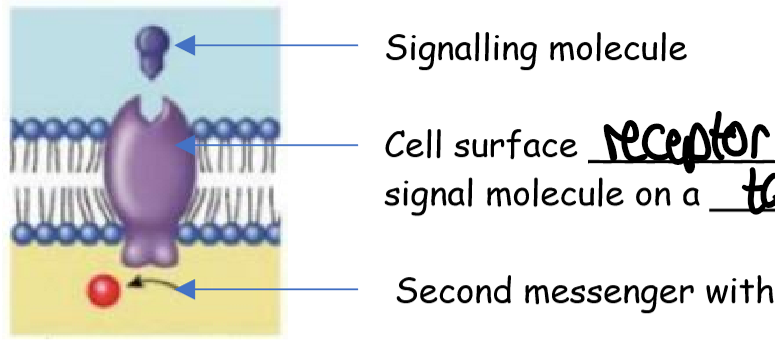
what are the forms of cell signalling in the body
endocrine, paracrine, autocrine, direct cell-cell signalling
what is endocrine cell signalling
signalling molecules called hormones are secreted into the bloodstream for distribution throughout the body, hormones reach all living cells in the body
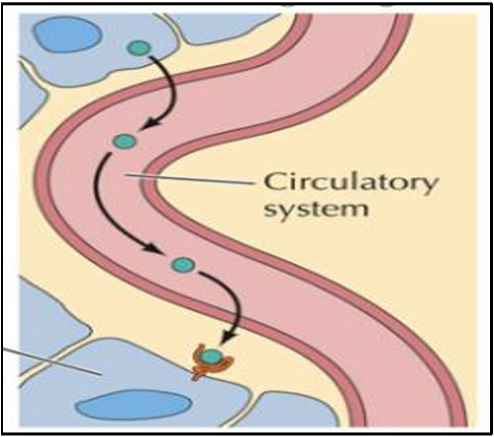
what is paracrine cell signalling
a secreting cell acts on nearby target cells by discharging signalling molecules into the extra-cellular fluid
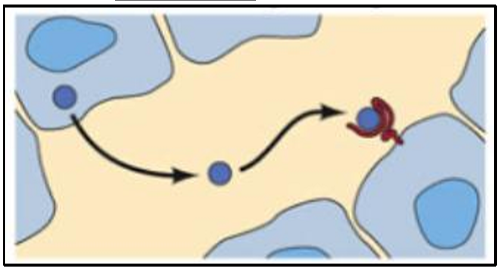
what are examples of paracrine cell signalling
growth factors that stimulate proliferation of local cells e.g. the effect of oestrogen on the developing ovarian follicle
nerve cell releases neurotransmitter into the synapse stimulating the target cell
muscle cells stimulated to contract by neural innervation
synapses connect nerve cells throughout the nervous system
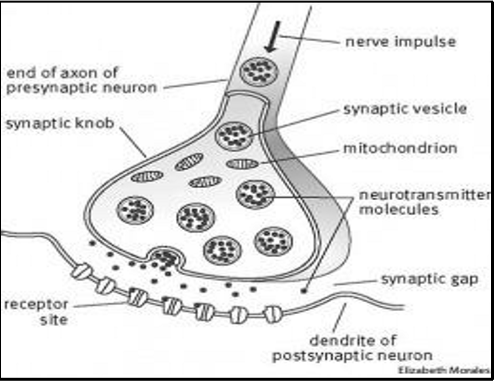
what is autocrine cell signalling
signalling molecule is released by the cell and binds to receptors on that same cell leading to changes in the cell
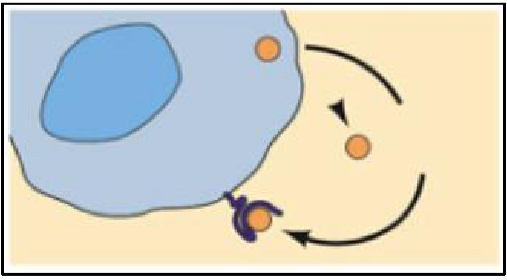
what are examples of autocrine cell signalling
T lymphocytes produce interleukins that stimulate their own cell division
cancer cells release chemicals that promote their own mitosis
what is direct cell-cell signalling
also called juxtacrine signalling, occurs by transferring signalling molecules across gap junctions between adjacent cells
what are examples of direct cell-cell signalling
plasmodesmata allows for communication between adjacent cells
early embryonic development depends on this type of signalling
what does homeostasis rely on
a continuous flow of information between different parts of the organism to regulate key physiological features
define homeostasis
maintaining a constant internal environment around a norm/set value despite external and internal changes
define negative feedback
a mechanisms that reverses a change in a variable bringing the level back to the norm/set value
define communication systems
systems which allow multicellular organisms to control and coordinate their bodies and respond to their environments, made up of the nervous system and the endocrine system
define autonomic nervous system
a branch of the nervous system that carries nerve impulses to muscles and glands, it controls involuntary activities and has two divisions: sympathetic and parasympathetic
define hypothalamus
region of the brain that serves as the control centre for the autonomic nervous system
what is the region of the brain that serves as the control centre for the autonomic nervous system
hypothalamus
define endocrine system
a system of glands that secrete hormones into the blood
define pituitary gland
small, hormone producing gland located at the base of the brain, known as the master gland
define receptor
specialised structure that detects a specific type of stimulus
define effector
an organ, tissue or cell that produces a response to a stimulus
define internal environment
the tissue fluid or extracellular fluid
what is the cell signalling molecules produced by endocrine glands
hormones
what is the physiological value around which the normal range fluctuates
norm/set value
what must be maintained constant in the internal environment
temperature, water, pH, blood glucose
why does temperature change in the internal environment
external value changes, physical activity, heat generation
why is it important to keep temperature regulated
optimum temp is required for enzyme activity
why does water potential change in the internal environment
intake of water, loss of water e.g. sweating
why is it important water is kept regulated in the internal environment
water potential maintained for metabolism, blood pressure, tissue formation
why does pH of the internal environment change
production of CO2/lactic acid
why is it important pH is regulated in the internal environment
optimum pH required for enzyme activity
why does blood glucose change
intake or usage of glucose
why is it important blood glucose is regulated
supply of respiratory substrate especially to the brain
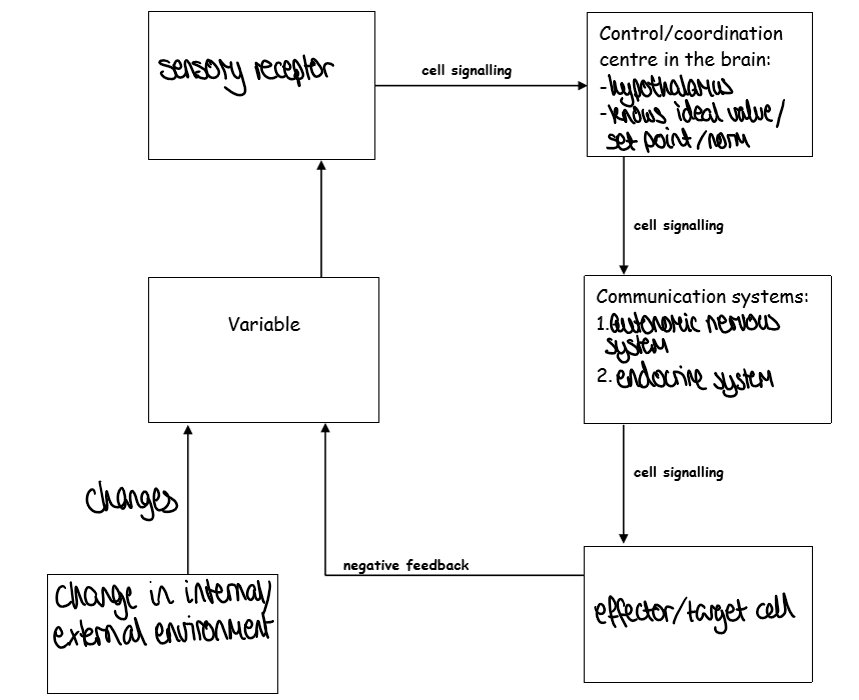
what is the principle process of a homeostatic control mechanism
change in internal/external environment → variable → sensory receptor → (cell signalling) control/coordination centre in the brain: hypothalamus, knows ideal value/norm → (cell signalling) communication systems: autonomic nervous system, endocrine system → (cell signalling) effector/target cell → (negative feedback) variable
what are the features of the endocrine system
collection of glands that produce hormones to control the functions of the body
effect is widespread
controls blood glucose levels, blood water potential, growth, production of gametes
composed of glands
signals are transmitted through the blood
signals take more time to reach the effector organ
whole system is not physically connected
uses hormones to transmit the signal to the effector
what are the features of the nervous system
network of nerve cells that coordinate the functions of the body by transmitting nerve impulses
effect is localised
controls muscle movement, heartbeat, digestion, breathing, speech, memory
composed of neurones that are arranged in the brain, spinal cord and peripheral nerves
signals are transmitted through neurones
signals are transmitted within a short period of time
whole system is physically connected
uses neurotransmitters to transmit the signals to the effector organs
what is positive feedback
change in a variable/internal environment is detected, effectors are stimulated to enhance the change and deviate it further from the norm
examples of necessary positive feedback loops in the body
uterine contraction and childbirth- oxytocin
suckling and let down of milk
nervous transmission
clotting mechanism
fever
examples of dangerous positive feedback loops
very high fever (hyperthermia)
carbon dioxide levels increasing in an airlock
severe blood loss
hypercytokinaemia
hypothermia
why does very high fever cause positive feedback
increased temp increases rate of collisions with enzymes, heat released
why does carbon dioxide levels increasing in an airlock cause positive feedback
loss of oxygen increases breathing rate
why does severe blood loss cause positive feedback
decreased blood volume decreases blood pressure, causes heart to pump more
why does hypercytokinaemia cause positive feedback
over production of cytokines destroys healthy cells, causes more cytokines to be released
define thermoregulation
the ability of an organism to keep its body temperature within certain boundaries even when surrounding temperature is very different
what are the mechanisms for thermoregulation
physiological mechanisms- homeostatic control, behavioural mechanisms- maximise or minimize heat transfer with the environment
what does heat transfer between the body of an organism and its environment depend on
magnitude and direction of the temperature gradient
what are the ways heat may be lost or gained
conduction, convection, radiation, evaporation, exothermic metabolic reactions
what is conduction
heat transfer by physical contact of adjacent particles
what is convection
heating or cooling by currents of air or water
what is radiation
heat transfer in the form of long-wave, infrared electromagnetic waves
what is evaporation
heat loss during the conversion of water to water vapour
what are the types of animals with relation to thermoregulation
endotherms, ectotherms
what are endotherms
animals that primarily generate their own heat
what are ectotherms
animals that primarily gain heat through their environments
what are the strategies animals have for thermoregulation
homeotherms, poikilotherms
what are homeotherms
animals that have a steady body temperature
what are poikilotherms
animals whose body temperature adjusts depending on the environment
what animals are endotherms and homeotherms
mostly birds and mammals
what animals are endotherms and poikilotherms
some birds and mammals- those that allow their body temps to vary during certain time periods, many insects and some invertebrates
what is torpor
like hibernation but temporary
what is the temporary version of hibernation
torpor
what animals are ectotherms and homeotherms
some tropical reptiles, organisms deep in the ocean
what animals are ectotherms and poikilotherms
most fish, amphibians, and reptiles, most invertebrates
what are the features of ectotherms
body temperature fluctuates with, although generally not as much as, the environment
need less food than endotherms to supply their metabolic needs
behavioural and physiological mechanisms important in limiting variation in body temp
found in a limited range of environments
what are the features of endotherms
body temp more or less constant and largely independent of the environment
need more food than ectotherms to supply their metabolic needs
physiological mechanisms important in maintaining body temp
found in an extremely wide range of environments
how do ectotherms maintain body temp
behavioural rather than physiological methods
what are the thermoregulation methods of ectotherms
reorientation
thermal gaping
colour changes
body raising
burrowing
bradycardia
what is reorientation
thermoregulation method for ectotherms, reorientation of the body with respect to solar radiation can vary the surface area exposed to heating, a terrestrial ectotherm may gain heat rapidly by aligning at right angles to the suns rays but as its body temperature rises it may reduce the exposed surface by reorientating itself parallel to the sun’s rays
what is thermal gaping
thermoregulation method for ectotherms, used by larger ectotherms e.g. alligators, open mouth allows heat loss by evaporation from moist mucous surfaces, tortoises spread saliva over neck and front legs to act as evaporative surface
what is colour changes thermoregulation method
method for ectotherms, colour changes of skin may alter ability of the body to absorb radiation heat energy, dark-bodied individual will absorb heat more rapidly than a light-bodied one, some ectotherms begin the day with a dark body to warm up and lighten as temp rises
what is body raising
thermoregulation method for ectotherms, minimize heat gains by conduction from hot surfaces such as rocks and sand, whole body may be lifted, reduce area of contact to absolute minimum by balancing on alternate diagonal pairs of feet
what is burrowing
thermoregulation method for ectotherms, avoids temperature fluctuations on the surface, temperature in a shallow burrow may fluctuate 5’ over 24 hrs whereas surface temperature may range over 40’, alligators or crocodiles may return to water rather than burrow due to high heat capacity of water means temp is relatively constant
what is the bradycardia thermoregulation technique
used by marine iguanas, when basking on rocks body temp is 37’, during feeding in the sea it’s exposed to environmental temp of 22-25’, to avoid losing heat rapidly by conduction and convection the iguana reduces flow of blood between core tissues and skin by decreasing heart rate- bradycardia
what are the endotherms mechanisms for thermoregulation
hairs raised
vasoconstriction/vasodilation
subcutaneous fat accumulation/reduction
brown fat thermogenesis
increased metabolic rate
shivering
sweating
behavioural mechanisms
countercurrent mechanism of blood in limbs
use of ears
what cell in the skin detects changes in environmental temperature
peripheral thermoreceptor
how does raising hairs help with thermoregulation
contraction of erector pili muscles controlled by sympathetic nervous system raises hairs almost vertically, in furry animals it traps a thick layer of stationary air next to the skin, air is a poor conductor so heat loss from skin is reduced, in birds feathers fluff up
what controls erector pili muscles
sympathetic nervous system
how does vasoconstriction thermoregulate
blood transports heat around the body in the circulatory system as it is warmed in organs so warms tissues at low temps, narrowing arterioles supplying skin capillaries and widening shunt vessels reduces heat flow to skin
what controls vasoconstriction/vasodilation
sympathetic nerves from vasomotor centre in the brain under commands from thermoregulatory centre in hypothalamus
what controls vasodilation
parasympathetic nervous system controlled by hypothalamus
how does subcutaneous fat accumulation help with thermoregulation
mammals store fat in adipose tissue below skin surface, tissue has limited blood supply and poor conductor, aquatic mammals have thick layer of fat (blubber) under skin, animals that remain active through cooler season accumulate fat as a survival mechanism and food reserve
what are the types of adipose tissue
white and brown
how does brown fat thermogenesis help with thermoregulation
brown fat cells contain many mitochondria, well supplied with blood capillaries, occurs under skin of upper back especially in young mammals, produces considerable amounts of heat as lipids are respired with little ATP formation- most energy released as heat, heat is transported in blood to body’s organs
what triggers thermogenesis in brown fat
sympathetic nervous system
how does shivering help thermoregulation
muscle contractions generate heat
what does prolonged vasoconstriction cause
necrosis of tissues
how does increased metabolic rate help thermoregulation
under persistent cooler conditions basal metabolic rate is raised, increasing amount of heat generated by the body
what causes metabolic rate to be raised in cooler conditions
short term by secretion of adrenaline, longer term by secretion of thyroxine
what does secretion of adrenaline do for thermoregulation
short term increase in basal metabolic rate
what does secretion of thyroxine do
long term increase in basal metabolic rate
what behavioural mechanisms do endotherms have to increase temperature
moving to a warmer place e.g. in the sun, huddling, putting on clothes
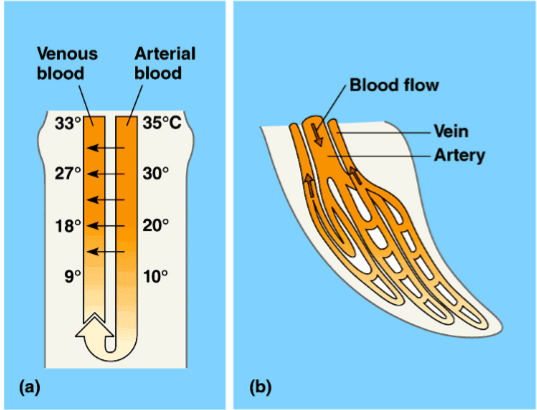
how does countercurrent mechanism of blood in limbs of endotherms in cold environments help with thermoregulation
artery and vein in close proximity, some heat lost from arterial blood coming from trunk transfers to the vein coming away from extremities by conduction, raises temperature of the venous blood as it re-enters trunk
how does sweating help with thermoregulation
water has high latent heat of vaporisation due to hydrogen bonds, takes lot of energy to change state from liquid to vapour, evaporation from surface of skin removes heat energy from skin lowering its temperature
how does the use of ears help with thermoregulation
ears are radiators of heat, elephants fan themselves, increase blood flow, skin on outer ear for heat loss
what are the behavioural mechanisms to reduce temperature in endotherms
moving into the shade, decreasing physical activity to lower metabolic rate, keeping away from other warm animals, panting, wear fewer clothes, having lots of sweat glands
what regulates thermoregulation
hypothalamus