APWM Unit 5 - Revolutions - 1750-1900
 Call Kai
 Learn
Learn Practice Test
 Spaced Repetition
 Match
Match Flashcards
1/54

There's no tags or description
Looks like no tags are added yet.
Name | Mastery | Learn | Test | Matching | Spaced | Call with Kai | Chat |
|---|
No analytics yet
Send a link to your students to track their progress
55 Terms
abolitionist movement
An international movement that between approximately 1780 and 1890 succeeded in condemning slavery as morally repugnant and abolishing it in much of the world; the movement was especially prominent in Britain and the United
States.
creoles
Native-born elites in the Spanish colonies.
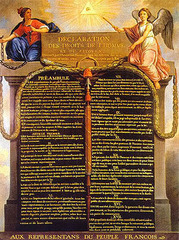
Declaration of the Rights of Man and Citizen
Document drawn up by the French National Assembly in 1789 that proclaimed the equal rights of all men; the declaration
ideologically launched the French Revolution.
Declaration of the Rights of Woman
Short work written by the French feminist Olympe de Gouges in 1791 that was modeled on the Declaration of the Rights of Man and Citizen and that made the argument that the equality proclaimed by the French revolutionaries must also include women.
Estates General
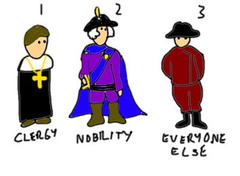
French representative assembly called into session by Louis XVI to address pressing problems and out of which the French Revolution emerged; the three estates were the clergy, the nobility, and the commoners.
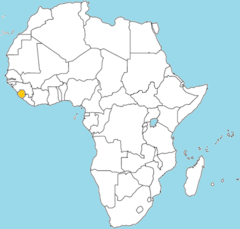
Freetown
West African settlement in what is now Sierra Leone at which British naval commanders freed Africans they rescued from illegal slave ships.
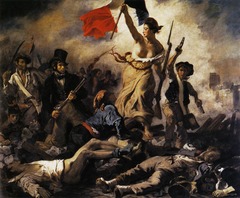
French Revolution
Massive dislocation of French society (1789-1815) that overthrew the monarchy, destroyed most of the French aristocracy, and launched radical reforms of society that were lost again, though only in part, under Napoleon's imperial rule and after the restoration of the monarchy.
gens de couleur libres
Literally, "free people of color"; term used to describe freed slaves and people of mixed racial background in Saint Domingue on the eve of the Haitian Revolution.
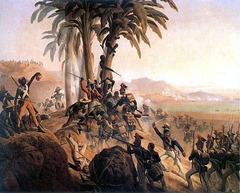
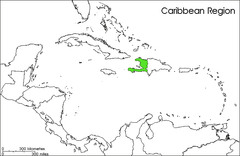
Haiti
Name that revolutionaries gave to the former French colony of Saint Domingue; the term means "mountainous" or "rugged" in the Taino language.
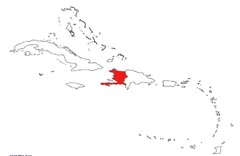
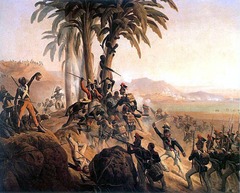
Haitian Revolution
The only fully successful slave rebellion in world history; the uprising in the French Caribbean colony of Saint Domingue (later renamed Haiti) was sparked by the French Revolution and led to the establishment of an independent state after a long and bloody war (1791-1804).
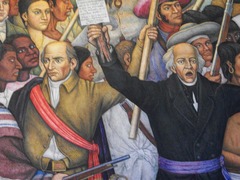
Hidalgo-Morelos rebellion
Socially radical peasant insurrection that began in Mexico in 1810 and that was led by the priests Miguel Hidalgo and José Morelos.
Latin American revolutions
Series of risings in the Spanish colonies of Latin America (1810-1826) that established the independence of new states from Spanish rule but that for the most part retained the privileges of the elites despite efforts at more radical social
rebellion by the lower classes.
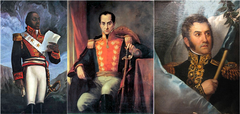
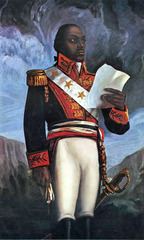
Louverture, Toussaint
First leader of the Haitian Revolution, a former slave (1743-1803) who wrote the first constitution of Haiti and served as the first governor of the newly independent state.
maternal feminism
Movement that claimed that women have value in society not because of an abstract notion of equality but because women have a distinctive and vital role as mothers; proponents argued that women have the right to intervene in civil and
political life because of their duty to watch over the future of their children.
Napoleon Bonaparte
French head of state from 1799 until his abdication in 1814 (and again briefly in 1815); Napoleon preserved much of the French Revolution under an autocratic system and was responsible for the spread of revolutionary ideals through his conquest of much of Europe.
nationalism
The focusing of citizens' loyalty on the notion that they are part of a "nation" with a unique culture, territory, and destiny; first became a prominent element of political culture in the nineteenth century.
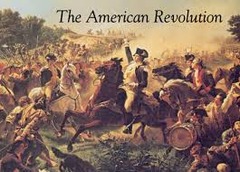
North American Revolution
Successful rebellion conducted by the colonists of parts of North America (not Canada) against British rule (1775-1787); a conservative revolution whose success assured property rights but established republican government in place of
monarchy.
petit blancs
The "little" (or poor) white population of Saint Domingue, which played a significant role in the Haitian Revolution.
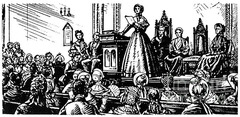
Seneca Falls Conference
The first organized women's rights conference, which took place at Seneca Falls, New York, in 1848.
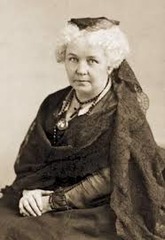
Stanton, Elizabeth Cady
Leading figure of the early women's rights movement in the
United States (1815-1902).
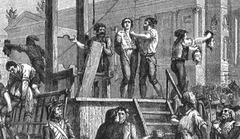
The Terror
Term used to describe the revolutionary violence in France in 1793-1794, when radicals under the leadership of Maximilien Robespierre executed tens of thousands of people deemed enemies of the revolution.
Third Estate
In prerevolutionary France, the term used for the 98 percent of the population that was neither clerical nor noble, and for their representatives at the Estates General; in 1789, the Third Estate declared itself a National Assembly and launched the
French Revolution.
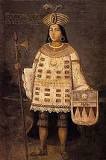
Tupac Amaru
The last Inca emperor; in the 1780s, a Native American rebellion against Spanish control of Peru took place in his name.
bourgeoisie
Term that Karl Marx used to describe the owners of industrial capital; originally meant "townspeople."
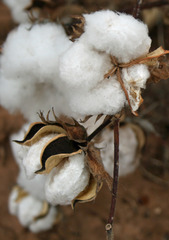
Indian cotton textiles
For much of the eighteenth century, well-made and inexpensive cotton textiles from India flooded Western markets; the competition stimulated the British textile industry to industrialize, which led to the eventual destruction of the Indian textile market both in Europe and in India.
Labour Party
British working-class political party established in the 1890s and dedicated to reforms and a peaceful transition to socialism, in time providing a viable alternative to the revolutionary emphasis of Marxism.
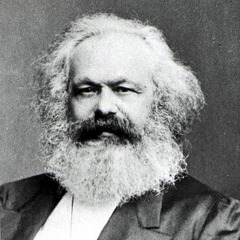
Marx, Karl
The most influential proponent of socialism, Marx (1818-1883) was a German expatriate in England who advocated working-class revolution as the key to creating an ideal communist future.
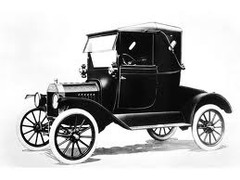
Model T
The first automobile affordable enough for a mass market; produced by American industrialist Henry Ford.
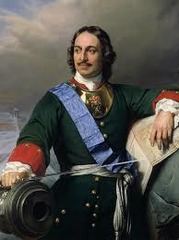
Peter the Great
Tsar of Russia (r. 1689-1725) who attempted a massive reform of Russian society in an effort to catch up with the states of Western Europe.
Populism
Late-nineteenth-century American political movement that denounced corporate interests of all kinds.
progressivism
American political movement in the period around 1900 that advocated reform measures to correct the ills of industrialization.
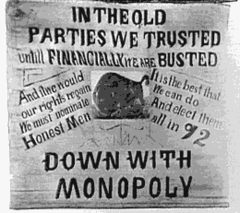
proletariat
Term that Karl Marx used to describe the industrial working class; originally used in ancient Rome to describe
the poorest part of the urban population.
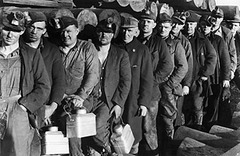
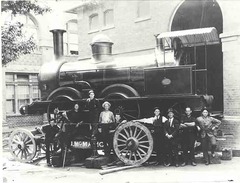
steam engine
Mechanical device in which the steam from heated water builds up pressure to drive a piston, rather than
relying on human or animal muscle power; the introduction of the steam engine allowed a hitherto unimagined increase in productivity and made the Industrial Revolution possible.
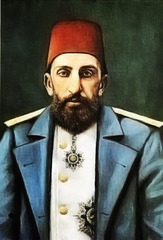
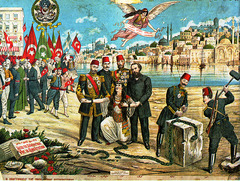
Abd al-Hamid II
Ottoman sultan (r. 1876-1909) who accepted a reform constitution but then quickly suppressed it, ruling as a reactionary autocrat for the rest of his long reign.
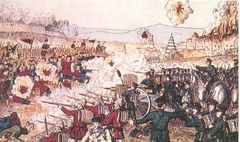
Boxer Rebellion
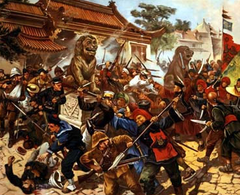
Rising of Chinese militia organizations in 1900 in which large numbers of Europeans and Chinese Christians were killed.
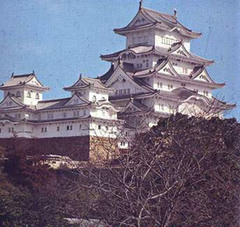
daimyo
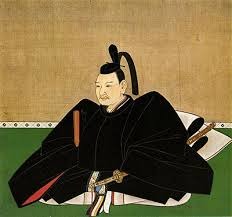
Feudal lords of Japan who retained substantial autonomy under the Tokugawa shogunate and only lost their social preeminence in the Meiji restoration.
Hong Xiuquan
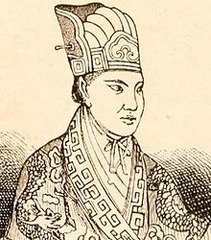
Chinese religious leader (1814-1864) who sparked the Taiping Uprising and won millions to his unique form of Christianity, according to which he himself was the younger brother of Jesus, sent to establish a "heavenly kingdom of great peace" on earth.
informal empire
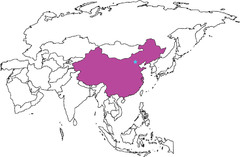
Term commonly used to describe areas that were dominated by Western powers in the nineteenth century but that retained their own governments and a measure of independence, e.g., Latin America and China.
Meiji restoration
The overthrow of the Tokugawa shogunate of Japan in 1868, restoring power at long last to the emperor Meiji.
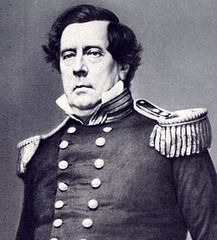
Perry, Matthew
U.S. navy commodore who in 1853 presented the ultimatum that led Japan to open itself to more normal relations with the outside world.
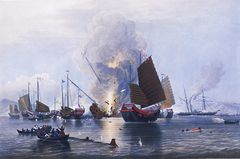
Opium Wars
Two wars fought between Western powers and China (1839-1842 and 1856-1858) after China tried to restrict the importation of foreign goods, especially opium; China lost both wars and was forced to make major concessions.
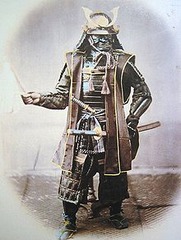
samurai
Armed retainers of the Japanese feudal lords, famed for their martial skills and loyalty; in the Tokugawa shogunate, the samurai gradually became an administrative elite, but they did not lose their special privileges until the Meiji restoration.
self-strengthening movement
China's program of internal reform in the 1860s and 1870s, based on vigorous application of Confucian principles and limited borrowing from the West.
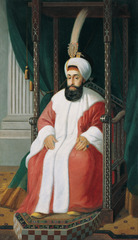
Selim III
Ottoman sultan (r. 1789-1807) who attempted significant reforms of his empire, including the implementation of new military and administrative structures.
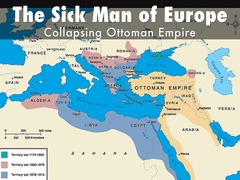
"sick man of Europe, the"
Western Europe's unkind nickname for the Ottoman Empire in the nineteenth and early twentieth centuries, a name based on the sultans' inability to prevent Western takeover of many regions and to deal with internal problems; it fails to recognize serious reform efforts in the Ottoman state during this period.
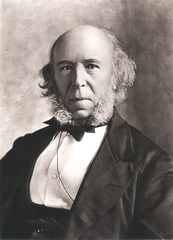
Social Darwinism
An application of the concept of "survival of the fittest" to human history in the nineteenth century. (NOT from Darwin - its from Herbert Spencer).
Taiping Uprising
Massive Chinese rebellion that devastated much of the country between 1850 and 1864; it was based on the millenarian teachings of Hong Xiuquan.
Tanzimat reforms
Important reform measures undertaken in the Ottoman Empire beginning in 1839; the term "Tanzimat" means "reorgani-zation."
Tokugawa shogunate
Rulers of Japan from 1600 to 1868.
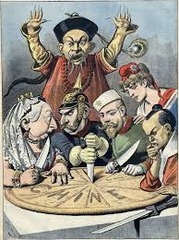
Unequal treaties
Series of nineteenth-century treaties in which China made major concessions to Western powers.
Young Ottomans
Group of would-be reformers in the mid-nineteenth-century Ottoman Empire that included lower-level officials, military officers, and writers; they urged the extension of Westernizing reforms to the political system.
Young Turks
Movement of Turkish military and civilian elites that developed ca. 1900, eventually bringing down the Ottoman Empire.
cash-crop agriculture
Agricultural production, often on a large scale, of crops for sale in the market, rather than for consumption by the farmers themselves.
cultivation system
System of forced labor used in the Netherlands East Indies in the nineteenth century; peasants were required to cultivate at least 20 percent of their land in cash crops, such as sugar or coffee, for sale at low and fixed prices to government contractors, who then earned enormous profits from further sale of the crops.
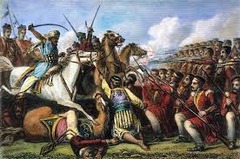
Indian Rebellion, 1857-1858
Massive uprising of much of India against British rule; also called the Indian Mutiny or the Sepoy Mutiny from the fact that the rebellion first broke out among Indian troops in British employ.