BLOCK 1 lecture 1
 Call Kai
 Learn
Learn Practice Test
 Spaced Repetition
 Match
Match Flashcards
 Knowt Play
1/10

There's no tags or description
Looks like no tags are added yet.
Name | Mastery | Learn | Test | Matching | Spaced | Call with Kai | Chat |
|---|
No analytics yet
Send a link to your students to track their progress
11 Terms
ATP and energy balance
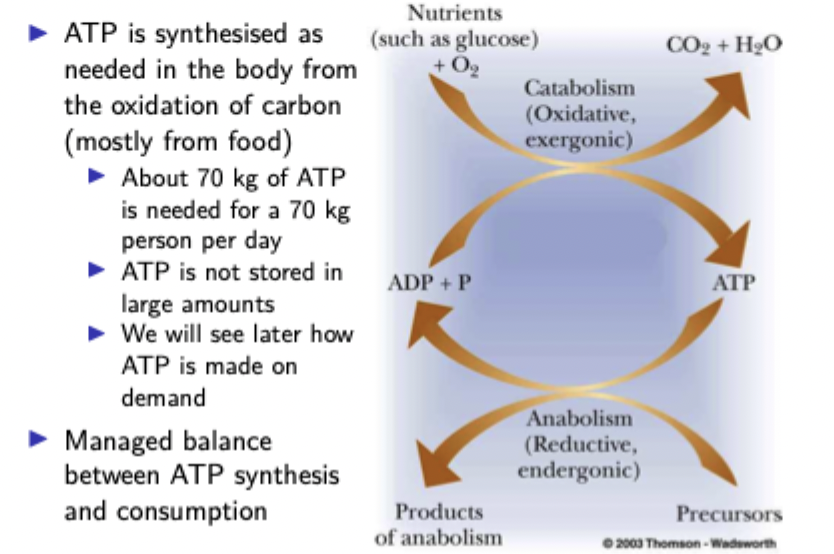
Most of your energy output is unrelated to the amount of exercise you are doing
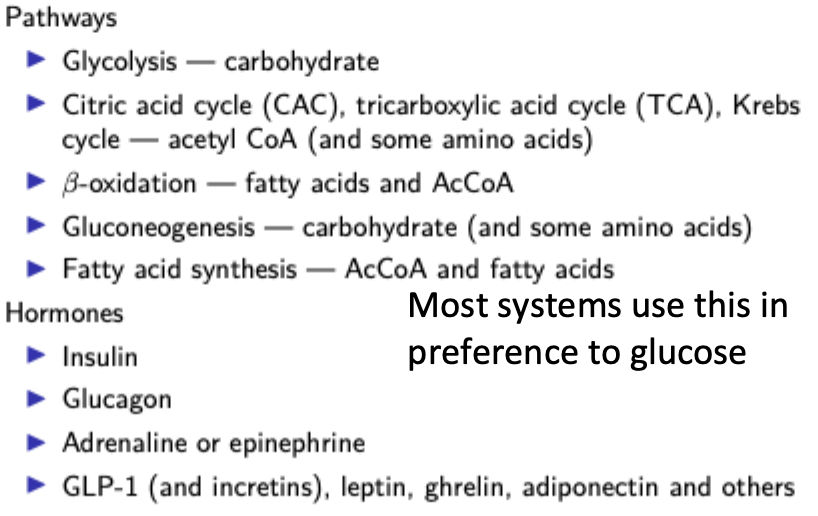
major metabolic pathways and hormones
overview of glycolysis
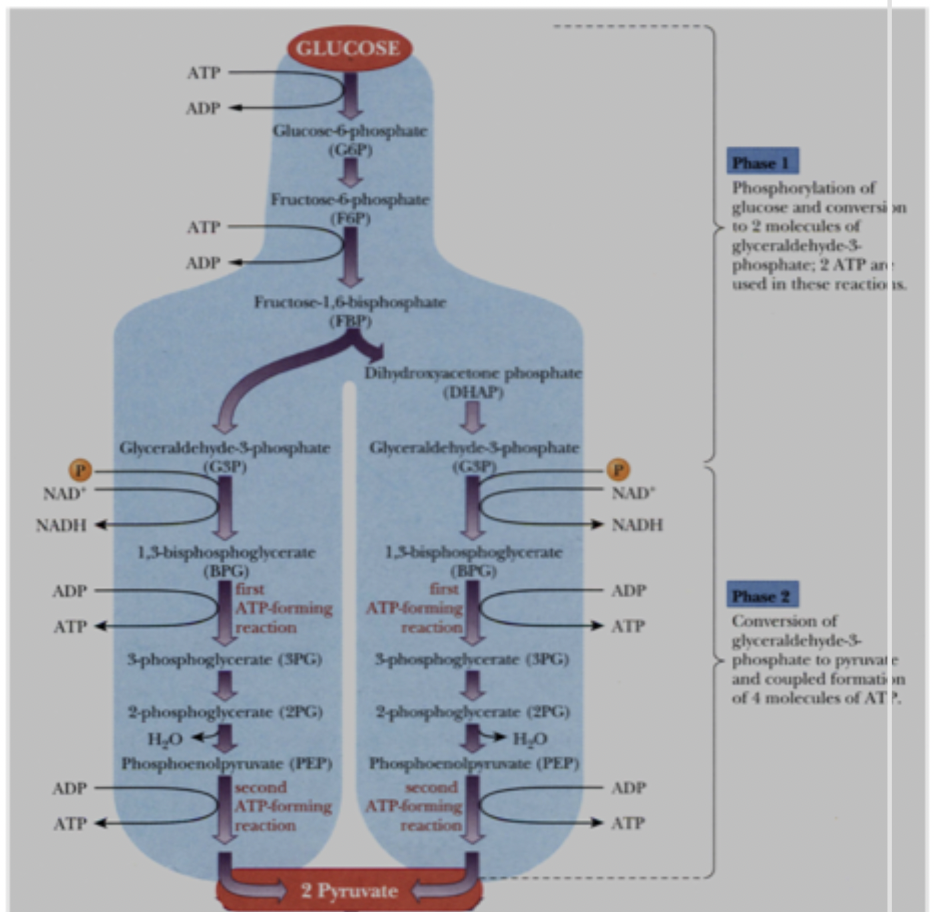
Glucose-6-phospate is widely considered to be the start of glycolysis because glucose is usually phosphorylated when it enters the cell
Helps compartmentalise the glucose so it cant move into and out of cells
Glycolysis = transformation to pyruvate
Anaerobic - does not require oxygen
Produces some ATP, some NADH and consumes some ATP
Consume 2 ATP and produce 4 so net production of 2 ATP
But also produce 2 NADH at the same time
overview of the CAC
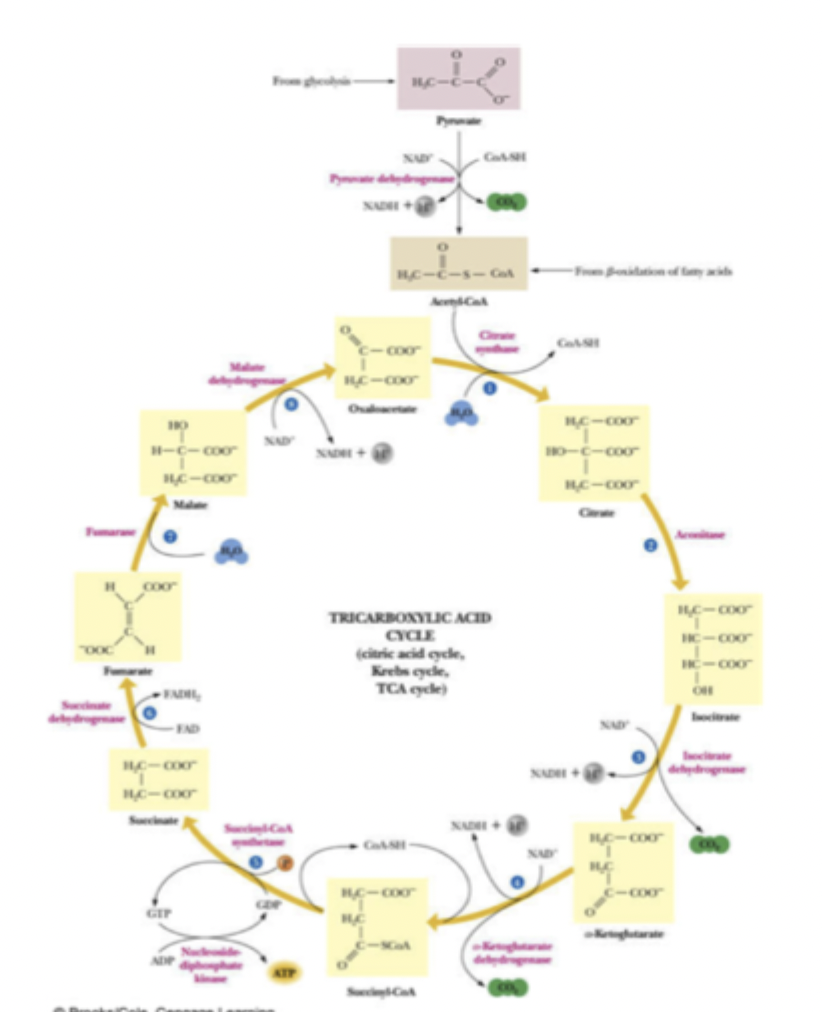
This is also a non-aerobic process as it does not directly require oxygen itself
Pyruvate (cytosol) to acetyl coA (mitochondria)
Produces more NADH and CO2
Acetyl CoA can also come from lots of other sources
Can be used to make fatty acids or ketone bodies or can be oxidised
It is a process of oxidation (CAC) although does not involve oxygen itself:
Acetyl CoA is fused with oxyloacetate to make citrate which then goes through a number of changes
Rearrangements
Addition of water across double bonds
Produces CO2
Production of reducing equivalents
FADH
More substrate level phosphorylation (GDP->GTP in humans)
And end up with the same thing that we started with - oxyloacetate
Circular nature is important because you cannot have a branchign system in which the intermediates are also used for other purposes as you see in linear pathways - reducing intermediates reduces efficacy
proton pumping in the ETC
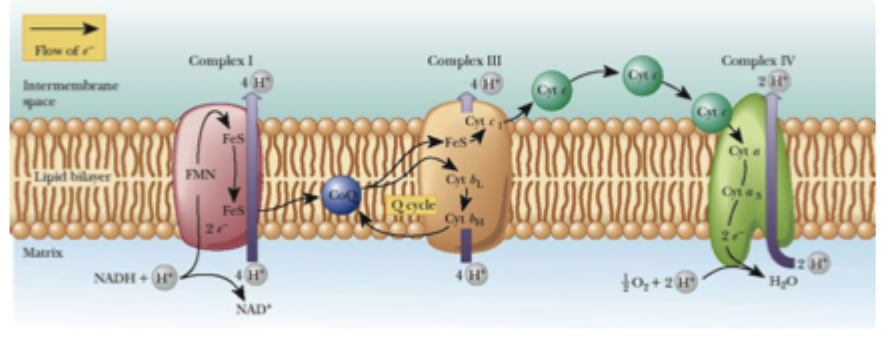
Proton gradients are fundamental to the way the mitochondria works and therefore are fundamental to the aerobic metabolism
Note that glycolysis and CAC don’t use oxygen itself but produce reducing equivalents
Limited supply
Most goes into proton pumping in the electron transport chain
CO2 from CAC and pyruvate dehydrogenase
Water is made in this procress
Electron flow through complexes is associated with the flow of protons from the matrix into the membrane space - ATP produced through ATP synthase when this happens
coupling of ATP synthesis and oxygen consumption
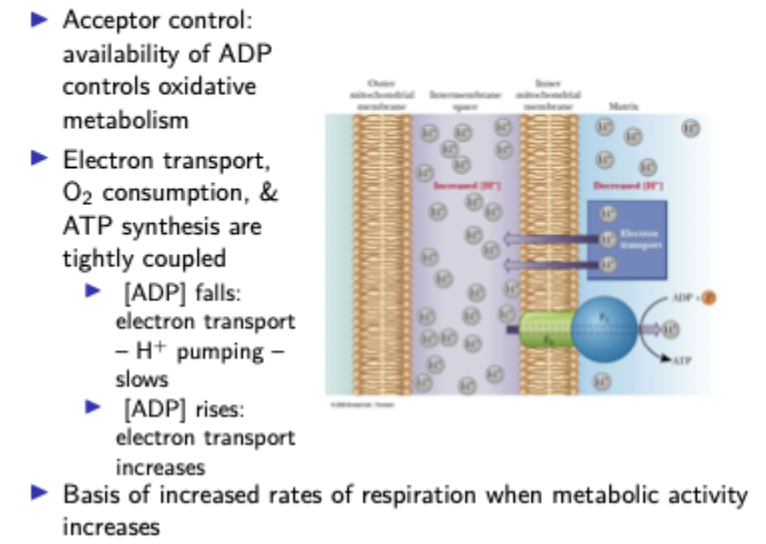
ADP has to be bound for this enzyme to work
Alows formation of ATP
Protons flow through the rotor
Process is linked back to ADP
Decrease in proton motor force stimulates ETC to transport more protons because the ETC is sensitive to proton motor force
It can also slow down when there is a large gradient/force
Converting more NADH to NAD also stimulates the CAC
mitochondrial uncouplers
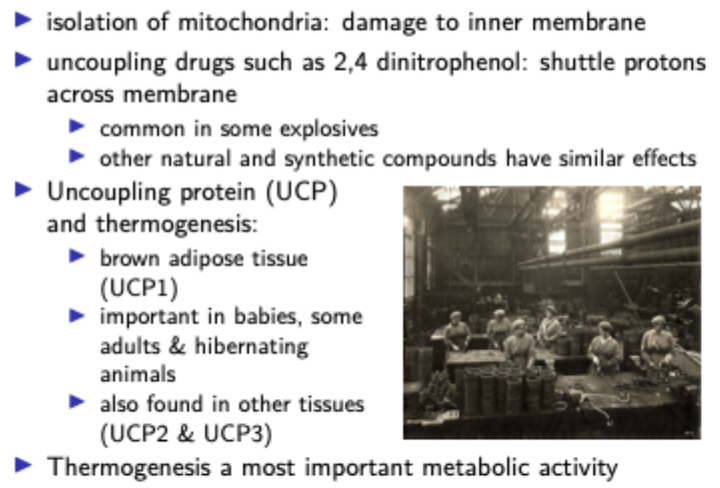
Most of our energy is used to maintain our body temperature
Uses uncoupling
Women making explosives would get hyperthermia because of the uncouplers in these
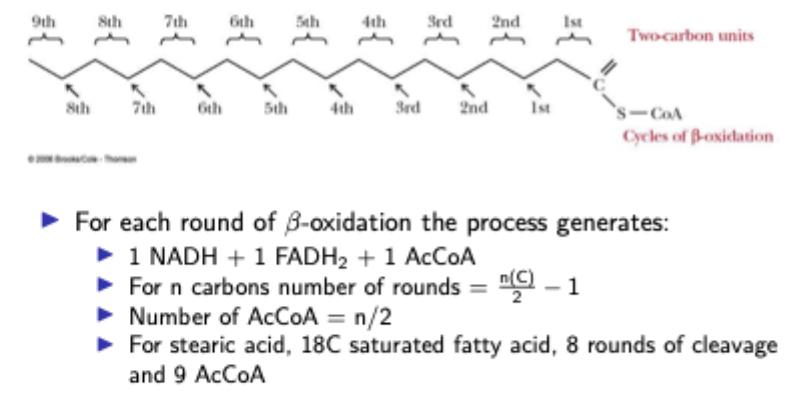
beta-oxidation
semi-cyclic pathway
Removing 2 carbons at a time from a fatty acyl coA molecule
Each time the cycle goes rounf is produces an acetyl Coa and shorten the fatty acid
Also involves NADH
Final step get to a 4 carbon fatty acid and generate 2 acetyl coA
16 carbon molecule requires 7 turns of this pathway (because last step produces 2)
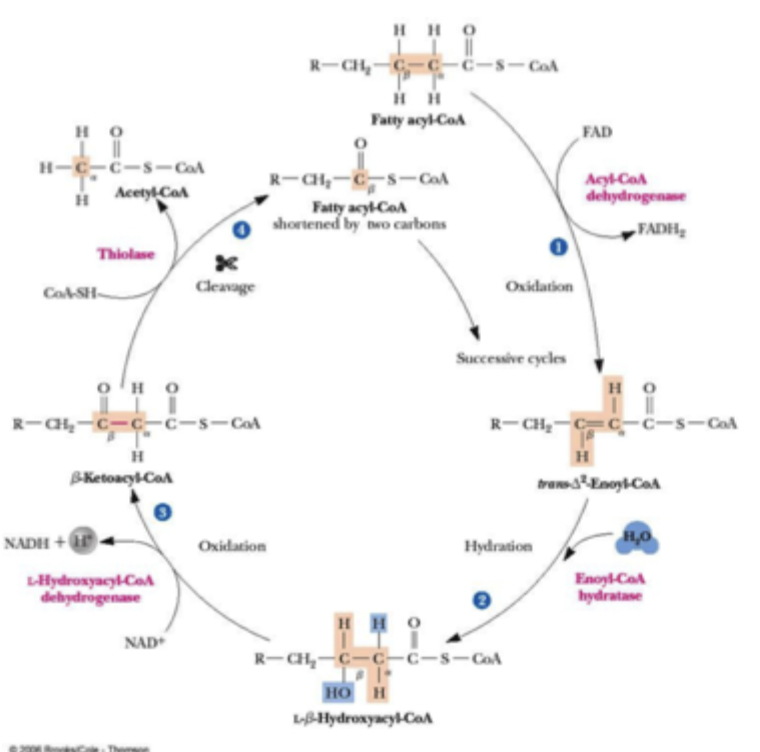
beta-oxidation overall reactions
amino acids as fuels
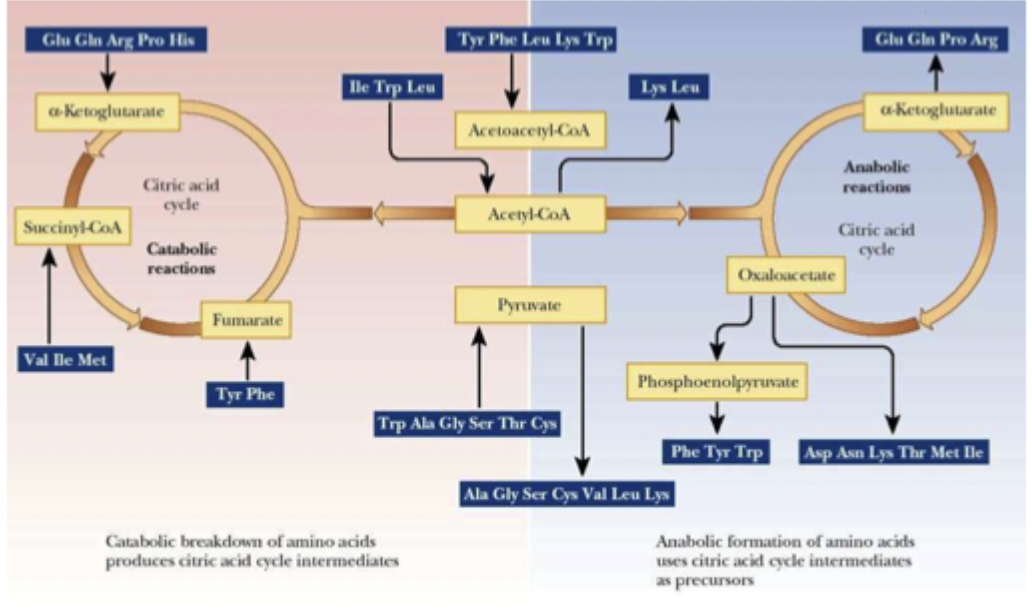
Amino acids are eventually broken down and will be converted into either acetyl coA or pyruvate
Each group of amino acids has its own degradation pathway
And some can make multiple - go through multiple steps and pathways
what can be done with pyruvate
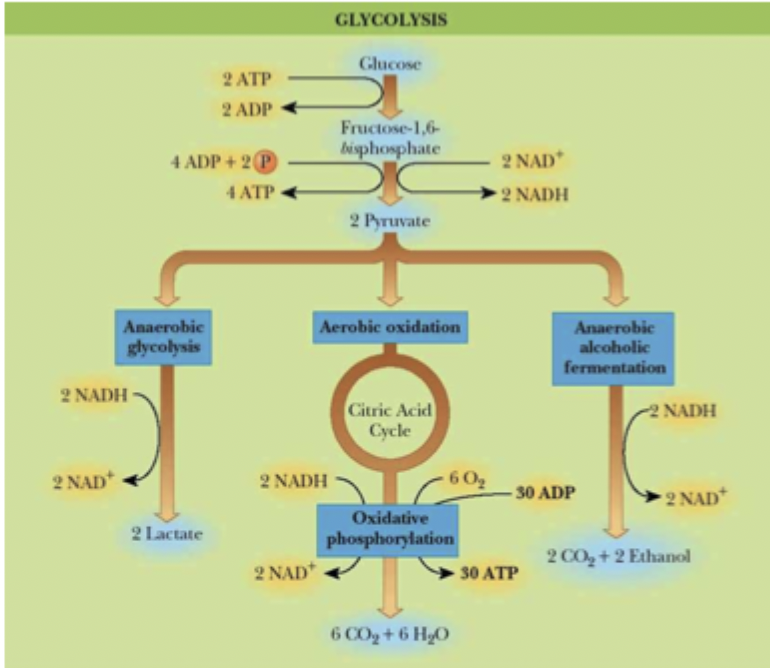
Can use the pentose phosphate pathways which is similar to glyolysis but do it in places like red blood cells which don’t have any mitochondria
Also when exercise means needs are too high for aerobic metabolism
Prodiuces lactate
Anaerobic organisms also use this
Also used in yeast to make ethanol and carbon dioxide (anaerobically)
Alcohol and bread