Cardiovascular System (Old)
 Call Kai
 Learn
Learn Practice Test
 Spaced Repetition
 Match
Match Flashcards
 Knowt Play
1/138

There's no tags or description
Looks like no tags are added yet.
Name | Mastery | Learn | Test | Matching | Spaced | Call with Kai | Chat |
|---|
No analytics yet
Send a link to your students to track their progress
139 Terms
What is the cardiovascular system?
The system which moves oxygen, nutrients and hormones to one’s body cells to use for energy, growth and repair.
Is the human heart a muscle?
Yes it is.
How often does the human heart beat?
100,000 times a day.
How many times will a human heart contract in a lifetime?
2.5 million times.
How much does the average heart weigh?
289 grams for males and 284 grams for females.
What is the primary role of the cardiovascular system?
To provide essential nutrients, minerals, and hormones to one’s body cells.
What is the cardiovascular system made up of?
It is made up of arteries, veins, and capillaries. The heart pumps blood through them.
What are all 5 functions of the cardiovascular system?
Delivers O2 and nutrients to the organs and cells.
Removes wastes and CO2.
Maintains homeostasis (Specifically the body temperature)
Fights disease
Transports hormone
What happens during exercise?
The blood flow is redistributed to the working muscles. 80-90% of total cardiac output is directed to working muscles.
What do arteries do?
They open up (vasodilate) and constrict (vasoconstriction) to allow less or more blood flow.
What is it called when arteries open up?
Vasodilate
What is it called when arteries constrict?
Vasoconstriction
What is the definition of vasodilate?
The opening of arteries to decrease blood pressure and increase blood flow.
What is vasoconstriction?
The constriction of arteries to increase blood pressure and decrease blood flow.
What gets blood flow the most during rest?
Organs such as the brain, kidneys, liver and heart.
What gets blood flow the most during exercise?
Working muscles.
What is hypothermia?
A potentially dangerous drop in temperature below 35*C. It is usually caused by prolonged exposure to cold temperatures.
What happens to the skin if the body’s temperature becomes too cold?
Blood flow to the skin would be restricted to decrease heat loss. The skeletal muscles will also contract (shiver) to generate heat.
What is hyperthermia?
The elevated body temperature above 38*C due to failed thermoregulation that occurs when the body produces or absorbs more heat than it can dissipate.
What is the difference between hypothermia and hyperthermia?
Hypothermia is cold body temperature while hyperthermia is hot body temperature.
What happens to the skin if the body’s temperature becomes too hot?
The blood flow will be directed to the skin to lose heat. Sweat glands will also increase secretion to sweat.
What happens if the body loses too much fluids by sweating?
The body will stop sending blood to the skin to prevent any further fluid loss, but that will result in an increase in core temperature.
What is thermoregulation?
How to the body manages the internal body temperature.
What are the white blood cells?
Blood cells which are responsible for protecting the body against parasites, bacteria and viruses.
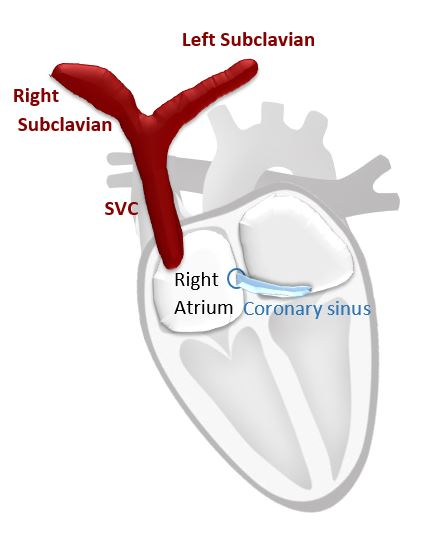
What is highlighted in red?
The superior vena cava.
Where are the superior vena cava and inferior vena cava located?
On the right side of the heart.
Where are the atriums located?
At the top.
Where are the ventricles located?
At the bottom
Where is the artery located?
On the left side of the heart.
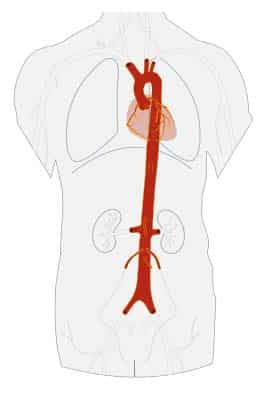
What is this?
The aorta
What is the size of the heart?
About the size of a fist.
What does the heart do?
The muscular pump in the heart contracts continuously to push blood around the body through blood vessels.
What is the heart protected by?
The heart is protected by the ribs, sternum and vertebral column.
What is the pericardium?
The thin, fluid-filled sac that surrounds the heart.
What is the superior vena cava?
A large vein responsible for returning deoxygenated blood collected from the upper body to the right atrium.
What is the inferior vena cava?
The large vein that returns blood from the legs and abdomen to the heart.
What are the atriums?
One of the two chambers of the heart which are the receiving stations of the heart.
What does the right atrium receive?
Oxygen-poor blood from the two largest veins in the body, the superior and inferior vena cava.
What does the left atrium receive?
Oxygenated blood from the pulmonary veins.
What are ventricles?
One of the two chambers that are the bottom of the heart which collects and pumps out blood.
What does the left ventricle pump out and where?
Oxygen-rich blood to the rest of the body
What does the right ventricle pump out and where?
Poor-oxygen blood to the lungs.
What is the right part of the heart responsible for?
Pumping poor-oxygen blood to the lungs.
What is the left part of the heart responsible for?
Pumping oxygen-rich blood to the rest of the body.
What is a valve?
Flaps which prevent backward flow of the blood. They can open and close.
Where is the tricuspid valve located?
On the right side of the heart, separating the right atrium and the right ventricle.
Where is the mitral valve located?
On the left side of the heart, seperating the left atrium and the left ventricle.
Where is the pulmonic valve located?
Between the right ventricle and the pulmonary artery.
Where is the aortic valve located?
Between the left ventricle and the aorta
How many valves are there?
4
What is an artery?
A muscular blood vessel which carries oxygen-rich blood back to the body.
Where is the pulmonary artery located?
On the top left of the heart above the pulmonary vein.
Where is the pulmonary veins located?
On the top left of the heart below the pulmonary artery.
What is the aorta?
The aorta is the main artery that carries blood away from your heart to the rest of your body.
What does the pulmonary artery do?
The pulmonary artery carries blood from the heart to the lungs.
What does the pulmonary vein do?
The pulmonary vein carries oxygenated blood to the left atrium.
Where do the arteries carry the blood?
Away from the heart
Where do the veins carry the blood?
To the heart
What is the path of deoxygenated blood?
It enters the right atrium through the superior vena cava from the body. Then the deoxygenated blood enters the right ventricle through the tricuspid valve. Then the deoxygenated blood enters the pulmonary artery through the pulmonic valve to the lungs.
In a nutshell:
Body
Superior Vena Cava
Right Atrium
Tricuspid Valve
Right Ventricle
Pulmonic Valve
Pulmonary Artery
Lungs
What is the path of oxygenated blood?
It enters the left atrium through the pulmonary veins from the lungs. Then the oxygenated blood enters the left ventricle through the mitral valve. Then the oxygenated blood enters the aorta through the aortic valve to the rest of the body.
In a nutshell:
Lungs
Pulmonary Veins
Left Atrium
Mitral Valve
Left Ventricle
Aortic Valve
Aorta
Body
What happens in the lungs?
Carbon dioxide is expelled and the blood is oxygenated.
What happens do the blood pressure in the blood vessels?
It increases and decreases.
What is systolic blood pressure?
Blood is pumped into the system from the heart.
What is diastolic blood pressure?
Heart is relaxing and filling with blood.
What is it called when the blood is pumped into the system from the heart? (It’s a type of blood pressure)
Systolic blood pressure
What is it called when the heart relaxes and fills with blood? (It’s a type of blood pressure)
Diastolic blood pressure
What are the 4 stages to each heartbeat?
Stage 1 - Atrial diastole
Stage 2 - Ventricular diastole
Stage 3 - Atrial systole
Stage 4 - Ventricular systole
What does atrial refer to?
Atrium
What does ventricular refer to?
Ventricle
What happens during atrial diastole?
The atria fill with blood returning from the body and the lungs. Blood returning from the body enters through the vena cava into the right atrium; blood from the lungs returns through the pulmonary vein into the left atrium. At this time, the heart valve remains shut.
The atria fill with blood returning from the body and the lungs. Blood returning from the body enters through the vena cava into the right atrium; blood from the lungs returns through the pulmonary vein into the left atrium. What stage is this?
Atrial diastole
What is the 1st stage to a heartbeat?
Atrial diastole
What is the 2nd stage to a heartbeat?
Ventricular diastole
What is the 3rd stage to a heartbeat?
Atrial systole
What is the 4th stage to a heartbeat?
Ventricular systole
What stage is atrial diastole?
Stage 1
What stage is ventricular diastole?
Stage 2
What stage is atrial systole?
Stage 3
What stage is ventricular systole?
Stage 4
What happens during ventricular diastole?
The pressure build-up in the atria causes the bicuspid valve and mitral valves to open; this allows blood to flow into the ventricles. The valves then close to prevent any backflow of blood.
The pressure build-up in the atria causes the bicuspid valve and mitral valves to open; this allows blood to flow into the ventricles. The valves then close to prevent any backflow of blood. What stage of a heart beat is this?
Ventricular diastole.
What happens during atrial systole?
The atria contract and blood is forced into the ventricles and pressure in the ventricles increases to become greater than the aorta and pulmonary artery.
The atria contract and blood is forced into the ventricles and pressure in the ventricles increases to become greater than the aorta and pulmonary artery. What stage of a heartbeat is this?
Atrial systole
What happens during ventricular systole?
The pulmonary valve and aortic valve at the top of the heart both open and the ventricle contracts, forcing blood through the aorta and to the rest of the body, or into the pulmonary artery to go to the lungs.
The pulmonary valve and aortic valve at the top of the heart both open and the ventricle contracts, forcing blood through the aorta and to the rest of the body, or into the pulmonary artery to go to the lungs. What stage of a heartbeat is this?
Ventricular systole
There are two circuits. What are they called?
Systemic and pulmonary
What happens during systemic circulation?
The blood is carried from the heart to the rest of the body (except lungs) and back again. The left side of the heart pumps oxygenated blood to the rest of the body through the aorta. Deoxygenated blood returns from the body to the right side of the heart through the superior vena cava and the inferior vena cava.
In summary. It sends out oxygenated blood and returned with deoxygenated blood.
What happens during pulmonary circulation?
Blood is carried from the heart to the lungs and back again. The right side of the heart pumps deoxygenated blood to the lungs via the pulmonary artery. Oxygenated blood returns to the heart from the lungs via the pulmonary vein.
In summary the deoxygenated blood is sent the lungs and comes back oxygenated.
What are the vessels involved in gas exchange?
Lungs, upper body, liver, stomach, intestines, kidneys and lower body.
What are the vessels which transport oxygenated blood?
Pulmonary vein, aorta, hepatic artery, and hepatic portal vein.
What are the vessels which transport deoxygenated blood?
Pulmonary artery, superior vena cava, inferior vena cava, hepatic vein and renal vein.
What is the hepatic vein?
Blood vessels that return low-oxygen blood from your liver back to the heart.
What is the hepatic artery?
Blood vessels that send low-oxygen blood from your liver back to the heart.
What is the hepatic portal vein?
A blood vessel that carries blood from the stomach and intestines to the liver.
What is the renal artery?
Large blood vessels that carry blood from your heart to your kidneys
what is the renal vein?
Large blood vessels that carry blood from your kidneys to your heart.
What does renal refer to?
Kidneys
What does hepatic refer to?
Liver
What is a cardiac cycle?
The sequence of events that occurs in one complete beat of the heart. There are 4 stages.
How long is atrial systole?
0.1 seconds