Lecture 9- Morphologic diagnosis vs etiologic diagnosis
 Call Kai
 Learn
Learn Practice Test
 Spaced Repetition
 Match
Match Flashcards
 Knowt Play
1/15

There's no tags or description
Looks like no tags are added yet.
Name | Mastery | Learn | Test | Matching | Spaced | Call with Kai | Chat |
|---|
No analytics yet
Send a link to your students to track their progress
16 Terms
description
A representation of something experienced by the
senses
• Should not be tied to a specific interpretation ie,
you don’t have to know the diagnosis to describe a
lesion
• Good descriptions use terms that anyone who
reads it will understand
morphologic diagnosis
• An interpretation of a lesion
• Retains some of the descriptors (distribution, etc), but
is your interpretation of the lesion that you see
• Organ: Process, +/- modifier, distribution, chronicity,
severity
etiologic diagnosis
assigned a cuae to the morphologic diagnosis
what should be included in description
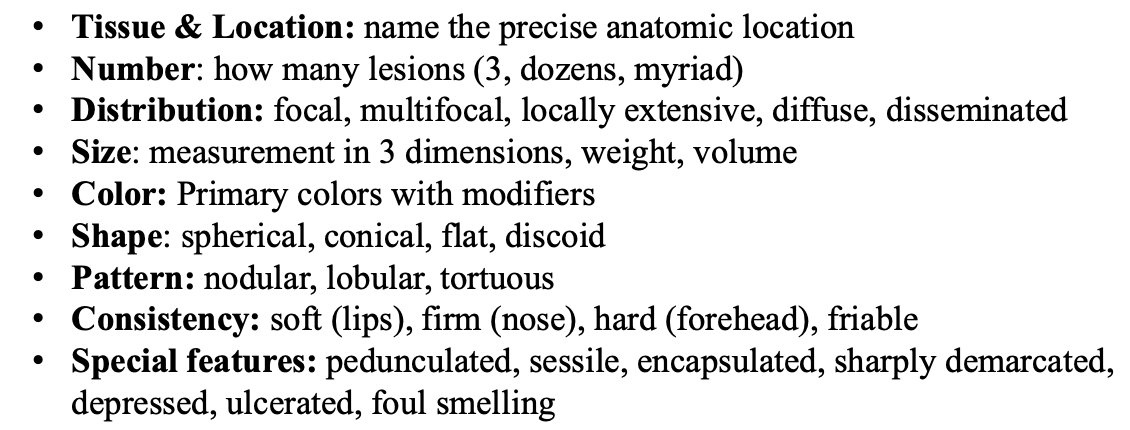
what should be included in morphologic diagnosis
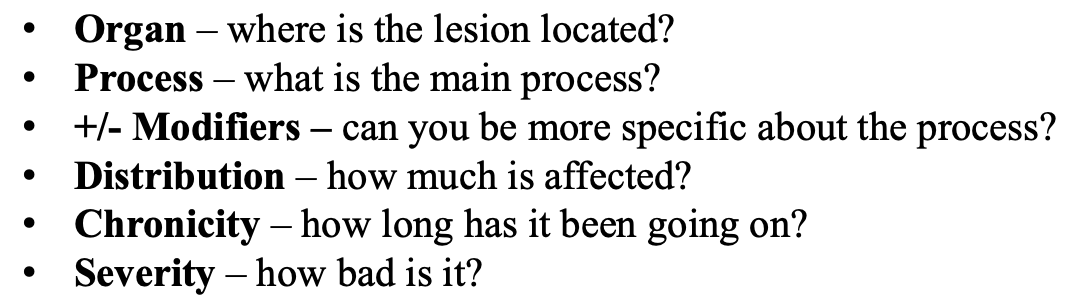
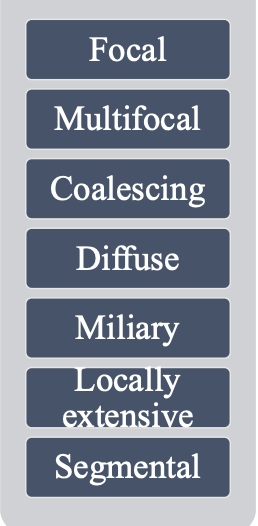
what are the different processes
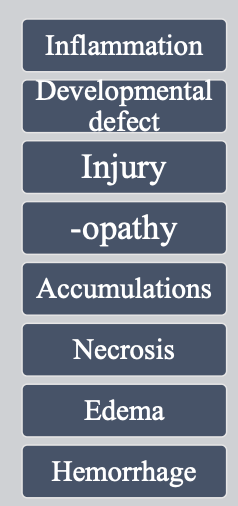
what are the modifiers
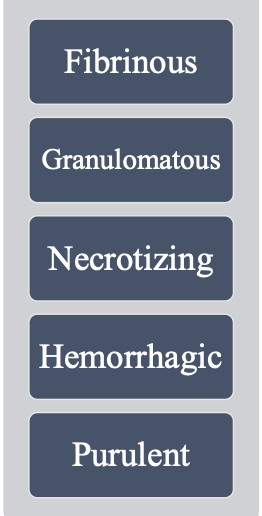
what are distribution
what are chronicity
acute
subacute
chronic
chronic active
severity
mild
moderate
severe
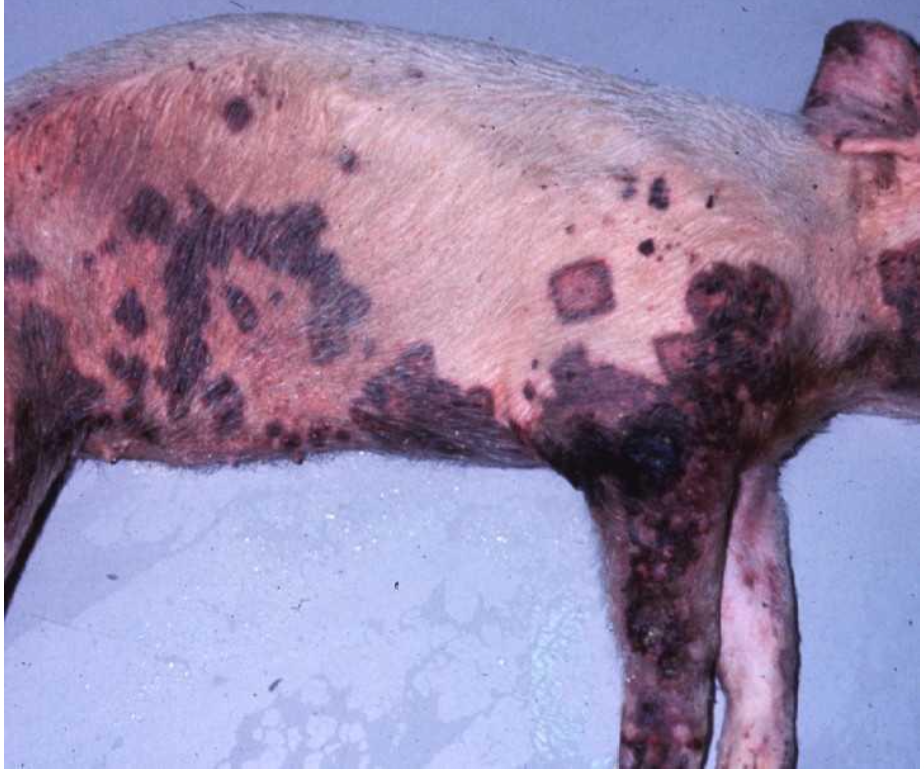
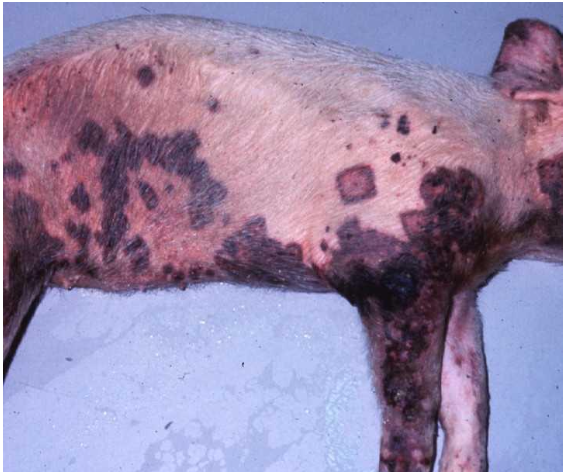
describe this
• The skin of the lateral thorax, abdomen, and the extremities contains numerous multifocal to coalescing diamond shaped sharply demarcated purple to red crusty looking lesions
morphologic diagnosis
Organ: Process, +/- Modifiers,
Distribution, Chronicity,
Severity
description
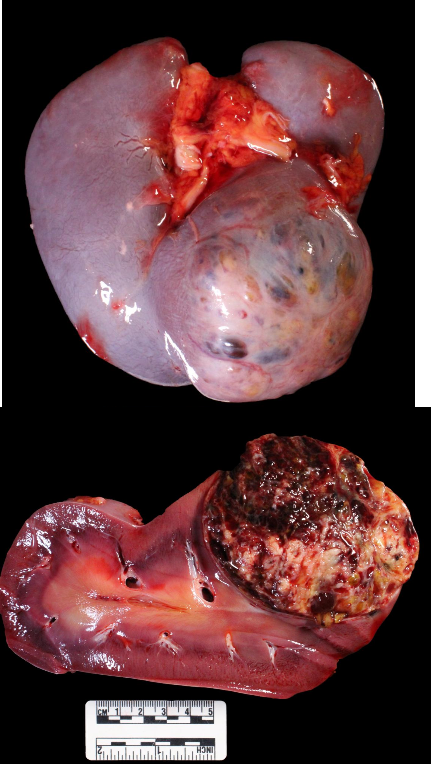
The caudal pole of the
kidney contains a
large, expansile mass
that measures
approximately 10cm x
15cm and is mottled
dark red to red to tan
to yellow. The mass is
circular, smoothly
marginated and soft to
firm. On cut surface
the mass is mottled
dark red to red to tan
morphologic diagnosis
Organ: Process, +/- Modifiers,
Distribution, Chronicity, Severity
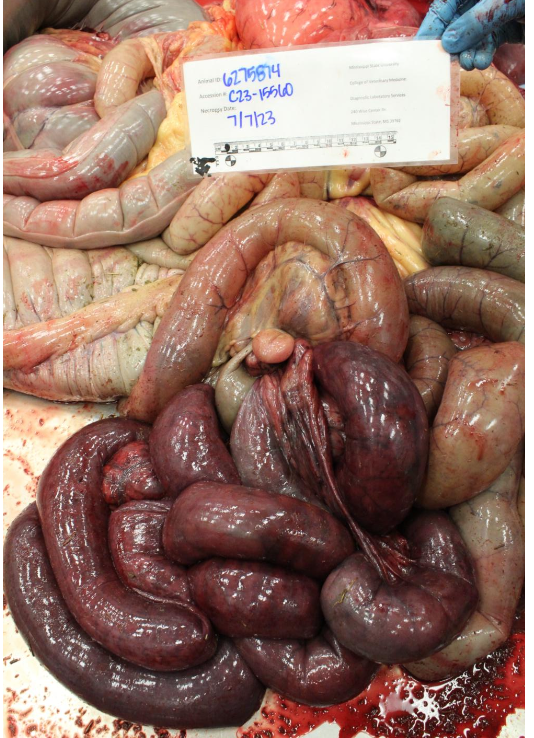
description
A large segment of the
aboral small intestine
is diffusely dark
purple to dark red and
gas dilated – there is a
clear line of
demarcation between
the affected and
unaffected bowel. A
large fatty mass is
twisted around the
darkened segment of
bowl.
morphologic diagnosis
Small intestine: Venous infarct,
segmental, severe, acute