AP Environmental Science | Unit 1
 Call Kai
 Learn
Learn Practice Test
 Spaced Repetition
 Match
Match Flashcards
 Knowt Play
1/55

There's no tags or description
Looks like no tags are added yet.
Name | Mastery | Learn | Test | Matching | Spaced | Call with Kai | Chat |
|---|
No analytics yet
Send a link to your students to track their progress
56 Terms
Symbiosis
Close, long term biological interaction between 2 or more different species
Mutualism | Symbiosis
Both organisms benefit from relationship
Commensalism | Symbiosis
One organism benefits while the other is unaffected
Parasitism | Symbiosis
One organism benefits while the other is harmed
Competition for limited resources
Organisms struggle against each other to obtain the same constrained supplies needed for survival
Resource Partitioning
Division of limited resources by competing species to avoid direct conflict and allow coexistence
Spatial | Resource Partitioning
Species use different physical areas of a habitat
Temporal | Resource Partitioning
Species feed or are active at different times
Dietary | Resource Partitioning
Species eat different types/sizes of food
Biome
Large geospatial area on earth defined by its unique climate, soil, plants, and animals
2 Defining Characteristics of a Biome
Temperature & Precipitation
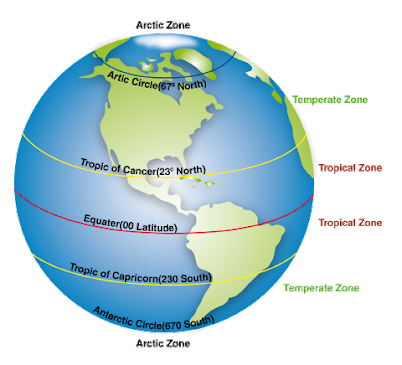
Range of Tropical Locations
Between Tropic of Cancer (23.5*N) and Tropic of Capricorn (23.5*S)

Range of Temperature Biomes
From hot, stable propics near the equator - to freezing, ice-covered polar regions

Range of Boreal Forests & Tundra Biomes
Cast, cold northern rings around earth, transitioning from temperature zones to frozen polar ice caps
Predictable Patterns in Biomes are because…
Of global climate rules
Sun
Tilt of Earth
Movement of air & water
Locations of a biome can shift because…
Long term changes in climate
Shifts in temperature
Shifts in rainfall patterns
Shifts in atmospheric conditions
Lakes, Rivers, Wetlands
Aquatic biomes that can source drinking water for humans
Marine Biome
Largest aquatic biome
Saltwater oceans, season, gulfs, estuaries
Estruary Biome
Brackish water
Partially enclosed coastal body of water where fresh water rivers & streams meet with salt water from ocean
EX: Chesapeake Bay
Fresh Water Wetlands
Land saturated/covered by freshwater for parts of the year
Has specialized plants and animals
Plants & animals have special adaptations that allow them to survive here
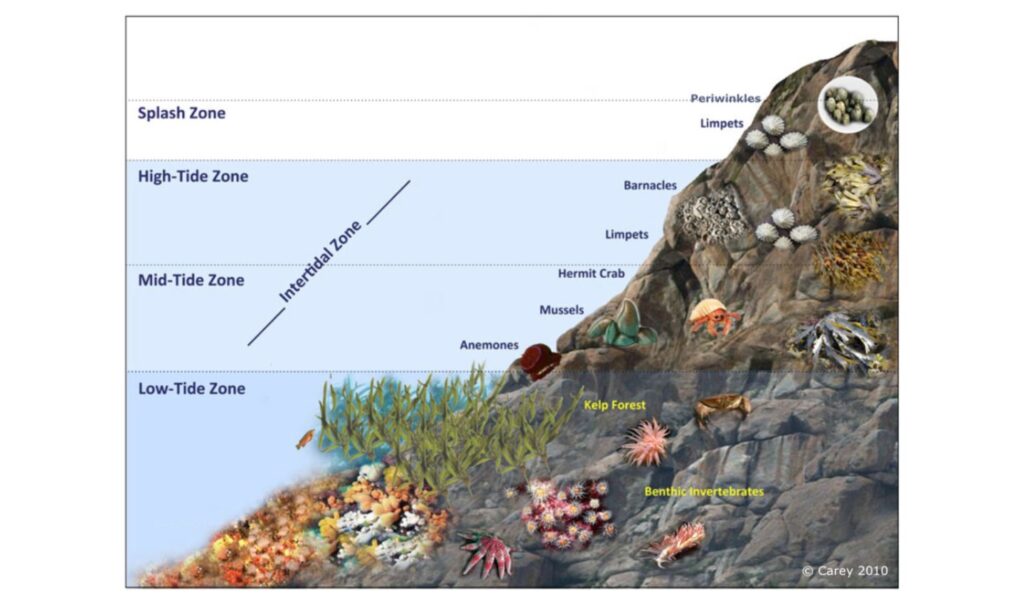
Intertidal Zones
Coastal area where ocean meets land between high & low tides
Plants & animals have specialized physical features (shells), anchoring methods, & Behavioral traits to adapt/live here
Carbon Source
Compound releasing carbon dioxide into environment
Supplies carbon atoms for living organisms to build biomass
Carbon Sink
Absorbs more carbon from atmosphere than it releases
EX: Oceans, Forests, soil
Long Term Carbon Reservoir
Sedimentary Rock (limestone)
Fossil Fuels
Photosynthesis & Cellular Respiration in Carbon Cycle
Act as perfectly balanced chemical mirror images
Constantly moves carbon between atmosphere & biosphere efficiently
Combustion of Fossil Fuels
Increases carbon stored in atmosphere
Releases ancient carbon into the atmosphere as carbon dioxide
Length of time Nitrogen speeds in reservoirs
Spends little time in reservoir because of its microbial activity & rapid gas exchange - recycling it quickly
Length of time Carbon spends in reservoirs
Spends a long time because it is locked away in long term, geological formations
Nitrogen Fixation
Changes unreactive nitrogen gas from air into usable forms (ammonia)
Nitrogen Assimilation
Process plants & microorganisms use to convert inorganic nitrogen from environment into organic compounds (proteins & amino acids)
The Atmosphere
Largest reservoir in Nitrogen Cycle
How Humans alter Nitrogen Cycle
Use of nitrogen based fertilizers in agriculture
Introduces more reactive nitrogen into ecosystems - more than the natural process can handle
Phosphorus Sources Examples
Weathering of rocks
Runoff
Phosphorous Sink Examples
Sedimentary rock
Ocean sediment
Major Phosphorus Reservoir
Sedimentary rock & ocean-bottom sediments
Weathering
Breaks down & dissolves rocks, minerals, and salts right where they sit on Earths surface
Phosphorus cycle moves slowly because…
It lacks a gaseous phase & it relies on weathering of rocks
The Sun | Hydrologic Cycle
Energy source that drives the cycle
Hydraulic Sink Examples
Oceans
Ice Caps
Glaciers
Hydraulic Source Examples
Groundwater Aquifers
Atmosphere
Critical Hydraulic Reservoirs for Drinking Water (Humans)
Ground water
Surface Water (lakes & rivers)
Infiltration Process
Water on the ground surface enters the soil through
Gravity
Soil saturation
Percolation
Runoff Trigger
Primary Productivity
Rate at which producers (plants & algae) convert solar energy into chemical energy/organic biomass though photosynthesis
Mass Based Units of Primary Productivity
Grams of organic carbon per square meter per year
(gC/m²/yr)
Grams of dry biomass per square meter per year (g/m²/yr)
Energy Based Units of Primary Productivity
Kilocalories per square meter per year
(kcal/m²/yr)
Joules per square meter per year
(J/m²/yr)
Net Primary Productivity (NPP) Equation
GPP-R=NPP
GPP: Gross Primary Productivity
NPP: Net Primary Productivity
R: Respiration
Trophic Level Pyramid Shape
Energy transfer between each level is inefficient (10% energy loss)
The Sun | Tropic Levels
Initial energy source for a trophic pyramid
Producers | Levels of Trophic Pyramid
Plants, algae, phytoplankton
Makes their own food through photosynthesis
Holds most biomass
Primary Consumers | Levels of Trophic Pyramid
Plant eating animals (rabbits, deer)
Feeds directly on the producers
Receives 10% of the energy stored in producer level
Secondary Consumers
Meat & plant/meat eaters (snakes, spiders)
Feed on primary Consumers
Receives 10% of energy from 2nd level
Tertiary Consumers
Top meat eaters (hawks, wolves, orcas)
Feed on secondary Consumers
Sits near top of food chain with lowest biomass
10% Rule
Energy is raised from one trophic level to the next and only 10% of that energy is passed
10% Rule with 2nd Law of Thermodynamics
The other 90% of the energy lost is lost to heat

Food Web
Complex, web-like network with multiple paths
Stronger stability: if one food source dies, the animal can switch to another options
More accurate
Food Chain
Follows one, direct & linear path of energy
Too simple
Fragile: if one plant or animal dies, the rest of the chain collapses