BIOL113 L28
 View linked note
 Call Kai
 Learn
Learn Practice Test
 Spaced Repetition
 Match
Match Flashcards
 Knowt Play
1/42

There's no tags or description
Looks like no tags are added yet.
Name | Mastery | Learn | Test | Matching | Spaced | Call with Kai | Chat |
|---|
No analytics yet
Send a link to your students to track their progress
43 Terms
What are the three main body parts of mollusks?
Muscular foot, visceral mass, and mantle.
How many known species are included in the phylum Mollusca?
150,000 known species.
What is the typical composition of the hard shell that protects most mollusks?
Calcium carbonate.
What is the function of the mantle in mollusks?
It secretes the shell and creates a water-filled chamber, the mantle cavity.
How do many mollusks feed?
By using a straplike rasping organ, a radula, to scrape up food.
What are the three classes of mollusks mentioned in the text?
Gastropoda, Bivalvia, Cephalopoda.
what are the typical features of Gastropods' shells?
Shells in one piece, e.g., limpets, snails.
What are the typical features of Bivalves' shells?
Shell forms two valves, e.g., mussels, clams, etc.
What are the typical features of Cephalopods?
They have no external shell, e.g., squid, octopus.
Where are the gonads located in most mollusks?
In the visceral mass.
What is the life cycle of many marine mollusks?
It includes a ciliated larvae, the trochophore.
how many classes are there in the phylum Mollusca?
Eight classes.
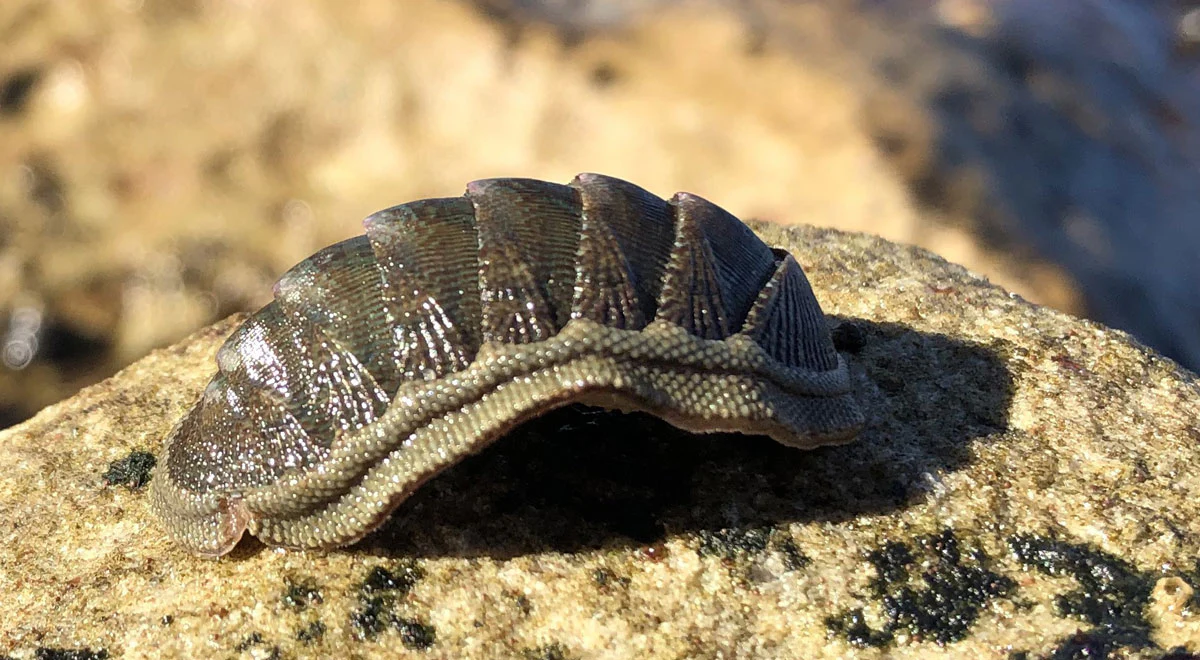
What are the characteristics of chitons' shells?
Divided into eight dorsal plates.
How do chitons move over the rock surface?
By gripping the rocky substrate tightly and creeping slowly using their muscular foot.
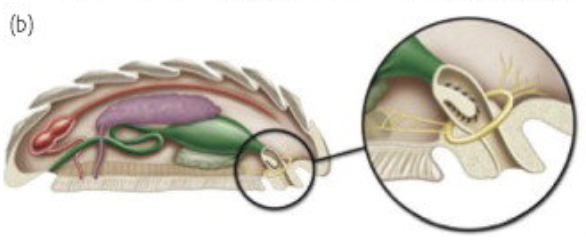
What do chitons use to scrape and ingest algae?
; Radulas.
Where are most species of Gastropoda found?
Marine, but there are also many freshwater species.
How do garden snails and slugs differ from other gastropods?
They have adapted to land.
What happens during embryonic development of gastropods?
The visceral mass is rotated up to 180 degrees, such that the anus and mantle cavity are above the head in adults.
How are most gastropods protected?
By single, spiraled shells into which the animals can retreat if threatened.
What is the function of the lining of the mantle cavity in terrestrial snails?
It functions as a 'lung'.
How do chitons and most gastropods move over various substrata?
By using a foot with a flat creeping sole adapted for locomotion.
What is the function of the foot in chitons and most gastropods?
It is provided with numerous gland cells which produce mucus (pedal gland).
How is movement achieved in gastropods?
By waves of muscular contractions passing along the foot.
How do bivalves achieve burrowing?
By the interaction of the foot muscles and the shell external skeleton.
What is ditactic movement in mollusks?
Waves of muscular contraction occurring on alternating sides of the foot.
What are the characteristics of bivalve shells?
Divided into two halves, hinged at the mid-dorsal line.
How do most bivalves feed?
As suspension feeders, trapping fine particles in mucus that coats the gills.
What is the function of the mantle cavity in bivalves?
Contains gills used for feeding and gas exchange.
How do sessile mussels anchor themselves?
By secreting strong threads that tether them to rocks, docks, boats, and the shells of other animals.
How do scallops avoid predators?
By swimming in short bursts, flapping their shells and jetting water out their mantle cavity.
How do cephalopods capture their prey?
By using rapid movements and long tentacles.
What do squids and octopuses use to immobilize their prey?
They bite their prey with beaklike jaws and inject poison.
What covers the visceral mass in cephalopods?
A mantle, with the shell being reduced and internal in squids, missing in many octopuses, and external only in nautiluses.
How do squids achieve fast movements?
By contracting their mantle cavity and firing a stream of water through the excurrent siphon.
What is the function of the foot in cephalopods?
It has been modified into the muscular siphon and parts of the tentacles and head.
What is the size range of most squid?
Most squid are less than 75 cm long, but the giant squid may reach 17 m (including tentacles) and weigh about 2 tons.
Where do most octopuses live?
On the seafloor.
What lifestyle do cephalopods have?
An active, predaceous lifestyle.
What type of circulatory system do cephalopods have?
A closed circulatory system.
What supports learning and complex behaviour in cephalopods?
A well-developed nervous system with a complex brain and well-developed sense organs.
What were the ancestors of octopuses and squids?
Shelled mollusks that took up a predaceous lifestyle.
What happened in the later evolution of shelled cephalopods?
The loss of the shell occurred.
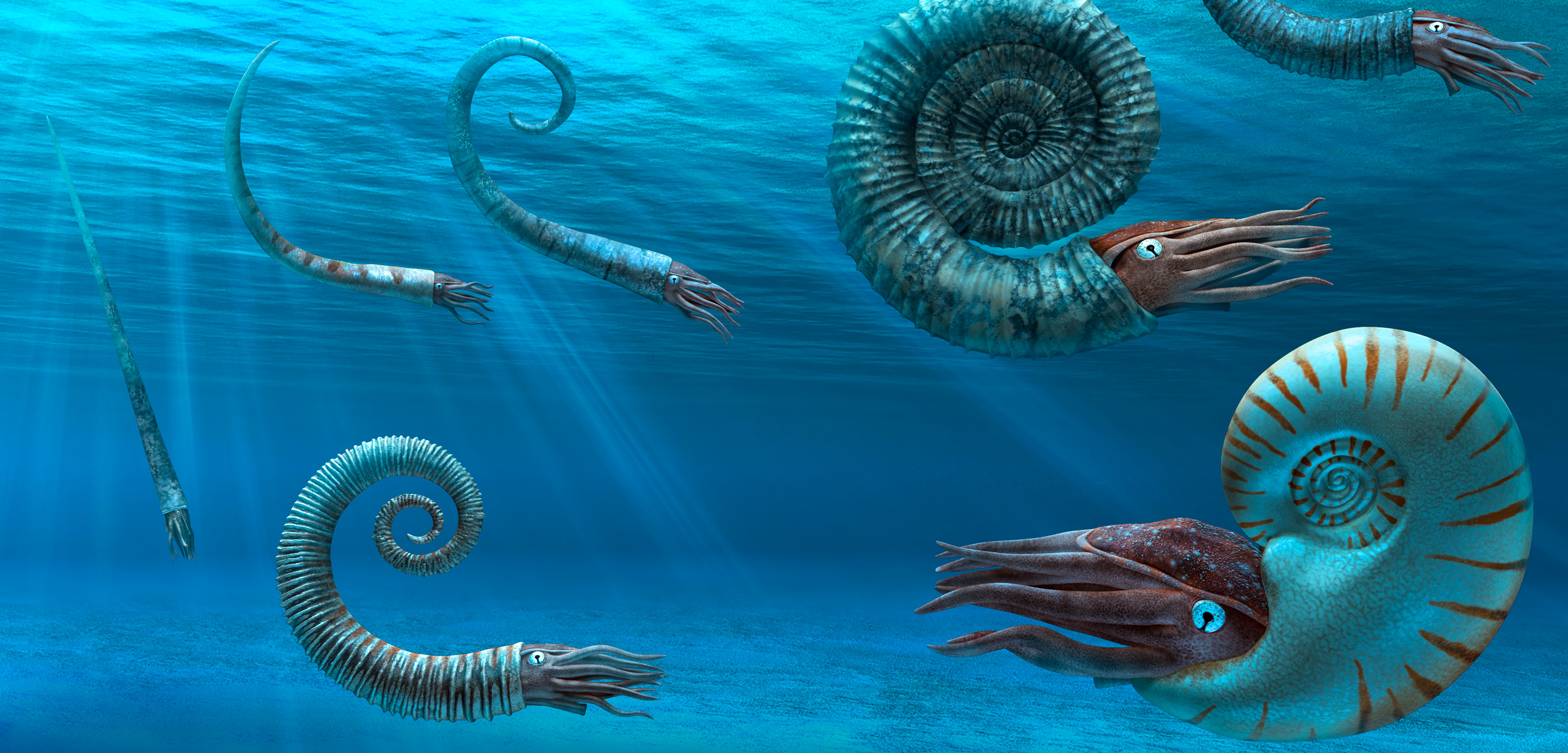
What were the dominant invertebrate predators for hundreds of millions of years?
Shelled cephalopods called ammonites.