Topic 1 Foundations of Geometry
0.0(0)
Studied by 0 people Call Kai
 Learn
Learn Practice Test
 Spaced Repetition
 Match
Match Flashcards
 Knowt Play
Card Sorting
1/38

Earn XP
Description and Tags
Last updated 2:54 PM on 11/16/22
Name | Mastery | Learn | Test | Matching | Spaced | Call with Kai |
|---|
No analytics yet
Send a link to your students to track their progress
39 Terms
1
New cards
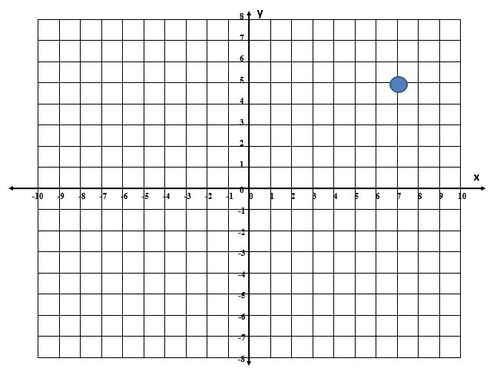
point
geometric element, indicates location, 0 dimensions
2
New cards
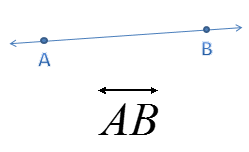
line
collection of points, straight path, continues infinetly in both directions
3
New cards
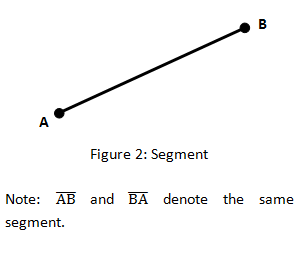
line segment
part of a line that contains every point of a line between its endpoints
4
New cards
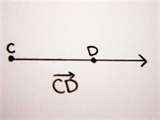
ray
a line with a single endpoint that extends infinitely in one direction
5
New cards
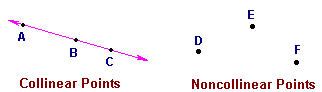
Collinear
points on the same line
6
New cards
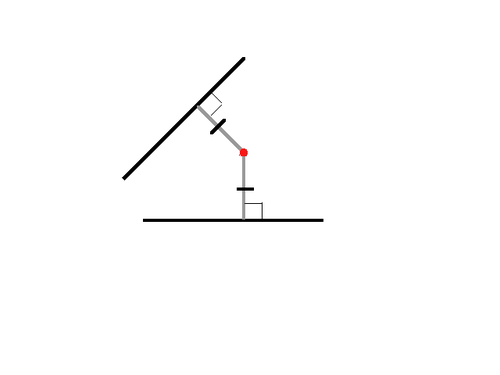
equidistant
equally distant
7
New cards
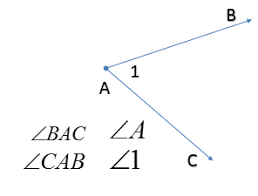
angle
A figure formed by two rays with a common endpoint
8
New cards
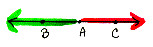
opposite rays
two rays that have a common endpoint and form a line whose angle measure is 180 degrees
9
New cards
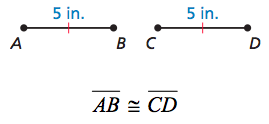
congruent
Having the same size and shape
10
New cards
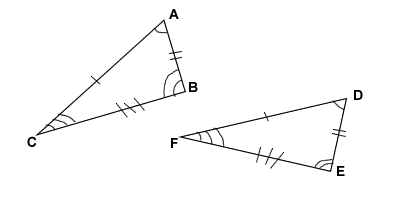
tick marks
Marks used on a figure to indicate congruent segments
11
New cards
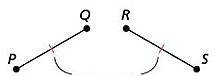
arc markings
marks used on a figure to indicate congruent angles
12
New cards
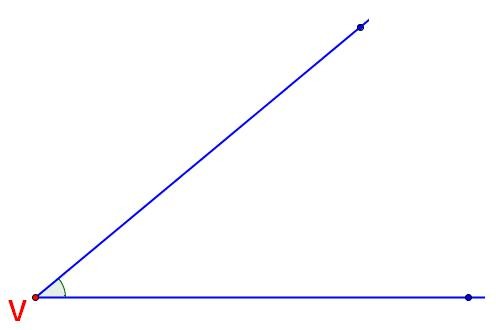
vertex
A point where two or more straight lines meet forming an angle
13
New cards
Distance Formula
used to find the length between two points
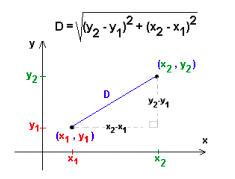
14
New cards
midpoint formula
used to find the coordinates of the point that is the midpoint of two other endpoints
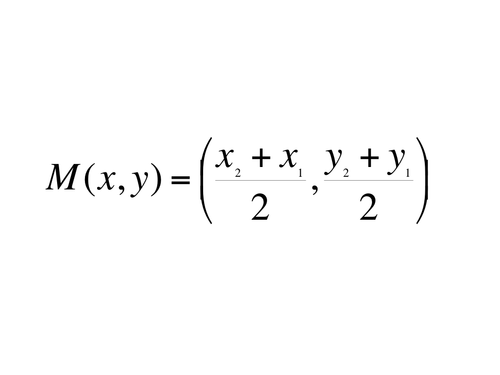
15
New cards
parallel lines
Lines in the same plane that never intersect. Their slopes are equal.
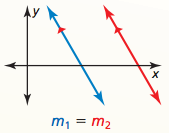
16
New cards
perpendicular lines
Lines that intersect to form right angles. Their slopes are the negative reciprocal of each other.
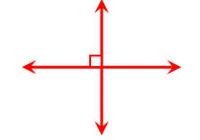
17
New cards
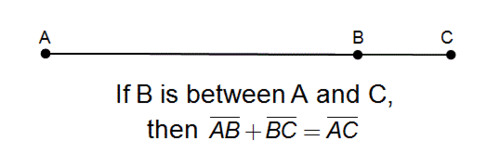
Segment Addition Postulate
If B is between A and C, then AB + BC = AC. The sum of the parts = the whole
18
New cards
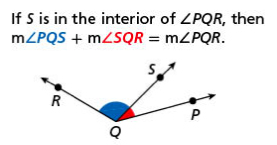
Angle Addition Postulate
If S is in the interior of
19
New cards
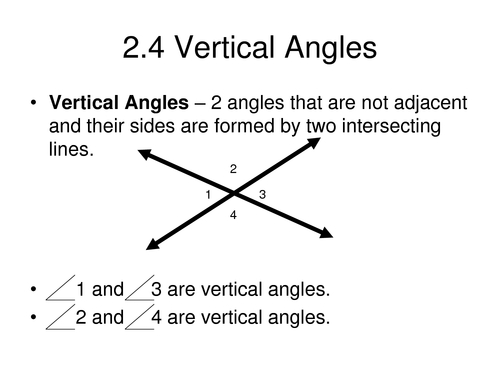
vertical angles
are opposite (non-adjacent) angles of two intersecting lines
20
New cards
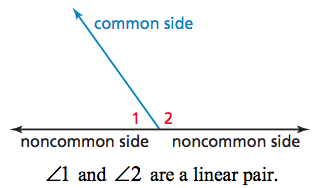
linear pair
A pair of adjacent angles whose noncommon sides are opposite rays forming a straight line
21
New cards
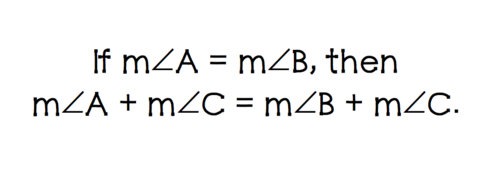
Addition Property of Equality
If a = b, then a + c = b + c (add the same thing to both sides of equation)
22
New cards
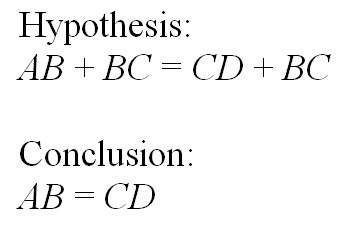
Subtraction Property of Equality
If a = b, then a - c = b - c (subtract the same thing from both sides of the equation)
23
New cards
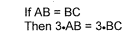
Multiplication Property of Equality
If a = b, then ac = bc (multiply the same thing to both sides of equation)
24
New cards
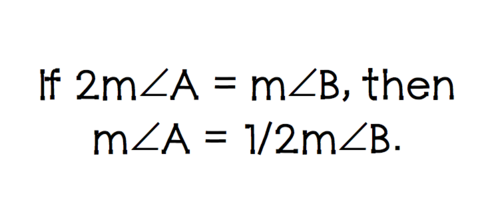
Division Property of Equality
if a = b, then a/c = b/c, c≠0 (divide the same thing to both sides of the equation)
25
New cards
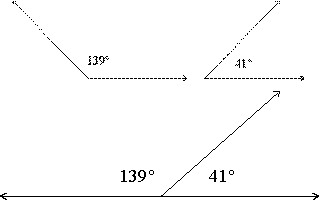
supplementary angles
Two angles whose sum is 180 degrees
26
New cards
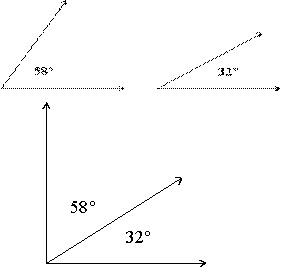
complementary angles
Two angles whose sum is 90 degrees
27
New cards
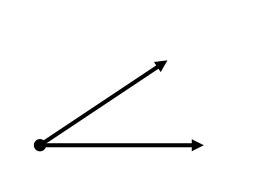
acute angle
an angle that measures less than 90 degrees
28
New cards
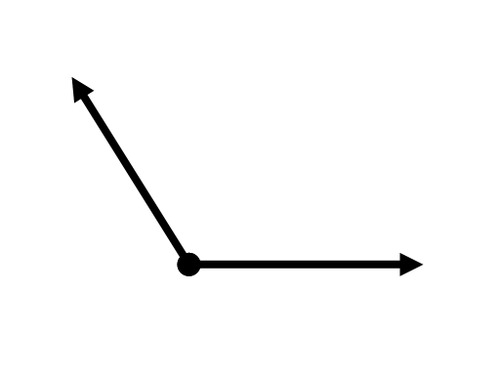
obtuse angle
An angle that measures more than 90 degrees but less than 180 degrees
29
New cards
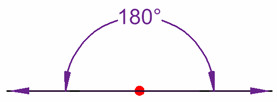
straight angle
an angle that measures exactly 180 degrees
30
New cards
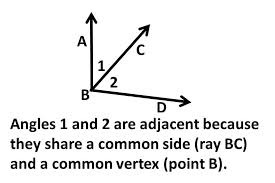
adjacent angles
Angles that have a common side and a common vertex (corner point).
31
New cards
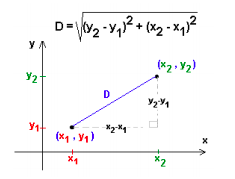
distance formula
used to find the length between two points
32
New cards
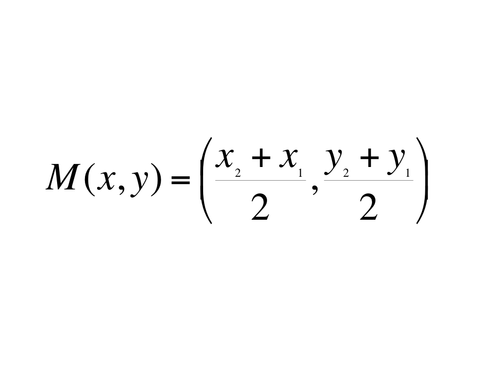
midpoint formula
used to find the point midway between two other points
33
New cards
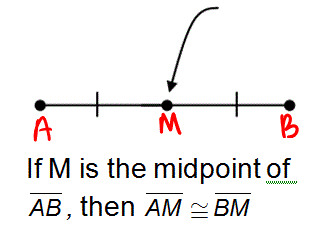
midpoint
A point that divides a segment into two congruent segments
34
New cards
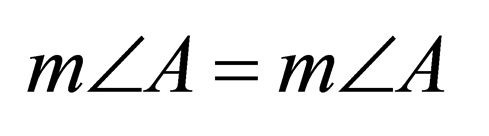
Reflexive Property
A quantity is congruent (equal) to itself. a = a
35
New cards
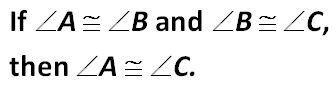
Transitive Property
If a = b and b = c, then a = c
36
New cards
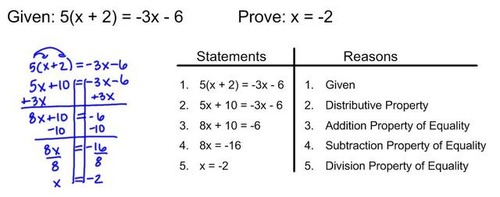
two-column proof
A style of proof in which the statements are written in the left-hand column and the reasons are written in the right-hand column.
37
New cards
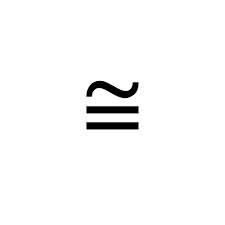
congruent symbol
Having the same measure
38
New cards
inductive reasoning
A type of logic in which generalizations are based on specific examples or observations.
39
New cards
deductive reasoning
Uses a sequence of logical statements to prove a conclusion through the use of properties and definitions.