K103 Lab Week 15: Circulatory System, Heart, Blood, and Exam Preparation
 Call Kai
 Learn
Learn Practice Test
 Spaced Repetition
 Match
Match Flashcards
 Knowt Play
1/20

There's no tags or description
Looks like no tags are added yet.
Name | Mastery | Learn | Test | Matching | Spaced | Call with Kai | Chat |
|---|
No analytics yet
Send a link to your students to track their progress
21 Terms
What is the function of arteries and arterioles?
To carry blood away from the heart.
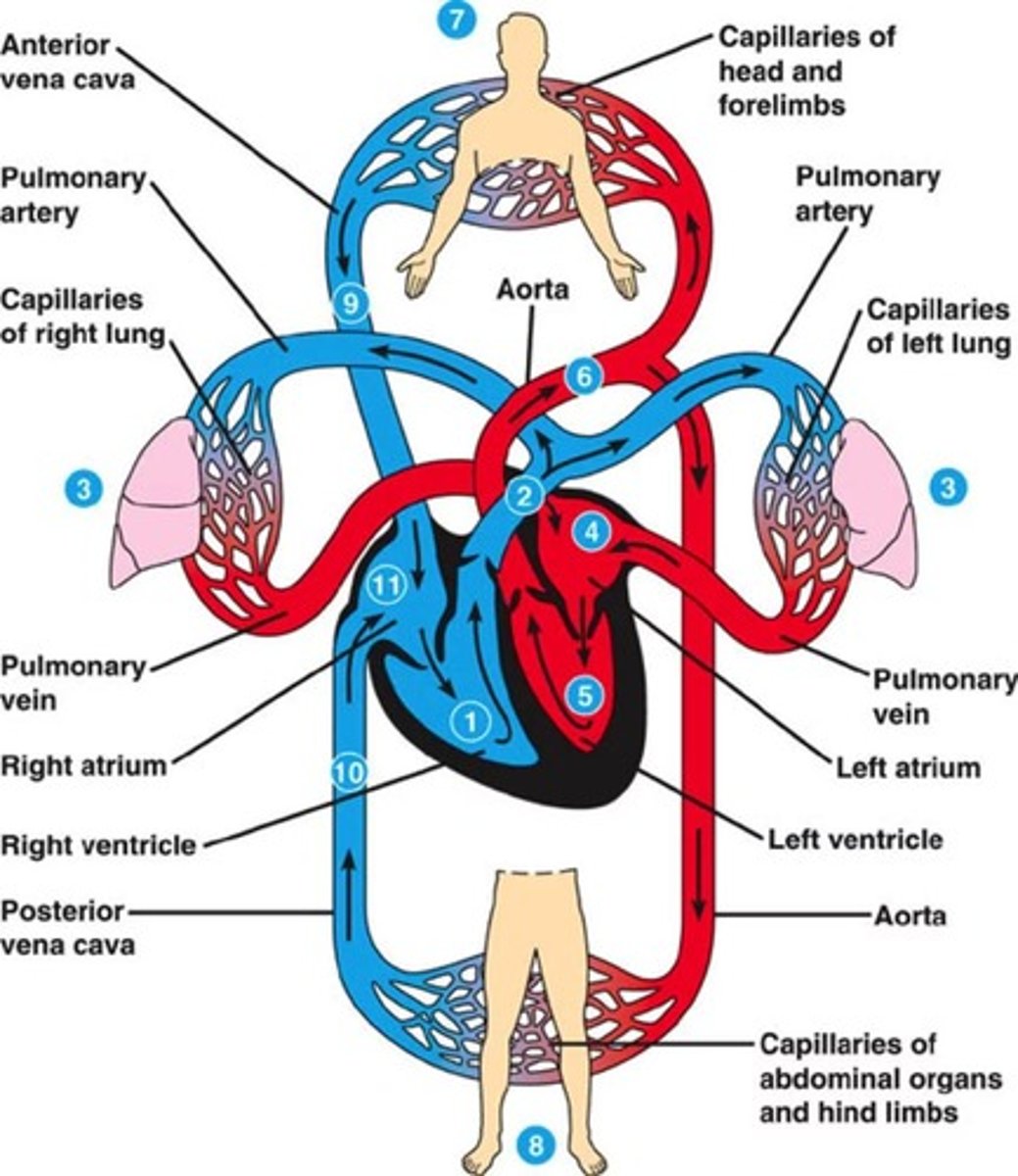
What part of the heart has oxygenated blood?
left side
left atrium
left ventricle
What part of the heart has unoxygenated blood?
right side
right atrium
right ventricle
What is the function of capillaries?
To facilitate exchange of substances with tissues, found within tissue
What is the role of veins?
To carry blood toward the heart.
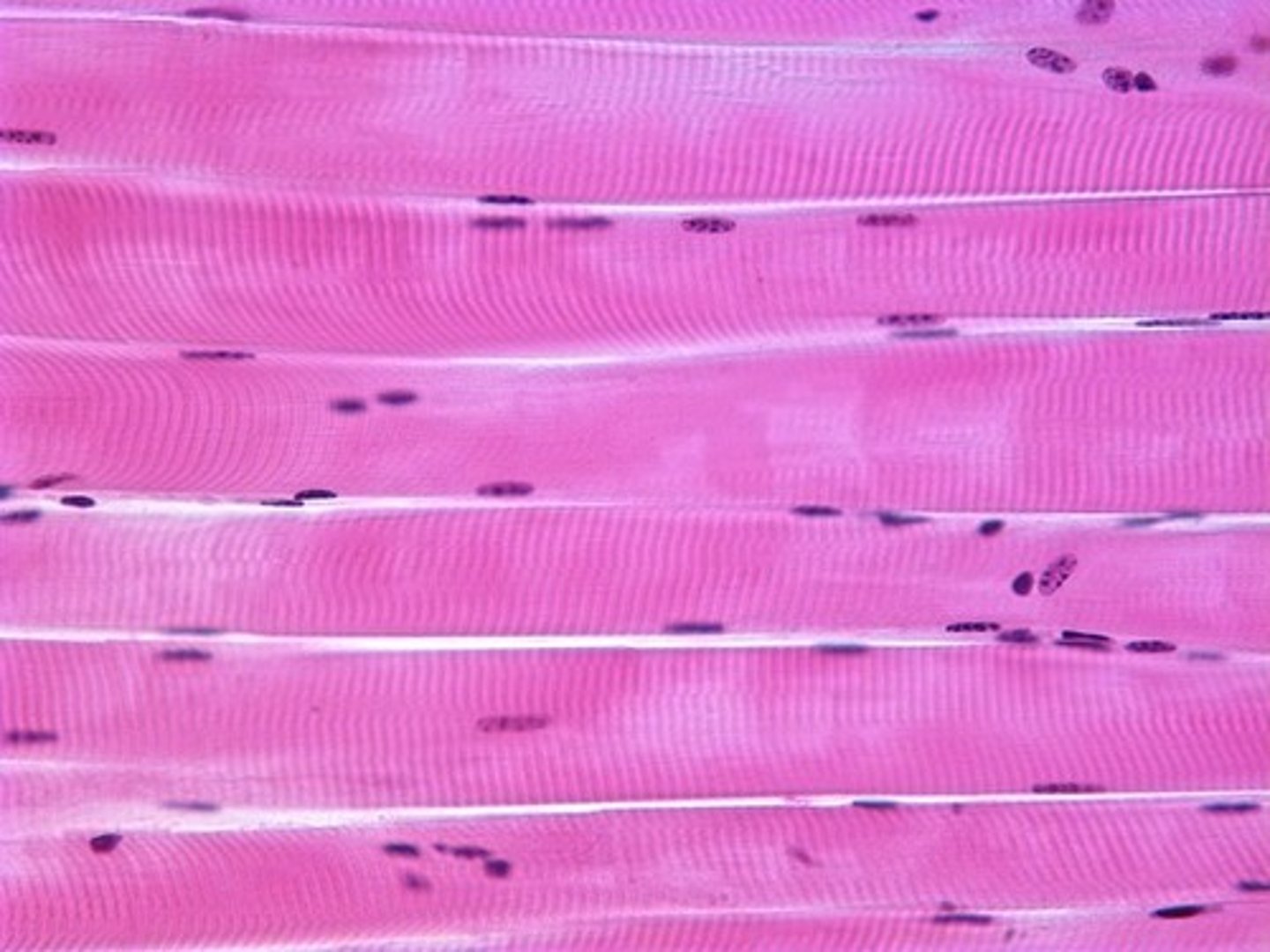
skeletal muscle
striated fibers, multinucleated, attached to skeleton, voluntary
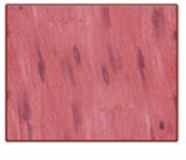
smooth muscle
non-striated fibers, spindle shaped, uninucleated, involuntary, covers wall of internal organs
cardiac muscle
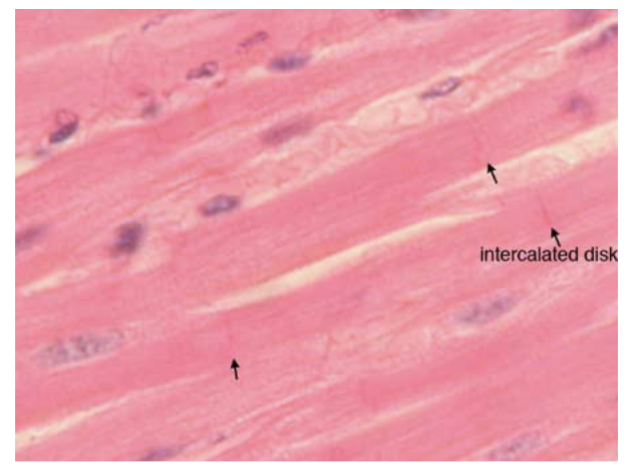
striated, branched, and uninucleated fibers, involuntary, only covers walls of the heart
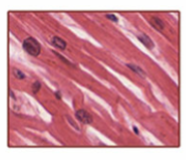
identify intercalated discs on cardiac muscle
What is heartbeat in and ECG?
contraction and relaxation of myocardium
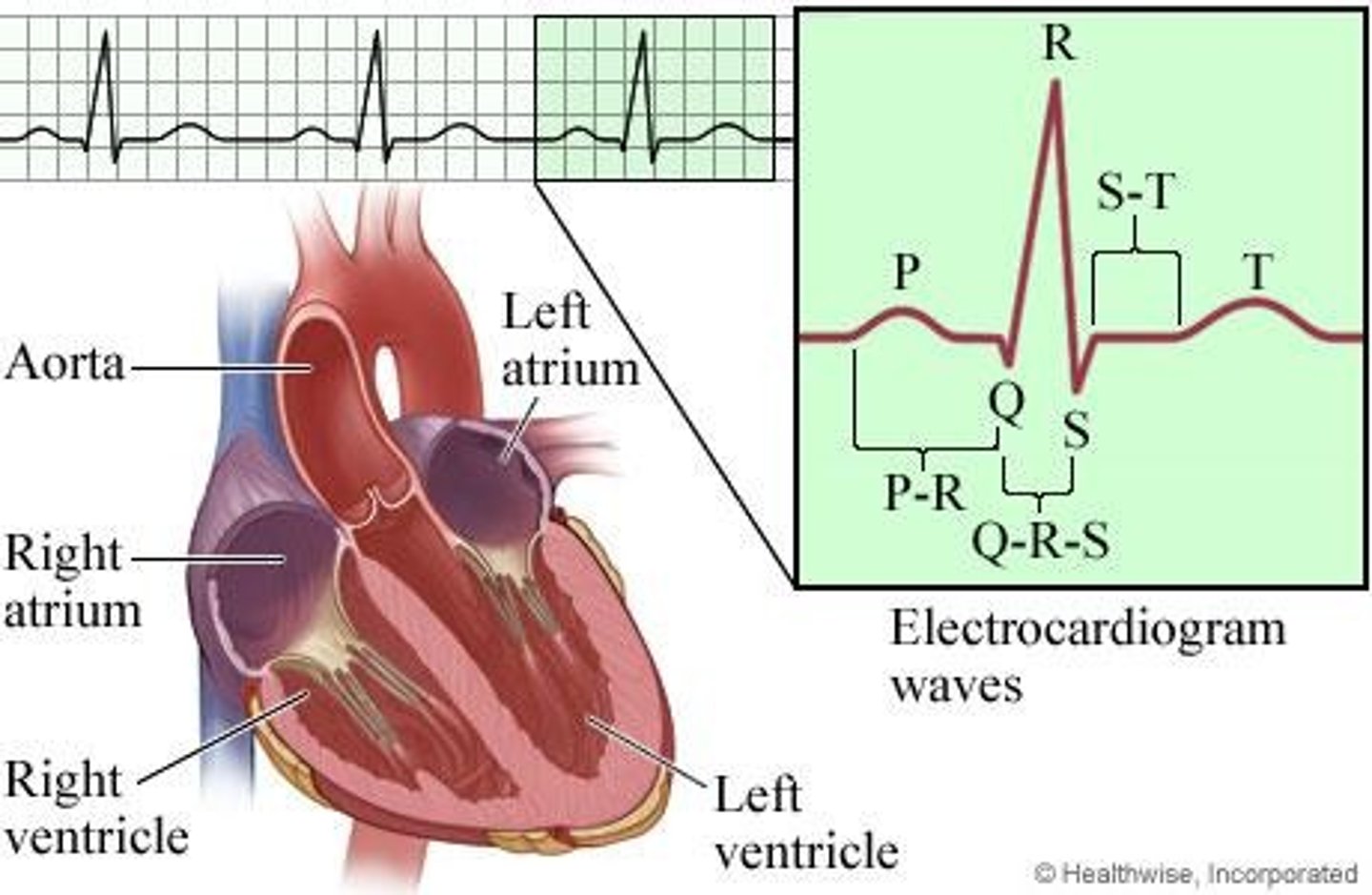
What does the P wave in an ECG represent?
The signal for the atria to contract, blood forced into ventricles
What does the QRS complex in an ECG indicate?
The relaxation of the atria and contraction of the ventricles, blood is forced out to body (systole)
What does the T wave in an ECG represent?
The relaxation of the ventricles (diastole)
What is the dicrotic notch?
A feature in the pulse wave indicating closure of the aortic valve.
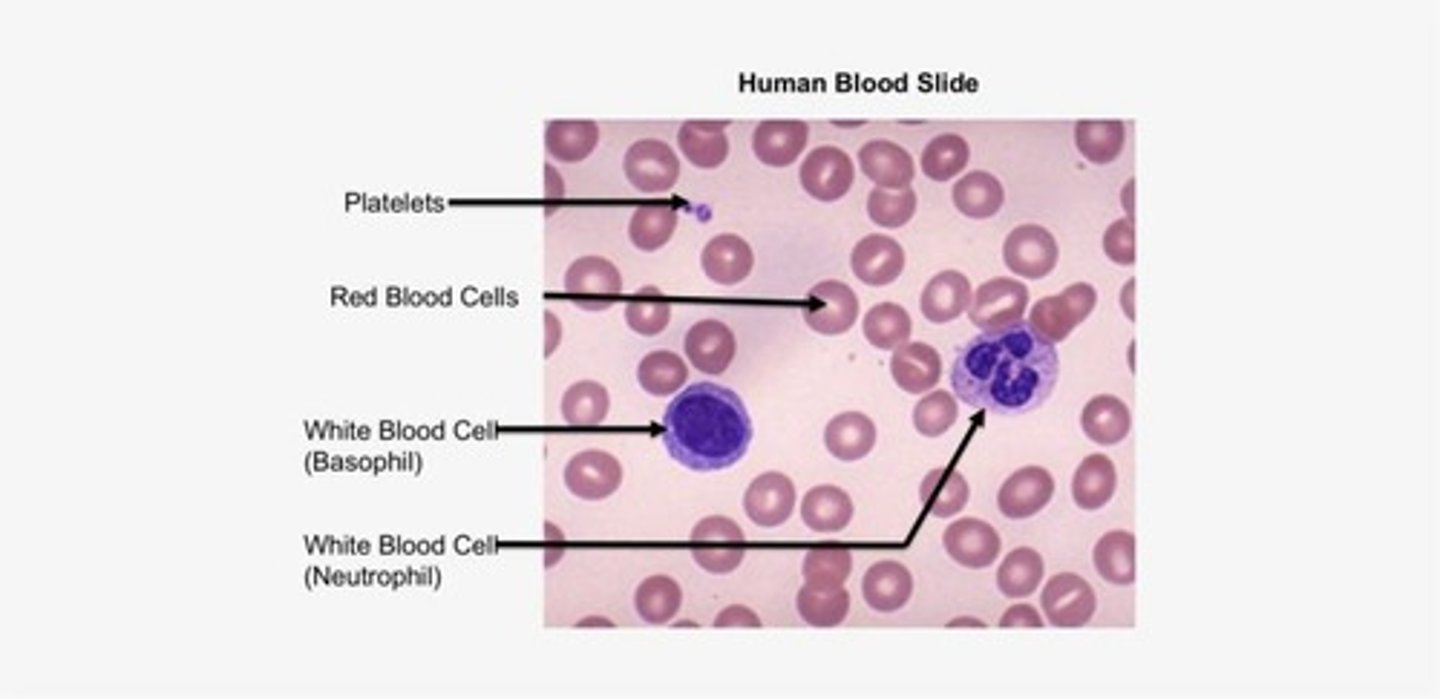
Identify the major cell types in a blood smear
Red blood cells and basic white blood cells, and platelets
What is the heart's primary function?
To pump blood throughout the body.
What is the significance of the heart's contraction and relaxation?
It is essential for maintaining blood circulation.
Identify the base and apex of the heart
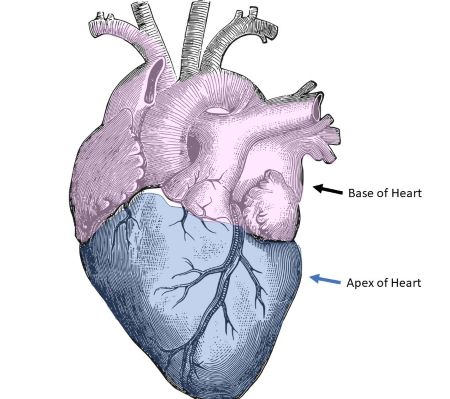
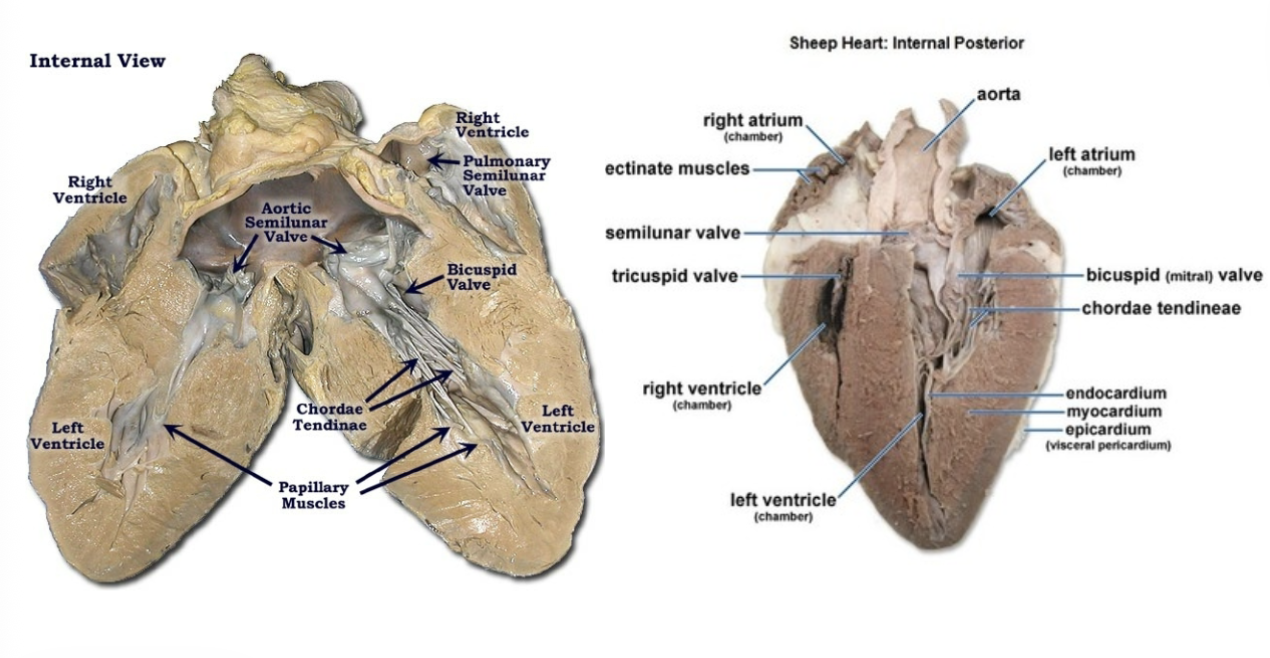
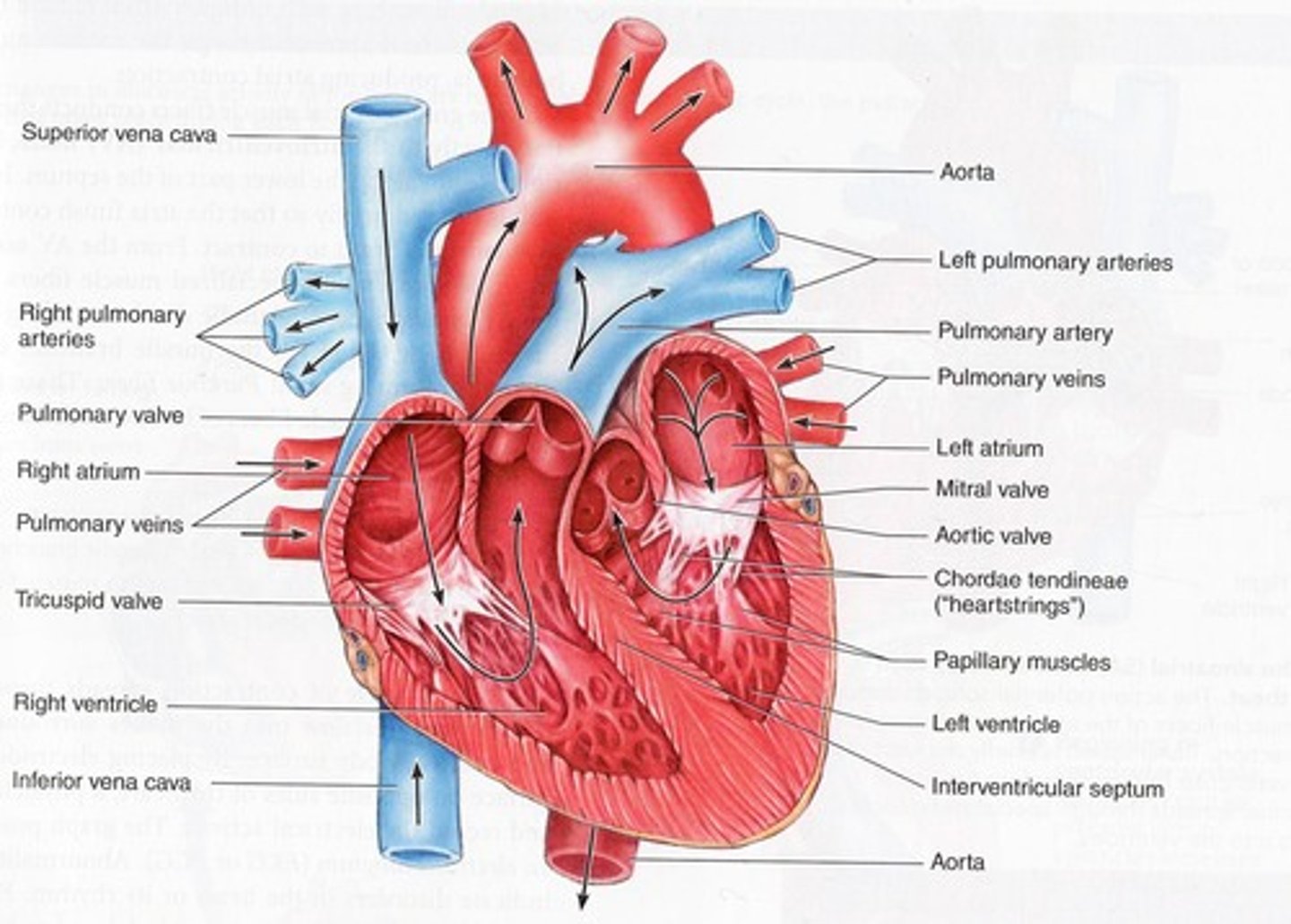
Identify structures on the heart
- left atrium
- right atrium
- left ventricle
- right ventricle
- ventricular septum
- superior vena cava
- inferior vena cava
- aorta
- tricuspid valve
- pulmonary valve
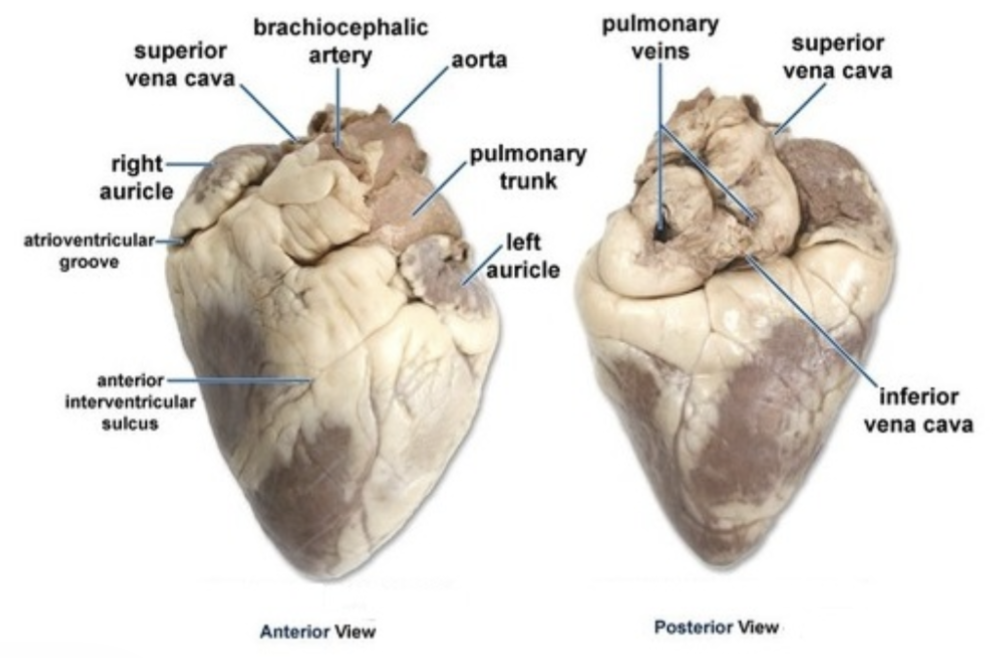
identify structures on the heart cont.
- left auricle
- right auricle
- pulmonary trunk
identify structures of the heart continued
- bicuspid valve
- aortic semilunar valve
- chordae tendinae
- papillary muscles