Orgo Exam 1 Reactions
 Call Kai
 Learn
Learn Practice Test
 Spaced Repetition
 Match
Match Flashcards
 Knowt Play
1/21

There's no tags or description
Looks like no tags are added yet.
Name | Mastery | Learn | Test | Matching | Spaced | Call with Kai | Chat |
|---|
No analytics yet
Send a link to your students to track their progress
22 Terms


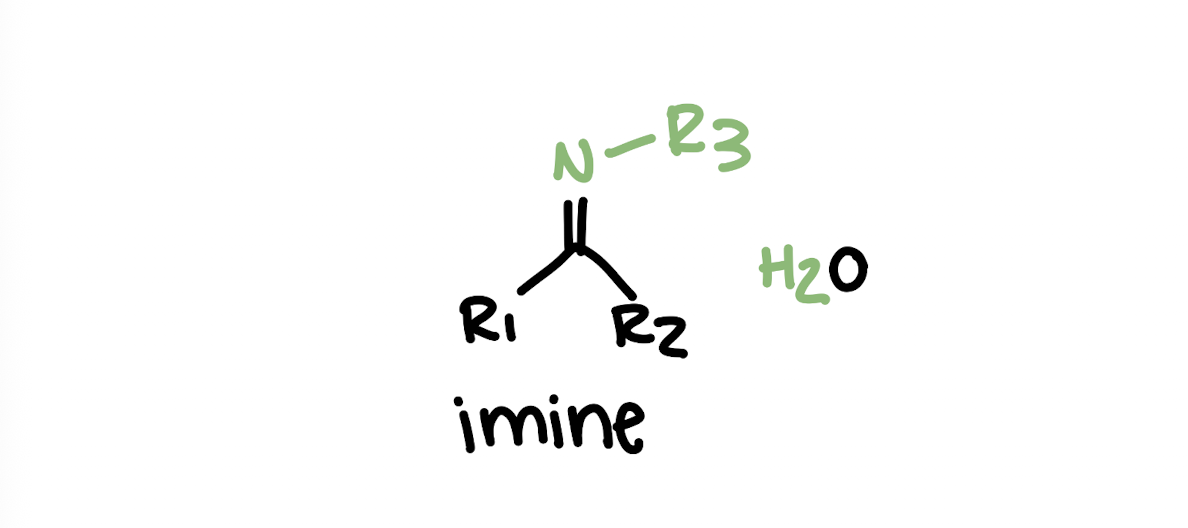

Synthesize the Grinard Reagent


Synthesize the Organolithium reagent:


Grignard + Expoxide (in aqueous acid)
OH replaces MgBr and adds C’s from epoxide (*markovnikov) least sub C on Epoxide adds to MgBr C


Synthesize the Gilman Reagent

Gilman +alkyl/alkenyl/aryl halide
New C-C bond (extends C chain by amount of C in chain attached to CuLi *stereospecific (trans and cis stay E —> E or Z —> Z)

(KOtBu = strong base)
Di chloro carbon

Di chloro carbon + C=C containing molecule

Simmons Smith Reaction
Alkene + Zn(Cu) —> Triangle where ene was (*show stereochem (both dash or both wedge = major product))
Grinard + Ketone or Aldehyde
—> OH where =O was AND extended C chain from Ketone/Aldehyde (*tertiary centers with ketones)
Carbonyl reactions in acidic conditions
protonation
H-Nu: attaches to C+ intermediate (*ALL Nu: are WEAK in ACIDIC conditions)
Base deprotonates H-Nu:
Carbonyl reactions in basic conditions
Nu: attaches straight to C=O
Racemic mixture (*ONLY if stereochem)
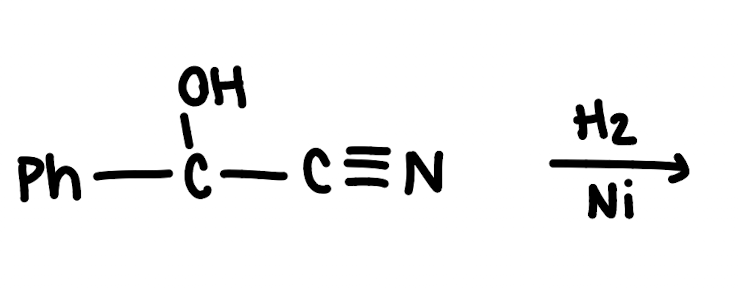
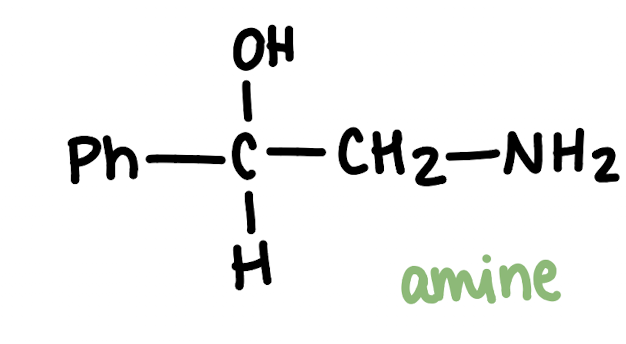
Cyanohydrin + H2 metal catalyst
Reduced to an amine

Cyanohydrin + Aqueous acid
COOH

Wittig reagent
Phosphonium

Aldehyde/Ketone + Witting Reagent
Alkene (in place of C=O) + Triphenyl P Oxide
Horner-Emmens-Wadsworth (Wittig variation)
Ketone —> 1. Base 2. Aldehyde or ketone → Alkene on ketone that was originally there
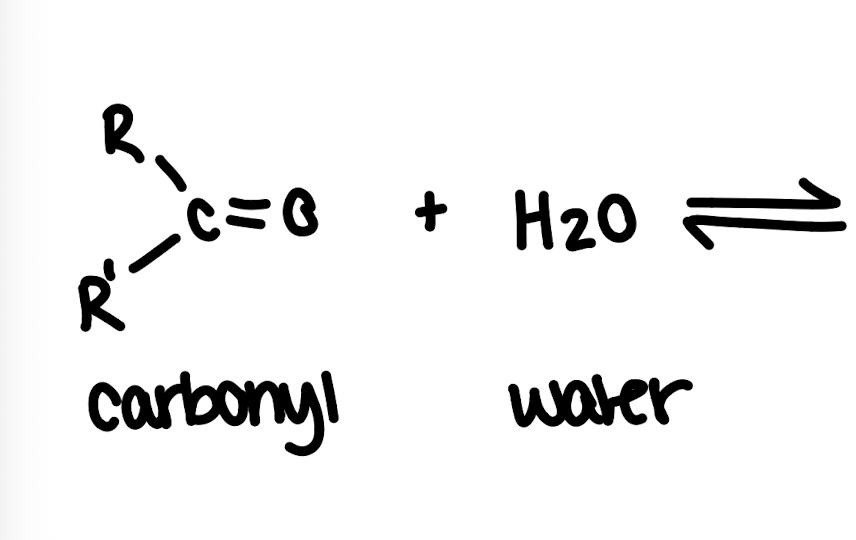
Carbonyl + H20
Hydrate

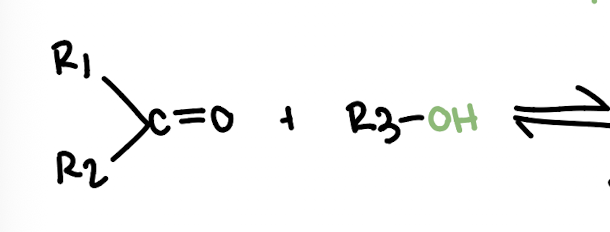
Aldehyde/ Ketone + OH
Acetal/Ketal
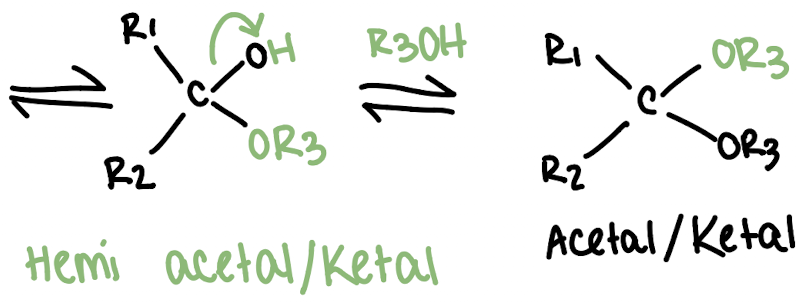
Acetal in aqueous acid