Lecture 13.5: Restorative Dentistry
 Call Kai
 Learn
Learn Practice Test
 Spaced Repetition
 Match
Match Flashcards
 Knowt Play
1/16

There's no tags or description
Looks like no tags are added yet.
Name | Mastery | Learn | Test | Matching | Spaced | Call with Kai | Chat |
|---|
No analytics yet
Send a link to your students to track their progress
17 Terms
What is the definition of restoration?
sealing of exposed dentinal tubules
What is the purpose of restorations?
To help eliminate or reduce tooth sensitivity in areas of exposed dentin and help prevent pulpitis or pulp necrosis.
▪ Shallow defects are treated the use of a dentinal “bonding agent”.
▪ Deeper defects may be indications for dentinal bonding and composite restoration.
What are the indications for restorations?
Uncomplicated crown fractures (no pulp exposure).
Dental caries lesion without pulp exposure on the occlusal surface of MxM1.
Restoration of a root canal access (advanced procedure).
Enamel defects from enamel hypoplasia or hypocalcification.
When is restoration contraindicated?
Crown fractures or crown/root fractures with pulp exposure.
Crown fractures with near pulp exposure.
Concerns about ingress of bacteria or bacterial toxin through the dentinal tubules into the pulp → Can lead to pulpitis, pulp necrosis, or pulp infection
Teeth that are affected by endodontic disease (radiograph tooth first).
Teeth that are affected by periodontitis – (probe gingival sulcus, radiograph first).
Cats with tooth resorption.
What are the components of bonding agents?
Etchant – typically 35 – 37% phosphoric acid. Prepares enamel and dentin to receive the primer.
Primer – hydrophilic monomers carried in a water-soluble solvent (acetone, ethanol, water) – promotes good flow into the hydrophilic enamel and dentin → Influences bonding strength.
Adhesive – Promotes bonding between enamel or dentin and the resin composite restorative material or cement. Acts as a link between hydrophilic resin primer and hydrophobic resin composite.
Fillers – sub-micron glass particles and nanofillers. Fillers control handling and improve strength.
Solvent – Include acetone, ethanol, and water. Control evaporation rate.
What is the mechanism of bonding?
▪ Bonding to enamel is primarily through mechanical retention to the etched enamel.
▪ Bonding to dentin results from penetration of the dentin tubules and the formation of resin-collagen hybrid layer.
What is the most commonly used bonding agent?
▪ Most commonly used: 5th Generation – 37% phosphoric acid etch, primer and adhesive in one bottle applied – Light cured.
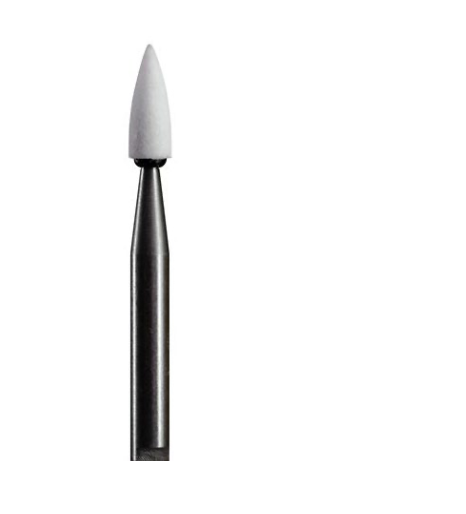
What is this?
Arkansas white stone - FL3

What are these?
sanding discs
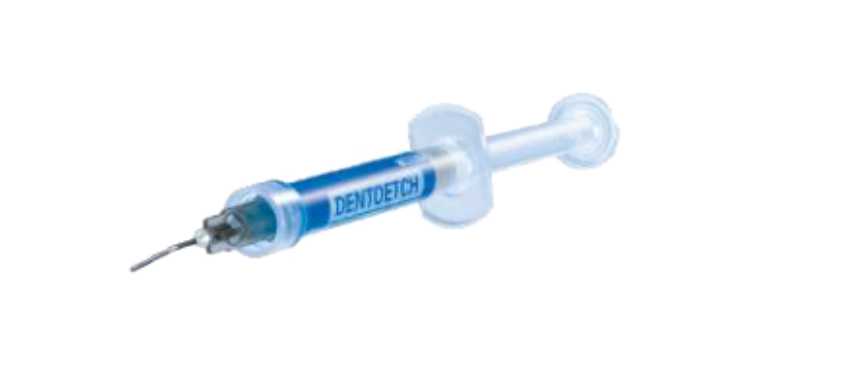
What is this?
37% phosphoric acid etch
What should you do to a tooth before bonding an uncomplicated crown fracture?
Probe gingival sulcus (8 places around the tooth) – to determine periodontal status.
Radiograph tooth to determine if the tooth is periodontally sound and has no evidence of endodontic disease.
No bone loss.
Compare width of root canal(s) with other teeth.
No evidence of apical lucency (granuloma or abscess).
Transilluminate the tooth to ensure that it is vital.
clean tooth
You are preparing to put restorative bonding on a fractured tooth. You find pulp exposure with your dental explorer. What do you do now?
If pulp exposure is found, then the tooth should either be extracted or referred for endodontic therapy
What is the Arkansas white stone in a high-speed hand piece used for?
to remove any sharp enamel edges of the fracture before bonding
What are the basic steps of restorative bonding?
make sure tooth is sound
clean tooth
probe for pulp exposure
remove any sharp enamel edges with arkansas white stone
smoothen fracture surface using discs
polish with non-fluoride polish
isolate tooth
apply 37% acid etch and rinse GENTLY with distilled water
apply bonding agent (apply to fracture site using micro-brush) → air dry w/ compressed air for 5-10 seconds
light cure
repeat bonding agent layer steps 1-2 consecutive times
Why does a non-fluoride polish need to be used before restorative bonding?
fluoride reduces efficacy of acid etch thus reducing bond strength
What does sealing the exposed dentinal tubules do?
• Should eliminate or reduce tooth sensitivity.
• Should prevent ingress of bacteria and bacterial toxins through the dentinal tubules to underlying pulp.
When should a tooth that has been restored be checked after procedure?
Potential for pulp to be irritated or infected prior the application of bonding
agent → Follow up radiographs in 6 – 12 months of this tooth and contralateral tooth. Compare width of root canals.