AP Psychology Unit 1- Sensation and the Senses
 Call Kai
 Learn
Learn Practice Test
 Spaced Repetition
 Match
Match Flashcards
 Knowt Play
1/40

There's no tags or description
Looks like no tags are added yet.
Name | Mastery | Learn | Test | Matching | Spaced | Call with Kai | Chat |
|---|
No analytics yet
Send a link to your students to track their progress
41 Terms
Sensation
processing environmental stimuli
Transduction
energy converted to neural signals
Absolute Threshold
the weakest amount of a stimulus that a person can detect half the time
just noticeable difference
the minimal change in a stimulus that can just barely be detected
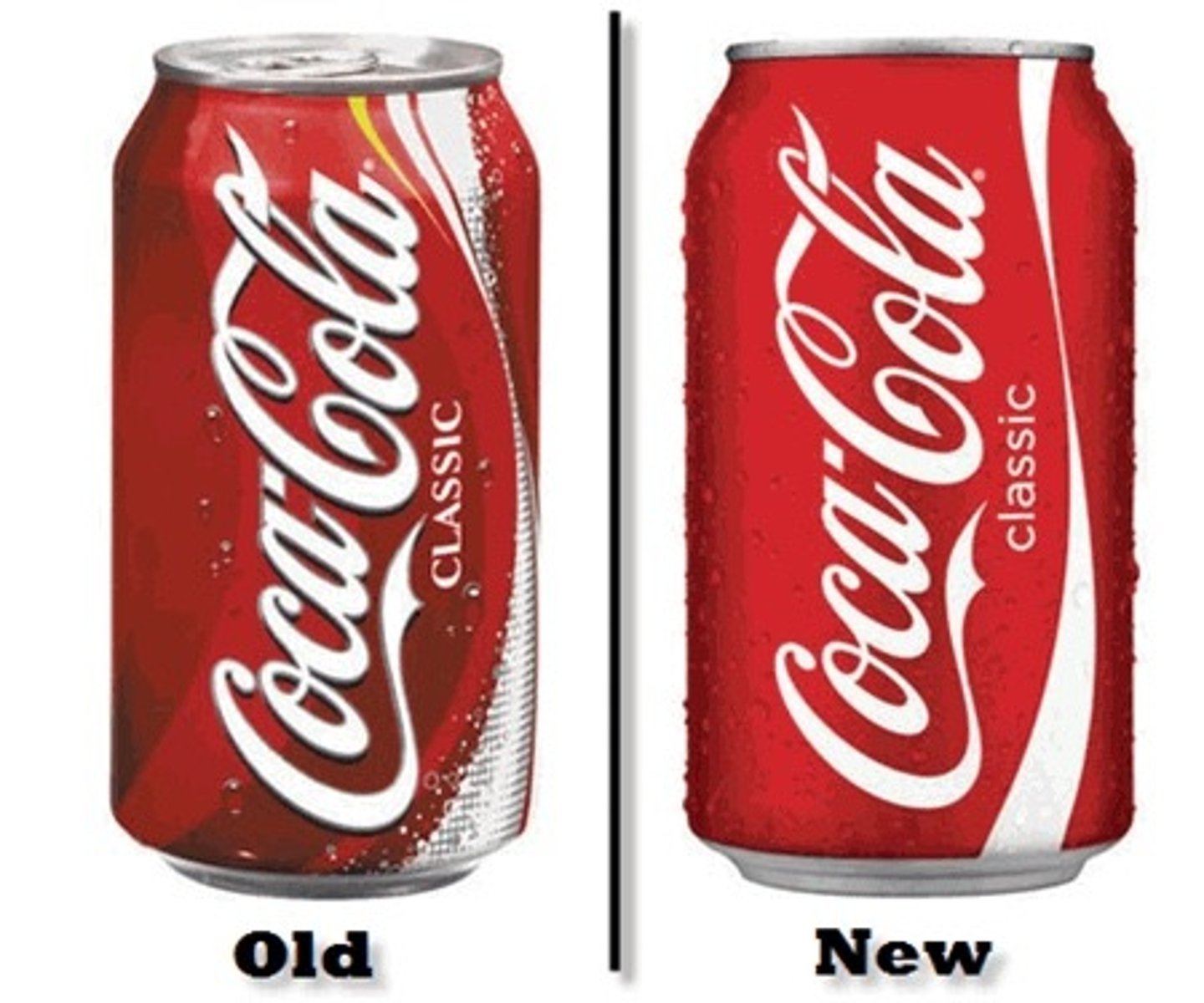
Weber's Law
The change needed is proportional to the intensity of the stimulus.
Optic Nerve
sends info to the occipital lobe
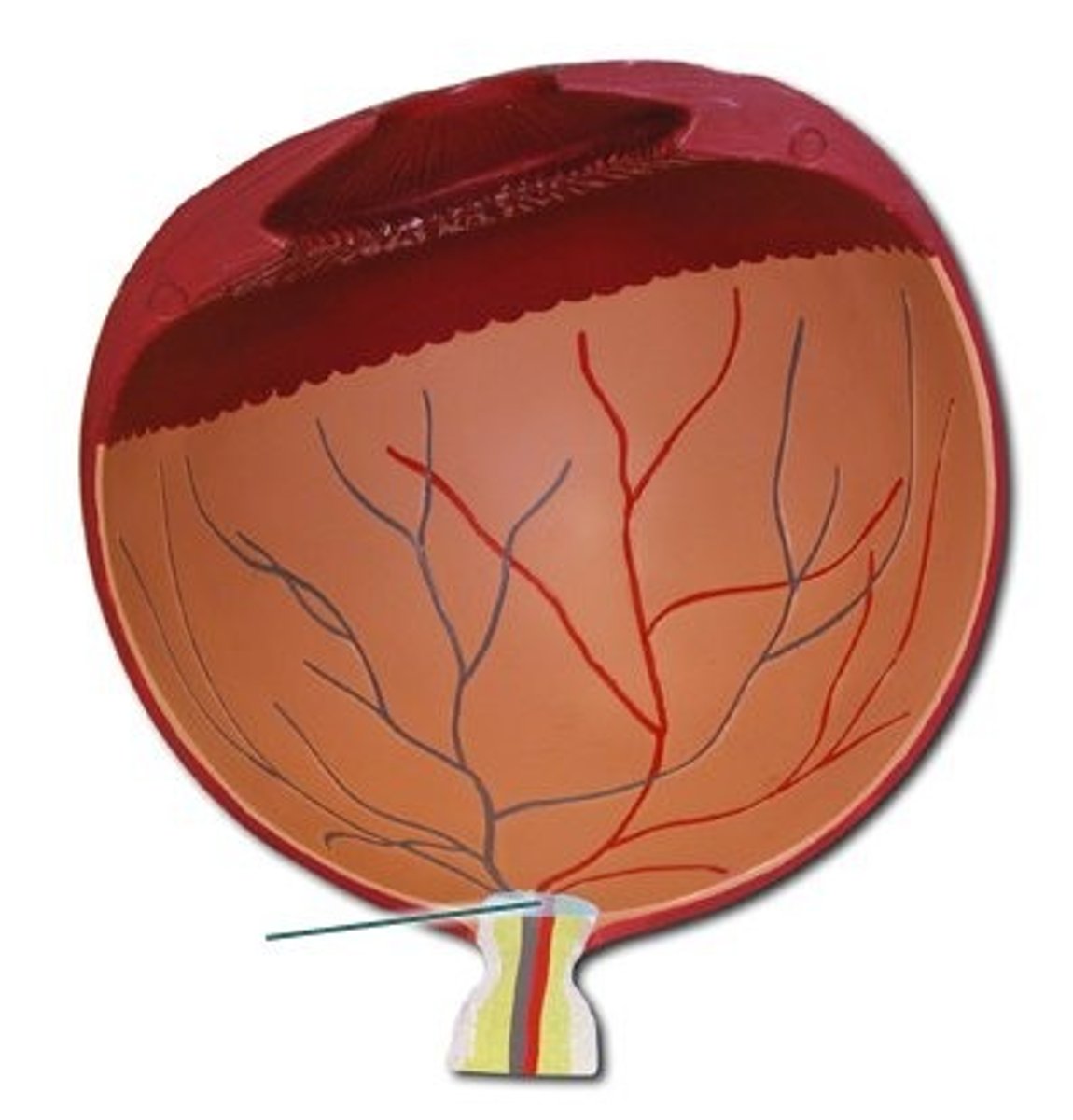
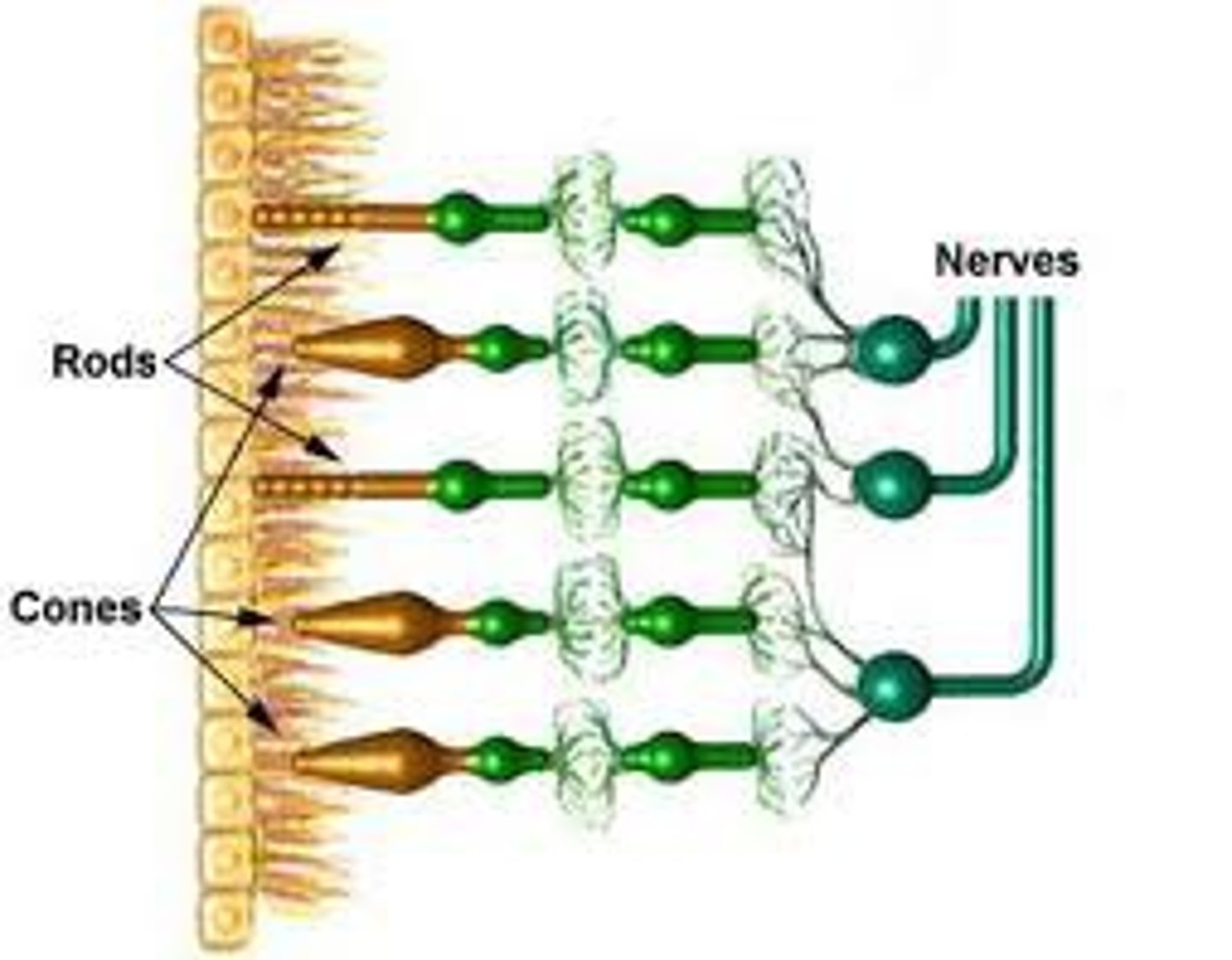
Photoreceptors
rods and cones
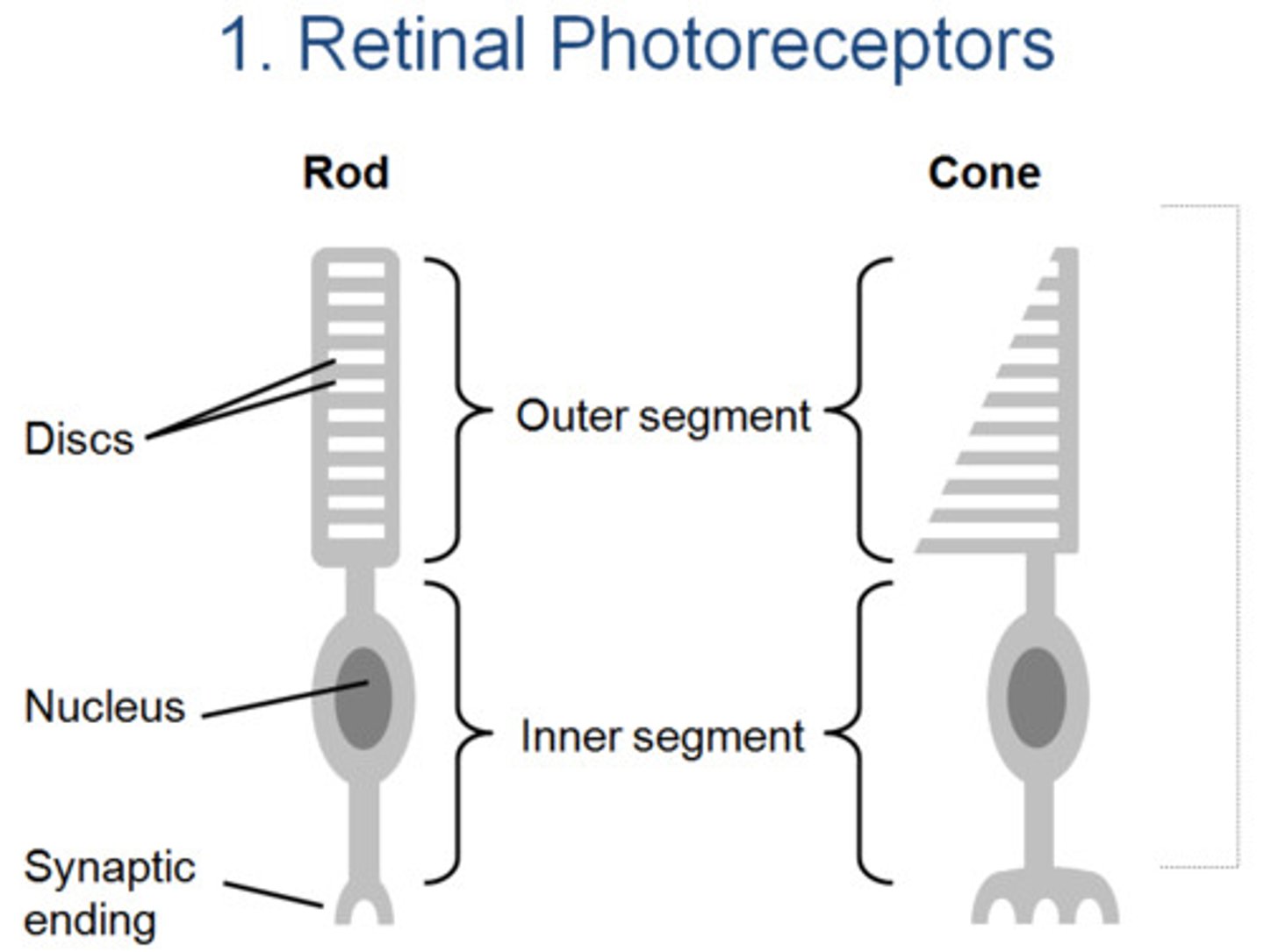
Rods
black and white, low light
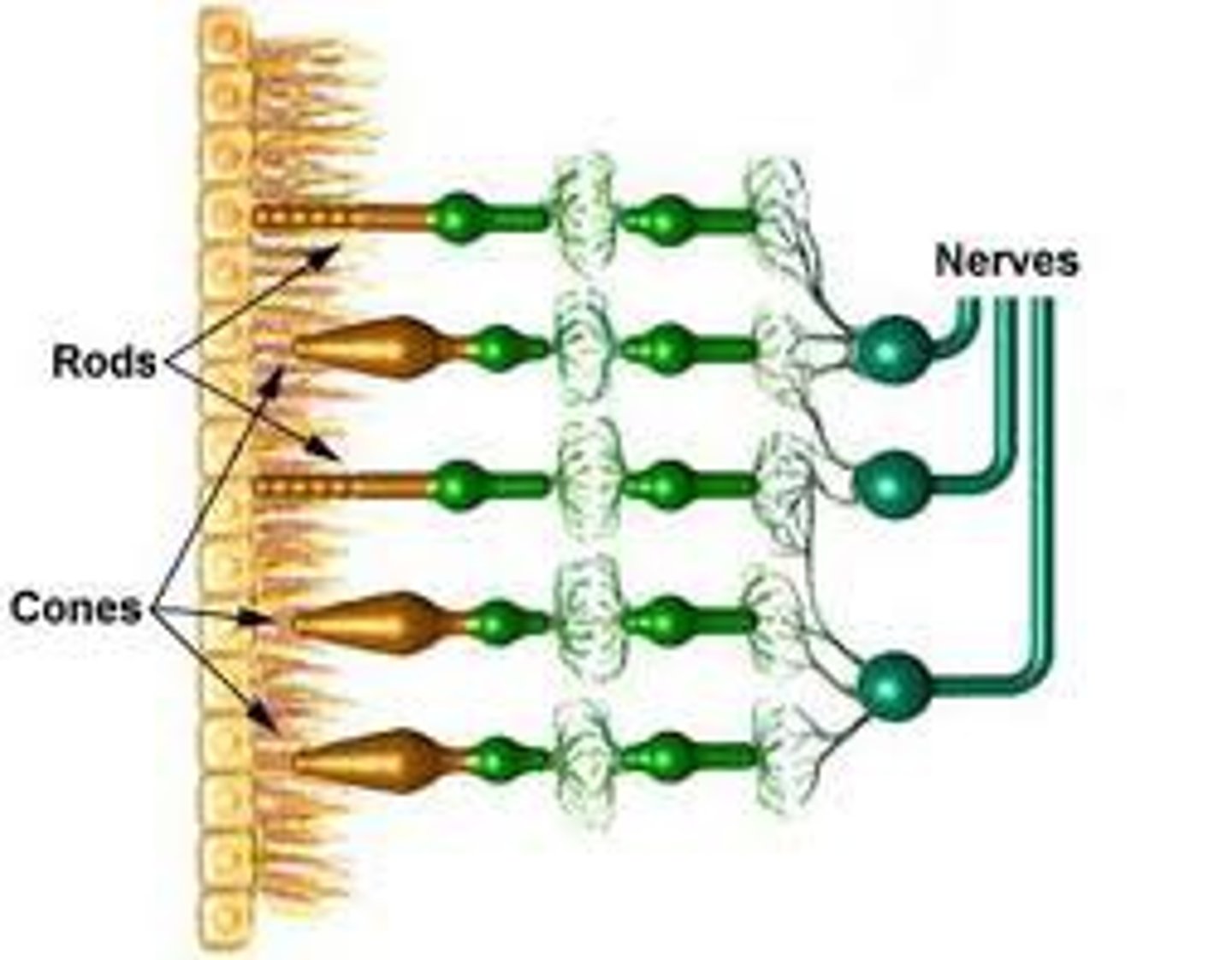
Cones
color, bright light
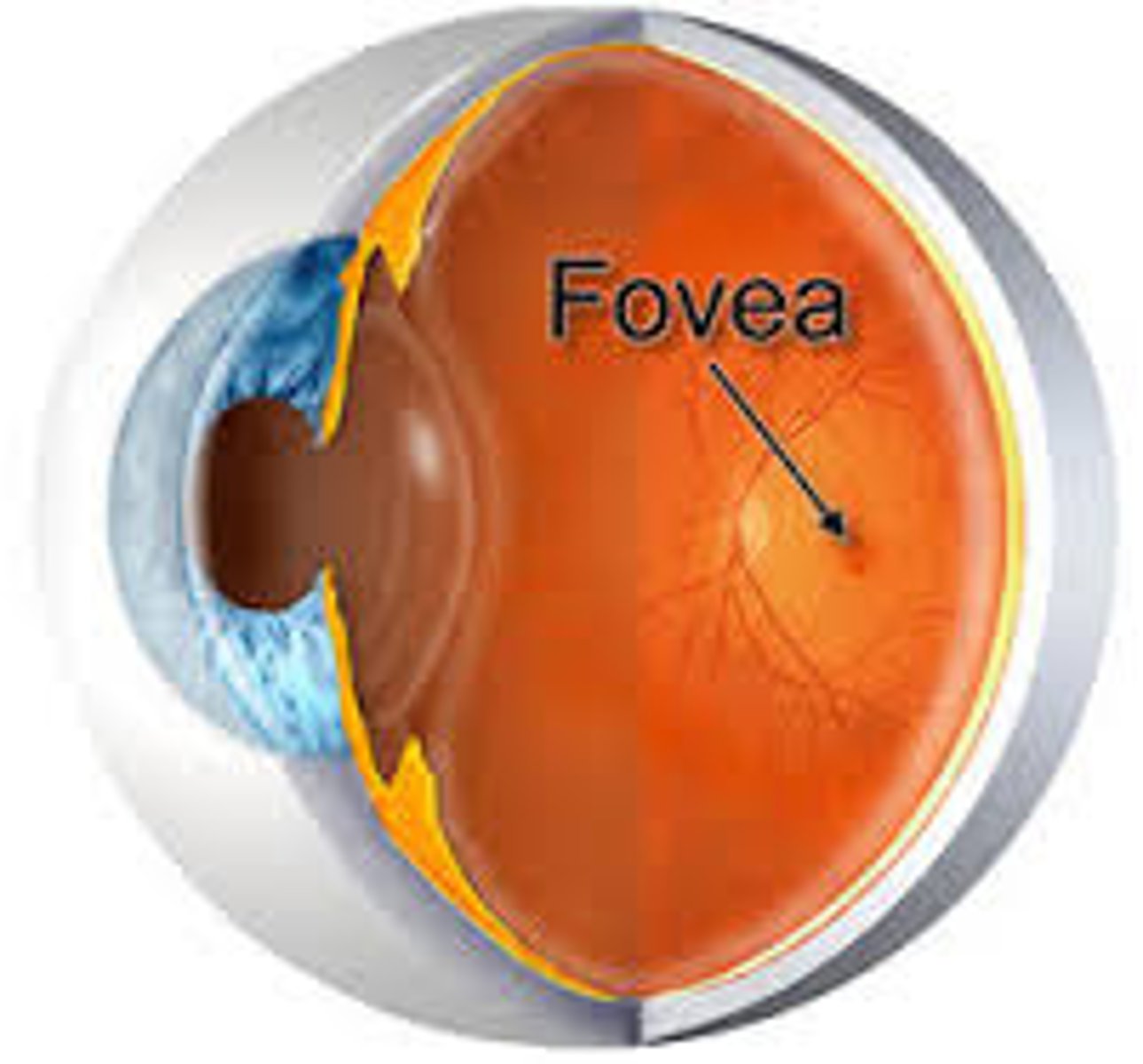
Fovea
Area of sharpest vision, highest concentration of cones
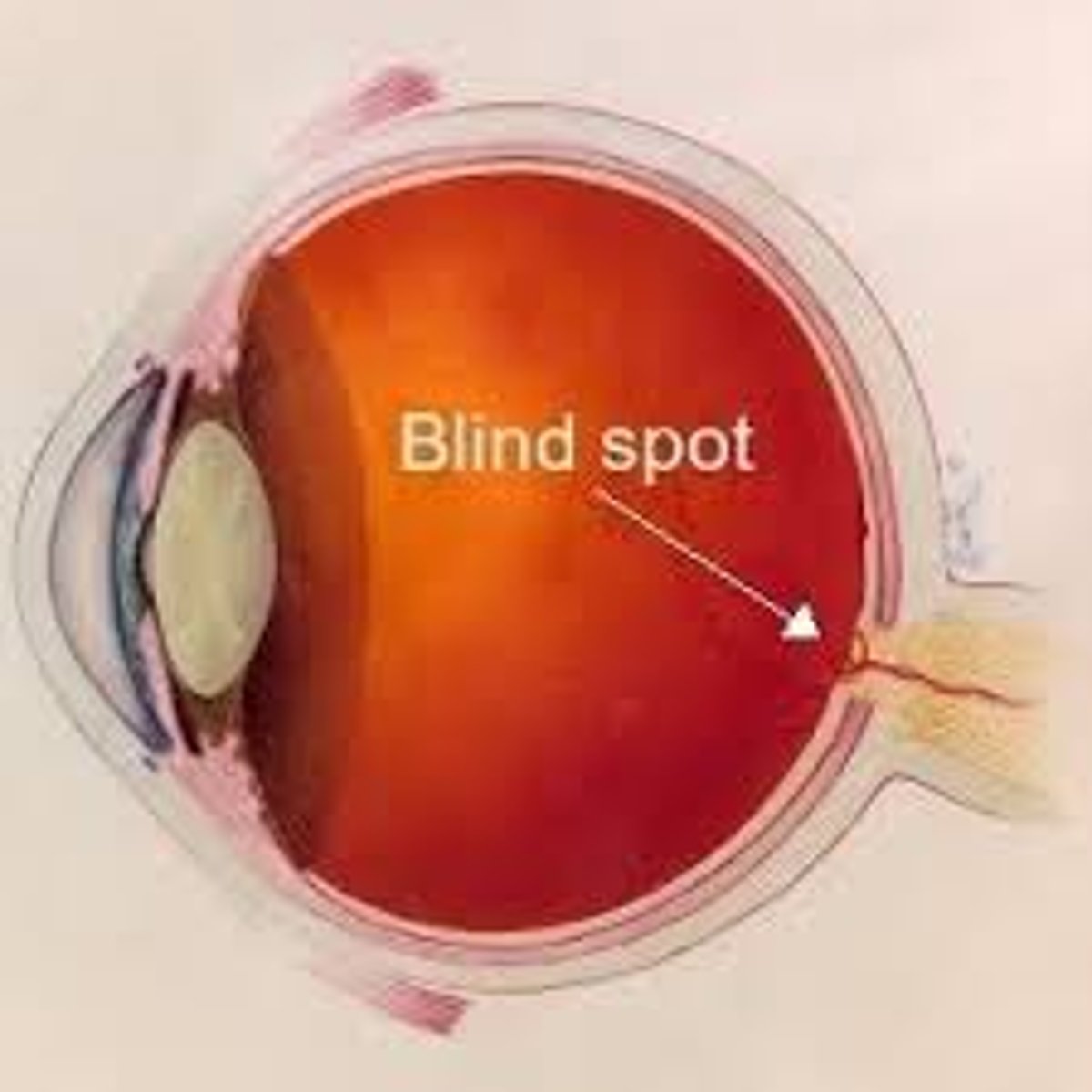
Blind Spot
Area where the optic nerve exits the eye
Vision
Eyes receive light energy and transduce into a neural message
Nearsighted
image focuses in front of retina
Farsighted
images focus on a point behind the retina
Dichromatism (colorblindness)
One cone is deficient, person can't see certain colors. Ex: Red-green colorblindness
Monochromatism (colorblindness)
See the world in only one color or black and white. Only one cone works or all are deficient
Conduction Deafness
Damage to middle ear, or born w/o ossicle bones
Sensorineural Deafness
deafness that results from damage to the auditory nerve
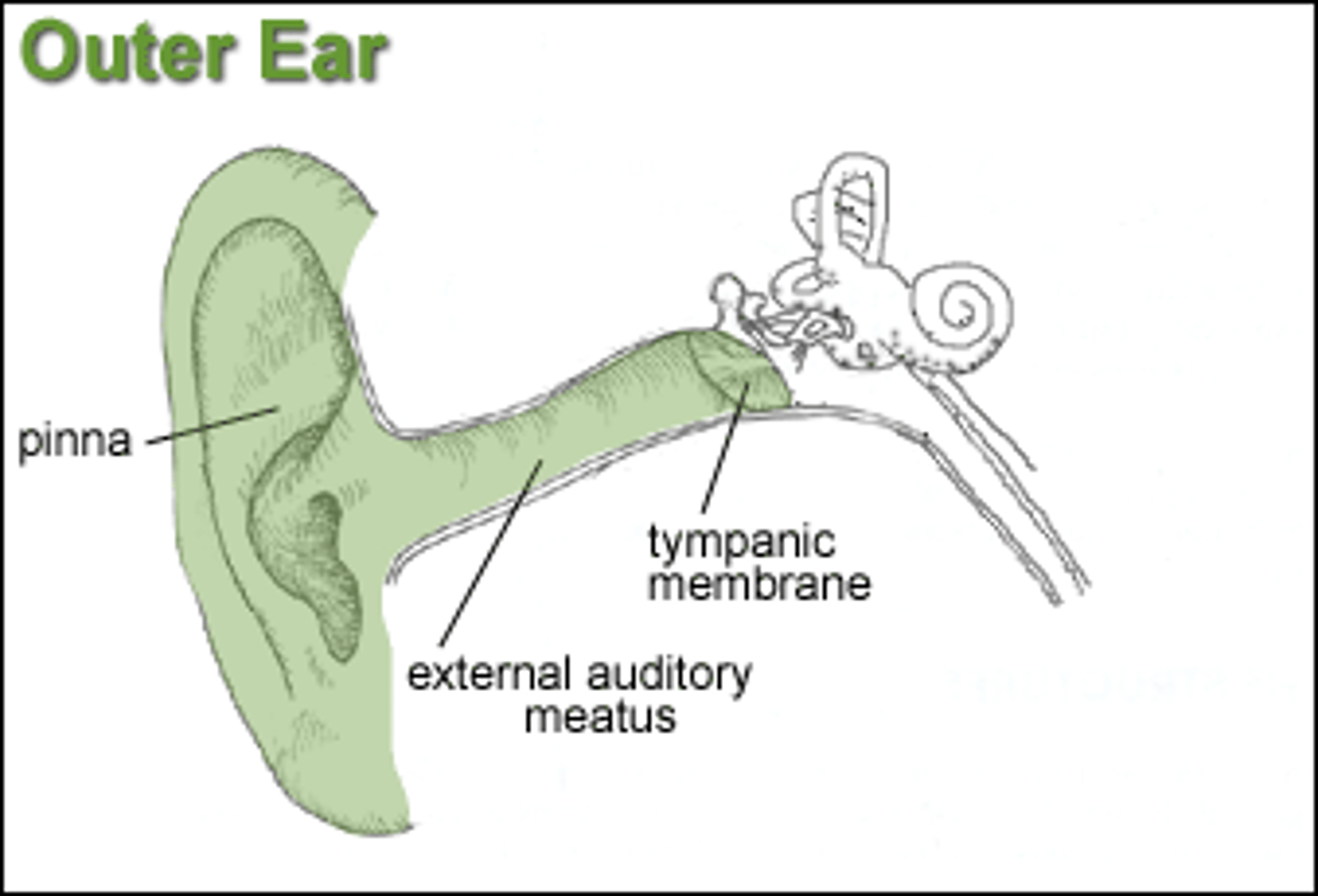
Outer Ear
anatomy canal
Middle Ear
Tympanic membrane, middle ear bones
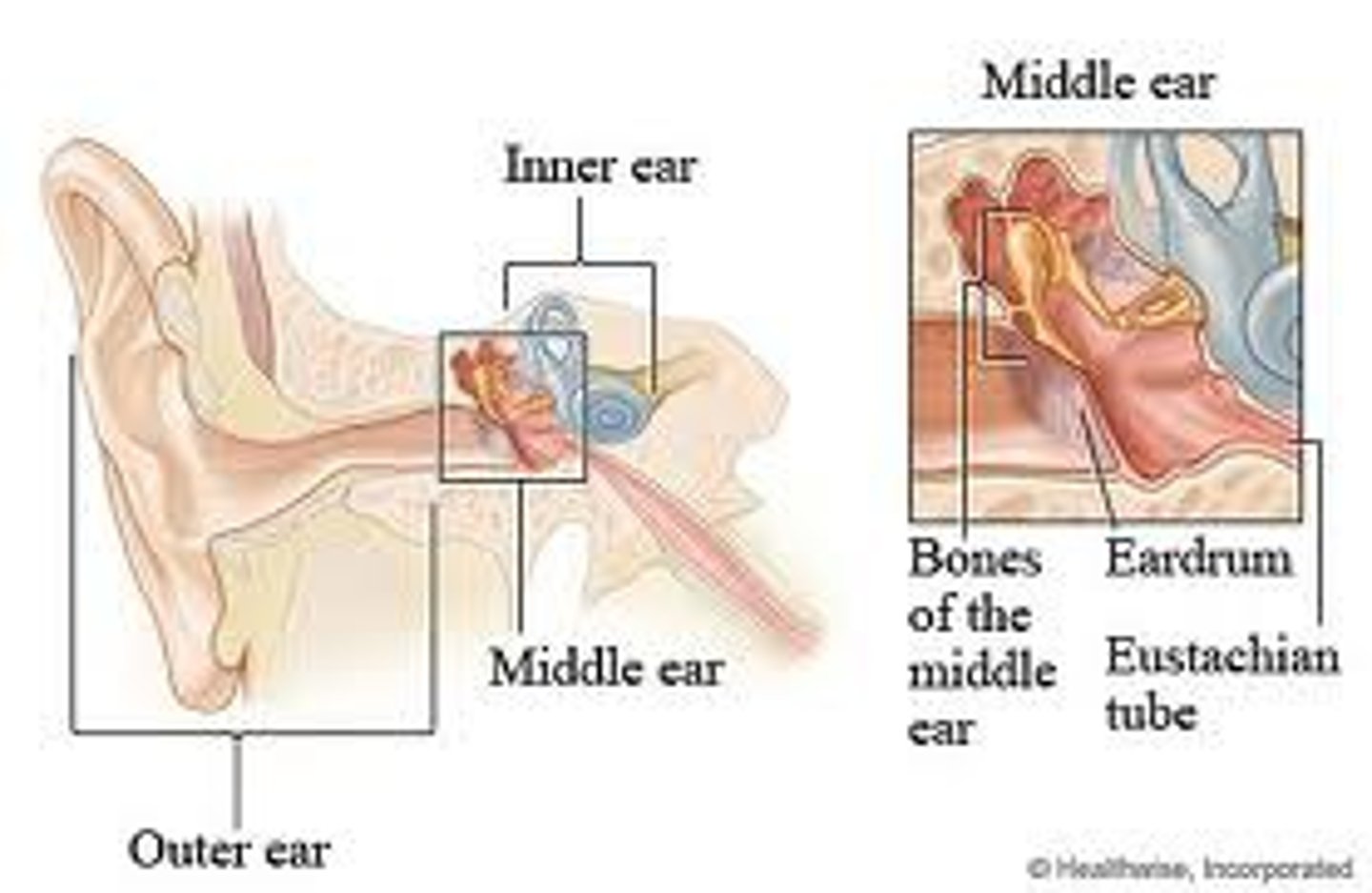
Inner Ear
semicircular canals, cochlea, and auditory nerve
Pitch
How high or low a sound is
Amplitude
loudness
Place Theory
We hear different pitches because different sound waves trigger activity in different places on the cochlear membrane
Frequency Theory
The rate of nerve impulses traveling up the auditory nerve matches the frequency of the tone
Olfaction
Smell. Molecules reach receptor cells in the nasal cavity then go straight to the olfactory bulb.
Gustation
Taste. Chemical molecules in the mouth.
Six Tastes
Sweet, sour, salty, bitter, umami, and oleogustus (fatty)
Super tasters
More taste buds on their tongues, able to detect flavors that most people can't. Cilantro-soap gene.
Touch
receptors on skin sensitive to warmth, pressure, cold, light touch, and pain.
Nociceptors
detect painful stimuli
gate control theory of pain
a theory of pain perception based on the idea that signals arriving from pain receptors in the body can be stopped, or gated, by the spinal cord
Small Nerve Fibers (gate theory)
Open the gate
Large Nerve Fibers (gate theory)
Close the gate. (Also medicine and endorphins can close the gate).
Vestibular Sense
the sense of body movement and position, including the sense of balance

Kinesthetic Sense
sense of the location of body parts in relation to the ground and each other
phantom limb sensation
the perception of sensations or pain in an amputated limb.
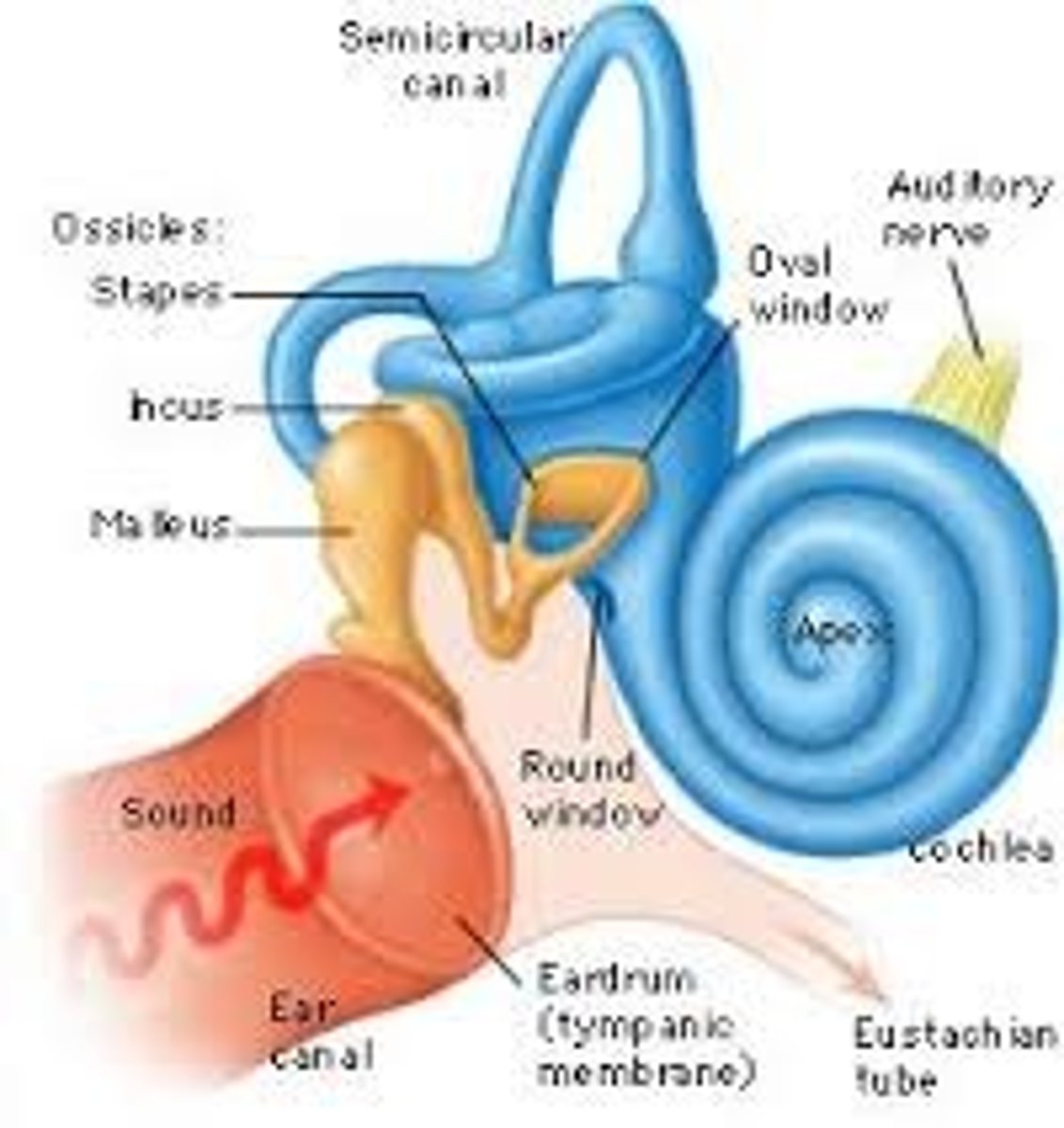
cochlea
a coiled, bony, fluid-filled tube in the inner ear through which sound waves trigger nerve impulses
ossicles of middle ear
hammer, anvil, stirrup, bones that vibrate
ear drum
The part of the ear that vibrates to allow us to hear sound.
auditory nerve fibers
These carry impulses from the inner ear to the brain (cerebral cortex).