CFB 12 - Nutrition, Water Soluble Vitamins
 Call Kai
 Learn
Learn Practice Test
 Spaced Repetition
 Match
Match Flashcards
 Knowt Play
1/71

There's no tags or description
Looks like no tags are added yet.
Name | Mastery | Learn | Test | Matching | Spaced | Call with Kai | Chat |
|---|
No analytics yet
Send a link to your students to track their progress
72 Terms
false... but the name comes from that original false belief (vita-life, amine-protein)
T/F: vitamins are protein components
organic substances (C, O, some N)
naturally occur in food in small amounts
needed for human body functioning
all vitamins can be obtained from the diet
Important facts about vitamins
Vitamin D (skin from sunlight)
Vitamin A (beta carotene)
Niacin B3 (AA tryptophan)
Biotin (intestinal bacteria)
What vitamins can be synthesized by the human body?
B complex group and C
water soluble vitamins
travels feely
water soluble vitamins can transport:
directly into blood stream (except B12, stored in liver)
water soluble vitamins absorption:
freely circulating in water-filled parts of body, no storage except B12
water soluble vitamins storage:
kidneys detect and remove excess amounts in urine
water soluble vitamins excretion:
unlikely to reach toxic levels because no stores and excrete regularly (except niacin)
water soluble vitamins toxicity:
needed in frequent, small doses (because no storage)
water soluble vitamins requirements:
A,D,E,K
fat soluble vitamins
into lymph then blood
fat soluble vitamins TRANSPORT
False!
T/F: fat soluble vitamins are also easily dissolvable in water
may require protein carriers
fat soluble vitamins transport
less readily excreted, remains in fat-storage sites
fat soluble vitamins excretion:
likely to reach toxic levels when consumed in excess
fat soluble vitamins toxicity
needed in periodic doses (NOT daily!)
fat soluble vitamins requirements
Ascorbic acid, ascorbate
Chemical name for vitamin C
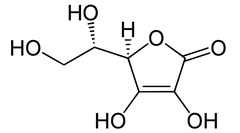
False!! (true in most animals except us)
T/F: vitamin C can be made endogenously from glucose in humans
stable when cold/dry/in acid
oxidized by air, alkaline anvironment, heat, light, presence of other minerals
only 85% would remain in closed contained after 8 days - why you get less vitamin C from orange juice!!!
When is vitamin C stable vs oxidized/lost?
1. increases iron absorption
2. biosynthesis of neurotransmitters
3. reducing agent (antioxidant, protects other antioxidants)
4. collagen production (more than 1/3 body protein)
5. detoxifies
6. wound healing
7. hormone production/release
Function of vitamin C in general (7)
Not stored - just body pools
- 4000mg high
- 1500mg normal
- 300mg deficient (scurvy)
Excess excreted by kidneys
Bioavailability is 100% for 15-200mg doses
- feedback mechanism: absorption decreases as intake increases
Storage of vitamin C
Children: 15-75mg/day (age dependent)
Adults:
- men: 90mg/day
- women: 75mg/day
Adult upper limit: 2000mg
How much vitamin C do we need?
-Integrity of fibroblasts, osteoblasts, odontoblasts, tissues, bones and teeth
-Rate of dentin formation directly related to Vitamin C levels
-Strong correlation between low Vitamin C and periodontal disease
-Easily hemorrhaging gingiva in absence of vitamin C
Function of vitamin C in mouth
acidic fruits, leafy veggies
kiwi
guava
red pepper
very easy to meet your needs with diet!!!
Food sources of Vitamin C
Smokers - cell damage, free radicals
- 115/130mg per day (women/men respectively
Pregnant women
- 80-85 mg per day
Lactating women
- 115-120 mg per day
Injured, stressed, infection
- 200 mg per day
Those with oral contraceptives, corticosteroids, and during high collagen synthesis need more!
People who need more vitamin C
Scurvy
Vitamin C deficency can lead to...
Scurvy
- individuals with peculiar diets
- bachelor scurvy case
(high carb diet, omit fruits/veggies)
- alcoholics/drug addicts
- poor and elderly with bad diet
- cancer cachexia/malabsorption
all are risk factors for...
True
T/F: If left untreated, scurvy is fatal
Scurvy
early on: weakness/lethargy
hemorrhages, hyperkeratosis, erythema/purpura, bleeding into skin/subcutaneous tissues/muscles/joints, coiled hairs, breakdown of wounds, depression, fever, shortness of breath, confusion
are all examples of symptoms...
affects tooth development, pulpal hemorrhage in infants, can affect pulp & dentin
bleeding gums, pulpal hemorrhage, irregular dentin
Dental implications of scurvy...
Too much vitamin C:
increased risk for kidney stones, sickling in sickle cell anemia, hemochromatosis, rebound scurvy
Symptoms of Vitamin C toxicity
fibroblasts
osteoblasts
odontoblasts
tissues
bones
teeth
Integrity of what 6 tissue components are related to vitamin C?
directly related to vitamin C levels
rate of dental formation is.....
periodontal disease
strong correlation between low vitamin C and....
Easily hemorrhaging
In absence of vitamin C, what happens to gingiva?
energy releasing*, function as catalysts for carbohydrate/fat/protein/AA metabolism & hematopoiesis
*not energy producing!!
General function of vitamin B
FALSE - it is adequate
T/F: US diet is inadequate in vitamin B
8 - originally thought to be one vitamin
"The great eight"
How many B vitamins are there
True!
T/F: B vitamins are found in the same foods
False! deficiency occurs with multiple B vitamins at once
T/F: Isolated deficiencies of vitamin B are common
swollen, strawberry colored tongue
edema of oral mucosa
inflammation of oral mucosa
three oral signs of vitamin B deficiency
False
T/F: Extra vitamin B gives you more energy
Thiamin
1.1-1.2 mg/day (women & men respectively)
degrades under similar conditions as vitamin C
antithiaminase in raw shellfish
excessive consumption is benign
found in energy drinks
sources: eggs, bananas, cheese, milk, veggies, grains, nuts, meats
easily available in a health diet
Vitamin B1
Riboflavin (means yellow)
coenzyme form
- FAD,FMN, glucose metabolism
supports antioxidant activity of glutathione peroxidase
seen in energy drinks
1.1-1.3 mg/day (women & men respectively)
similar food sources and destroying mechanisms to B1
Vitamin B2
Niacin
Two forms: Nicotinic acid/nicotinamide
Coenzyme forms: NAD, NADP
Function:
- citric acid cycle, ETC
- glucose metabolism & FA synthesis
- steroid formation
- RBC formation
- needed for 50 metabolic reactions
14-16 mg/day (women & men respectively)
can be synthesized from AA tryptophan
Stable in heat, acid, alkali, oxygen
Mostly found in meats
Vitamin B3
Was originally confused with nicotine! NOT the same or even close to the same
Why is nicotinic acid called niacin?
Pantothenic Acid "from every side"
NO RDA
deficiency is rare
coenzyme form: coA in metabolism
food sources:
- whole grain
- legumes
- beef liver
- brewers yeast
Vitamin B5
Mushrooms
Which food is commonly associated with having a variety of B vitamins?
Pyridoxine
coenzyme form: PLP
- protein metabolism
- gluconeogensis
- carb/fat metabolism
- convert tryptophan to niacin
- can make methionine
- hemoglobin synthesis
- neurotransmitter synthesis
Vitamin B6 deficiency will cause microcytic anemia
RDA: 1.2-1.3 mg/day
- oatmeal, beans, pistachios, cereal
Vitamin B6
Cobalamin
dark red color
RDA: 2.4 micrograms/day
metabolism of purine/pyrimidines & production of neurotransmitters, myelin sheath
deficiencies in elderly, alcoholics, vegans
eating dairy, meats, seafood can help meet requirements
Vitamin B12
biotin & folate (folic acid)
Excluding vitamin B1/2/3/5/6/12, what are the last two B vitamins?
coenzyme: biocytin in RNA/DNA synthesis
NO RDA
little chance for deficiency (except children with conditions or drugs that block absorption)
avidin in raw egg whites can cause deficiency if you eat a large amount
Important facts about biotin
Coenzyme: THFA (tetrahydrofolic acid)
RDA: 400 micrograms/day (UL of 1000)
- Pregnancy requires 600 micrograms/day to avoid neural tube defects, spina bifida, paralysis: occurs in first 30 days of development!
can get from cereal, orange juice, lentils
Important facts about folate
Bacteria in large intestine produce
Small intestine absorbs
Biotin in large intestine vs small intestine
strawberry/swollen tongue, edema of oral mucosa, inflammation of oral mucosa
Symptoms of Vitamin B deficiency (generally)
Thiamine (B1) deficiency
- dry: Nervous system
- wet: GI/Cardiovascular system
symptoms: weakness, nerve degeneration, irritability, nerve transmission lost, poor coordination, calf pain
Beri Beri is
elderly, alcoholics, restrictive diet, developing countries
At risk populations for vitamin B1 deficiency
Encephalopathy
Thiamine (B1) deficiency
linked to alcoholism!
- cause cell damage: stomach cells are not absorbing nutrients
- inadequate diet due to alcohol consumption
nervous system effects
Wernicke-Korsakoff Syndrome is
Riboflavin (B2) deficiency
- rare but alcoholics/sedative users
- inflammation of mouth/tongue
- NS effects
Ariboflavinosis is
Niacin (B3) deficiency
Pellagra is
4 D's
Diarrhea, Dematitis, Dementia, Death
Pellagra is characterized by..
-Occurs in elderly, alcoholism,
-medication prevent absorption of vitamin B6, renal dialysis
Pyridoxine B6 deficiency
neural tube defects, spina bifida, paralysis
Folate deficiency in pregnancy can lead to...
B12 deficiency
*if antidepressants don't work, patients may have a vitamin B12 deficiency!
Irreversible nerve damage, impaired neurological function, confusion, gait/position impairment, pernicious anemia are signs of...
oral symptoms: glossitis, red, sore, smooth, burning tongue
nontoxic
Benefits: lowers LDL, increases HDL
Adverse effects: flushing (vasodilator), liver toxicity
Benefits/Adverse effects of Niacin
True, multiple types of B vitamins have the same food source. Deficiency will occur with multiple B vitamins at once
T/F: Isolated Vitamin B deficencies are rare
carbohydrate metabolism - thiamin, riboflavin, niacin, B5, biotin
fat metabolism - biotin, B5
amino acid/protein metabolism - B6, B5, biotin
hematopoiesis - B6, folate, B12
B vitamins are all coenzymes that work as catalysts for... (4)

provides B vitamins
How does fiber relate to vitamins?
B5, Biotin, B6, Folate, B12
Hematopoietic vitamins
Anemia
Condition of low hemoglobin levels can be called....
microcytic - shrunken blood cells
deficiency in vitamin B6 or iron
macrocytic - enlarged blood cells
deficiency in vitamin B12 or folate
Two types of anemia