MSIII Midterm Exam Study Guide
 Call Kai
 Learn
Learn Practice Test
 Spaced Repetition
 Match
Match Flashcards
 Knowt Play
1/113

There's no tags or description
Looks like no tags are added yet.
Name | Mastery | Learn | Test | Matching | Spaced | Call with Kai |
|---|
No analytics yet
Send a link to your students to track their progress
114 Terms
What is the main risk factor for ankle sprains?
History of ankle sprains
During AC separation, the clavicle pops:
Up and back
Most common mechanism of injury for anterior shoulder dislocation:
Fall on an externally rotated arm
Fracture of the anterior rim of the glenoid with the attached labrum
Bony bankart
Tear of the superior labrum extending from anterior to posterior - may be associated with the long head of the biceps tendon and recurrent anterior stability
Hill-sachs
Compression fracture of the posterolateral margin of the humeral head
SLAP Lesion
De Quervain Tenosynovitis (All Peanut Lovers Eat Peanut Butter)
APL and EPB are affected
Ulnar nerve injuries are characterized by a:
Claw hand deformity
The claw hand deformity is a key characteristic of an:
Ulnar nerve injury, lower plexus injury, and Klumpky’s palsy
Median nerve injuries are characterized by:
The Ape hand deformity or benediction sign
What’s the cause of primary frozen shoulder?
No known cause
What’s the cause of secondary frozen shoulder?
A period of pain or immobilization (RA, OA, trauma)
Which patients have a higher likelihood of developing frozen shoulder?
40-65yo, women, diabetes mellitus, and thyroid disease
Which stage of frozen shoulder (adhesive capsulitis) is characterized by pain at night that increases with movement and ER is limited?
Stage 1
Which stage of frozen shoulder (adhesive capsulitis) is characterized by persistent and intense pain at rest and ROM is limited in all directions?
Stage 2
Which stage of frozen shoulder (adhesive capsulitis) is characterized by pain only with movement, significant adhesions, and limited ROM in all directions?
Stage 3
What is a common compensation for patient’s in stage 3 of frozen shoulder?
Excessive scapulothoracic movement
Which stage of frozen shoulder (adhesive capsulitis) is characterized by minimal pain but significant capsular restrictions, motion is gradually improving
Stage 4
Which motions are the most limited with Frozen Shoulder (Adhesive Capsulitis)
ER and abduction
After an MUA surgery for frozen shoulder, which position is often required of pts to sleep in for up to 3 weeks?
Shoulder in passive abduction
Which motions are restricted for post-op glenohumeral arthroplasty pts?
Extension past neutral, and apley internal rotation
What muscle is it important not to stress following a TSA or an RTSA?
Subscapularis
Compromise of the structural integrity of the musculocutaneous structures (vascular changes, collagen degeneration) is known as:
Intrinsic Impingement/rotator cuff disease/tendinopathy
Which type of extrinsic impingement is characterized by an abdnormal acromion shape
Primary extrinsic impingement
Which type of extrinsic impingement syndrome is characterized by hypermobility or instability of GH leading to increased translation of humeral head?
Secondary extrinsic impingement
Which type of extrinsic impingement is characterized by mechanical entrapment of posterior supraspinatus tendon between humeral head & labrum due to repeated elevation, horizontal abduction, maximal ER (throwing position)
Internal extrinsic impingement
Which special tests test for subacromial pain or impingement?
Neer impingement, Hawkin’s kennedy, empty can, painful arc, and anterior apprehension
Which shoulder pathology is associated with an active inflammatory process in the bursa or tendons in the subacromial space?
Tendonitis/bursitis/Tendonalgia/Tenonopathy
Which special tests detect bicipital Tendonitis/Tendonalgia
Speeds test and Yergason’s test
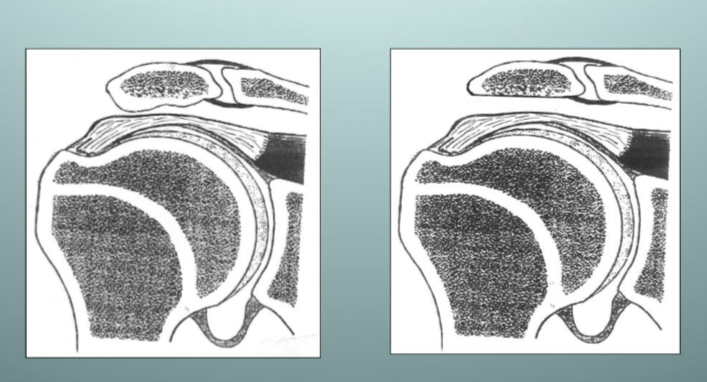
What is this a depiction of?
Subacromial decompression
Which procedure is designed to restore or increase the volume of the subacromial space
and provide adequate gliding room for the cuff tendons?
Subacromial decompression
If the pt has inferior shoulder instability, what special test will they be positive for?
The sulcus sign
Which direction of shoulder hypermobility/dislocation is due to a posteriorly directed force on distal humerus or forearm when humerus is in a position of elevation, ER, horizontal abduction?
Anterior dislocation
Which direction of shoulder hypermobility/dislocation is due to a force applied to the arm when humerus positioned in flexion, ADD, IR (FOOSH)?
Posterior dislocation
A fracture of the anterior rim of the glenoid with the attached labrum is called a…
Bony bankart
A tear of the Superior Labrum extending from Anterior to Posterior – may be associated with tear of long head of biceps tendon & recurrent anterior instability of GH is called a…
SLAP lesion
A compression fracture at the posterolateral margin of humeral head is called a…
hill-sachs fracture
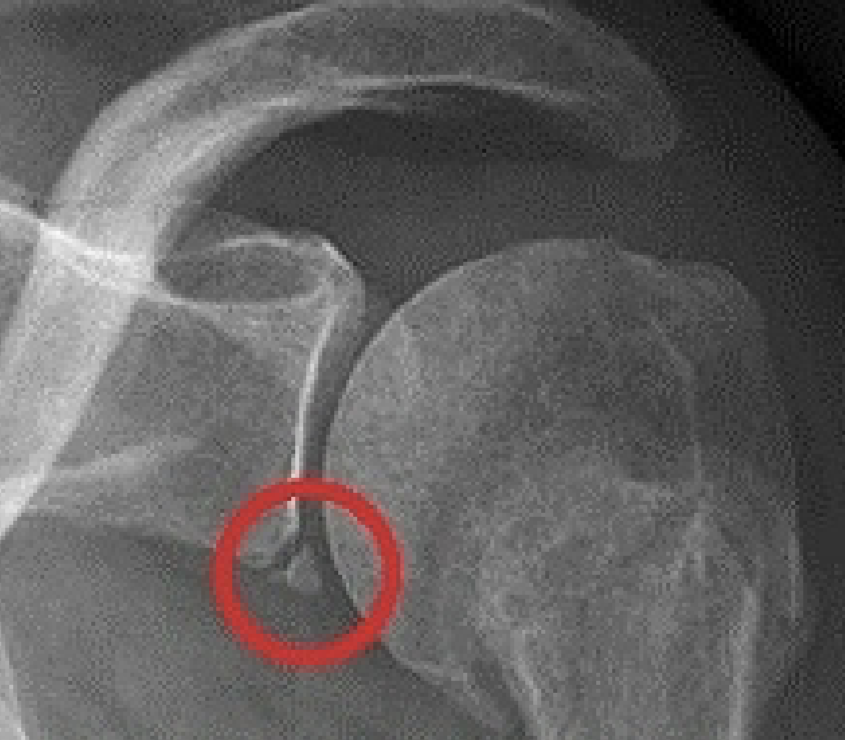
Bony bankart
What common nerve injury is associated with a humeral neck fracture?
Axillary nerve
What nerve is compressed during a humeral shaft fracture?
Radial nerve
Formation of bone in atypical locations of the body (muscle-tendon unit, capsule, ligaments)
Myositis Ossificans /Heterotopic Ossificans (HO)/ Ectopic Bone Formation
In which scenario is a pt have about a 40% of developing Myositis Ossificans?
After an elbow fracture
In which bone is it most common to develop Heterotopic Ossificans (HO)?
Brachialis
Which tests would be positive in the presence of lateral elbow tendinopathy?
Mill’s test and Cozen’s test
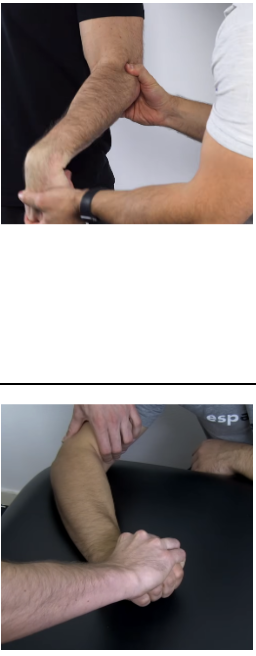
Which muscles are most commonly involved in lateral epicondylalgia?
ECRB and ED
Which muscles are involved in medial elbow tendinopathy/epicondylagia (golfer’s elbow)
The wrist flexors (common flexor tendon)
Excessive repetitive use of wrist & forearm muscles
Strain exceeds of the strength of the tissues when demand EXCEEDS repair process
With repetitive trauma, collagen weakening occurs
Involved nerves may be sensitized
These are all possible causes/ characteristics of:
Tendinopathy
True/false: Medial and lateral tendinopathy would be good pt scenarios to incorporate ULNT
True
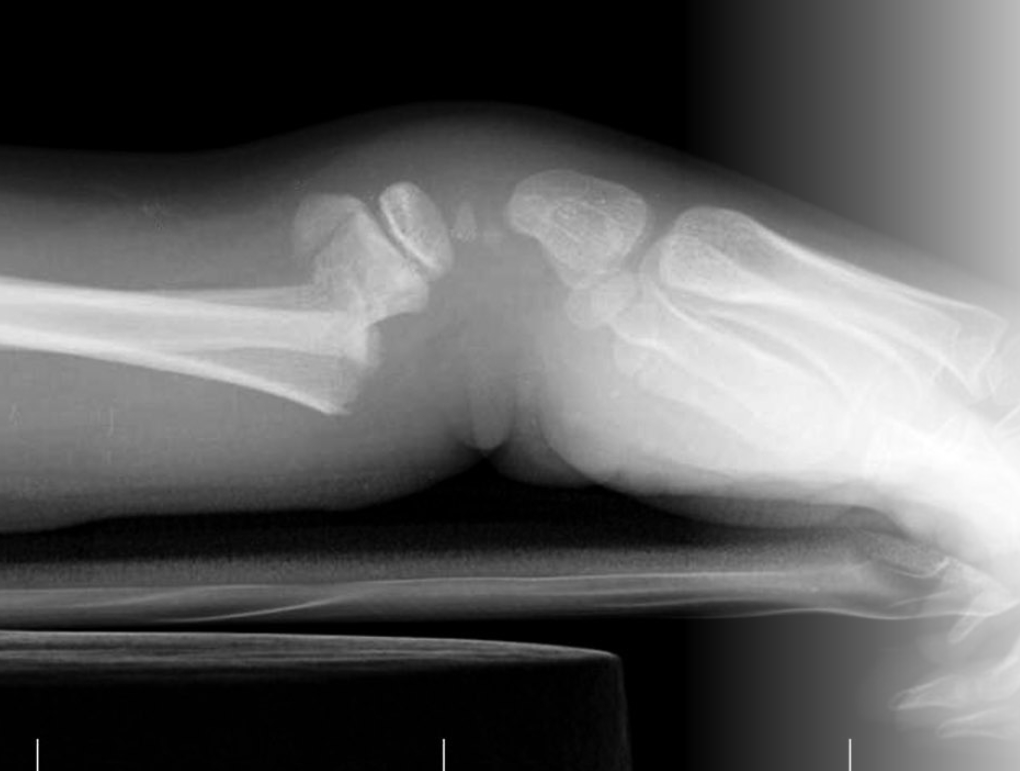
What is the MOI for a Colle’s fracture?
FOOSH
What is the most commonly fractured carpal?
Scaphoid
What is the main concern with a scaphoid fracture?
Avascular necrosis
What is the main sign of a scaphoid fracture?
Tenderness & swelling in the anatomical snuff box
Which muscles are involved is De Quervain Tenosynovitis?
APL and EPB
Pathological breakdown of the tendon structure results from continued or repetitive loading of the involved muscle or tendon beyond its ability to adapt
De Quervain Tenosynovitis
What is the most common ligament injury in the hand?
Thumb UCL sprain (gamekeeper’s thumb)
What is the MOI for a thumb UCL sprain?
Traumatic valgus force to the thumb MCP
What is the most common entrapment neuropathy in the UE?
Carpal tunnel syndrome
Which pathology is characterized by sensory loss and motor weakness that occurs with entrapment of the median nerve?
Carpal Tunnel Syndrome
Which tests would be positive for carpal tunnel syndrome?
Phalan’s test and Tinel’s test
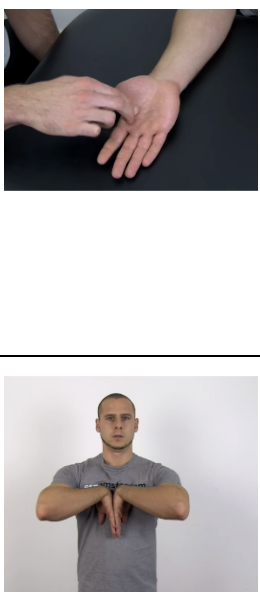
What are the two key element of CRPS?
Disproportionate pain to the inciting incident, no other diagnosis that
explains signs & symptoms
Which type of CRPS is characterized by NO nerve origin and abnormal sweating?
Type 1
Which type of CRPS develops after a nerve injury?
Type 2
What is the main indication that separates and ORIF from a THA?
Extracapsular hip fracture (ORIF) or Intracapsular hip fracture (THA)
What is the underlying pathology that accounts for most total hip procedures?
Osteoarthritis
Which surgical approach to THA has the highest incidence of dislocation?
Posterior/posterolateral
Precautions for posterolateral THA:
Hip flexion >90, IR and adduction past neutral
Which THA approach has a delayed recovery of abductors and normal gait?
Anterior/anterolateral
Anterolateral THA precautions:
Hip flexion >90, extension, ER, and adduction past neutral
“Pain typically presents in the mid-buttock area & may radiate through the sciatic nerve distribution – may also impact hip, coccyx, groin”
This describes:
Piriformis syndrome
“May occur from acute (direct impact) or cumulative trauma (running with repetitive friction between ITB & greater trochanter) the lateral hip irritating the trochanteric bursa”
This describes:
Trochanteric Bursitis
“Displacement of femoral head out of acetabulum – goal of treatment is to brace to reduce femoral head into acetabulum & maintain reduction”
This describes which pediatric pathology?
Congenital Hip Dyslasia
“Portion of femoral head undergoes avascular necrosis →infarcts → necrotic bone absorbed & replaced – gradual & painful onset, relieved by rest & aggravated by WB”
This describes which pediatric pathology?
Legg-calve-perthes disease
“Weakening of epiphyseal plate of upper femur → femoral neck displaces – treat with surgery (removable pins)”
This describes which pediatric pathology?
Slipped capital femoral epiphysis
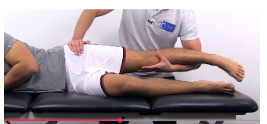
If the patient has a tight IT band, which special test will they be positive for?
Ober test
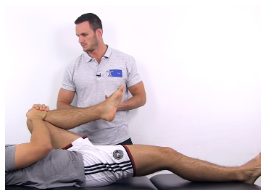
If the patient has a hip flexor contracture, which special test will they be positive for?
Thomas test
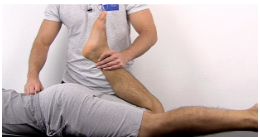
If the patient ha a tight rectus femoris, which special test will they be positive for?
Ely Test
Which test will be positive in the case of hamstring contractures?
Tripod test
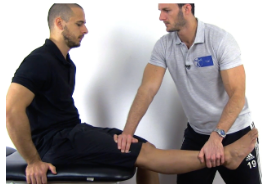
Which test tests for limitation in general hip ROM?
FABER (Patrick) test
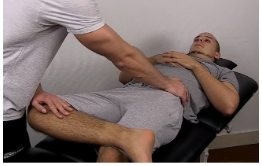
Which muscle may be tight/overactive in the case of trochanteric bursitis?
TFL
With Trochanteric Bursitis, when would discomfort be experienced?
Asymmetrical standing
Which type of fixation is most likely to loosen over time?
Cemented
Which type of fixation may be followed by WB restrictions for up to 8 weeks?
Uncemented
No ___ in ___-_____ position for 2 weeks after cemented and 4-6 weeks after uncemented TKA to avoid varus and valgus stressed to the operated knee.
SLRs in side-lying
Embryologic synovial tissue remnant causes joint irritation.
What is this?
Plica Syndrome
Irritation of infrapatellar fat pad from trauma or overuse.
What is this?
Fat Pad Syndrome
Irritation of IT band as it passes over lateral femoral condyle – may be from tight TFL or glute max.
What is this?
IT Band friction syndrome
Which syndrome is caused by prolonged kneeling or recruitment of minor trauma to the anterior knee
Prepatellar bursitis (housemaid’s knee)
Osteochondritis dissecans of patella or femoral trochlea can cause:
Pain with squatting, stooping, ambulation, and stair. Joint may be loose.
What is softening of the cartilaginous posterior surface of the patella called?
Patellar Chondromalacia
Which PF pathology occurs during adolescence from overuse during rapid growth?
Apophysitis / Osgood-Schlatter disease
During recovery from an ACL reconstruction, avoid squatting > __ degrees knee flexion
60
During recovery for ACL reconstruction, avoid resistance on the _____ during hip or quad strengthening + avoid resisted extension < __ degrees
Tibia, 45
After a PCL reconstruction, postpone ____ ___ _____ for 6-12 weeks in prone or standing
Active knee flexion
Which part of the meniscus is the most vasularized/ has the most blood supply?
The lateral/outer portion
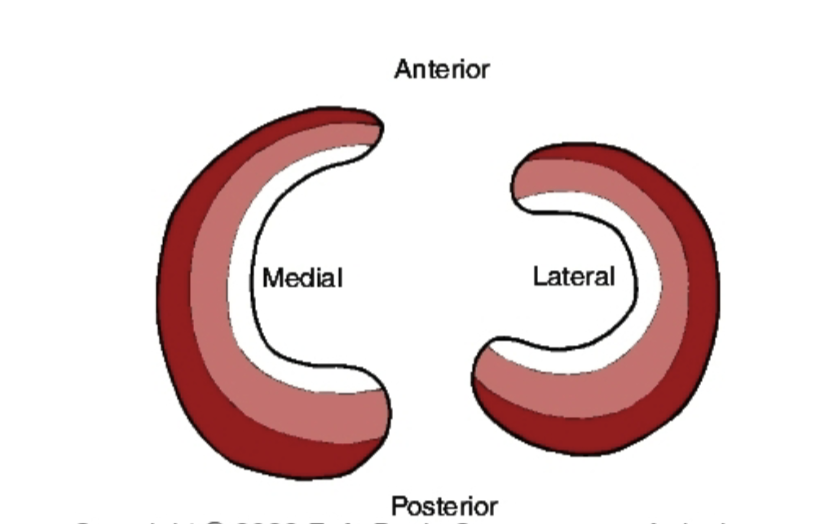
Which special tests test the meniscus?
McMurray and Apley tests
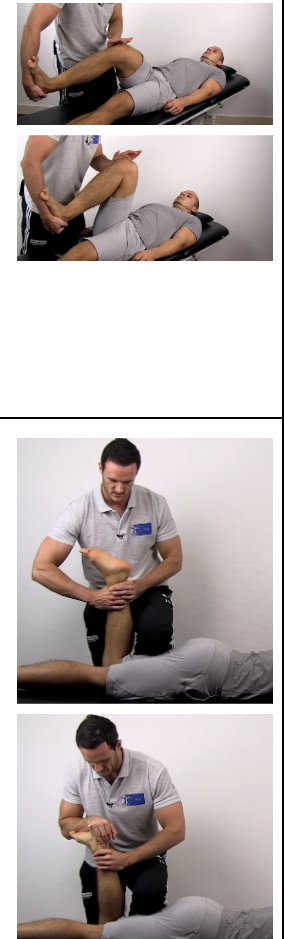
Which special tests test the ACL?
Lachman, anterior drawer, and lateral pivot shift
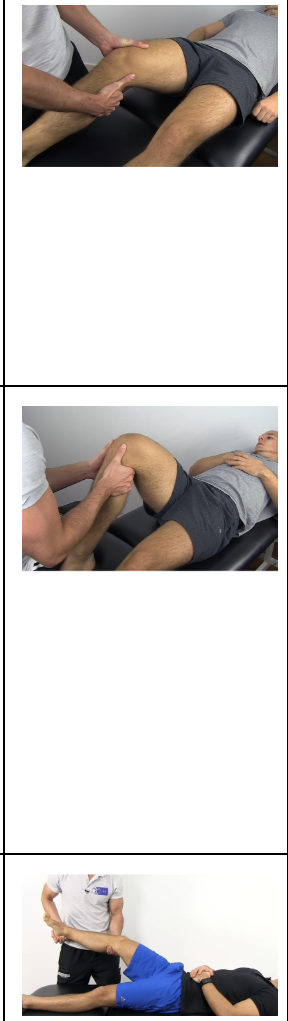
Which special tests test the PCL?
Posterior sag sign, and posterior drawer
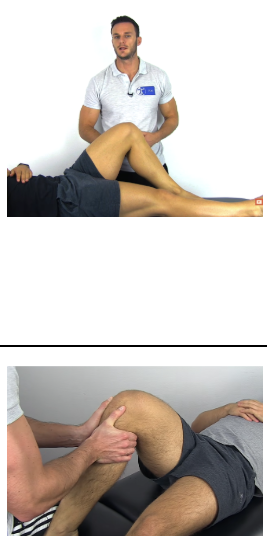
Which special test tests for MCL knee injurie?
Valgus Abduction Stress test
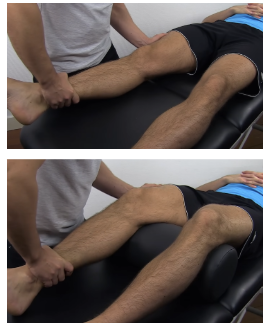
Which special test tests for LCL knee injurie?
The Varus Adduction Stress test
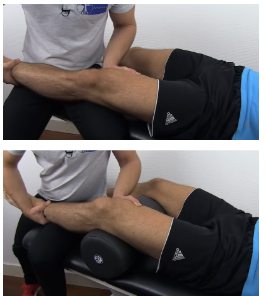
Which special tests assess for swelling in the knee joint?
The brush test and patellar tap test