Digestive System: Stomach Structure, Function, and Regulation
 Call Kai
 Learn
Learn Practice Test
 Spaced Repetition
 Match
Match Flashcards
 Knowt Play
1/18

There's no tags or description
Looks like no tags are added yet.
Name | Mastery | Learn | Test | Matching | Spaced | Call with Kai |
|---|
No analytics yet
Send a link to your students to track their progress
19 Terms
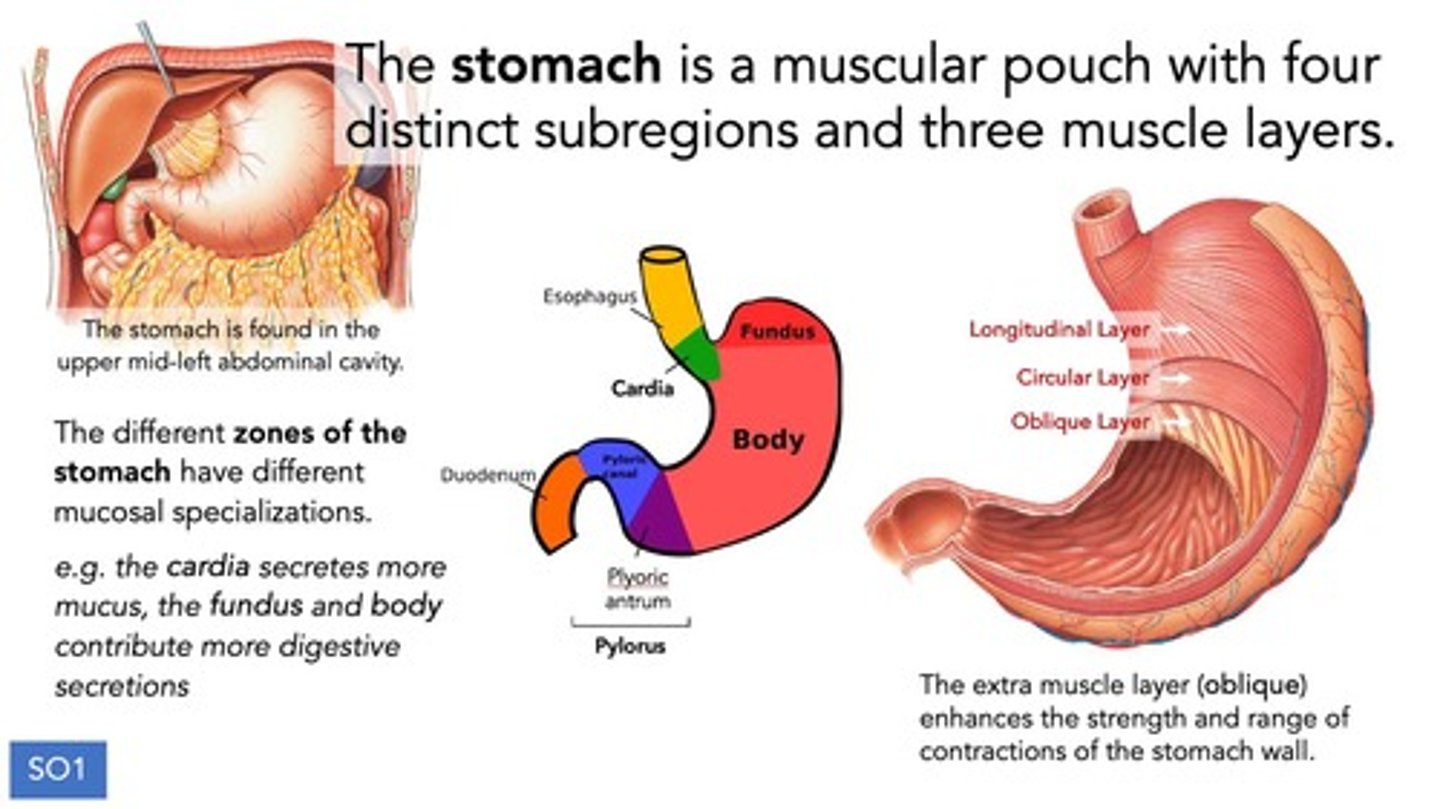
What is the primary function of the stomach?
To temporarily store ingested food and contribute to its physical and chemical digestion.
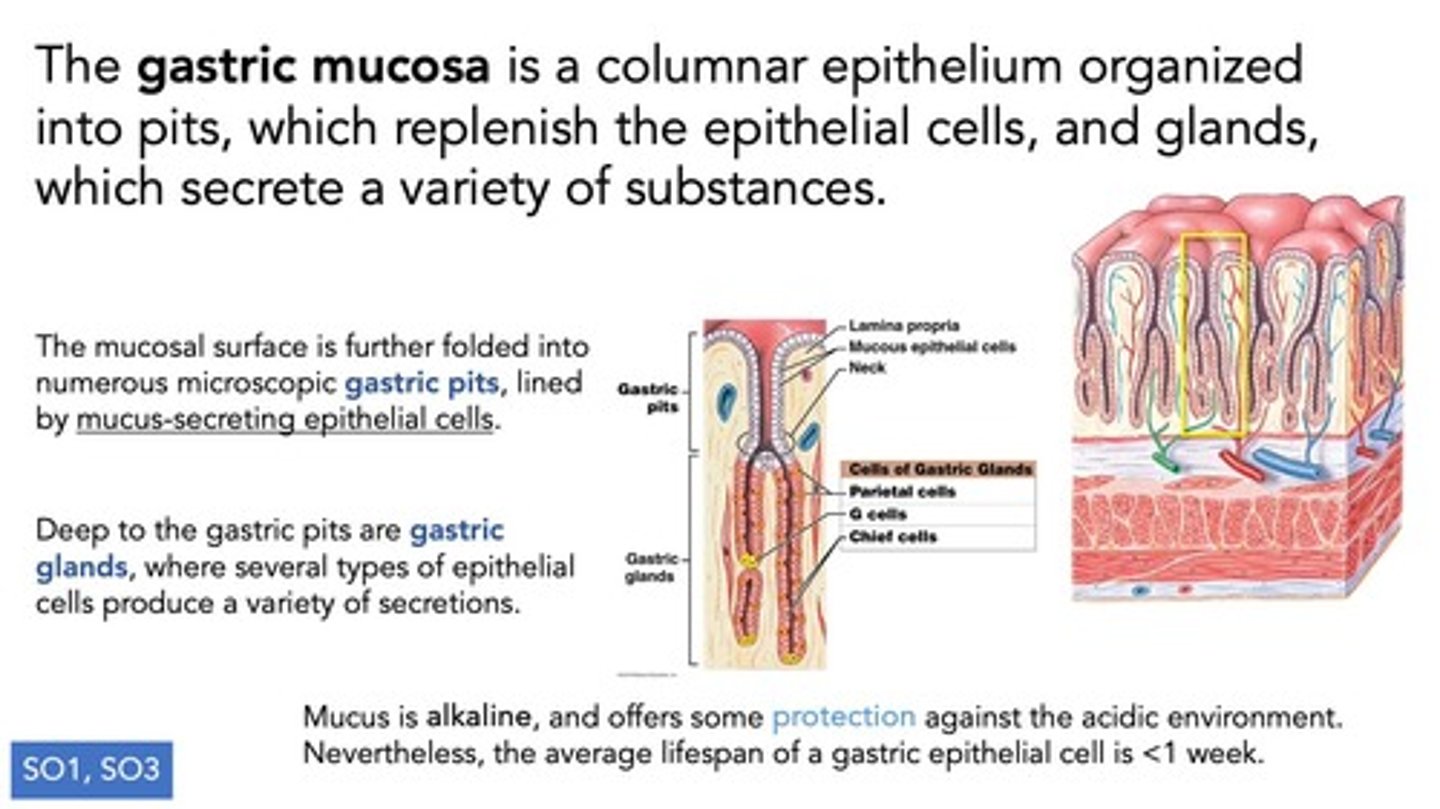
What are the main components of the gastric mucosa?
Pits lined with mucous secreting cells and deeper glands containing various cell types.
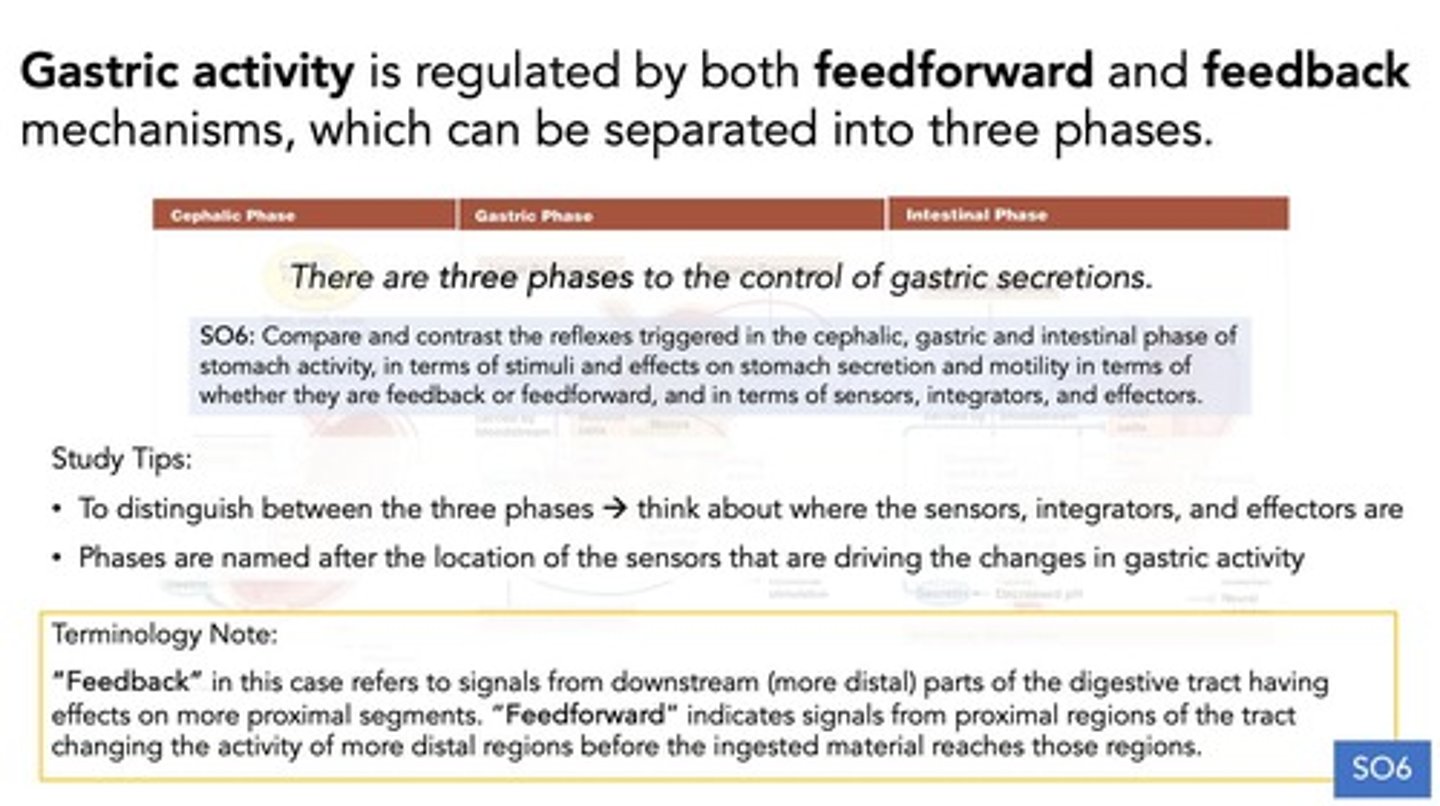
What types of reflexes regulate gastric secretions?
Local, gastrointestinal, or extrinsic reflexes that can produce feedforward or feedback control.
What are the three phases of gastric secretion regulation?
Cephalic, gastric, and intestinal phases.
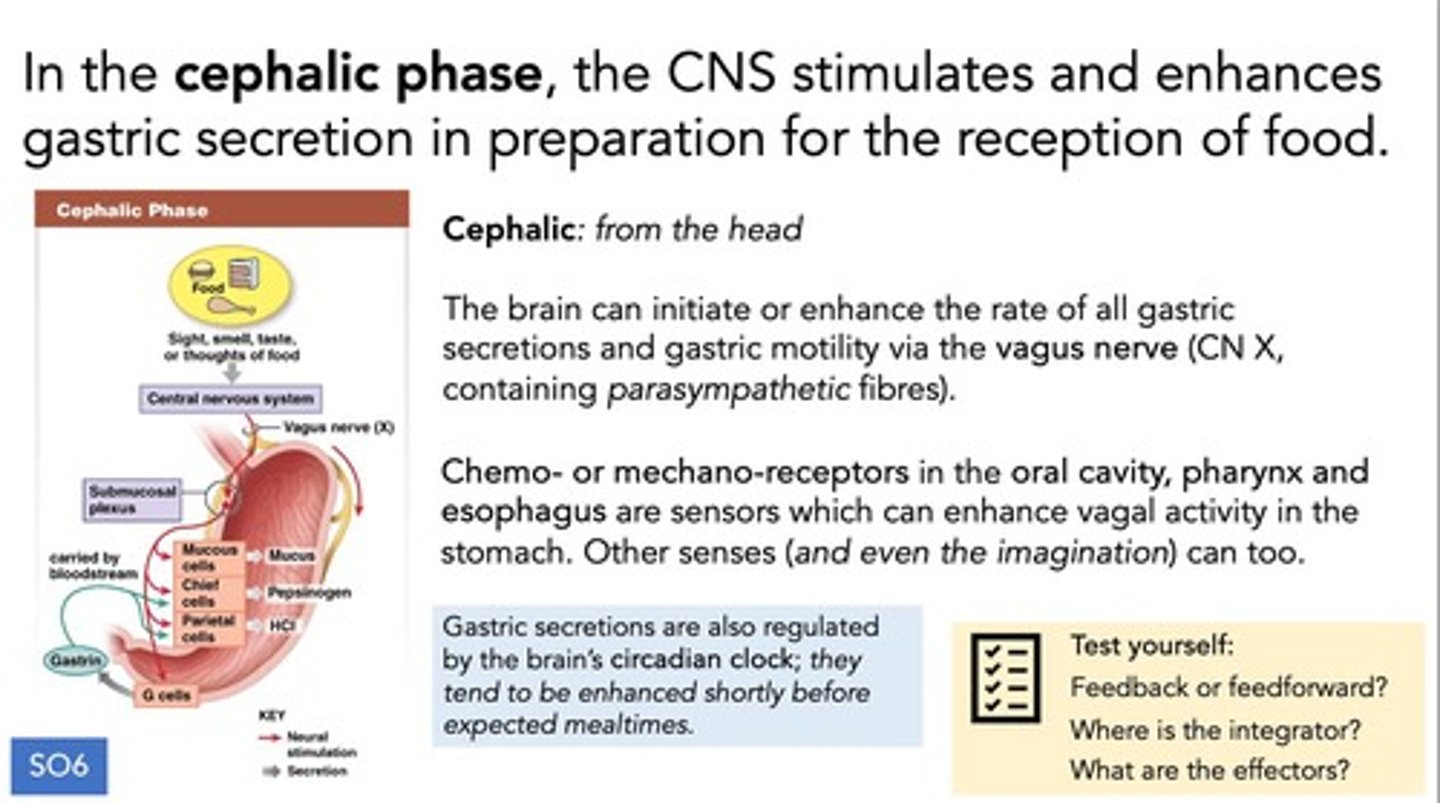
What occurs during the cephalic phase of gastric regulation?
It is generated from the brain and tends to enhance stomach secretion and contraction.
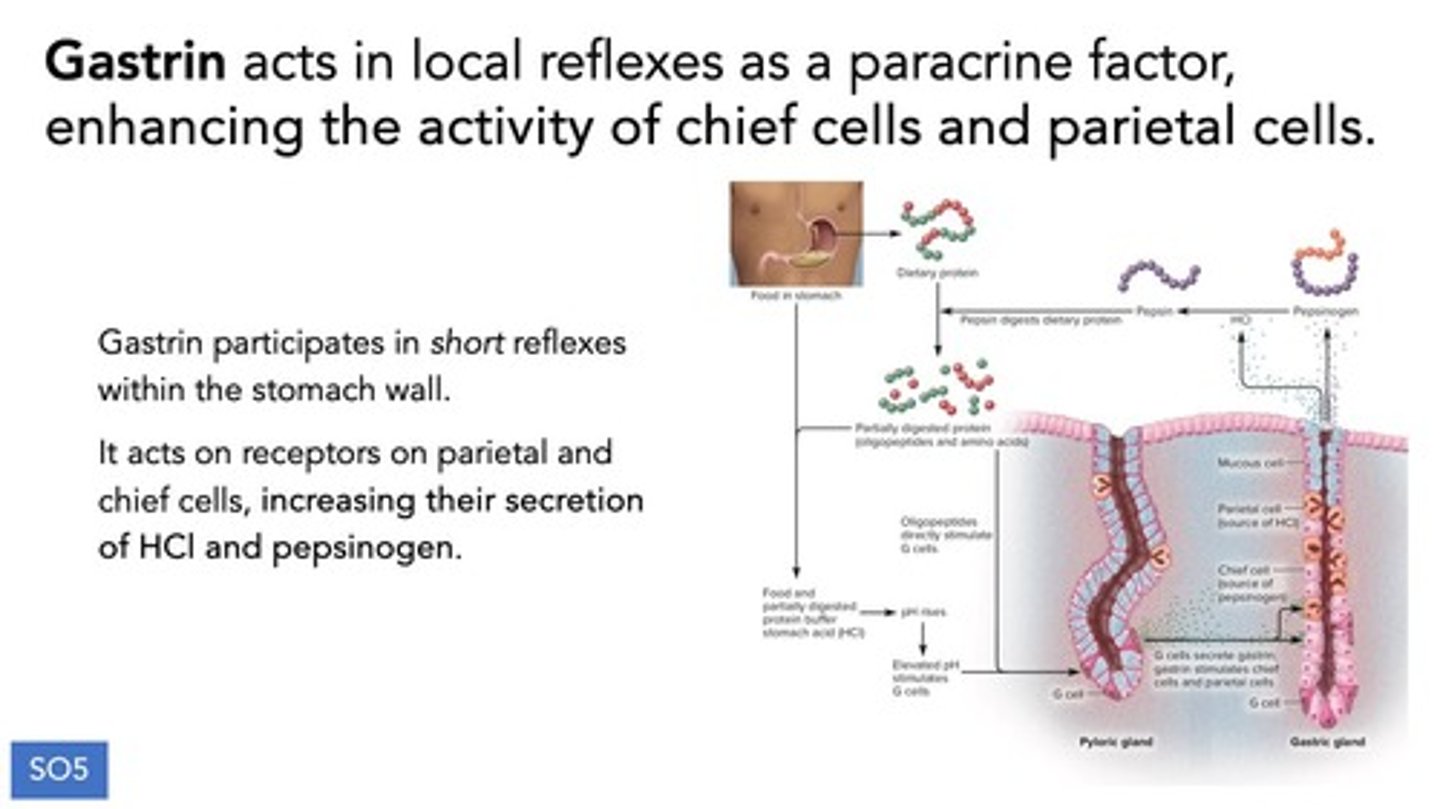
What is the role of gastrin in the stomach?
It stimulates the secretions of cells within the gastric pits and affects the muscularis layer.
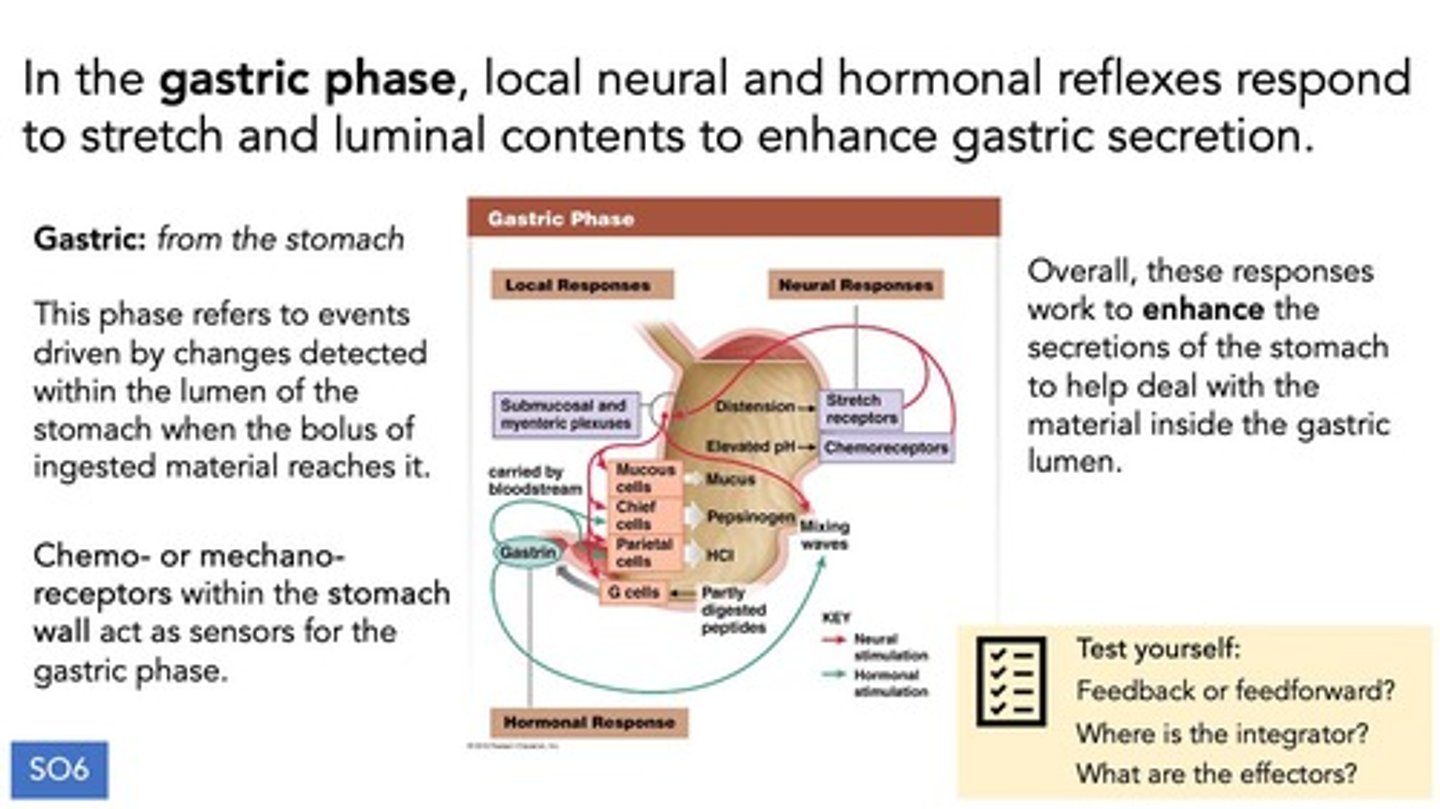
What types of cells are involved in gastric secretions?
Parietal cells, chief cells, and G cells.
What do parietal cells secrete?
Hydrochloric acid (HCl) which aids in digestion.
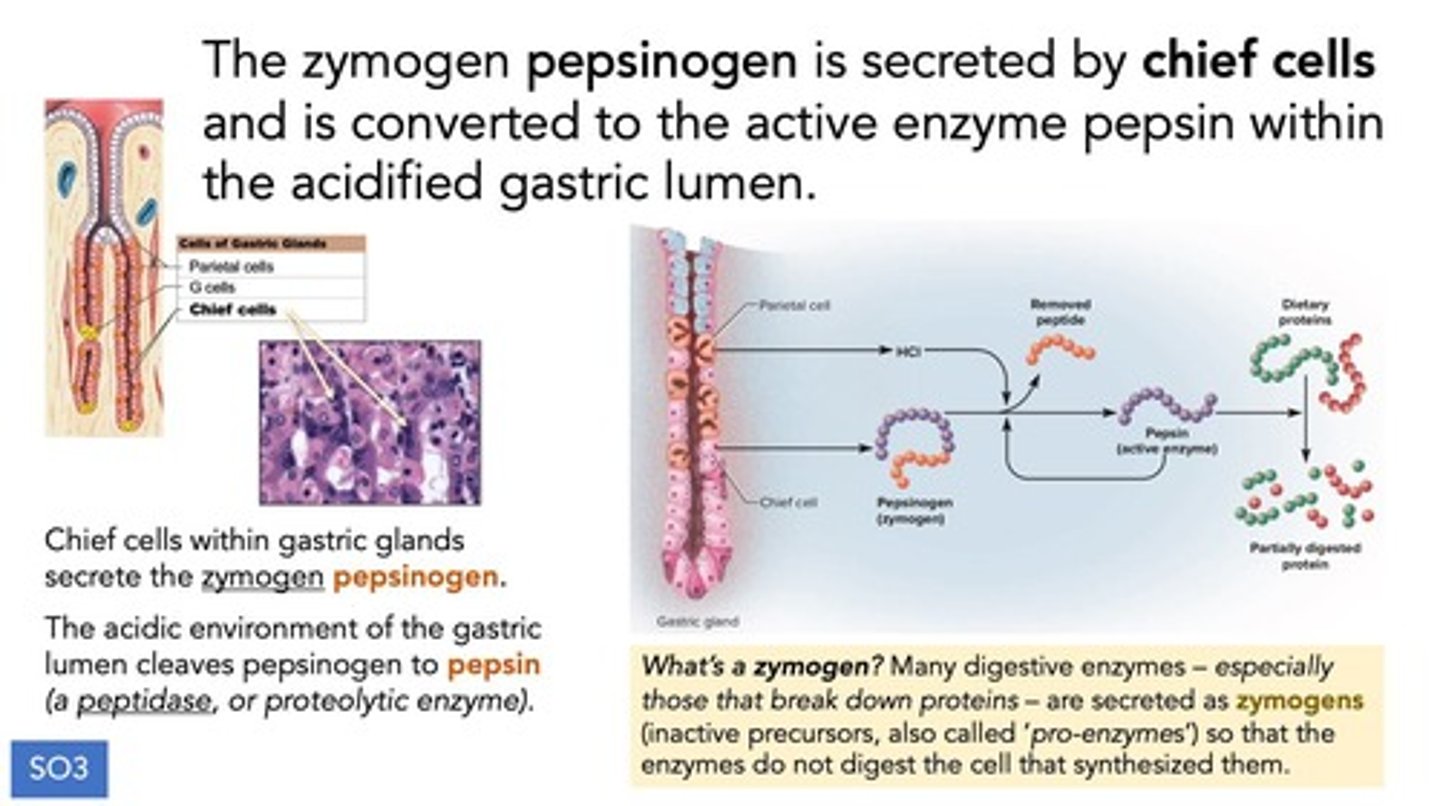
What do chief cells secrete?
Pepsinogen, which is activated to pepsin for protein digestion.
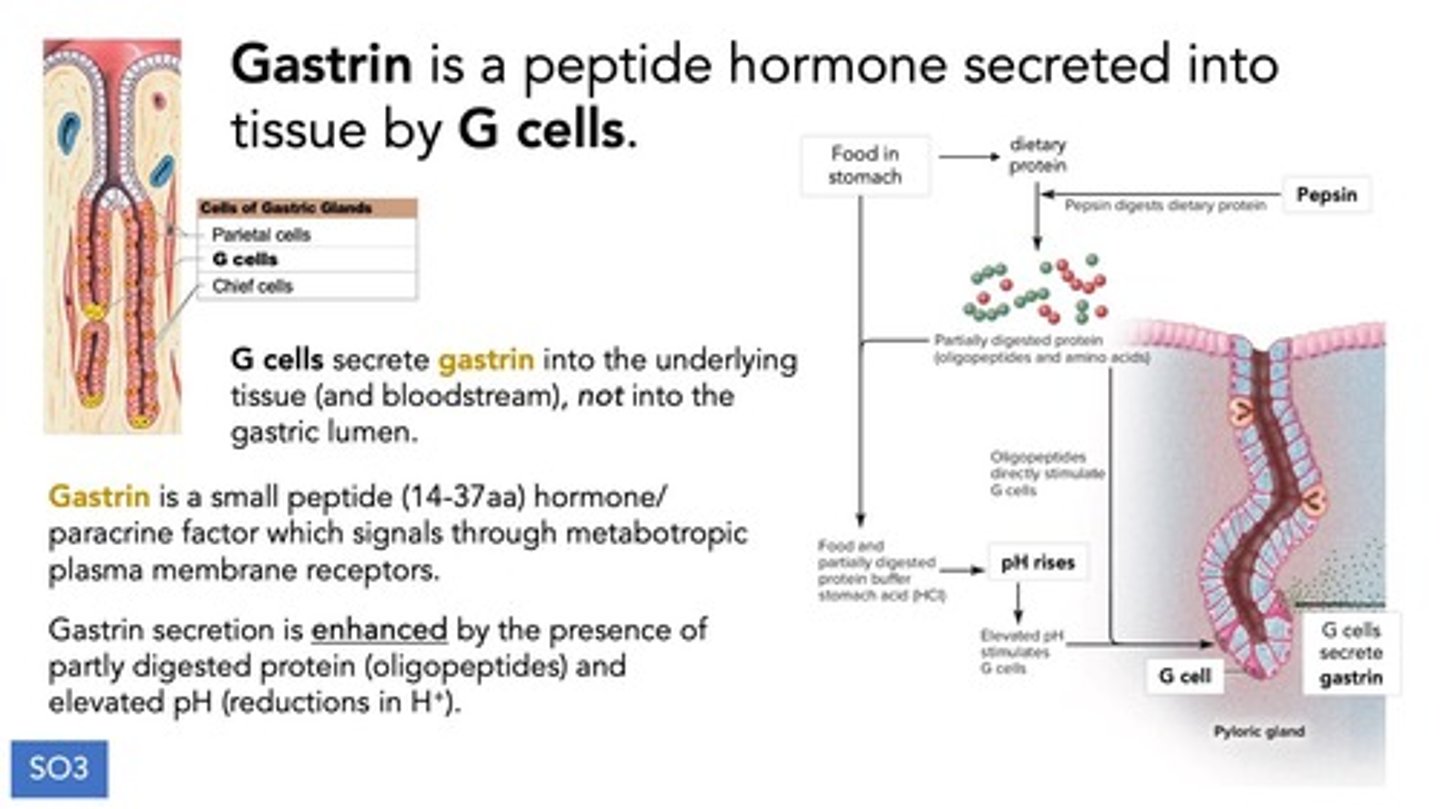
What do G cells secrete?
Gastrin, a hormone that stimulates gastric acid secretion.
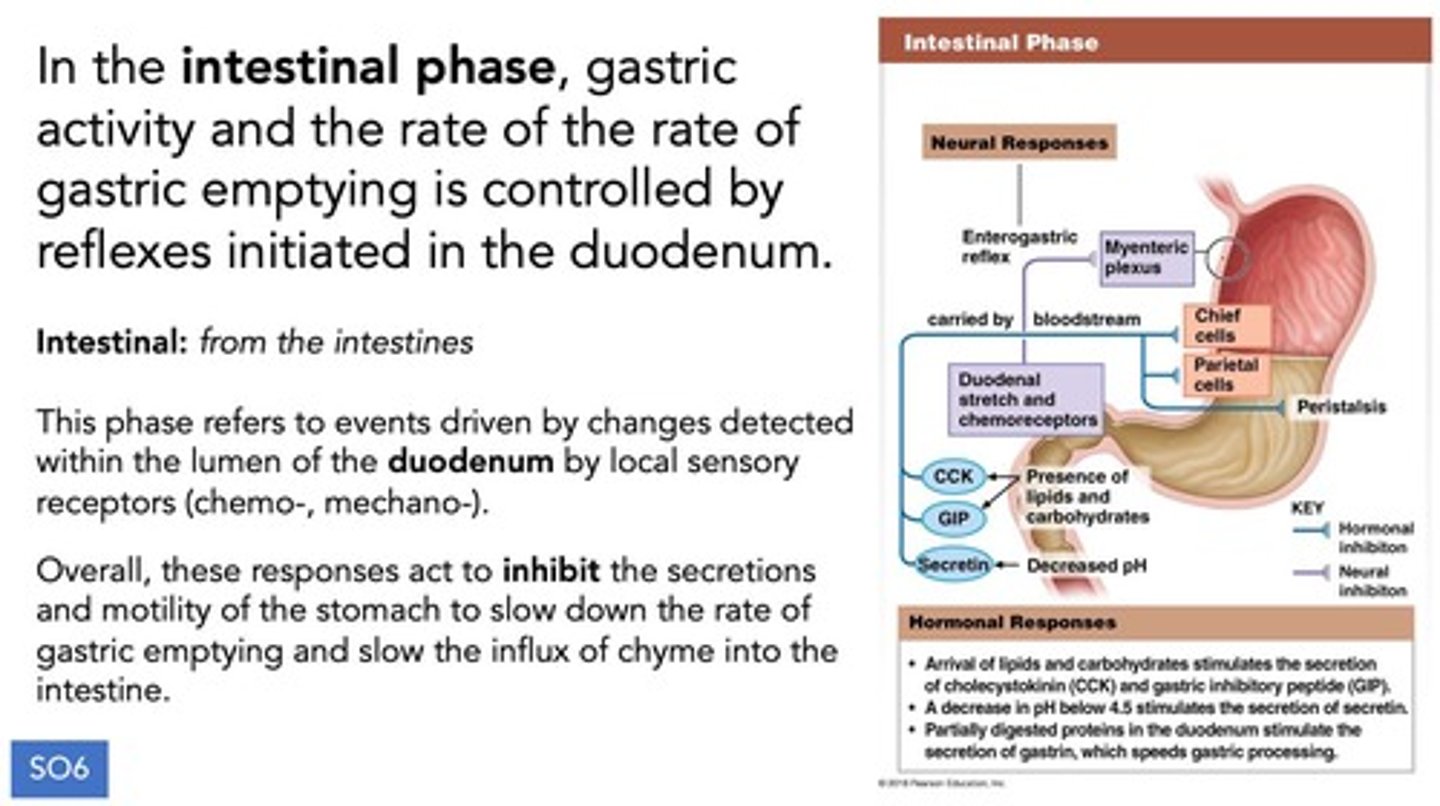
How does the intestinal phase affect gastric secretion?
It tends to inhibit gastric secretion and motility.
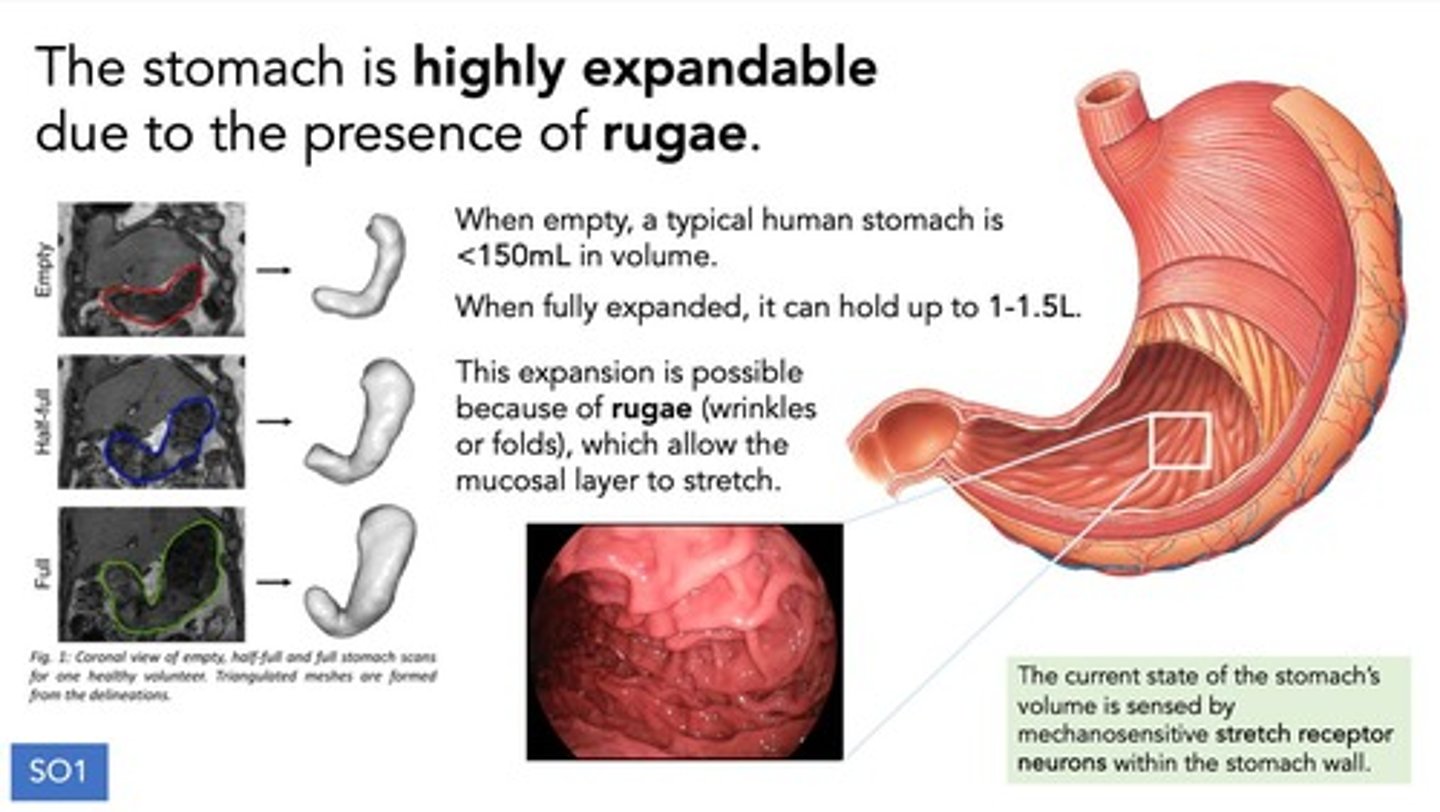
What is the function of rugae in the stomach?
To allow for expansion of the stomach as it fills with food.
What is the role of gastric pits?
They contain cells that secrete gastric juices and hormones regulating digestion.
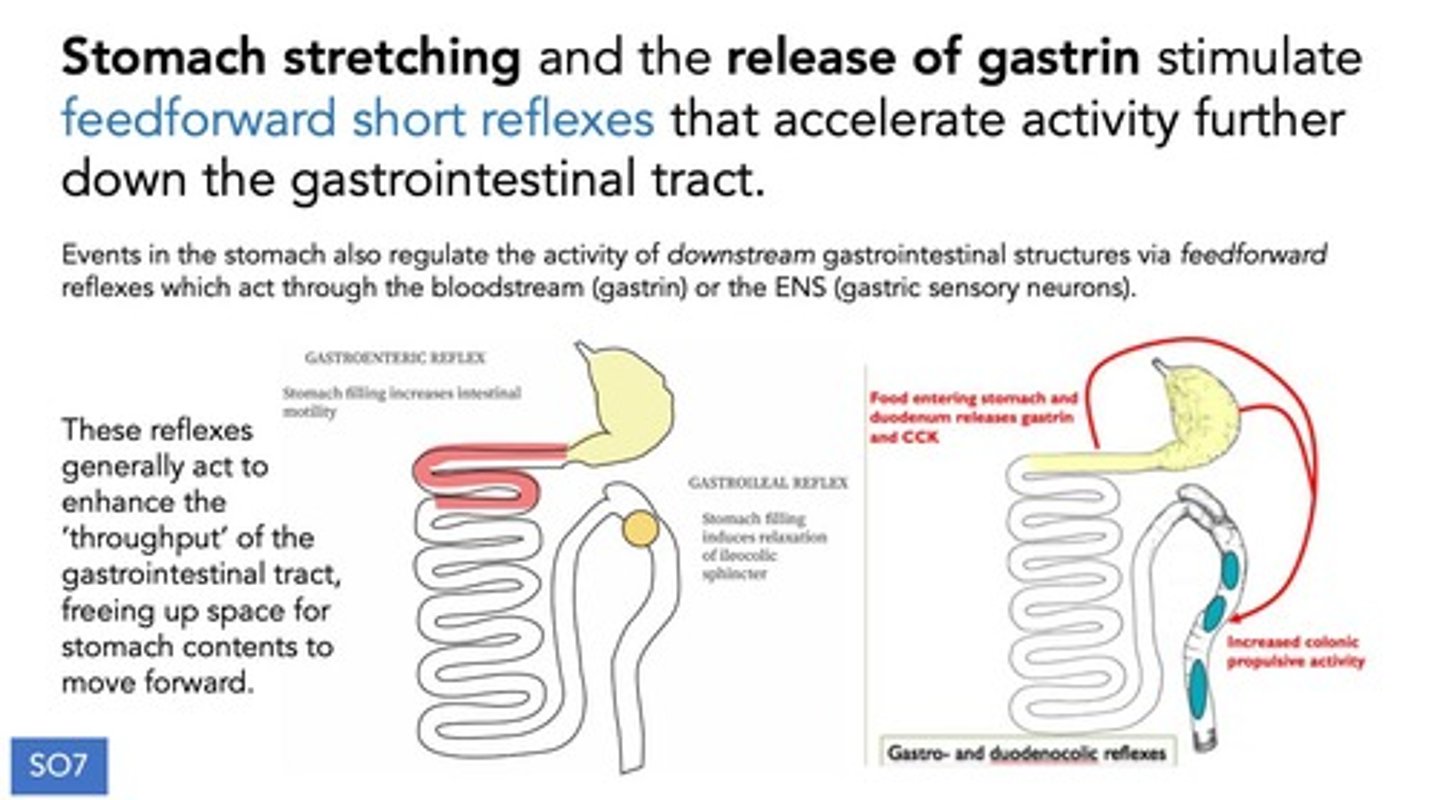
What is a feedforward reflex in the digestive system?
A reflex triggered by sensors in the stomach that acts on a more distal principal organ.
What is the significance of the gastric phase?
It is generated from the stomach and enhances secretion and contraction.
What is the difference between feedback and feedforward control in gastric regulation?
Feedback control responds to the effects of gastric secretions, while feedforward control anticipates needs based on sensory input.
What is the role of the muscularis layer in the stomach?
It facilitates the mixing and movement of food through contractions.
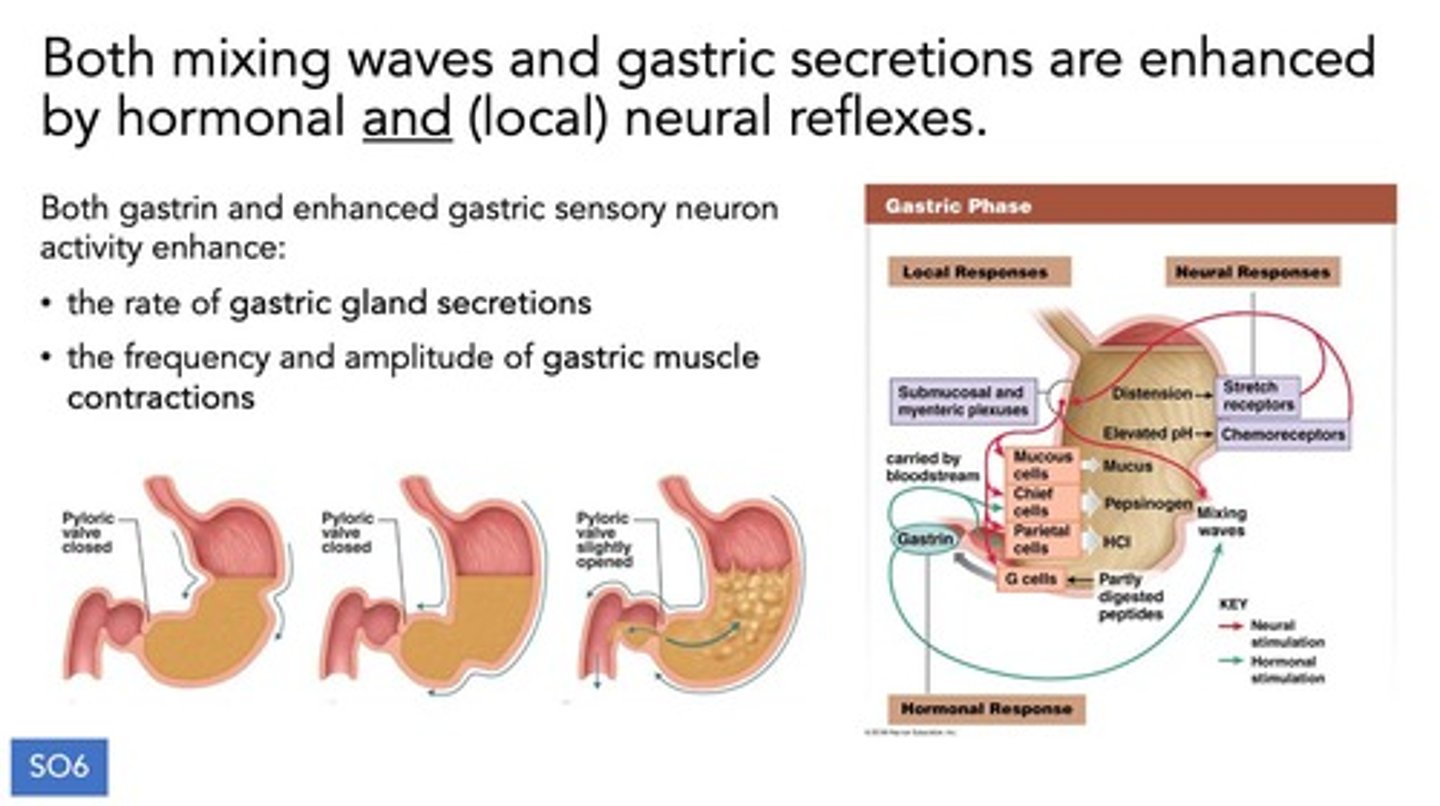
What triggers the gastric phase of gastric regulation?
The presence of food in the stomach.
What is the importance of understanding gastric secretions for exams?
It is crucial to know the different types of secretions, mechanisms of HCl secretion, and phases of gastric regulation.

