Strategic Planning
 Call Kai
 Learn
Learn Practice Test
 Spaced Repetition
 Match
Match Flashcards
 Knowt Play
1/64

There's no tags or description
Looks like no tags are added yet.
Name | Mastery | Learn | Test | Matching | Spaced | Call with Kai | Chat |
|---|
No analytics yet
Send a link to your students to track their progress
65 Terms
What is strategy?
Criteria for decision-making
Resources needed to achieve goals
Long-term plans
HR needs people to think of strategy to achieve long-term goals
Strategic Planning
Producers for making decisions about the organization’s long-term goals and strategies
Human Resource Planning (HRP)
Process of anticipating and providing for the movement of people:
Into
Within
Out of an organization
Strategic Human Resources Management
Pattern of human resources deployments and activities that enable an organization to achieve its strategic goals
High-performance Work Systems
A group of human resource practices that increase an organization’s ability to:
Attract
Select
Hire
Develop
Retain
HPWS stress
Employee involvement and a culture of commitment rather THAN CONTROL
Importance of the quest for excellence and expects employees to be highly qualified, competent, and engaged in improving the organization
Strategy formulation
Providing input as to what is possible given the types and number of people available
Strategy implementation
Resource allocation decisions: structure, processes, and human capital

Linking strategic planning and human resources
Strategic Management and HR Planning
1) Mission, Vision, and Values
2) External Analysis
3) Internal Analysis
4) Formulating Strategy
5) Strategy Implementation
6) Evaluation and Assessment
Mission, Vision, and Values
Mission: The basic purpose of the organization as well as its scope of operations
Strategic Vision: A statement about where the company is headed and what it can become in the future
Core Values: Strong beliefs and principles that the company uses as a foundation for decisions
External Analysis - Environmental Scanning
Systematic monitoring of the major external forces influencing the organization
External Analysis - Business Environment
economic and ecological changes
technological changes
demographic changes'
social changes
legal changes
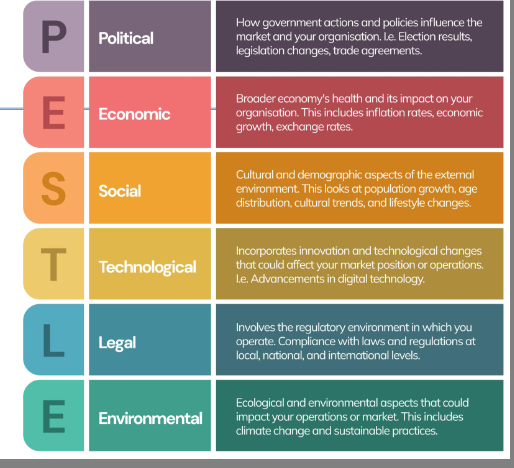
PESTEL
Political
Economic
Social
Technology
Environment
Legal
Factors HR should consider for the supply of labour
migration in and out of the area
mobility of the population
firm’s demand for specific skills
unemployment rate
education levels
government labor regulations
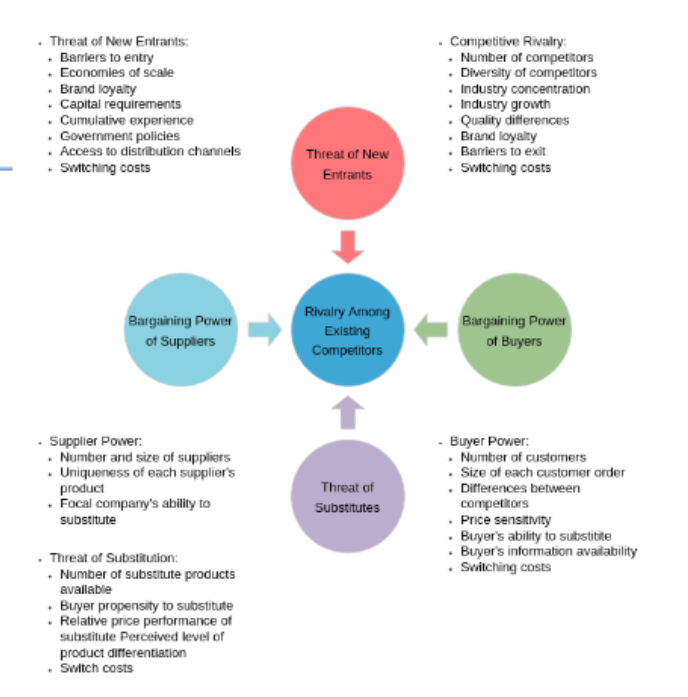
Five Forces Analysis
1) Threat of New entrants
Barriers to entry
2) Competitive Rivalry
number of competitors
3) Bargaining Power of Buyers
number of customers
4) Threat of Substitutes
number of substitute products available
5) Supplier Power
number and size of suppliers
Rivalry against Existing Competitors
Customers
Rival firms
New entrants
Substitutes
Suppliers
Stakeholders
Stakeholders
Key people and groups that have interest in a firm’s activities and that can either affect them or be affected BY THEM
Primary stakeholder
Investors, employees, customers, suppliers, and creditors
Transactional interactions
Secondary stakeholder
Community in which the firm operates
government, business groups, and the media
Internal Analysis
Growing number of experts now argue that the key to a firm’s success is based on establishing a set of core capabilities
Capibilities
Composition
Culture
Core capabilities
Integrated knowledge sets within an organization that distinguish it from competitors and deliver value to customers
processes
systems
people
Value Creation
What the firm adds to a product or service by virtue of making it; amount of benefits provided by the product or service (after costs of making it are subtracted) Sus
Sustainable a competitive advantage through people
Resources must be valuable
Resources must be rare
Resources must be difficult to imitate
Resources must be organized
Different skills groups can be classified based on…
how they add strategic value
are unique to that organization

What does this model?
Mapping Human Capital
Uniqueness
Value
Cultural audits
Audits of the culture and quality of work-life in an organization
How do employees spend their time?
How do they interact with each other?
Are employees empowered?

Corporate Culture
How people interact with one another in the workplace
Forecasting
Managers must continually forecast both the needs and the capabilities of the firm for the future to do an effective job at strategic planning
forecasting the demand for labour
forecasting the supply for labour
balancing supply and demand considerations

HR Forecasting Model
Quantitative Approach
Trend analysis: forecasting labour demand based on an organizational index(such as sales)
Qualitative approaches
Management forecasts: opinions of
supervisors
department managers
experts
other knowledge
Forecasting the supply of employees
Staffing tables
graphical representation of all organizational jobs
number of employees currently occupying these jobs
Markov Analysis
Method for tracking the pattern of employee movements through various jobs

Markov Analysis
percentage V.S. actual number of employees
Quality of fill
A metric designed to assess how well new hires are performing on the job
Skill Inventories
Files of personnel education, experiences, interests, and skills that makes it easy for managers to match job openings
Replacement charts
Listing current jobholders and people who are potential replacements if an opening occurs
Succession Planning
Process of identifying, developing, and tracking key individuals for executive positions
Human Capital Readiness
Evaluating the availability of critical talent in a company and comparing it to the firm’s supply
Employees needed and employees available represent a gap that must be filled
Strategy formulation
Moving from simple analysis to devising a coherent course of action
SWOT analysis
Comparison of strengths, weaknesses, opportunities, and threats for strategy formulation purposes
Corporate Strategy
A firm’s corporate strategy includes the markets in which it will compete, against who and how
Some firms choose a concentration strategy that focuses on only a limited portion of the industry
Growth and diversification
Growth boosts these 3 elements:
employee productivity
greater number of employees
employees developing or acquiring new skills
Low-cost strategy
Competing on productivity and efficiency
keeping costs low to offer an attractive price to customers
Differentiation strategy
Competing on unique value added
providing something unique and distinctive to customers
Vertical Fit/Alignmet
Focuses on the connection between the business objectives and the major initiatives in HR
Horizontal Fit/Alignment
Aligning HR practices with one another INTERNALLY to establish a configuration that is mutually reinforcing
Strategy Implementation - Hard S
Strategy that lays out the route that the organization will take in the future
Systems and processes to implement strategies
Strategy Implementation - Soft S
Shared values, or core values as a guiding parameter for strategic planning

7-S Framework
Staffing options include….
hiring full-time employees
having current employees work overtime
recalling laid-off workers
using temp or contract employees
outsourcing or offshoring
How to deal with surplus employees…
layoffs, attrition, and termination
layoffs are often based on seniority and/or ability
Attrition
Natural departure of employees through quits, retirements, and deaths
Hiring freeze
New workers are not hired as planned or workers who have left are not replaced
Termination
Initiated by the employer to separate an employee from the organization PERMANENTLY
Severance pay
Lump-sum payments given to terminated employees, calculated on the basis of years
Benchmarking
The process of comparing the organization’s processes and practices to those of other companies
Two categories of metrics
Human capital metrics: Assess aspects of the workforce
HR metrics: Assess the performance of the HR function
Balanced Scorecard
Measurement framework that helps managers translate strategic goals into operational objectives
BSC four related cells…
financial
customer
processes
learning
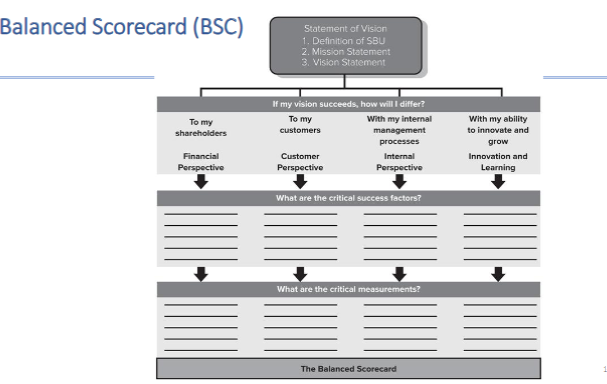
Balanced Scorecard (BSC)
Organization Capability
Capacity of the organization to continuously act and change in pursuit of sustainable competitive advantage
2 ways flexibility can be achieved….
coordination flexibility: the ability to rapidly reallocate resources to new or changing needs
resource flexibility: having human resources who can do
many different things in many different ways
Computing Turnover Rate

Computing Absenteeism rate
