fox organic
 Call Kai
 Learn
Learn Practice Test
 Spaced Repetition
 Match
Match Flashcards
 Knowt Play
1/25

There's no tags or description
Looks like no tags are added yet.
Name | Mastery | Learn | Test | Matching | Spaced | Call with Kai | Chat |
|---|
No analytics yet
Send a link to your students to track their progress
26 Terms
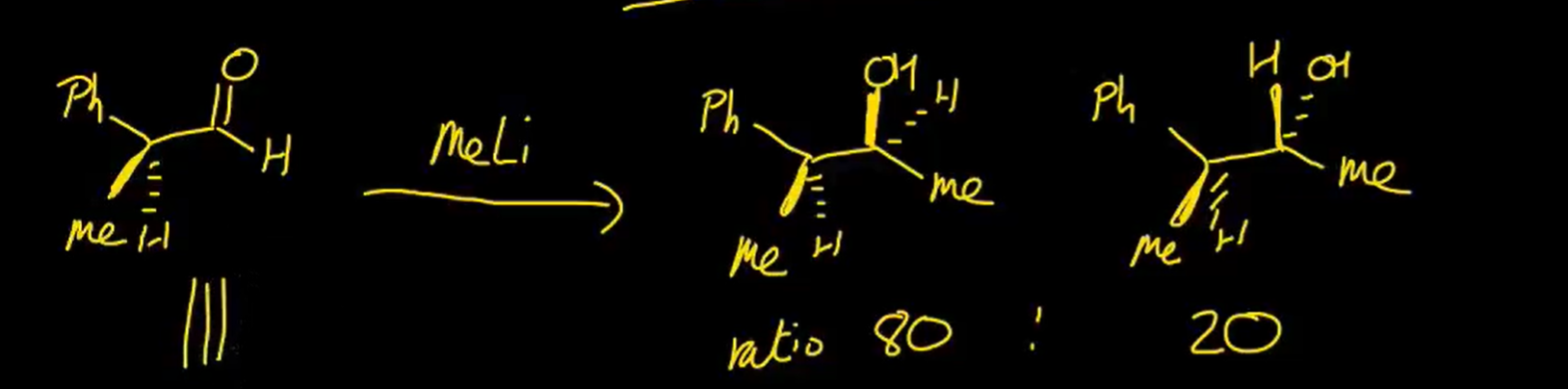
why is this the major product
so the major, ph is a large substituent methyl is meduium and H is small. the Me-Li attacks at an angle greater than 90 degree, thru the H, so more favoured. this called Felkin control
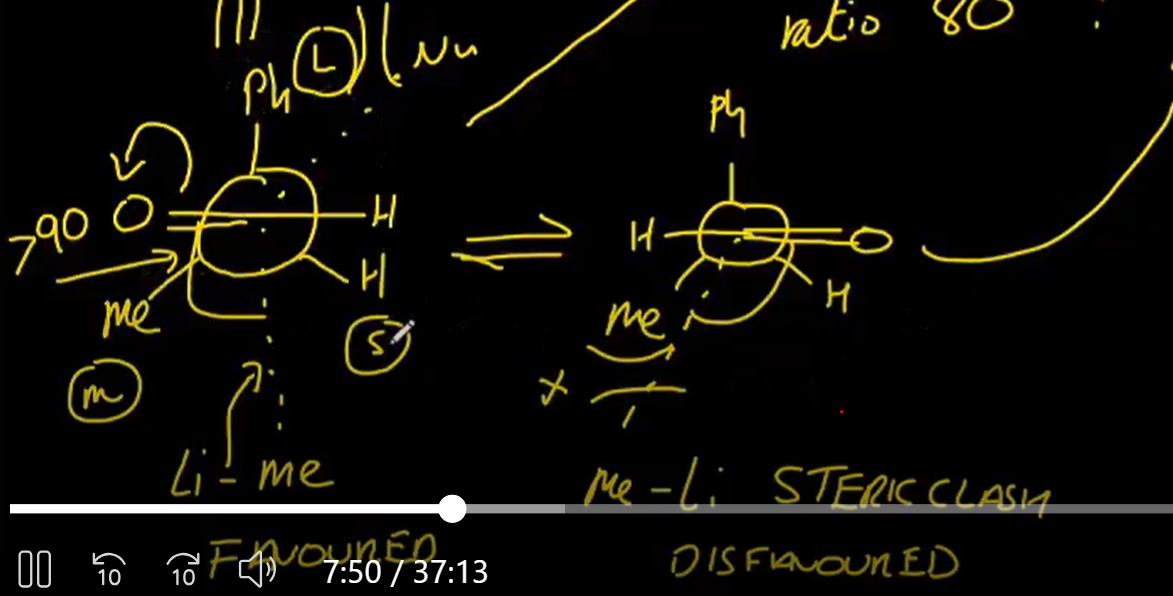
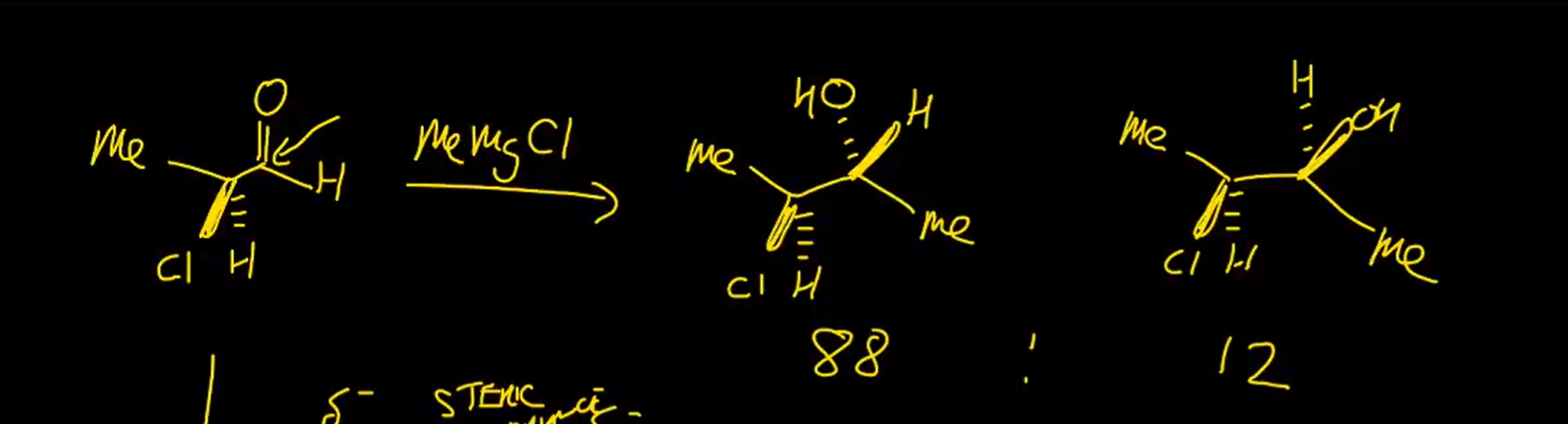
justify this
polar model, where Cl is 90 degrees to carbonly
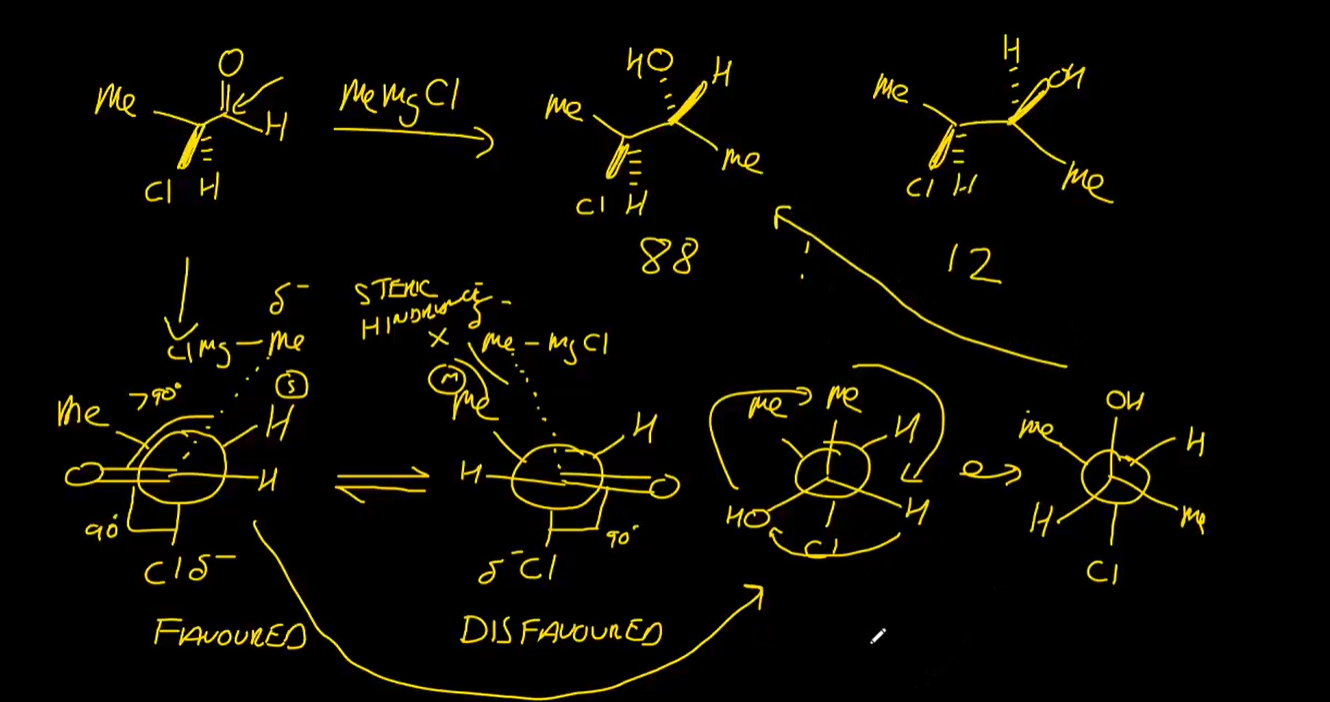
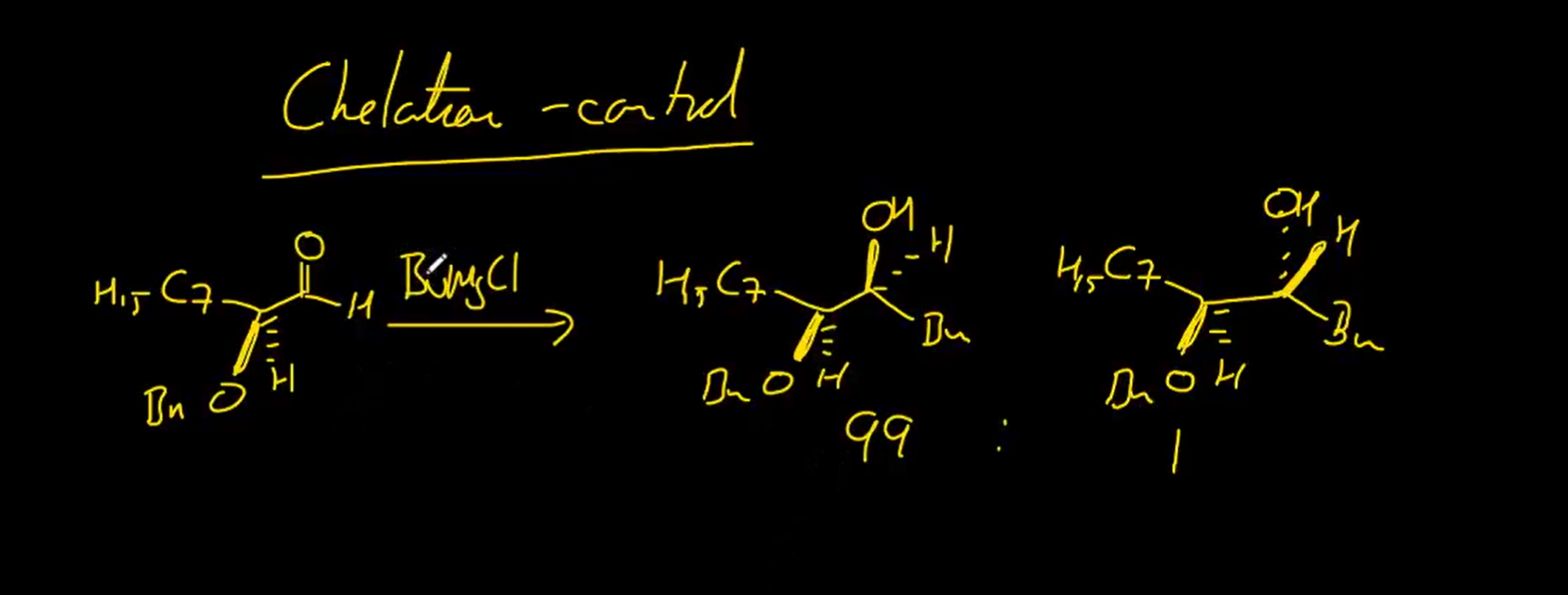
whats happening here
chelation model
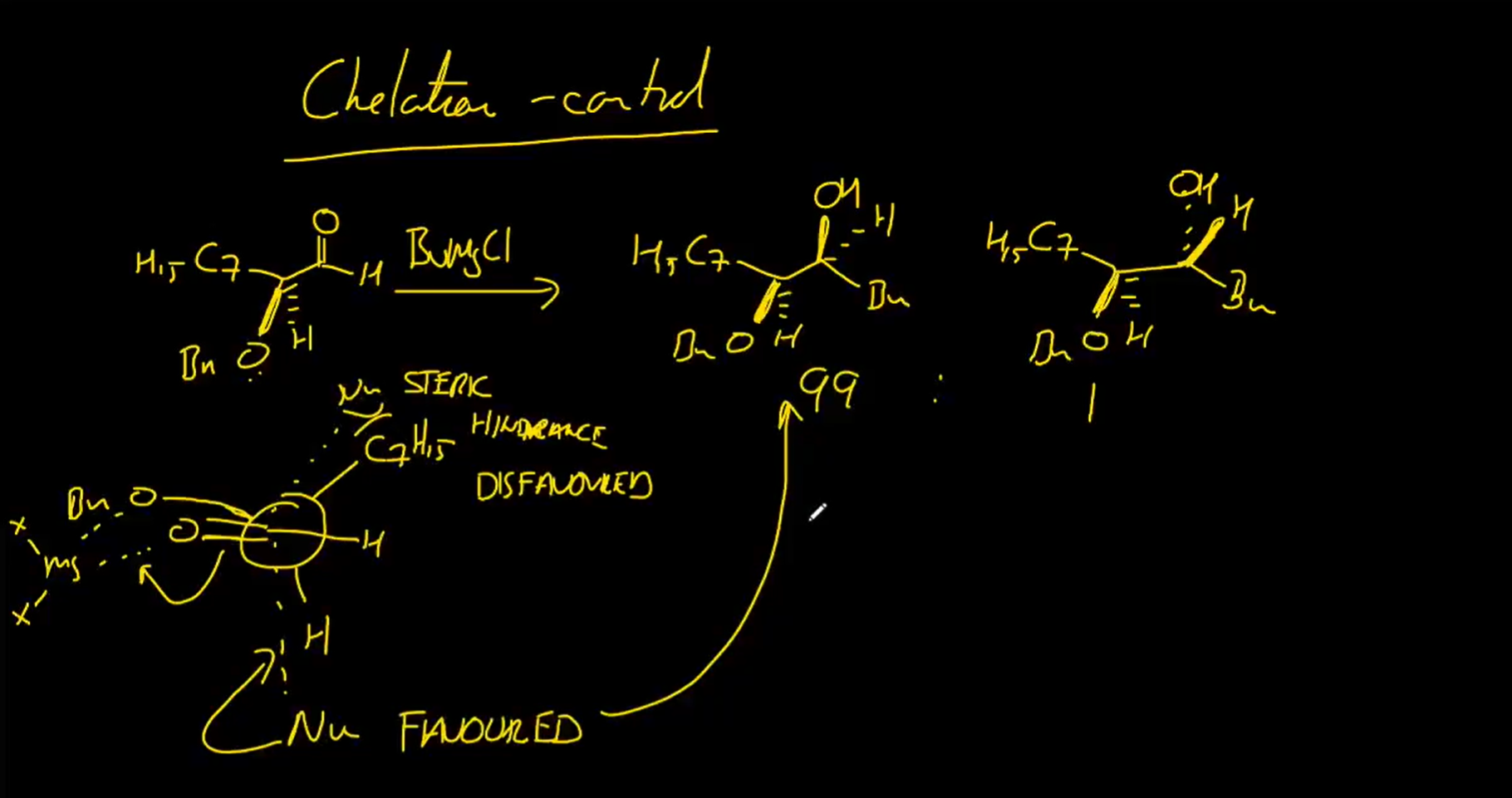
so whats difference between the chelation model and carbonyl model
Rule for chelation,
polar group must have lone pairs, but not halogen
2)metal of nucleophile needs to be m2+ or m3+ to be a good lewis acid. but can be lithium if reaction a is not an aldol reaction or b) polar group is O or N, not S

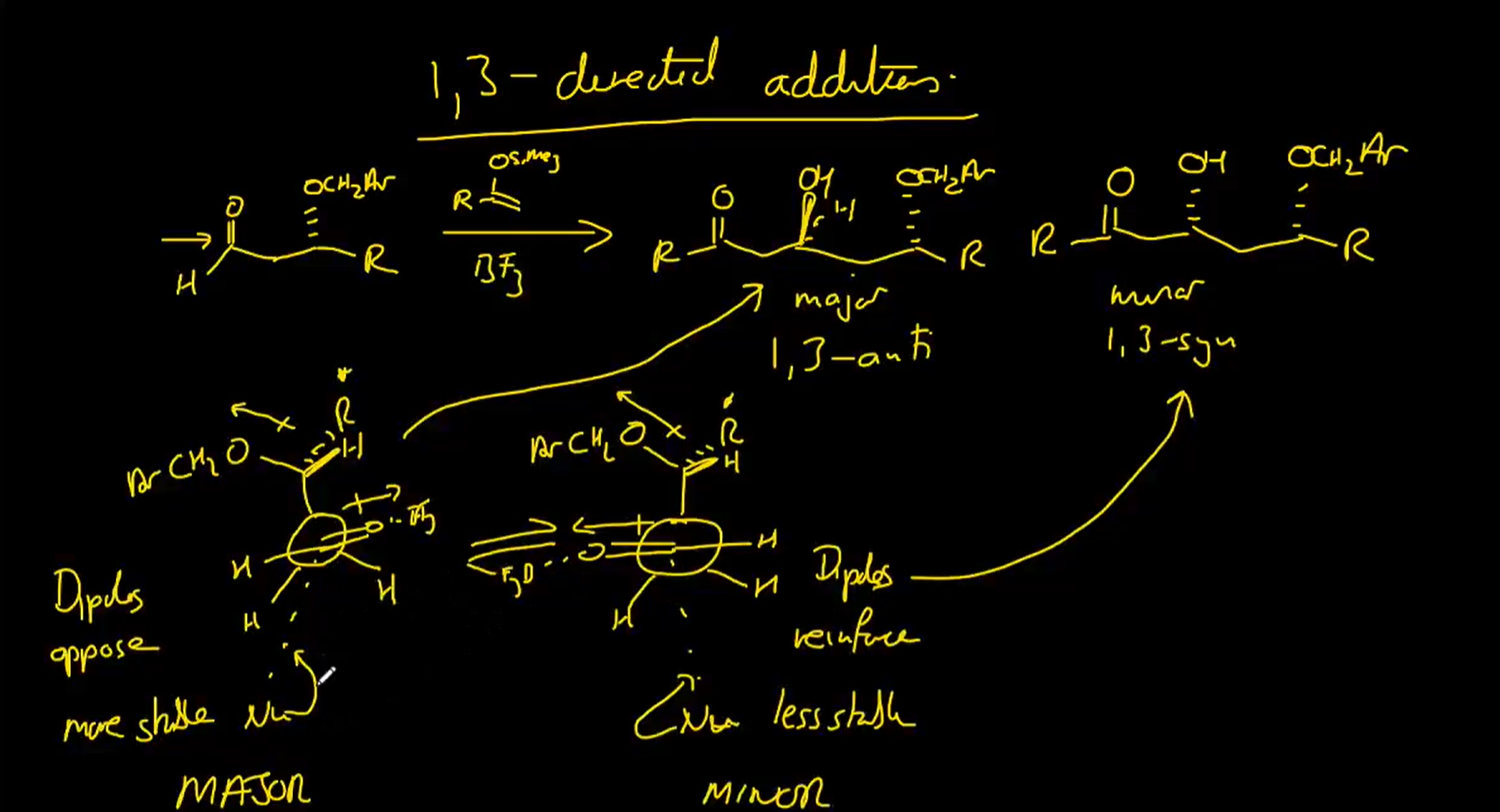
why is anti more major
BF3 group disacitated dipole carbon to oxygen but also dipole on C-O single bond, the dipoles oppose on left hand side which is more stable bc theyre opposite direction, right hand are parallel so reinforce eachother, Nu attacks from bottom near H hence why major
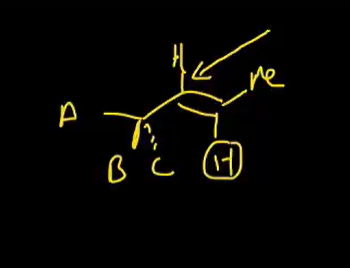
might be a little difficult but whats the newman projection of this
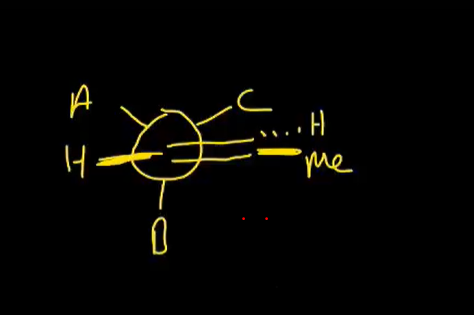
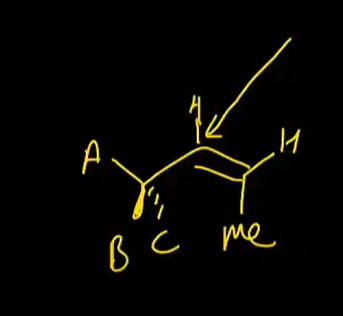
newmann of this
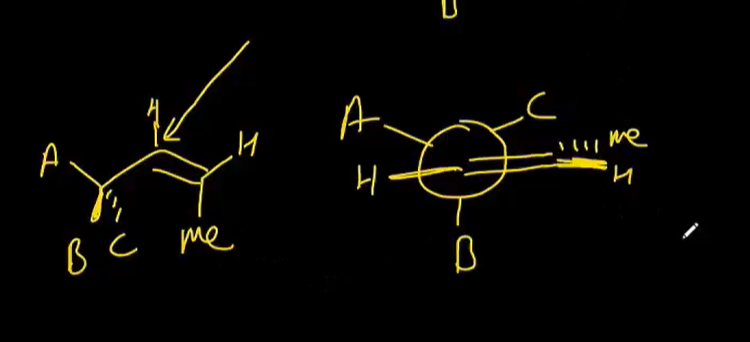
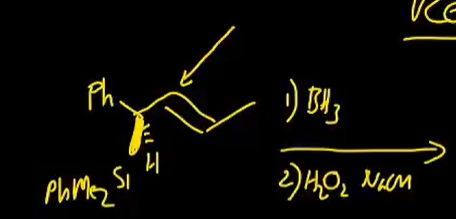
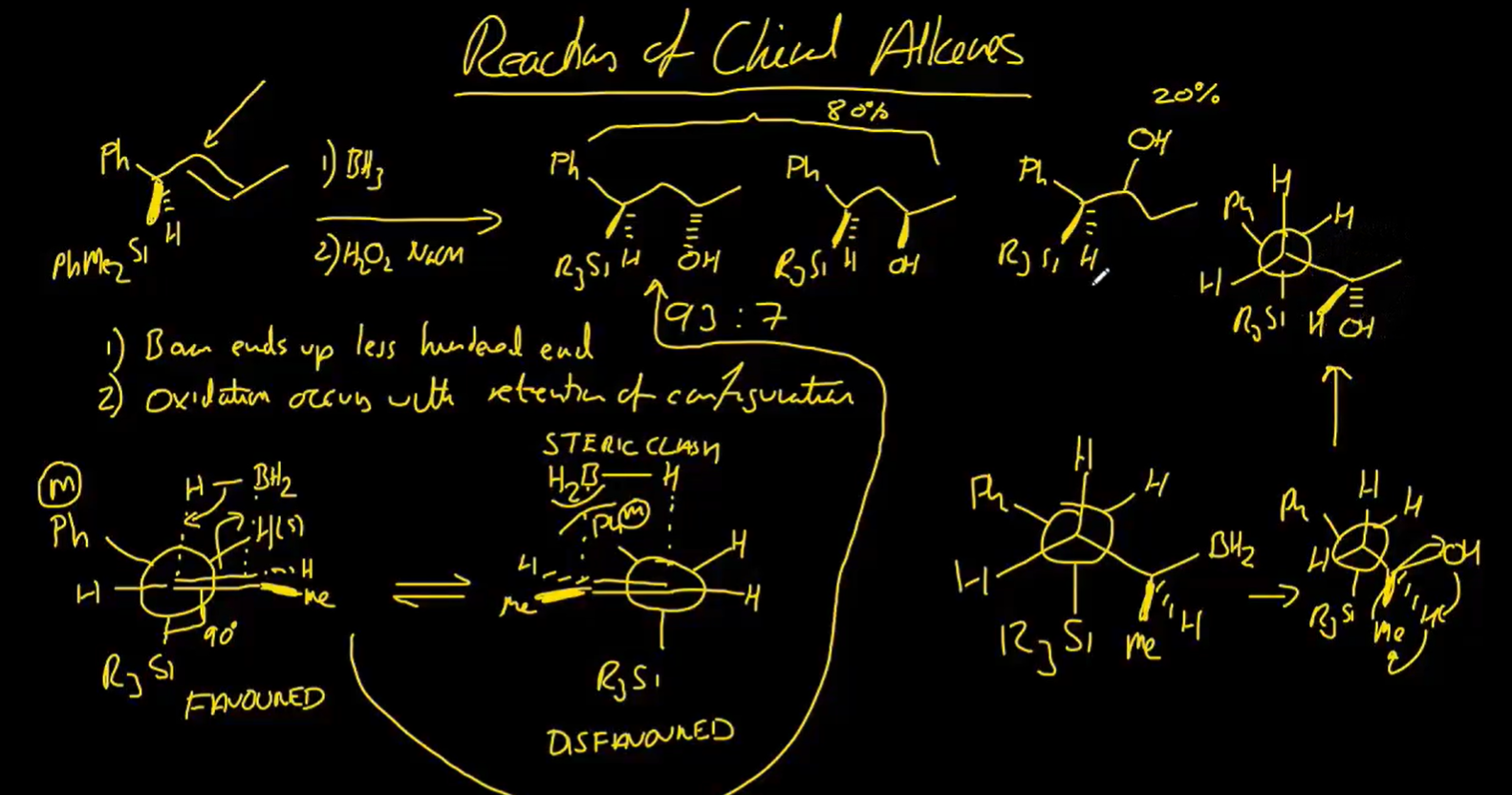
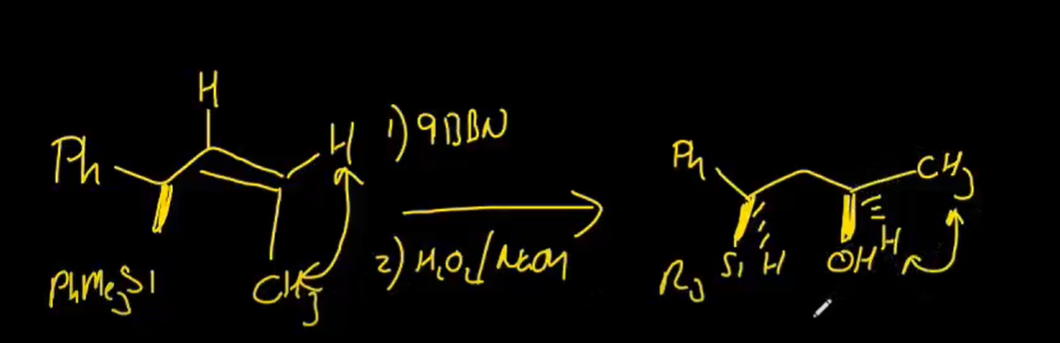
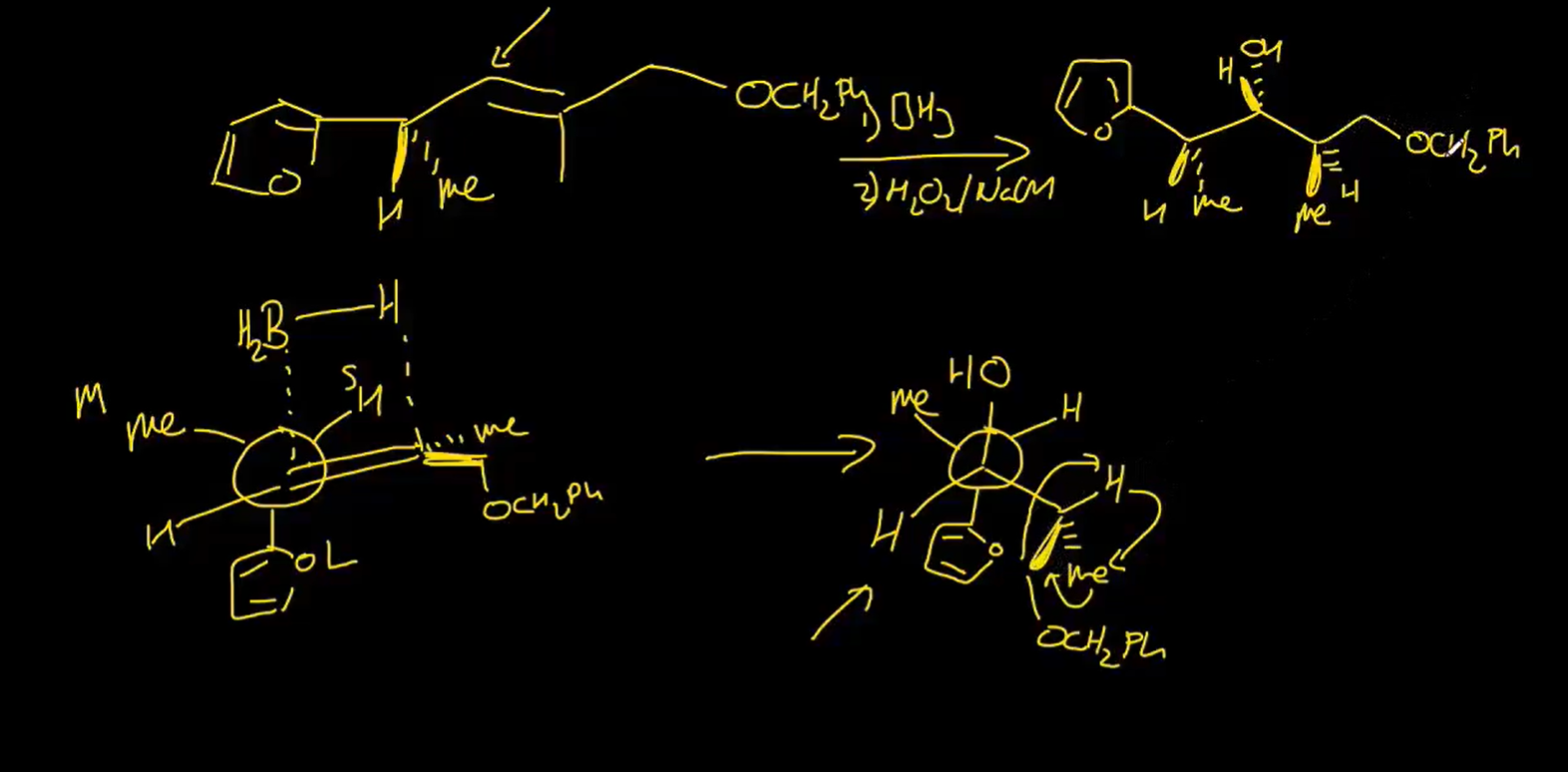
for this reaction, hydroboratin, what are the general rules
1)Boron ends up on less hindered end
2)oxidation occurs with retention of configuration
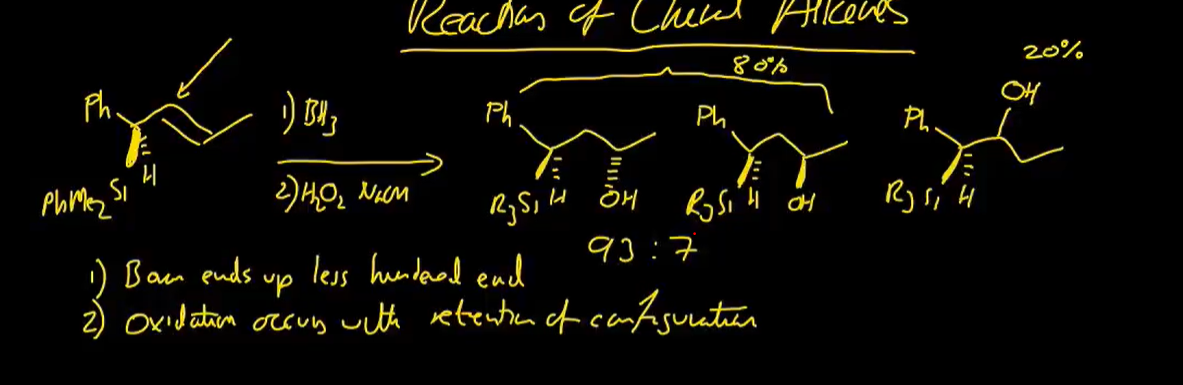
why is this the ratio
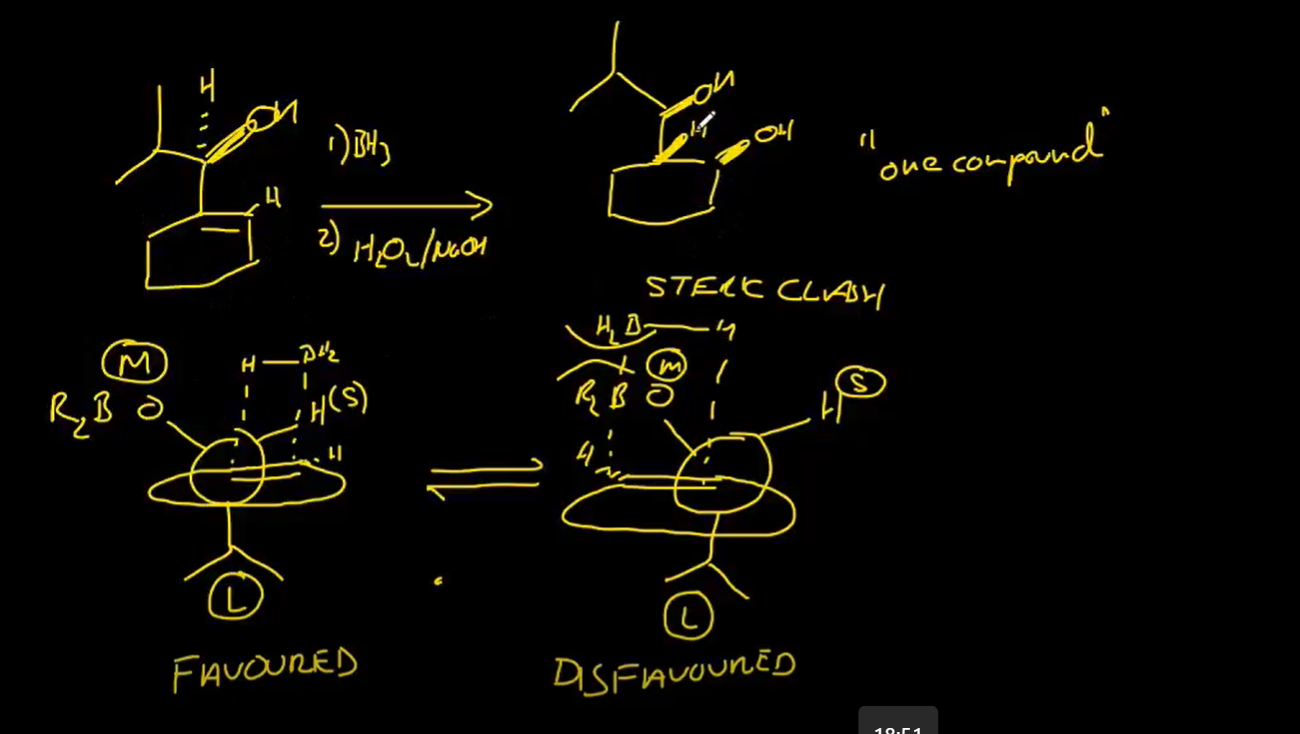
small group is hydrogen, 90 degrees is the biggest group, so bc Hydrogen is sterically less hindered, buti in the equillibirum, theres a bit of steric clash with Ph and the BH2 group so hence disfavoured.
two get newmann to look like molecule, the substituents shifted one to the left. so OH took H position, H took Me posotion Me took OH position
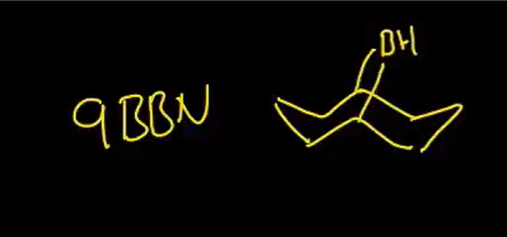
advantage of using 9BBN
its more selective for some major isomer of product by >95: >5 regioisomeric control
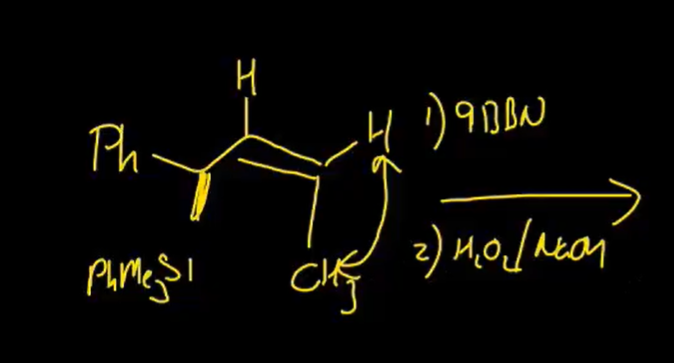
this makes
mostly stays the same with the ch and h flipping
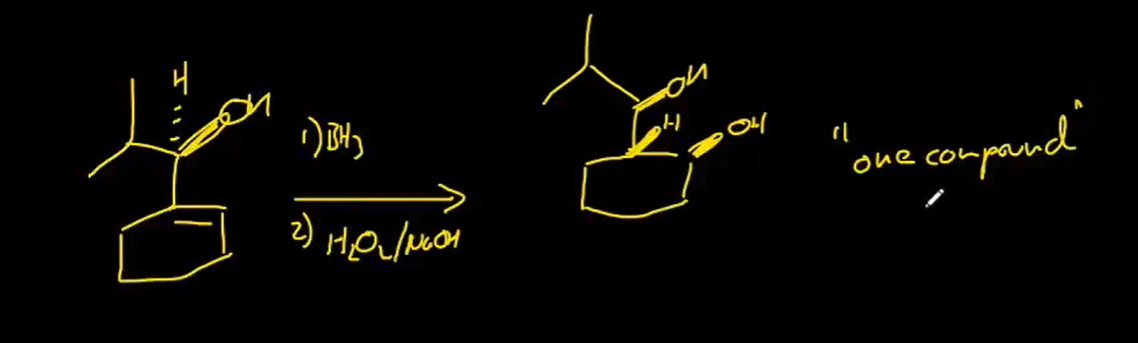
whats going on here
draw the ring as a circle and this is whats favoured due to less teric clash
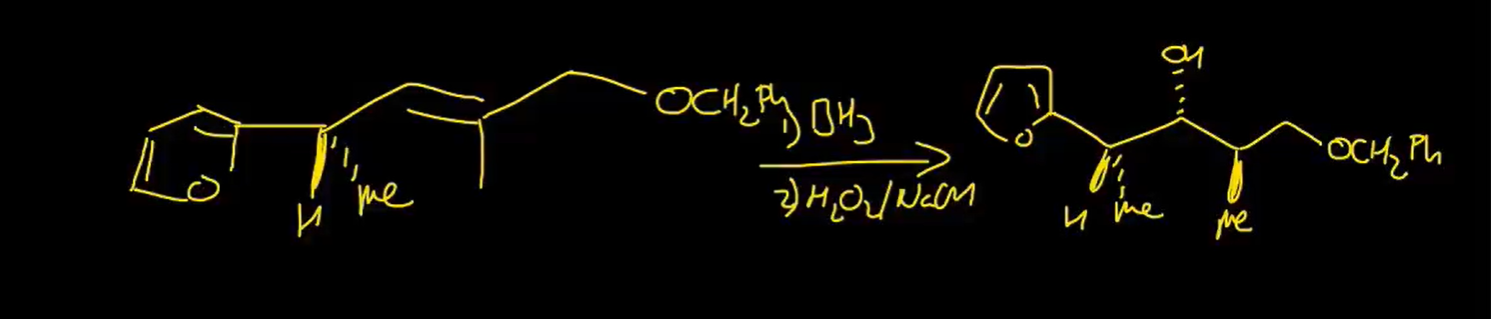
explain this
same concept but remember to switch substituents around
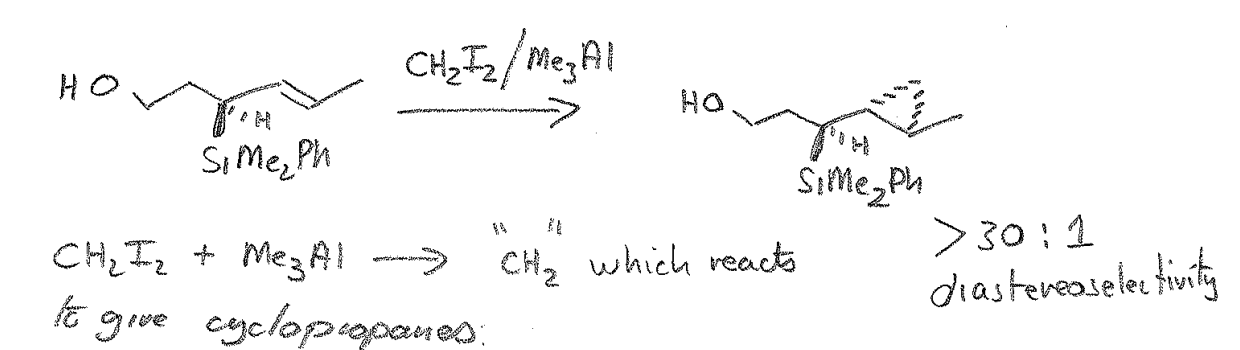
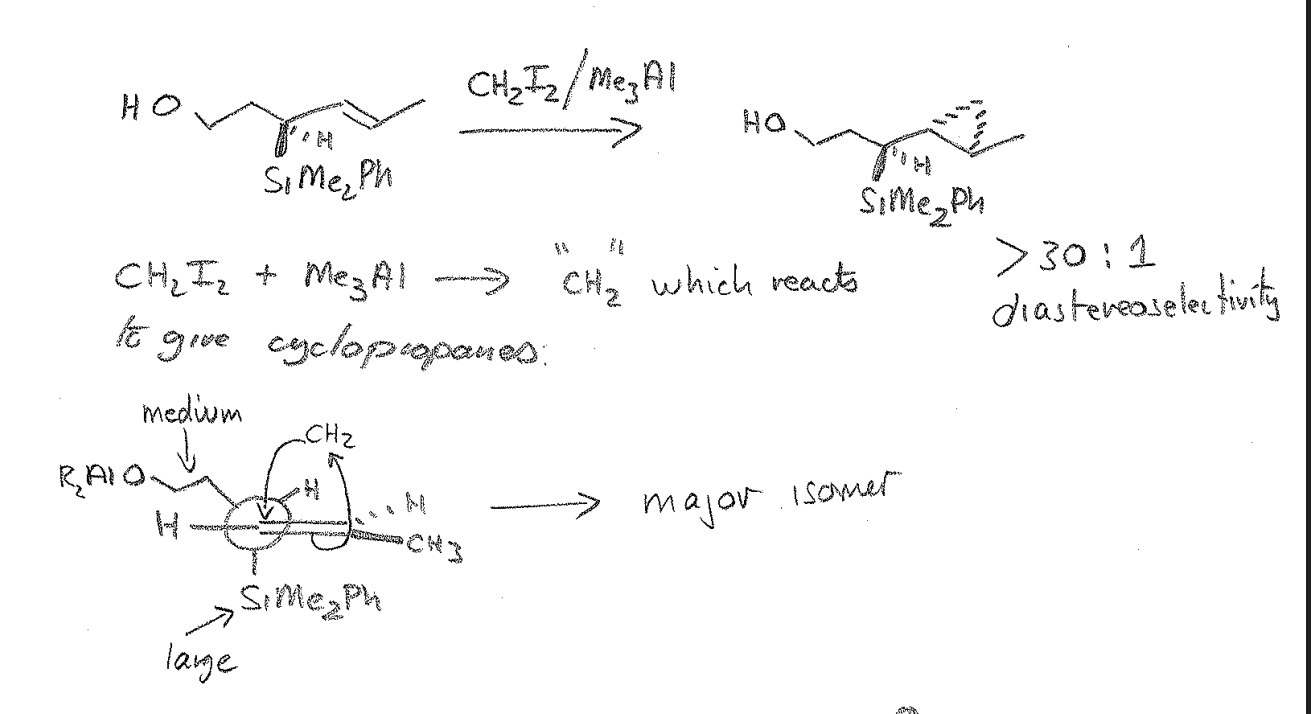
how do we get from reactant to product
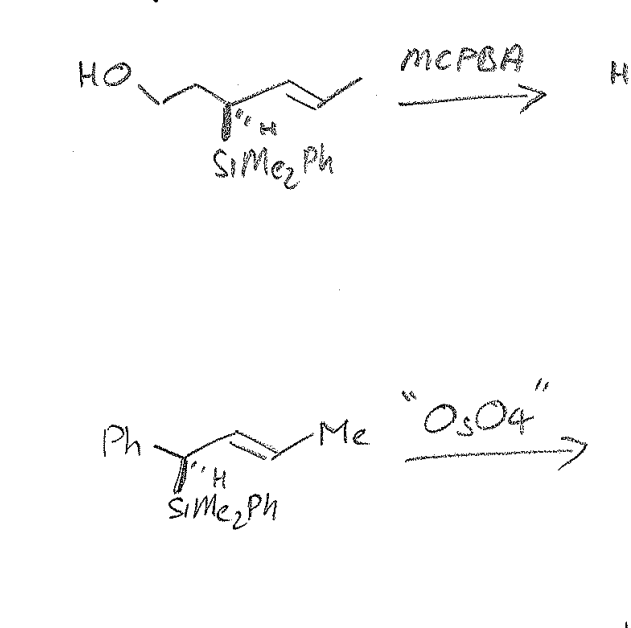
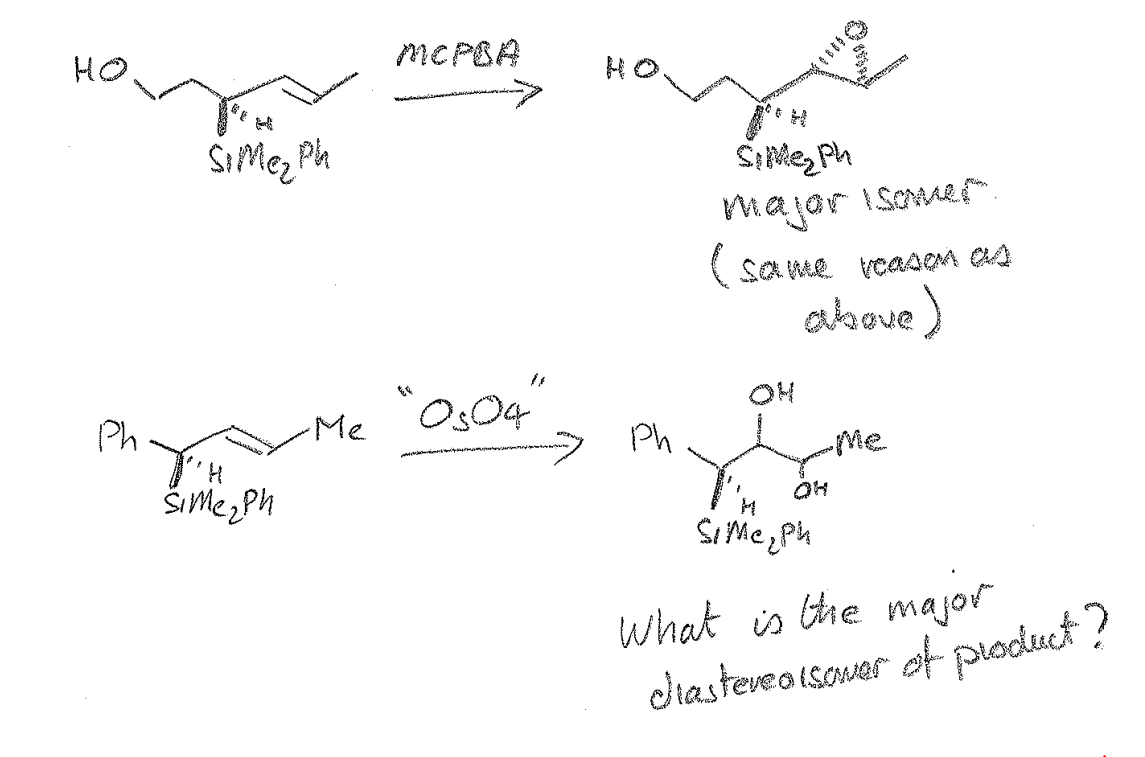
whats the prodcuts for these and its reasoning
mCPBA is the same reason for the one before, the one below
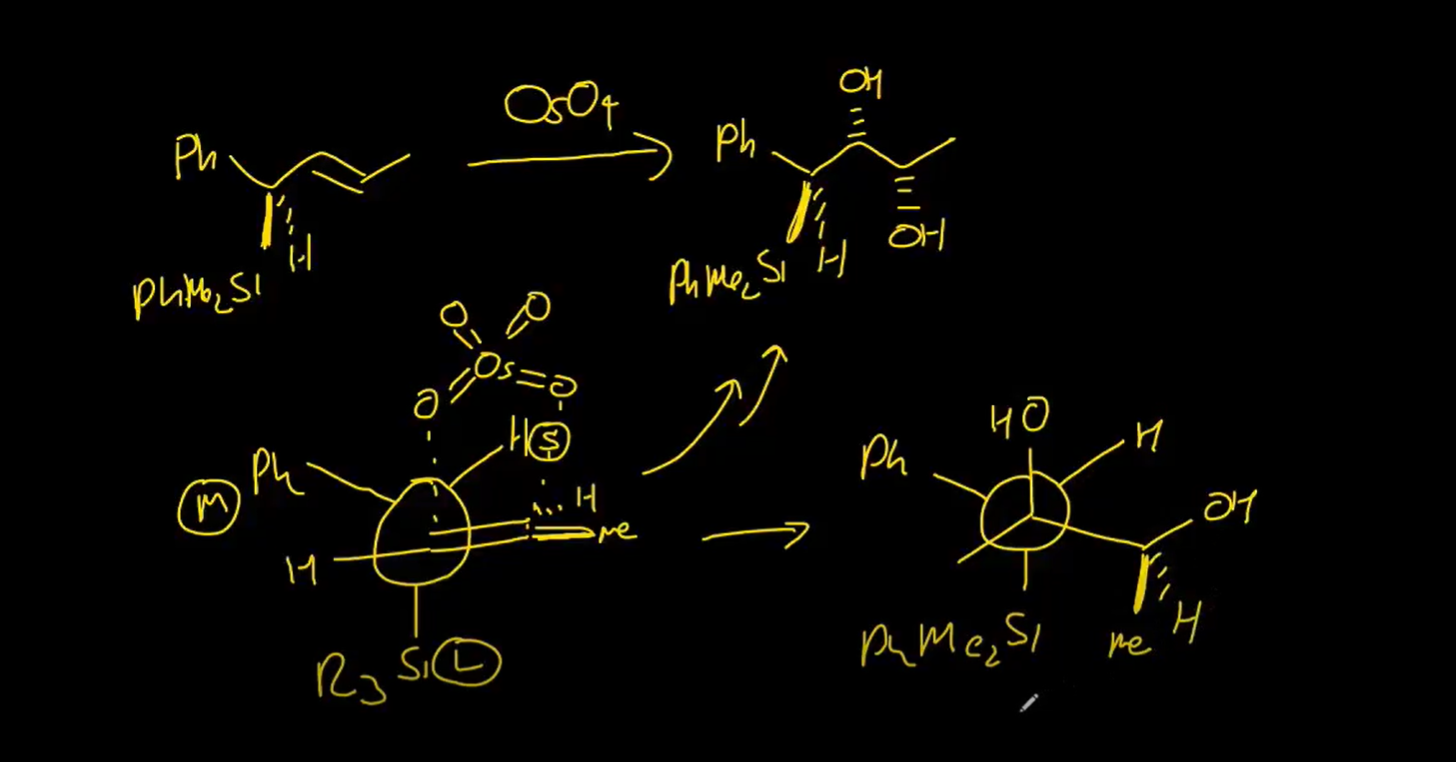
the onzoloysis mechanism
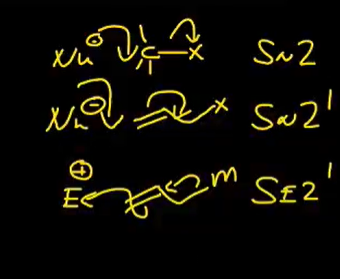
reminder of how sn2 reactions go which then expains SE2 reactions
metal or psuedo group (silicon) attacks the electrophile
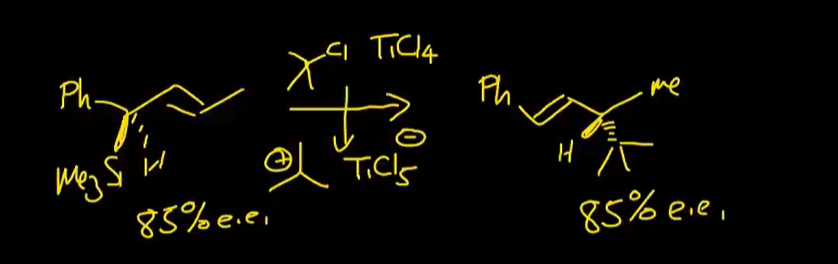
we can see in SE2 reaction the silicon group has gone, whats happening here
the p orbital is adjacent to the silicon carbon on the adjacent carbon the p orbital of sillyl is positive bringing greater stability bc sillyl is electropositive. This is beta silyl carbon

Draw out the attack of TiCl4
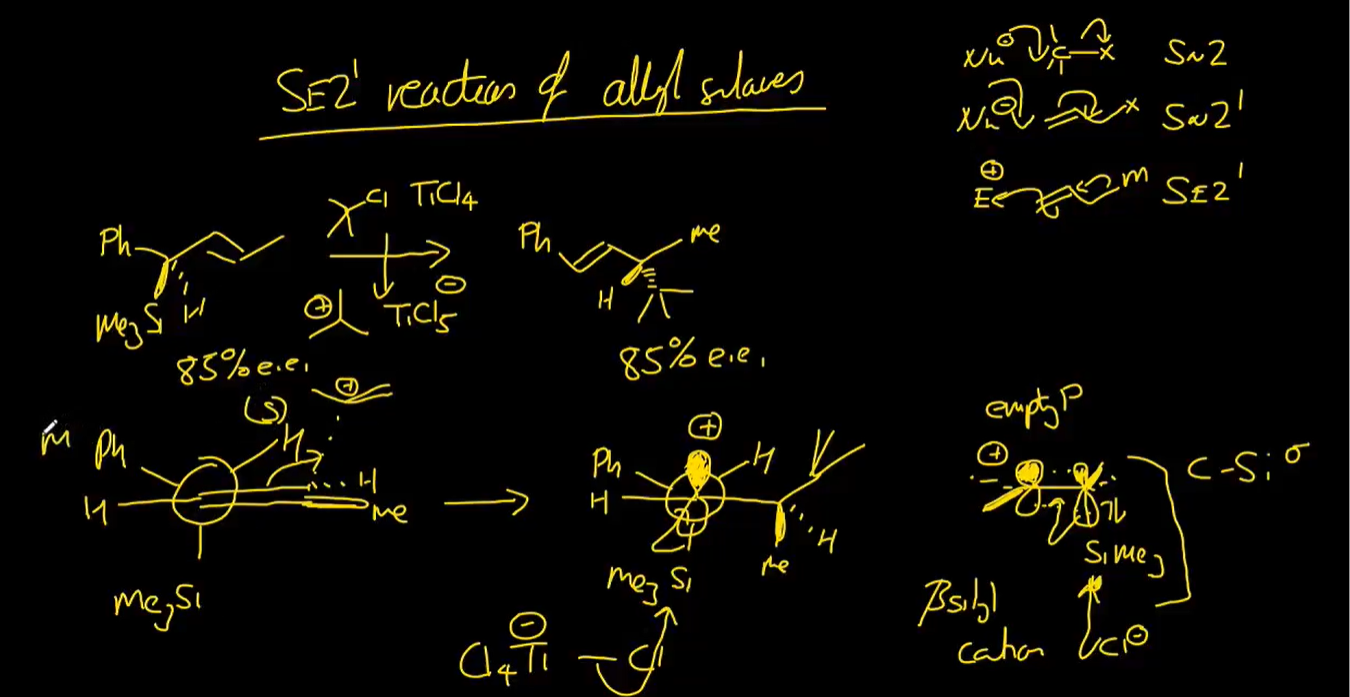

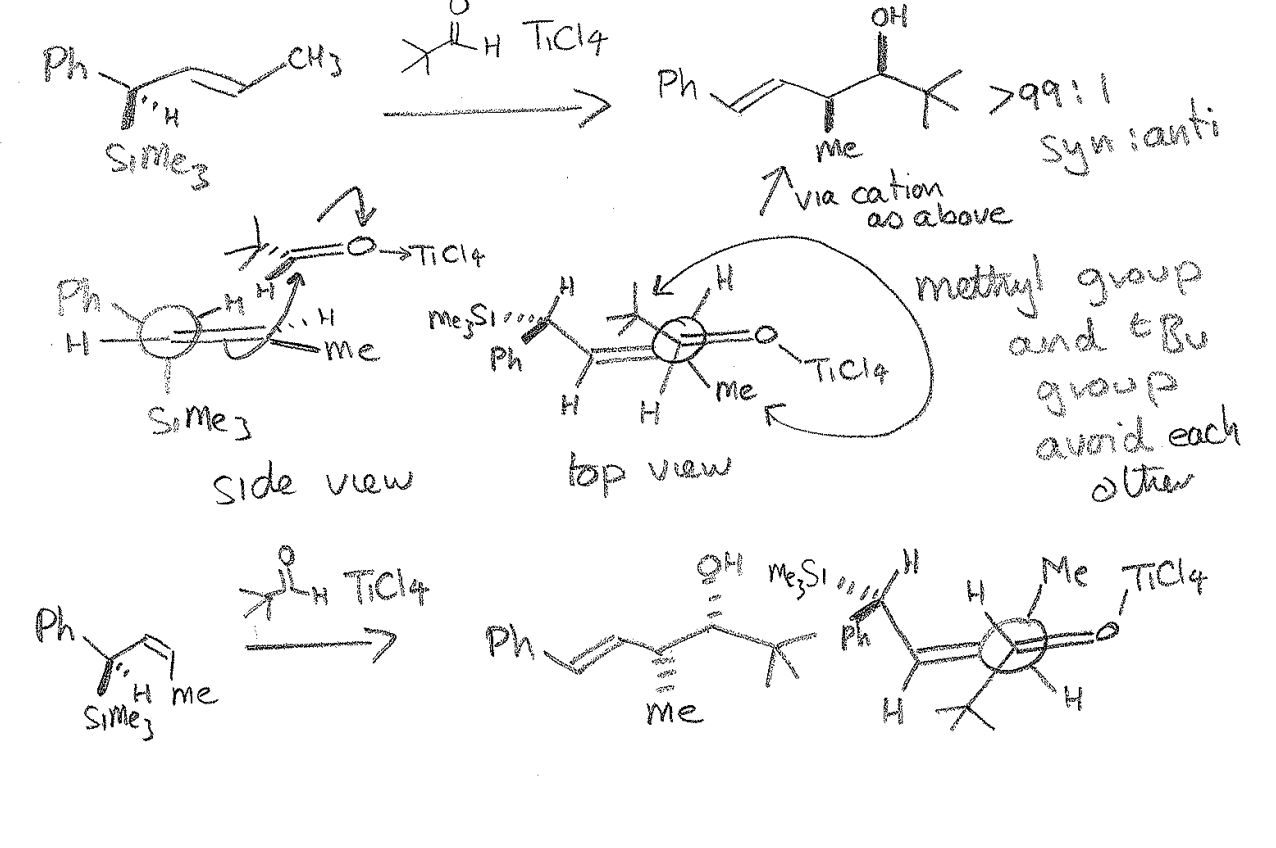
why is this the ratio
theres steric clash in the tbu and methyl. the substituents swap. the enantiomer is made with diff starting material
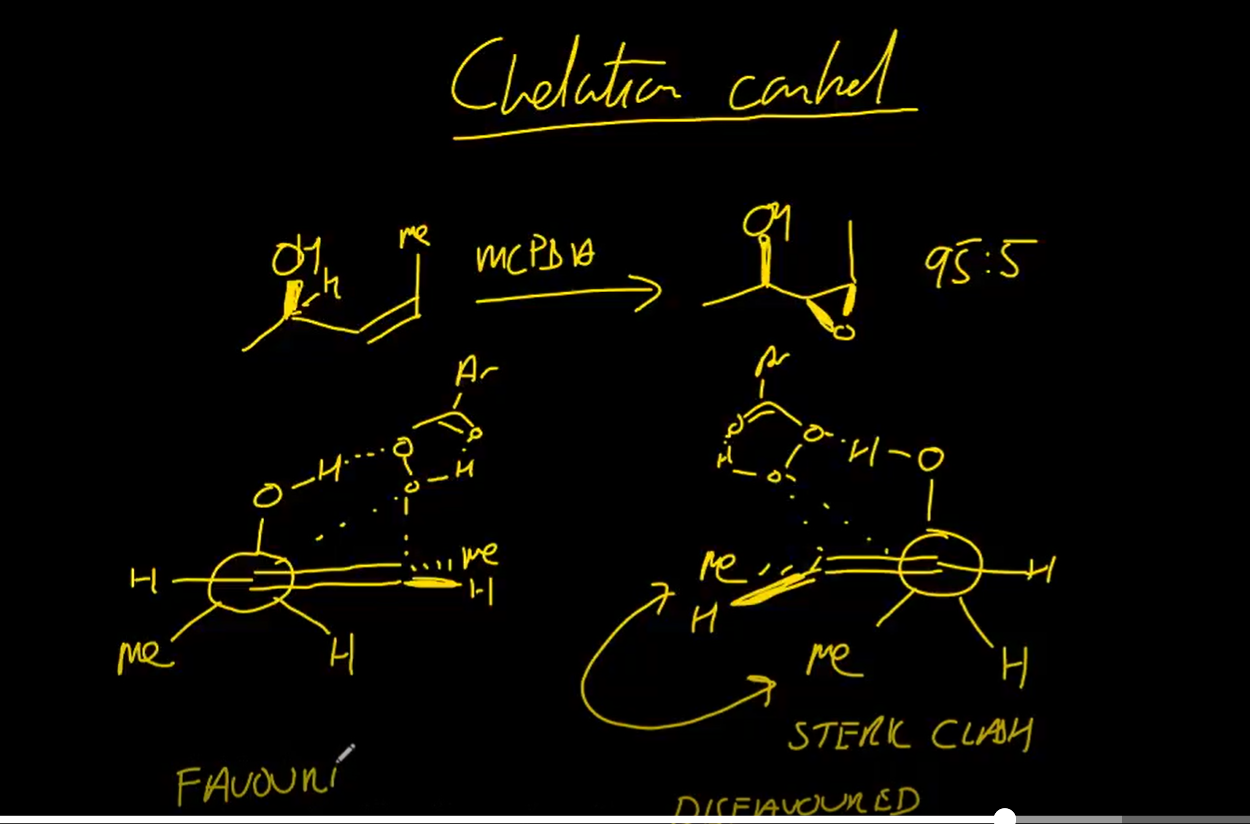
whats chelation control
something reacting 90 degrees to alkene
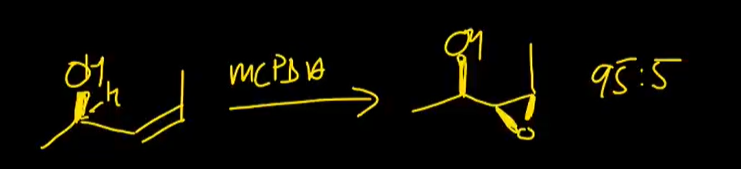
why is this the case
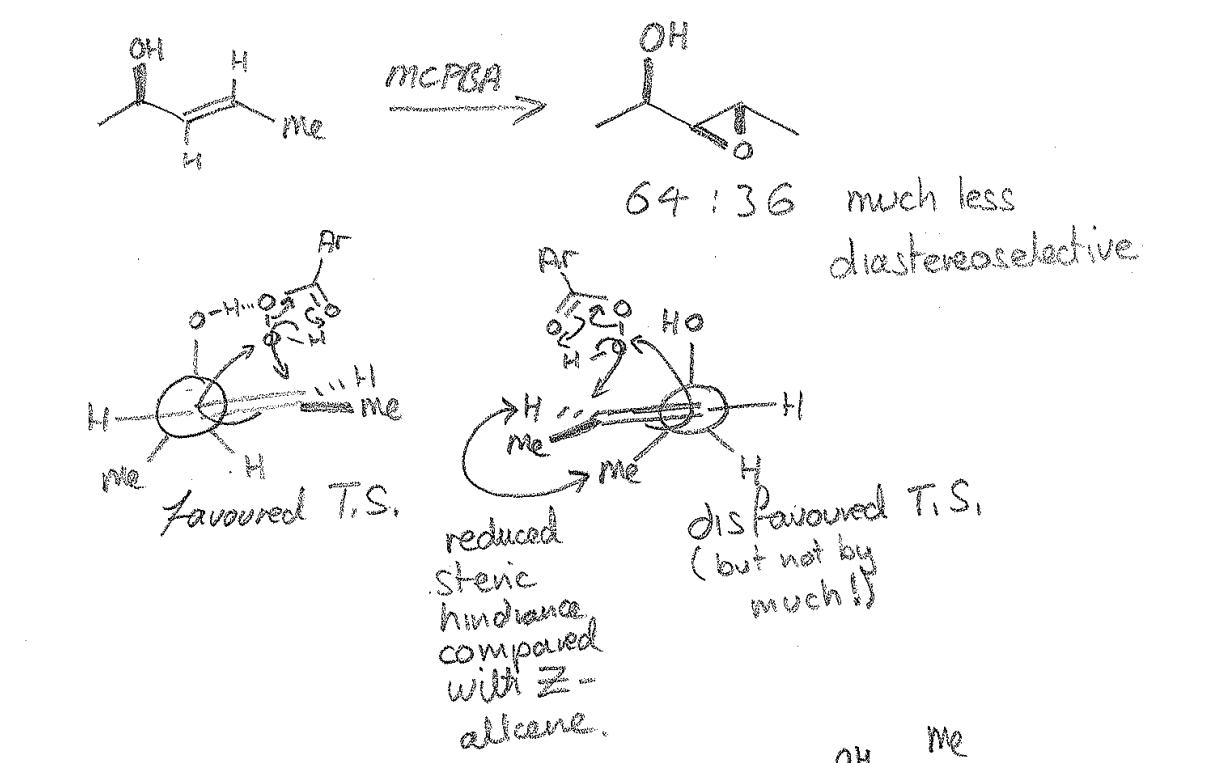
steric hindrance in disfavoured one by the me groups
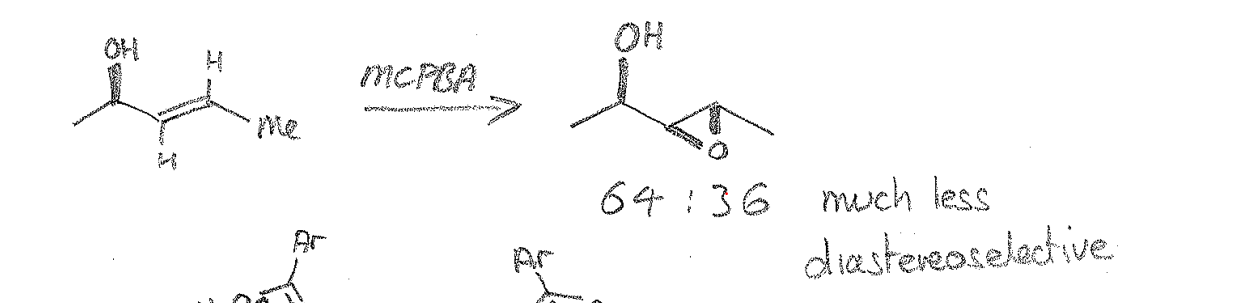
why is this much less diastereoselective
because h and me do have a steric clash, its still not by match
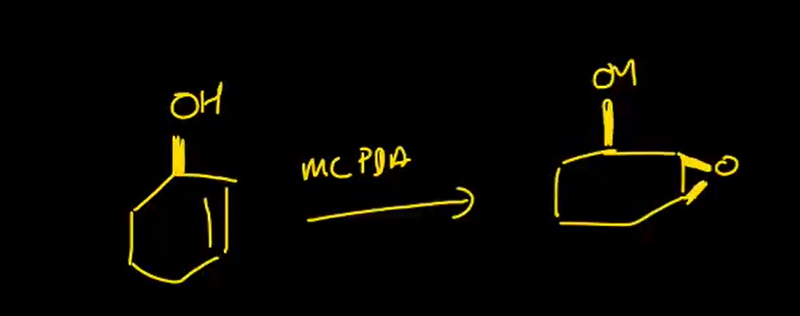
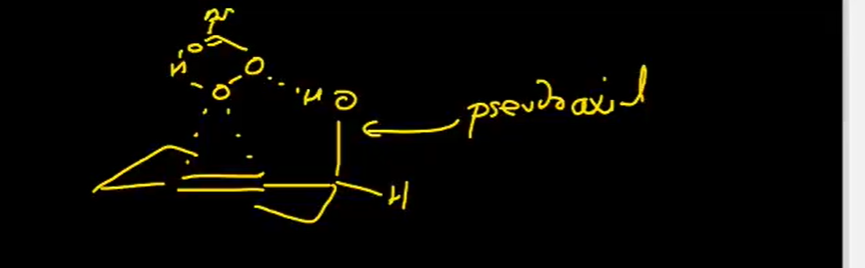
why is this the major
pseudoaxial
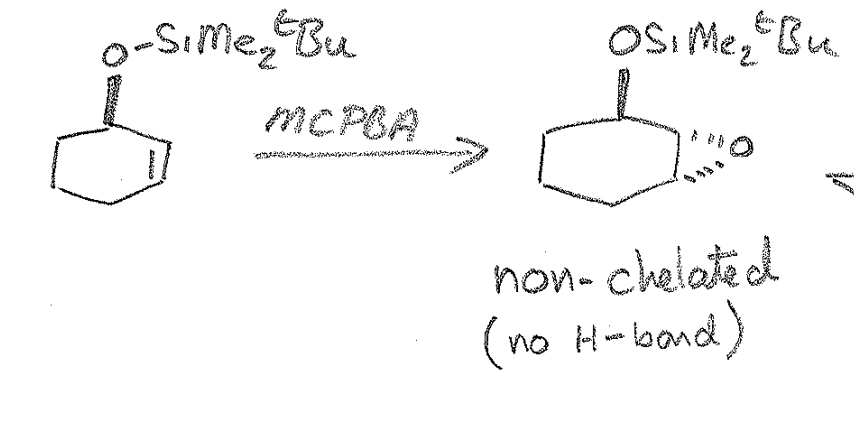
whys this the major
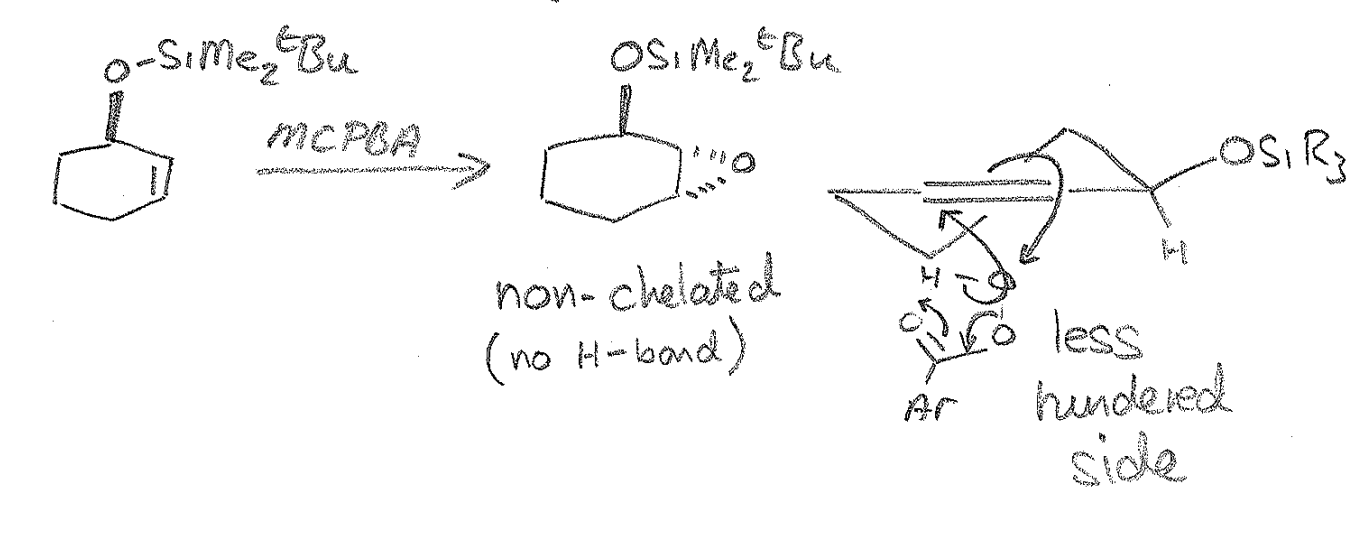
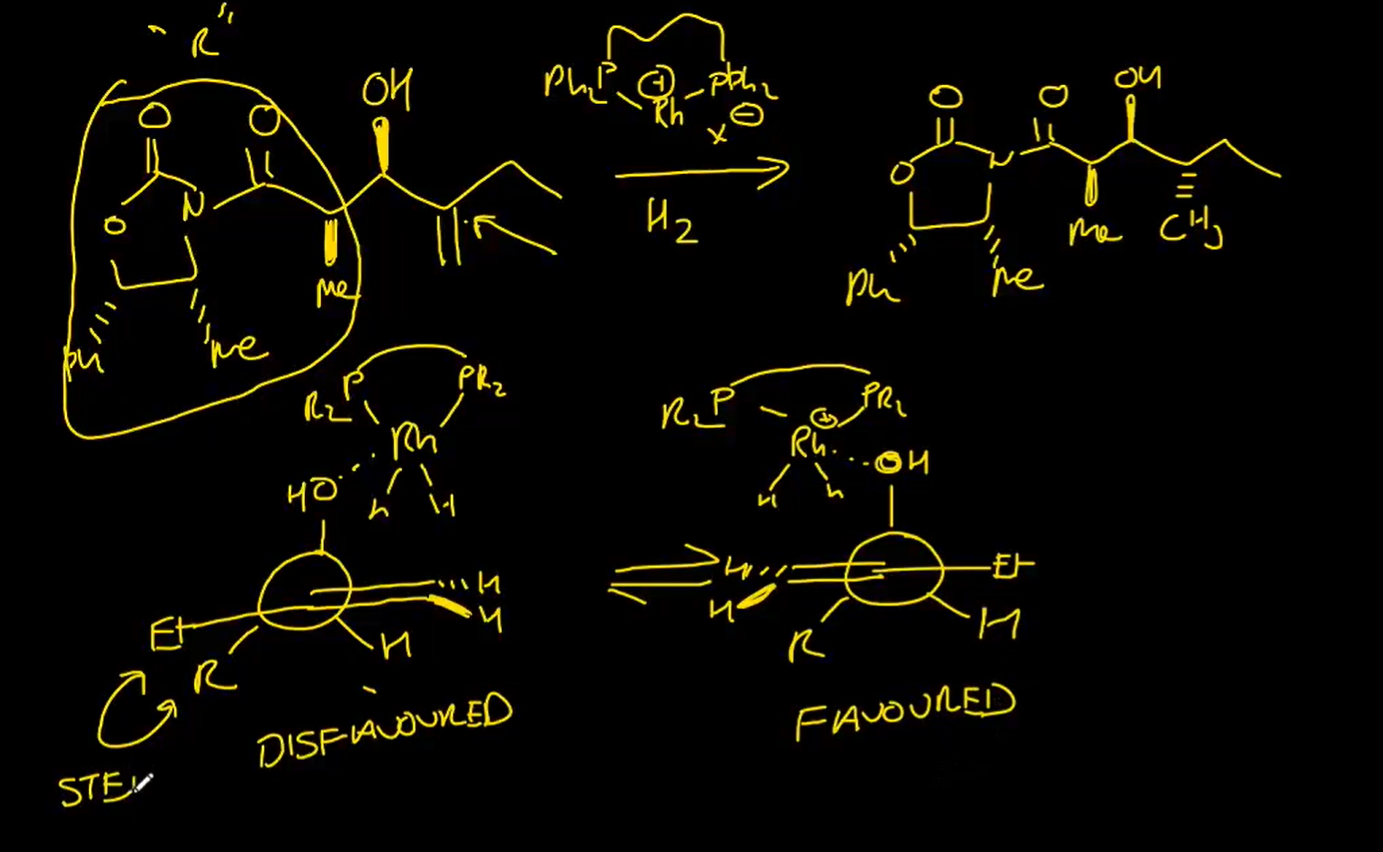
why is this favoured
because the r group is near H which is a small substituent