Nutrition and Aging
 Studied by 0 people
 Call Kai
 Learn
Learn Practice Test
 Spaced Repetition
 Match
Match Flashcards
 Knowt Play
1/57

There's no tags or description
Looks like no tags are added yet.
Name | Mastery | Learn | Test | Matching | Spaced | Call with Kai |
|---|
No study sessions yet.
58 Terms
What is the projected percentage of the U.S. population over 65 years old by 2030?
1 in 5 will be over 65 years old.
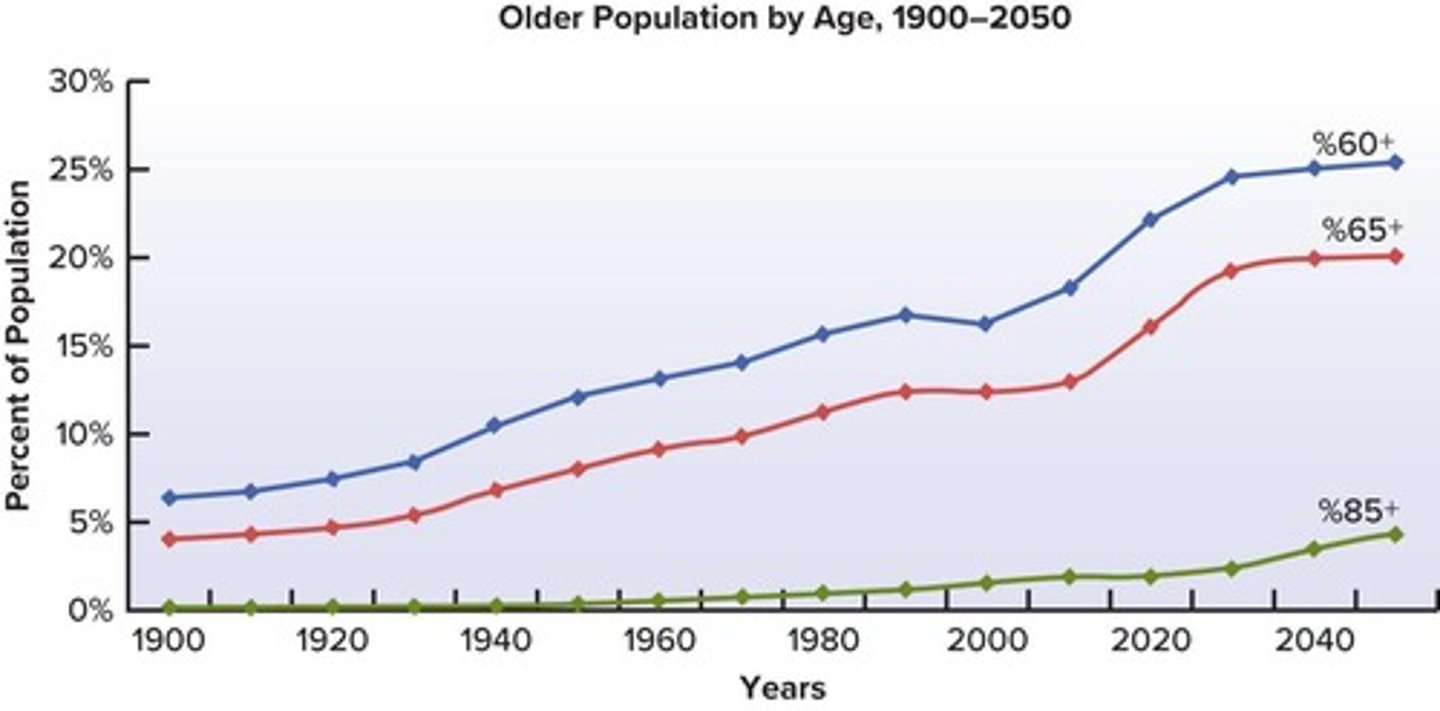
What challenges does an increasing aging population present for our society?
large proportion → annual incomes of <$10,000
Long term challenges to health care (chronic conditions, disease, cancer)
What percent of 65+ year olds are underweight?
10%
What are some chronic conditions commonly found in older adults?
Cardiovascular disease, type 2 diabetes, hypertension, cancers, and osteoporosis.
Life expectancy
The number of years an average person, born in a specific year, is expected to live
What is life expectancy for males and females in the United States?
73 years for males and 79 years for females
How many healthy years are people expected to live in the U.S.?
ONLY 66 healthy years
Define healthy aging.
The process of developing and maintaining the functional ability that enables well-being in older age.
Healthy aging enables people to...
Be and do what they value
Healthy aging includes a person's ability to...
-Meet basic needs
-Learn, grow, make decisions
-Be mobile
-Build and maintain relationships
-Contribute to society
Aging is...
INDIVIDUALISTIC
What are the characteristics of successful agers?
Functional independence, slower age-related declines, and chronic disease onset at a later age.
What is the goal of successful agers?
Maintain health and prevent disease
How can aging adults prevent disability and disease?
-Maintain healthy body weight
-Weight bearing exercise for muscle and bone health
What are usual agers characterized by?
Aging as expected, having one or more chronic diseases, and some disability but can function.
What is the goal of usual agers?
Prevent disabilities
What defines accelerated agers?
Physical function has declined and may experience dementia.
What is the goal of accelerated agers?
Maintain functional status and increase independence
List some factors that determine how you age.
Genetics, access to health care, environment, and lifestyle habits (diet, exercise, alcohol, smoking, sleep, weight).
What is the Mediterranean diet associated with?
Longevity! with abundant intakes of fruits, vegetables, whole grains, beans, nuts, and seeds, olive oil, fish, dairy and eggs= limited.
What does the mediterranean diet say about physical activity?
Daily physical activity is a way of LIFE
What are the physiological changes with age?
-Body composition changes
-Decreased bone mineral density
-Joint health deterioration
-Digestion
-Oral health
-Dehydration
What happens to lean body mass (LBM) as one ages?
Decreased lean body mass; LBM decreases from 45% to 27% of total body weight.
What is sarcopenia?
Loss of skeletal muscle and strength associated with aging, with a loss of 0.5-1% per year after age 25.
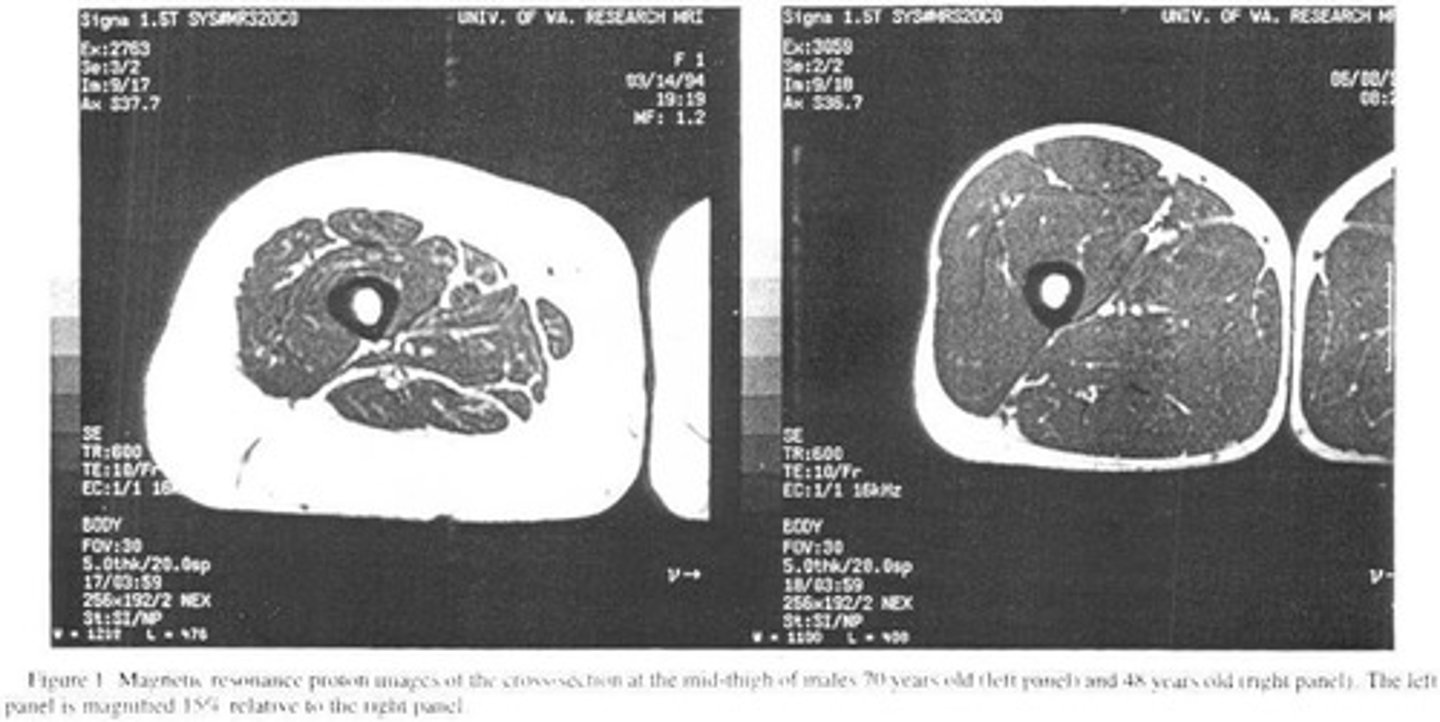
Consequences of decreased Lean body mass (LBM)
Weakened response to illness or other stress, decreased mobility, instability= falls
Sarcopenic obesity
Loss of lean tissue AND increased fat mass
When is bone mass gained?
During adolescence
Bone mass and aging women
Bone mass is stable until menopause, and then decreases
Bone mass and aging men
Slow and steady bone loss after middle age
What is the consequence of decreased bone mineral density?
Increased risk of osteoporosis and bone fractures, and HIP fractures
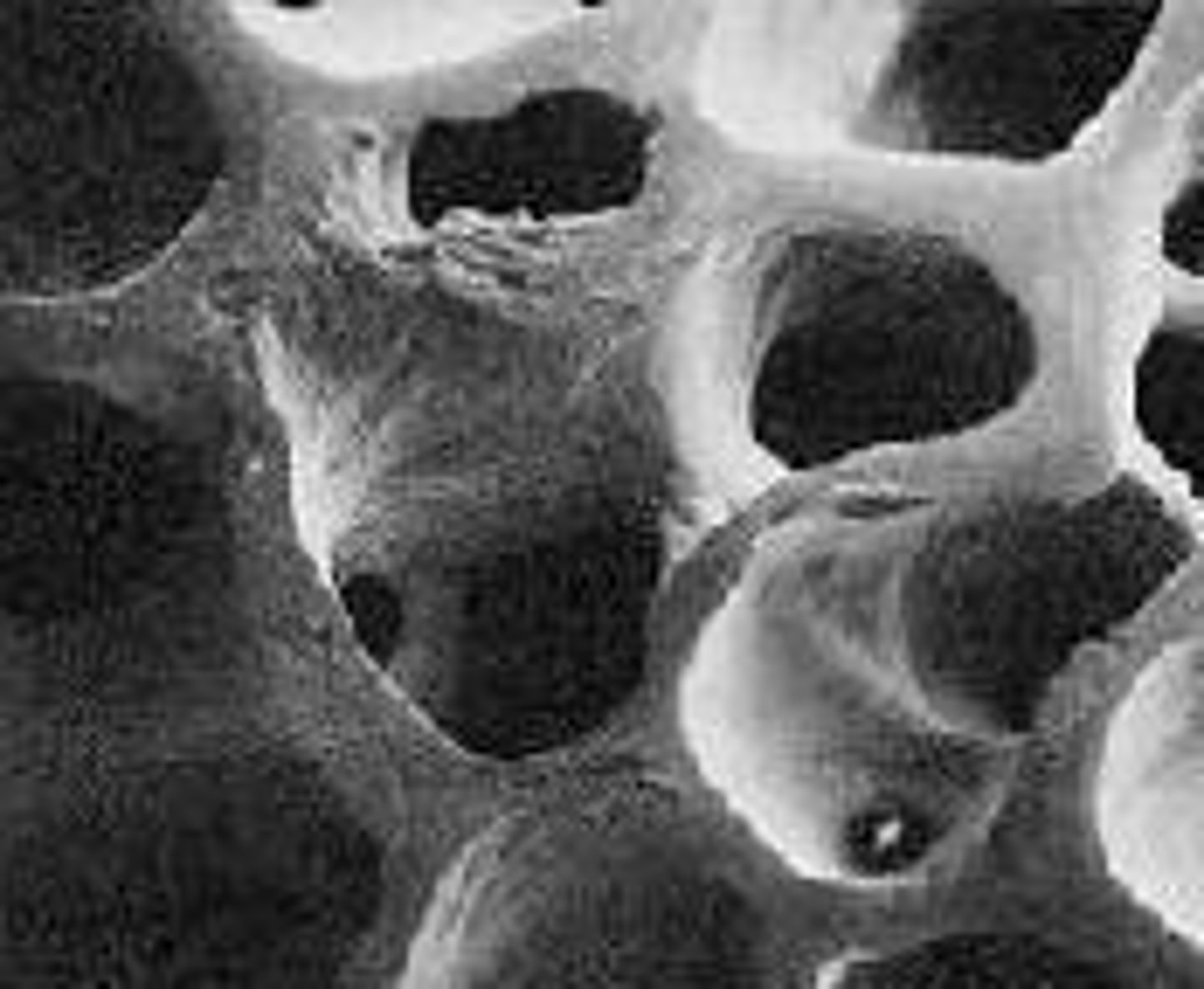
How many people suffer hip fractures each year?
More than 300,000
Statistics about hip fractures
-Most are women over 65 yrs
-70% are women
-Risk increases with age
-1/5 die from relates complication within a year
What is a common cause of disability and pain in older adults?
Arthritis, which involves deterioration in and around joints.
Arthritis
Joint inflammation, common among obese individuals
How does aging affect digestion?
Decreased stomach acidity and nutrient absorption, especially of B12.
How does aging affect oral health?
Loss of teeth, gum disease and impaired chewing, decreased saliva output
What increases the risk of dehydration in older adults?
Impaired thirst mechanism, intentional reduction of fluid intake, medications, and less efficient kidney function.
What dietary recommendations are suggested for older adults?
Maintain healthy body weight, engage in weight-bearing exercise, and ensure adequate protein intake.
Ensure adequate Ca and Vitamin D throughout lifetime and fatty acids
How do nutrient needs change with age? (energy and protein)
Energy needs decrease, while protein needs may remain the same or increase.
What vitamin increases in need for adults over 70?
Vitamin D INC!
What age should men and women INC Calcium?
Over 70 for male, over 50 for women
When should B6 increase?
Over 50
Do iron needs increase or decrease for women over 50?
DECREASE
B-12 needs and aging
DRI stays the same, but some older adults have decreased absorption and may need supplements
What are some psychological factors affecting food choices in older adults?
Depression, grief/loss, and food faddism.
What are some socioeconomic factors affecting food choices in older adults?
Income, cooking facilities, transportation/distance to grocery store
What are some physical factors affecting food choices in older adults?
Ability to cook, oral health, taste changes
What overall factors affect food choices of older adults?
Psychological, socioeconomic, physical
What federal programs provide nutrition assistance to older adults?
Older Americans Act Nutrition Programs, including Congregate Nutrition Program and Meals on Wheels, US department of Agriculture programs (SNAP, senior farmers market, child and adult care food program)
What is the importance of weight-bearing exercise for older adults?
It helps maintain muscle and bone health.
What is the role of calcium and Vitamin D in aging?
They are crucial for preserving bone health.
What percentage of older adults use at least one drug?
90% of older adults.
What percentage of older adults take 5 or more medications daily?
OVER 41%
What is the impact of drug-nutrient interactions in older adults?
They can alter absorption, metabolism or excretion, appetite, and nutrient needs.
What is the goal of nutritional and lifestyle recommendations for older adults?
To preserve healthy, functional years of life.
What is the typical protein recommendation for older adults?
0.8 g/kg body weight, but some suggest 1.0-1.2 g/kg for muscle preservation.
What is the significance of maintaining a healthy body weight in older adults?
It helps prevent loss of muscle mass and supports overall health.
Weight-bearing exercise and adequate protein are key for:
Maintaining/ preventing loss of muscle mass, maintaining a healthy body weight, preserving bone health