Intro to Credibility
 Call Kai
 Learn
Learn Practice Test
 Spaced Repetition
 Match
Match Flashcards
 Knowt Play
1/24

Earn XP
Description and Tags
Section 1 of Exam MAS-II
Name | Mastery | Learn | Test | Matching | Spaced | Call with Kai | Chat |
|---|
No analytics yet
Send a link to your students to track their progress
25 Terms
Collective Risk Model: Aggregate Premium Equation
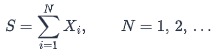
Aggregate premium mean and variance
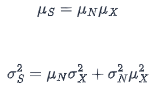
Full Classic (Limited Fluctuation) Credibility Condition
S bar = Sample mean
Miu_S = Expected mean
k = accuracy parameter
1 - alpha = Coverage Probability

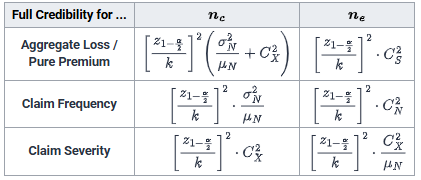
Convert between full credibility standard for n_e and n_c

Full credibility formula table for PP, Freq, and Sev with n_c and n_e
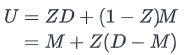
Updated prediction of loss for partial credibility
D = Observed
M = Manual Rate
Z = Credibility Factor
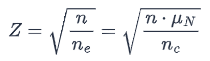
Square root rule for calculating Z
n = actual exposures
n * miu_N = avg claims for n exposures (use actual number of claims for sev or if miu_N is unknown)
Model Distribution: Discrete vs Continuous

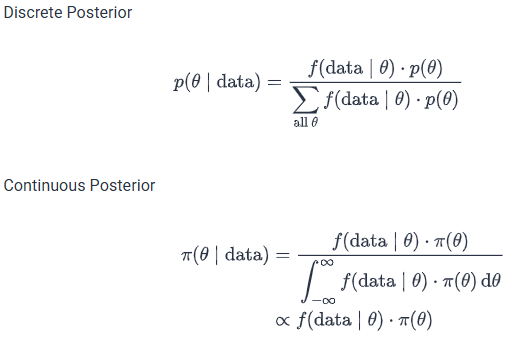
Posterior Distribution: Discrete vs Continuous
Remember to check if a common distribution can be recognized from f(data | theta) * pi(theta) and the domain. Recognizing a distribution allows us to avoid integration and save time.
Predictive Distribution: Discrete vs Continuous

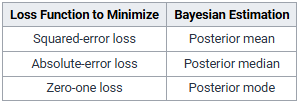
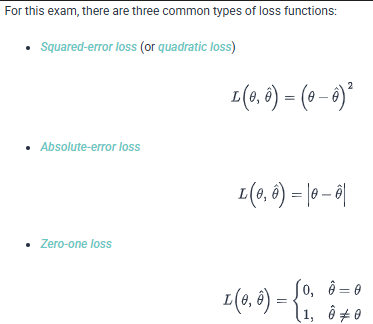
Loss Functions: 3 Types with 3 Bayesian Estimates
Loss Function Formulas
Conjugate Prior Types
Plus Uniform (0, theta) - SP-Pareto
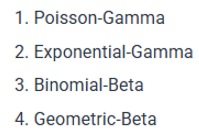
Conjugate Prior: Poisson-Gamma
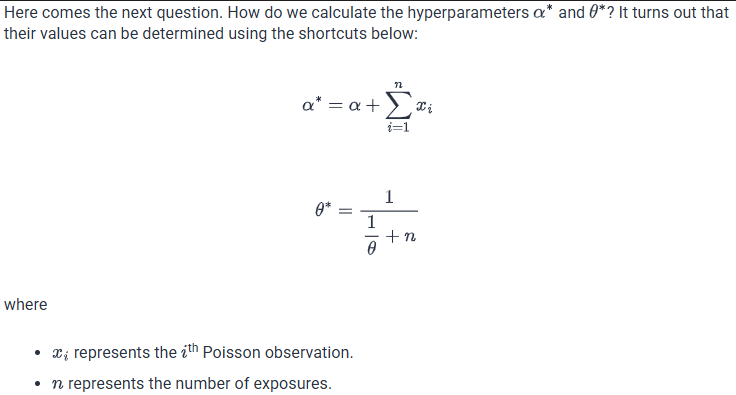
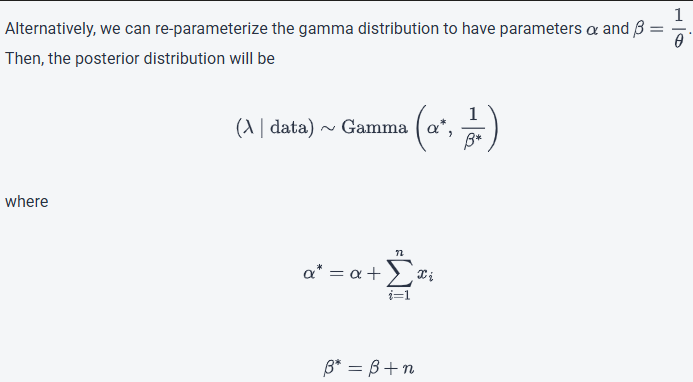
Conjugate Prior: Poisson-Gamma (1/theta)
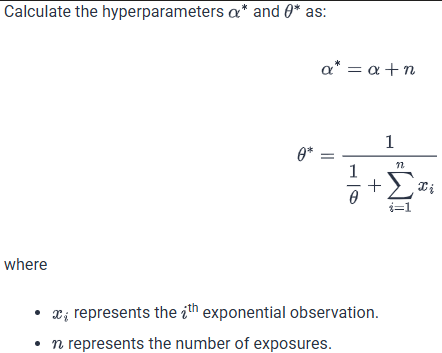
Conjugate Prior: Exponential-Gamma
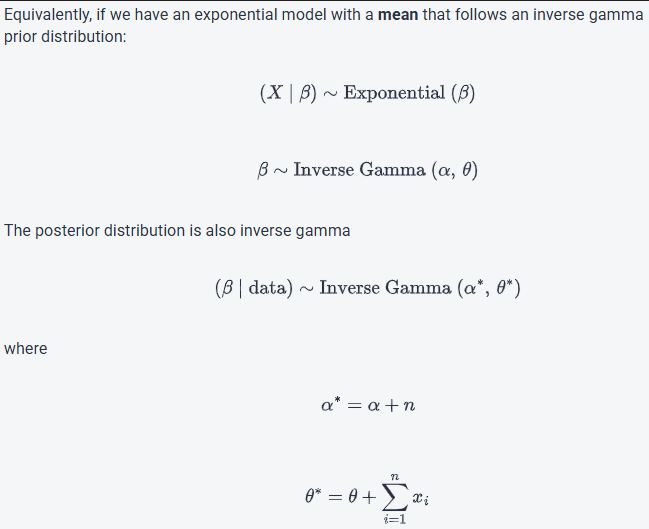
Conjugate Prior: Exponential-Inverse Gamma
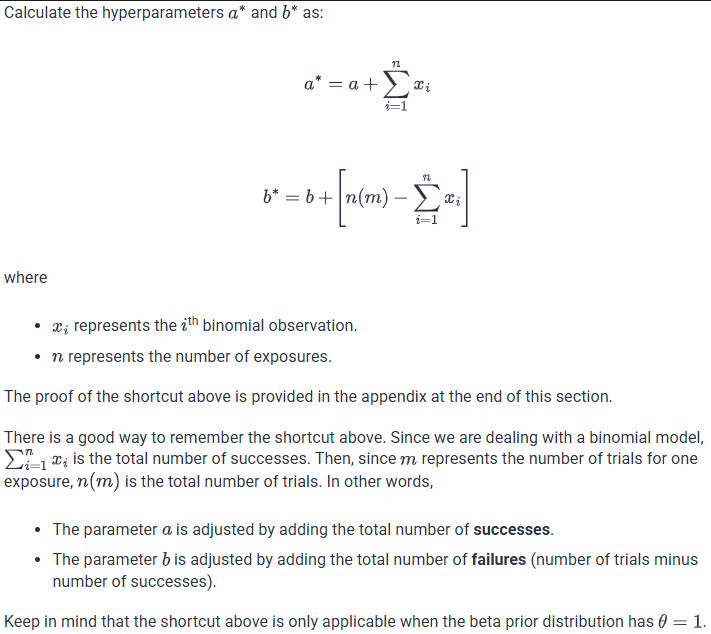
Conjugate Prior: Binomial-Beta
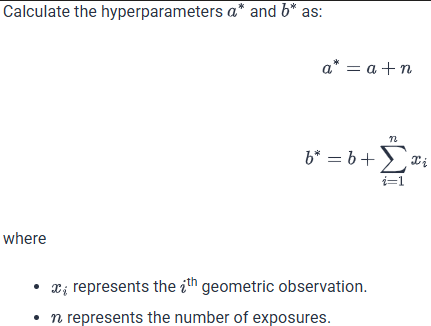
Conjugate Prior: Geometric-Beta
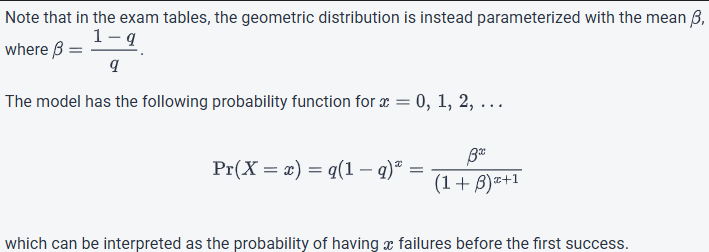
Convert Geometric from mean-based (B) to probability-based (q)
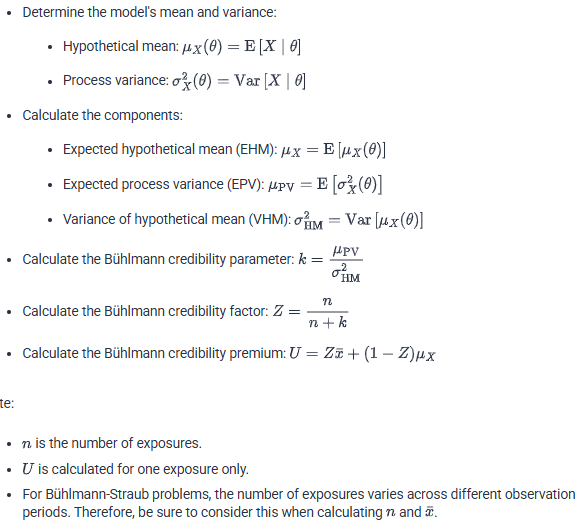
Steps to solving a Buhlmann credibility problem
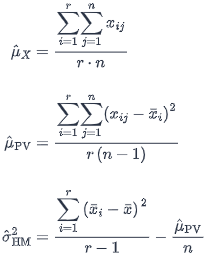
Uniform Exposures: Hypothetical mean, Process Variance mean, and Variance of Hypothetical Mean Equations
Miu_x is x bar
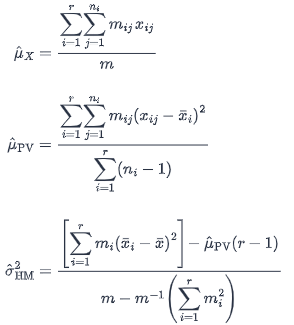
Non-Uniform Exposures: Hypothetical mean, Process Variance mean, and Variance of Hypothetical Mean Equations
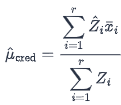
Credibility-Weighted Mean (EHM)
Also called method to “preserve total losses/claim count”
Best way to identify the number of exposures (n) for the Z equation
Think “what is the denominator for x bar” for whatever the question is asking about (could be a single policyholder)