aphg ch7
 Call Kai
 Learn
Learn Practice Test
 Spaced Repetition
 Match
Match Flashcards
 Knowt Play
1/46

There's no tags or description
Looks like no tags are added yet.
Name | Mastery | Learn | Test | Matching | Spaced | Call with Kai | Chat |
|---|
No analytics yet
Send a link to your students to track their progress
47 Terms
agglomeration
grouping together many firms from same industry in single area for collective/cooperative use of infrastructure & sharing labour resources
ancillary activities/multiplier effect
economic activities surrounding & supporting large-scale industries (eg. shipping, food service)
backwash effects
negative effects on 1 region resulting form economic growth within another
break-bulk point
location where large shipments of goods are broken into smaller containers for delivery to local markets
brick-and-mortar businesses
traditional businesses w/ actual stores for trade & retail, do not exist solely on internet (not ie. amazon)
bulk-gaining industries
where product weighs more after assembly than did in separate parts. tend ot have production facilities close to markets
bulk-reducing industries
final products weigh less than separate parts, processing facilities tend to be close to sources of raw materials
commodity dependence
peripheral economies rely too heavily on export of raw materials, put on unequal terms of exchange w/ more-developed countries exporting higher-value goods
conglomerate corporation
firm comprising of many smaller firms that server different functions
core
national/global regions where economic power (wealth, innovation, advanced technology) is concentrated
core-periphery model
spatial structure of development in under-developed countries defined by dependence on developed core region
cottage industry
production of goods & services based in homes > factories
deglomeration
dispersal of industry that formerly existed as established agglomeration
economic backwaters
regions that fail to gain from national economic development
ecotourism
form of tourism based on enjoyment of scenic areas/natural wonders, environmentally sustainable
export-processing zone
govs create favourable investment & trading conditions to attract export-orientated industries
fast world
areas of word (usually economic core) experiencing greater levels of connection bc of high-speed telecommunications & transportation technologies
footloose firms
cost of transporting raw materials & finished product not important for determining location of firm
fordism
henry ford, system of standardized mass production
globalization
idea that world is becoming increasingly interconnected on global scale; smaller scale political/economic life beocming obsolete
gross domestic product
total value of goods & services produced by country
gross national product
total value of goods & services (including income from abroad) produced by residents of a country
human development index
calculates development in terms of human welfare; life expectancy, education, income
least-cost theory
alfred weber, optimal location of manufacturing establishment in relation to cost of transport & labour & relative advantages of agglomeration or deglomeration
manufacturing region
region where manufacturing activities have clustered together (great lakes [michigan, illinois, indiana, ohio, new york, pennsylvania]) (central england, southeastern brazil, tokyo)
maquiladoras
cities where us firms have factories just outside us-mex border in areas designated by mex gov. factories cheaply assemble goods to export to us
microlending
small loans to poor people (typically women) to encourage development of community-oriented small businesses
net national product
measure of all goods & services produced by country in a year, includes production from investments abroad, subtractign loss/degradation of natural resource capital
offshore financial centers
areas specially designed to promote business transactions, centers for banking & finance
outsourcing
sending industrial processes out for external production
periphery
countries w/ low levels of economic activity, low per-capita incomes, & generally low standards of living. africa (-south africa), asia, parts of south america. [world economic periphery]
primary economic activites
natural resources made available for use/further processing (mining, agriculture, forestry, fishing)
purchasing-power parity
monetary measurement of development taking into account what money buys in diff countries
quaternary economic activities
research, information gathering, administration
quinary economic activities
advanced quaternary, high-level decision-making for large corporations/high-level scientific research
regionalization
specific regions acquire characteristics differentiating form others within same country. involves development of dominant economic activities in particular regions
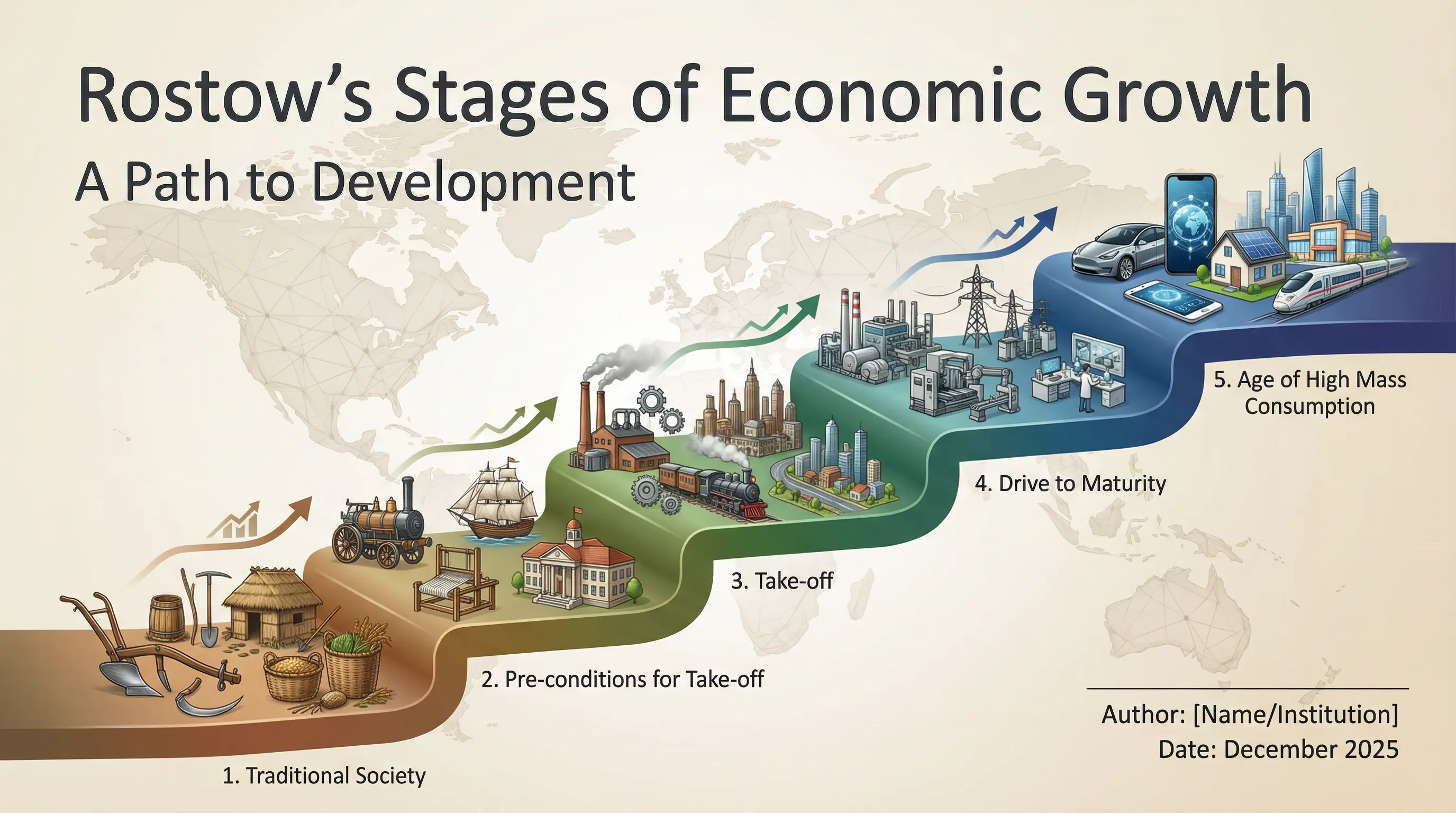
rostow’s stages of development (economic growth)
least-most developed country progression, 5 stages
secondary economic activities
processing raw materials (manufacturing, construction, power generation)
semipheriphery
newly industrialized countries, relatively diverse economic opportunities but w/ extreme wealth disparity (china, brazil, india, chile, indonesia)
service-based economies
highly developed economies focusing on research & development, marketing, tourism, sales, telecommunications
slow world
developing world w/o high-speed telecommunications & transport tech
spatially fixed costs
input cost in manufacturing remaining constant wherever production is lcoated
spatially variable costs
input cost in manufacturing changing significantly from place to place in total amount & in relative share of total costs
specialty goods
not mass-produced, assembled individually/in small quantities
teritiary economic activities
provide market exchange of goods & bring tgther consumers & providers of services (retail, transportation, government, personal & professional services)
world cities
group of cities forming interconnected, internationally dominant system of global control of finance & commerce (nyc, la, london, paris, shanghai)
world-systems theory
immanuel wallerstein. explaisn emergency of core, periphery, & semiperiphery in terms of economic & political connections established at beginning of exploration & maintained through economic access