Symptoms and Signs of Lung Disease
 Call Kai
 Learn
Learn Practice Test
 Spaced Repetition
 Match
Match Flashcards
 Knowt Play
1/36

There's no tags or description
Looks like no tags are added yet.
Name | Mastery | Learn | Test | Matching | Spaced | Call with Kai | Chat |
|---|
No analytics yet
Send a link to your students to track their progress
37 Terms
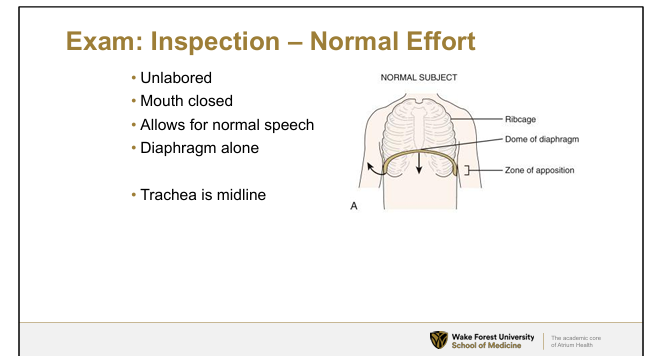
Normal respiratory inspection findings
Unlabored breathing, mouth closed, normal speech, diaphragm as primary muscle, trachea midline
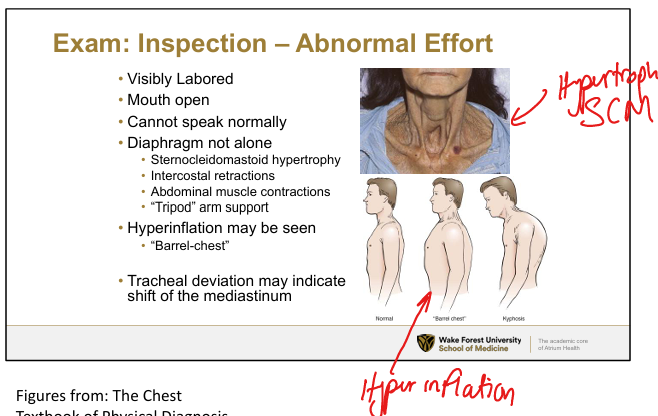
Abnormal respiratory inspection findings
Labored breathing, mouth open, accessory muscle use (SCM hypertrophy, intercostal retractions, abdominal contractions), tripod position, barrel chest, tracheal deviation
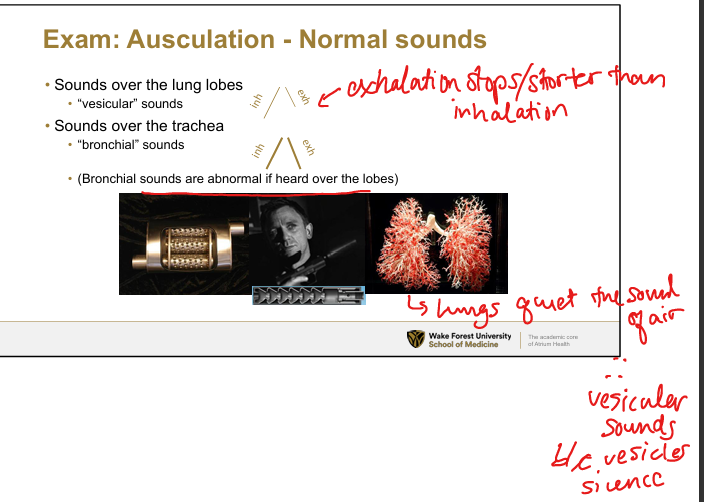
Normal vesicular breath sounds
Soft, low‑pitched, inspiratory phase longer than expiratory, heard over lung lobes
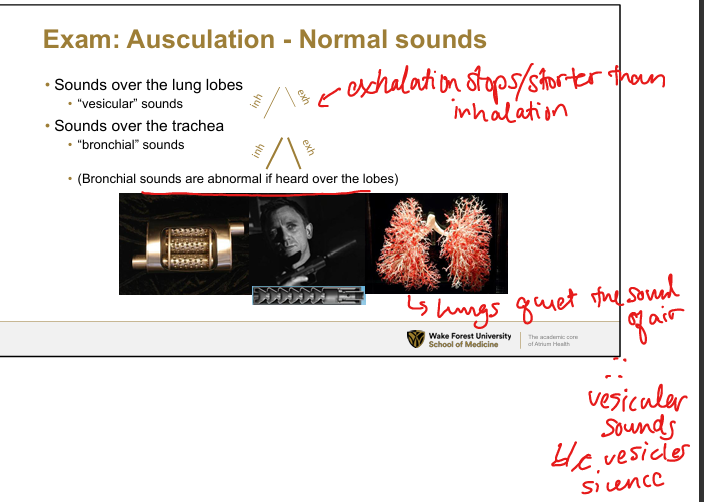
Normal bronchial breath sounds
Loud, high‑pitched, equal inspiratory/expiratory phases, normally only over trachea
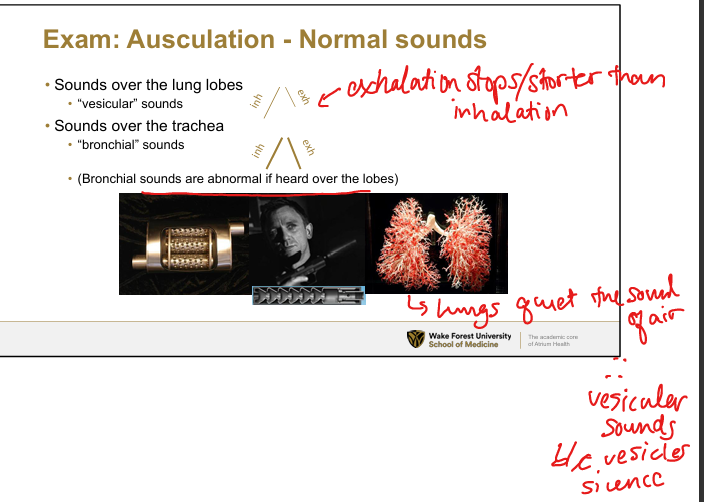
Bronchial sounds heard over lung fields indicate
Consolidation (pneumonia)
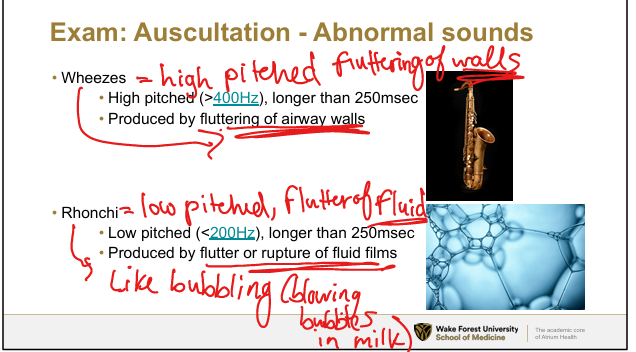
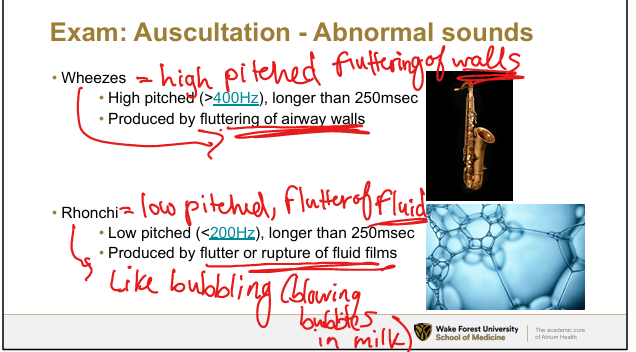
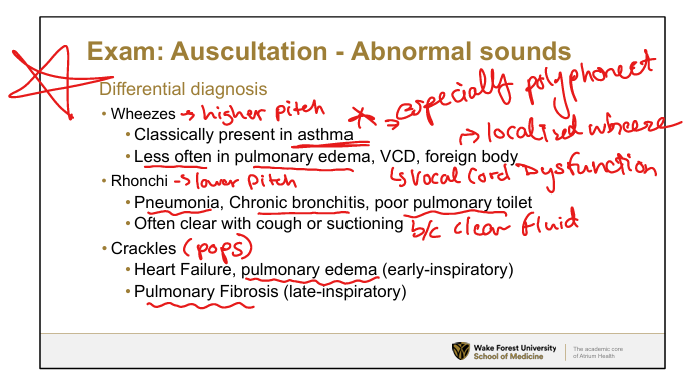
Wheezes definition
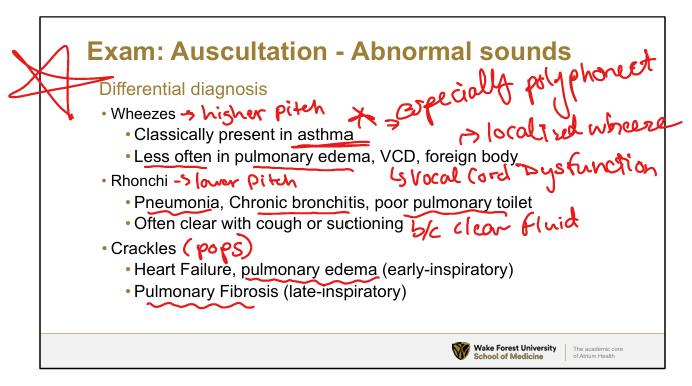
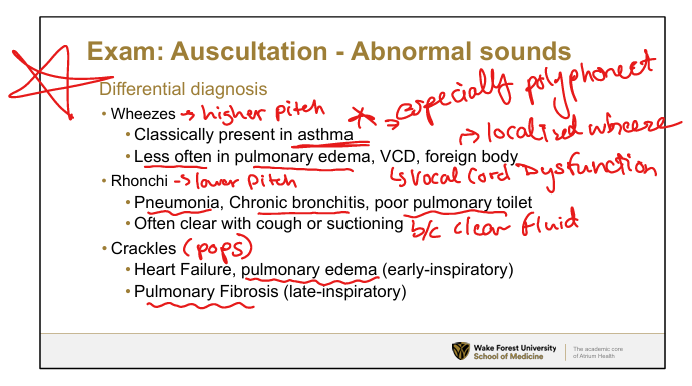
Continuous, high‑pitched musical sounds from airway wall fluttering
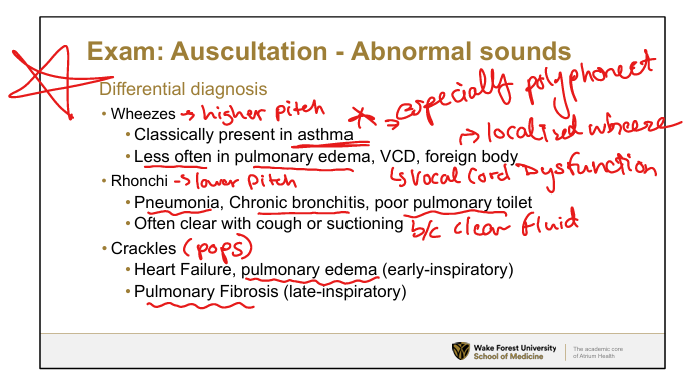
Common causes of wheezes
Asthma (classic), pulmonary edema, vocal cord dysfunction, foreign body
Rhonchi definition
Low‑pitched continuous sounds from fluid film rupture or airway secretions
Common causes of rhonchi
Pneumonia, chronic bronchitis, poor pulmonary toilet
Crackles definition
Discontinuous popping sounds from collapsed airways opening
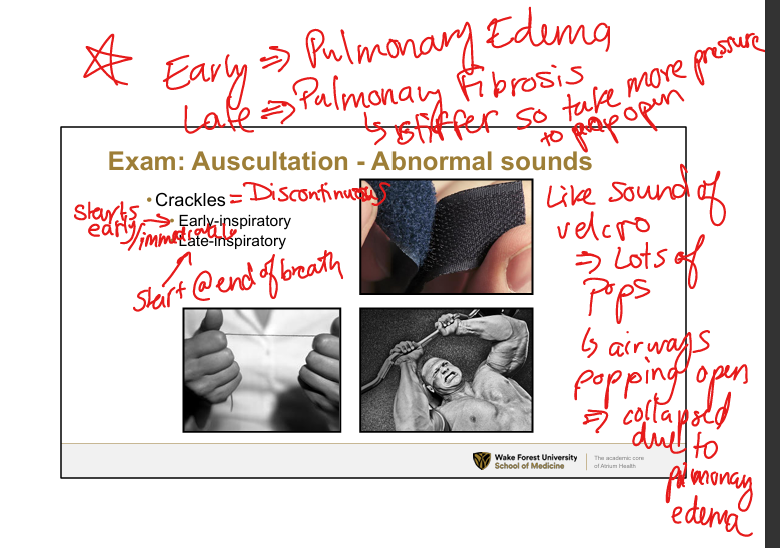
Early inspiratory crackles causes
Pulmonary edema, heart failure
Late inspiratory crackles causes
Pulmonary fibrosis(fibrotic alveoli take longer to pop open)
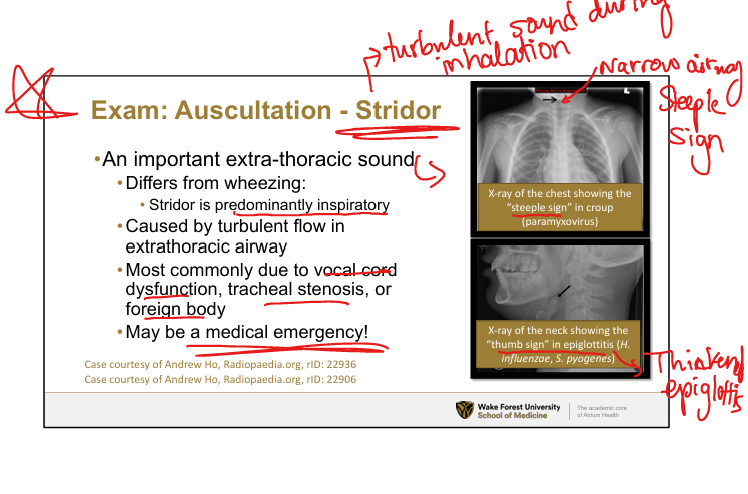
Stridor definition
Loud, predominantly inspiratory sound from turbulent flow in extrathoracic airway
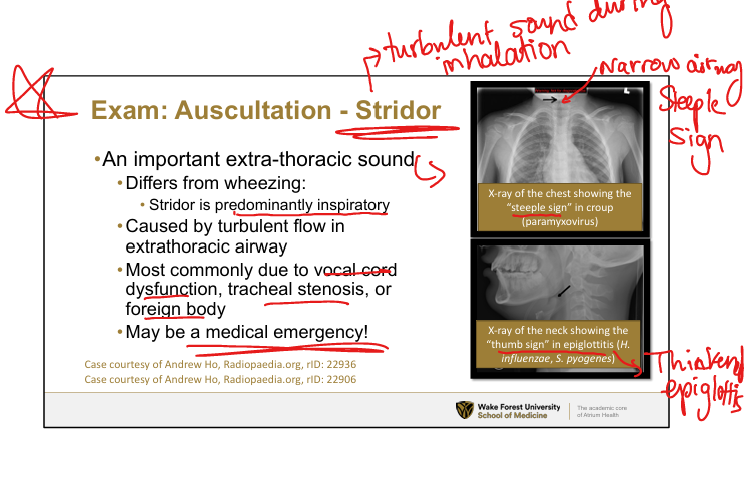
Common causes of stridor
Vocal cord dysfunction, tracheal stenosis, foreign body
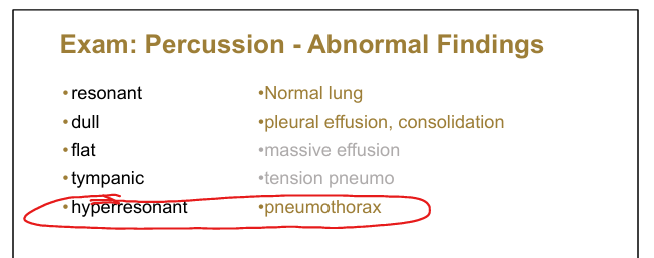
Percussion: hyperresonant
Pneumothorax
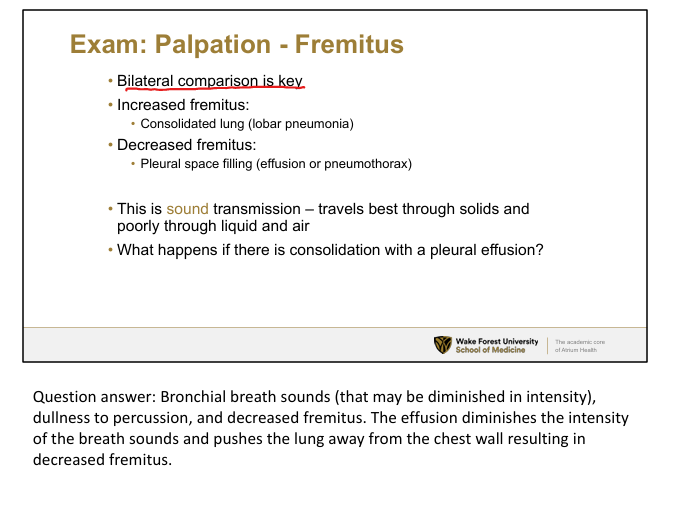
Fremitus increased
Consolidation lung»lobar pneumonia (sound travels better through solid lung)
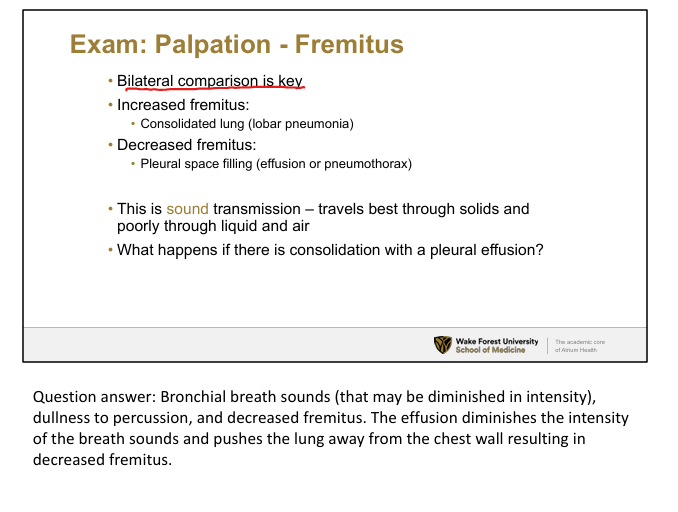
Fremitus decreased
Pleural effusion or pneumothorax (sound blocked by fluid/air)
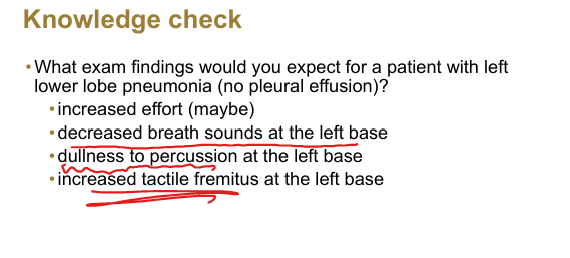
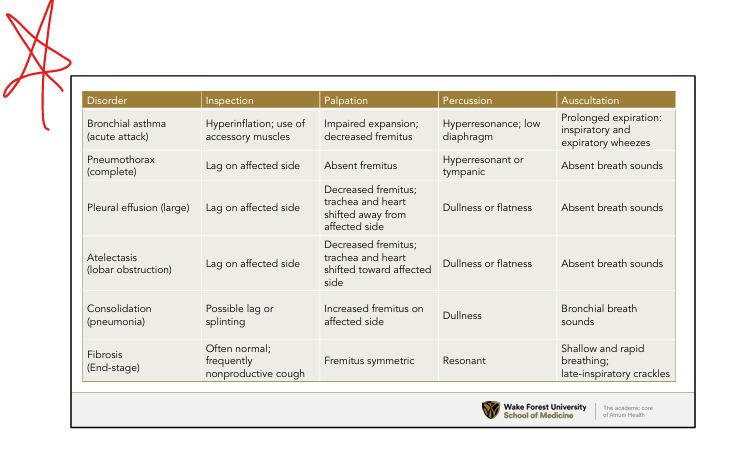
Findings in lobar pneumonia
Increased fremitus, dull percussion, decreased breath sounds, bronchial breath sounds
Findings in complete pneumothorax
Lag on affected side, absent fremitus, hyperresonant/tympanic percussion, absent breath sounds
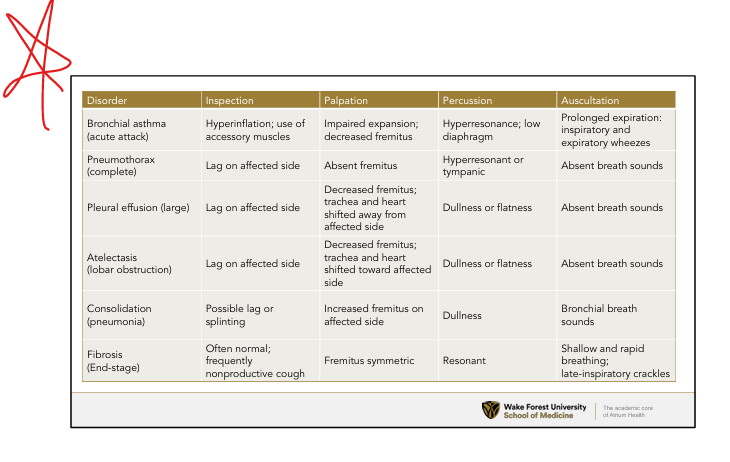
Findings in large pleural effusion
Lag, decreased fremitus, dull/flat percussion, absent breath sounds, tracheal shift away
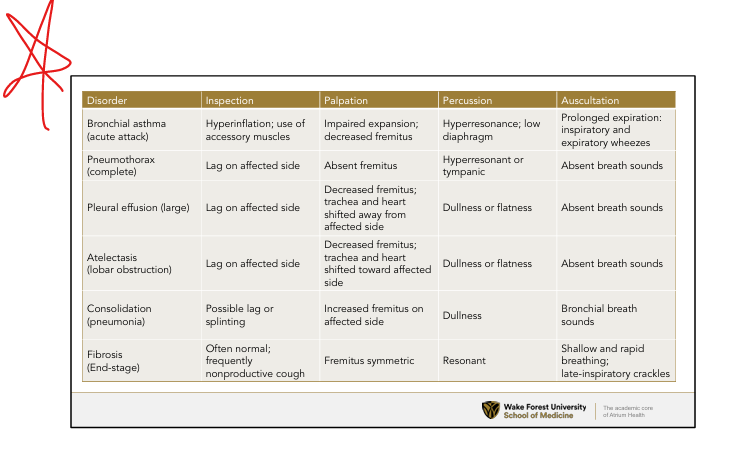
Findings in atelectasis (lobar obstruction)
Lag, decreased fremitus, dull percussion, absent breath sounds, tracheal shift toward affected side
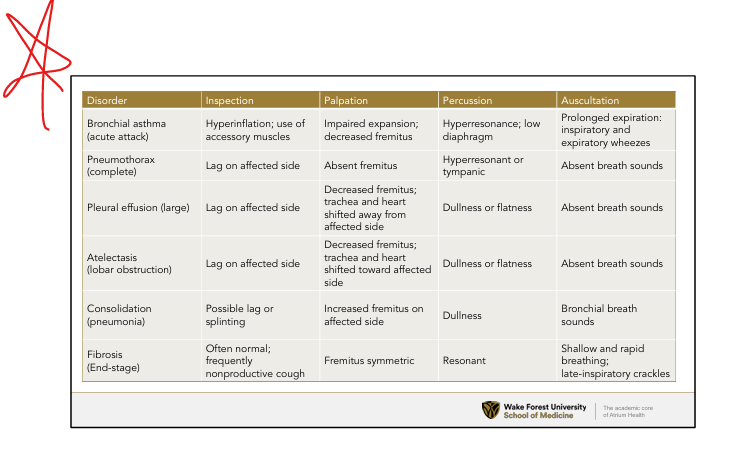
Findings in end‑stage fibrosis
Normal inspection, symmetric fremitus, resonant percussion, late‑inspiratory crackles, shallow rapid breathing
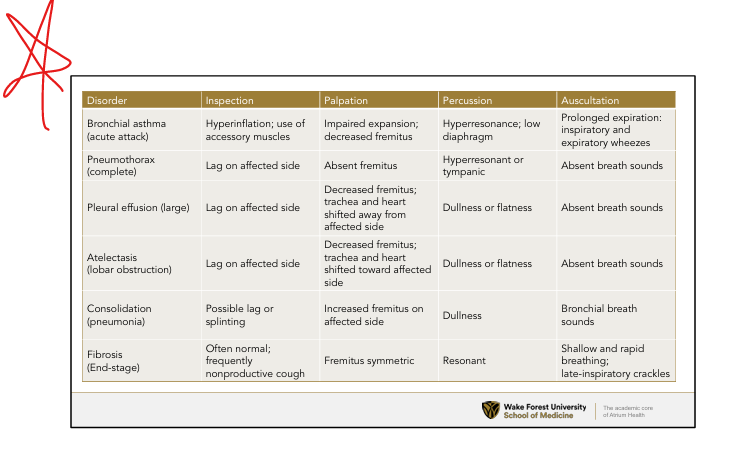
Findings in bronchial asthma(acute attack)
Hyperinflation, use of accessory muscles; impaired expansion + decreased fremitus; hyperresonnance, low diaphragm; prolonged expiration» inspiratory + expiratory wheezes
Orthopnea definition
Dyspnea when lying flat
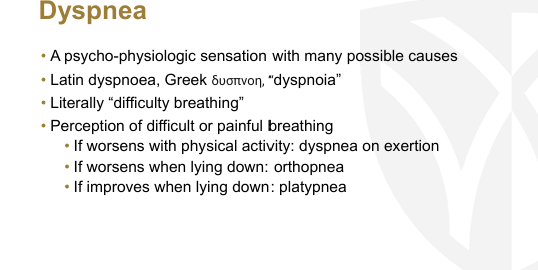
Platypnea definition
Dyspnea relieved when lying flat
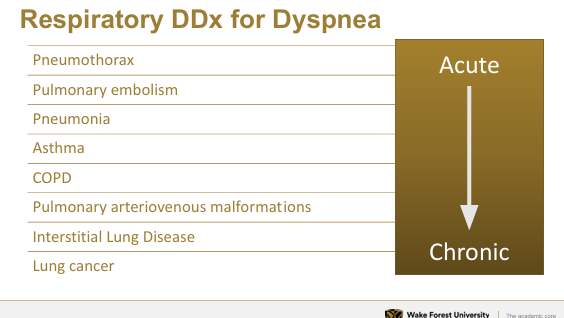
Major respiratory causes of acute + chronic dyspnea
Acute: Pneumothorax, pulmonary embolism, pneumonia, asthma
Chronic: COPD, ILD, Lung Cancer, pulmonary arteriovenous malformations
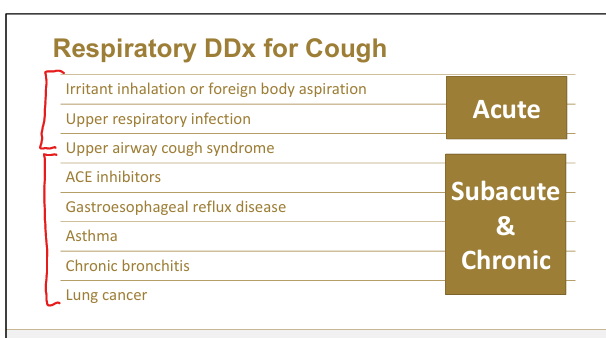
Common acute causes of cough
URI, irritant inhalation, foreign body aspiration
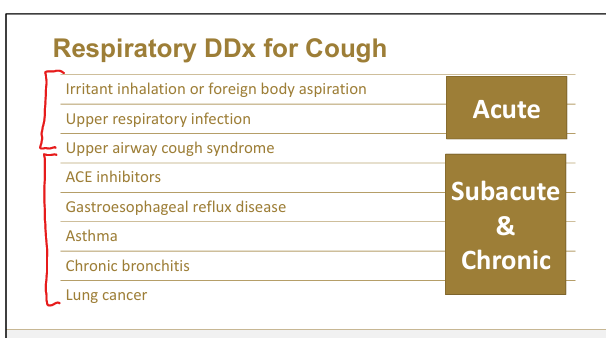
Common chronic causes of cough
GERD, asthma, chronic bronchitis, ACE inhibitors, upper airway cough syndrome, lung cancer
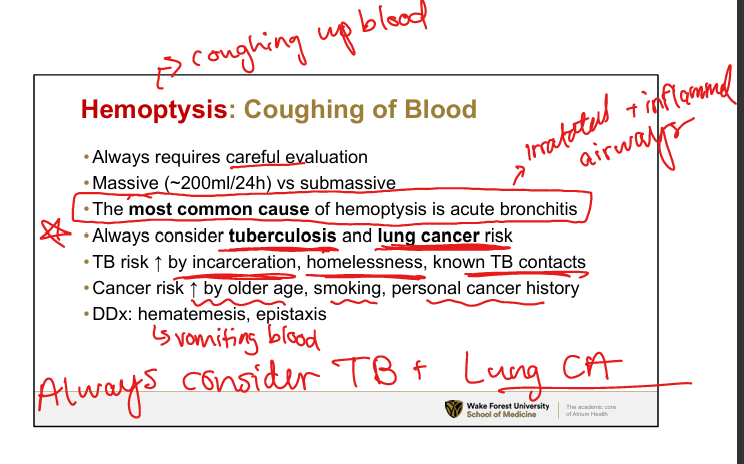
Definition of hemoptysis
Coughing up blood from lower respiratory tract
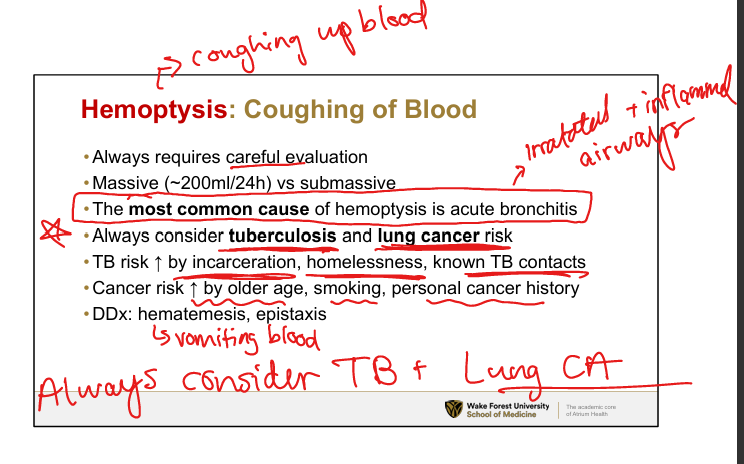
Most common cause of hemoptysis
Acute bronchitis
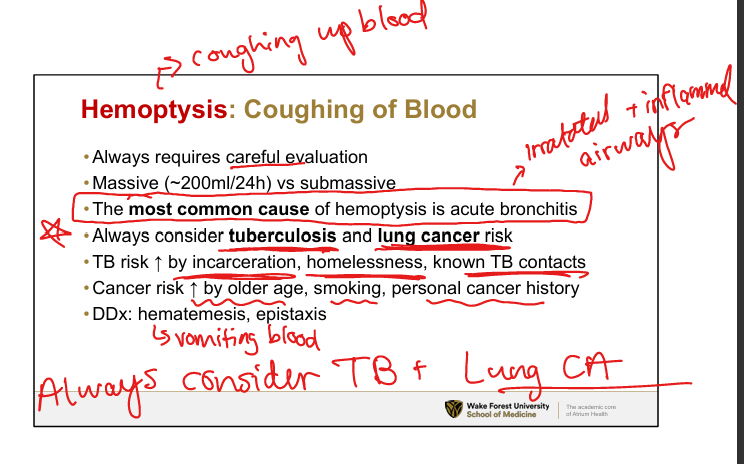
High‑risk hemoptysis considerations
Tuberculosis, lung cancer
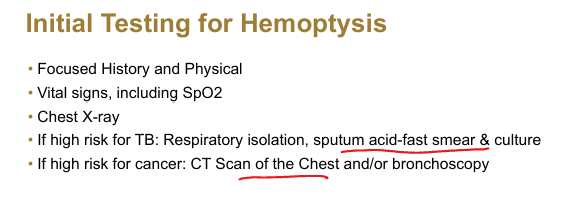
Initial testing for hemoptysis
Chest X‑ray, vitals, sputum AFB if TB risk, CT or bronchoscopy if cancer risk
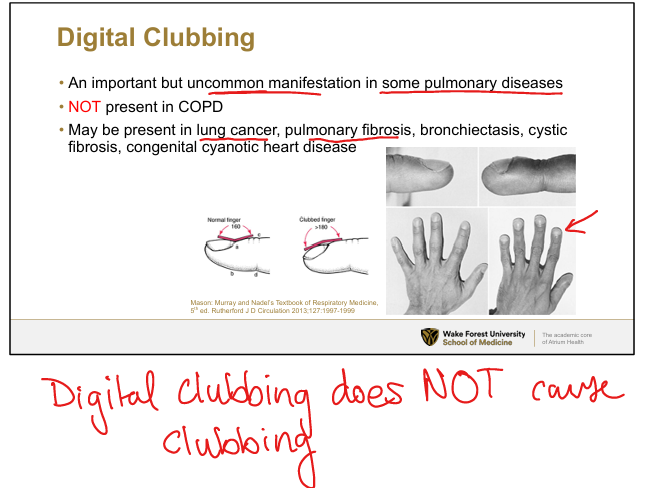
Digital clubbing definition
Bulbous enlargement of distal fingers with angle >180°. NOT CAUSED BY COPD
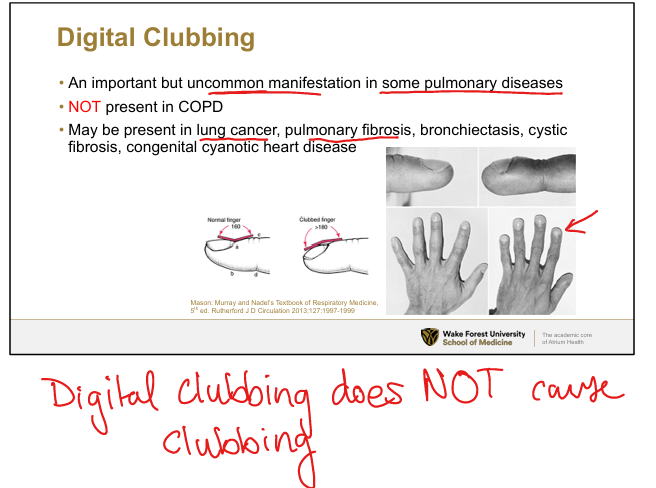
Diseases associated with digital clubbing
Lung cancer, pulmonary fibrosis, bronchiectasis, cystic fibrosis, cyanotic congenital heart disease
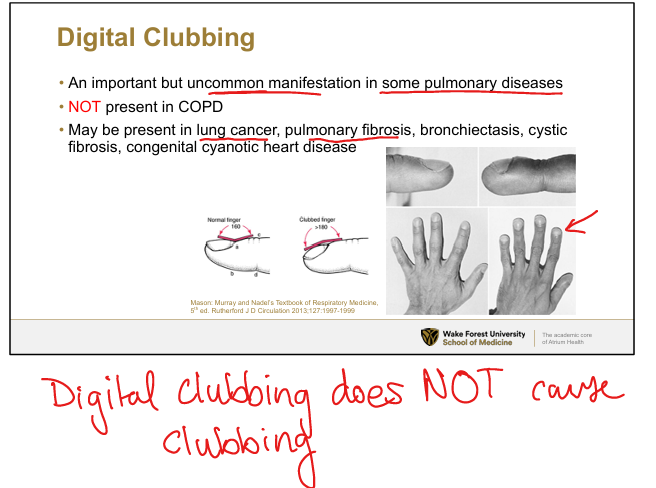
Diseases NOT associated with clubbing
COPD
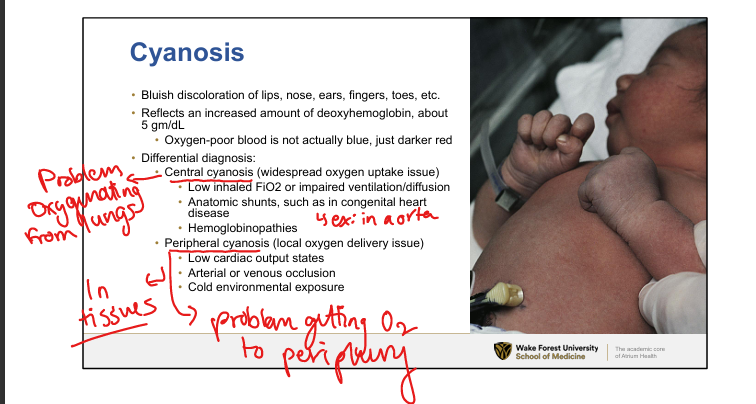
Central cyanosis causes
Low FiO2, impaired ventilation/diffusion, congenital heart shunts, hemoglobinopathies
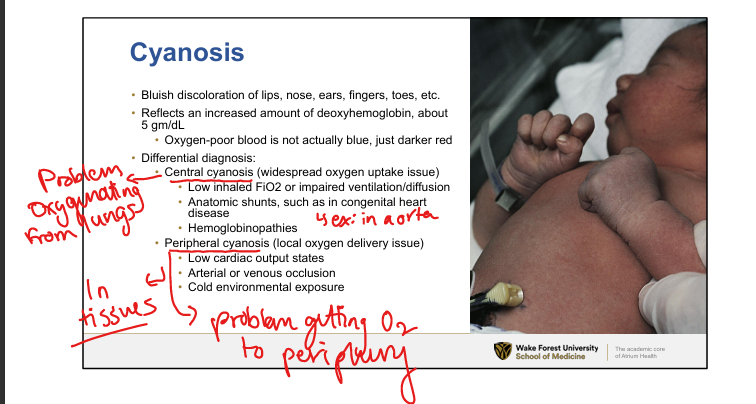
Peripheral cyanosis causes
Low cardiac output, arterial/venous occlusion, cold exposure