Sedative and Hypnotics
 Call Kai
 Learn
Learn Practice Test
 Spaced Repetition
 Match
Match Flashcards
 Knowt Play
1/73

Earn XP
Description and Tags
Sedative and Hypnotics
Name | Mastery | Learn | Test | Matching | Spaced | Call with Kai | Chat |
|---|
No analytics yet
Send a link to your students to track their progress
74 Terms
What is sleep?
Sleep is a naturally occurring altered state of consciousness characterized by decreases in awareness and responsiveness to stimuli.
Sleep cycle classification
Non Rapid Eye Movement sleep (NREM) (Quite or Deep sleep)
Rapid Eye Movement sleep (REM) (Paradoxical)
Non Rapid Eye Movement sleep (NREM) (Quite or Deep sleep)
Consist of four or five alternative cycle
• Deep sleep or quite sleep
• Progression from 1 to 4 stages
• Characterized by deeper level of sleep
Rapid Eye Movement sleep (REM) (Paradoxical)
• REM sleep closely resembles wakefulness except for very low muscle tone, indicated by a reduction in amplitude of the EMG.
• Blood pressure and pulse rate show wide variations and may fluctuate rapidly.
• Respirations are irregular and oxygen consumption increases.
Vaginal secretions increases in women and erections may occur in men.
Different phases of sleep
• Stage 0 (awake) - From lying down to falling asleep and occasional nocturnal awakenings; constitutes 1–2% of sleep time. Eye movements are irregular or slowly rolling.
• Stage 1 (dozing) - Eye movements are reduced but there may be bursts of rolling. Neck muscles relax. Occupies 3–6% of sleep time.
• Stage 2 (unequivocal sleep) - little eye movement; subjects are easily arousable. This comprises 40–50% of sleep time.
• Stage 3 (deep sleep transition)- Eye movements are few; subjects are not easily arousable; comprises 5–8% of sleep time.
• Stage 4 (cerebral sleep)- Eyes are practically fixed; subjects are difficult to arouse. Night terror may occur at this time. It comprises 10–20% of sleep time.
• During stage 2, 3 and 4 heart rate, BP and respiration are steady and muscles are relaxed. Stages 3 and 4 together are called slow wave sleep (SWS).
Factors effecting sleep
• Physical activity
• Psychologic stress
• Motivation
• Diet
• Alcohol Intake
• Smoking
• Environmental Factors
• Lifestyle
• Illness
• Medications
Types of sleep disorder
• Insomnia: – Not enough sleep or sleep of poor quality
• Hypersomnia – Excessive daytime sleepiness
• Parasomnia
– Unusual happening in the night
– Nightmares – Night terror
– Sleepwalking (somnambulism)
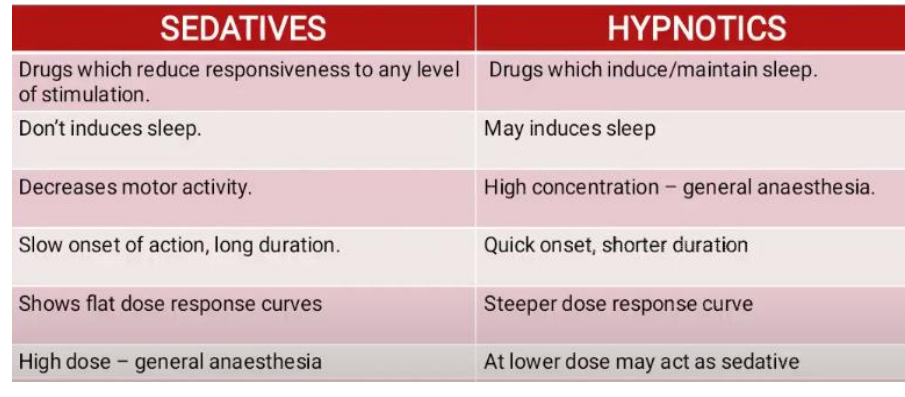
Sedatives
Drugs that ↓ excitement, calm down and cause drowsiness without producing sleep.
Hypnotics
Drugs that induce and maintain sleep similar to normal arousal sleep
Tranquilizer
Drugs that reduces tension and anxiety without drowsiness or sleep
Sedative-hypnotic drug classification
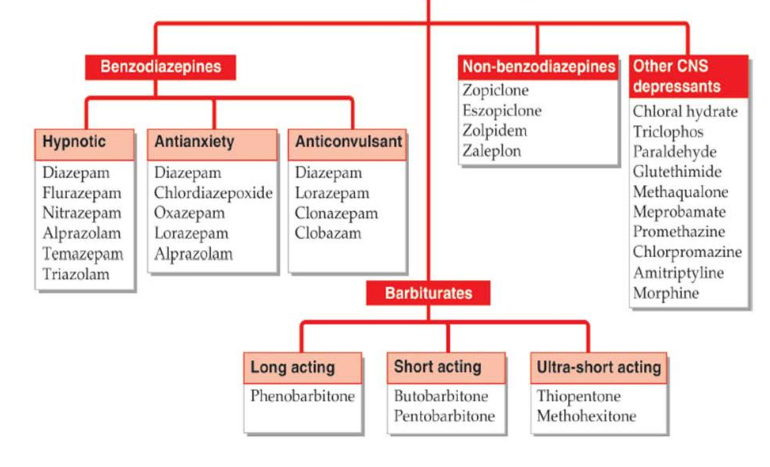
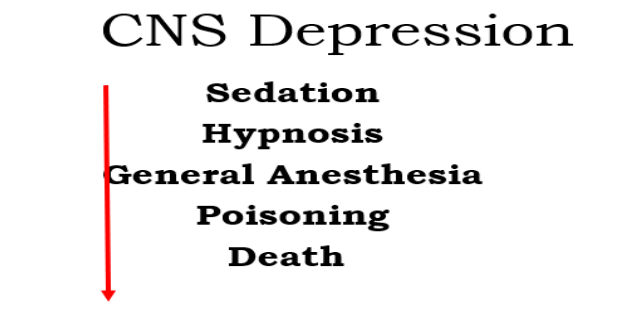
What would happen if you keep using sedative and hypnotics (show flowchart)
Sedative vs Hypnotics
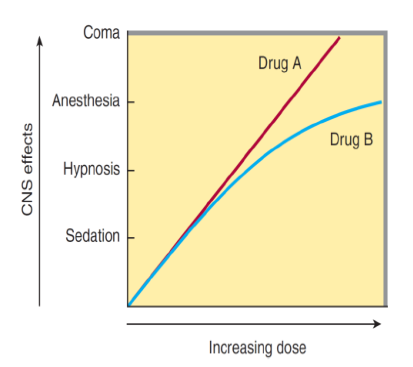
Dose-response curves for sedative-hypnotics
• Drug A
❑An increase in dose higher than that needed for hypnosis may lead to a state of general anesthesia.
❑With higher doses, the drug will depress the respiratory and vasomotor centers which lead to coma
❑Drug A–alcohol and barbiturates
• Drug B
❖Needs greater doses to achieve CNS depression
❖Drug B–benzodiazepines and newer hypnotics
Classification of sedatives and hypnotics list
1. Barbiturates:
✔Long acting : Phenobarbitone, Pentobarbitone
✔Intermediate acting: Amylobarbitone
✔Short acting : Butobarbitone, Methohexitone
✔Ultra short acting: Thiopentone
2. Benzodiazepines:
❖Hypnotic: Diazepam, Flurazepam, Nitrazepam, Alprazolam, Temazepam, Triazolam
❖Antianxiety: Diazepam, Chlordiazepoxide, Oxazepam, Lorazepam, Alprazolam
❖Anticonvulsant: Diazepam, Clonazepam, Lorazepam, Clobazam
3. Newer non-benzodiazepine hypnotics: Zopiclone, Zolpidem, Zaleplon
Clinical uses of sedatives and hypnotics
•Anxiety
•Insomnia
•Sedation and amnesia before and during medical and surgical procedures
•Treatment of epilepsy and seizure states
•A component of balanced anesthesia
•Ethanol or other sedative-hypnotic withdrawal states
•Muscle relaxation
•treatment in psychiatry
In short what does anxiolytics, sedatives, and hypnotics do?
❑Anxiolytics: reduce anxiety
❑Sedatives: decrease activity, calming effect
❑Hypnotics: induce sleep
What is anxiety?
It is an unpleasent state of tension, apprehension, or uneasiness (a fear that arises from either a known or an unknown source)
Anxiety involves
• Mental features
– worry, fear, difficulty concentration, sleep problems.
• Physical symptoms: are similar to those of fear and involve sympathetic activation:
– Tachycardia; sweating, muscle aches, nausea, shortness of breath, trembling, and palpitations.
Causes of anxiety
1). Medical:
• Respiratory
• Endocrine
• Cardiovascular
• Metabolic
• Neurologic.
2). Drug-Induced:
• Stimulants - Amphetamines, cocaine, TCAs, caffeine.
• Sympathomimetics - Ephedrine, epinephrine, pseudoephedrine phenylpropanolamine.
• Anticholinergics\Antihistaminergics -Trihexyphenidyl, benztropine, meperidine diphenhydramine, oxybutinin.
• Dopaminergics - Amantadine, bromocriptine, L-Dopa, carbid/levodopa.
• Miscellaneous: Baclofen, cycloserine, hallucinogens, indomethacin.
3). Drug Withdrawal: • BDZs, narcotics, BARBs, other sedatives, alcohol.
When does anxiety become a disorder?
• Anxiety is a normal human response to objects, situations or events that are threatening
• Anxiety is different from fear due to its cognitive component (i.e. fear of the future)
• Anxiety can be helpful and adaptive (e.g. anxiety about giving lectures!)
• Anxiety becomes a disorder when out of proportion or when it significantly interferes with life.
Anxiolytic
✔An anxiolytic is a medication or other intervention that reduces anxiety.
✔It is an agent which decreases wariness manifested as the psychic awareness of anxiety which is accompanied with increased vigilance, motor tension, and autonomic hyper reactivity.
Anxiety disorders
• Primary
❑Panic Disorder
❑Generalized Anxiety Disorder (GAD)
❑Phobic Disorders
❑Post-Traumatic Stress Disorder (PTSD)
❑Obsessive-Compulsive Disorder
• Secondary, due to medical causes or substances
Panic disorder
• Panic disorder is an anxiety disorder where you regularly have sudden attacks of panic or fear.
• Everyone experiences feelings of anxiety and panic at certain times.
• It's a natural response to stressful or dangerous situations.
Treatment of panic disorder
• Psychotherapy: Psychotherapy, also called talk therapy, is considered an effective first choice treatment for panic attacks and panic disorder.
• Medications:Several types of medication have been shown to be effective in managing symptoms of panic attacks, including:
❑Selective serotonin reuptake inhibitors (SSRIs).
❑Serotonin and norepinephrine reuptake inhibitors (SNRIs).
❑Benzodiazepines. These sedatives are central nervous system depressants.
• If one medication doesn't work well for you, your doctor may recommend switching to another or combining certain medications to boost effectiveness.
Symptoms of GAD
✔Feeling restless or worried
✔Having trouble concentrating or sleeping
✔Dizziness or heart palpitations
Treatment of GAD
• Medication (SSRIs used more for GAD than other anxiety disorders)
• Psychoanalysis: GAD is caused by conflict between the ego and id impulses. The ego fears punishment but id cannot be extinguished = constant anxiety and conflict (has not been displaced as with phobia)
• Behavioral Techniques: difficult to implement due to global nature of GAD.
• May choose themes or priorities:
❖ Cognitive Therapy: apparently most useful but still shows limited success
❖ Others: Rational Emotive Therapy, Existential Therapy, Gestalt Therapy, Narrative Therapy
What is a phobia?
A phobia is a type of anxiety disorder that causes an individual to experience extreme, irrational fear about a situation, living creature, place, or object.
Specific phobias
❖Selective, persistent and out of proportion
❖ Includes cognition that leads to behavioural response, whether or not the threat is present
❖May be genetically, neurologically or experientially based
❖Maintained through the processes of classical and operant conditioning.
Social phobia
❑A more pervasive, highly cognitive type of phobia
❑Distinguishing feature is the fear of doing something in front of others
❑May be situation or context (e.g. performance versus interaction anxiety) specific
❑Fear of one’s own behaviour causing negative attention from others
Treatment of phobias
• Cognitive behavioral therapy
❑It is the most commonly used therapeutic treatment for phobias. It involves exposure to the source of the fear in a controlled setting. This treatment can decondition people and reduce anxiety.
• Medication
❑Antidepressants and anti-anxiety medications can help calm emotional and physical reactions to fear. Often, a combination of medication and professional therapy is the most helpful.
What is PTSD
PTSD, is an anxiety disorder that can develop after exposure to a terrifying event or deal in which grave physical harm occurred or was threatened.
What are treatments for PTSD?
• The main treatments for PTSD are talk therapy, medicines, or both. PTSD affects people differently, so a treatment that works for one person may not work for another.
• If you have PTSD, you need to work with a mental health professional to find the best treatment for your symptoms.
• Talk therapy, or psychotherapy, which can teach you about your symptoms. You will learn how to identify what triggers them and how to manage them. There are different types of talk therapy for PTSD.
• Medicines can help with the symptoms of PTSD. Antidepressants may help control symptoms such as sadness, worry, anger, and feeling numb inside. Other medicines can help with sleep problems and nightmares.
What is OCD?
Obsessive-Compulsive Disorder, OCD, is an anxiety disorder and is characterized by recurrent, unwanted thoughts (obsessions) and/or repetitive behaviors (compulsions).
OCD treatment
• Psychotherapy. Cognitive behavioral therapy can help change your thinking patterns.
• Relaxation. Simple things like meditation, yoga, and massage can help with stressful OCD symptoms.
• Medication: Psychiatric drugs called selective serotonin reuptake inhibitors help many people control obsessions and compulsions. They might take 2 to 4 months to start working. Common ones such as citalopram , escitalopram etc.)
• Neuromodulation: In rare cases, when therapy and medication aren’t making enough of a difference, your doctor might talk to you about devices that change the electrical activity in a certain area of your brain.
• TMS (transcranial magnetic stimulation): The TMS unit is a non-invasive device that is held above the head to induce the magnetic field. It targets a specific part of the brain that regulates OCD symptoms.
Barbiturates
⮚Barbiturates depress the CNS at all level in a dose-dependent fashion.
⮚Derivatives of barbituric acid
⮚Now it mainly used in anesthesia and treatment of epilepsy.
⮚Use as sedative-hypnotic agents is no longer recommended.
Types of barbiturates
I. Ultra-short-acting barbiturates : Act within seconds, and their duration of action is 30min.
II. Short-acting barbiturates : Have a duration of action of about 2h.
III. Intermediate-acting barbiturates : have and effect lasting 3-5h.
IV. Long-acting barbiturates : Have a duration of action greater than 6h. Such as Barbital and Phenobarbital.
Reasons for not using barbiturates as sedative-hypnotic
• (1) Have a narrow therapeutic-to-toxic dosage range.
• (2) suppress rem sleep.
• (3) tolerance develops relatively quickly.
• (4) have a high potential for physical dependence and abuse.
• (5) potent inducers of hepatic drug-metabolising enzymes.
MOA of barbiturates
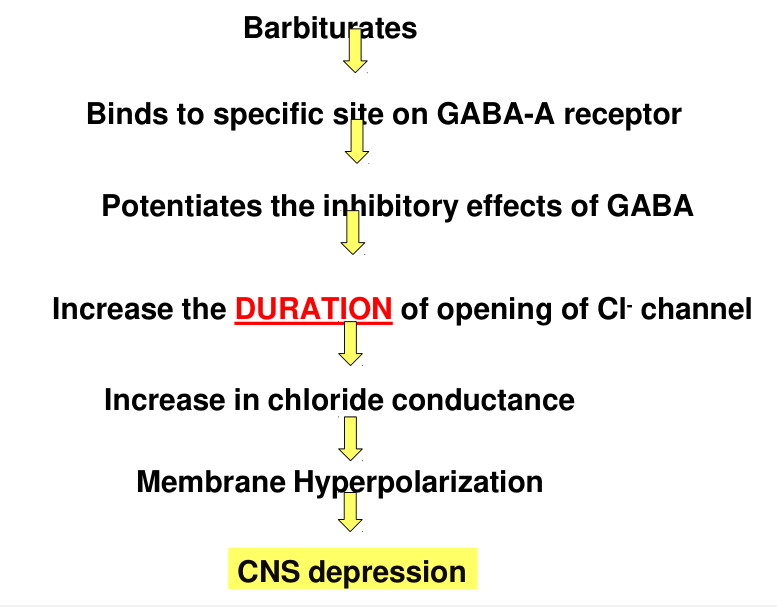
Pharmacokinetics of barbiturates
• All barbiturates are weak acids
• lipid soluble
• absorbed orally.
• distribute throughout the body
• Thiopentone is highly lipid soluble (high rate of entry into CNS- quick onset of action).
• Redistribute in the body from the brain to skeletal muscles- adipose tissues.
• Metabolized in the liver to inactive metabolites
• Excreted in the urine.
• Alkalinization increases excretion (NaHCO3)
• Cross the placenta ( pregnancy).
Pharmacological actions of barbiturates
❑Central Nervous System: In a dose-dependent fashion.
• Sedative
• Hypnotic
• Anesthesia in large dose
• Anticonvulsant action
• Coma and death.
❑Respiratory system: suppress hypoxic and chemoreceptor response to CO2
• Large doses leads to respiratory depression & death.
❑CVS:
• Healthy patient: at low doses, they have insignificant effects.
• Hypovolemic states, CHF: normal doses may cause cardiovascular collapse.
• Large dose → circulatory collapse due to medullary vasomotor depression.
❑Skeletal Muscle:
• Anesthetic dose reduce muscle contraction by depressing excitability of neuromuscular junction
❑Kidney: It reduces urine flow by decreasing BP and increasing ADH release.
❑Enzyme induction: It induces cytochrome P450 microsomal enzymes in the liver
Therapeutic uses of barbiturates
• As Sedative-hypnotic agents
• Are used in the emergency treatment of convulsions as in status epilepticus.
• Anesthetic (or pre-anesthetic)
• Combination with antipyretic-analgesic
• Treatment of hyperbilirubinemia and
• kernicterus in the neonate.
Adverse effects of barbiturates
• After effect: hangover ---dizzy, drowsiness, amnesia, impaired judgment, disorientation.
• Tolerance: decreased responsiveness to a drug following repeated exposure because of down-regulation of receptors and induction of hepatic drug-metabolising enzymes.
• Dependence: including psychologic and physiologic dependence.
Withdrawal symptoms: excitation, insomnia, tremor, anxiety, hallucinations and sometimes convulsions.
• Depressant effect on respiration: can cross the placental barrier during pregnancy and secrete to breast milk.
• Others: Skin eruptions and porphyria
Treatment of barbiturate poisoning
• An overdose can result in coma, diminished reflexes, severe respiratory depression, hypotension leading to cardiovascular collapse, and renal failure.
• No specific antidote
• supporting therapy is adequate
• Treatment (A.B.C):
(1) supporting respiration and circulation.
(2) alkalinizing the urine and promoting diuresis.
(3) Hemodialysis or peritoneal dialysis.
Drug interactions of barbiturates
• Barbiturates are potent microsomnal enzymes and reduces the effectiveness of oral drugs ( e.g. OCP, oral anticoagulants, oral hypoglycemics etc.)
Benzodiazepines
• Chemically – all are 1,4-benzodiazepines, and most contain a carboxamide group in the 7-membered heterocyclic ring structure.
• Benzodiazepines are a class of drugs that can treat a range of conditions. Doctors often prescribe them to treat anxiety, seizures, and insomnia.
• The short-term use of these medications is usually safe and effective, but long-term use can lead to tolerance, dependence, and other adverse effects.
MOA of benzodiazepines
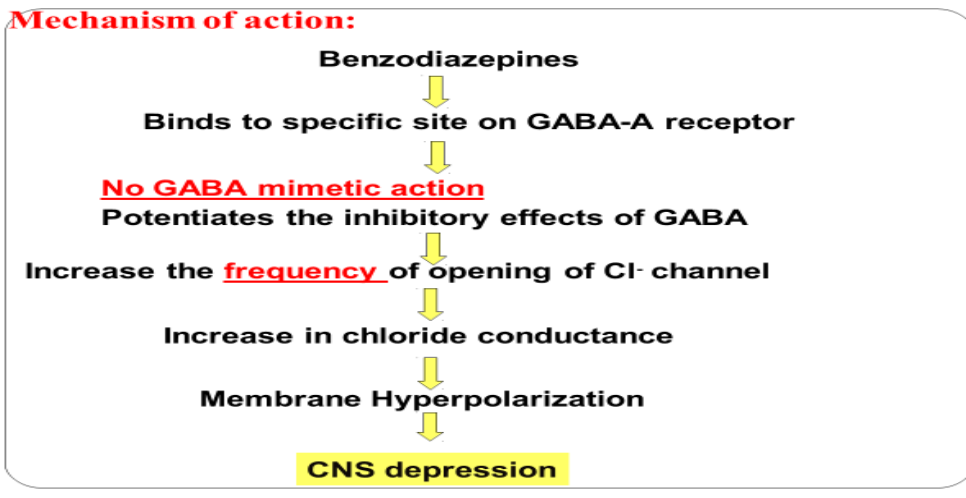
Classification of benzodiazepines
• Short acting with t ½ less then 5 hours – Alprazolam, Triazolam
• Intermediate acting t ½ 5-24 hours – Nitrazepam, Lorazepam, Oxazepam, Temazepam
• Long acting with t ½ longer then 24 hours – Flurazepam, Daizepam, Chlordiazepoxide, Chlorazepate
Site of action of BDZs
i. Limbic system
ii. Reticular formation system
iii. Cerebral cortex
iv. Spinal cord
Therapeutic uses of BDZs
❑Anxiety disorder
❑Muscular disorder
❑Seizure
❑Sleep disorder
Pharmacokinetics of BDZs
• Well absorbed when given orally;
• They bind strongly to plasma protein, and their high lipid solubility cause many of them to accumulate gradually in body fat.
• Distribution volumes is big.
• Metabolic transformation in the microsomal drug- metabolizing enzyme systems of the liver, eventually excreted as glucuronide conjugates in the urine.
• They vary greatly in duration of action, and can be roughly divided into different categories.
● Well absorbed orally
● IM – irregular
● Plasma protein binding varies : diazepam – 99% and flurazepam – 10%
● Widely distributed in the body
Pharmacological action of BDZs
1. Sedation and Hypnosis
2. Reduction in anxiety
3. Anaesthetic
4. Muscle Relaxation
5. Anti – Convulsion effect
6. Amnesia
7. Other actions such as decreases nocturnal gastric secretion and prevents stress ulcers
Effects of ligand BDZ receptor
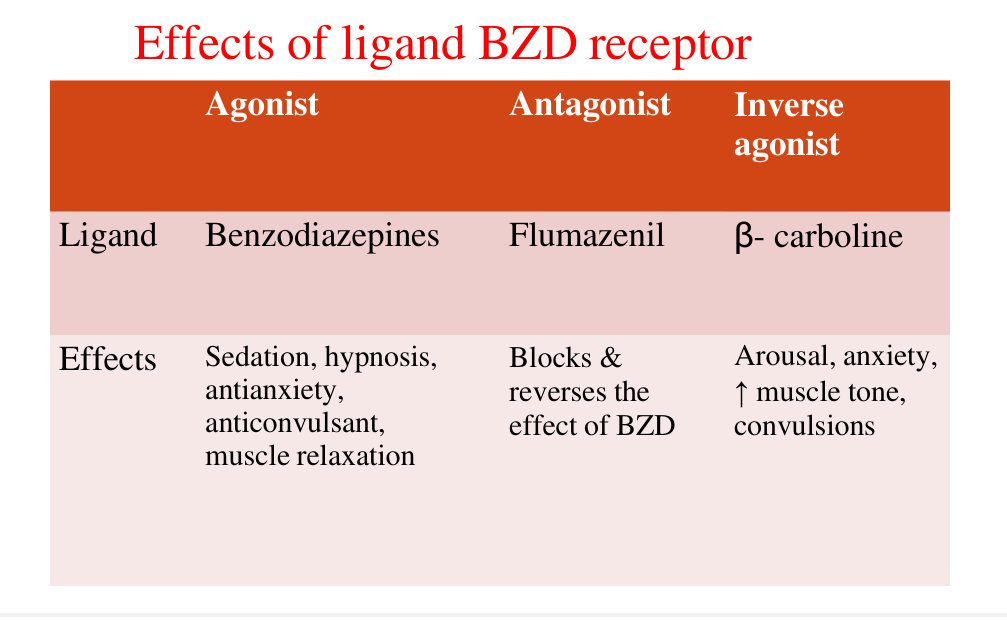
Classification of BDZs
• Short acting: (3-5 hours). Triazolam
• Intermediate: (6-24 hours). Alprazolam, Lorazepam, Estazolam, Oxazepam, Temazepam
• Long acting: ( 24-72 hours) Chlorazepate, Chlordiazepoxide, Diazepam, Flurazepam, Quazepam, Prazepam, Nitrazepam
Adverse effects of BDZs
❑ Dizziness, vertigo, ataxia, disorientation, amnesia, impairment of psychomotor skills.
❑Hangover may be seen on large dose.
❑ Weakness, blurring of vision, dry mouth and urinary incontinence.
❑Paradoxical stimulation, irritability and sweating
❑Nightmare
❑Dependence
❑Pregnancy – flaccidity and respiratory depression in neonate
Acute over dosage of BZD
● Induces sleep; respiratory depression is mild
● Specific antagonist - flumazenil
Drug interaction of BDZs
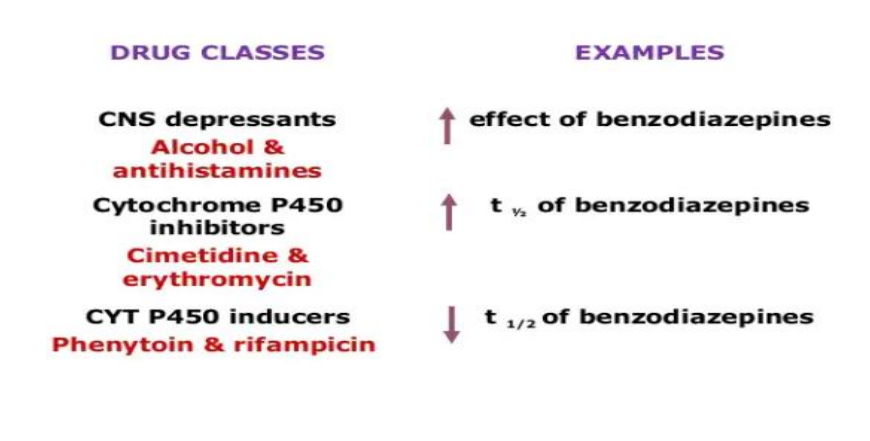
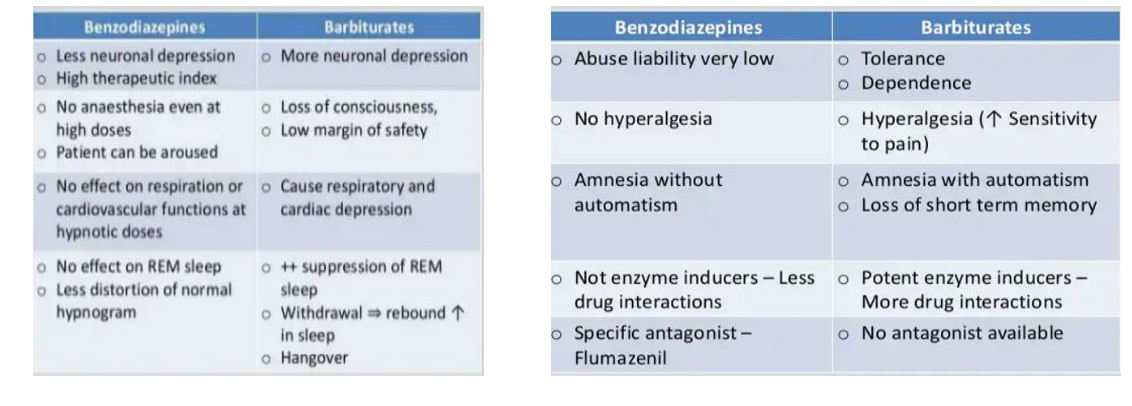
Why are benzodiazepines preferred over barbiturates?
Doesn’t impair sleep architecture
No hang over
High therapeutic index – 20 hypnotic doses x endanger life
Hypnotic dose – does not affect Resp / CV function
No action on other systems
No Microsomal enzyme induction
withdrawl syndrome are less marked
Less dependence
Lower abuse liability
Do not produce hyperalgesia
Amnesia without automatism
Do not produce generalized CNS depression
Less distortion of sleep and rebound phenomena
Specific Antagonist/Antidote: Flumazenil available
Comparison between benzodiazepines and barbiturates
Newer non-benzodiazepine hypnotics
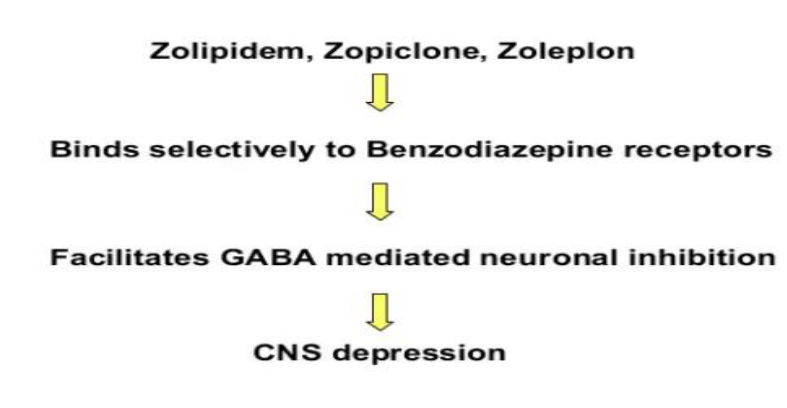
• The non-benzodiazepine sedative hypnotics are a newer class of sedative drugs and include zolpidem , zaleplon , zopiclone (, and eszopiclone and collectively called 'Z-drugs'; .
• Non-benzodiazepines, such as zolpidem, zopiclone and zaleplon, demonstrate hypnotic efficacy similar to that of benzodiazepines along with excellent safety profiles.
• Produces Hypnotic effect with minimal anticonvulsant and muscle relaxant properties
• It produces natural sleep without alteration of REM sleep.
• Minimal hangover effects
• Short duration of action
• Less likely to produce Tolerance and dependence
• They have only been approved for insomnia.
• Side effects: Metallic or bitter taste, impaired judgment and alertness, psychological disturbances, dry mouth and mild dependence.
MOA of Z drugs
NMDA receptor
● Mediate slow excitatory responses
● Long term adaptive changes in the brain
• Normal stimulation – learning and memory(synaptic plasticity)
• Over stimulation – excitotoxicity in brain (neurodegenaration and apoptosis
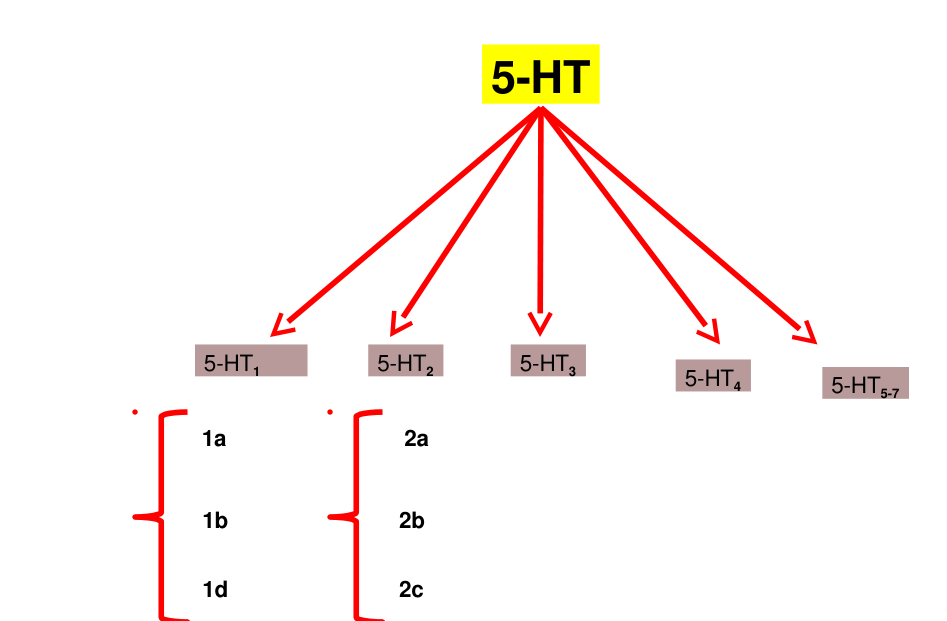
5-HT receptors
SSRIs
Antidepressants
Citalopram
Escitalopram
Fluoxetine
Fluoxamine
Sertraline
5HT 1A partial agonists
Anxiolytic drugs
Buspirone
Gepirone
Ipsapirone
5-HT 1D partial agonists
Migraine drugs
Sumatriptan
Naratriptan
Zolmitriptan
Rinzatriptan
5-HT 2A, 2C antagonists
Prophylaxis of migraine
Methysergide
Cyproheptadine
Newer antipsychotic drugs
Clozapine
Olanzapine
Reserpidone
Aripiprazole
Ziprasidone
5HT 3 antagonists
Antiemetic drugs
Ondasteron
Granisteron
Dolosteron
5HT 4 agonists
Prokinetic drugs
Cisapride
Mosapride
Metoclopramide
Miscellaneous
Paraldehyde
Melatonin
Ramelteon
Paraldehyde
• It is a colorless, transparent, pungent, inflammable liquid.
• It is an irritant and can dissolve plastic cannot be given by a plastic syringe. It also has anticonvulsant properties.
• Route: It is given rectally , IM, or orally.
• Uses:
• 1. As Convulsant in status epileptics particularly in children.
• 2. Hypnotic rarely used.
Melatonin
• The hormone secreted by the pineal gland is known to regulate sleep.
• Melatonin act on melatonin receptors. It does not depress the CNS it improves the quality of sleep and helps in withdrawing BZD after long term use.
Rameleton
• It is an agonist at the melatonin receptors is a novel hypnotic drug.
• It does not modify the sleep.
• The duration of action is prolonged.
• Adverse effect are dizziness and fatigue
Sedative- Hypnotic: Withdrawal Syndrome
• First 12-15 hours: Patient appears to improve
• 16+ hours
❑Restless, anxious, tremulous, weak, abdominal cramping
❑Vomiting, orthostatic hypotension, tremors, increased deep tendon flexion, convulsions
• Days 2-3
✔Delirium, hallucinations, disorientation to time & place
✔Once delirium starts can’t be reduced by administration of other sedative hypnotics-has to run its course
✔Includes hyperthermia (increased body temp), exhaustion, cardiovascular collapse & sometimes death
✔Depending upon type of drug, withdrawal symptoms reach peak severity at days 2-3 & last upwards of a week ( & in some cases, some of the symptoms may last several weeks)