AQA AS bio 3.1 biological molecules
 Call Kai
 Learn
Learn Practice Test
 Spaced Repetition
 Match
Match Flashcards
 Knowt Play
1/203

There's no tags or description
Looks like no tags are added yet.
Name | Mastery | Learn | Test | Matching | Spaced | Call with Kai | Chat |
|---|
No analytics yet
Send a link to your students to track their progress
204 Terms
What are proteins made up of?
Amino acids are the monomers from which proteins are formed
What are proteins important as?
Enzymes, chemical messengers, and components of the blood
Draw the general structure of an amino acid
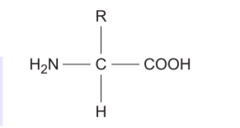
What does the NH₂ in an amino acid represent?
amine group
What does the COOH in an amino acid represent?
carboxyl group
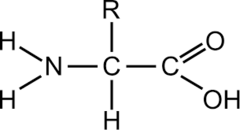
What does the R in an amino acid represent?
side chain
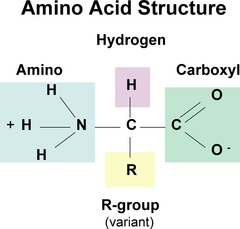
How many different amino acids are common in all organisms?
There are 20 amino acids that are common in all organisms
How do the 20 amino acids common in all organisms differ from each other?
They differ only in their side group
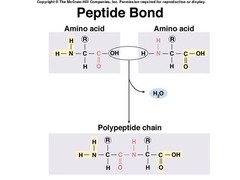
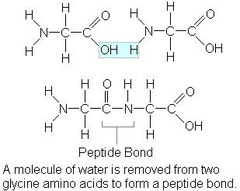
What type of bond does a condensation reaction between two amino acids form?
peptide bond
(one water molecule is eliminated)
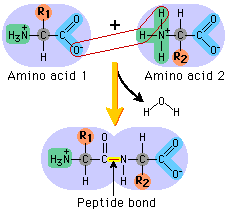
Draw a diagram for the condensation reaction between two amino acids
How are dipeptides formed?
By the condensation of two amino acids
How are polypeptides formed?
By the condensation of many amino acids
What is a functional protein?
A protein that affects the functional operations of a cell
What is a structural protein?
A protein that provides physical stability and movement, like collagen
How many polypeptides may a functional protein contain?
one or more polypeptides
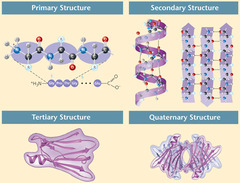
How many levels of protein structure are there?
4; primary, secondary, tertiary, quaternary
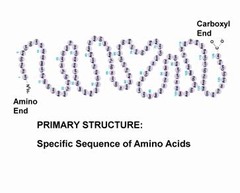
What is the primary structure of proteins?
The sequence (order) of amino acids
What is the secondary structure of proteins?
The shape that the chain of amino acids forms, stabilised by hydrogen bonding between different parts of the polypeptide chain
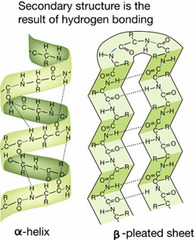
Name the two shapes that can form within proteins due to hydrogen bonds
α-helix
β-pleated sheets
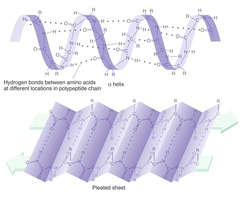
How do hydrogen bonds form in the secondary structure of proteins?
The hydrogen in the -NH has a weak positive charge
The oxygen in the -C=O has a weak negative charge
hydrogen bonds form between the oxygen of the carboxyl group of one amino acid and the H in the amine group of another amino acid
What is the tertiary structure of a protein?
The 3D shape of the protein formed from further twisting and folding
Leads to additional bonds forming to maintain the structure
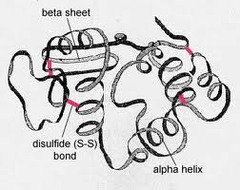
Name the three types of bond that help maintain the tertiary structure of a protein
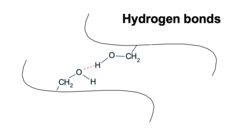
Hydrogen bonds (weakest)
Ionic bonds
Disulphide bonds (strongest)
How do hydrogen bonds form in the tertiary structure of a protein?
Between R groups of amino acids within polypeptide chains
How do ionic bonds form in the tertiary structure of a protein?
Between charged R groups
(between carboxyl and amine groups not involved in the peptide bond)
How do disulphide bridges (type of covalent bond) form in the tertiary structure of a protein?
Only occur between sulphur in the R group of the amino acid cysteine
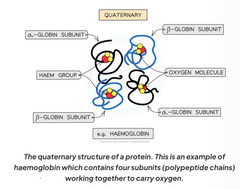
What is the quaternary structure of a protein?
Occurs in proteins that have more than one polypeptide chain
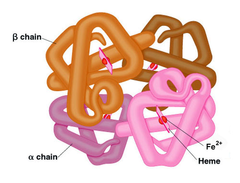
Each polypeptide chain in the quaternary structure is referred to as a...
Subunit of the protein
How does denaturing affect a protein?
The bonds which hold the tertiary and secondary structure in shape will break
The unique 3D shape of the protein (e.g. enzyme's active site) is changed
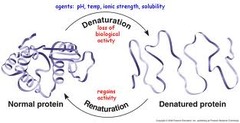
Name two conditions that can cause a protein to denature
Too high a temperature (too much kinetic energy)
Too high/low a pH (too many H+ or OH- ions)
Describe the impact of a change in primary structure of proteins
There is a change in the sequence of amino acids that form a chain (primary structure)
The ionic, hydrogen and disulphide bonds will form in a different location
This results in a different 3D shape
Describe the impact of a change in primary structure of enzymes
The enzyme's active site will be a different shape so the enzyme will not work
Describe the impact of a change in primary structure of a carrier protein
Carrier proteins will have a different shaped binding site, so molecules are no longer complementary and cannot be transported across cell membranes
Describe how to test for proteins in a sample
1) grind up the food sample in a pestle and mortar with distilled water
2) filter the solution through a funnel and filter paper in order to remove any remaining undissolved solid
3) place 3cm^3 of the food sample into a test tube
4) add 3cm^3 of Biuret's reagent
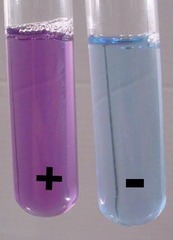
Describe the result for a positive test for proteins
The solution will turn from blue to purple/lilac
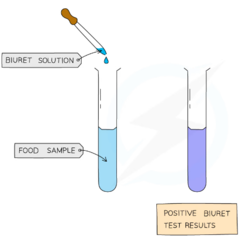
Describe the result for a negative test for proteins
The solution would remain blue
What is a T-test for?
comparing 2 means
What is an enzyme?
A biological catalyst (speeds up chemical reactions without being used up or changed)
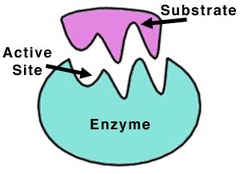
Describe the structure of an enzyme
Globular proteins with a tertiary structure
There is a specific 3D shape on the surface called an active site where reactions take place
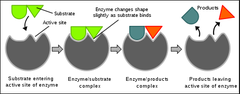
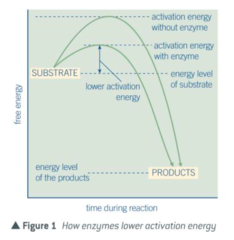
How does an enzyme catalyse a reaction?
Enzymes lower the activation energy of the reaction by providing an alternate pathway for the reaction to occur
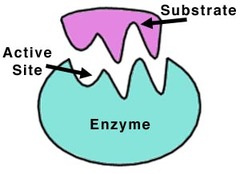
What does it mean that enzymes are specific?
The tertiary structure of the active site is specific to the structure of the substrate molecule
This means the active site can only fit complementary substrate(s) and combine with them to form an enzyme substrate complex
Name two models of enzyme action
lock and key model
induced fit model
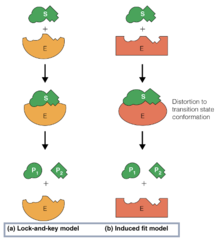
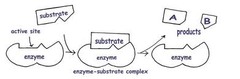
Describe the lock and key model for enzyme action
Suggests that the tertiary structure of the active site is fixed so the active site doesn't change shape
Due to random collisions, the substrate binds to an enzyme's active site to form an enzyme-substrate complex
Temporary bonds form between the substrate molecule and the amino acids on the surface of the active site, distorting the bonds in the substrate and lowering the activation energy
The substrate is broken down into products which are released
Describe the induced fit model of enzyme action
The active site is not complementary to (doesn't fit) the substrate
As the substrate binds to the active site, the shape of the active site changes slightly to mould itself tightly around the substrate so it fits perfectly
This distorts the bonds in the substrate, lowering the activation energy
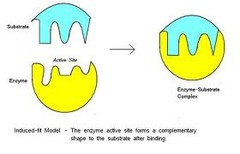
Which model of enzyme action is believed to be correct?
Induced fit model
Name five factors which affect the rate of enzyme controlled reactions
Temperature
pH
Substrate concentration
Enzyme concentration
Concentration of competitive and non-competitive inhibitors
What does the rate of an enzyme controlled reaction depend on?
The frequency of successful collisions between the substrate and the active site of the enzyme
Draw the graph showing the effect of temperature on the rate of an enzyme controlled reaction
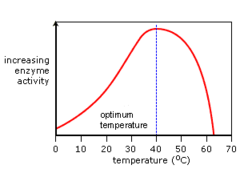
How does temperature affect enzyme activity, up to the optimum temperature?
The rate increases as the temperature increases:
The kinetic energy of the enzyme and substrate increases
This increases the frequency of successful collisions between the substrate and the active site
This increases the number of enzyme-substrate complexes that form
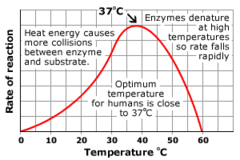
How does temperature affect enzyme activity, past the optimum temperature?
The rate of reaction decreases with temperature:
The enzymes are vibrating more rapidly, causing bonds (e.g. hydrogen bonds) within the enzymes to break
This changes the enzyme's tertiary structure; as the shape of the active site changes, it is no longer complementary to the substrate, so the substrate cannot fit.
The enzyme is denatured and no longer functions.
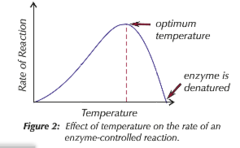
Can an enzyme renature if it has denatured due to high temperatures?
No - it's tertiary structure has changed so much that it cannot be reversed
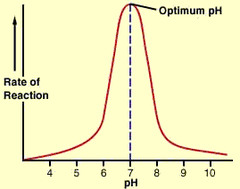
Draw the graph showing the effect of pH on the rate of enzyme controlled reactions
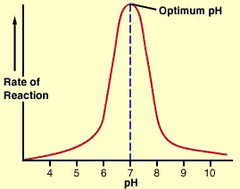
How does pH affect enzyme activity?
Enzyme activity decreases as the pH moves away from the optimum pH
H+ ions bond with the R groups of the amino acids in the active site, preventing the R groups from bonding with the substrates
H+ ions also bond with R groups of amino acids in the rest of the enzyme molecule
This breaks the bonds holding the tertiary structure of the enzyme in place.
The tertiary structure of the enzyme changes so the shape of the active site changes and is no longer complementary to the substrate - the enzyme has denatured
How can you calculate the pH of a solution using the concentration of hydrogen ions?
pH = -log[H+]
Draw the graph showing the effect of enzyme concentration on enzyme activity
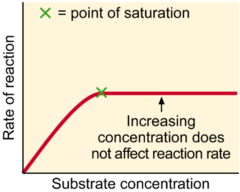
How does enzyme concentration affect enzyme activity?
At first the rate of reaction is directly proportional to enzyme concentration: the number of active sites available for substrates to collide with increases
This increases the frequency of collisions between the substrate and the active sites
Eventually the rate of reaction will level off as substrate concentration becomes the limiting factor: there will not be enough substrate molecules to collide with all the available active sites, so increasing enzyme concentration will have no effect
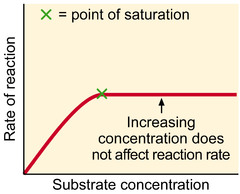
Draw the graph showing the effect of substrate concentration on enzyme activity
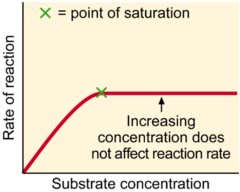
How does substrate concentration affect enzyme activity?
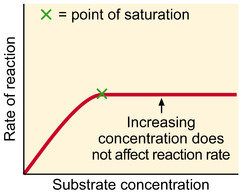
At first, the rate of reaction is directly proportional to the substrate concentration: more substrate molecules increases the frequency of collisions between the substrate and the active site
Eventually the rate of reaction will level off as enzyme concentration becomes the limiting factor: all active sites are occupied so increasing substrate concentration will have no effect
What is a competitive inhibitor?
molecule with a similar shape to the substrate, allowing it to occupy the active site of the enzyme
It competes with the substrate to bind in the active site of an enzyme.
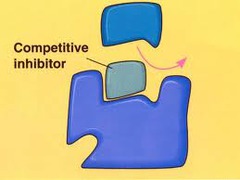
Describe how competitive inhibitors impact enzyme activity
they have a similar shape to that of the substrate molecules
they compete with the substrate to bind to the active site of the enzyme
They prevent the actual substrate from colliding with the active site, reducing the frequency of collisions between the substrate and the active site
This reduces the rate of reaction
How can you reduce the effect of a competitive inhibitor?
increasing substrate concentration
There will be a greater chance that the substrate will occupy the active site instead of the competitive inhibitor
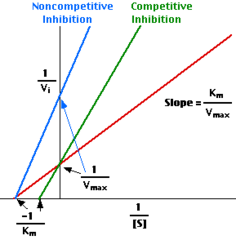
What is a non-competitive inhibitor?
A molecule that binds to a different site (allosteric site) on the enzyme, causing the tertiary structure of the enzyme to change
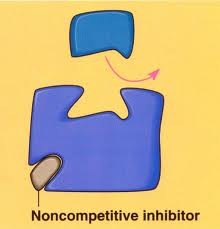
Describe how non-competitive inhibitors impact enzyme activity
When it binds to the allosteric site, it causes the tertiary structure to change
the active site changes shape and is no longer complementary to the substrate, so enzyme-substrate complexes can't be formed
This reduces the rate of reaction
Does increasing substrate concentration reduce the effect of non-competitive inhibitors?
No
As the shape of the active site has changed, the substrate molecule still cannot bind with the active site
Give a method to investigate the effect of temperature on the rate of an enzyme controlled reaction
1) take three test tubes and measure 5cm³ of milk into each. Draw a cross on each with a black marker, then place in water bath at 20°C for 10 minutes to equilibrate
2) add 5cm³ of trypsin to each test tube simultaneously and start the timer
3) record how long it takes for the milk samples to completely hydrolyse and become colourless (you are able to see the cross)
4) repeat at temperatures of 30°C, 40°C, 50°C and 60°C
5) find the mean time for the milk to become hydrolysed at each temperature, then work out the rate of reaction using:
rate of reaction = 1 / mean time
6) plot a graph of rate of reaction against temperature
What statistical test should be used for comparing two means?
T-test
What are monosaccharides?
The monomers from which larger carbohydrates are made
Name three common monosaccharides
glucose, fructose, galactose
What type of bond does a condensation reaction between two monosaccharides form?
A glycosidic bond
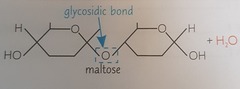
What is a disaccharide?
Two monosaccharides joined together by a glycosidic bond
How is a disaccharide formed?
by the condensation of two monosaccharides
Give three examples of disaccharides
maltose, lactose, sucrose
How is the disaccharide maltose formed?
By the condensation of two glucose molecules
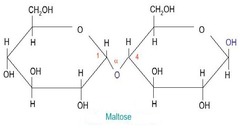
Give the word equation for the condensation reaction that forms maltose
glucose + glucose → maltose + water
How is the disaccharide lactose formed?
By the condensation of a glucose molecule and galactose molecule
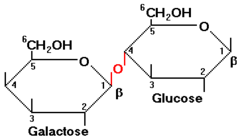
Give the word equation for the condensation reaction that forms lactose
glucose + galactose → lactose + water
How is the disaccharide sucrose formed?
by condensation of a glucose molecule and a fructose molecule
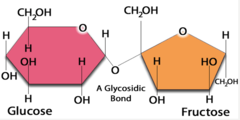
Give the word equation for the condensation reaction that forms sucrose
glucose + fructose → sucrose + water
What is an isomer?
molecules with the same molecular formulae but different structural formulae (same atoms but arranged differently)
Name two isomers of glucose
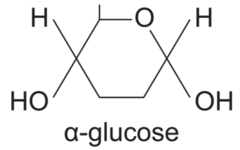
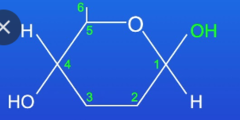
α-glucose and β-glucose
Give the structure for α-glucose
Give the structure for β-glucose
What are polysaccharides?
Polymers formed by the condensation of many glucose units
Name three polysaccharides
starch, glycogen, cellulose
How is the polysaccharide starch formed?
By the condensation of α-glucose
How is the polysaccharide glycogen formed?
By the condensation of α-glucose
How is the polysaccharide cellulose formed?
By the condensation of β-glucose
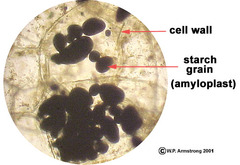
What is the function of starch?
glucose storage in plants
What is the function of glycogen?
glucose storage in animals (mainly in muscle and liver cells)
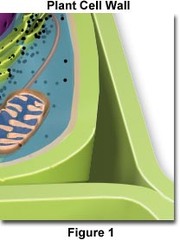
What is the function of cellulose?
structural component of plant cell walls
What two polysaccharides make up starch?
amylose and amylopectin
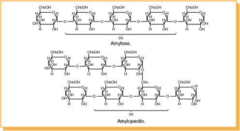
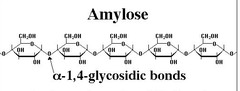
What type of bonds can be found within amylose?
1,4 glycosidic bonds between α-glucose molecules
Describe the shape of amylose
Unbranched helix-shaped chain
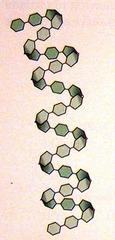
Recognise the structure of amylose
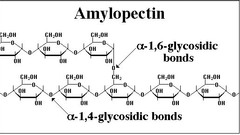
What type of bonds can be found within amylopectin?
1,4 and 1,6 glycosidic bonds between α-glucose molecules
1,6 glycosidic bonds form branches
Describe the shape of amylopectin
Branched molecule
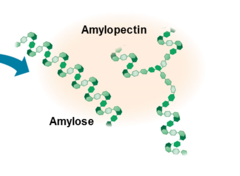
Recognise the structure of amylopectin
Describe how the structure of starch relates to its function
Amylose's helix shape is compact, so a lot can be stored in a small space
Amylopectin's branches result in many terminal glucose molecules that can be acted on by enzymes simultaneously, increasing the rate at which the glucose can be hydrolysed for use
Insoluble, so it has no osmotic effect and large amounts can be stored without affecting water balance
What type of bonds can be found within glycogen?
1,4 and 1,6 glycosidic bonds between α-glucose molecules
1,6 glycosidic bonds form branches
Describe the shape of glycogen
Highly branched molecule
(there are even more 1,6 glycosidic bonds than amylopectin)
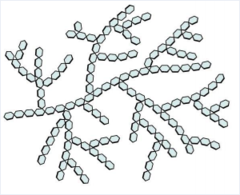
Describe how the structure of glycogen relates to its function
Branching results in many terminal glucose molecules that can be acted on by enzymes simultaneously, increasing the rate at which the glucose can be hydrolysed for use
(Important for animals as they have a high respiration rate and their energy needs can change rapidly)
High number of branches makes glycogen a compact molecule, so a lot can be stored in a small space
Insoluble, so it has no osmotic effect and large amounts can be stored without affecting water balance
Large and cannot diffuse out the cell