102: The Upper Extremity: Osteology and Organization
 Call Kai
 Learn
Learn Practice Test
 Spaced Repetition
 Match
Match Flashcards
 Knowt Play
1/169

There's no tags or description
Looks like no tags are added yet.
Name | Mastery | Learn | Test | Matching | Spaced | Call with Kai | Chat |
|---|
No analytics yet
Send a link to your students to track their progress
170 Terms
Axilla
Shoulder (Glenohumeral joint)
Arm (Brachium)
Forearm (Antebrachium)
Hand
What are the 5 regions of the upper extremity?
Common action
Common innervation
Common blood supply
What are the three common functions of compartments of the upper extremity?
Where fixed end of a skeletal muscle attaches
- Most are bones
-Some are connective tissue sheaths or bands
- Typically proximal to insertion in an anatomical position
What is the origin?
Where the moveable end of a skeletal muscle attaches
What does insertion mean?
Specific movement produced by a skeletal muscle; typically moving insertion toward origin
What does action mean?
The scientific study of bones
What is osteology?
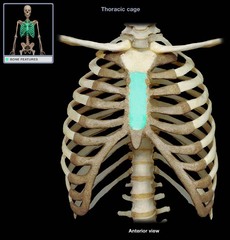
Sternum
identify the structure
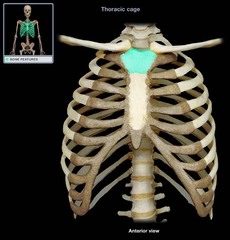
Manubrium of sternum
identify the structure
right clavicle
identify the structure
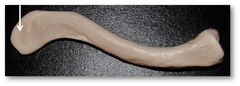
left clavicle
identify the structure
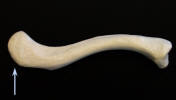
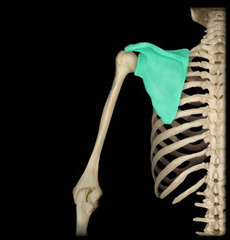
Scapula
identify the structure
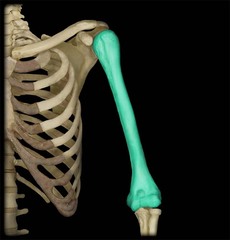
Humerus
identify the structure
Acromial end and sternal end
What are the two ends of the clavicle?
Acromion process
identify the structure
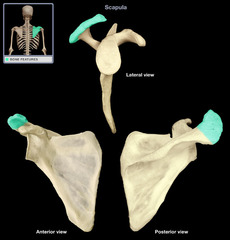
Glenoid fossa
identify the structure
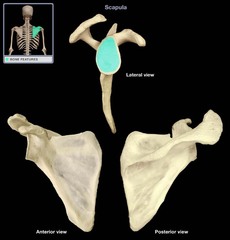
Coracoid process
identify the structure
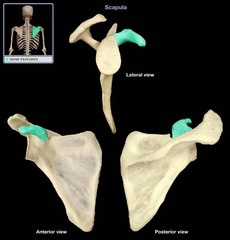
Subscapular fossa
identify the structure
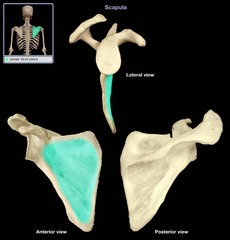
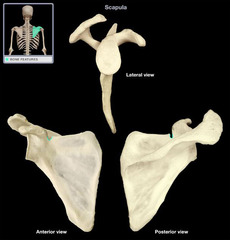
Suprascapular notch
identify the structure
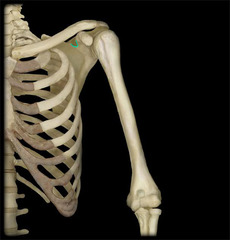
Suprascapular notch
identify the structure
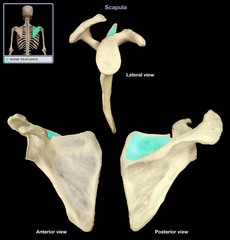
Supraspinous fossa
identify the structure
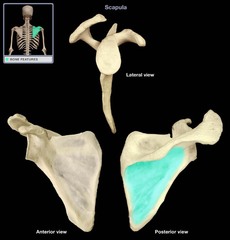
Infraspinous fossa
identify the structure
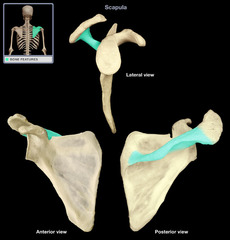
Spine of the scapula
identify the structure
Where bones connect
What are joints/articulations?
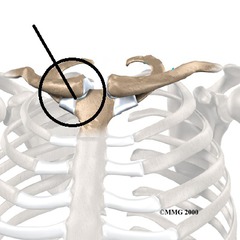
Sternoclavicular joint
The clavicle articulates with the axial skeleton via which joint?
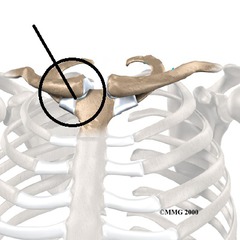
Acromioclavicular joint
The clavicle articulates with the scapula via which joint?
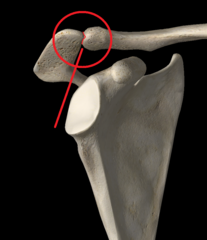
sternoclavicular joint
identify the joint
acromioclavicular joint
identify the joint
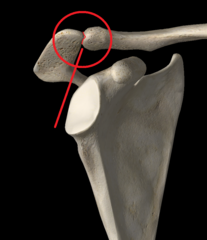
Conoid tubercle
identify the structure
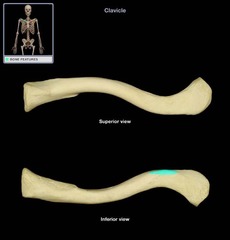
Protect joints!
What is the function of ligaments?
Impression for costoclavicular ligament
identify the structure
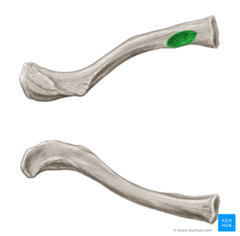
Acromion process of the scapula to the distal end of the clavicle
What does the acromioclavicular ligament connect?
Extends between coracoid process and acromion process of scapula
What does the coracoacromial ligament connect?
1. Conoid ligament
2. Trapezoid ligament
These attach to the conoid tubercle and trapezoid line
What two ligaments make up the coracoclavicular ligament?
Connects the manubrium of sternum to sternal end of clavicle
What does the Sternoclavicular ligament connect?
Connects sternal end of clavicle to 1st rib at costal cartilage
What does the costoclavicular ligament connect?
First
Coraco comes (first/last)
Last
Clavicular comes (first/last)
acromioclavicular ligament
identify the structure
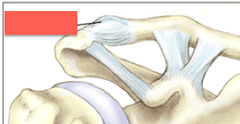
coracoacromial ligament
identify the structure
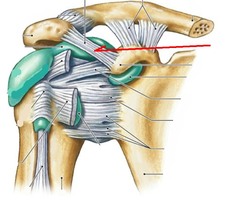
coracoclavicular ligament
identify the structure
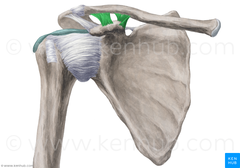
conoid and trapezoid ligament
what two ligaments make up the coracoclavicular ligament?
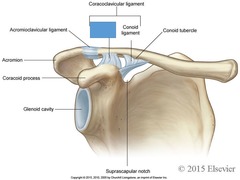
conoid ligament
identify the structure
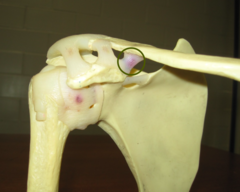
trapezoid ligament
identify the structure
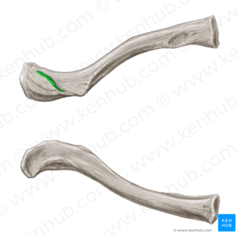
Trapezoid line of clavicle
identify the structure
sternoclavicular ligament
identify the structure
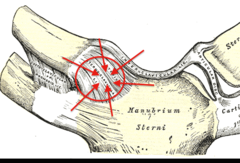
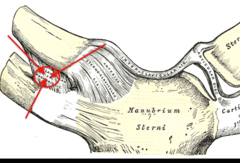
costoclavicular ligament
identify the structure
Falling on shoulder or outstretched hand
What is the mechanism of injury for AC joint separation?
"Piano-key sign"
What is another name for AC joint separation?
acromioclavicular, coracoclavicular
in a "piano key sign" injury, what ligaments of the shoulder are torn?
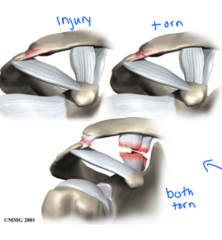
clavicle
in a "piano key sign" injury, what bone is no longer attached to shoulder?
AC joint separation
What happened here?
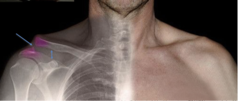
glenohumeral joint
identify the joint
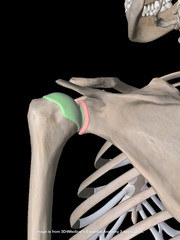
glenohumeral joint
In Scapulo-humeral Rhythm to make a 180 degree angle, the ______ does 120 degrees of the movement
Scapulothoracic joint
This joint allows movement in all directions between muscles of the scapula and the thoracic wall, increasing the mobility of the upper extremity
scapulothoracic joint
In Scapulo-humeral Rhythm to make a 180 degree angle, the ______ does 60 degrees of the movement
scapulothoracic joint
The "joint" that connects the scapula to the thoracic cage, does not use ligaments, but soft tissue
Upward
Scapular movements
Inferior angle: Lateral = (upward/downward)
Downward
Scapular movements
Inferior angle: Medial = (upward/downward)
Upward
Scapular movements
Glenoid: Faces up = (upward/downward)
Downward
Scapular movements
Glenoid: Faces down = (upward/downward)
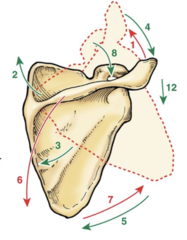
Elevation
The scapular into the red is...
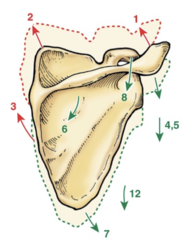
Depression
The scapular into the green is...
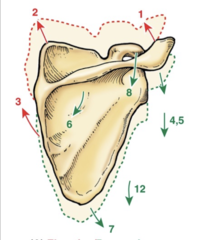
Protraction
The scapular into the red is...
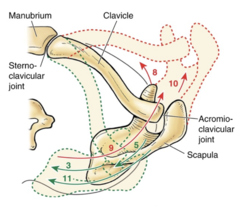
Retraction
The scapular into the green is...
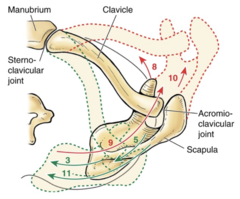
Upward rotation
The scapular into the red is...
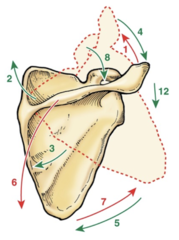
Downward rotation
The scapular into the green is...
Physiological (bc it is between soft tissue not bones)
What type of joint is the scapulothoracic joint?
Glenohumeral joint
- Between glenoid cavity and humeral head
What joint connects the arm (humerous) to the pectoral girdle?
Ball and socket
- Adding further mobility to the upper extremity
What type of joint is the glenohumeral joint?
Flexion/Extension
Internal rotation/External rotation
Adduction/Abduction
Circumduction
What motions are allowed at the glenohumeral joint?
Decrease
- These joints need extra structures for support
An increase in mobility results in an (increase/decrease) stability
Forward
Flexion is when the arm moves
Backward
Extension is when hte arm moves
Away from the midline
Abduction is when the arm moves
Toward the midline
Adduction is when the arm moves
- Muscles that cross the axial skeleton to the humerus cross the joint anteriorly and pull arm medially for internal rotation
- Muscles cross joint posteriorly to laterally rotate humerus at glenoidhumeral joint
How do muscles cross the shoulder joint to produce each action?
Movement together where there is 180° abduction occurring at the glenohumeral and scapulothoracic joints
What is scapulohumeral rhythm?
Of the 180° movement:
- 60° occur at the scapulothoracic joint
- 120° occur at the glenohumeral joint
What degrees are each joint in the scapulohumeral rhythm?
Shoulders abduct, external/lateral rotate, extend back
What motions needed to get arm into this position?
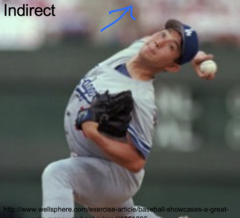
Indirect
When motion/movement causes head of humerus to dislocate out of glenoid fossa this is (direct/indirect) dislocation of glenohumeral joint
Direct
While in abduction and lateral rotation, a force hits laterally, forcing elbow back and proximal end of humerus out anteriorly, this is (direct/indirect) dislocation of glenohumeral joint
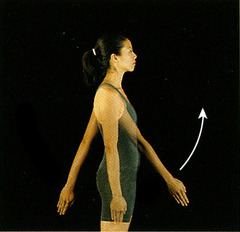
arm flexion
identify the action
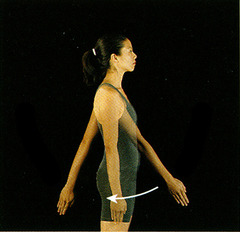
arm extension
identify the action
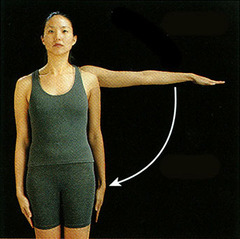
arm adduction
identify the action
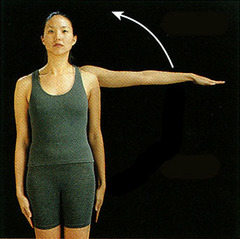
arm abduction
identify the action
elbow flexion
identify the action
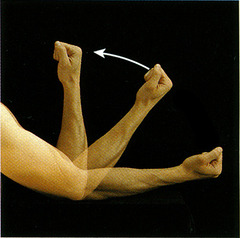
elbow extension
identify the action
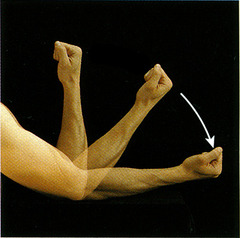
elbow lateral rotation
identify the action
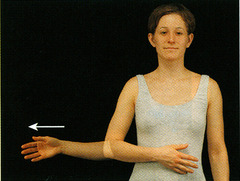
elbow medial rotation
identify the action
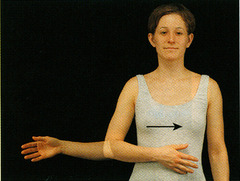
wrist flexion
identify the action
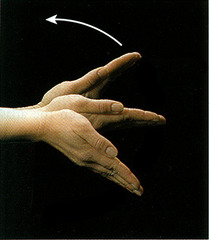
wrist extension
identify the action
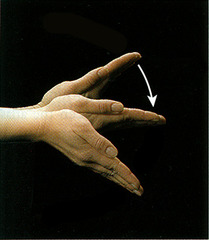
wrist adduction
identify the action
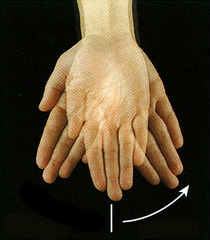
wrist abduction
identify the action
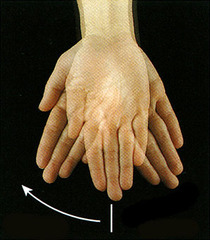
finger adduction
identify the action
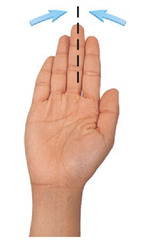
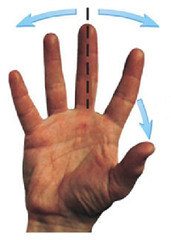
fingers abduction
identify the action
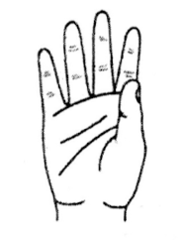
thumb adduction
identify the action
thumb abduction
identify the action
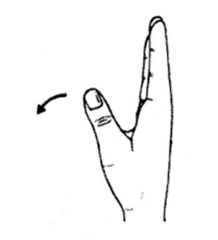
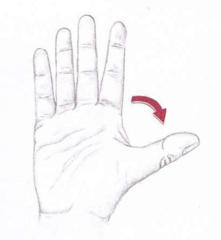
thumb opposition
identify the action
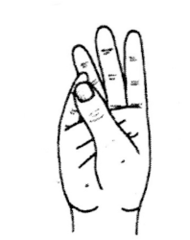
thumb flexion
identify the action
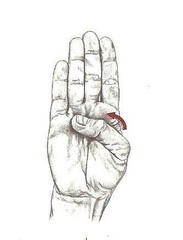
thumb extension
identify the action