A&P LAB II EXAM I
 Call Kai
 Learn
Learn Practice Test
 Spaced Repetition
 Match
Match Flashcards
 Knowt Play
1/241

There's no tags or description
Looks like no tags are added yet.
Name | Mastery | Learn | Test | Matching | Spaced | Call with Kai | Chat |
|---|
No analytics yet
Send a link to your students to track their progress
242 Terms
What can happen if a gland produces too little of a hormone?
Hormone deficiency can cause problems because the body does not receive enough of the hormone's normal effect. Hyposecretion.
What can happen if a gland produces too much of a hormone?
Excess hormone can cause an overactive or exaggerated effect in the body. Hypersecretion.
What is a hormone?
A chemical messenger released into the blood that affects target cells or tissues with specific receptors.
What is a tropic hormone?
A hormone that acts on another endocrine gland and stimulates it to release hormones.
What are the three types of endocrine control?
Humoral control, hormonal control, and neural control.
What is humoral control?
Blood ions or nutrients trigger hormone release.
What is hormonal control?
Hormones stimulate other endocrine glands to release hormones.
What is neural control?
Nerves stimulate hormone release.
What does Adrenocorticotropic Hormone (ACTH) do?
Stimulates the adrenal cortex to release cortisol.
What does aldosterone do?
Regulates sodium and potassium and increases blood pressure.
What does Antidiuretic Hormone (ADH) do?
Promotes water reabsorption and reduces urine production.
What does calcitonin do?
Lowers blood calcium by stimulating calcium uptake into bone.
What does cortisol do?
Regulates metabolism, helps with stress, and reduces inflammation.
What do epinephrine and norepinephrine do?
Produce fight-or-flight effects such as increasing heart rate, blood pressure, and blood glucose.
What does estrogen do?
Helps with female reproductive development and secondary s*x characteristics.
What does Follicle Stimulating Hormone (FSH) do?
Helps with egg development in females and sperm development in males.
What does growth hormone do?
Promotes body growth, protein synthesis, and fat metabolism.
What does glucagon do?
Raises blood glucose by stimulating glycogen breakdown.
What does insulin do?
Lowers blood glucose by promoting glucose uptake.
What does Luteinizing Hormone (LH) do?
Triggers ovulation and progesterone production in females and stimulates testosterone production in males.
What does melatonin do?
Helps regulate circadian rhythms and sleep.
What does oxytocin do?
Stimulates uterine contractions and milk ejection.
What does Parathyroid Hormone (PTH) do?
Increases blood calcium through bone breakdown and increased kidney calcium reabsorption.
What does progesterone do?
Prepares the uterus and maintains the uterine lining.
What does prolactin do?
Stimulates milk production.
What does testosterone do?
Helps with sperm production and male secondary sex characteristics.
What does thymosin do?
Helps with T-cell development.
What do T3 and T4 do?
Increase metabolism and support growth and development.
What does Thyroid Stimulating Hormone (TSH) do?
Stimulates the thyroid to release T3 and T4.
Where is the parathyroid gland?
On the anterior (front) of the neck near the thyroid.
What hormone does the parathyroid produce?
Parathyroid hormone (PTH)
What do chief cells produce?
PTH.
What does Parathyroid Hormone (PTH) do?
Increases blood calcium.

Parathyroid glands
Where is the thyroid gland?
In the front of the neck below the larynx.
What do thyroid follicles contain?
Colloid.
What is the function of colloid?
It stores thyroid hormone.
What do follicular cells produce?
T3 and T4.
What do parafollicular/C cells produce?
Calcitonin.
What does calcitonin do?
Lowers blood calcium.
What hormones does the thyroid produce?
T3, T4, and calcitonin.

1
Colloid

2
Follicle cells

3
thyroid follicle

4
parafollicular cell
What does the P wave represent?
Atrial depolarization.
What does the QRS complex represent?
Ventricular depolarization. Atrial repolarization occurs at the same time but is hidden.
What does the T wave represent?
Ventricular repolarization.
What does the PR interval represent?
The time from atrial depolarization to ventricular depolarization.
What does the ST segment represent?
The plateau when the ventricles are fully depolarized.
What does the QT interval represent?
The duration of ventricular activity.
What happens after the P wave?
Atrial depolarization leads to atrial systole.
What happens after the QRS complex?
Ventricular depolarization leads to ventricular systole.
What happens after the T wave?
Ventricular repolarization leads to ventricular
Where is the pancreas?
Behind the stomach.
What are the Islets of Langerhans?
Endocrine cell clusters in the pancreas.
What do alpha cells produce?
Glucagon.
What does glucagon do?
Raises blood glucose.
What do beta cells produce?
Insulin.
What does insulin do?
Lowers blood glucose.
What do delta cells produce?
Somatostatin.
What does the rest of the pancreas do?
It is exocrine tissue that produces digestive enzymes.
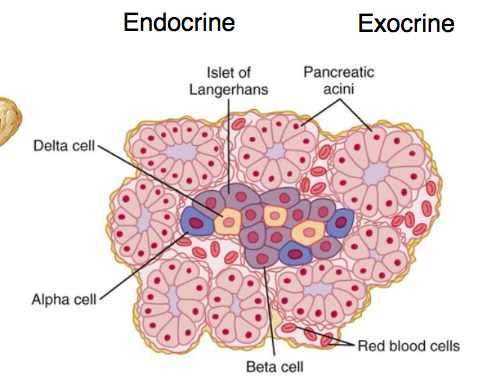
Pancreatic Cells
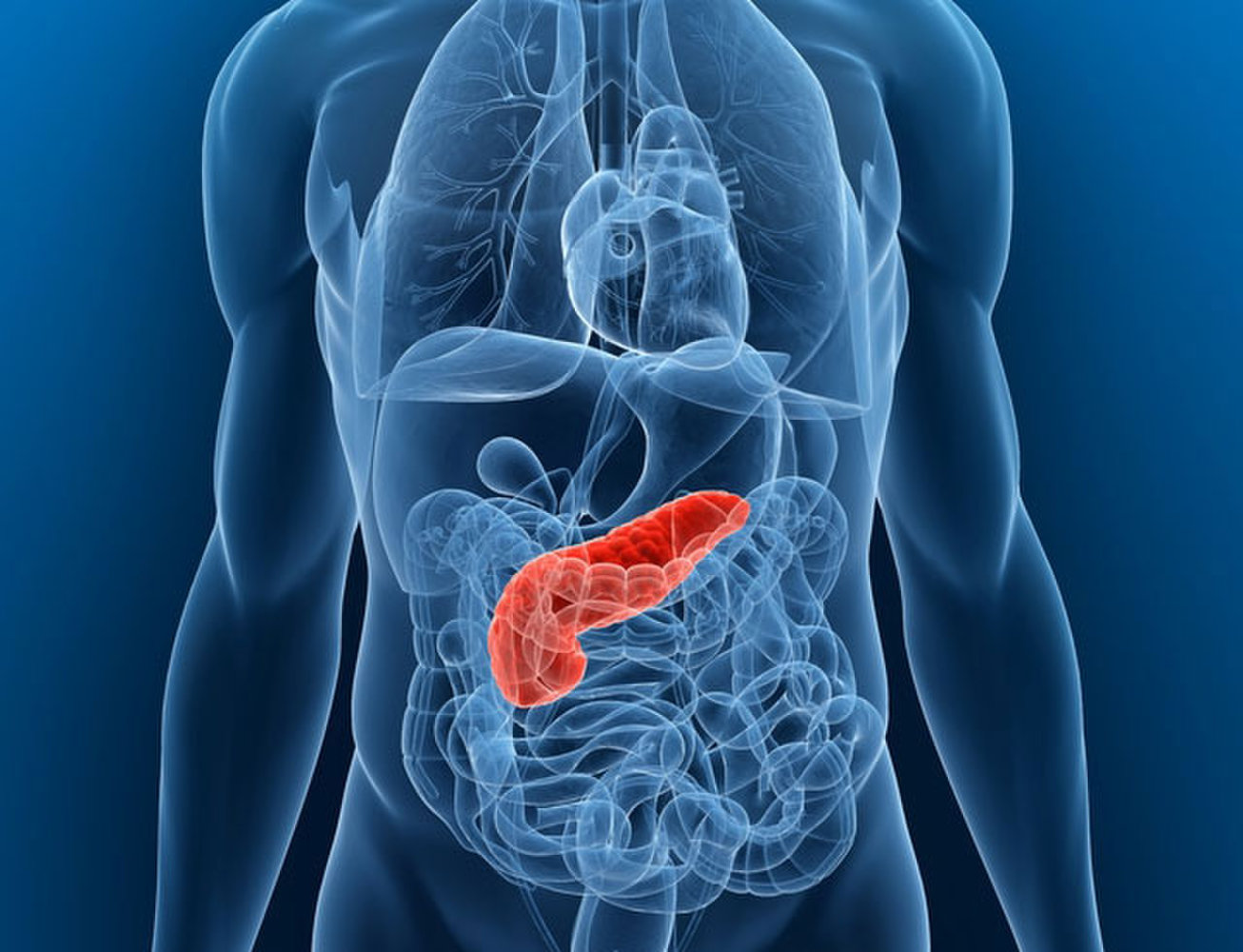
Pancreas
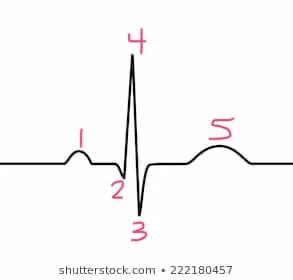
1
P
2
Q
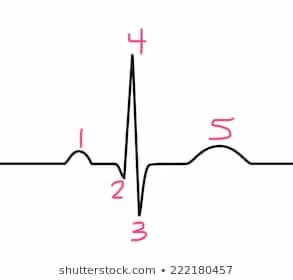
3
S
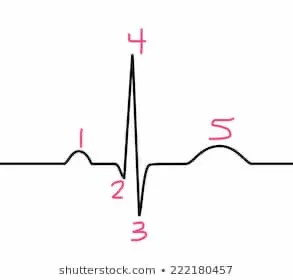
4
R

5
T
What do the vena cavae do?
Return blood to the right atrium.
Where are the jugular veins?
In the neck.
Where are the subclavian veins?
Under the clavicle.
Where is the brachial vein?
In the upper arm.
Where are the radial and ulnar veins?
In the forearm.
Where is the femoral vein?
In the upper thigh.
Where is the popliteal vein?
Behind the knee.
What feature is commonly found in veins?
Valves.
Where is the pituitary gland?
At the base of the brain in the sella turcica.
What are the two major parts of the pituitary?
Anterior pituitary and posterior pituitary.
Which part is darker and glandular?
Anterior pituitary.
Which part is lighter and nervous tissue?
Posterior pituitary.
What hormones does the anterior pituitary secrete?
ACTH, FSH, GH, LH, prolactin, and TSH.
What hormones does the posterior pituitary release?
ADH and oxytocin
Where are ADH and oxytocin made?
In the hypothalamus.
What does the posterior pituitary do with ADH and oxytocin?
Stores and releases them.
Where are the adrenal glands?
On top of the kidneys.
What are the two major regions of an adrenal gland?
Adrenal cortex and adrenal medulla.
What does the adrenal cortex produce?
Cortisol and aldosterone.
What does the adrenal medulla produce?
Epinephrine and norepinephrine.
What does cortisol do?
Helps regulate metabolism and the stress response.
What does aldosterone do?
Regulates sodium and potassium and increases blood pressure.
What do epinephrine and norepinephrine do?
Produce fight-or-flight effects.
What device measures blood pressure?
A sphygmomanometer and stethoscope.
How is blood pressure measured?
The cuff is inflated around the arm and then slowly released while listening to the brachial artery.
What is the first Korotkoff sound?
What does the disappearance of Korotkoff sounds represent?
Diastolic pressure.
Where is the cuff placed?
On the upper arm over the brachial artery.
What is systolic pressure?
The pressure during ventricular contraction.
What is diastolic pressure?
The pressure during ventricular relaxation.
What is pulse pressure?
Systolic pressure minus diastolic pressure.