neuro complications
 Call Kai
 Learn
Learn Practice Test
 Spaced Repetition
 Match
Match Flashcards
 Knowt Play
1/37

There's no tags or description
Looks like no tags are added yet.
Name | Mastery | Learn | Test | Matching | Spaced | Call with Kai | Chat |
|---|
No analytics yet
Send a link to your students to track their progress
38 Terms
Which of the following is the earliest sign of increased ICP?
A. Projectile vomiting
B. Cushing’s triad
C. Change in Level of Consciousness (LOC)
D. Decerebrate posturing
Answer: C. (Always pick LOC as the earliest sign).
A patient has a Blood Pressure of 160/70 and a Heart Rate of 52. The nurse recognizes this as:
A. Serotonin Syndrome
B. Cushing’s Triad
C. Autonomic Dysreflexia
D. Hypovolemic Shock
Answer: B. Widening Pulse Pressure (Increasing Systolic BP, Decreasing Diastolic BP).
Which medication is specifically used to decrease cerebral edema in a patient with increased ICP?
A. Furosemide (Lasix)
B. Mannitol (Osmitrol)
C. Nitroprusside
D. Magnesium Sulfate
Answer: B. Mannitol is an osmotic diuretic. It pulls fluid from the brain tissue into the vascular space to be excreted by the kidneys.
Note: Always use a filter needle for Mannitol because it can crystallize!
The physician orders Mannitol (Osmitrol) for a patient with a head injury and an ICP of 24 mmHg. Which nursing action is essential when preparing this medication?
A. Monitor the patient’s blood glucose levels every 4 hours.
B. Use a filtered needle or in-line filter for administration.
C. Administer the medication via a slow IV push over 30 minutes.
D. Position the patient in a supine position during the infusion.
Correct Response: B
A patient is admitted with a subarachnoid hemorrhage. Which of the following assessment findings would be the priority for the nurse to report to the healthcare provider?
A. A Glasgow Coma Scale (GCS) score that changed from 12 to 10.
B. Patient reports a "mild" headache and photophobia.
C. Blood pressure of 138/84 mmHg.
D. Pupils are equal, round, and reactive to light (PERRLA).
Correct Response: A
Rationale: A decrease in the Glasgow Coma Scale (GCS) score (even by 1 or 2 points) indicates a change in the Level of Consciousness (LOC), which is the earliest indicator of neurological deterioration or increasing ICP.
The nurse notes that a patient with a head injury is exhibiting Cushing’s Triad. Which set of vital signs is most consistent with this finding?
A. BP 90/60, Pulse 120, Respirations 24
B. BP 120/80, Pulse 80, Respirations 16
C. BP 170/60, Pulse 50, Respirations 8 (irregular)
D. BP 110/70, Pulse 110, Respirations 30
Correct Response: C
A nurse is caring for a client with a traumatic brain injury and an ICP of 22 mmHg. Which elevation of the head of the bed (HOB) is considered the 'gold standard' to promote venous return while maintaining cerebral perfusion?
A.0 to 10 degrees
B. 30 to 45 degrees
C. 15 to 20 degrees
D. 60 to 90 degree
B. 30 to 45 degrees
When turning a client with increased ICP to a side-lying position, which nursing action is most critical to maintain neurological stability?
A. Flexing the knees and hips toward the abdomen
B. Placing the client in the Trendelenburg position first
C. Removing the pillow from under the head
D. Using the logrolling technique
D. Using the logrolling technique
Rationale: Logrolling keeps the head, neck, and spine in one axis, preventing any neck rotation that would block venous outflow
A patient with increased ICP is experiencing 'Decerebrate Posturing.' How should the nurse position the extremities during rest?
A. In a fetal position for comfort
B. With the legs crossed to prevent sliding
C. In a position of function with neutral alignment
D. With the arms flexed tightly against the chest
C. In a position of function with neutral alignment
That's right!
Neutral alignment prevents further complications and avoids positions that might stimulate further pressure increases.
A nurse is caring for a client who begins to have a tonic-clonic seizure while lying in bed. Which of the following actions should the nurse perform first?
A. Restrain the client's extremities to prevent injury.
B. Administer the scheduled dose of phenytoin immediately.
C. Insert a padded tongue blade into the client's mouth.
D. Turn the client to a side-lying position.
D. Turn the client to a side-lying position.
That's right!
This is the priority action to maintain a patent airway and prevent aspiration of secretions or emesis during the seizure.
A patient with a history of epilepsy is being discharged with a prescription for Phenytoin (Dilantin). Which instruction should the nurse emphasize to the patient?
A. Stop the medication if you experience any mild nausea.
B. Take the medication only when you feel a seizure coming on.
C. Perform frequent oral hygiene and see a dentist regularly.
D. Increase your intake of grapefruit juice to improve absorption.
C.Perform frequent oral hygiene and see a dentist regularly.
That's right!
Gingival hyperplasia is a common side effect of phenytoin, requiring meticulous oral care to manage gum overgrowth.
The nurse is documenting a seizure involving a child. The child appeared to be staring into space for 10 seconds and was unresponsive to touch, but returned to baseline immediately after. This is characteristic of:
A. Atonic Seizure
B. Focal Aware Seizure
C. Absence Seizure
D. Myoclonic Seizure
C. Absence Seizure
That's right!
Absence seizures are generalized seizures common in children, characterized by brief staring and an immediate return to consciousness without a post-ictal state.
A patient experiences a sudden loss of muscle tone and falls to the floor while walking. The nurse identifies this as which type of seizure?
A. Absence seizure
B. Atonic seizure
C. Tonic seizure
D. Myoclonic seizure
B. Atonic seizure
That's right!
Atonic seizures, often called 'drop attacks,' involve a sudden, complete loss of muscle tone.
A nurse witnesses a patient in the tonic phase of a grand mal seizure. Which clinical finding is expected during this specific phase?
A. Immediate return to consciousness
B. Continuous muscle stiffening and rigidity
C. Rhythmic jerking of the extremities
D. Purposeless lip-smacking
B. Continuous muscle stiffening and rigidity
Right answer
The tonic phase is characterized by sudden, intense muscle contractions and stiffening of the body.
Which nursing action is the absolute priority when a patient begins having a generalized seizure in a chair?
A. Hold the patient's limbs still to prevent fractures.
B. Ease the patient to the floor and turn them to their side.
C. Insert a bite block to prevent tongue injury.
D. Place the patient in a prone position on the floor.
B. Ease the patient to the floor and turn them to their side.
Right answer
Lowering to the floor prevents falls, and side-lying keeps the airway clear of secretions.
A patient with epilepsy describes feeling a 'metallic taste' and seeing 'halos' just before a seizure. The nurse documents this as:
A. A post-ictal state
B. An automatism
C. Status epilepticus
D. An aura
D. An aura
That's right!
An aura is a sensory warning sign that signals an impending seizure.
A patient has been seizing for 10 minutes without regaining consciousness. Which medication should the nurse have ready to administer first?
A. Phenytoin (Dilantin)
B. Valproic Acid (Depakene)
C. Lorazepam (Ativan)
D. Gabapentin (Neurontin)
C. Lorazepam (Ativan)
That's right!
IV Benzodiazepines like Lorazepam are the first-line treatment for stopping status epilepticus.
A patient suddenly loses all muscle tone and collapses to the floor during a physical therapy session. The patient remains unresponsive for a few seconds and then slowly regains consciousness. The nurse identifies this as which type of seizure?
A. Atonic seizure
B. Absence seizure
C. Tonic seizure
D. Myoclonic seizure
A. Atonic seizure
That's right!
Atonic means 'without tone,' and these seizures cause 'drop attacks' where the patient suddenly collapses.
The nurse is documenting a seizure where the patient's body became rigid for 15 seconds, followed by 45 seconds of rhythmic jerking of all four extremities. How should the nurse label these two distinct phases?
A. Tonic and Clonic
B. Automatism and Myoclonic
C. Clonic and Tonic
D. Aura and Post-ictal
A. Tonic and Clonic
Right answer
The tonic phase is characterized by muscle stiffening, while the clonic phase involves rhythmic jerking.
A patient remains conscious during a seizure but reports hearing a loud 'ringing' and feeling a 'pins and needles' sensation in the right hand. The nurse identifies this as a:
A. Focal impaired awareness seizure
B. Focal aware seizure
C. Psychogenic seizure
D. Generalized sensory seizure
B.Focal aware seizure
That's right!
In this type, consciousness is preserved and the symptoms are limited to a specific sensory or motor area of the brain.
During a seizure, the nurse observes a patient staring blankly while repetitively picking at their gown and smacking their lips. The patient does not respond to verbal commands. This represents:
A. Absence seizure
B. Atonic seizure
C. Tonic-clonic seizure
D. Focal impaired awareness seizure
D. Focal impaired awareness seizure
Right answer
This type features altered consciousness and automatisms like lip-smacking or fumbling with clothes.
.
A patient experiences brief, shock-like jerks of the arms and legs that occur shortly after waking up in the morning. The nurse documents this as which type of seizure?
A. Clonic seizure
B. Tonic seizure
C. Atonic seizure
D. Myoclonic seizure
D. Myoclonic seizure
Right answer
Myoclonic seizures are characterized by sudden, very brief muscle contractions that can look like a sudden jerk.
Following a seizure, the patient is very sleepy, confused, and complains of a headache and muscle soreness. The nurse recognizes the patient is in which phase?
A. Clonic phase
B. Post-ictal phase
C. Pre-ictal phase
D. Tonic phase
B.Post-ictal phase
Right answer
The post-ictal phase is the recovery period after a seizure, often marked by drowsiness and confusion.
Which of the following seizures is considered a medical emergency if it lasts longer than 5 minutes or occurs in rapid succession without a return to consciousness?
A. Myoclonic jerk
B. Absence seizure
C. Status epilepticus
D. Focal aware seizure
C. Status epilepticus
That's right!
Status epilepticus is a life-threatening state of continuous or repeated seizure activity without recovery in between.
A patient with epilepsy is prescribed Phenytoin (Dilantin). Which of the following instructions should the nurse prioritize during discharge teaching?
A. "You may stop the medication once you are seizure-free for a month."
B. "Perform oral hygiene and see your dentist regularly."
C. "Mix the medication with fruit juice to improve the taste."
D. "Restrict your fluid intake to 1,000 mL per day."
B: Phenytoin causes
Gingival Hyperplasia. Frequent dental care is essential. (A is wrong: abrupt stop causes status epilepticus).
Which of the following lab results would cause the nurse the most concern for a patient taking Carbamazepine (Tegretol)?
A. Sodium 136 mEq/L
B. White Blood Cell (WBC) count 2,500 mm^3
C. Serum Glucose 110 mg/dL
D. Platelet count 200,000 mm^3
B: Carbamazepine can cause
Bone Marrow Suppression (Aplastic Anemia). A WBC of 2,500 is significantly low (Normal: 5,000–10,000).
A client is brought to the ER in Status Epilepticus. Which medication does the nurse expect the physician to order first?
A. Phenobarbital
B. Valproic Acid
C. Diazepam
D. Ethosuximide
C: Benzodiazepines are the drug of choice to stop active, prolonged seizure activity.
The nurse is monitoring a patient receiving IV Phenytoin. The nurse should notify the physician immediately if which sign of toxicity is observed?
A. Gingival hyperplasia
B. Nystagmus and ataxia
C. Constipation
D. Brownish-pink urine
B: Nystagmus (involuntary eye movement) and Ataxia (staggering gait) are classic signs of Phenytoin toxicity (>20 mcg/mL).
The nurse is teaching a patient about Carbamazepine (Tegretol). Which statement by the patient indicates a need for further teaching?
A. "I will report a sore throat or fever to my doctor immediately."
B. "I should drink a glass of grapefruit juice every morning."
C. "I will have my blood levels checked regularly."
D. "I will use a high-SPF sunscreen when going outside."
B: Grapefruit Juice. It inhibits the metabolism of Carbamazepine, leading to toxic drug levels. (A is correct because it monitors for Aplastic Anemia).
After long-term phenytoin (Dilantin) therapy following seizures caused by exposure to a strange ley line disturbance, Razor visits Lisa for a check-up. Which finding is most expectected
A. Weight gain.
B. Insomnia.
C. Excessive growth of gum tissue.
D. Deteriorating eyesight.
C. Excessive growth of gum tissue
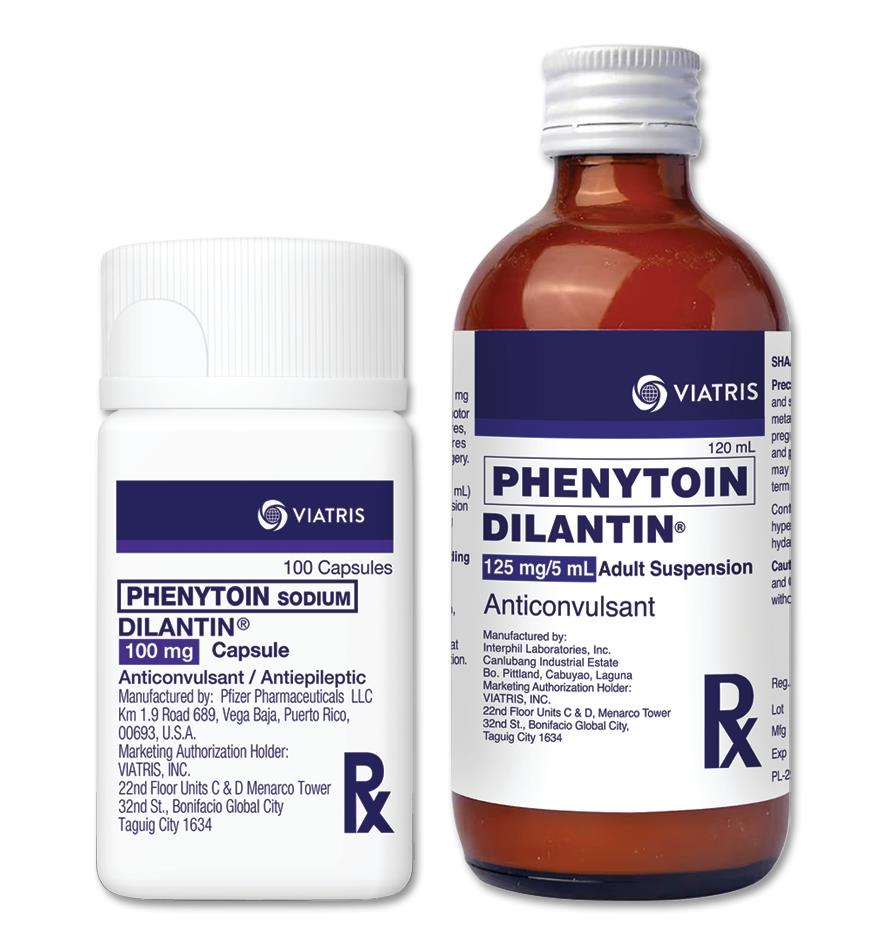
A patient is prescribed Phenytoin (Dilantin) for the management of grand mal seizures. Which serum drug level indicates that the patient is within the therapeutic range?
A. 25 to 35 mcg/mL
B. 40 to 50 mcg/mL
C. 10 to 20 mcg/mL
D. 5 to 10 mcg/mL
C.10 to 20 mcg/mL
That's right!
This is the established therapeutic range where the drug is effective without causing significant toxicity.
When administering Phenytoin (Dilantin) intravenously, the nurse knows it must be diluted specifically with which solution to prevent drug precipitation?
A. 5% Dextrose in Water (D5W)
B. 0.9% Normal Saline (NS)
C. 0.45% Sodium Chloride
D. Lactated Ringer's Solution
B. 0.9% Normal Saline (NS)
That's right!
Phenytoin is only compatible with Normal Saline; other fluids will cause the drug to crystallize.
A diabetic patient is started on Phenytoin. The nurse should alert the patient to monitor for which of the following metabolic changes?
A. Hyperglycemia
B. Hypercalcemia
C. Hypoglycemia
D. Hypokalemia
A. Hyperglycemia
Right answer
Phenytoin inhibits the release of insulin from the pancreas, leading to increased blood glucose levels.
Why is the intramuscular (IM) route for Phenytoin administration generally discouraged in nursing practice?
A. It causes significant tissue irritation and potential damage.
B. The drug becomes non-therapeutic when it contacts muscle tissue.
C. It is too difficult to calculate the IM dosage.
D. The drug is absorbed too rapidly when given IM.
A. It causes significant tissue irritation and potential damage.
Right answer
Phenytoin is highly alkaline and can cause local tissue necrosis and damage when injected into muscle.
When administering Phenytoin via a continuous IV infusion, the nurse must monitor for which two major adverse cardiovascular effects?
A. Atrial Fibrillation and Pulmonary Embolism
B. Hypotension and Cardiac Dysrhythmias
C. Bradycardia and Peripheral Edema
D. Hypertension and Tachycardia
B. Hypotension and Cardiac Dysrhythmias
Right answer
Continuous or rapid IV administration of Phenytoin can lead to a dangerous drop in blood pressure and heart rhythm disturbances.
The nurse is caring for a client who requires ICP monitoring. As a nurse, you should be alert for what major complication of ICP monitoring?
A. High blood pressure
B. Apnea
C. Coma
D. Infection
D. Infection