The Cell Cycle
 Call Kai
 Learn
Learn Practice Test
 Spaced Repetition
 Match
Match Flashcards
 Knowt Play
1/23

There's no tags or description
Looks like no tags are added yet.
Name | Mastery | Learn | Test | Matching | Spaced | Call with Kai | Chat |
|---|
No analytics yet
Send a link to your students to track their progress
24 Terms
The Cell Cycle
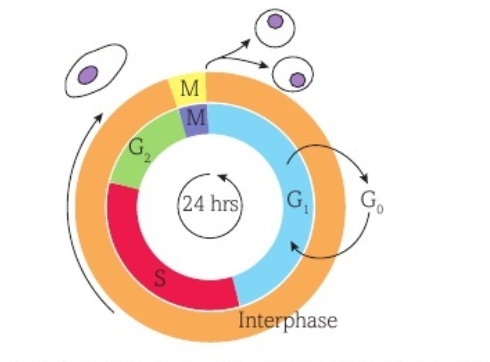
M Phase
condensation of chromatin
halfway through
cell growth stops
mitosis (nuclear division)
cytokinesis
G0 Phase
triggered during G1
epithelial cells do not have this
neurons are in this indefinitely
cell may undergo apoptosis
G1 (growth) Phase
ensures cell can go through S phase
cells grow/increase size
gene transcription
organelles duplicate
Biosynthesis
p53 gene (tumour suppressor) controls this
S (synthesis) Phase
cell is now committed to cell cycle
chromosomes are unwound + DNA is diffuse
DNA replicates
chromosomes consist of identical sister chromatids
phase is rapid as DNA exposed to mutagens
G2 Phase
ensures cell is ready for mitosis
cells grow
Prophase
chromosomes thicken + DNA supercoils
nuclear envelope breaks down
centriole divides and centrioles move to poles
tubulin threads form between centrioles
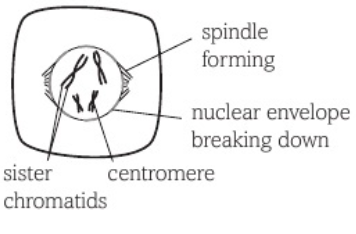
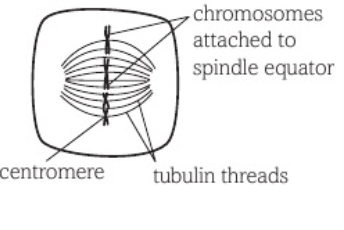
Metaphase
chromatid pairs attach to spindle threads @ equator
attach by centromeres
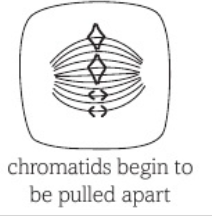
Anaphase
centromere of each pair of chromatids split
motor proteins pull chromatids towards opposite poles
chromatids (called chromosomes now) make a V
Telophase
separated chromosomes reach poles
nuclear envelope forms
1 cell - 2 nuclei → genetically identical
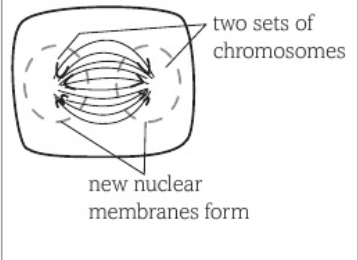
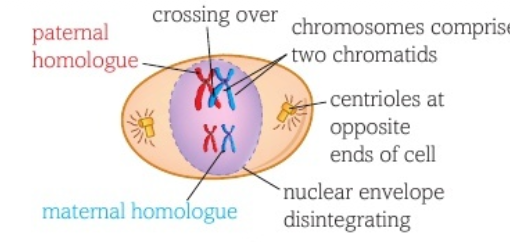
Prophase 1
meiosis
chromatin condenses
chromosome supercoils
nuclear envelope breaks down
chromosomes come together in homologous pairs
crossing over between non-sister chromatids
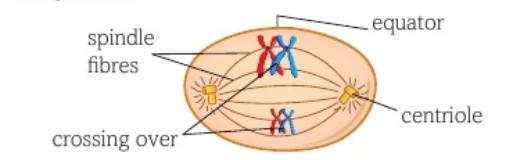
Metaphase 1
pairs attach along equator
attach to a spindle thread by centromere
pairs are arranged randomly w/members of each pair facing opposite poles
the way they line up determines how they will segregate independently during anaphase
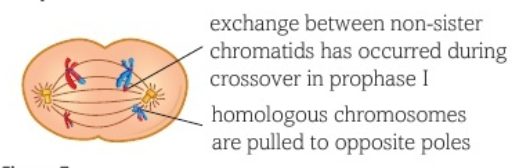
Anaphase 1
homologous pairs are pulled apart by motor proteins
centromeres do not divide
crossed-over areas separate resulting in allele shuffling
Telophase 1
nuclear envelopes form
cytokinesis
short interphase
in plants this does not exist
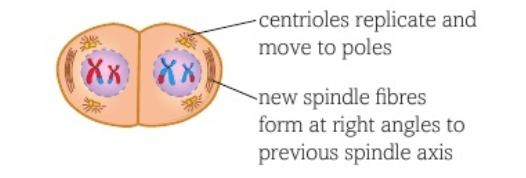
Prophase 2
nuclear envelopes break down
chromosomes coil and condense
chromatids of a chromosome are not identical due to P1
spindles form
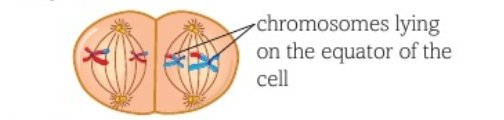
Metaphase 2
chromosomes attach by centromeres to equator of a spindle
chromatids are randomly arranged
the way they are arranged determines how they separate during A2
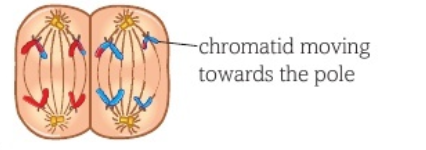
Anaphase 2
centromeres divide
chromatids pulled apart
chromatids are randomly arranged
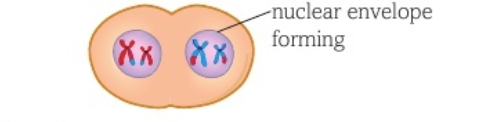
Telophase 2
nuclear envelope forms
in animals the two cells divide into four haploid cells
in plants a tetrad of four haploid cells is formed
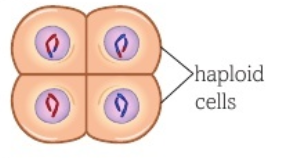
Order of mitosis
PMAT
Prophase
Metaphase
Anaphase
Telophase
What is Chromatin?
DNA + Histone proteins
Chromatid
Half of a chromosome → sister __
Chromosome
2 Chromatids → in homologous pairs
Diploid (2n)
46 chromosomes in 23 pairs → somatic (body) cells
Haploid (n)
23 chromosomes → gametes