test 1 // general microbiology
 Call Kai
 Learn
Learn Practice Test
 Spaced Repetition
 Match
Match Flashcards
 Knowt Play
1/86

Earn XP
Description and Tags
intro to history 1 & 2, microscopy, microbes & the tree of life, central metabolism
Name | Mastery | Learn | Test | Matching | Spaced | Call with Kai | Chat |
|---|
No analytics yet
Send a link to your students to track their progress
87 Terms
what is microbiology?
the study of microorganisms
what are the main three microorganisms?
prokaryotes (bacteria & archaea)
small eukaryotes (fungi & yeast)
viruses
are prokaryotes unicellular or multicellular?
unicellular
are small eukaryotes unicellular or multicellular?
can be either
which of the two main microorganisms are considered “alive”?
what does it mean for them to be alive?
prokaryotes and small eukaryotes
they can self-propagate/reproduce
which of the three main microorganisms are not considered alive?
what does it mean for them to not be alive?
viruses
they cannot self-propagate/reproduce; they need a host in order to be able to do so
why is microbiology considered important?
because microorganisms cause human, animal, & plant diseases
if we can identify the cause of a disease, we can prevent and/or treat it
how long ago was the origin of the earth?
4.5 bya
how long ago did bacteria & archaea (microbes) appear?
4 bya
how long ago did phototrophic bacteria appear?
at this time, there was a dominance of microbes that can ___ but don’t use ___
3.5 bya
photosynthesize, O2
how long ago did the transition to an oxygenated environment happen?
which microorganisms were responsible for this and how long ago did they appear
2-3 bya
cyanobacteria; ~2.25 byaw
how long ago did eukarya appear?
2 bya
how long ago did humans, vascular plants, mammals, and animals appear?
0.5 bya
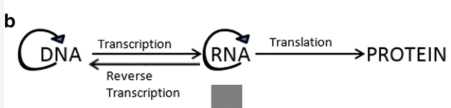
describe the central dogma
include all of the processes that go from one component to the other
main: dna → rna → protein
dna making more dna: dna replication
dna to rna: transcription
rna making more rna: rna replication
rna to dna: reverse transcription
rna to protein: translation
90% of biomass in oceans is ___ (~___ cells)
microbial
10²⁹
____ ____ contribute to 1% of global biomass & 50% of CO2 fixation
marine phytoplankton
describe the volta experiment
methane produced by microbes found in sediment can be lit on fire
describe fermentation tanks
microbes generating ethanol from sugars found in corn
microbes contain majority of ___ ___
earth’s biomass
~___ microbial cells on earth
10³⁰
microbes can be found kilometers ___ ___ ___ and kilometers ___ ___ ___
up in atmosphere
below earth’s surface
more ____ cells are associated with the human body than human cells
____ has the highest density (amount: ___ ___)
microbial
gut, (10¹³ bacteria)
most snowflakes form around ___
bacteria
what are some human uses of microbes?
yeast (alcohol, baking)
bacteria (yogurt, cheese)
robert hooke (time period: ___ ___)
probably the first person to observe ___
achieved ___ magnification
could only see ___ ___ (e.g., plants, fungi, algae)
coined the term “___”
saw series of boxes/”tiny rooms” in ___ ___
wrote first book on ___ observations titled “___”
late 1600s
microorganisms
30x
larger microbes
cell
sliced pork
microscope; micrographia
antoni van leeuwenhoek (time period: ___ ___)
had a hobby of ___ ___
built his own ___ ___ ___
____ ____ ____ ____ published his letters
achieved ___ magnification
allowed him to see ____
late 1600s
lens grinding
single lens microscope
royal society of london
300x
bacteria
what is spontaneous generation?
give an example
____ was against spontaneous generation
early experiments showed that when food was ___ and ____ ____ ____, rot didn’t happen
shows that ___ were killed and didn’t come back/grow
counter: ___ ___ is needed
what were the two competing theories at this time?
the idea that living organisms formed spontaneously from natural elements (life from non-living elements)
pasteur
heated; sealed from air
microbes
fresh air
competing theory #1 (spontaneous gen.):
air carries a “vital force”
fresh air allows life from nonliving
competing theory #2 (germ theory):
air carries “seeds” or “germs”
fresh air carries microbes
louis pasteur (time period: ___ ___)
pasteur experiment; used ___-___ ___
allowed ___ ___ to reach sterile medium, but trapped ___ in neck
no growth
then allowed medium to come into contact w/ trapped ___
growth
what did this show?
mid 1800s
swan-necked flask
fresh air; microbes
microbes
this disproved spontaneous generation by showing that airborne microorganisms cause growth, not a “vital force” in the air
if spontaneous gen. were true, there would’ve been growth under the first condition

germ theory of disease:
edward jenner (time period: ___ ___)
vaccination for ___ ___ from cow pox
trains ___ ___ ___ to recognize and kill ___
louis pasteur (time period: ___ ___)
vaccines for ___, ___ ___, and ___
joseph lister (time period: ___ ___)
concept of ___ of wounds & surgical rooms
killing bacteria prevents ___
late 1700s
small pox
adaptive immune system; pathogens
late 1800s
anthrax, foul cholerae, and rabies
mid 1800s
disinfection
infections
pure culture techniques:
robert koch
first used ___ ___, ___, or ___ under a bell jar
can grow microbes, but ___
julius petri
invented ____ ____!
tried ___ and ___ as mediums
why was one good and the other bad?
potato slices, gelatin, starch
inconvenient
petri dishes!
gelatin, agar
gelatin was bad because of low melting point (28 deg C) and bacteria eat it over time
agar was good because it’s solid at body temp (37 deg C), doesn’t get eaten by bacteria, and allows for selection by addition of nutrients
describe the two main methods of growing bacteria
include the general procedure and benefits of each
spread plate
procedure: dilute in liquid, then spread on plate
benefits: ensures uniform distribution & allows for easy counting
streak plate
procedure: use innoculating loop to pick a colony from a dense plate & streak on a new plate
benefits: allows isolation of a microbe from a mix of them

robert koch (time period: ___ ___)
koch’s postulates: how to determine if a ___ is causing a ___
→ what were the 4 steps of koch’s postulates?
→ what were some limitations?
late 1800s
microbe; disease
organism is present in sick animals and not in healthy ones
organism can be grown in pure culture away from animal
cells from the pure culture cause disease when inoculated into healthy/susceptible animals
→ If it causes the same disease here, go to step 4
organism is re-isolated from exposed animals from step 3 and shown to be the same in pure culture
limitations:
some microbes are unculturable
different organisms have varying susceptibility to disease
some may get sick while others don’t
some pathogens only infect humans
environmental microbiology
some bacteria may require ___-___ ___ conditions
____ ____ are used to adhere to these conditions and include placing an environmental sample under ___ ___ conditions for an organism w/ specific ___ ____
martinus beijernick & sergei winogradsky (time period: ___ ___-___ ___)
created the ___ ___
isolates from ___ ___ and ___ ___
mix of microbes coexisting in a ___ system
demonstrated ____
use of ___ compounds (e.g. sulfur, ammonia) to obtain energy
demonstrated fixation of CO2 is not always associated with ___
demonstrated the ___ of atmospheric ___ into cellular ___
environmental-specific growth
enrichment techniques, optimal growth, metabolic capabilities
late 1800s-early 1900s
winogradsky column
environmental soil; water samples
closed
chemolithotrophy
inorganic
photosynthesis
fixation; nitrogen; nitrogen

what is magnification?
the extent to which the image of an object is larger than itself
magnification: product of ___ and ___ lens
objective; ocular
what is resolution/resolving power?
what is the equation for resolution?
the degree to which details are retained in a magnified image / the ability to distinguish between two points
resolution = R = 0.5λ / NA
where —
λ: wavelength of light
NA: numerical aperture (the light-gathering ability of the lens) [dimensionless]
what is a standard light microscope’s best resolution at 1000x magnification (answer in nm and microns)
200 nm / 0.2 microns
bright-field microscope
____ ____ in gen micro labs
light is ___ thru the specimen
____ between the background & cells is generated by ___ or ___ of light
only cells with ___ ___ are seen easily
____ of the cells is generally required
____ often ___ the cells
____ cells take up ___ more effectively
what are the 4 steps of this?
most common
transmitted
contrast; absorption; scattering
natural pigments
staining
staining; kills
dead; stain
→ 1. spread culture in thin film over slide
→ 2. air-dry
→ 3. pass slide thru flame to heat-fix
→ 4. flood slide w/ stain; rinse & dry
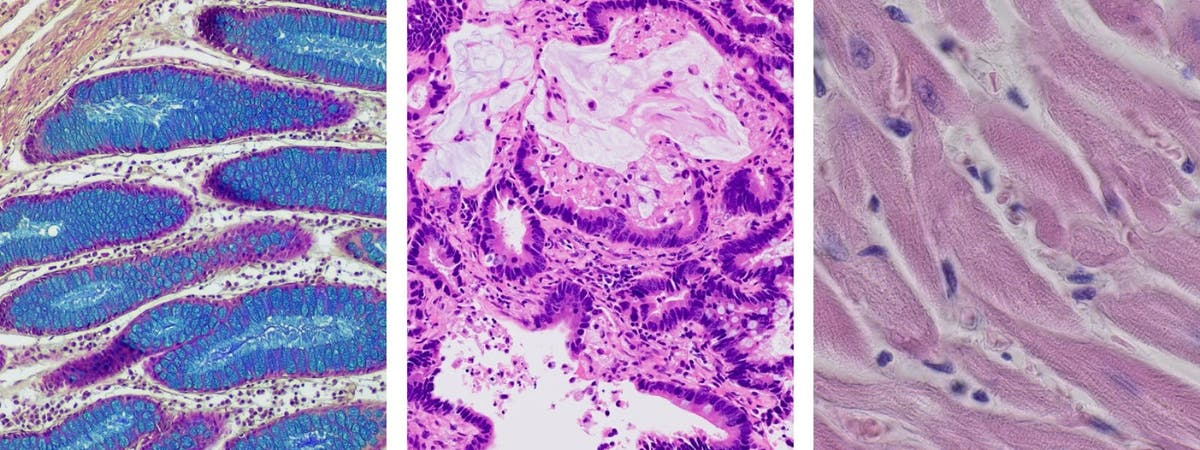
simple stains:
generally used for ___ ___
stains are generally ___ ___
basic dyes (___) are ___ charged
examples?
bind to ___ charged cell components
examples?
acidic dyes (___) are ___ charged
bind to ___ charged cell components
examples?
bacterial cell surface is usually ___, so this method is commonly used
all bacteria
charged molecules
(cationic); positively
ex. methylene blue, crystal violet, safranin
negatively
ex. carboxylates, phosphates, polysaccharides, nucleic acids, phospholipids
(anionic); negatively
positively
ex. amino groups, proteins
negative
what is the purpose of differential stains?
what are three examples and their unique 2 groups?
divides a mixture of bacteria into two groups based on an unique property
gram stain (gram + vs -)
most common
acid fast stain (mycobacteria vs. others)
stains unique cell wall of mycobacteria
endospore stain (spore within mother cell)
stain can be forced into spores; rest is washed out
gram staining
what is the difference between g+ & g- bacteria?
describe the steps of gram staining
explain why it works
g+: thick peptidoglycan layer in cell wall
g-: thin peptidoglycan layer in cell wall
flood heat-fixed smear w/ crystal violet for 1 min
everything takes on stain; all cells are purple
add iodine for 1 min
iodine complexes w/ CV form aggregates; all cells remain purple
decolorize w/ alcohol (~20s)
CV-iodine complex is trapped in g+ cells; g+ cells are purple & g- cells are colorless
counterstain w/ safranin for 1-2 mins
stains both g+ & g- cells, but only visible in g- cells; g+ cells are purple & g- cells are pinkish-red
why it works:
CV enters cells & is precipitated w/ iodine
ethanol disrupts cell mem. of all cells
stain complex is only washed out of g- cells and is retained in g+ cells

dark-field microscope
light is only on the ___
only ___ light reaches eyes
cells are ___ against a ___ background
no need to ___
can’t see ___/___
provides better ___ than bright-field
can see ___ cells/structures
edges
scattered
bright; dark
stain
color/stains
resolution
smaller
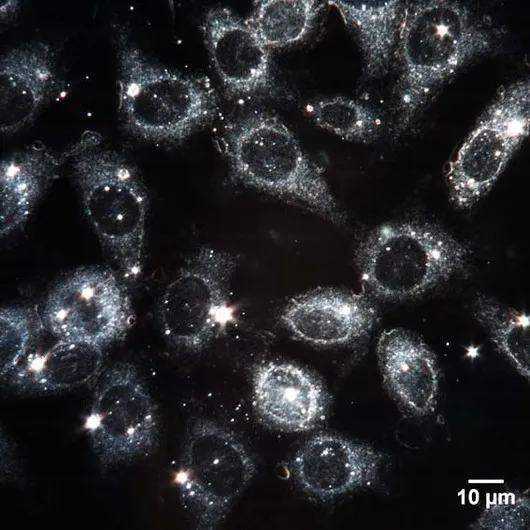
phase contrast microscope
special ___ ___
puts source light into the same ___
____ light = out of phase, which gives ___
no ___ required
allows cell visualization while they’re ___
light condenser
phase
diffracted; contrast
stain
alive

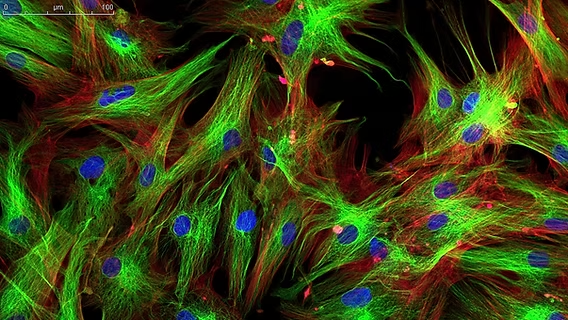
fluorescence microscope:
light source at a ___ that causes the specimen to fluoresce at a ___ ___
some cells exhibit ___
fluorescent ___ are used to ___ specific cell structures
___-___ proteins can be specifically localized in cells
wavelength; different wavelength
autofluorescence
dyes; stain
fluorescently-tagged
transmission electron microscope (TEM)
the electrons that ___ ___ the sample are collected to make image
___, ___ sections of fixed samples
uses ___-___ stains
pass through
2D, thin
heavy-metal

scanning electron microscope (SEM)
the electrons that are ___ ___ the sample are collected to make image
____ (2D or 3D?)
cells are coated with ___ ___
scattered off
3D
heavy metal

e- microscopy has magnification up to ___
100,000x
atomic force microscope (AFM)
tiny ___ is scanned across & just above sample ___
scans the ___
weak ___ ___ between atoms of the ___ and the sample cause ___ to deflect ___ and ___
provides extremely fine ___
can be challenging with ___/___/___ samples
stylus; surface
surface
repulsive forces; stylus; stylus; up; down
detail
live/sticky/flexible
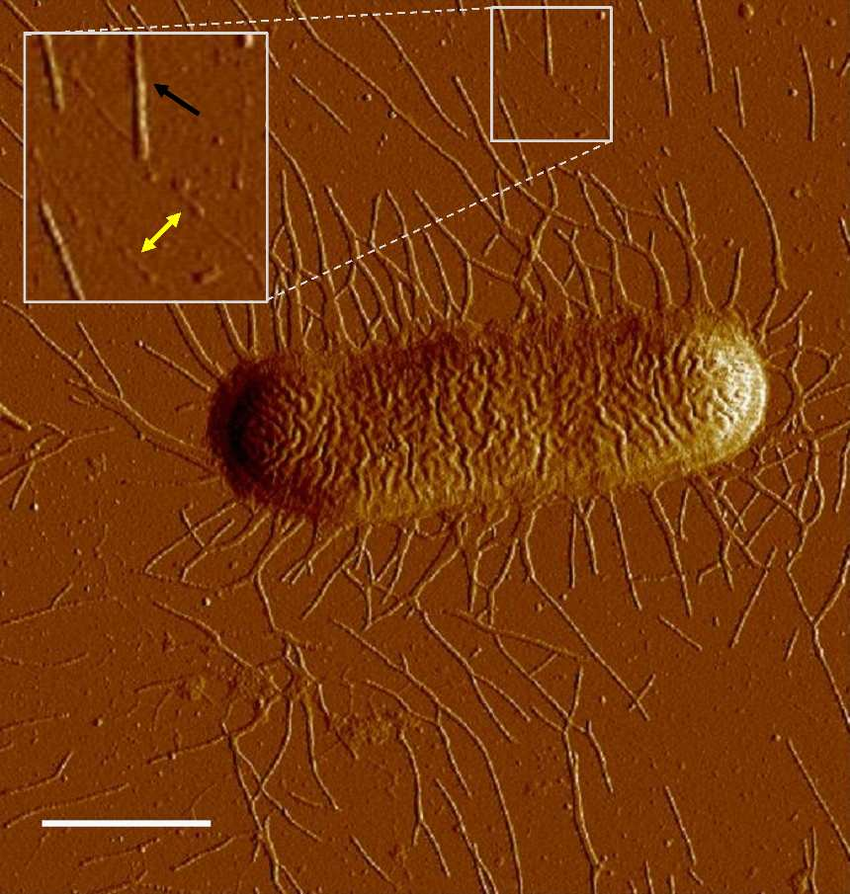
is size a good way to categorize microorganisms?
NO, because exceptions exist
what are three cellular components all cells have and the functions of them?
cytoplasmic membrane
prevents loss of cytoplasm & controls what goes in + what goes out
cytoplasm
contains ribosomes & metabolic enzymes
dna
genetic material
located within nucleoid for prokaryotes and within nucleus for eukaryotes
which cells have cell walls?
what does this help them resist?
bacteria, fungi, and plants
osmotic lysis
animal cells have a ___
results in cell shape that can ___
cytoskeleton
change
prok. vs. euk: organelles
p: no organelles
e: internal mem.-bound organelles
prok. vs. euk: nucleus
p: no nucleus
e: nucleus
prok. vs. euk: dna
p: dna condensed into nucleoid
e: dna within mem.-bound nucleus
nearly all eukaryotes have ___ while only plant cells have ___
mitochondria; chloroplasts
prok. vs. euk: chromosome structure
p: 1 circular chromosome + some small circular extra-chromosomal dna (plasmids)
e: multiple linear chromosomes
prok. vs. euk: diploid/haploid
p: haploid
e: diploid
prok. vs. euk: sexual reproduction
p: no sexual reproduction
e: can sexually reproduce
viruses
can be ___ or ___
no ___, ___, or ___ activity
composed of ___ ___ (___ or ___), ___ ___, and ___ (sometimes)
must infect a ___ or ___ in order to ___
prokaryotic; eukaryotic
cytoplasm, ribosomes, metabolic
nucleic acid (dna or rna), protein capsid, membrane
prokaryote; eukaryote; reproduce
what is a virus with a membrane present called?
what is a virus with a membrane absent called?
enveloped virus
naked virus
early classification attempts
linnaeus (year?)
____ kingdoms
what were they and what did they include?
didn’t include ___
structure based on ___
introduced ___ naming by ___ and ___
whittaker (year?)
____ kingdoms
what were they and what did they include?
based on ___, ___, and ___
1753
two
animalia (higher animals & protozoa) & plantae (higher plants, algae, and fungi)
prokaryotes
microscopy
latin; genus; species
1969
five
monera (bacteria), protista (algae & protozoa), plantae (photosynthesizers), fungi (nutrient uptake thru absorption), & animalia (nutrient uptake by ingestion)
appearance, structure, and metabolism
molecular-based approach to phylogeny
carl woese (time period?)
____ ____ in proks.; ___ ___ in euks.
ancient molecule that ___ ___ have
part of ___; essential for ___
changed very ___ over evolutionary time
why?
sequenced ___
why?
can create tree based on ___ ___ between species
1970s
16S rRNA; 18S rRNA
all cells
ribosomes; translation
slowly
because most mutations would lead to cell death; only certain mutations allowed
easily
because only ~0.03% of the genome is needed for it to be sequenced
rRNA differences
current tree of life
____ domains
what are they?
archaea are more related to ___ than ___
discovered by ___
LUCA =
where bacteria diverge from ___ and ____
what is endosymbiosis?
what are two endosymbionts?
look like ___, but can’t ___ on their own
three
bacteria, archaea, eukarya
eukarya; bacteria
woese
last universal common ancestor
archaea; eukaryotes
bacteria that have been engulfed by eukaryotic cells to form organelles
mitochondria & chloroplasts
bacteria; grow
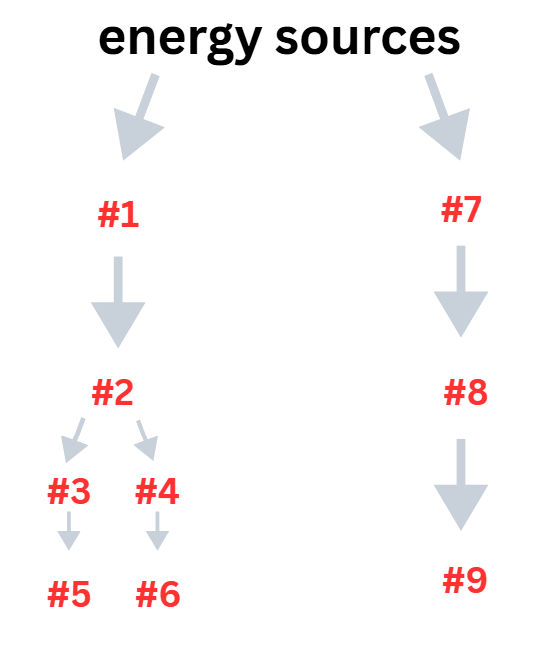
classification based on energy (method of generating ATP)
label #1-9
chemicals
chemotrophy
organic compounds (contain C-H bond)
inorganic compounds (e.g. CO2)
chemoorganotrophs
chemolithotrophs
light
prototrophy
phototrophs
classification based on carbon source
____ vs ____
describe each
heterotrophs vs. autotrophs
heterotrophs require organic compounds as carbon source (e.g., sugars, proteins, lipids) & autotrophs use CO2 as carbon source (e.g., thru photosynthesis + chemosynthesis)
chemoheterotrophs / chemoorganoheterotrophs use what for energy and what as carbon source?
what are some examples?
energy: organic compounds
carbon source: organic compounds
examples: humans, many bacteria, fungi
chemolithoautotrophs use what for energy and what as their carbon source?
what are some examples?
energy: inorganic compounds
carbon source: CO2
examples: sediment bacteria, oceans, deep sea vents
photoautotrophs use what for energy and what as their carbon source?
what are some examples?
energy: light
carbon: CO2
examples: plants, algae, photosynthetic bacteria
photoheterotrophs use what for energy and what as their carbon source?
what are some examples?
energy: light
carbon: organic compounds
examples: some bacteria
notable bacteria
spirochetes
pathogens
associated diseases?
chlamydia
STD
____ ____ pathogen
cyanobacteria
____ the atmosphere
became ___
gram + bacteria
____ formers
associated disease?
proteobacteria
ancestors led to ___
examples?
syphillis, lyme disease, ulcers
obligate intracellular
oxygenated
chloroplasts
spore
MRSA
mitochondria
e. coli, salmonella, pseudomonas
archaea
prokaryotes that live in ___ environments
e.g.
halophiles (require high ___)
methanogens (produce ___, found in ___ & ___ gut, ___ [anaerobe or aerobe?])
hyperthermophiles (require high ___)
extremophiles (require extreme ___, ___, or ___)
extreme
salt
methane; termite; cow; anaerobe
temperature
temperature; salt; pH
notable eukarya
diplonomads
pathogen
example? (has no ___)
____ ____
giordia (mitochondria
green algae
life evolution vs. earth history
LUCA appeared ___ ___
cyanobacteria appeared between ___ ___
3.5-4 bya
2-3 bya
what is catabolic metabolism / catabolism?
is it energy-requiring or energy-producing?
breaking down available nutrients to extract energy and provide simple organic building blocks for synthesizing new cell components
energy-producing
what is anabolic metabolism / anabolism?
is it energy-requiring or energy-producing?
using simple organic building blocks to produce more complex cell components aka ‘biosynthesis’
energy-requiring
in catabolic metabolism, is the energy level of the reactants above or below that of the products?
above; since energy is released, the reactants have more energy than the products
in anabolic metabolism, is the energy level of the reactants above or below that of the products?
below; since energy is required for anabolism to happen, the reactants have less energy than the products
enzymes
biological ___
usually ___, sometimes ___
reduce ___ ___ for the rxn to progress
increase the ___ of rxn
are not ___ within rxns and can go on to ___ other rxns
do not determine rxn ___
____ frequency of substrates reaching the transition state
catalysts
proteins, RNA
activation energy
rate
consumed; catalyze
direction
increases
enzymatic rxns
substrate binds to ___ ___ of enzyme
substrate cleaves off ___ and the ___ substrate leaves as ___ ___
can also go in the ___ direction (___ rxn)
____ ___ bind and leave as ___ ___ after cleaving
much ___ likely to occur
active site
site; single; two products
other (reverse)
two substrates; one product
less
enzymes
names usually end in “__”
have an ___ ___ that substrates bind to
enzyme & substrate may undergo ___ changes during catalysis
enzyme holds substrate in the right ___ for rxn to progress
may have ___ ___ covalently bonded to enzyme
must be ___ to function
not normally ___
examples?
may have ___ bound temporarily during rxn
____ between enzymes & are ___
examples?
“-ase”
active site
conformational
conformational
prosthetic groups
attached
released
ex. heme, Fe-S cluster
coenzymes
move; recycled
ex. NAD+, FAD, coenzyme A
redox
e- donor = ___ = ___ agent
e- acceptor = ___ = ___ agent
e- donors usually release ___ as well as e-s, both of which e- acceptors accept
all e- donors have ___ ___
oxidized; reducing
reduced; oxidizing
protons
reduction potentials
redox tower
half rxns present at the top of the tower want to ___ e-s and “___ ___” the tower
half rxns present at the bottom want to ___ e-s
2 half rxns together: e-s always wanna go “___” the tower
if two half rxns make the e-s go ___, the overall rxn is energetically unfavorable
____ form gives e'-s to ___ form
what is the order of the written half rxns on the redox tower?
donate; go down
accept
down
up
reduced; oxidized
[oxidized form]/[reduced form] (E0’) # of e’ transferred
e- transfer
in the cell, e- transfers are facilitated by ___ ___ ___
these are ___ that interact w/ enzymes which catalyze redox rxns, ___ e-s, and can then ___ to another site to ___ e-s to an ___ ___ on the redox tower
examples?
intermediate electron carriers
coenzymes; accept; diffuse; donate; acceptor lower
NAD+/NADP+, FAD+
high energy bonds
high energy bonds are used as ___-___ ___ for energy
high energy bond examples?
low energy bond examples?
short-term storage
ATP→ADP, ADP→AMP, PEP, acetyl phosphate, acetyl-coA
AMP→adenosine, glucose 6-phosphate
substrate-level phosphorylation
a way to form ___
____ ____ donated from ___ ___ to ___ to form ___
example of a donator?
ATP
phosphate group; organic compounds; ADP; ATP
PEP
oxidate phosphorylation
a way to form ___
____ membrane forms ___ to become less ___
powered by ___ ___ ___ (___)
H+ moves down a ___ (___ to ___ concentration) across a membrane
____ to ____ of cell
ATP
energized; ATP; energized
proton motive force (PMF)
gradient (high; low)
outside; inside