TEN STEPS CH8: Purpose and Tone
 Call Kai
 Learn
Learn Practice Test
 Spaced Repetition
 Match
Match Flashcards
 Knowt Play
1/35

There's no tags or description
Looks like no tags are added yet.
Name | Mastery | Learn | Test | Matching | Spaced | Call with Kai | Chat |
|---|
No analytics yet
Send a link to your students to track their progress
36 Terms
There is an author, a person with thoughts, feelings, and opinions, behind everything you read. Authors write from a personal point of view. That point of view is reflected in
the purpose of a piece of writing—to inform, to persuade, or to entertain and its tone—the expression of attitude and feeling.
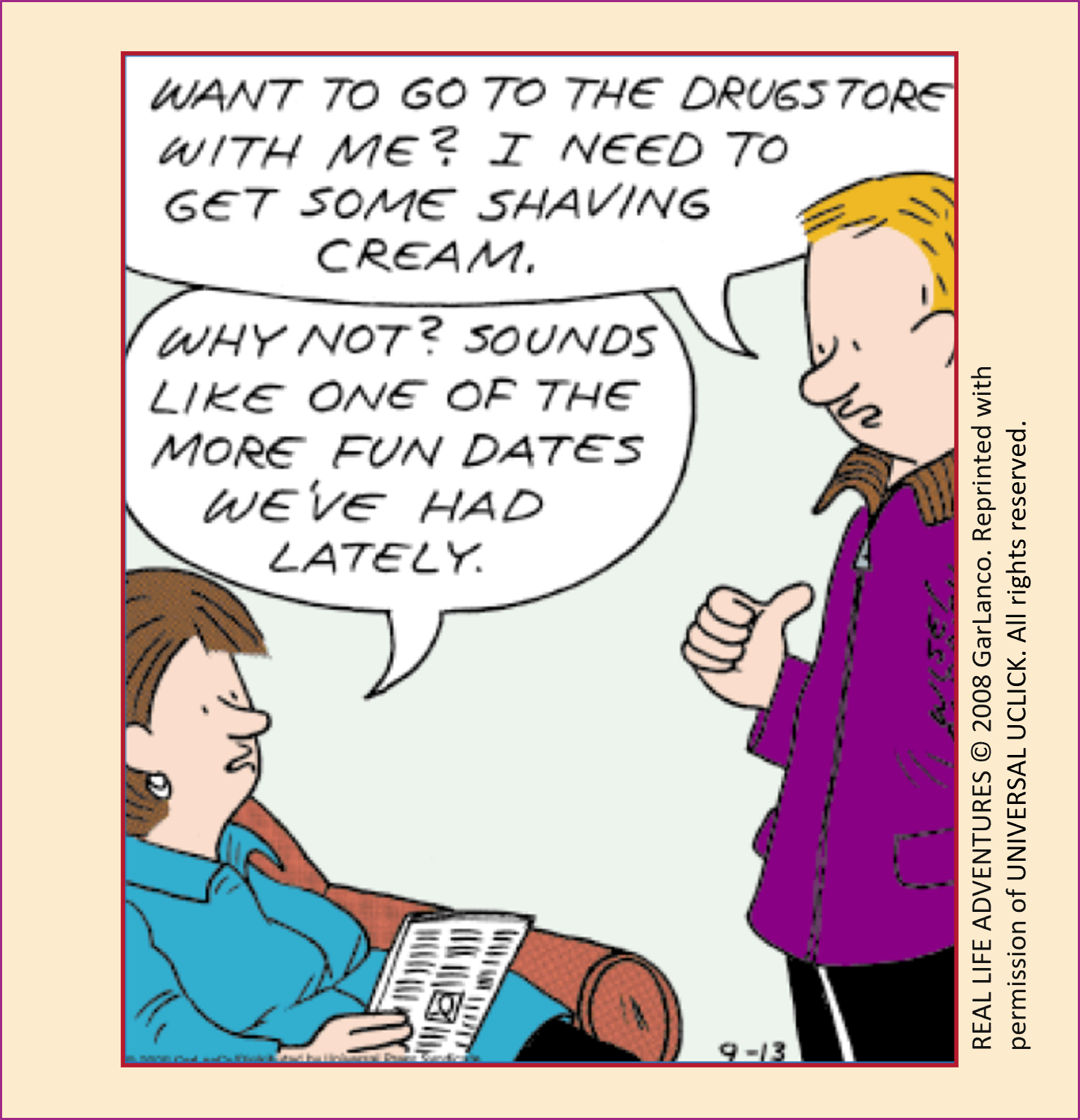
The purpose of this cartoon,
like all cartoons, is to entertain.
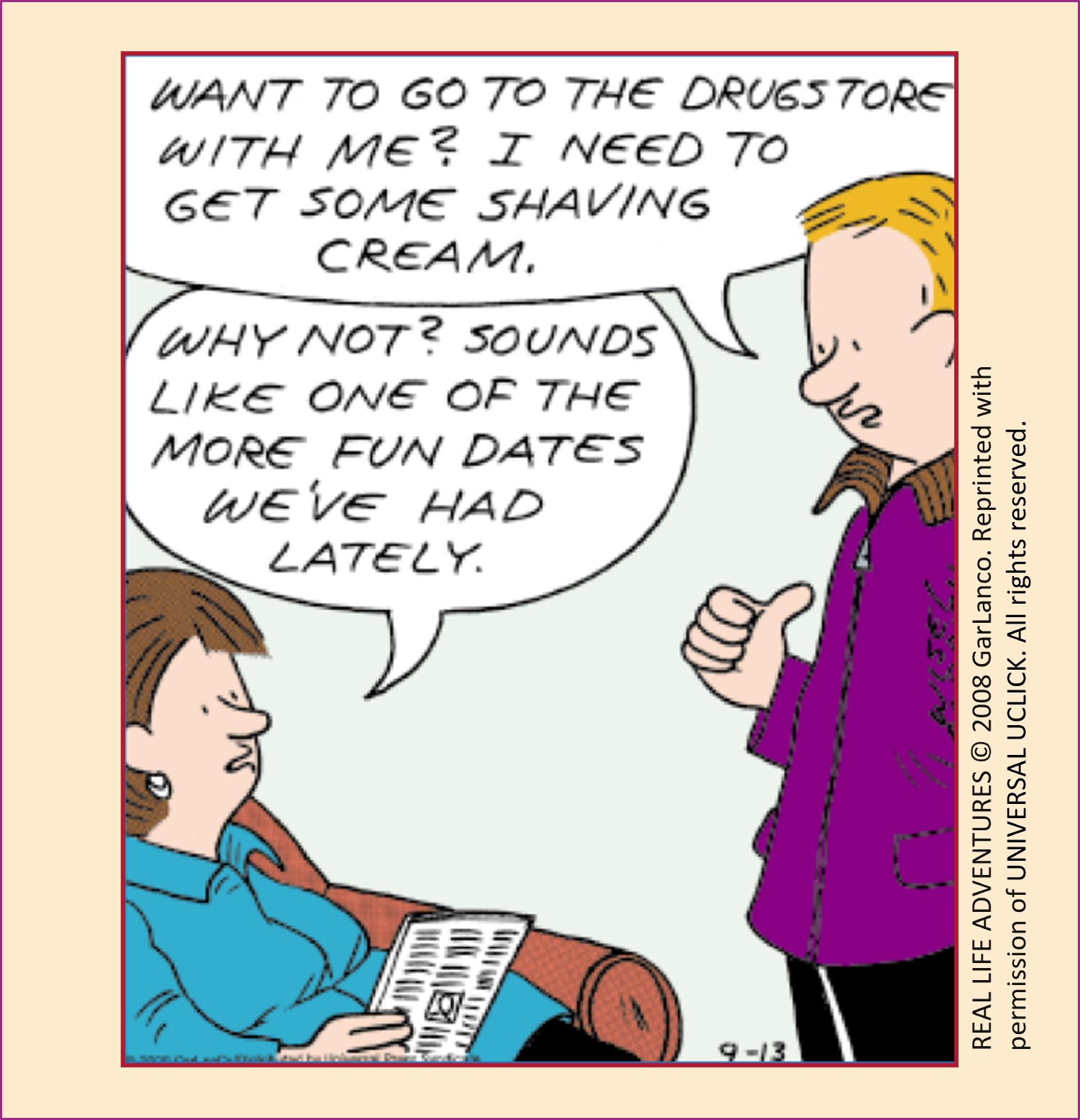
Can you tell what the tone of each speaker is? Which one actually means what he or she is saying? Which one does not?
The man means what he is saying. He is asking the woman to go with him on an errand he could easily do on his own, so we can assume he enjoys and desires her company. The woman, on the other hand, does not mean what she is saying. Few people would consider a trip to the drugstore a “fun date,” so we can infer she is being sarcastic, saying the opposite of what she means.
The author’s reason for writing is called
the purpose of a selection.
Here are three common purposes in writing:
To inform, To persuade, To entertain
To inform purpose:
to give information about a subject.
To persuade purpose:
to convince the reader to agree with the author’s point of view on a subject.
To entertain purpose:
to amuse and delight; to appeal to the reader’s senses and imagination.
Often, the cover and the title of a book or article will
suggest the author’s main purpose.

Primary purpose:
A. to inform
Primary purpose:
B. to persuade

Primary purpose:
C. to entertain
Read this paragraph and decide what the author’s purpose is. “Athletes should not earn millions of dollars a year. If they weren’t paid so much, then tickets to sports events wouldn’t have to be so expensive, and more people could enjoy sports more often. Also, more reasonable pay would make for better role models for young people, many of whom look up to sports figures.”
B. to persuade
Read this paragraph and decide what the author’s purpose is. “The bubonic plague, also called the Black Death, swept Europe, Asia, and Africa from 1346 to 1353. So deadly was this disease that it killed one-third of the population of these continents. The plague was spread by fleas infected with bacteria from diseased rats. When it resulted in pneumonia, coughing spread the bacteria directly through the air.”
A. to inform
Read this paragraph and decide what the author’s purpose is. “Men don’t even notice 97 percent of the beauty efforts women make. For example, the average woman spends five thousand hours per year worrying about her fingernails. But I have never once, in more than forty years of listening to men talk about women, heard a man say, “She has a nice set of fingernails!” Many men would not notice if a woman had upward of four hands.”
C. to entertain
Sometimes, writing may blend two or even three purposes. For example,
an author might write an informative article about losing weight. But it could include some comic touches. And it might even include some implied persuasion. But remember to focus on the author’s primary purpose.
tone is
a writer’s attitude toward his or her subject.
Tone is expressed through the
words and details the writer selects.
A writer’s voice can project one or more tones, or feelings, such as
anger, respect, cheerfulness, and more than 80 others.
Examples of tone: Statements made by employees of fast-food restaurants. “I hate this job. The customers are rude, the managers are idiots, and the food smells like dog chow.”
Tone: bitter, angry
Examples of tone: Statements made by employees of fast-food restaurants. “I have no doubt that flipping burgers and toasting buns will prepare me for a top position on Wall Street.”
Tone: mocking, sarcastic
Examples of tone: Statements made by employees of fast-food restaurants. “I love working at Burger Barn. I meet interesting people, earn extra money, and get to eat all the chicken nuggets I want when I go on break.”
Tone: enthusiastic, positive
What is tone in this statement? “Unfortunately, this car is a lot less reliable than I’d like.”
B. disappointed
What is tone in this statement? “It’s not the greatest car in the world, but it usually takes me where I have to go.”
A. tolerant
What is tone in this statement? “If car dealers weren’t so dishonest, I wouldn’t have bought this piece of junk for so much money.”
B. angry
One commonly used tone is irony. When writing has an ironic tone, it
says one thing but means the opposite. This is known as verbal irony. is also known as sarcasm.
Verbal Irony example, if the price tag on a shirt you like is double what you’d expect, and you say: “What a bargain” you are using verbal irony.
The words you have said are the opposite of what you really mean.
Irony also refers to situations in which what happens is
the opposite of what we might expect. This is known as irony of situation.
Irony of Situation example: Security cameras installed installed to stop crime were stolen during a robbery.
“Security cameras installed installed to stop crime” is What is expected. “were stolen during a robbery.” is What actually happens.
this is a example of ____ irony: After sitting through the first session of what is clearly going to be a very boring class, you say to a classmate, “I only hope I can stand all the excitement.”
Verbal irony
this is a example of ____ irony: After seeing your favorite basketball team play its worst game ever, you might comment, “I knew they wouldn’t disappoint me.”
Verbal irony
this is a example of ____ irony: A doctor tells a man that he’d better exercise if he wants to stay healthy. So the man begins jogging. One day while jogging across a street, he is hit by a truck and dies instantly.
Irony of Situation
this is a example of ____ irony: After being told they could never have children, a couple adopts a baby. A few months later, the wife becomes pregnant.
Irony of Situation
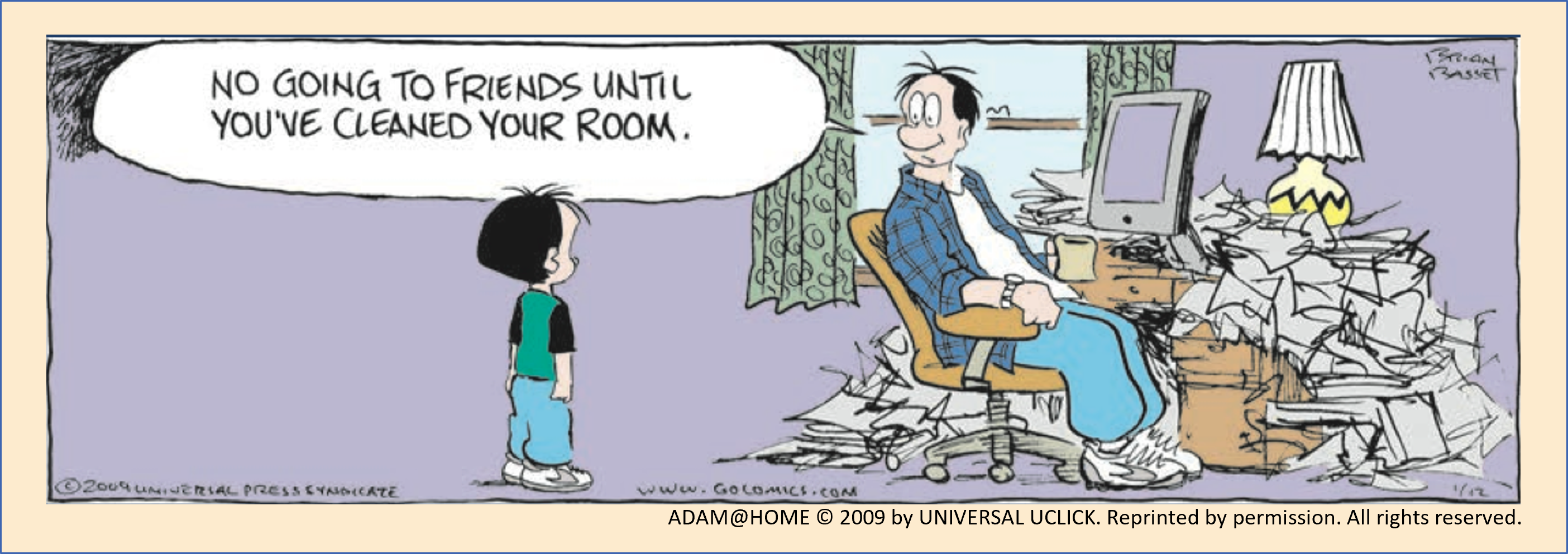
In this cartoon, it is ironic that
the father who expects his son to clean his room permits himself to have a very messy environment.
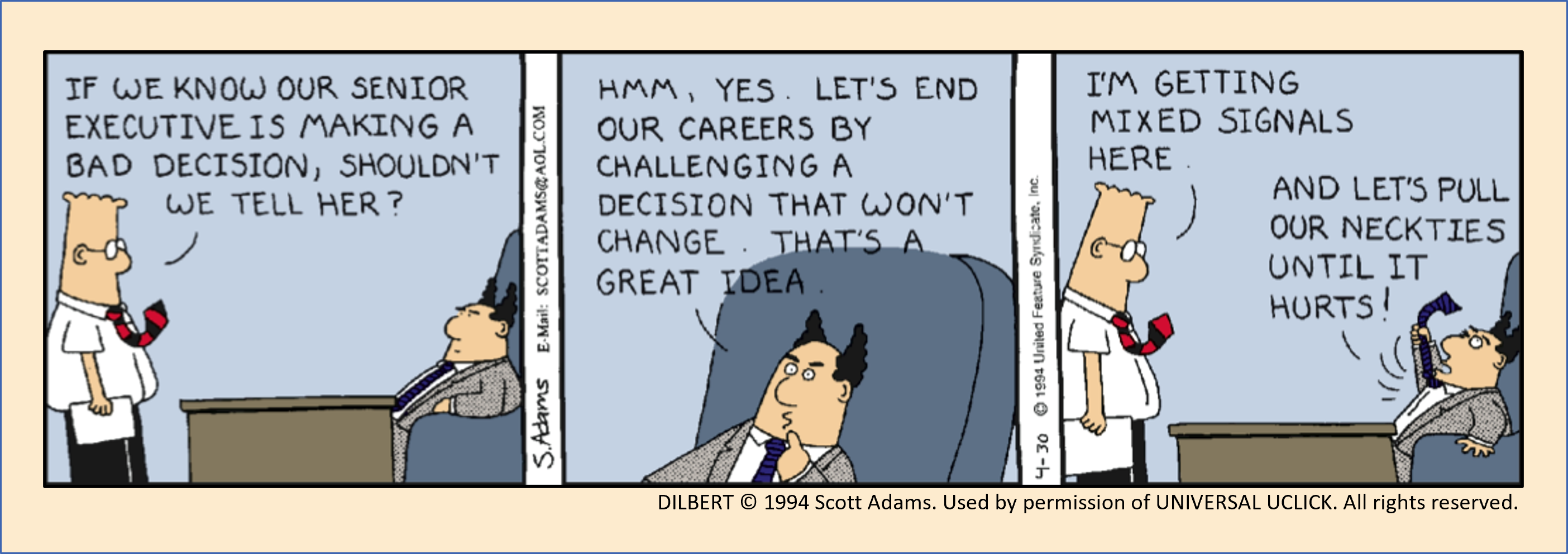
Think about which of the statements in this cartoon are straightforward and which are ironic. the first statement on the left is
A. Straightforward
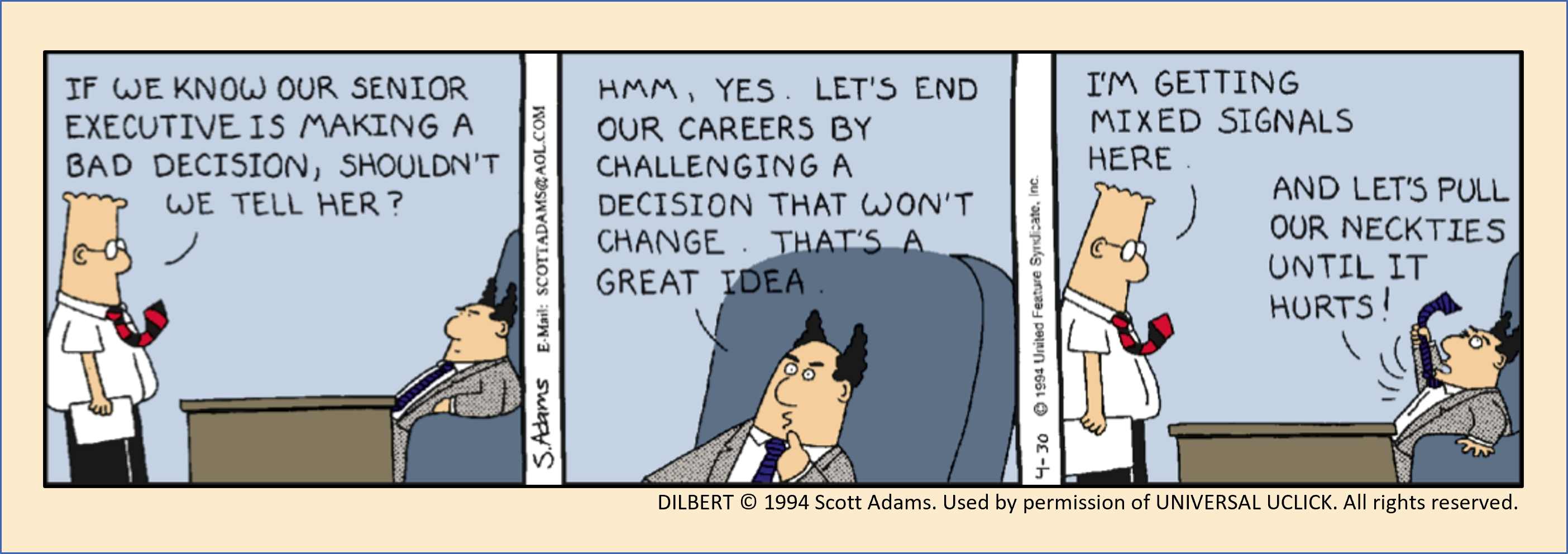
Think about which of the statements in this cartoon are straightforward and which are ironic. the first statement on the left is
B. Ironic