Loads under gravity (wk 1)
 Call Kai
 Learn
Learn Practice Test
 Spaced Repetition
 Match
Match Flashcards
 Knowt Play
1/16

There's no tags or description
Looks like no tags are added yet.
Name | Mastery | Learn | Test | Matching | Spaced | Call with Kai | Chat |
|---|
No analytics yet
Send a link to your students to track their progress
17 Terms
Define load
a force acting on a structure
Come from the mass of an object
vertical force
E.g. beams, walls, floors, objects on the floor
Also comes from
fluid pressure (water, wind/air)
dynamic events (e.g. earthquakes, winds, storms)
not always vertical
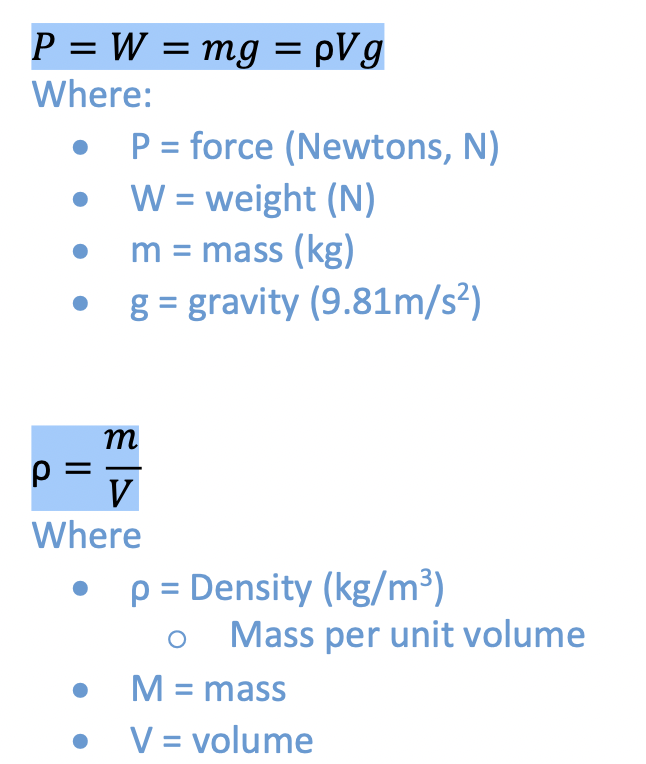
Different equations to calculate weight
Densities of common engineering materials
water
Steel
concrete
Water: 1000 kg/m3 = 1 g/cm3
Steel: 7800 kg/m3
Concrete: 2400 kg/m3
What is density
mass per unit volume
p=m/V
1kN/m²
1 kPa
1 N/mm²
1 MPa
1N/m²
1 Pa
How do we measure the volume of irregular objects
Archimedes Principle
When we suspend a mass and put it in fluid, we can measure the increase in mass of the water
we can calculate the volume of the object
Volume of water displaced (∆ water volume)= volume of the object
Volume = density x mass
Density = density of water = 1000kg/m³
Mass = ∆ in mass of the water
If the object floats on water, like timber, attach it to a heavy mass of which we already know the volume
what is Archimedes Principle
any objects submerged in a fluid experiences an upward buoyant force equal to weight of fluid displaced
Common loads in structures
Dead load - permanent loads from self-weight, permanent equipment
Physically part of the building
e.g. columns, bricks, etc..
Live load - temporary load from the structure
Anything that is moveable
e.g. chairs,
Building codes have different estimates for live load depending on function (e.g. office building, factory)
So we can safely accomodate for the live load
Three main types of loads
Point load - a load applied on a concentrated area at a point
Force (kN)
Distributed load - load distributed over a length
Can be uniform or varying
Force per unit length (kN/m)
Pressure - load distributed over an area
Force per unit area (kN/m2 or kPa)
Converting loads
Pressure to point load
Point load to pressure

Converting loads
Point load to distributed load
Distributed load to point load

Converting loads
Pressure to distributed load
Distributed load to pressure

St Venant’s principle
At points far away from the load, it doesn't matter what kind of load it is (e.g. pressure, distributed point) since long as they are statically equivalent, the result will be the same
Why do we have a safety factor when we consider different load combinations
Different combinations of loads must be considered to ensure safety
Due to uncertainties in load, estimated loads are scaled up
Provides a factor of safety for load magnitudes (risk)
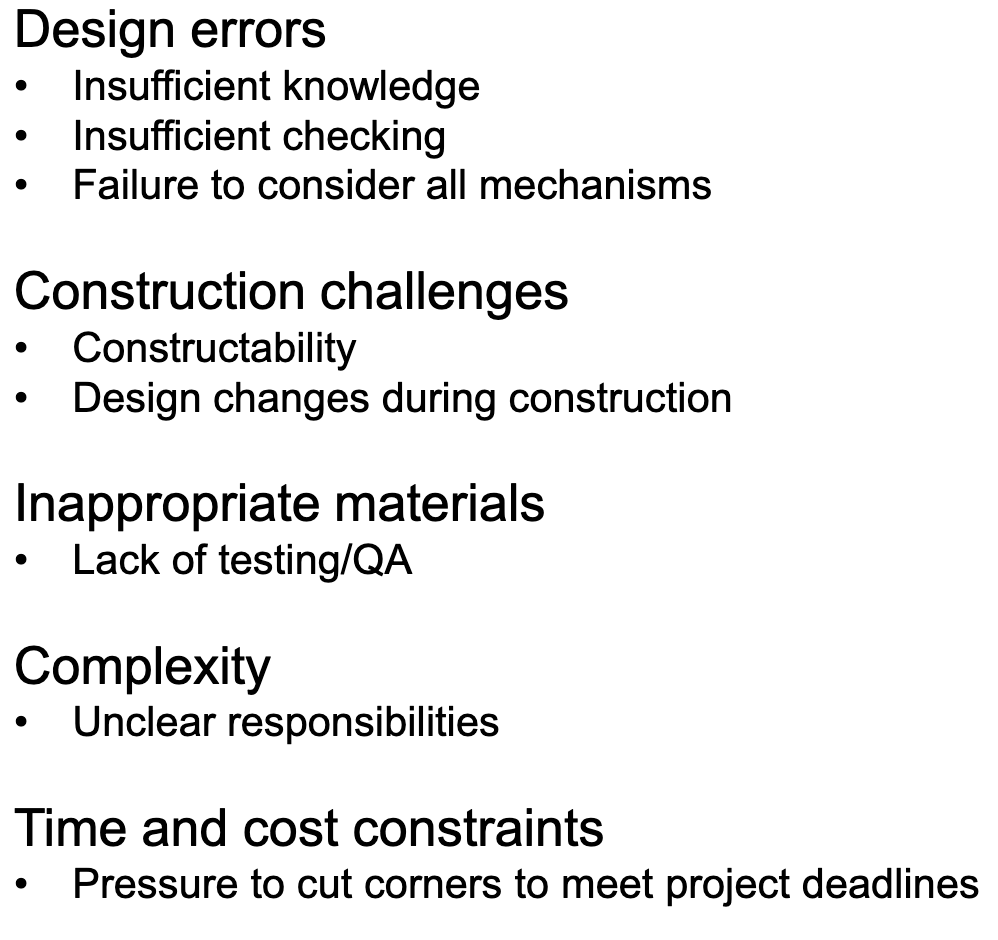
why do structures fail