PHYSICS 1 [SEM1Q1] - Kinematics: Fundamental quantities and translational motion
 Call Kai
 Learn
Learn Practice Test
 Spaced Repetition
 Match
Match Flashcards
 Knowt Play
1/30

There's no tags or description
Looks like no tags are added yet.
Name | Mastery | Learn | Test | Matching | Spaced | Call with Kai | Chat |
|---|
No analytics yet
Send a link to your students to track their progress
31 Terms
scientific claim
need units, reference frames, and evidence
quantity
number + unit + meaning = ?
“number alone is not physics“
Motion
an object is in motion if it changes its position over time
Translational - person running on a track
Rotational - earth spinning about its axis
Vibrational - back-and-forth motion of pendulum
3 types of motion
uniform motion
If the objects’ velocity remains constant along a line as it covers equal distances and time, irrespective of the duration of time.
the particle model
The size and shape when rotation or deformation is not important.
Instead, you track a point representing the object’s position, making a model.
The model is useful only if it answers the question well enough.
position
Concerned only with translational motion
Treat the moving object as a point particle
its location with respect to a chosen reference point
motion
depends on where you measure from
with the context of frame reference
function of time
Represent the position as a
displacement
Answers “how did position change”
It compares final and initial positions
It is vector
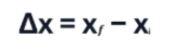
formula for displacement
distance
Tracks path length
It is scalar
odometer
measures total distance travelled
scalar
Quantity that only has magnitude or can be described by a single number
vector
Quantity that has both magnitude and direction
Can be identified by an arrow above the symbol
magnitude
___ of a vector is a scalar quantity and is always positive
Parallel vectors
Negative vectors
Equal vectors
Collinear vectors
Co-terminal vectors
5 types of vectors
Parallel vectors
two vectors that have the same direction
Negative vectors
vectors that have the same magnitude
Equal vectors
same magnitude and direction
Collinear vectors
they act along the same line
Co-terminal vectors
have a common terminal point
speed
The distance traveled divided by the time required to cover the distance
SI: meter per second (m/s)
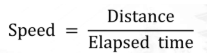
formula of speed
velocity
Rate of change of displacement
Measures speed in a given direction
An example of a vector quantity

formula for velocity

formula for the average velocity
acceleration
Rate of change of velocity in a given direction
If it is positive then we understand its rate of change of velocity to be positive and it could mean that its speed is increasing
An example of vector quantity

formula for average acceleration

velocity and acceleration signs
velocity and acceleration on graphs :)
Review graphs