Lesson 2 - Microbes Shape Human History

0.0(0)
Studied by 0 people
call kaiCall Kai
Locked
learnLearn
examPractice Test
spaced repetitionSpaced Repetition
heart puzzleMatch
flashcardsFlashcards
GameKnowt Play
Card Sorting

1/18

encourage image

There's no tags or description

Looks like no tags are added yet.

Last updated 6:54 PM on 9/16/26
Name
Mastery
Learn
Test
Matching
Spaced
Call with Kai
Chat

No analytics yet

Send a link to your students to track their progress

19 Terms

1
New cards

When did we find out about Microbes?

  • All the way 10,000 BCE (12,000 years ago ish)!

  • Various food and drink products were produced by microbial fermentation


<ul><li><p>All the way 10,000 BCE (12,000 years ago ish)!</p></li><li><p>Various food and drink products were produced by microbial fermentation</p></li></ul><p></p>
2
New cards

What is the correlation between microbes and disease?

  • For most of history, infectious disease has been the leading cause of mortality worldwide

  • Used to devastate human populations

  • Major turning points occurred with increased sanitation and hygiene and later, antimicrobial drugs and vaccines


<ul><li><p><span>For most of history, infectious disease has been the leading cause of mortality worldwide</span></p></li><li><p><span>Used to devastate human populations </span></p></li><li><p><span>Major turning points occurred with increased sanitation and hygiene and later, antimicrobial drugs and vaccines</span></p></li></ul><p></p>
3
New cards

The Bubonic Plague

  • Caused by bacterium Yersinia pestis

  • Reoccurred from 6th-17th century!

  • Wiped out a third of Europe’s Population

  • Spread by fleas and rodents, related to poor sanitation, causes infection of the lymph nodes

    • Major European epidemic from ~1345-1355

      • Black Death (Caused by Bubonic Plague): ~100-200 million deaths in ~10 years; ~45-50% of European population died in 4-year period)

      • Appr. 7 million COVID-19 deaths as of April 2024


<ul><li><p><span>Caused by bacterium <strong>Yersinia pestis</strong></span></p></li><li><p><span>Reoccurred from 6th-17th century!</span></p></li><li><p><span>Wiped out a third of Europe’s Population</span></p></li><li><p><span>Spread by fleas and rodents, related to poor sanitation, causes infection of the lymph nodes</span></p><ul><li><p><span>Major European epidemic from ~1345-1355</span></p><ul><li><p><span>Black Death (Caused by Bubonic Plague): ~100-200 million deaths in ~10 years; ~45-50% of European population died in 4-year period)</span></p></li><li><p><span>Appr. 7 million COVID-19 deaths as of April 2024</span></p></li></ul></li></ul></li></ul><p></p>
4
New cards

Smallpox

  • Caused by Variola virus

  • Causes small skin lesions, highly contagious, airborne

  • Infects multiple organs, ~30% mortality

  • Leading cause of death in 18th century Europe, ~400,000 people died from the disease per year

  • Evidence of smallpox from Egyptian mummies (~3000 years ago)

  • Believed responsible for death of ~90-95% of Indigenous people after European contact; decimated native American communities (no immunity)


<ul><li><p><span>Caused by <strong>Variola virus</strong></span></p></li><li><p><span>Causes small skin lesions, highly contagious, airborne</span></p></li><li><p><span>Infects multiple organs, ~30% mortality</span></p></li><li><p><span>Leading cause of death in 18th century Europe, ~400,000 people died from the disease per year</span></p></li><li><p><span>Evidence of smallpox from Egyptian mummies (~3000 years ago)</span></p></li><li><p><span>Believed responsible for death of ~90-95% of Indigenous people after European contact; decimated native American communities (no immunity)</span></p></li></ul><p></p>
5
New cards

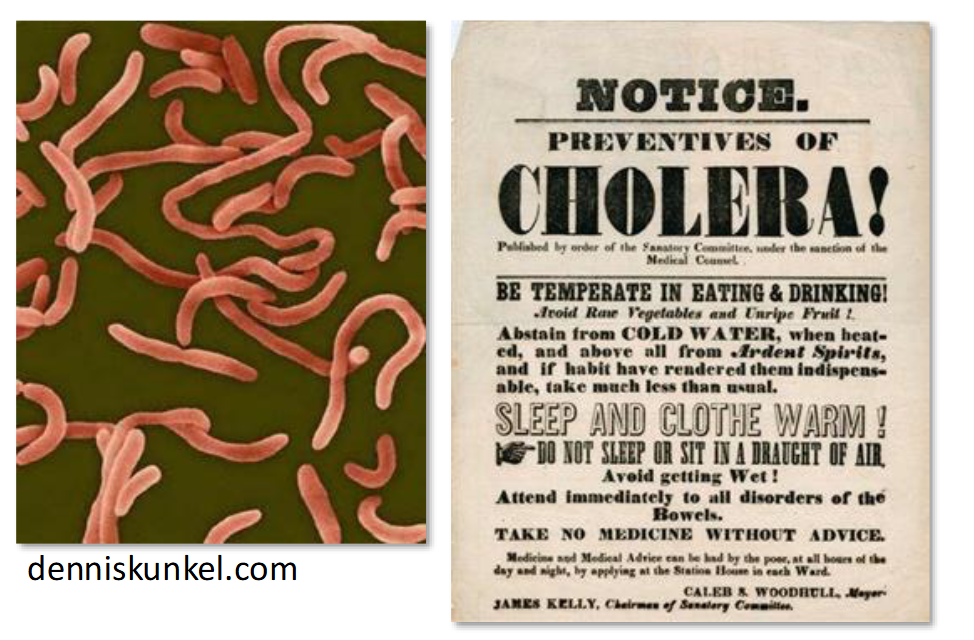
Cholera

  • Caused by bacterium Vibrio cholerae

  • Causes infection of small intestine, severe diarrhea, vomiting and dehydration

  • Transmission through contaminated food and water

  • Major worldwide epidemics throughout 19th and early 20th Century, ~50 million deaths over first 3 epidemics

<ul><li><p><span>Caused by bacterium <strong>Vibrio cholerae</strong></span></p></li><li><p><span>Causes infection of small intestine, severe diarrhea, vomiting and dehydration</span></p></li><li><p><span>Transmission through contaminated food and water</span></p></li><li><p><span>Major worldwide epidemics throughout 19th and early 20th Century, ~50 million deaths over first 3 epidemics</span></p></li></ul><p></p>
6
New cards

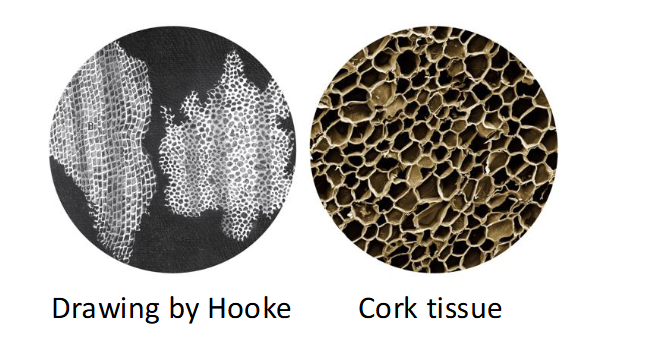
Who created the microscope and the term “cell”?

  • Architect Robert Hooke (1635–1703)

  • Built the first compound lens microscope (~30x magnification);

  • First to ‘see’ and record eukaryotic microbes; gave birth to Microbiology…revealed the microscopic world!

  • Coined the term “cell” from Latin cella, which means small room after observing cork tissue

<ul><li><p><span>Architect <strong>Robert Hooke</strong> (1635–1703)</span></p></li><li><p><span>Built the first compound lens microscope (~30x magnification);</span></p></li><li><p><span>First to ‘see’ and record eukaryotic microbes; <strong>gave birth to Microbiology…revealed the microscopic world!</strong></span></p></li><li><p><span>Coined the term “cell” from Latin cella, which means small room after observing cork tissue</span></p></li></ul><p></p>
7
New cards

Who refined the microscope and what else did he discover?

  • Antonie van Leeuwenhoek (1632-1723) experimented magnifying lenses, up to 500X magnification

  • He mounted single lenses on sample holder and focus adjustment

  • Became the first person to observe single-celled organisms, he called them “Animalcules”


<ul><li><p><span>Antonie van Leeuwenhoek (1632-1723) experimented magnifying lenses, up to 500X magnification</span></p></li><li><p><span>He mounted single lenses on sample holder and focus adjustment</span></p></li><li><p><span>Became the first person to observe single-celled organisms, he called them “Animalcules”</span></p></li></ul><p></p>
8
New cards

What was the Spontaneous Generation Theory?

  • Where did (microscopic) life come from? Do microbes have parents?

  • Spontaneous generation: the theory that living creatures could arise without parents

  • For example, people believed maggots came from rotting meat and microorganisms arose from decaying material.

  • By late 1600s/early 1700s there is evidence to disprove this, though not widely accepted → Redi and later Pasteur provided evidence against it

  • Still no evidence links microbes to infectious diseases


<ul><li><p>Where did (microscopic) life come from? Do microbes have parents?</p></li><li><p>Spontaneous generation: the theory that living creatures could arise without parents</p></li><li><p>For example, people believed <strong>maggots came from rotting meat</strong> and <strong>microorganisms arose from decaying material</strong>.</p></li><li><p>By late 1600s/early 1700s there is evidence to disprove this, though not widely accepted → <strong>Redi</strong> and later <strong>Pasteur</strong> provided evidence against it</p></li><li><p>Still no evidence links microbes to infectious diseases</p></li></ul><p></p>
9
New cards

Miasma Theory

  • Miasma theory stated that diseases (cholera, plague) were caused by “bad air” or “night air”

  • Prevailing theory until 19th Century


<ul><li><p><span>Miasma theory stated that diseases (cholera, plague) were caused by “bad air” or “night air”</span></p></li><li><p><span>Prevailing theory until 19th Century</span></p></li></ul><p></p>
10
New cards

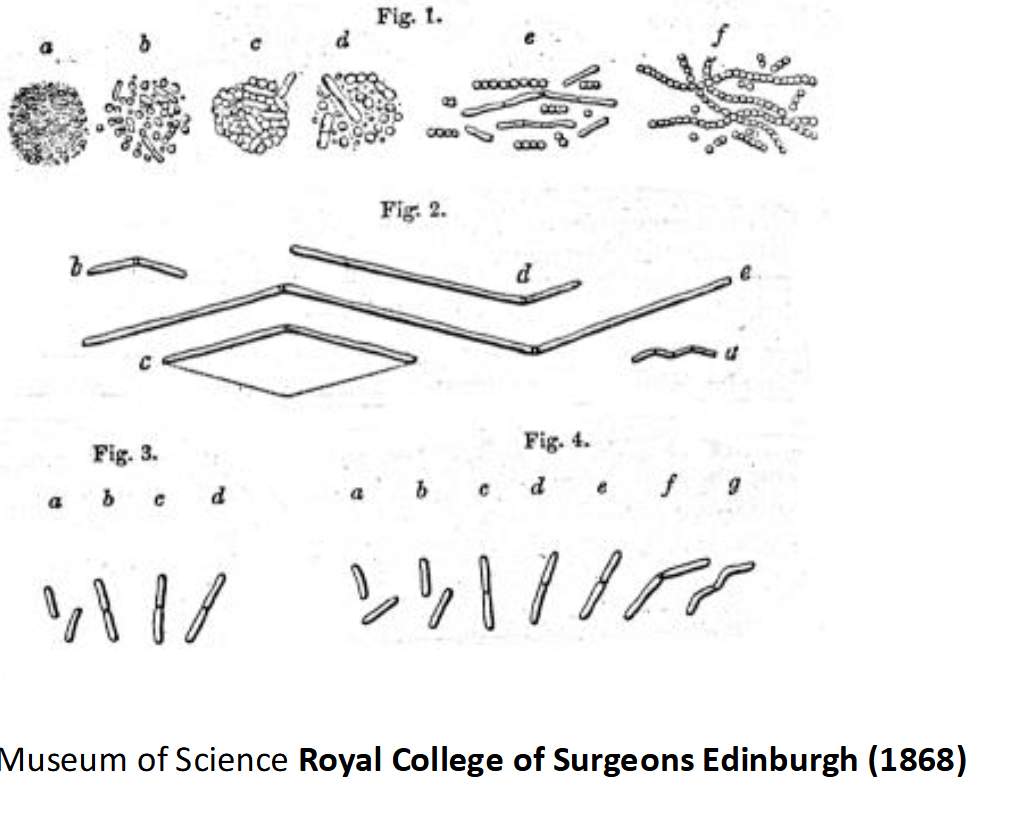
What theory arose in the 19th Century?

  • Germ Theory and Sanitation!

  • Germ theory states that some diseases are caused by microorganisms

  • Gained widespread acceptance in 19th

  • Century; contributors:

    • Louis Pasteur

    • Joseph Lister

    • Florence Nightingale

  • Solidify Germ Theory and promoted the ideas of sanitation and hygiene by end 19th century

<ul><li><p><span>Germ Theory and Sanitation!</span></p></li><li><p><span>Germ theory states that some diseases are caused by microorganisms</span></p></li><li><p><span>Gained widespread acceptance in 19th</span></p></li><li><p><span>Century; contributors:</span></p><ul><li><p><span>Louis Pasteur</span></p></li><li><p><span>Joseph Lister</span></p></li><li><p><span>Florence Nightingale</span></p></li></ul></li><li><p><span>Solidify Germ Theory and promoted the ideas of sanitation and hygiene by end 19th century</span></p></li></ul><p></p>
11
New cards

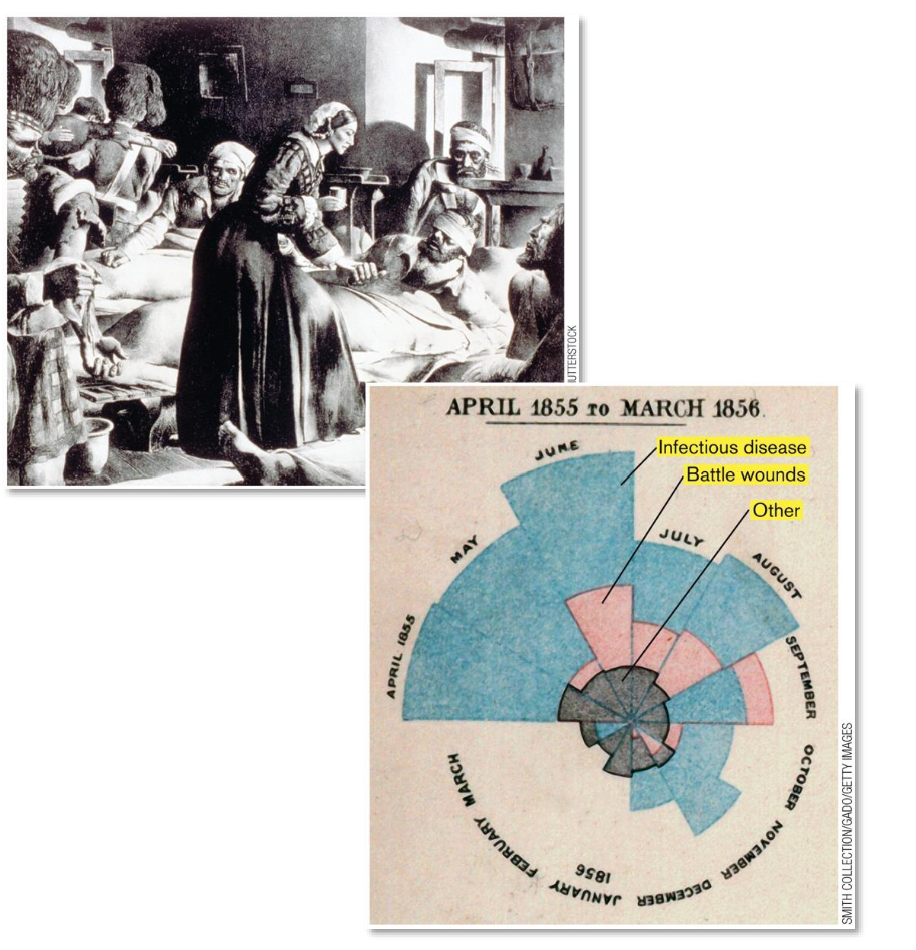
Who was Florence Nightingale?

  • British nurse better known as founder of professional nursing

  • Also, founder of medical statistics

  • 1855; tracked causes of deaths during Crimean war

  • Found more soldiers died of microbial infections than of battle wounds

  • Shows statistical correlation of sanitation with mortality

  • Convinced British government to improve living conditions for soldiers

<ul><li><p><span>British nurse better known as founder of professional nursing</span></p></li><li><p><span>Also, founder of medical statistics</span></p></li><li><p><span>1855; tracked causes of deaths during Crimean war</span></p></li><li><p><span>Found more soldiers died of microbial infections than of battle wounds</span></p></li><li><p><span><strong>Shows statistical correlation of sanitation with mortality</strong></span></p></li><li><p><span>Convinced British government to improve living conditions for soldiers</span></p></li></ul><p></p>
12
New cards

Louis Pasteur

  • Major contributor to medical microbiology and immunology

  • As a French chemist and microbiologist, Pasteur discovered microbial fermentation produces lactic acid or alcohol (1857)

  • He showed microbes fail to appear spontaneously using swan-necked flasks (1864)

  • Disproved Spontaneous Generation Theory

  • Major evidence in support of Germ Theory

  • Development of first artificial vaccine (against anthrax; 1881)

  • Developed pasteurization techniques for milk


<ul><li><p><span>Major contributor to medical microbiology and immunology </span></p></li><li><p><span>As a French chemist and microbiologist, Pasteur discovered microbial fermentation produces lactic acid or alcohol (1857)</span></p></li><li><p><span>He showed microbes fail to appear spontaneously using <strong>swan-necked flasks </strong>(1864)</span></p></li><li><p><span>Disproved Spontaneous Generation Theory</span></p></li><li><p><span>Major evidence in support of Germ Theory</span></p></li><li><p><span>Development of first artificial vaccine (against anthrax; 1881)</span></p></li><li><p><span>Developed pasteurization techniques for milk</span></p></li></ul><p></p>
13
New cards

What was Robert Koch the founder of?

  • German physician; Founder of the scientific method of microbiology

  • Developed Koch’s Postulates (still in use today!)

  • Used blood from an anthrax-infected cow carcass to infect a rabbit; when that died, he infected another. The blood was black with long, rod-shaped bacilli

  • First to use an animal model system

  • Developed the pure-culture technique

  • Used these techniques to prove that tuberculosis (TB) is caused by Mycobacterium tuberculosis;

  • Nobel prize in 1905

  • Discovers the specific agents (bacteria) responsible for TB, anthrax, and cholera


<ul><li><p><span>German physician; <strong>Founder of the scientific method of microbiology</strong></span></p></li><li><p><span>Developed<strong> Koch’s Postulates (still in use today!)</strong></span></p></li><li><p><span>Used blood from an anthrax-infected cow carcass to infect a rabbit; when that died, he infected another. The blood was black with long, rod-shaped bacilli</span></p></li><li><p><span>First to use an animal model system</span></p></li><li><p><span>Developed the pure-culture technique</span></p></li><li><p><span>Used these techniques to prove that tuberculosis (TB) is caused by Mycobacterium tuberculosis; </span></p></li><li><p><span>Nobel prize in 1905</span></p></li><li><p><span>Discovers the specific agents (bacteria) responsible for TB, anthrax, and cholera</span></p></li></ul><p></p>
14
New cards

What did Koch depend on for his expirements?

  • Koch depended on discoveries by:

    • Julius Petri; discovered and developed the culture plate (dish) used to this day (Petri Dish/Petri plate)

    • Angelina & Walther Hess

      • First to develop solid medium to culture bacteria


<ul><li><p><span>Koch depended on discoveries by:</span></p><ul><li><p><span>Julius Petri; discovered and developed the culture plate (dish) used to this day (Petri Dish/Petri plate)</span></p></li><li><p><span>Angelina &amp; Walther Hess</span></p><ul><li><p><span>First to develop solid medium to culture bacteria</span></p></li></ul></li></ul></li></ul><p></p>
15
New cards

Who was Joseph Lister and what discovery did he make?

  • Sterilization

  • Surgeon

  • Realized gangrene and death after surgery was due to infection

  • 1860-1870; pioneer antiseptic practice during surgery, using carbolic acid (phenol) spray to sterilize surgical instruments, clean wounds

  • Made surgeons wash hands in diluted phenol and wear gloves


<ul><li><p><strong>Sterilization</strong></p></li><li><p><span>Surgeon</span></p></li><li><p><span>Realized gangrene and death after surgery was due to infection</span></p></li><li><p><span>1860-1870; pioneer antiseptic practice during surgery, using carbolic acid (phenol) spray to sterilize surgical instruments, clean wounds</span></p></li><li><p><span>Made surgeons wash hands in diluted phenol and wear gloves</span></p></li></ul><p></p>
16
New cards

Now since the cause of disease was discovered… how do we treat it?

  • Identifying the cause of disease is the first step, next comes treatment

  • In Asia and Africa, the incidence of smallpox was decreased through inoculation of children with material from pustules

  • Lady Montagu, a smallpox survivor, introduced the approach to Europe in 1717

  • Variolation: Deliberately exposing a healthy person to material from a smallpox pustule (usually by introducing it into a small cut) to try to give them a milder form of smallpox and future protection.

  • The concept is that the virus is attenuated when outside the body, but still stimulated the immune system. Material taken from a pustule and exposed to the environment might be less capable of causing severe disease than a fresh infection

  • Carried risks


17
New cards

Edward Jenner and Early Vaccines

  • Early 19th Century, English physician Edward Jenner (1749-1823) finds milkmaids exposed to cowpox (vaccinia virus) are immune to the more severe smallpox

  • Tests this by inoculating a child with pus from cowpox blisters, develops the first smallpox vaccine

  • First person to provide scientific evidence for the deliberate use of vaccination to control an infectious disease

  • Cowpox inoculation was called ‘vaccination’, after the virus, which was derived from the Latin word for cow (vacca)


<ul><li><p><span>Early 19th Century, English physician Edward Jenner (1749-1823) finds milkmaids exposed to cowpox (vaccinia virus) are immune to the more severe smallpox</span></p></li><li><p><span>Tests this by inoculating a child with pus from cowpox blisters, develops the first smallpox vaccine</span></p></li><li><p><span>First person to provide scientific evidence for the deliberate use of vaccination to control an infectious disease</span></p></li><li><p><span>Cowpox inoculation was called ‘vaccination’, after the virus, which was derived from the Latin word for cow (vacca)</span></p></li></ul><p></p>
18
New cards

The Discovery of Viruses

  • 1892: Dmitri Ivanovsky discovered a disease-causing agent so small that it passed though 0.1 μm pores in a filter

  • Martinus Beijerinck proposed the filtrable agent was not a bacterium; it was a novel unknown microbe coined ‘virus’ (latin for poison)

  • Wendell Stanley (1904-1971) later purified & crystallized the agent, identifying the Tobacco Mosaic Virus (TMV) (Nobel Prize in Chemistry, 1946)


<ul><li><p><span>1892: Dmitri Ivanovsky discovered a disease-causing agent so small that it passed though 0.1 μm pores in a filter</span></p></li><li><p><span>Martinus Beijerinck proposed the filtrable agent was not a bacterium; it was a novel unknown microbe coined ‘virus’ (latin for poison)</span></p></li><li><p><span>Wendell Stanley (1904-1971) later purified &amp; crystallized the agent, identifying the Tobacco Mosaic Virus (TMV) (Nobel Prize in Chemistry, 1946)</span></p></li></ul><p></p>
19
New cards

Summary of Microbe History

  • Early Visualizations: Robert Hooke (first compound microscope, eukaryotic microbes, "cell") and Antonie van Leeuwenhoek (high-power simple microscope, discovery of single-celled bacteria/"animalcules").

  • The Debate on Spontaneous Generation: Francesco Redi (flies & maggots) Lazzaro Spallanzani (boiled sealed broth) Louis Pasteur (swan-necked flasks definitively proving biogenesis).

  • Miasma vs. Germ Theory & Antiseptics: Moving away from "bad air" via Florence Nightingale's medical statistics (sanitation vs. battle deaths) and Joseph Lister's carbolic acid (phenol) antiseptic surgery.

  • Pure Culture & Koch's Postulates: Robert Koch establishing causality for anthrax, TB, and cholera with help from Julius Petri (Petri dish) and Walther & Angelina Hesse (agar medium).

  • Immunization: Variolation (Lady Montagu) Cowpox/Smallpox vaccination (Edward Jenner) → Attenuation vaccines for anthrax and rabies (Louis Pasteur).

  • Subcellular & Genomic Horizons: Discovery and crystallization of viruses (Ivanovsky, Beijerinck, Stanley) up to Sanger sequencing and the first cellular genome (Haemophilus influenzae, 1995).



