Cardio Pharm- RAAS inhibitors (ACEis, ARBS, ARAs, renin inhhibitors)
 Call Kai
 Learn
Learn Practice Test
 Spaced Repetition
 Match
Match Flashcards
 Knowt Play
1/18

There's no tags or description
Looks like no tags are added yet.
Name | Mastery | Learn | Test | Matching | Spaced | Call with Kai | Chat |
|---|
No analytics yet
Send a link to your students to track their progress
19 Terms
lisinopril, captopril, fosinopril, enalapril, benazepril
are __________
angiotensin converting enzyme inhibitors
angiotensin receptor blockers
aldosterone receptor blockers
renin inhibitors
angiotensin converting enzyme (ACE) inhibitors
this class of meds decrease conversion of angiotensin I to angiotensin II, thus decreasing vasoconstriction; this class also inhibits bradykinin breakdown
ACE inhibitors
lisinopril, captopril, etc. ______ bradykinin breakdown
increase
decrease
decrease!! by decreasing the breakdown of bradykinin, the BRADYKININ LEVELS GO UP, LEADING TO INCREASED NO AND PGI2 AKA VASODILATING EFFECT
which ace inhibitor has decreased absorption with food
lisinopril
captopril
benazepril
enalapril
CAPTOPRIL!!
dont take CAPTopril with CAPTAIN crunch bc itll decrease absorption aka it wont be as effective
which ace inhibitor is not excreted in the urine
Fosinopril, excreted in Feces
which class of HTN meds is first line for AN UNCOMPLICATED pt with diabetes with proteinuria or pts w CKD
ACEs/ARBs
ARBs
thiazides
loop diuretics
alpha-1 blockers
calcium channel blockers
ACEs/ARBs, note: if the person has CAD, HTN, and diabetes, although ACEs/ARBs are renoprotective and great for diabetes, they may need a stronger med due to the CAD, so even though in the pharm slides it says beta blockers are contraindicated for diabetes bc risk of masking hypoglycemia symptoms, IF THE PT HAS CORONARY ARTERY DISEASE U TREAT THAT ASAPPPPPP
ACEs have a renal protective effect and are used in pts with proteinuric chronic kidney disease because of vasodilation of ________ arteriole, leading to DECREASED GFR and thus DECREASED proteinuria
efferent
afferent
efferent
*VERY IMPORTANT*
ACE inhibitors (and ARBs) ______ glomerular filtration rate (GFR) AND WHY IS THIS IMPORTANT
increase
decrease
DECREASE- why is this good? bc in someone with proteinuric kidney disease or diabetes, decreasing the GFR REDUCES PRESSURE WITHIN THE KIDNEYS, ALLOWING THE GLOMERULI (tiny fitlers) TO REST/SLOW DOWN, THUS SLOWING THE PROGRESSION OF KIDNEY DAMAGE
THIS IS WHY ACEs (and ARBs) are the preferred HTN med for diabetics/those w CKD
can ACE inhibitors/ARBs be used in pregnancy
NOOOOOOOOOOO
persistent dry cough/angiodema is a risk for
ACEs
ARBs
both
ACEinhibitors - its bc of the increased bradykinin levels since were inhibiting bradykinin breakdown
if someone has AEs with ACEinhibitor, switch to ARB
ACEs/ARBs increase risk for _____kalemia
hypo
hyper
HYPER
so increased risk for too much potassium
T/F: ACEis/ARBs have a BOXED WARNING for fetal hypotension, oligohydraminios, and renal injury if taken during pregnancy
T- DO NOT EVER EVER EVER GIVE AN ACE/ARB DURING PREGNANCY
T/F: ACEs/ARBs have renal protective function and are preferred for diabetics/CKD HOWEVER, not good in someone with BILATERAL RENAL ARTERY STENOSIS
T
how is that possible
well, in CKD the kidney are damaged bc of TOO MUCH PRESSURE IN THE KIDNEYS, and ACEis/ARBs DECREASE that pressure by decreasing GFR, so thats a great thing, aka the renal protective effect of ACEs/ARBs (protecting the kidneys from pressure overload)
HOWEVER
in renal artery stenosis, this is a completely different issue- the artery providing blood to the kidney is STENOSED AKA NARROWED, we DO NOT want to further reduce that blood flow by decreasing pressure that would not be good
losartan, valsartan, candesartan, telimisartan are:
thiazides
loop diuretics
non dihydropyridines
dihydropyridines
angiotensin II receptor blockers
angiotensin II receptor blockers (ARBs)
losartan, valsartan, etc work by:
inhibiting the actions of angiotensin II by blocking their receptors
decrease conversion of angiotensin I to angiotensin II
inhibit renin activity
inhibiting the actions of angiotensin II by blocking their receptors
they are angiotensin II RECEPTOR blockers, so angiotensin II is still formed, but it cant exert its actions bc ITS RECEPTORS ARE BLOCKED!!!!!
ACEs and ARBs decrease water and _____ retention
K+
Na+
Ca2+
Mg2+
Na+
________ inhibits activation of angiotensinogen into angiotensin I
angiotensin converting enzyme inhibitors
angiotensin receptor blockers
renin inhibitors
renin inhibitors (ex: Aliskiren)
REN in akiskiren, RENin inhibitor
remember, in general "ogen" means precursor, so we're preventing the conversion of angiotensinogen (precursor) into its active form, angiotensin I
raas pathway is:
AngiotensINOGEN
Angiotensin I
Angiotensin II
Aldosterone
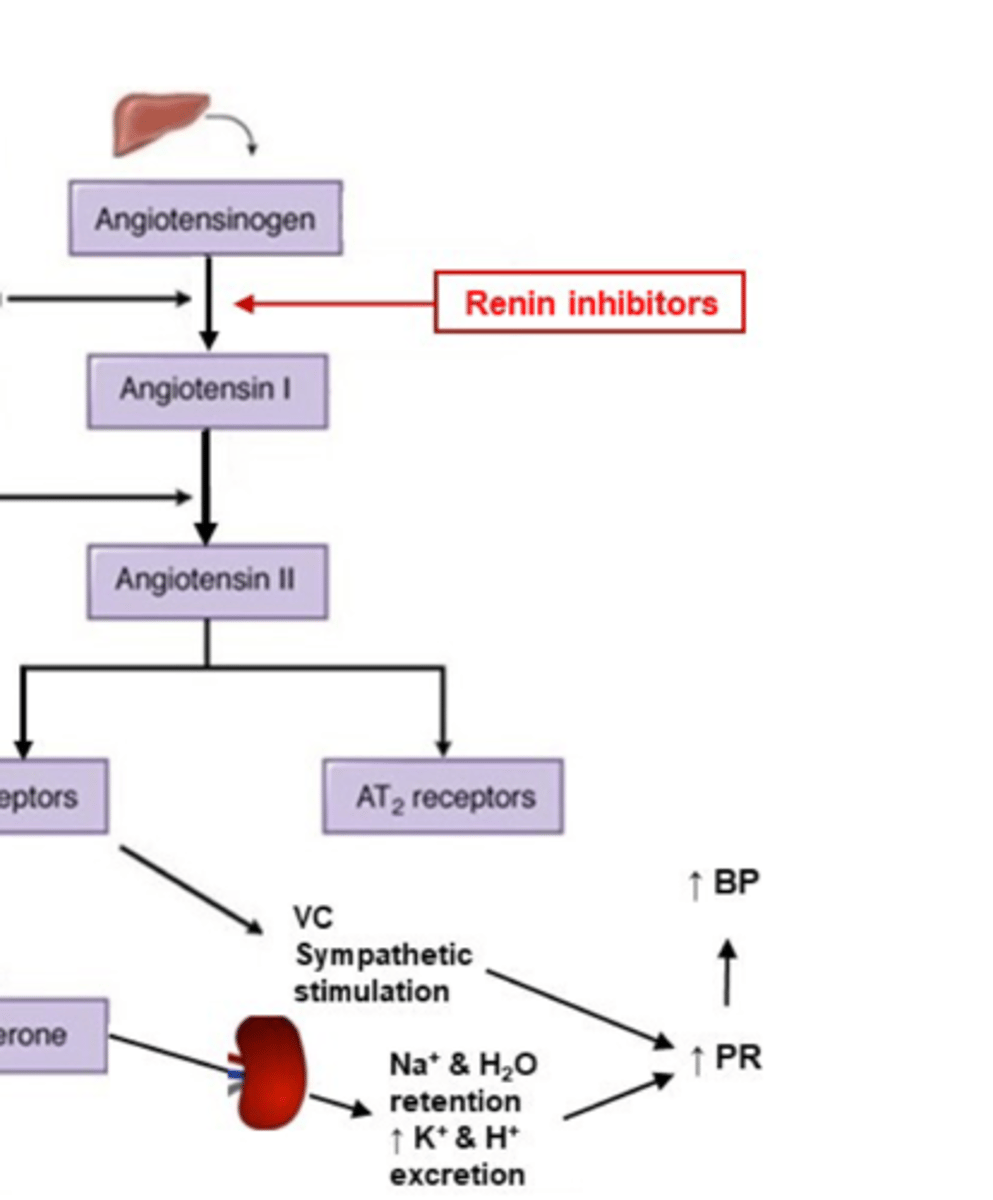
eplerenone blocks aldosterone receptors and _____ K+ excretion
increases
decreases
DECREASES
its similar to spironolactone; they are both ARAs meaning aldosterone receptor ANTAGONISTs, and they RETAIN K+!!!! meaning if we retain K+ in body, so were not peeing out as much K+ aka decreased K+ excretion
think about spiro working at a derm office, whenever we prescribed it for acne we told pts to avoid high potassium foods bc it can increase ur K+ retention, same idea w eplerenone, these are K+ sparing diuretics meaning we keep our K+
does Eplerenone have gynecomastia side effects like spironolactone
no