5.2 - PTSD
 Studied by 0 people
 Call with Kai
 Learn
Learn Practice Test
 Spaced Repetition
 Match
Match Flashcards
 Knowt Play
1/37

There's no tags or description
Looks like no tags are added yet.
Name | Mastery | Learn | Test | Matching | Spaced | Call with Kai |
|---|
No study sessions yet.
38 Terms
1 month
The diagnosis of PTSD requires that symptoms must last for at least ________.
PTSD
What this means is that, in the study just described, the women who had symptoms within 2 weeks of the assault would not be diagnosed with ____.
Acute Stress Disorder
a diagnostic category that can be used when symptoms develop shortly after experiencing a traumatic event and last anywhere between 3 days to one month
receive treatment
The existence of this diagnosis means that people with symptoms do not have to wait a whole month to be diagnosed with PTSD.
Instead they can _____ treatment as soon as they experience symptoms
Stressor
Intrusion Symptoms
Avoidance
Negative Alterations in Cognitions and Mood
Arousal and Reactivity
Other Reqd:
Duration
Functional Significance
Exclusion
Criterion of PTSD: (8)
Stressor-Exposure to Trauma (A)
The person was exposed to actual or threatened death, injury, or sexual violence
(directly, by witnessing, learning it happened to someone close, or repeated exposure like first responders).
Intrusion Symptoms (B)
The trauma keeps coming back in the mind through:
Flashbacks
Nightmares
Intrusive thoughts
Distress when reminded of it
Avoidance (C)
The person avoids:
Thoughts, feelings, or conversations about the event
Places, people, or activities that remind them of it
Negative Alterations in Cognitions and Mood (D)
Negative changes in thoughts or emotions, such as:
Guilt, fear, shame
Feeling detached or numb
Blaming self or others
Loss of interest in activities
Arousal and Reactivity (E)
Irritable behavior and angry outbursts.
Reckless or self-destructive behavior.
Hypervigilance.
Exaggerated startle response
Problems with concentration
Sleep disturbance
Duration (F) = 1 month
The duration of the disturbance is more than _____
Functional Significanc(G)
The disturbance causes clinically significant distress or impairment in important areas of life, such as:
Social life (trouble connecting with others)
Work or school (difficulty concentrating or attending)
substance
* Criterion H (Exclusion):
The disturbance is not attributable to the physiological effects of a ______ (e.g., medication, alcohol) or another medical condition.
Intrusion
Avoidance
Negative alterations in cognition & mood
Arousal and reactivity
Clinical Symptoms of PTSD (20 symptoms in total)
These are grouped into 4 main areas:
Intrusion
Recurrent reexperiencing of the traumatic event through nightmares, intrusive images, and physiological reactivity to reminders of the trauma.
Avoidance
Efforts to avoid thoughts, feelings, or reminders of the trauma.
Negative alterations in cognitions and mood
This includes such symptoms as feelings of detachment as well as negative emotional states such as shame or anger, or distorted blame of oneself or others.
Arousal and reactivity
Hypervigilance, excessive response when startled, aggression, and reckless behavior.
Military combat
Prisoner of war, concentration camp, and torture experience
Traumas caused by human intent
Accidents or natural disasters
Rates of PTSD After Traumatic Experiences:
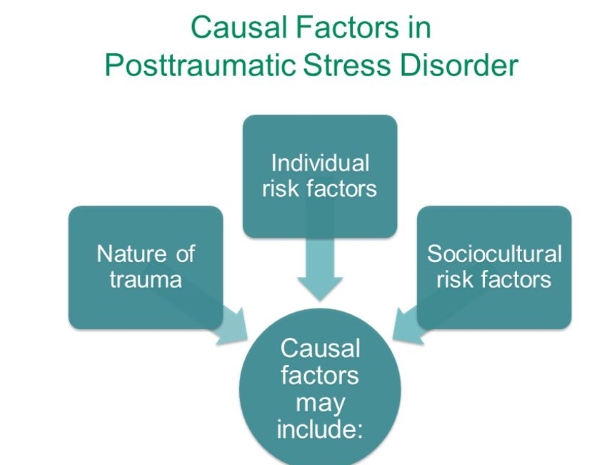
Nature of Trauma
Individual risk factors
Sociocultural risk factors
Causal Factors in PTSD:
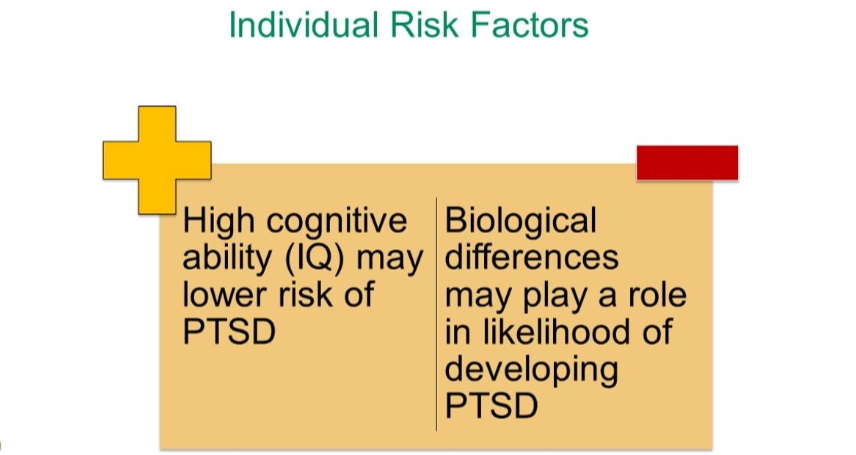
lower
Biological
Individual Risk Factors:
High congitive ability may _____ risk of PTSD
_________ differences may play a role in likelihood of developing PTSD
In combat-related trauma:
Justification for combat
Identification with combat unit
Esprit de corps
Quality of leadership
Sociocultural Factors:
Psychological debriefing
Challenges in studying crisis victims
Trauma and physical health
Prevention and Treatment of Stress Disorders: (3)
Military service
Medical procedures
Relationship termination
Prevention (Advanced preparation of stressor):
Telephone hotlines
Psychological first aid
Crisis intervention
Treatment for Stress Disorders (Approaches to treatment include):
Critical Incident Stress Debriefing
Medications
Cognitive-behavioral treatments
Psychological Debriefing
(Strategies for relief of PTSD symptoms):
Traumatic events cannot be predicted or controlled by researchers
Variables of interest are difficult to assess
Funding can be difficult to obtain
Challenges in Studying Crisis Victims:
trauma
Studies indicate that ______ is bad for body as well as mind
Depersonalization
Derealization
The DSM-5-TR also includes a Dissociative Specification for individuals who meet the full criteria for PTSD and, in addition, experience persistent or recurrent symptoms of either __________ or _________
Depersonalization
feeling detached from oneself
Derealization
experiencing the world as unreal
Intrusion Symptoms (1)
Avoidance or Negative Alterations (1)
Alterations in Arousal and Reactivity (2 reqd.)
There is also a separate set of criteria for PTSD in Preschool Children (ages 6 years and younger):
Intrusion Symptoms (At least one required)
These are ways the trauma is re-experienced. Unlike older children who may have verbal memories, preschoolers' symptoms are often behavioral:
Recurrent, distressing, intrusive memories or dreams related to the event (content or feelings). For dreams, the content may not be recognizable.
Trauma-specific reenactment in play (e.g., repeating aspects of the trauma during play).
Dissociative reactions (e.g., flashbacks) where the child acts or feels as if the event is recurring.
Intense psychological or marked physiological distress/reactions at exposure to internal or external reminders.
Avoidance or Negative Alterations (At least one required)
This cluster combines avoidance symptoms and negative changes in mood/cognitions, as many of these are difficult to detect or manifest in young children.
Persistent avoidance of activities, places, or physical reminders of the event.
Avoidance of people, conversations, or interpersonal situations that are reminders.
Markedly diminished interest or participation in significant activities, including constricted play
Socially withdrawn behavior.
Persistent reduction in the expression of positive emotions.
Substantially increased frequency of negative emotional states (e.g., fear, guilt, sadness, shame, confusion).
Alterations in Arousal and Reactivity (At least two required)
These symptoms represent heightened emotional and physical reactions.
Irritable behavior and angry outbursts (including extreme temper tantrums)
Hypervigilance (constantly on the lookout for danger).
Exaggerated startle response.
Problems with concentration.
Difficulty falling or staying asleep, or restless sleep.
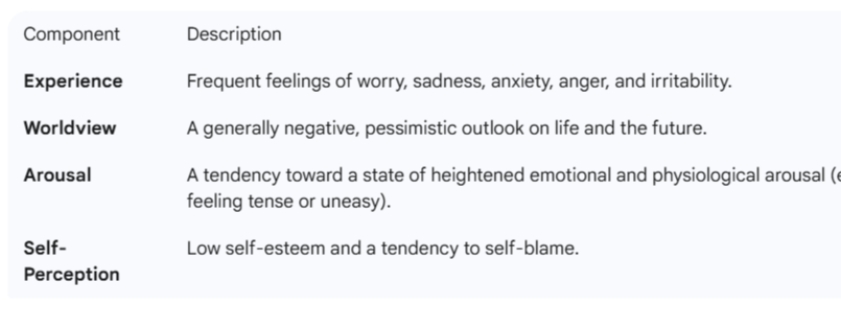
Negative Affectivity (NA)
refers to the tendency to experience negative emotions across time and situations and to feel emotionally distressed.
It's a general, pervasive disposition to be gloomy, tense, and irritable.
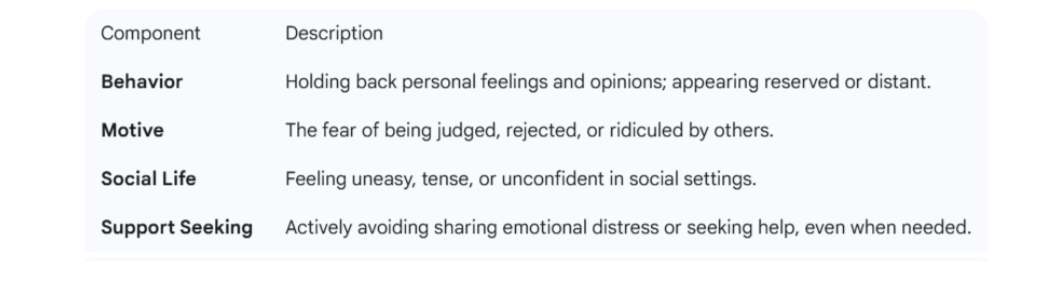
Social Inhibition (SI)
refers to the tendency to inhibit the expression of emotions, thoughts, and behaviors in social interactions to avoid disapproval or rejection.
It represents a fear of social situations and a reluctance to seek out support.
Social Inhibition (SI)