AP ART HISTORY - Unit 1
 Call Kai
 Learn
Learn Practice Test
 Spaced Repetition
 Match
Match Flashcards
 Knowt Play
1/10

There's no tags or description
Looks like no tags are added yet.
Name | Mastery | Learn | Test | Matching | Spaced | Call with Kai | Chat |
|---|
No analytics yet
Send a link to your students to track their progress
11 Terms

Title/Name: Apollo 11 Stones Artist/Culture: Unknown, prehistoric hunter-gatherers of southern Africa Date: c. 25,500–25,300 BCE Materials: Quartzite stone with charcoal drawings Location: Apollo 11 Cave, Namibia Form: Small stone fragments with abstracted animal imagery in dark lines Function: Likely symbolic/ritual or communicative; exact purpose unknown Content: Animal-like figures, possibly rhinoceros or feline forms Context: Among the earliest known examples of figurative art from Africa; demonstrates sophisticated artistic expression during prehistory.

Title/Name: Great Hall of the Bulls Artist/Culture: Paleolithic peoples of Lascaux, France Date: c. 15,000–13,000 BCE Materials: Mineral pigments on cave walls Location: Lascaux Cave, France Form: Large-scale animal paintings using strong outlines, overlapping forms, natural rock contours, and earth-toned pigments Function: Possibly ritual, spiritual, or symbolic; exact purpose uncertain Content: Bulls, horses, deer, and other animals Context: Created by Paleolithic hunter-gatherers; animals were important to their environment and worldview.

Title/Name: Camelid Sacrum in the Shape of a Canine Artist/Culture: Unknown, ancient Mexican peoples Date: c. 14,000–7,000 BCE | Materials: Camelid sacrum bone Location: Mexico Form: Bone naturally shaped and modified to resemble a canine head; simple recognizable silhouette Function: Likely symbolic or ritual; exact function unknown Content: Resembles the head of a dog or other canine Context: Demonstrates early humans' ability to recognize and transform natural forms into meaningful images.

Title/Name: Running Horned Woman Artist/Culture: Unknown, Tassili n'Ajjer peoples Date: c. 6,000–4,000 BCE | Materials: Pigment on rock Location: Tassili n'Ajjer, Algeria Form: Stylized human figure with raised arms, bent legs, and horn-like features Function: Possibly ritual or ceremonial Content: Female figure appearing to run or dance, with horns or a horned headdress Context: Created in a region that was once wetter and supported human settlement; demonstrates ritual and human-animal relationships.

Title/Name: Beaker with Ibex Motifs Artist/Culture: Unknown, Neolithic peoples of Iran Date: c. 4,200–3,500 BCE Materials: Painted ceramic Location: Tepe Sialk, Iran Form: Geometric vessel decorated with highly stylized ibexes and repeated patterns Function: Likely storage or serving vessel; decoration may have symbolic meaning Content: Repeated ibex/goat imagery and geometric designs Context: Reflects the development of pottery and settled agricultural societies during the Neolithic.
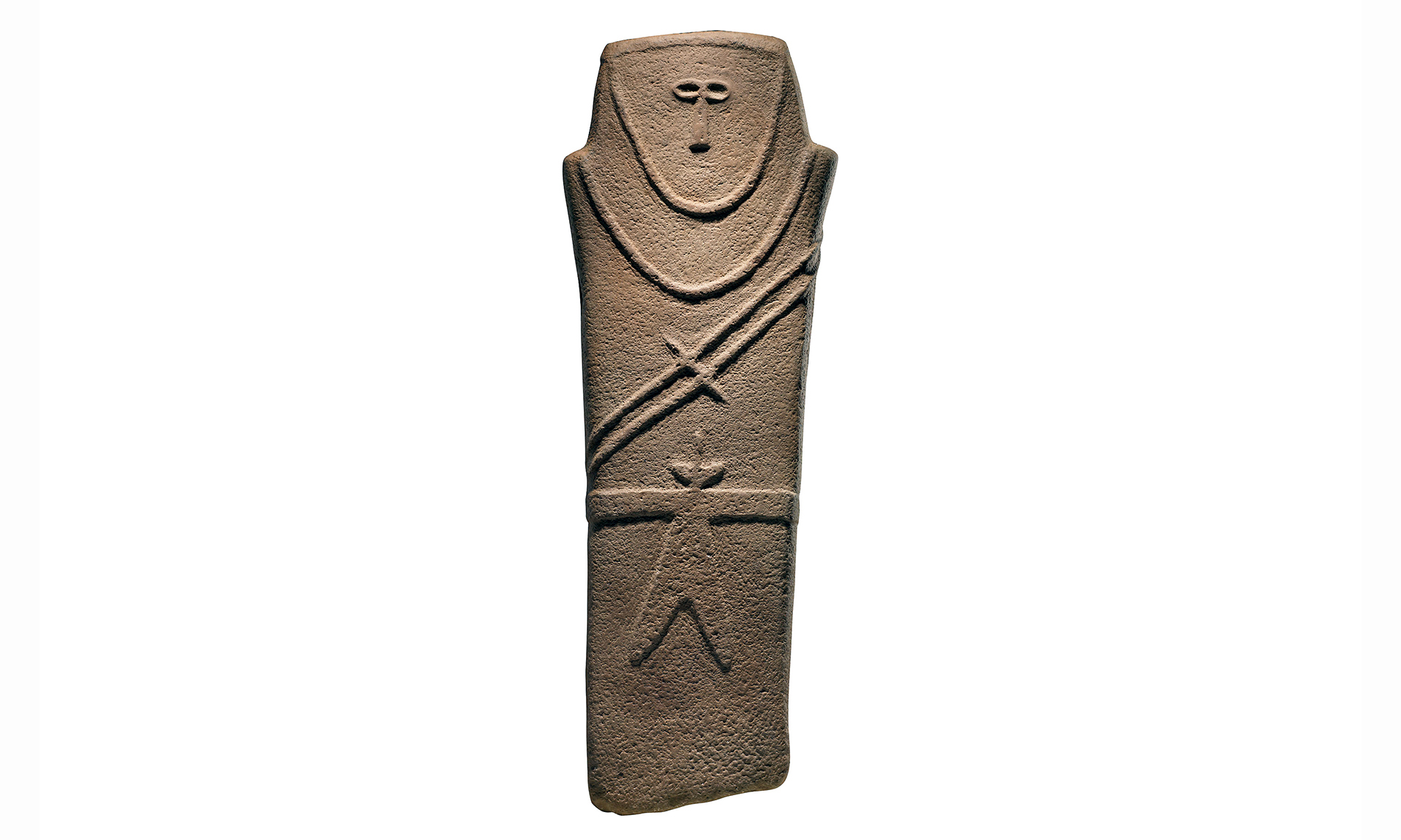
Title/Name: Anthropomorphic Stele Artist/Culture: Unknown, Arabian Peninsula Date: c. 4,000 BCE Materials: Stone Location: Arabian Peninsula Form: Upright stone slab with abstract human face/body and simplified geometric features Function: Possibly commemorative, funerary, or ritual Content: Human-like figure with abstract facial and bodily features Context: Demonstrates prehistoric experimentation with simplified human representation and monumental stone.

Title/Name: Jade Cong Artist/Culture: Liangzhu culture, China Date: c. 3,300–2,200 BCE Materials: Jade Location: China Form: Hollow rectangular tubular object with circular interior and carved masks; highly polished Function: Likely ritual or ceremonial object associated with elite status and burial Content: Abstract animal/human-like faces, often called taotie motifs Context: Jade required significant labor to obtain and carve, suggesting social hierarchy and the importance of ritual objects.

Title/Name: Stonehenge Artist/Culture: Neolithic peoples of Britain Date: c. 2,500–1,600 BCE Materials: Bluestone and sarsen stone Location: Salisbury Plain, England Form: Circular arrangement of massive upright stones with horizontal lintels; monumental post-and-lintel construction Function: Ceremonial/ritual monument; associated with burial and astronomical alignments Content: Concentric circles and horseshoe arrangements of standing stones Context: Required enormous communal labor and sophisticated organization; demonstrates prehistoric societies' ability to transform landscapes.
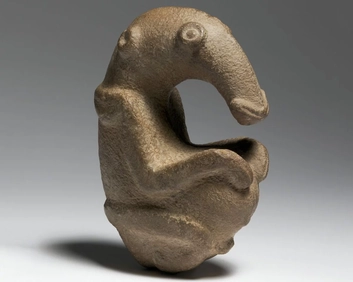
Title/Name: The Ambum Stone Artist/Culture: Ambum Valley culture, Papua New Guinea Date: c. 1,500 BCE Materials: Stone Location: Ambum Valley, Papua New Guinea Form: Small, smooth, polished stone sculpture with an abstracted animal form; rounded body and simplified features Function: Possibly ritual or ceremonial; exact function unknown Content: Often interpreted as an anteater or echidna-like creature Context: Demonstrates sophisticated prehistoric stone carving in Oceania and the importance of animal imagery.

Title/Name: Tlatilco Female Figurine Artist/Culture: Tlatilco culture, Mexico Date: c. 1,200–900 BCE Materials: Ceramic/terracotta Location: Central Mexico Form: Small hollow ceramic female figure with exaggerated body proportions, elaborate hairstyle, and facial features Function: Possibly ritual, funerary, or domestic; exact purpose unknown Content: Female figure emphasizing the body and hairstyle Context: Tlatilco society was agricultural and had extensive cultural connections; demonstrates prehistoric ceramic traditions in Mesoamerica.

Title/Name: Terra Cotta Fragment | Artist/Culture: Nok culture, Nigeria
Date: c. 500 BCE–200 CE
Materials: Terracotta
Location: Nigeria
Form: Fragment of a larger hollow sculpture with a highly stylized human head; naturalistic facial features combined with geometric details
Function: Unknown; possibly ritual, funerary, or commemorative
Content: Human head with distinctive facial features and hairstyle
Context: Nok artists were among the earliest known iron-working cultures in West Africa; their terracotta sculptures demonstrate sophisticated artistic traditions and human representation.