Anatomy and Physiology Tissues Quiz
 Call Kai
 Learn
Learn Practice Test
 Spaced Repetition
 Match
Match Flashcards
 Knowt Play
1/41

There's no tags or description
Looks like no tags are added yet.
Name | Mastery | Learn | Test | Matching | Spaced | Call with Kai | Chat |
|---|
No analytics yet
Send a link to your students to track their progress
42 Terms

What epithelial tissue is this?
Simple Squamous - found in capillaries, endothelium, alveoli in lungs, lens of eye and functioning in diffusion, filtration and secretion.
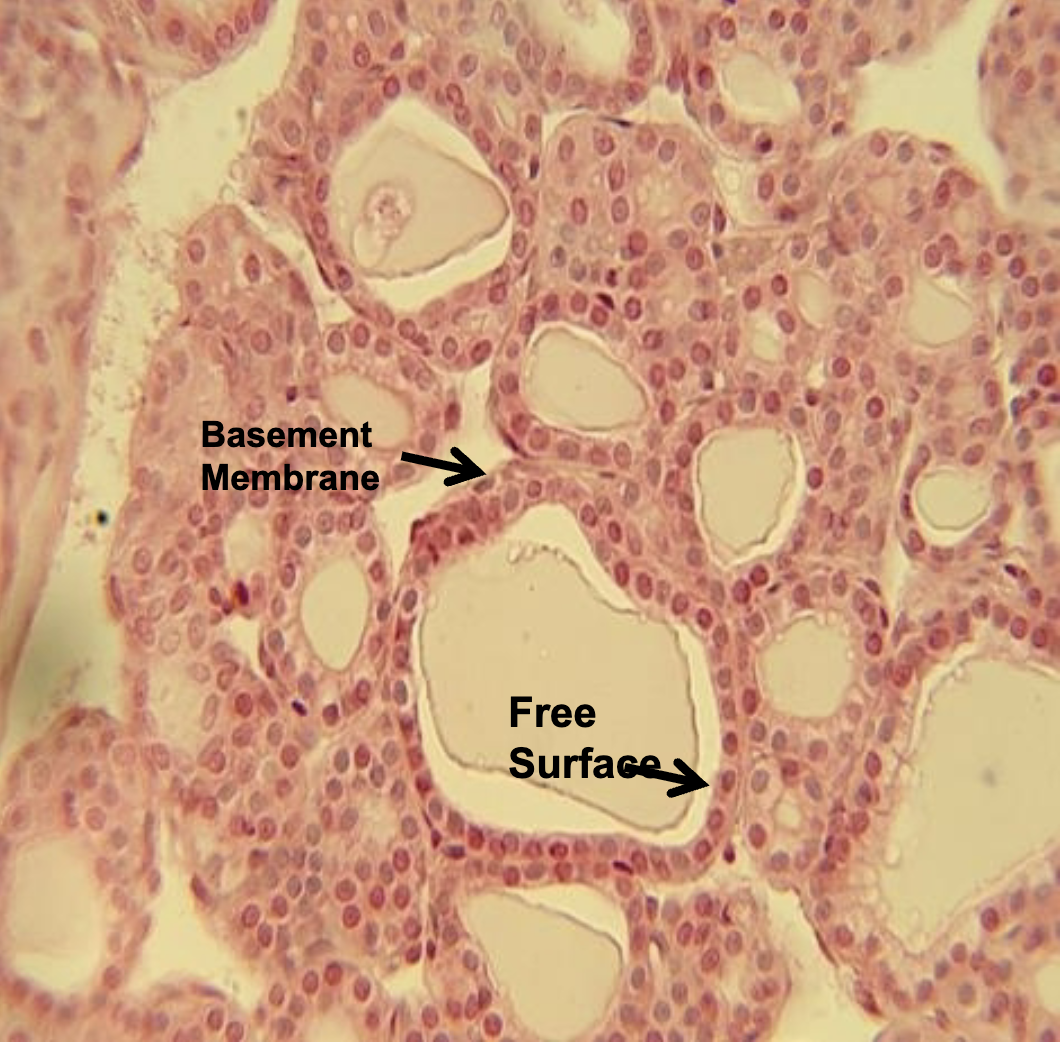
What epithelial tissue is this?
Simple Cuboidal - found in collecting ducts of kidneys, surface of ovaries, functioning in absorption, active transport and secretion.

What epithelial tissue is this?
Simple Columnar - found in the lining of the digestive tract from stomach to anal canal, portions of uterus and uterine tubes, functioning in secretion of mucous and absorption

What epithelial tissue is this?
Pseudo-stratified Columnar - found in the respiratory tract and male urethra, functioning in goblet cells releasing mucous that coat pathways

What epithelial tissue is this?
Stratified Squamous - found in the esophagus, mouth, vagina, anus, epidermis of skin, functioning in protection against abrasion

What epithelial tissue is this?
Stratified Cuboidal - found in sweat glands, ovary follicles, mammary glands, functioning in protection and secretion

What epithelial tissue is this?
Stratified Columnar - found in large ducts of some glands, some portions of the male urethra, functioning in protection and secretion
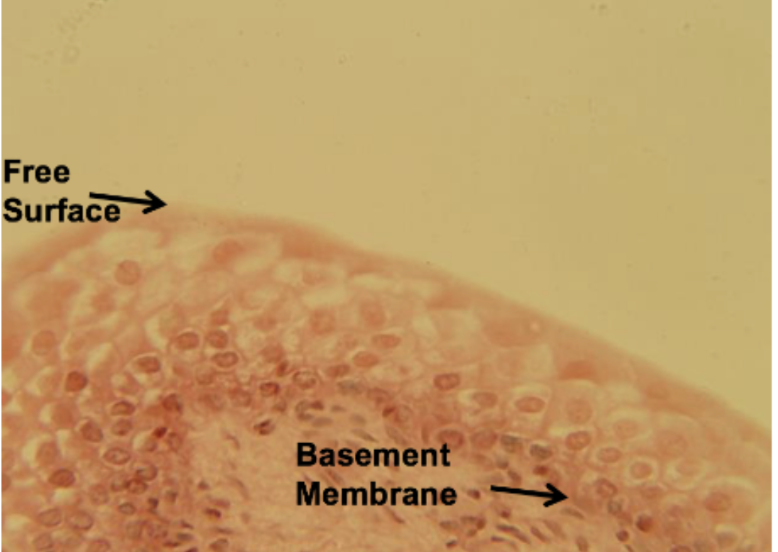
What epithelial tissue is this?
Transitional - found in the bladder, urethra, ureters, functioning in allowing stretching as it fills
What is histology?
The study of tissues
Epithelial tissue
Cellularity- little extracellular matrix
Special cell contacts- desmosome, tight junctions to bind cells
together
Polarity- free surface, basement membrane
Supported by connective tissue- reticular lamina + basal lamina basement membrane
Avascular but innervated- nutrients/gasses diffuse
through the basement membrane so the most active
cells will be closest to the membrane
Regeneration- undergo mitosis to replace
themselves; heal quickly
Location- Body surfaces, e.g., digestive tract, outside of
body, glands, and membranes
The basement membrane _________
supports and anchors the epithelium
Where does all connective tissue develop from?
an embryonic tissue, mesenchyme
What types of cells are common in connective tissue and what do they do?
-blasts --- build
-cytes --- mature
-clasts --- destroy
What are the 3 major components of the connective tissue extracellular matrix?
1. protein fibers (fibrous)
2. ground substance of nonfibrous proteins & molecules
3. fluid (i.e. H2O)
What are the protein fibers of the extracellular matrix in connective tissue?
Collagen - rope-like and strong but inflexible
Reticular fibers - tiny collagen fibers that act like a web
between tissues
Elastin - elastic proteins that can be stretched and return to
their original shape
What are the ground substances in connective tissue and what do they do?
Proteoglycans - aid in water retention by connective
tissue, makes CT able to withstand pressure
Hyaluronic acid: large unbranched polysaccharides, makes certain connective tissues very slippery
Glycosaminoglycans: help to hold water
Loose connective tissue
Tends to be vascular, with nervous innervation
Main cells are fibroblasts, fibrocytes, and few fibroclasts

What connective tissue is this?
Areolar - found widespread throughout the body, nearly everywhere, functioning in anchoring skin to underlying tissue and anchoring tissues together

What connective tissue is this?
Adipose - found under skin, around kidneys, eyeballs, functioning in cushioning, insulation, and energy storage.
Dense connective tissue
Avascular and has almost no nervous input
Often referred to as fibrous connective tissue
Main cells are fibroblasts

What connective tissue is this?
Dense Regular - found in tendons, ligaments, aponeuroses, functioning in in attaching muscle to bone (tendon) and attaching muscle to muscle (ligament)
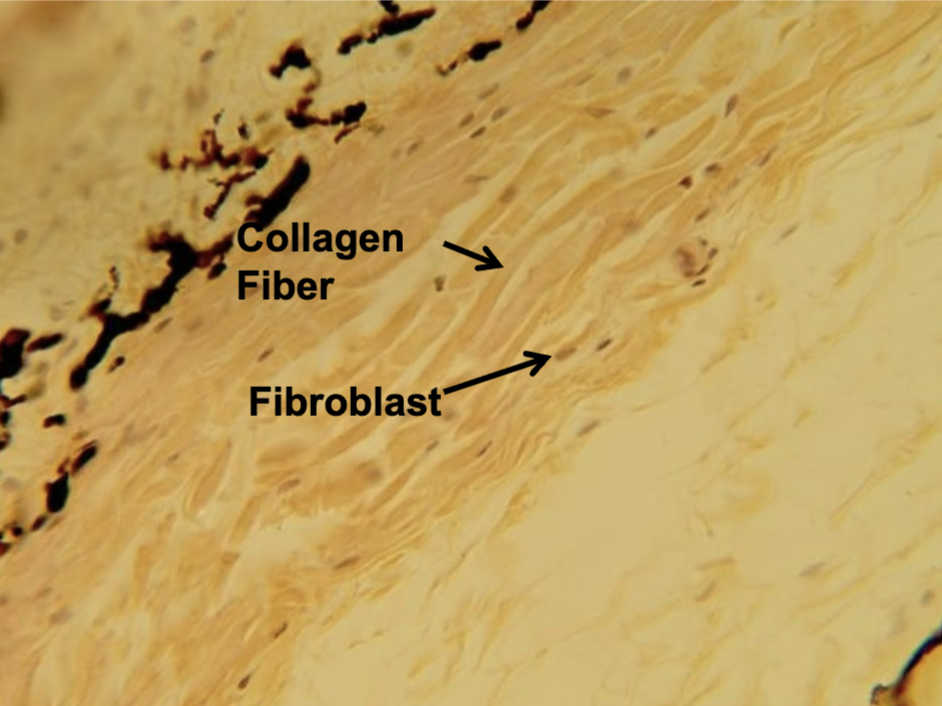
What connective tissue is this?
Dense irregular - found mostly in the dermis of the skin, capsules around organs and joints, functioning in strength in all directions
Cartilage
Avascular and lacks nerve fibers.
Has high tensile and compressive strength.
Chondroblasts, chondrocytes, and chondroclasts are the main cell types
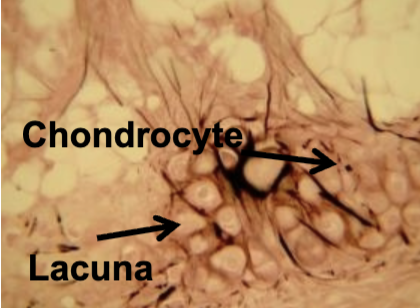
What cartilage is this?
Elastic - found in the larynx, nose, ear, functioning in giving support while remaining flexible

What cartilage is this?
Hyaline - found covering articular surfaces, at the ends of ribs, epiphyseal plates, functioning in providing support and reinforcements and secreting fluid at joint surfaces which lubricates the joint surfaces to protect the ends of the long bone.
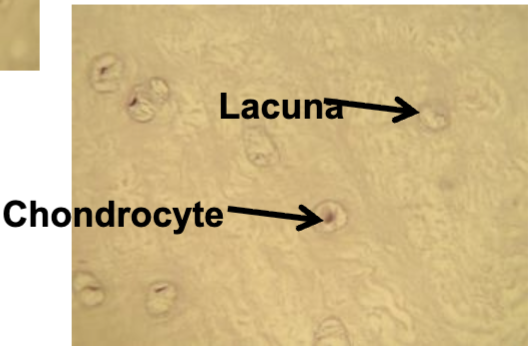
What cartilage is this?
Fibrocartilage - found in intervertebral discs, pubic symphysis, discs of knee and jaw joint, functioning in absorbing large amounts of compressive force.
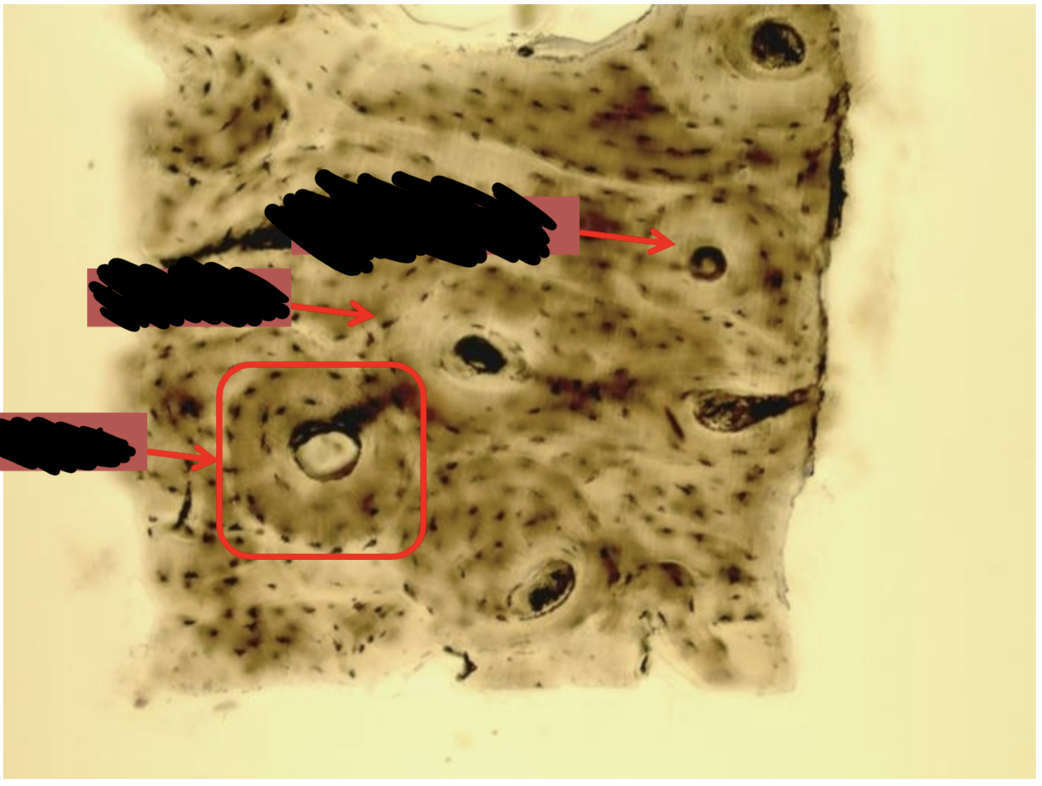
What type of connective tissue is this?
Bone -
Consists of a mineralized EM, which is composed of
hydroxyapatite and living cells, which are mainly
osteocytes and collagen.
Holes in matrix are called lacunae and that is where
the bone-producing osteocytes reside.
Bone is very vascular and heals readily

What type of connective tissue is this?
Blood Cells -
Red and white blood cells are unique because they are suspended in a fluid matrix.
Classified as CT because it derives from mesenchyme.
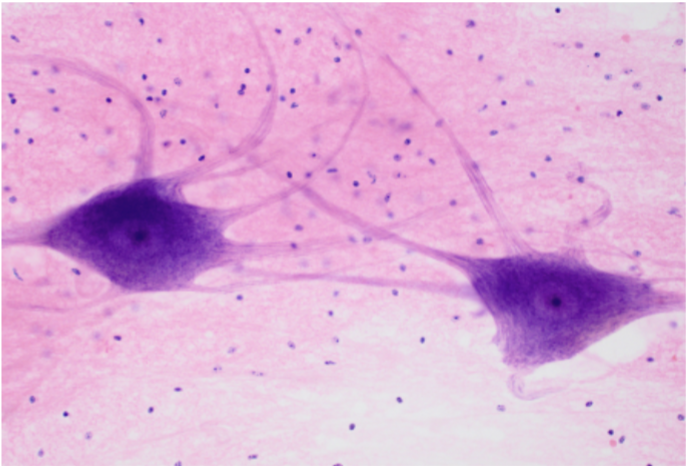
What tissue is this?
Nervous - Specialized to carry electrical signals called action potentials. Neurons make up the brain, spinal cord and peripheral nerves.
What are neurons composed of?
Dendrites: receive electric signals and send them toward the cell body
Cell Body (soma): site of general cell functions.
Axon: Conduct action potentials away from the cell body.

What type of muscle tissue is this?
Skeletal - attached to bone, striated cells, voluntary and multi-nucleated

What type of muscle tissue is this?
cardiac - found attached to the walls of the heart, striated cells, involuntary, uninucleated

What type of muscle tissue is this?
Smooth - found lining the walls of internal organs and digestive system, nonstriated cells, involuntary, uninucleated
Hypodermis
Not really part of the skin, it is the deep underlying layer also called the subcutaneous layer.
The hypodermis is well innervated with nerves and blood vessels.
There is also a layer of fat contained in the subcutaneous area; clinically this is often a site of injections.
Dermis
Loose CT, dense irregular CT, and adipose Highly vascularized and innervated
Contains sweat glands - Eccrine and Apocrine
Location of sensory receptors and hair follicles
Deeper thicker layer of the skin that is composed mainly
out of dense fibrous connective tissue. Interspersed with
collagenous and elastic fibers, and some adipose cells.
Blood vessels and nerves are abundant in the dermis and
supply nutrients to the overlying epidermis to which are
attached (i.e. papillae).
The dermis is important in regulating body temperature
because the arterioles imbedded within it.
Can vasoconstrict and vasodilate in response to core temp
changes.
Also imbedded within the dermis are sensory receptors
that are sensitive to heat, cold, pressure, pain and touch
Epidermis
Composed of stratified squamous epithelium which arranges itself into 4 or 5 layers
Stratum Basale
Deepest layer composed of cuboidal or columnar cells.
Cells here actively replace themselves by mitosis
Stratum Spinosum
• Superficial to the stratum basale and is composed of about 8-10 layers of cells.
• A limited amount of mitosis occurs in these cells as they are pushed toward the surface and begin to flatten out.
Stratum Granulosum
• Superficial to the stratum spinosum and diamond shaped.
• In the uppermost cells of this layer the organelles and nuclei die as cells further flatten
Stratum Lucidum
• A clear layer of cells usually only about 2-3 layers thick.
• Only found in areas where the skin is extremely thick as in the palms of the hands and soles of the feet.
Stratum Corneum
• Most superficial layer and is composed of 25 or more layers of dead cells which are filled with the protein keratin.
• Cells from the deeper layers are constantly being produced and pushed to the surface to replace those that have been desquamated