[TOXICOLOGY] Medical Toxicology
 Call Kai
 Learn
Learn Practice Test
 Spaced Repetition
 Match
Match Flashcards
 Knowt Play
1/106

Earn XP
Description and Tags
Proverbs 16:3
Name | Mastery | Learn | Test | Matching | Spaced | Call with Kai | Chat |
|---|
No analytics yet
Send a link to your students to track their progress
107 Terms
c. 200 mg/kg
Aspirin poisoning becomes potentially lethal at doses greater than:
a. 50 mg/kg
b. 100 mg/kg
c. 200 mg/kg
d. 500 mg/kg
d. Aspirin
Reye’s Syndrome is caused by
a. Acetaminophen
b. Isoniazid
c. Digoxin
d. Aspirin
b. Children after a viral infection
Reye's syndrome is associated with aspirin use in:
a. Elderly patients with hypertension
b. Children after a viral infection
c. Pregnant women
d. Patients with diabetes
b. Fatty liver and hepatic encephalopathy
Reye's syndrome is characterized by:
a. Pulmonary fibrosis and renal failure
b. Fatty liver and hepatic encephalopathy
c. Nephrotic syndrome and edema
d. Myocarditis and arrhythmias
b. Respiratory alkalosis + bicarbonaturia
The initial acid-base disturbance in aspirin poisoning is:
a. Metabolic acidosis
b. Respiratory alkalosis
c. Respiratory acidosis
d. Metabolic alkalosis
d. Stimulates the CNS respiratory center causing hyperventilation
Respiratory alkalosis in salicylate poisoning occurs because aspirin:
a. Depresses the respiratory center immediately
b. Causes bronchoconstriction
c. Inhibits bicarbonate excretion
d. Stimulates the CNS respiratory center causing hyperventilation
a. Respiratory acidosis
A severe aspirin overdose may eventually cause:
a. Respiratory acidosis
b. Metabolic alkalosis
c. Hypernatremia
d. Polycythemia
d. Uncoupling of oxidative phosphorylation
Hyperthermia in salicylate poisoning results from:
a. Increased thyroid hormone production
b. Acetylcholinesterase inhibition
c. Excess insulin release
d. Uncoupling of oxidative phosphorylation
a. Inhibition of aminotransferase in the Krebs cycle
Aspirin causes metabolic acidosis partly by:
a. Inhibition of aminotransferase
b. Increased bicarbonate synthesis
c. Increased insulin secretion
d. Enhanced gluconeogenesis
a. Metabolic acidosis
Salicylic acids → _____
a. Metabolic acidosis
b. Respiratory alkalosis
c. Respiratory acidosis
d. Metabolic alkalosis
a. Tinnitus
Which symptom is characteristic of mild salicylate poisoning (salicylism)?
a. Tinnitus
b. Bradycardia
c. Jaundice
d. Hematuria
a. Hyperventilation
Which finding is commonly seen in mild salicylate poisoning?
a. Hyperventilation
b. Constipation
c. Miosis
d. Edema
a. Hallucinations
b. Fever
c. Acid-base disturbances
Headache is seen in mild salicylism
Mild (Salicylism) = Tinnitus, Hyperventilation, Headache
Fatal = respiratory depression
Severe salicylate poisoning may present with:
a. Hallucinations
b. Fever
c. Acid-base disturbances
d. Headache
b. Respiratory depression
The most common cause of death (fatal) in severe aspirin poisoning is:
a. Renal failure
b. Respiratory depression
c. GI hemorrhage
d. Cardiac arrest
a. Activated charcoal
Treatment for aspirin toxicity
a. Activated charcoal
b. Atropine
c. Penicillamine
d. Vitamin K
b. Forced alkaline diuresis
Treatment for aspirin toxicity
a. Acidification of urine
b. Forced alkaline diuresis
c. Vitamin K administration
d. Chelation therapy
b. Sodium bicarbonate (NaHCO₃)
Agent is used to correct acidosis in aspirin poisoning
a. Calcium gluconate
b. NaHCO₃
c. Protamine sulfate
d. Naloxone
a. Ice blanket
A patient with aspirin poisoning and hyperthermia may benefit from:
a. Ice blanket
b. Heating pad
c. Copper sulfate
d. Vitamin C
a. Gastric lavage &
c. Emesis
Which GI decontamination method may be used in aspirin poisoning?
a. Gastric lavage
b. Whole Bowel Irrigation (WBI)
c. Emesis
d. Cathartics
Answer Key
110 – 160 mg/kg → B (Vascular collapse), E (Hypoprothrombinemia)
50 – 80 mg/kg → D (Salicylism), A (Hyperventilation)
> 160 mg/kg → G (Renal failure), C (Respiratory failure → may lead to death)
80 – 110 mg/kg → F (Metabolic acidosis), H (Hyperthermia)
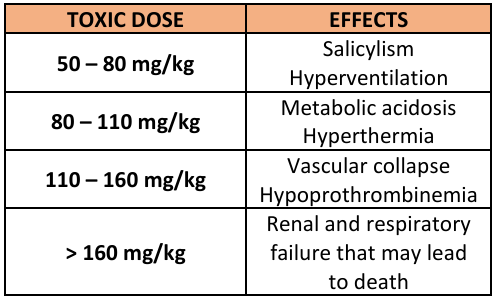
Matching Type Quiz: Salicylate Toxicity
Column A – Toxic Dose (mg/kg)
110 – 160
50 – 80
>160
80 – 110
Column B – Effects
A. Hyperventilation
B. Vascular collapse
C. Respiratory failure → may lead to death
D. Salicylism
E. Hypoprothrombinemia
F. Metabolic acidosis
G. Renal failure
H. Hyperthermia
b. Hepatic injury
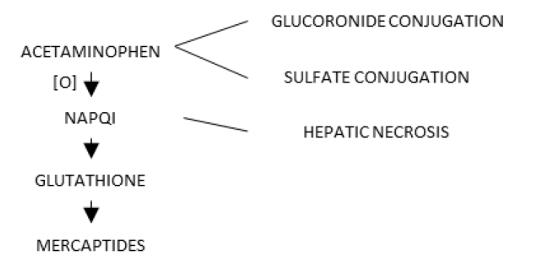
Acetaminophen poisoning primarily causes:
a. Renal stones
b. Hepatic injury
c. Pulmonary fibrosis
d. Bone marrow suppression
b. Nausea and vomiting
Which symptom is commonly seen early in acetaminophen poisoning?
a. Tinnitus
b. Nausea and vomiting
c. Wrist drop
d. Tremor
a. Acetaminophen poisoning
A patient presents with nausea, vomiting, and abdominal pain after a drug overdose. Which poisoning should be suspected?
a. Acetaminophen poisoning
b. Copper poisoning
c. Mercury poisoning
d. Lead poisoning
a. Jaundice
Which of the following is a later manifestation of acetaminophen toxicity?
a. Jaundice
b. Burton's line
c. Kaiser-Fleischer rings
d. Acrodynia
b. N-acetylcysteine (Fluimucil®)
The antidote for acetaminophen poisoning is:
a. Deferoxamine
b. N-acetylcysteine
c. Penicillamine
d. Atropine
d. Replenish glutathione (GSH) stores
The primary action of N-acetylcysteine is to:
a. Chelate iron
b. Increase vitamin K synthesis
c. Inhibit acetylcholine receptors
d. Replenish glutathione (GSH) stores
d. Isonicotinylhydrazide
Isoniazid is also known as:
a. Acetylsalicylic acid
b. Ethambutol
c. Para-aminosalicylic acid
d. Isonicotinylhydrazide
c. Inhibition of pyridoxal phosphokinase
The mechanism of toxicity of isoniazid is:
a. Inhibition of acetylcholinesterase
b. Inhibition of MAO
c. Inhibition of pyridoxal phosphokinase
d. Inhibition of ferrochelatase
b. Vitamin B6 (Pyridoxine)
INH toxicity primarily causes deficiency of:
a. Vitamin B1 (Thiamine)
b. Vitamin B6 (Pyridoxine)
c. Vitamin B12 (Cobalamin)
d. Vitamin C (Ascorbic acid)
a. Irritability and seizures
A patient with INH overdose is most likely to present with:
a. Irritability and seizures
b. Burton's line
c. Pulmonary fibrosis
d. Acrodynia
c. Liver
The toxic metabolites of isoniazid primarily affect the:
a. Heart
b. Lungs
c. Liver
d. Bone marrow
a. Signs of liver failure
Which finding suggests hepatotoxicity from INH overdose?
a. Signs of liver failure
b. Hyperreflexia
c. Mydriasis
d. Proteinuria
c. 1:1
Pyridoxine is administered in INH poisoning at what ratio?
a. 1:10
b. 1:5
c. 1:1
d. 10:1
b. Digitalis lanata and Digitalis purpurea
Digoxin is derived from:
a. Atropa belladonna
b. Digitalis lanata and Digitalis purpurea
c. Papaver somniferum
d. Cinchona officinalis
d. Inhibition of Na⁺-K⁺ ATPase
The mechanism of action of digoxin is:
a. Inhibition of acetylcholinesterase
b. Calcium channel blockade
c. Blockade of β₁ receptors
d. Inhibition of Na⁺-K⁺ ATPase
c. Hypokalemia
Which electrolyte abnormality increases the risk of digoxin toxicity?
a. Hyperkalemia
b. Hypernatremia
c. Hypokalemia
d. Hypermagnesemia
b. Hypercalcemia
Which electrolyte disturbance potentiates digoxin toxicity?
a. Hypocalcemia
b. Hypercalcemia
c. Hyponatremia
d. Hypophosphatemia
a. Hypercalcemia + Hypokalemia
Which combination increases the likelihood of digoxin toxicity?
a. Hypercalcemia + Hypokalemia
b. Hypocalcemia + Hyperkalemia
c. Hypernatremia + Hypermagnesemia
d. Hyponatremia + Hypophosphatemia
c. Increases digoxin absorption
Chronic antibiotic use may increase digoxin toxicity because it:
a. Enhances renal excretion
b. Blocks digoxin receptors
c. Increases digoxin absorption
d. Inactivates digoxin
c. Quinidine
Which antiarrhythmic drug increases the risk of digoxin toxicity?
a. Lidocaine
b. Procainamide
c. Quinidine
d. Esmolol
a. Confusion &
c. Hallucinations
Which neuropsychiatric manifestation may occur in digoxin toxicity?
a. Confusion
b. Coma
c. Hallucinations
d. Aphasia
b. Xanthopsia
The classic visual disturbance associated with digoxin toxicity is:
a. Diplopia
b. Xanthopsia
c. Hemianopsia
d. Nyctalopia
c. Yellow-green visual discoloration
Xanthopsia refers to:
a. Red color blindness
b. Blue-green visual discoloration
c. Yellow-green visual discoloration
d. Complete blindness
c. Fatal arrhythmia
The most feared complication of digoxin toxicity is:
a. Hepatic failure
b. Renal failure
c. Fatal arrhythmia
d. Pulmonary fibrosis
b. Ventricular tachycardia
Which life-threatening arrhythmia may occur in severe digoxin toxicity?
a. Atrial flutter
b. Ventricular tachycardia
c. Sinus bradycardia
d. First-degree AV block
a. Cardiac automaticity
Digoxin-induced ventricular tachycardia results from stimulation of:
a. Cardiac automaticity
b. Hepatic metabolism
c. Renal secretion
d. Skeletal muscle contraction
d. All of the above
Which cardiac structures are stimulated in digoxin toxicity?
a. SA node
b. AV node
c. Bundle of His and ventricular muscle
d. All of the above
sedation = μ (Mu)
modulation of hormone and neurotransmitter release = μ (Mu) and δ (Delta)
psychotomimetic effects = κ (Kappa)
slowed gastrointestinal transit = μ (Mu)
inhibition of respiration = μ (Mu)
supraspinal and spinal analgesia = All
slowed gastrointestinal transit = κ (Kappa)
OPIOIDS AND OPIATES: μ (Mu) or δ (Delta) or κ (Kappa)?
sedation = ____
modulation of hormone and neurotransmitter release = ____
psychotomimetic effects = ____
slowed gastrointestinal transit = ____
inhibition of respiration = ____
supraspinal and spinal analgesia = ____
slowed gastrointestinal transit = ____
modulation of hormone and neurotransmitter release = ____
κ
δ
μ
OPIOIDS AND OPIATES: μ (Mu) or δ (Delta) or κ (Kappa)?
Dynorphins >> endorphins and enkephalins
Enkephalins > endorphins and dynorphins
Endorphins > enkephalins > dynorphins
b. Stimulation of opioid receptors
The mechanism of toxicity of opioids and opiates is:
a. Inhibition of acetylcholinesterase
b. Stimulation of opioid receptors
c. Blockade of dopamine receptors
d. Inhibition of Na⁺-K⁺ ATPase
✅Pinpoint pupils (Miosis)
Mydriasis
Agitation
✅Coma
✅Respiratory depression
Seizures
Triad is most characteristic of opioid poisoning
(Put check)
Pinpoint pupils (Miosis)
Mydriasis
Agitation
Coma
Respiratory depression
Seizures
c. Naloxone
The antidote for opioid overdose is:
a. Atropine
b. Flumazenil
c. Naloxone
d. Pralidoxime
b. Competitive opioid antagonist
Naloxone acts as a:
a. Opioid agonist
b. Competitive opioid antagonist
c. Benzodiazepine antagonist
d. Cholinergic agonist
b. Benzodiazepines and Barbiturates
Sedative-hypnotics commonly include:
a. Opioids and NSAIDs
b. Benzodiazepines and Barbiturates
c. Organophosphates and Carbamates
d. Digoxin and Quinidine
d. Drowsiness and ataxia
A patient who overdosed on benzodiazepines is most likely to present with:
a. Agitation and seizures
b. Miosis and diarrhea
c. Hyperthermia and tremors
d. Drowsiness and ataxia
a. Somnolence
An overdose of benzodiazepines commonly produces:
a. Somnolence
b. Hallucinations
c. Hypertension
d. Hyperglycemia
a. Confusion
Which mental status change may occur in sedative-hypnotic poisoning?
a. Confusion
b. Euphoria
c. Mania
d. Psychosis
c. Flumazenil
Which antidote is used for benzodiazepine overdose?
a. Naloxone
b. Pyridoxine
c. Flumazenil
d. Atropine
c. Hallucinogen
Lysergic Acid Diethylamide (LSD) is classified as a:
a. Opioid
b. Sedative-hypnotic
c. Hallucinogen
d. Stimulant
b. Ergot
LSD is derived from:
a. Belladonna
b. Ergot
c. Digitalis
d. Cinchona
c. Activation of 5-HT₂A receptors
The primary mechanism of LSD is:
a. Stimulation of μ-opioid receptors
b. Blockade of dopamine receptors
c. Activation of 5-HT₂A receptors
d. Inhibition of acetylcholinesterase
HTN
Tremors
Vomiting
Profound mydriasis
LSD Clinical Presentation:
HTN or hypotension?
Stiffness or Tremors?
Nausea or Vomiting?
Profound miosis or mydriasis?
c. MDMA (Ecstasy)
Which of the following is considered an amphetamine-related drug?
a. Morphine
b. Digoxin
c. MDMA (Ecstasy)
d. Diazepam
a. Cocaine
Which illicit drug is classified as an amphetamine-related compound?
a. Cocaine
b. Warfarin
c. Aspirin
d. Acetaminophen
b. Stimulation of adrenergic receptors with release of norepinephrine
The mechanism of toxicity of amphetamines primarily involves:
a. Inhibition of acetylcholinesterase
b. Stimulation of adrenergic receptors
c. Blockade of opioid receptors
d. Inhibition of Na⁺-K⁺ ATPase
c. Norepinephrine (NE)
Amphetamines produce their effects mainly by increasing:
a. Acetylcholine
b. GABA
c. Norepinephrine (NE)
d. Histamine
b. Teeth grinding
Bruxism, due to Amphetamine, refers to:
a. Tooth discoloration
b. Teeth grinding
c. Jaw fracture
d. Difficulty swallowing
b. Hyperthermia
The most dangerous manifestation of amphetamine toxicity is:
a. Mydriasis
b. Hyperthermia
c. Bruxism
d. Insomnia
c. Hypertension
Which cardiovascular effect is commonly seen in amphetamine poisoning?
a. Bradycardia
b. Hypotension
c. Hypertension
d. HF
d. Pinpoint pupils
Which finding is LEAST consistent with amphetamine toxicity?
a. Bruxism
b. Hyperthermia
c. Hypertension
d. Pinpoint pupils
b. Labetalol
Which drug may be used to manage hypertension associated with amphetamine toxicity?
a. Naloxone
b. Labetalol
c. Pyridoxine
d. Flumazenil
a. Sodium nitroprusside
Which vasodilator may be used in severe amphetamine-induced hypertension?
a. Sodium nitroprusside
b. Vitamin K
c. Deferoxamine
d. Atropine
b. Angel Dust
Phencyclidine (PCP) is commonly known as:
a. Ecstasy
b. Angel Dust
c. Speed
d. Crack
c. Dissociative anesthesia
Phencyclidine produces a state similar to:
a. Opioid analgesia
b. General anesthesia
c. Dissociative anesthesia
d. Local anesthesia
b. Ketamine
PCP is most closely related pharmacologically to:
a. Morphine
b. Ketamine
c. Aspirin
d. Digoxin
Aphasia
General anesthesia
✅Disorganized thought process
Sedation
✅Nystagmus
✅HTN
Miosis
Xanthopsia
Phencyclidine Clinical Presentation:
(Put check)
Aphasia
General anesthesia
Disorganized thought process
Sedation
Nystagmus
HTN
Miosis
Xanthopsia
b. Hashish &
d. Hashoids
Marijuana is also known as:
a. Angel Dust
b. Hashish
c. Ecstasy
d. Hashoids
b. Δ⁹-Tetrahydrocannabinol (THC)
The principal psychoactive component of marijuana is:
a. Cannabidiol (CBD)
b. Δ⁹-Tetrahydrocannabinol (THC)
c. Morphine
d. Mescaline
a. The most commonly used illegal drug
Marijuana is considered:
a. The most commonly used illegal drug
b. The most common prescription opioid
c. A synthetic stimulant
d. A hallucinogenic mushroom
a. Stimulation of cannabinoid receptors
The mechanism of action of marijuana is:
a. Stimulation of cannabinoid receptors
b. Inhibition of acetylcholinesterase
c. Blockade of opioid receptors
d. Activation of α₁ receptors
Tachycardia
Rhinitis
Increase appetite
Impaired short-term memory
Impaired rxn time
Acute psychosis
Bizarre behavior
Motor disturbances
Marijuana Clinical Presentation:
Bradycardia or Tachycardia
Rhinitis or Sinusitis
Increase or Decrease appetite
Impaired short-term memory or Amnesia
Bradykinesia or Impaired rxn time
Acute psychosis or Mania
Bizarre behavior or Paranoia
Motor disturbances or GI disturbances
b. CNS depression
The primary mechanism of alcohol toxicity is:
a. CNS stimulation
b. CNS depression
c. Rostral to caudal progression
Alcohol produces CNS depression in a:
a. Caudal to rostral progression
b. Peripheral to central progression
c. Rostral to caudal progression
d. Random pattern
a. GABA-ergic activity
The CNS effects of alcohol are primarily due to its:
a. GABA-ergic activity
b. Cholinergic activity
c. Adrenergic activity
d. Histaminergic activity
c. Depression of the CNS respiratory center
Respiratory acidosis in alcohol intoxication results from:
a. Hyperventilation
b. Increased bicarbonate loss
c. Depression of the CNS respiratory center
d. Excessive sweating
b. Metabolic alkalosis
Repeated vomiting in alcohol intoxication may lead to:
a. Respiratory acidosis
b. Metabolic alkalosis
c. Respiratory alkalosis
d. Metabolic acidosis
c. Lactic acid
Alcohol intoxication may cause metabolic lactic acidosis due to accumulation of:
a. Ketoacids
b. Sulfuric acid
c. Lactic acid
d. Uric acid
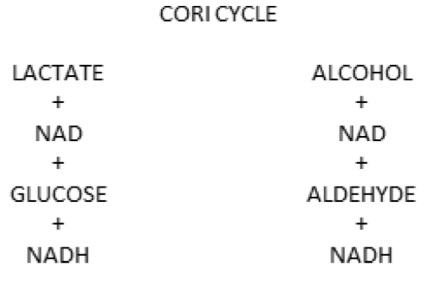
CORI Cycle
Metabolic acidosis
Coma
Hyperthermia
Hypoglycemia
ALCOHOL Clinical Presentation:
Metabolic acidosis or Metabolic alkalosis
Coma or Seizure
Hyperthermia or Hypothermia
Hypoglycemia or Hyperglycemia
c. Vitamin B1 (Thiamine)
Which vitamin should be administered before glucose in chronic alcohol intoxication?
a. Vitamin B6 (Pyridoxine)
b. Vitamin B12 (Cobalamin)
c. Vitamin B1 (Thiamine)
d. Vitamin K
b. Wernicke-Korsakoff syndrome
Administration of thiamine before glucose helps prevent:
a. Reye's syndrome
b. Wernicke-Korsakoff syndrome
c. Fetal alcohol syndrome
d. Hepatic encephalopathy
b. Vitamin B1 then glucose
A chronic alcoholic presenting with confusion and malnutrition should receive:
a. Glucose alone
b. Vitamin B1 then glucose
c. Naloxone then glucose
d. Vitamin K then glucose
c. Hemodialysis
In severe alcohol poisoning, which extracorporeal method may be utilized?
a. Hemoperfusion
b. Plasmapheresis
c. Hemodialysis
d. Exchange transfusion
a. IV fluids and supportive care
A dehydrated patient with acute alcohol intoxication should receive:
a. IV fluids and supportive care
b. Vitamin K
c. Activated charcoal
d. EDTA
a. Claviceps purpurea
Ergot alkaloids are derived from:
a. Claviceps purpurea
b. Digitalis purpurea
c. Papaver somniferum
d. Atropa belladonna
c. Ergotamine
Which drug is an ergot alkaloid used for acute migraine treatment?
a. Methysergide
b. Ergonovine
c. Ergotamine
d. Sumatriptan
b. Ergonovine
Which ergot alkaloid is commonly used for postpartum bleeding?
a. Ergotamine
b. Ergonovine
c. Digoxin
d. Morphine
b. Postpartum bleeding
Methysergide and ergonovine uses
a. Acute migraine treatment
b. Postpartum bleeding
c. Anticoagulation therapy
d. Treatment of seizures
d. Both B and C
Which of the following is an abortifacient ergot derivative?
a. Ergotamine
b. Ergonovine
c. Methysergide
d. Both B and C
e. Both A and B
b. Convulsive and gangrenous
Ergot toxicity may present in which two major forms?
a. Respiratory and cardiac
b. Convulsive and gangrenous
c. Acute and chronic
d. Hepatic and renal