Bio 141 - Lab 1 quiz study guide
 Call Kai
 Learn
Learn Practice Test
 Spaced Repetition
 Match
Match Flashcards
 Knowt Play
1/43

There's no tags or description
Looks like no tags are added yet.
Name | Mastery | Learn | Test | Matching | Spaced | Call with Kai | Chat |
|---|
No analytics yet
Send a link to your students to track their progress
44 Terms
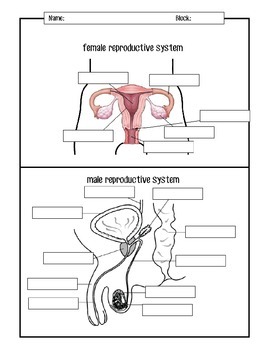
reproductive system
major organs: gonads (testes and ovaries)
transports the gender cells and development of fetus
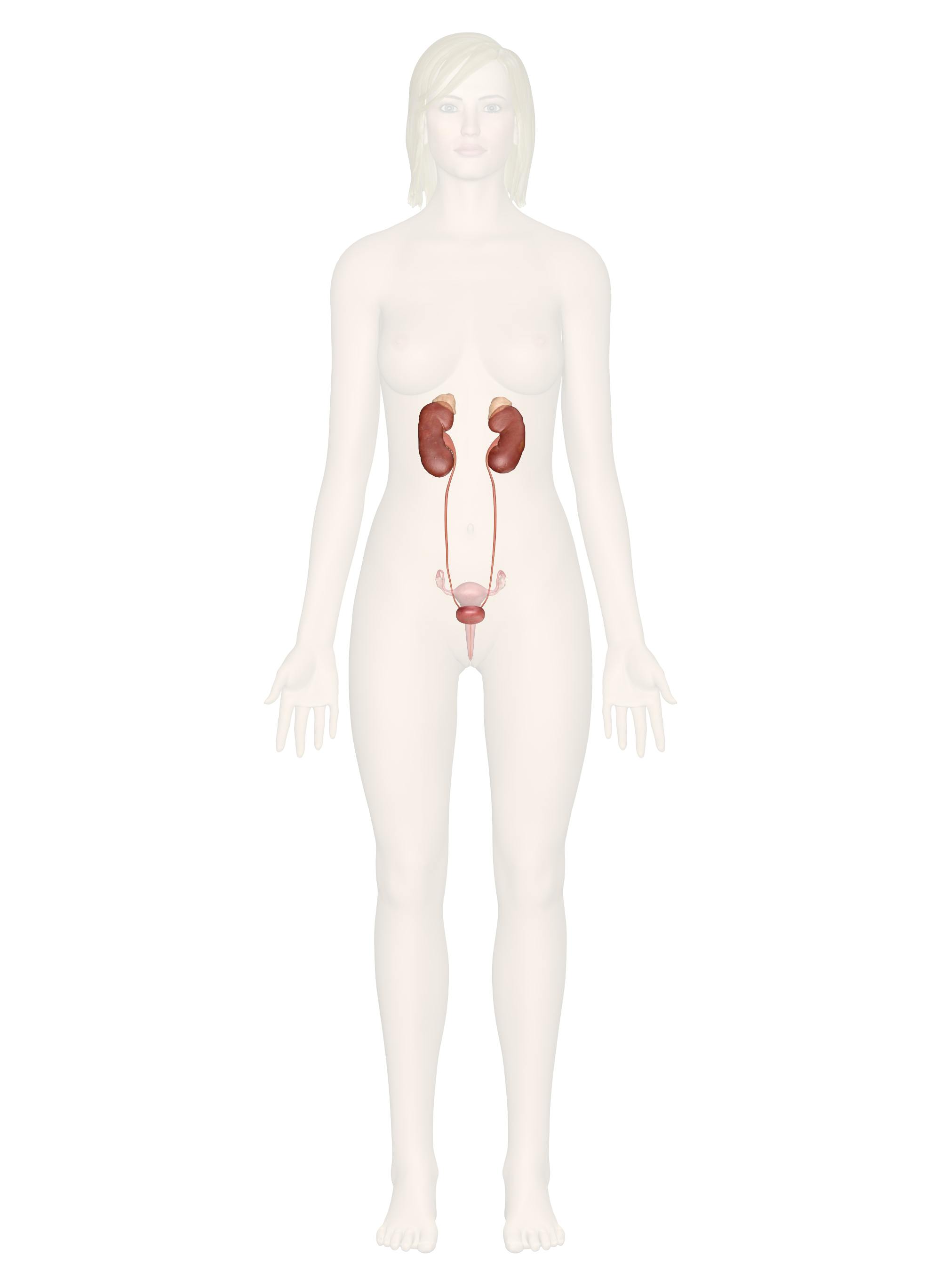
urinary system
major organs: kidneys, ureters, urinary bladder, and urethra
get rid of nitrogenous wastes, filters, adjusts chemical balance of bodily fluids, and maintains the blood volume
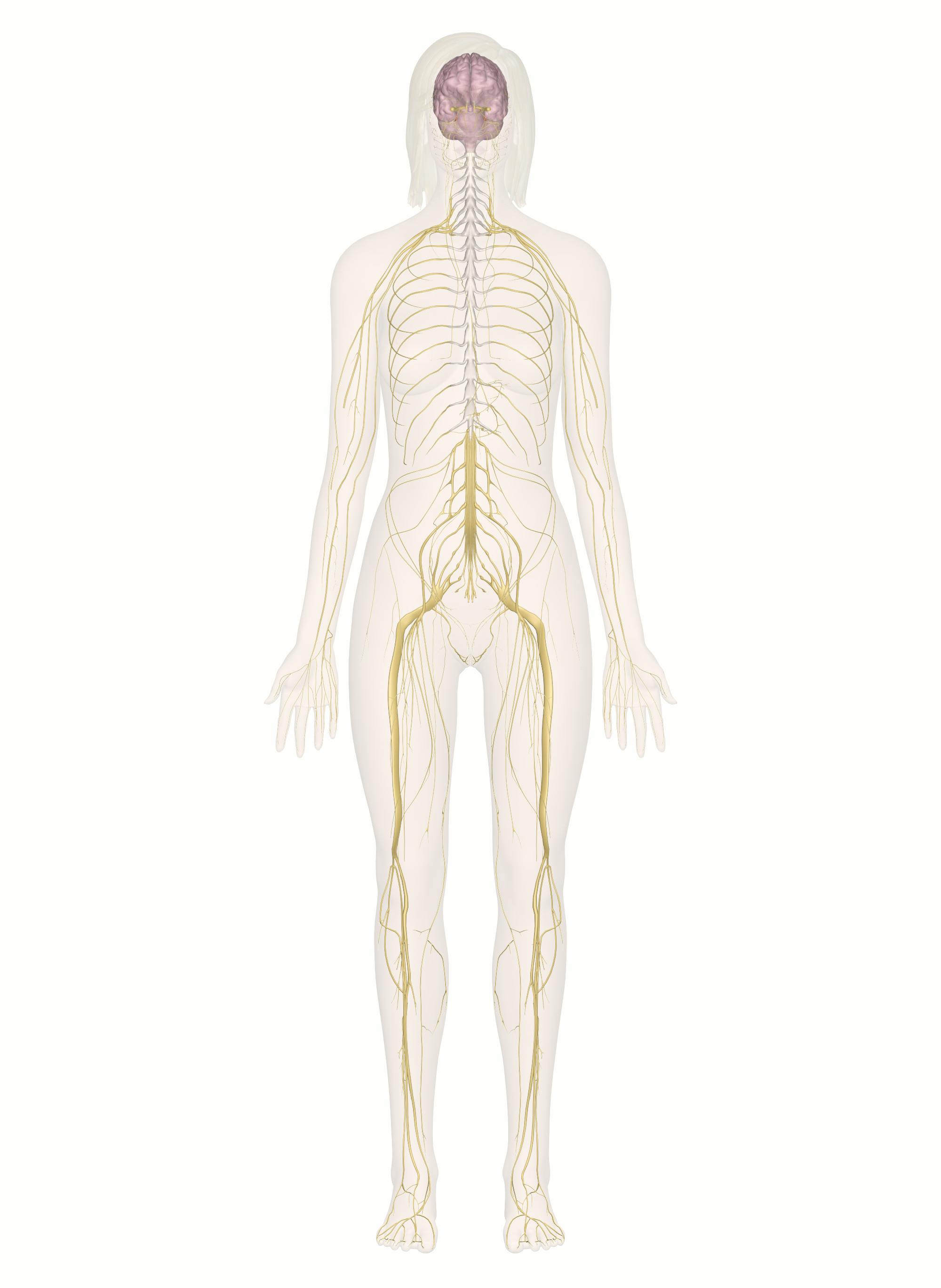
nervous system
major organs: brain spinal cords, nerves
coordinates the body regions, interpret environmental cues and integrate information
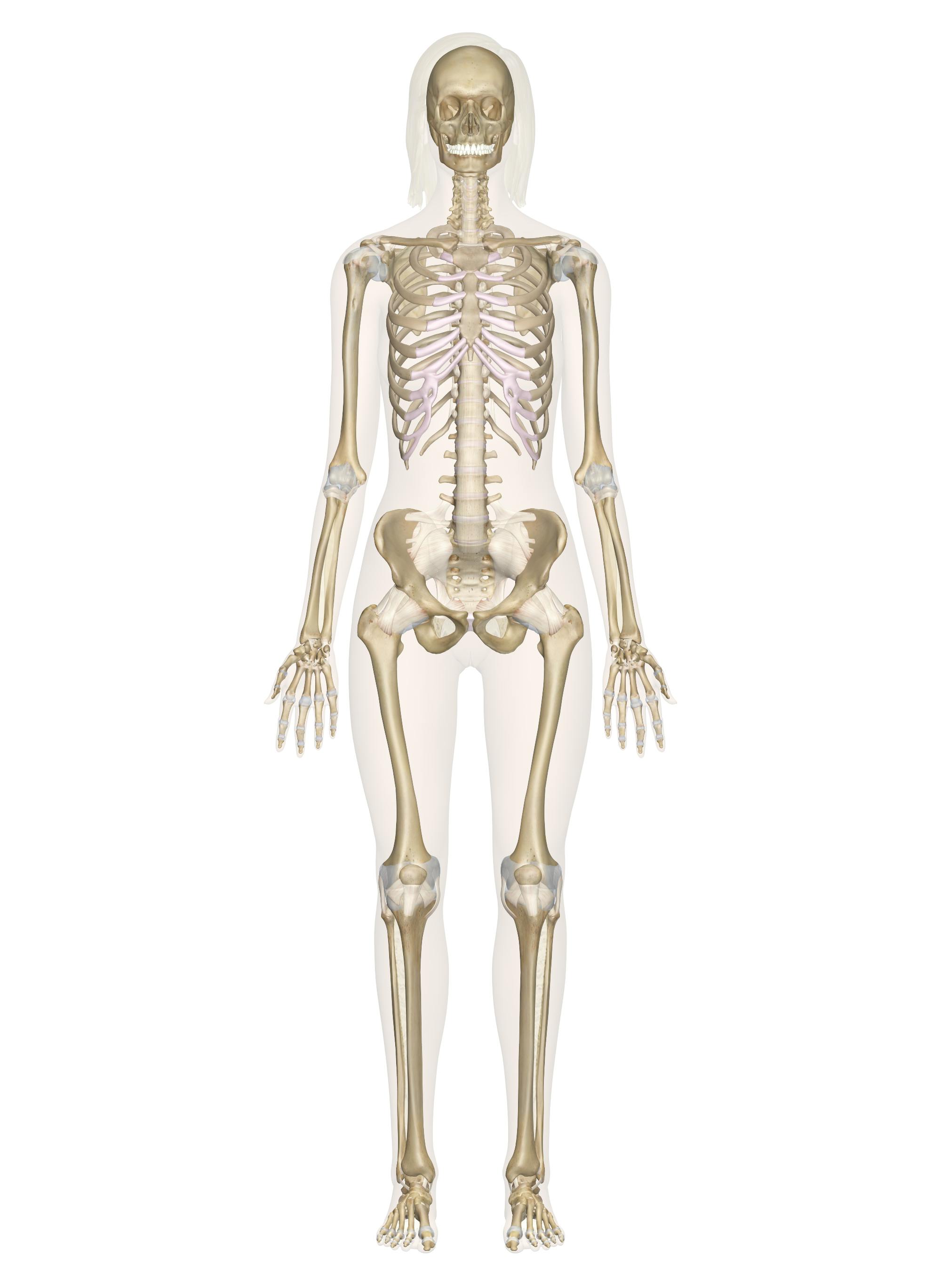
skeletal system
major organs: bones, cartilage, tendons, ligaments, joints
support the body protect delicate organs and produces blood
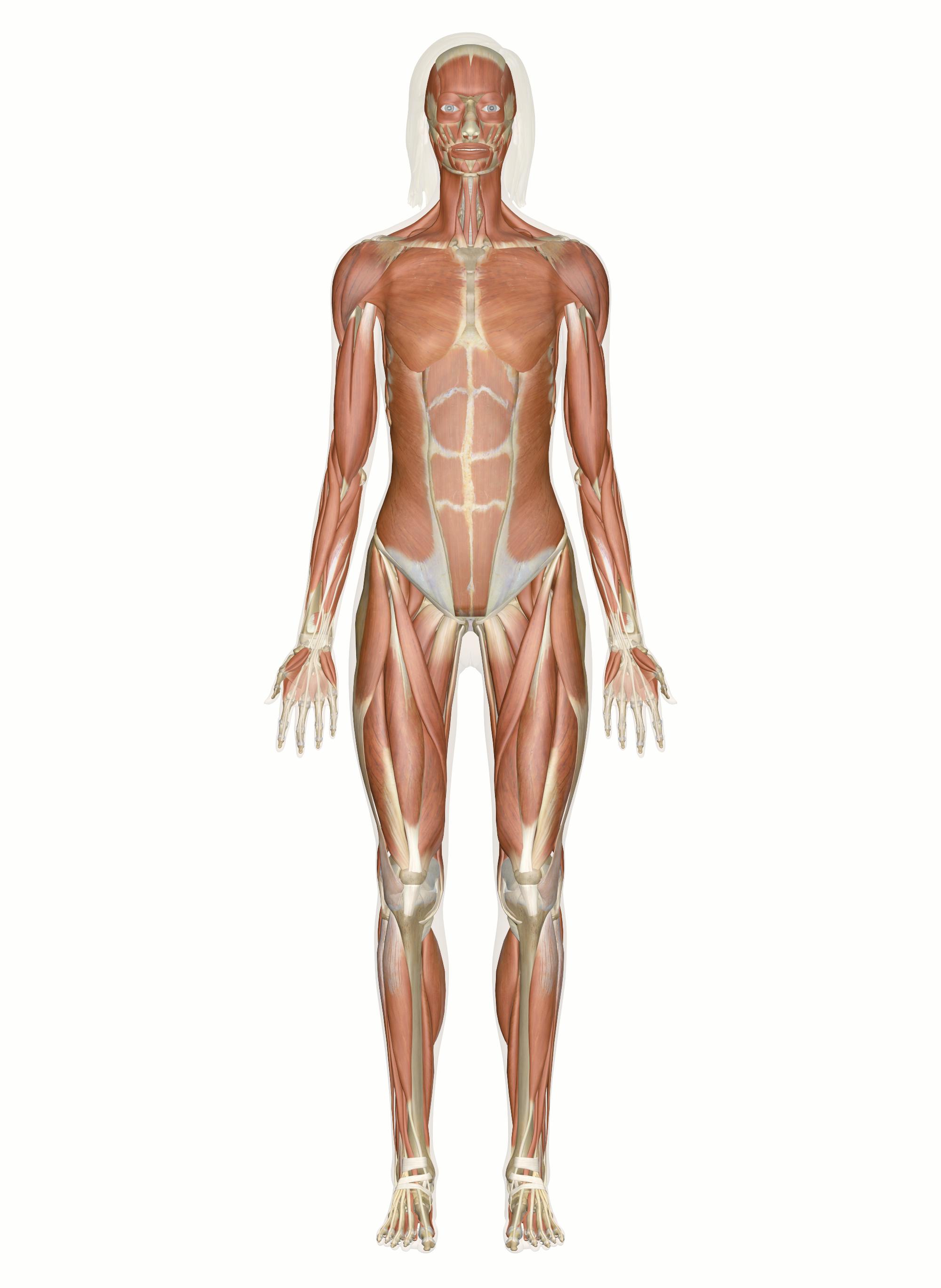
muscular system
major organs: all muscles attached to skeleton
move and strengthen the joints and generate heat, abdominal compression
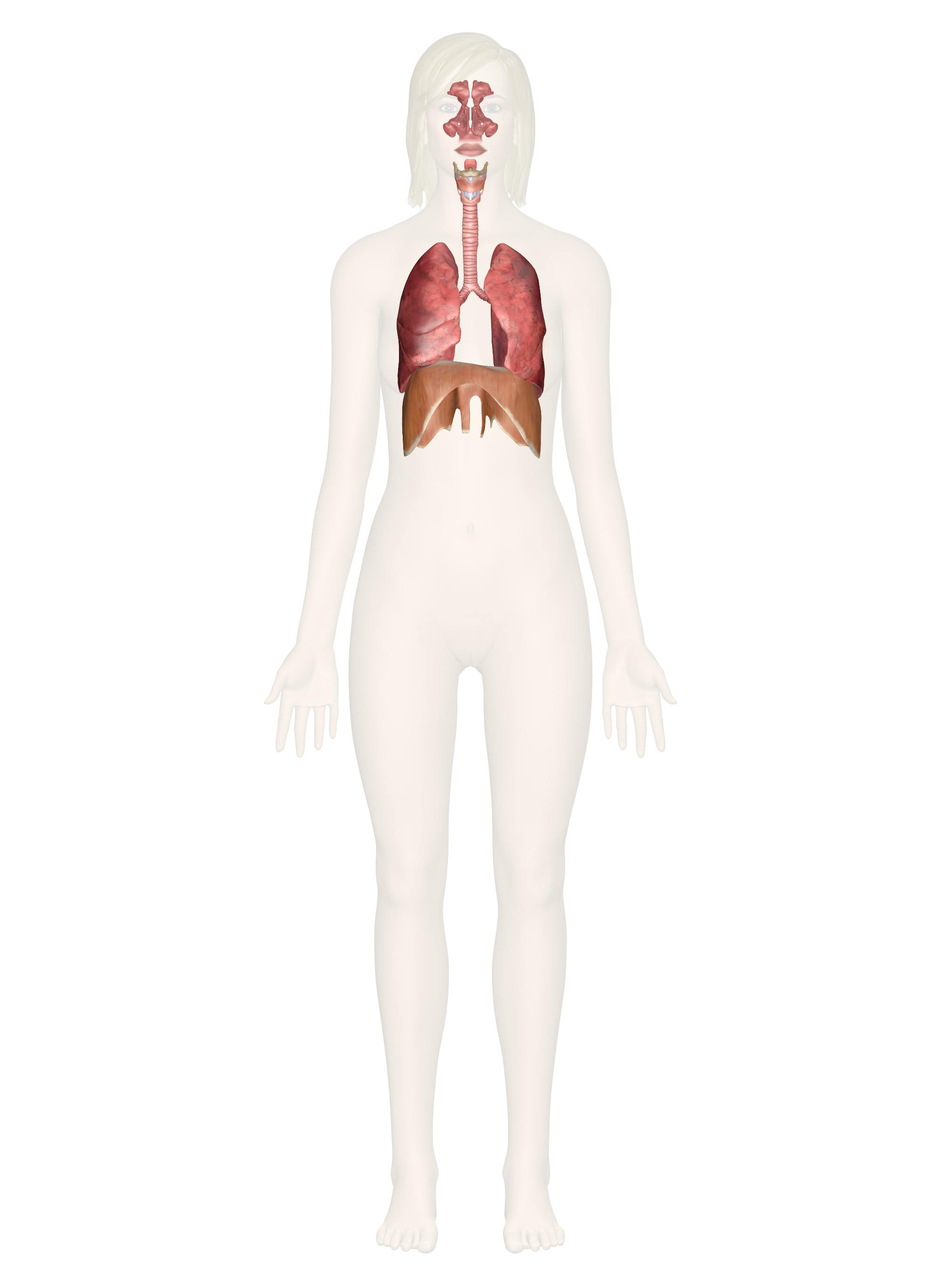
respiratory system
major organs: nose, larynx, trachea, lungs
absorption of O2 and discharge of CO2, acid-base balance, speech
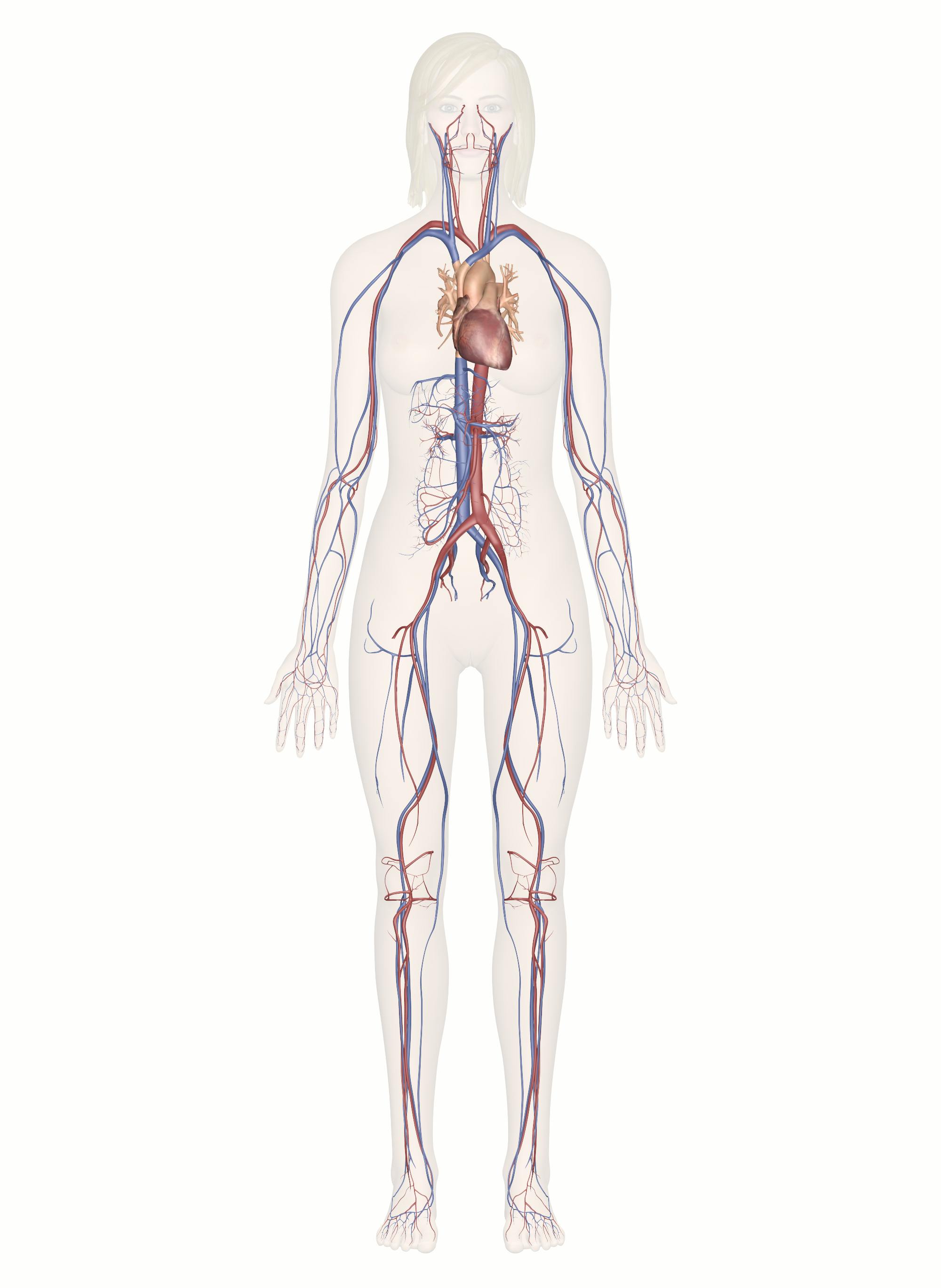
circulatory system
major organs: heart and blood vessels
distribution of nutrients, oxygens, wastes, hormones, electrolytes, heat, immune cells, antibodies, fluid, electrolyte and acid-base balance
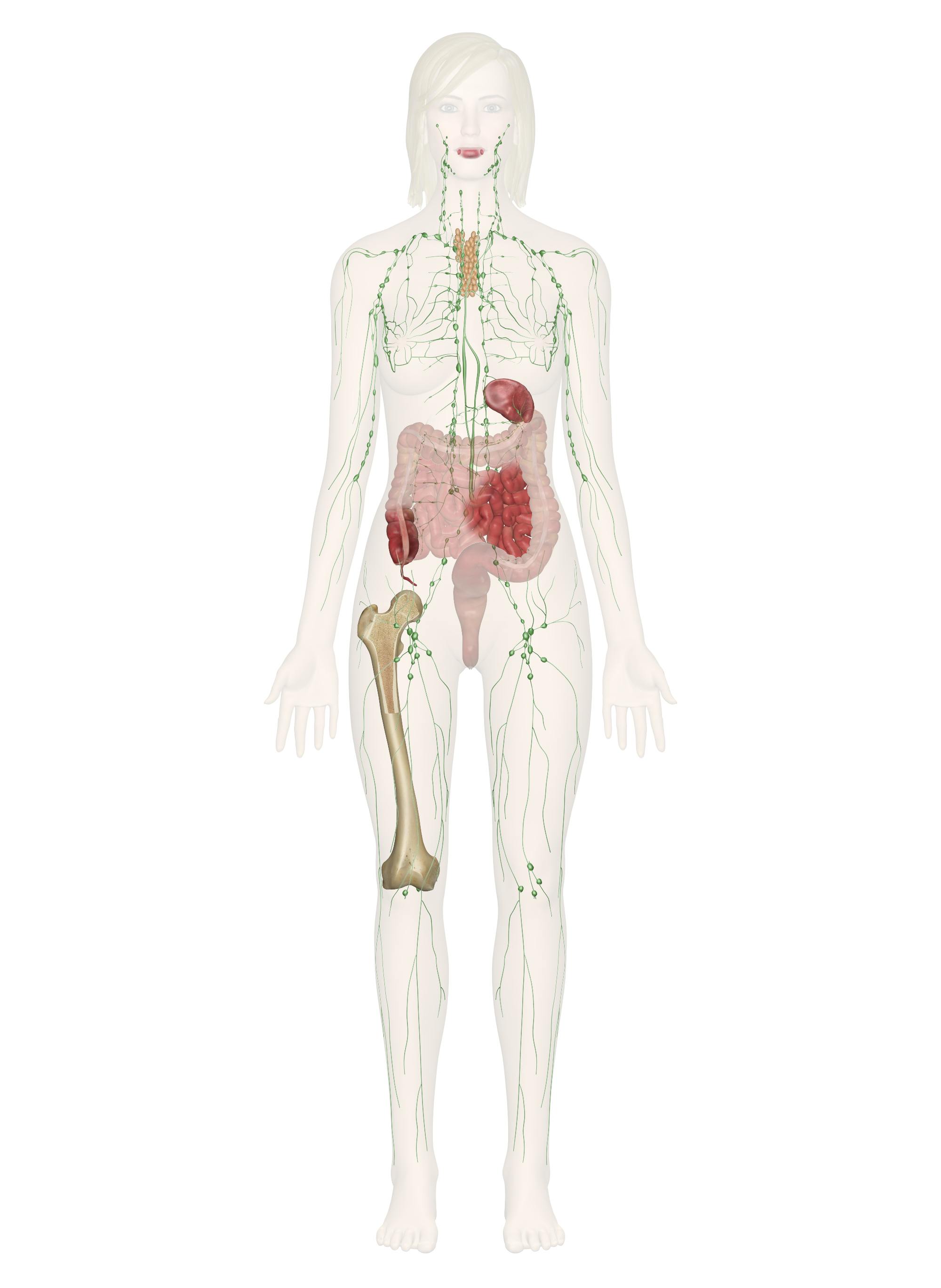
lymphatic system
major organs: lymph nodes, lymphatic vessels, thymus, spleen, tonsils
recover excess tissue fluid, detection of pathogens, production of immune cells, defense against disease
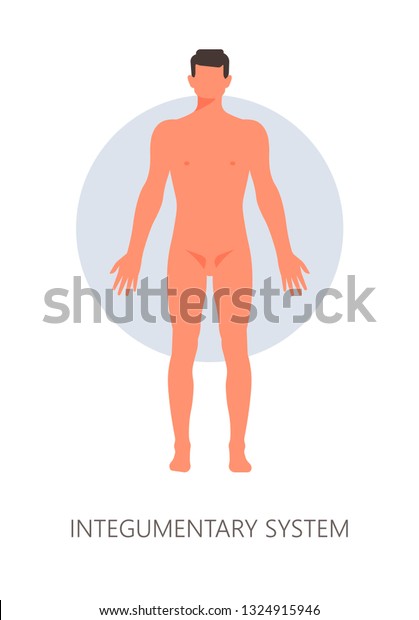
integument system
major organs: skin, hair, nails, cutaneous glands
protection, water retention, thermoregulation, vitamin D synthesis, cutaneous sensation, non-verbal communication
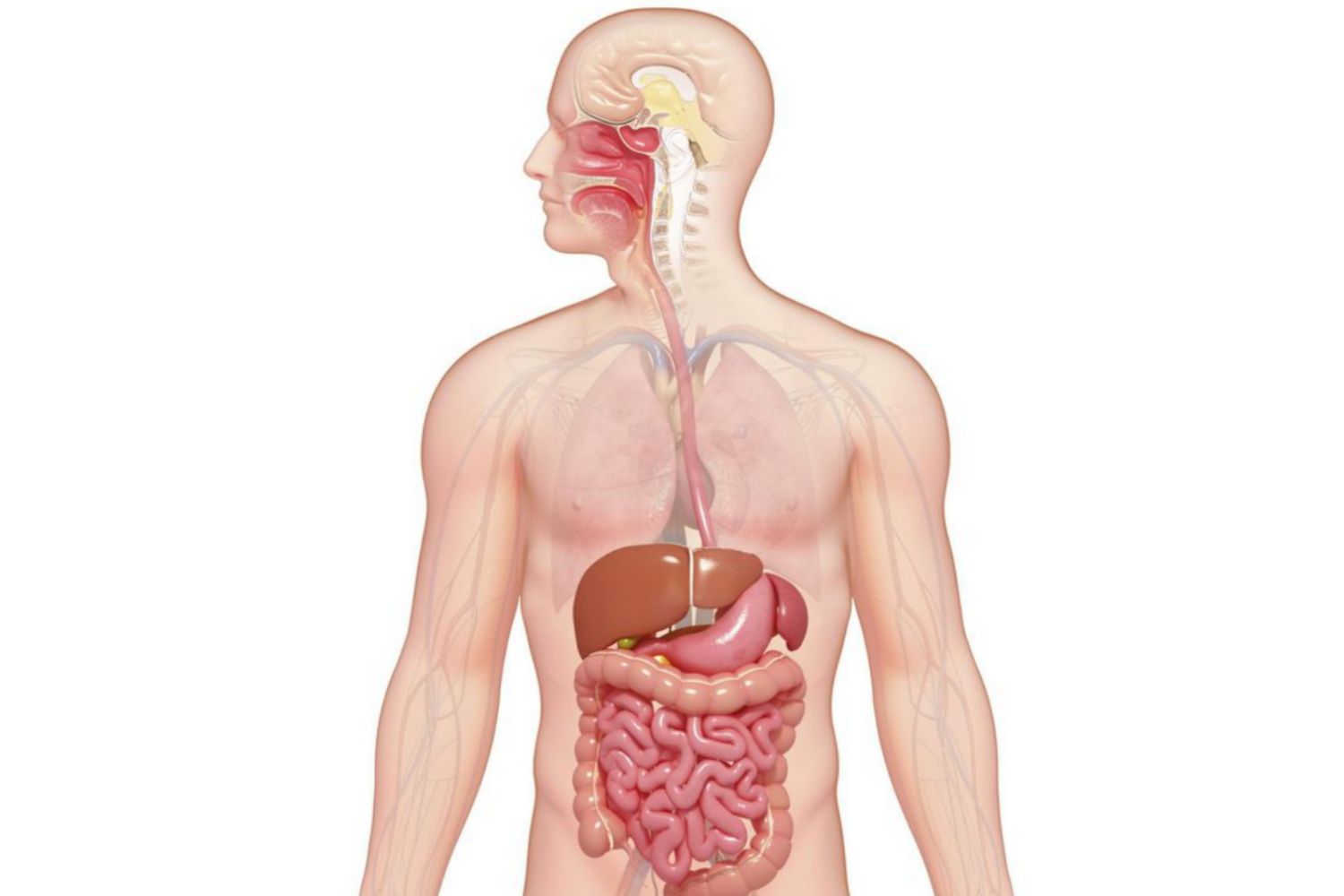
digestive system
major organs: teeth, tongue, salivary glands, esophagus, stomach, small and large intestines, liver, gallbladder, pancreas
nutrient breakdown and absorption, metabolism, synthesis of plasma proteins
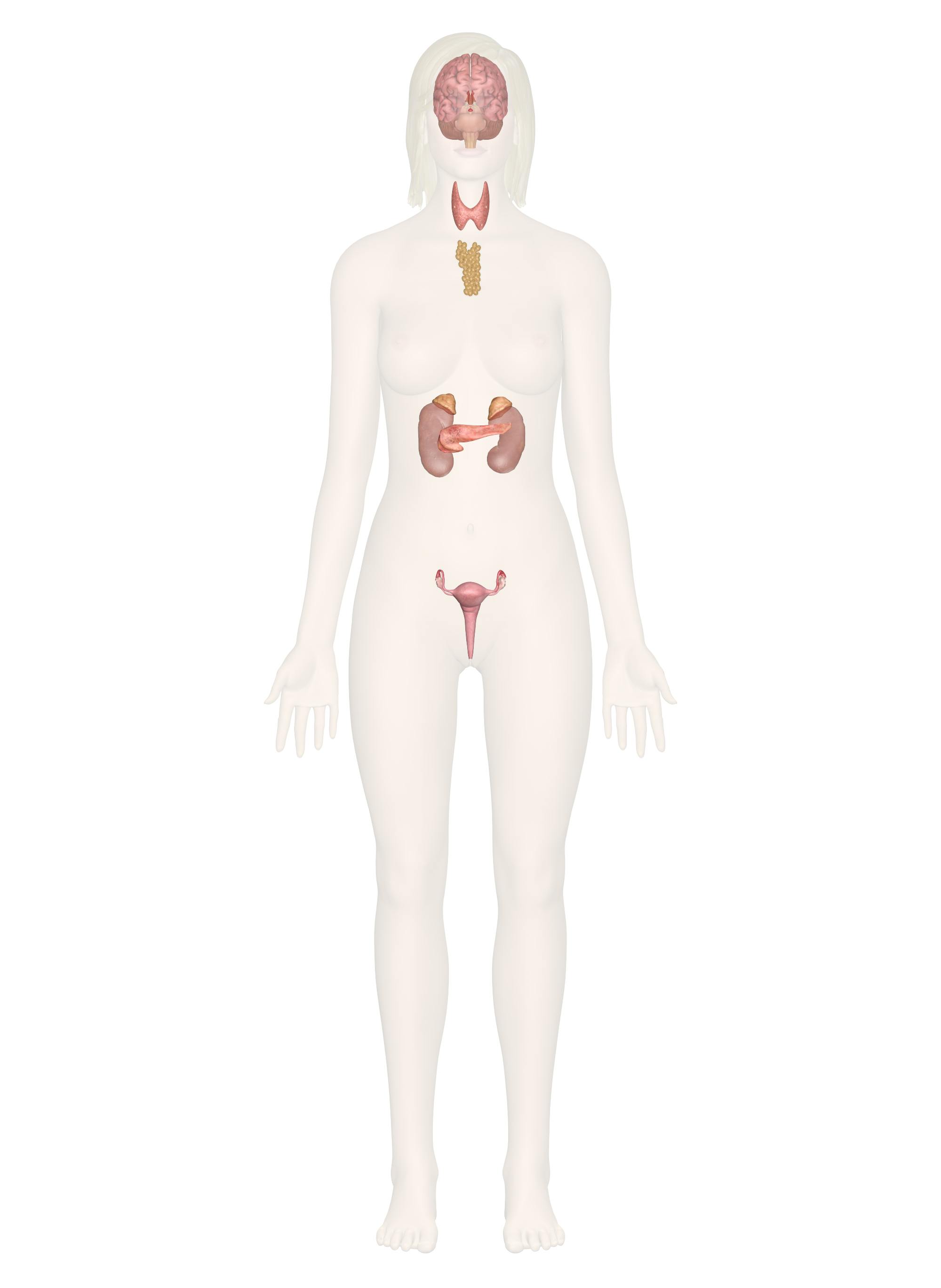
endocrine system
major organs: pituitary gland, thyroid gland, parathyroid gland, thymus, adrenal glands, pancreas, testes, ovaries
hormone production & internal chemical communication and coordination
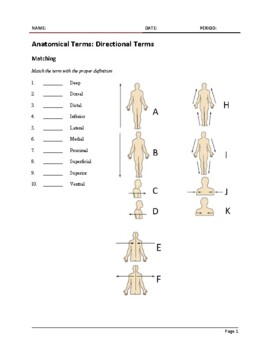
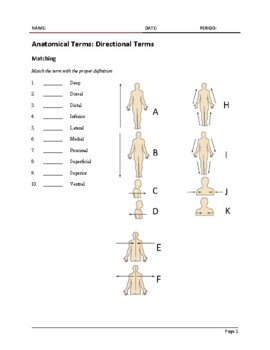
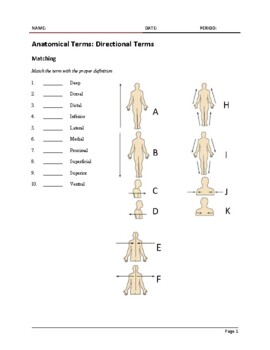
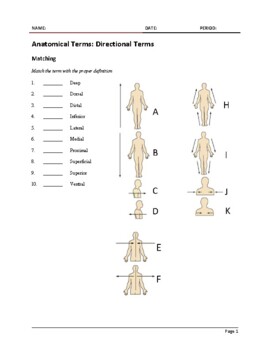
what directional term is A?
superior
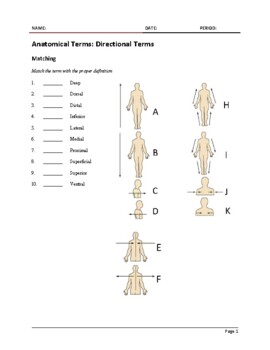
what directional term is B?
inferior
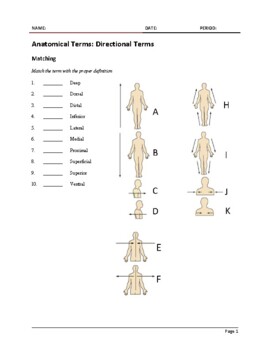
what directional term is C?
anterior
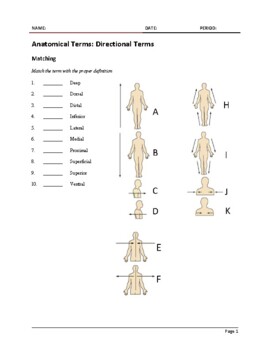
what directional term is D?
posterior
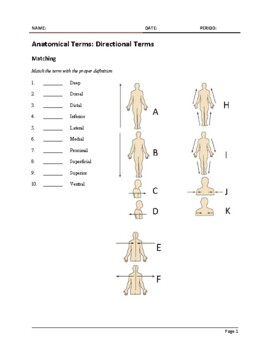
what directional term is E?
medial
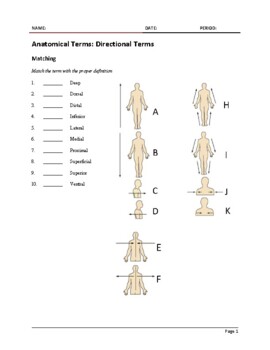
what directional term is F?
lateral
what directional term is H?
promixal
what directional term is I?
distal
what directional term is J?
superficial
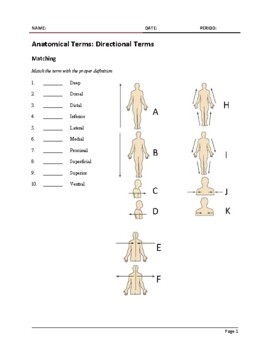
what directional term is K?
deep
Describe anatomical position and its importance
a universal standard in which anatomical specimens are oriented in the same position for reference
important because it prevents confusion when comparing anatomical directions on specimens (patients)
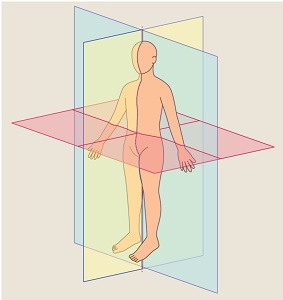
what planes of section is the blue area?
coronal/frontal
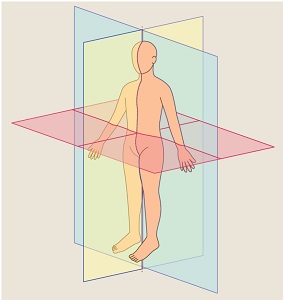
what planes of section is the red area?
transverse/horizontal
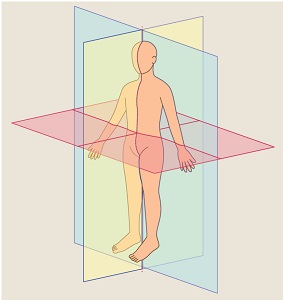
what planes of section is the yellow area?
midsagittal
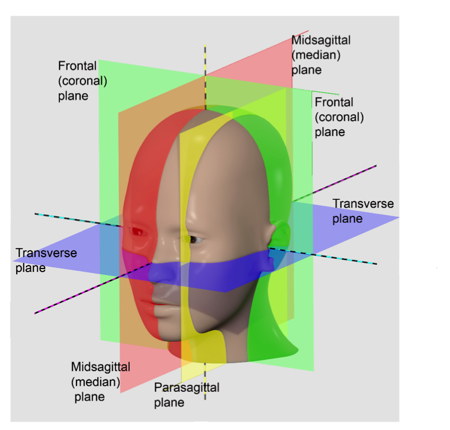
what planes of section is the yellow line?
parasagittal
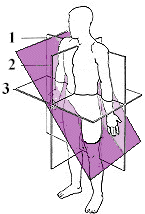
what planes of section is the purple area?
oblique
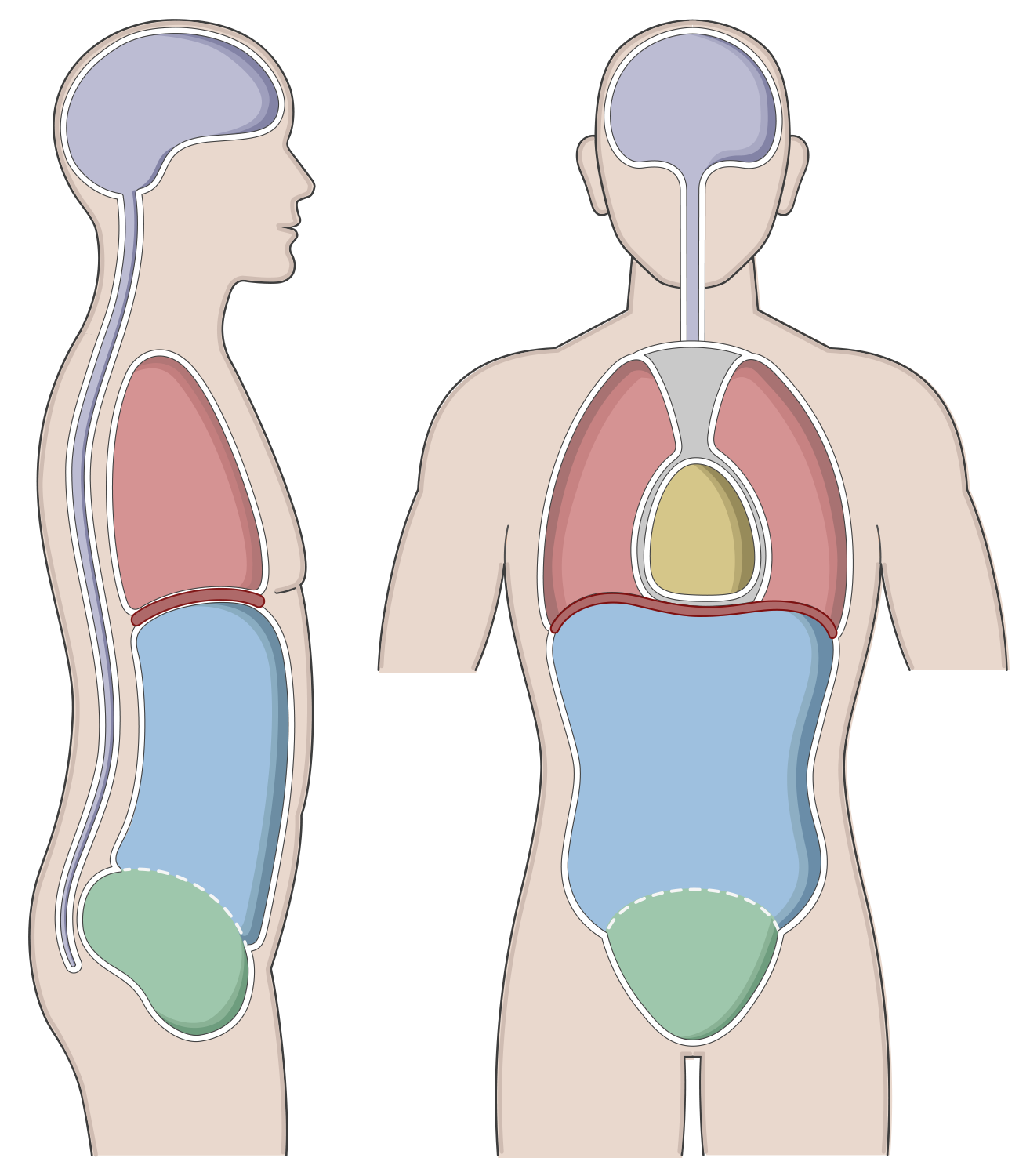
dorsal cavity
purple area (contains both cranial and spinal cavity)
major organs: skull, brain, spinal cord
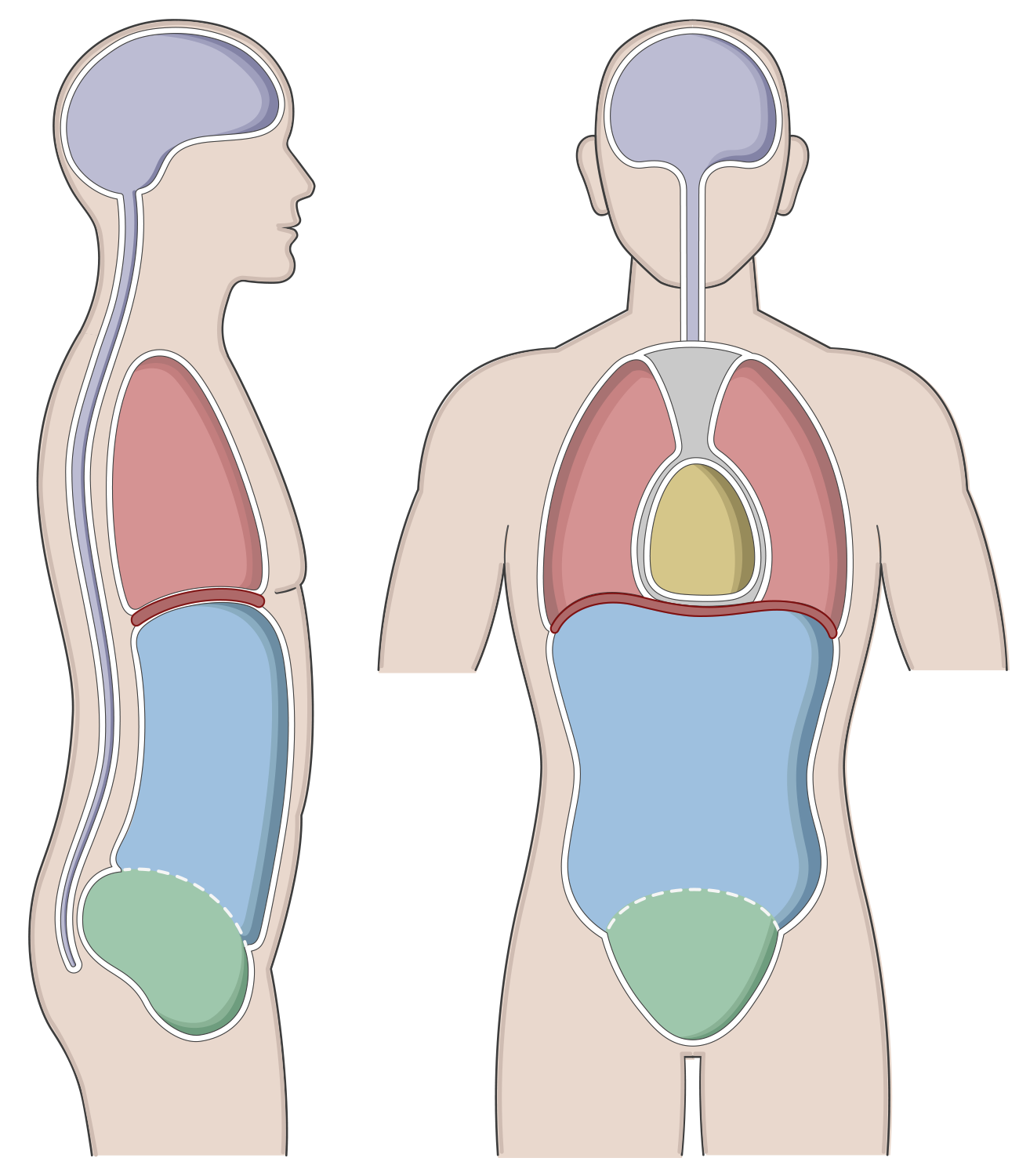
ventral cavity
red area (contains thoracic & abdominal-pelvic cavity)
thoracic cavity contains mediastinum, pleural, pericardial
major organs: heart, trachea, lungs, liver, intestines, stomach, kidney, pancreas, gallbladder, reproductive organs, bladder
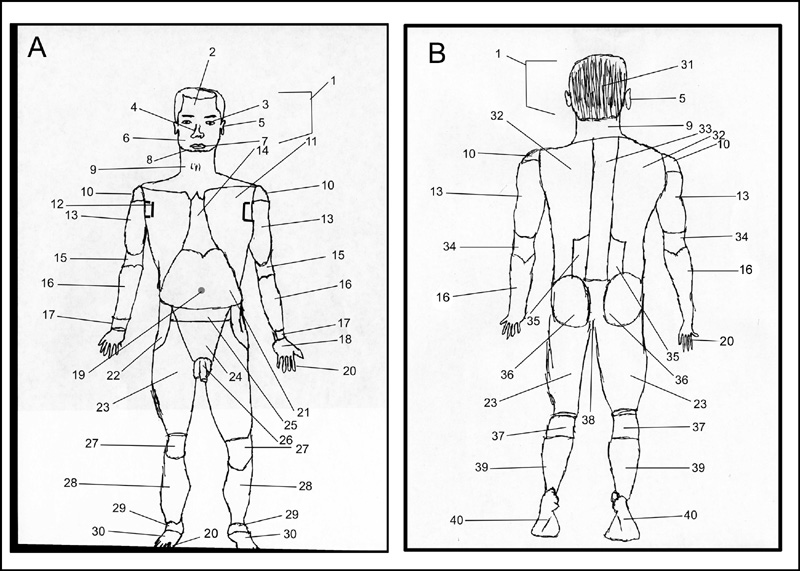
what region of the body is 1?
cranial
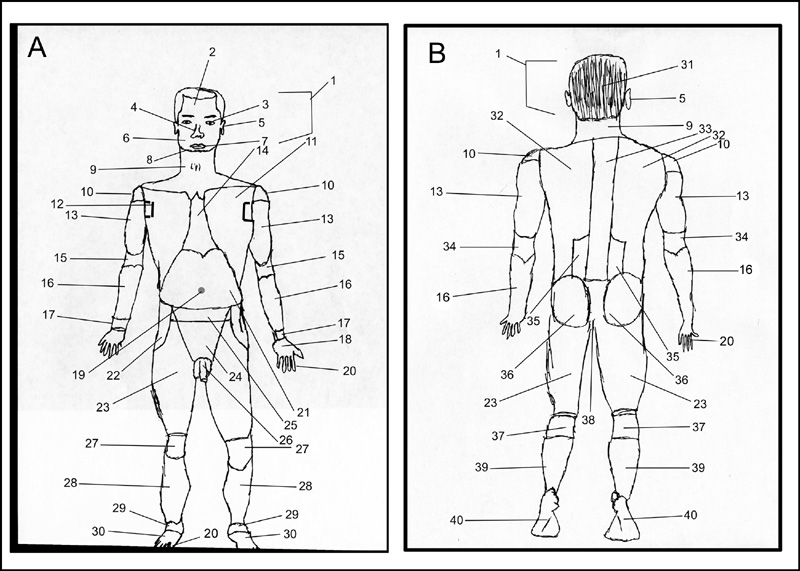
what region of the body is 2?
facial
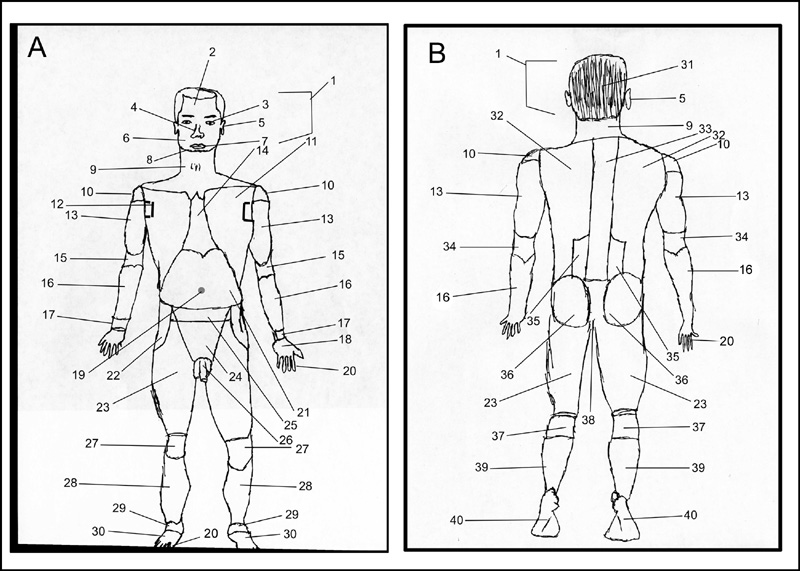
what region of the body is 31?
nuchal
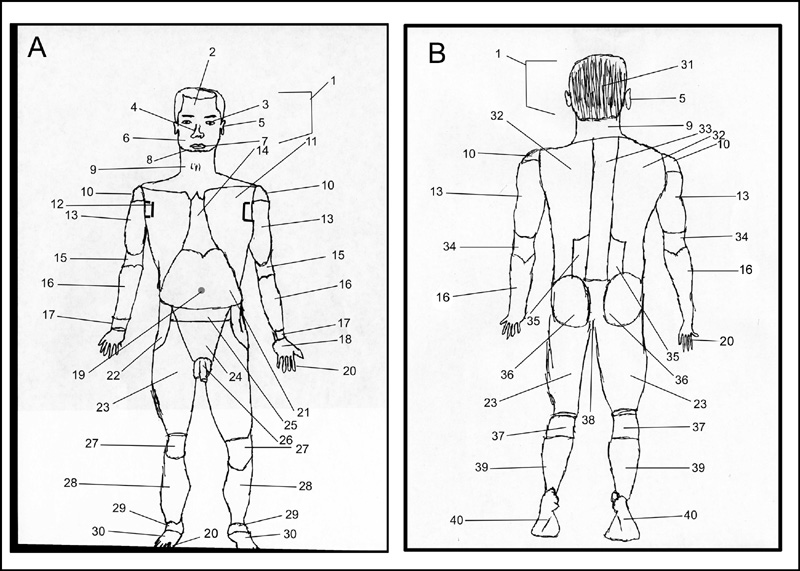
what region of the body is 6?
buccal
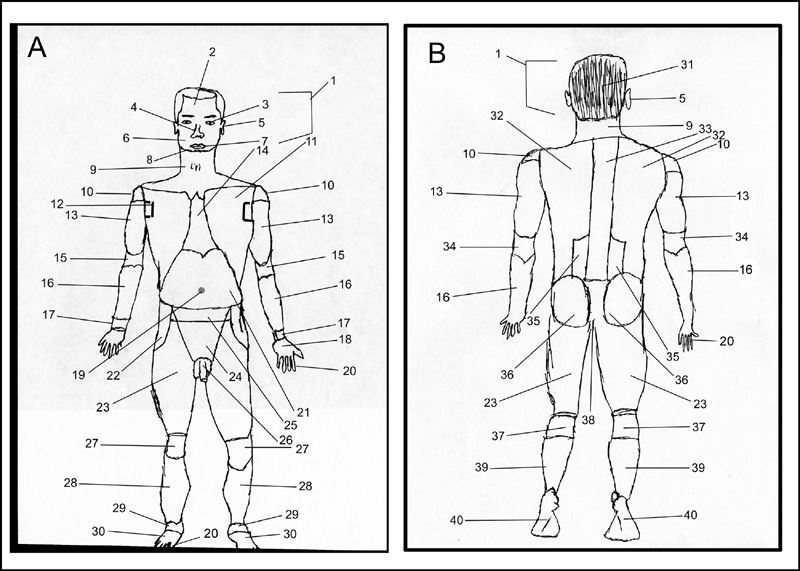
what region of the body is 9?
cervical
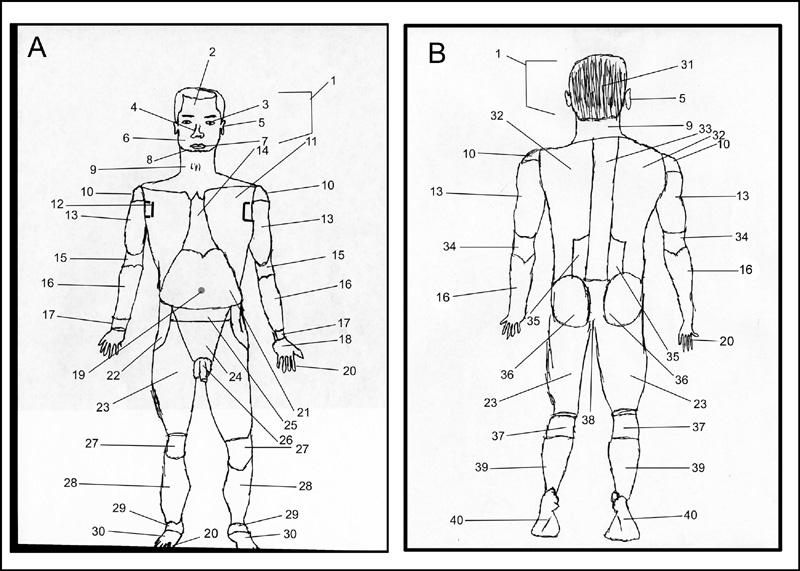
what region of the body is 8?
mental
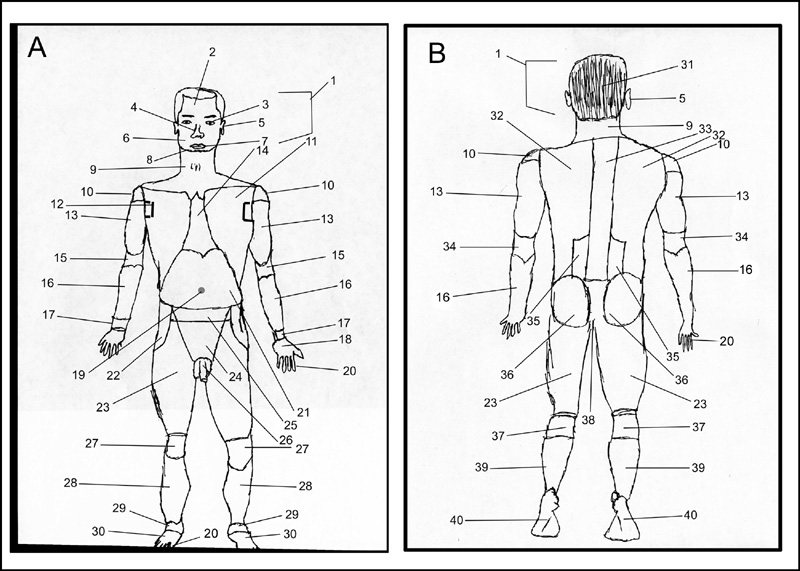
what region of the body is 10?
acromial
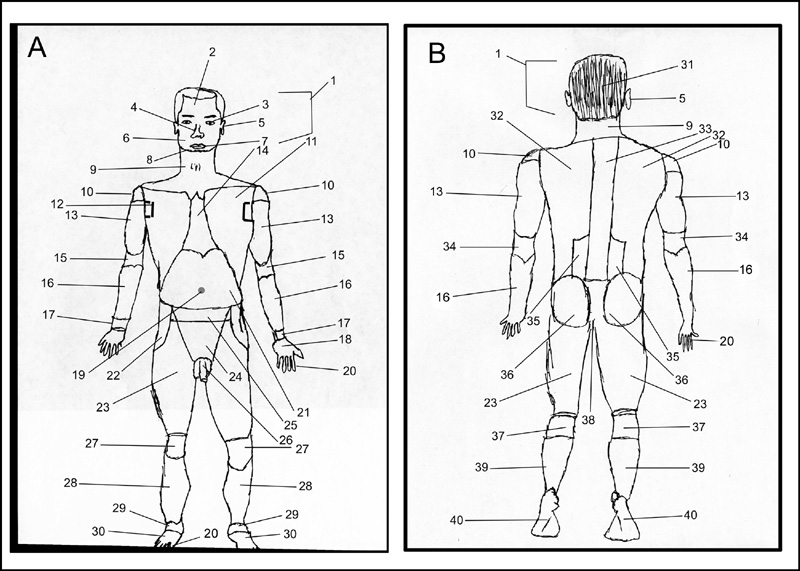
what region of the body is 13?
brachial
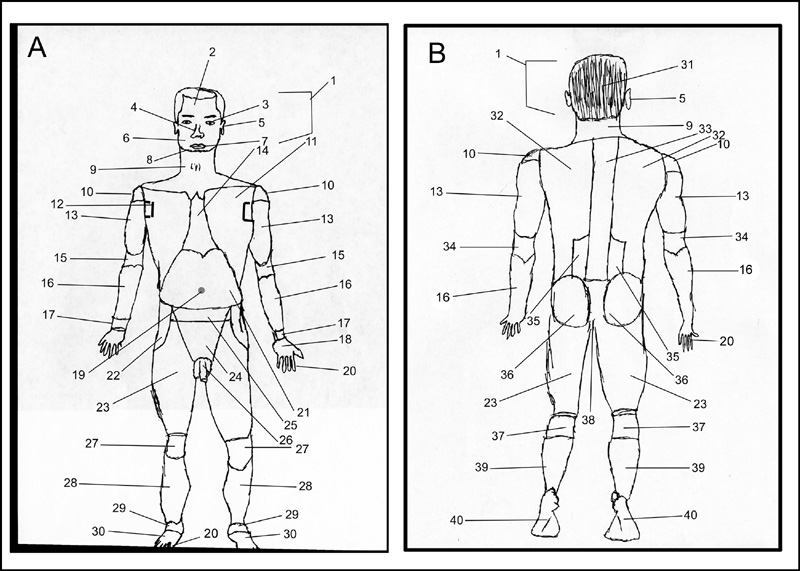
what region of the body is 15?
cubital
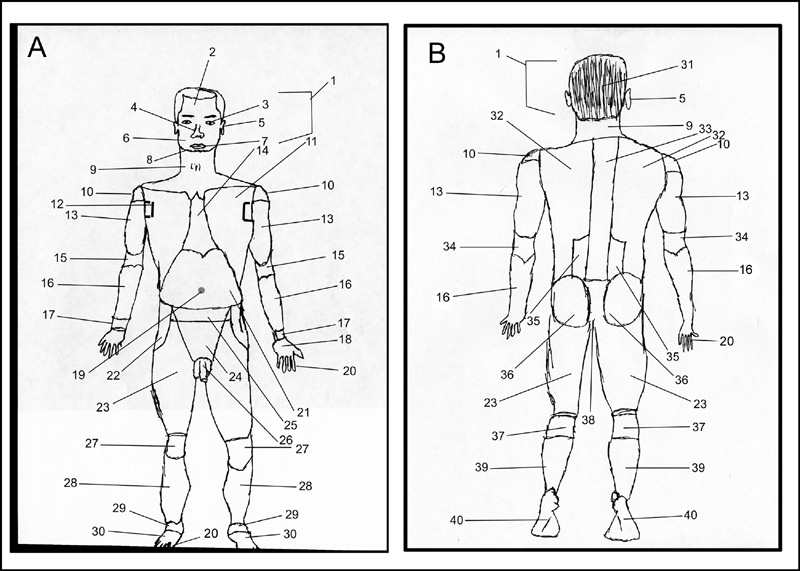
what region of the body is 16?
antebrachial
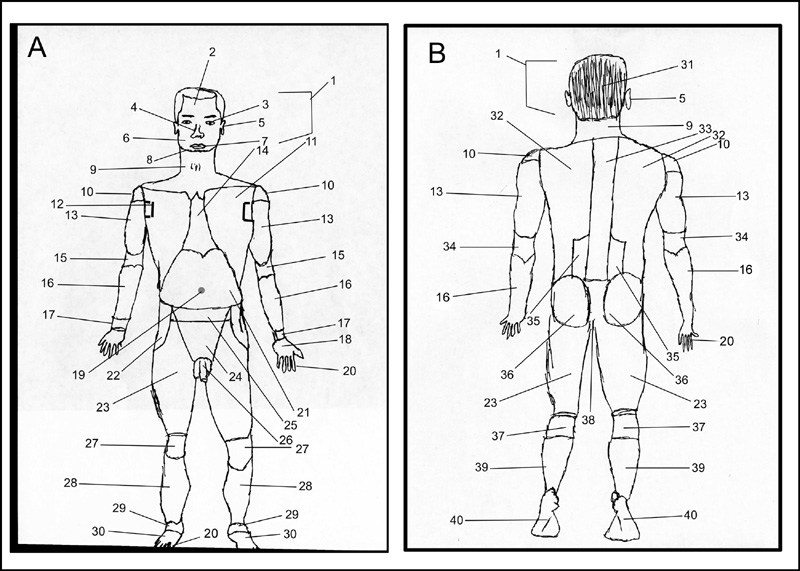
what region of the body is 38?
perineal
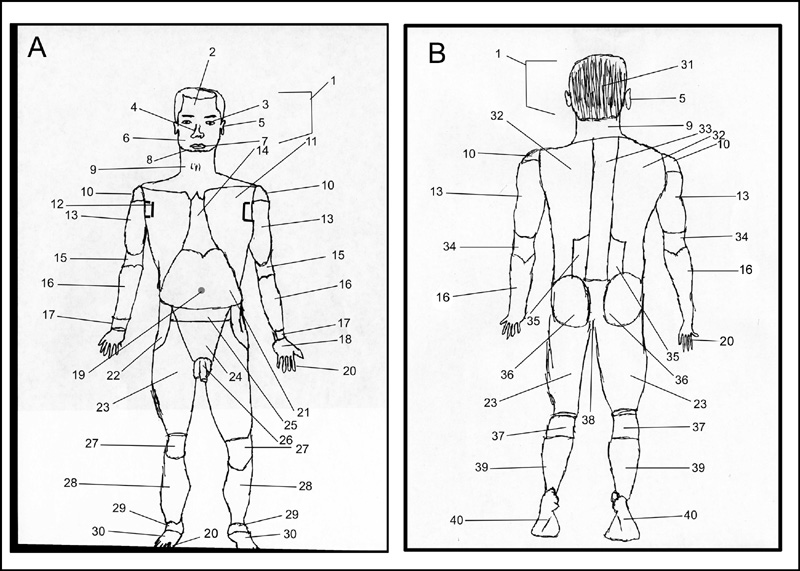
what region of the body is 23?
femoral
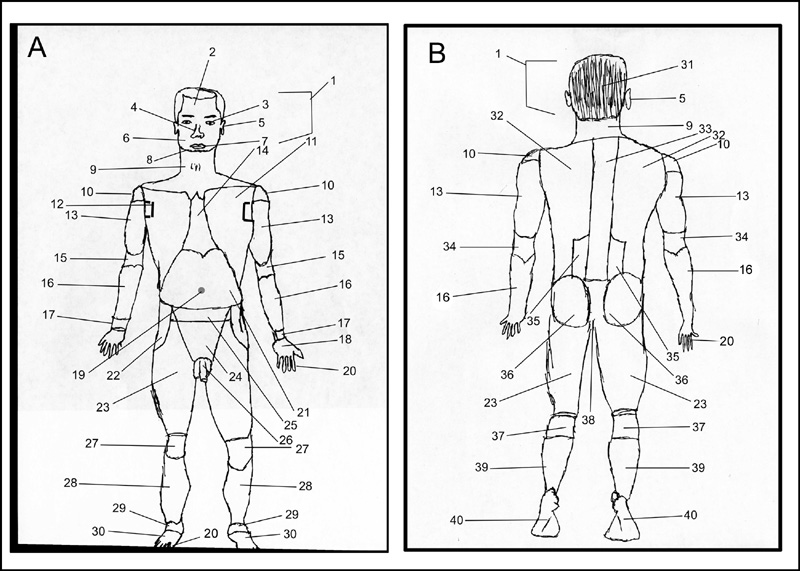
what region of the body is 29?
tarsal
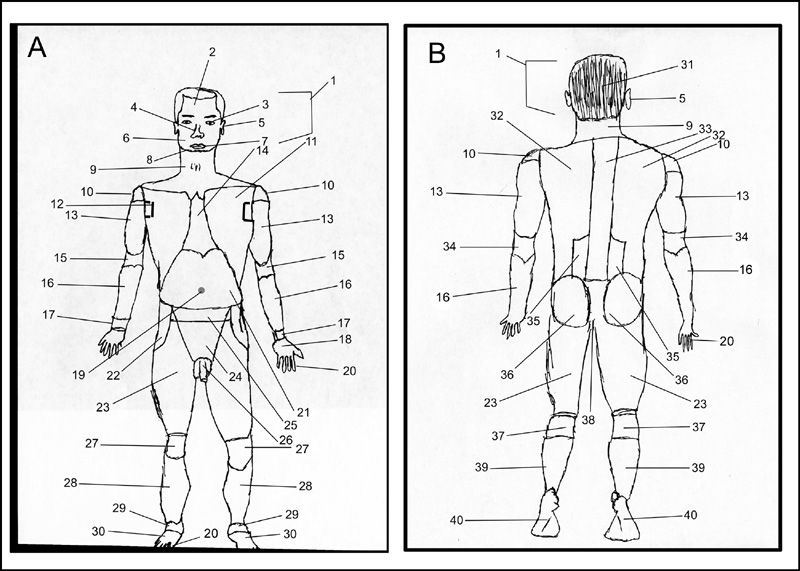
what region of body is 18?
palmar
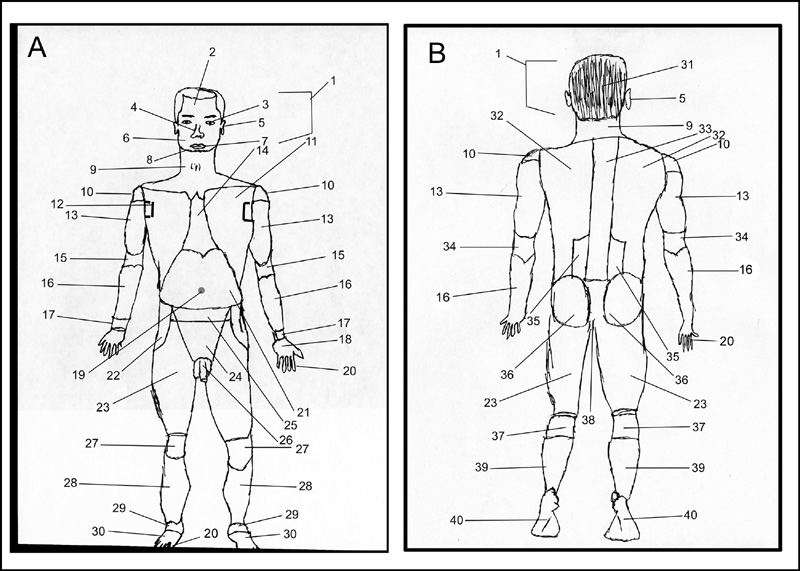
what region of body is 17?
carpal