Biol 130 - Chapter 3 Chemistry of Life
 Call Kai
 Learn
Learn Practice Test
 Spaced Repetition
 Match
Match Flashcards
 Knowt Play
1/49

There's no tags or description
Looks like no tags are added yet.
Name | Mastery | Learn | Test | Matching | Spaced | Call with Kai | Chat |
|---|
No analytics yet
Send a link to your students to track their progress
50 Terms
matter
is anything that has mass and takes up space
elements
are the basic building blocks of matter that cannot be broken down by chemical means
atoms
are the smallest units of an element that retain the element’s physical and chemical properties. these bond together to form molecules
parts of the periodic table of elements
atomic number: how many protons are in the nucleus
atomic symbol: letter abbreviation
atomic mass: average weight of an atom’s isotopes

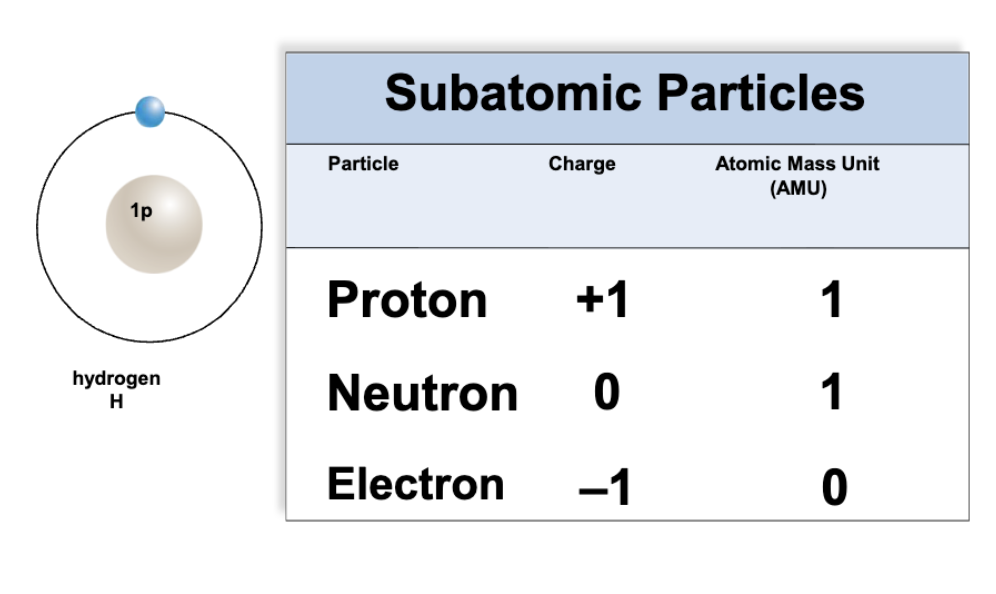
subatomic particles of atoms
neutrons are neutral (uncharged)
protons are positively charged
neutrons and protons make up the nucleus
electrons are negatively charged and orbit around the nucleus
isotopes
are atoms that have the same atomic number but a different atomic mass because the number of neutrons differ.

radioisotopes
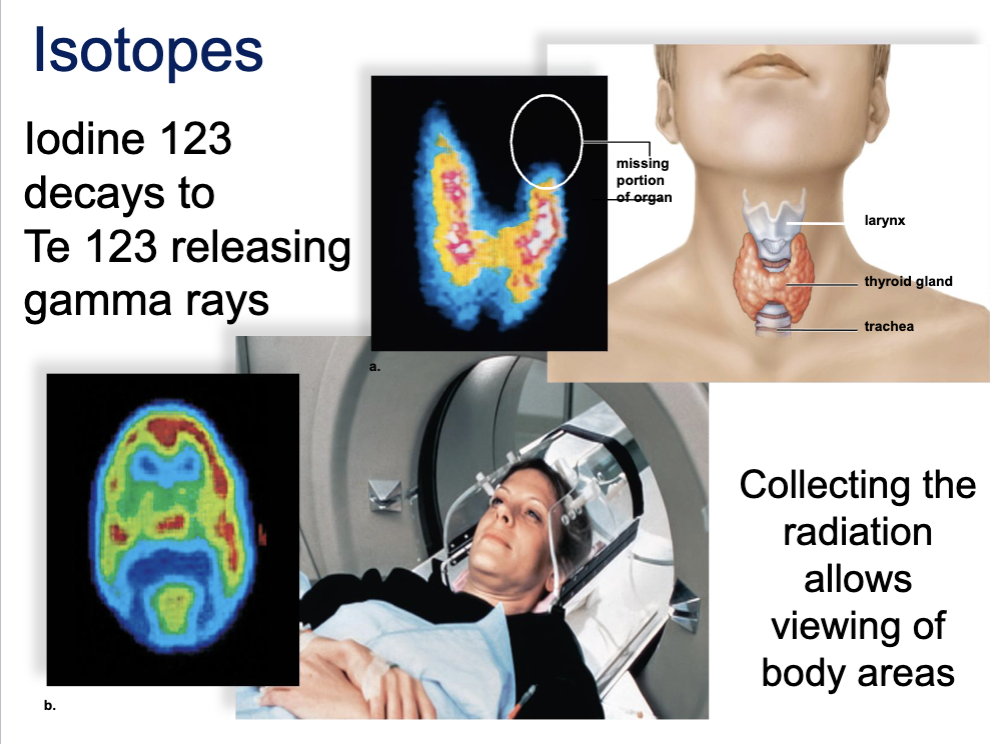
a type of isotope that is useful in dating old objects through decay of C14, imaging body organs and tissues through alpha, beta, gamma rays and x-rays, and killing cancer
any radiation can be harmful by damaging cells and DNA and/or causing cancer
molecules
made of atoms that are bonded together
can be made of the same atom N-N, or different atoms H2O
types of chemical bonds
covalent
hydrogen
ionic
covalent bond
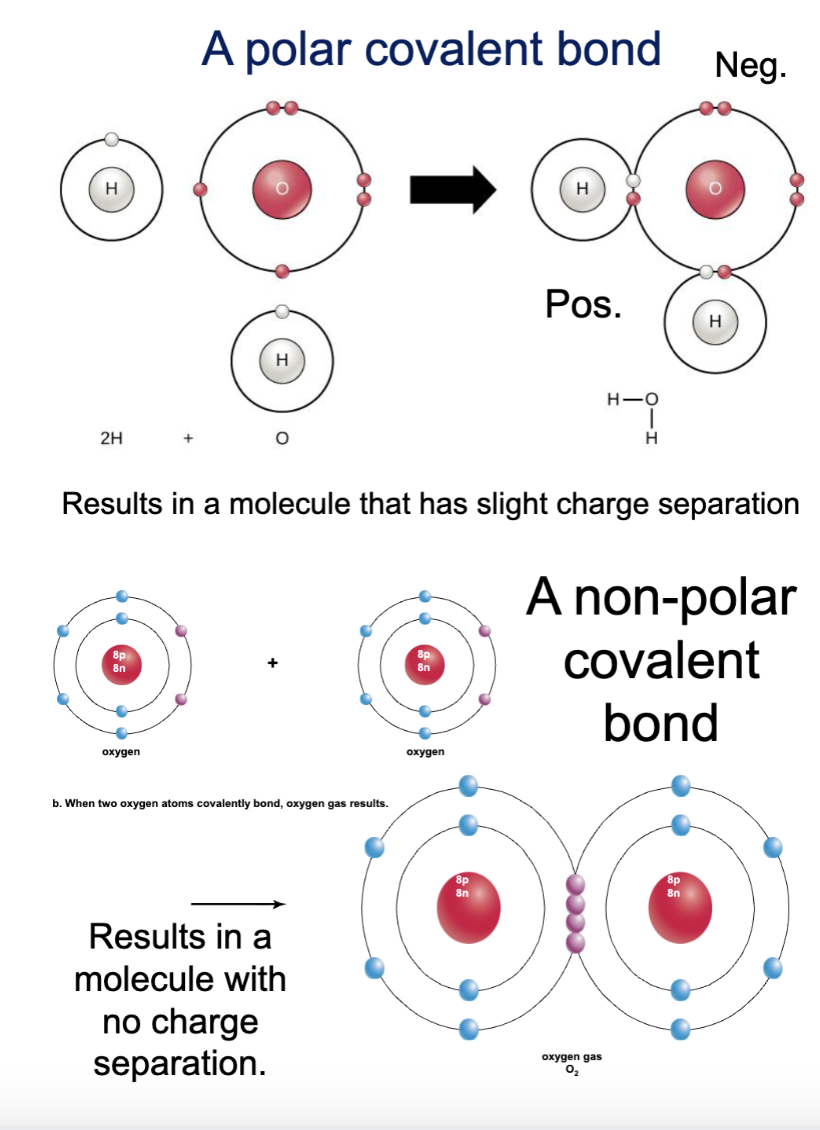
a type of chemical bond, atoms in this type of bond share electrons, result in a stable outer shell
a polar BLANK bond results in a molecule that has slight charge separation
a non-polar BLANK bond results in a molecule with no charge separation.
hydrogen bonds
occurs between two polar covalently bonded molecules (ie two water molecules)
the oxygen of H2O is slightly electronegative, the 2 H’s attached at an angle are slightly electropositive
opposites attract = the O is attracted to one of the 2 H’s on another water molecule

ionic bonds
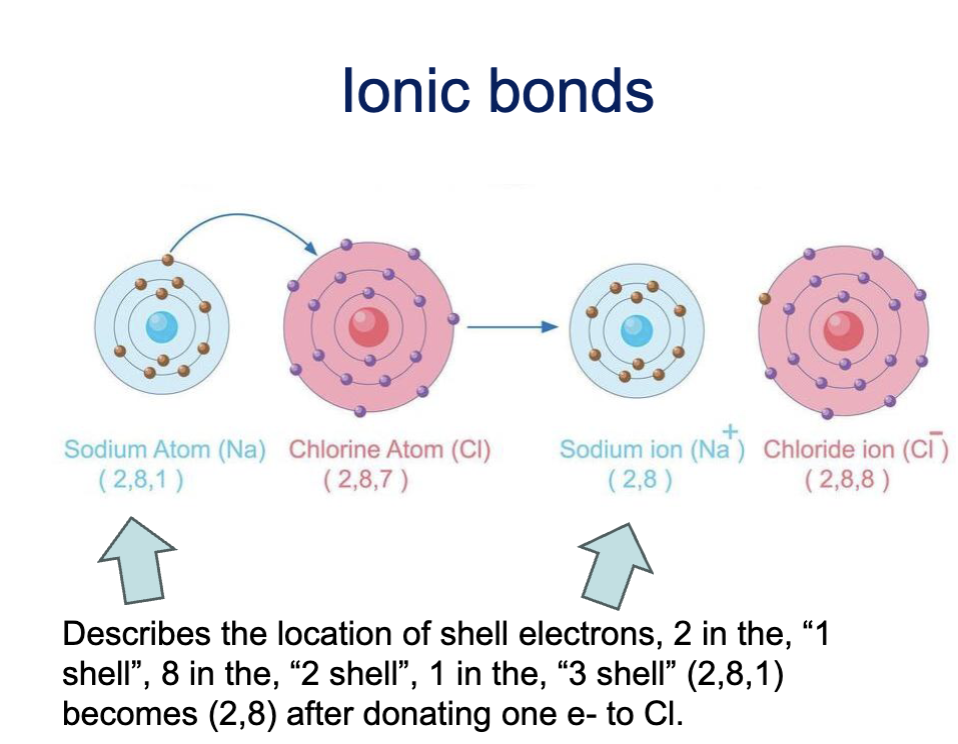
atoms in this type of bond donate or take on electrons
result in a stable outer shell of each atom
occur between particles that are charges (ions)
typically is a solid until dissolved into solution: ie table salt, sodium chloride, NaCI, a white solid until dissolved into a solvent then it vanishes from sight.
properties of water
water is liquid at room temperature
solid at 0 degrees cel
liquid water changes temperature slowly (high heat capacity)
water has a high heat of evaporation (100degree cel_
frozen water is less dense than liquid water, floats
molecules of water cling together through H bonds
water is a solvent for other polar molecules (like dissolves like = hydrophilic, ie NaCI) but not for non-polar ie fats/oils)
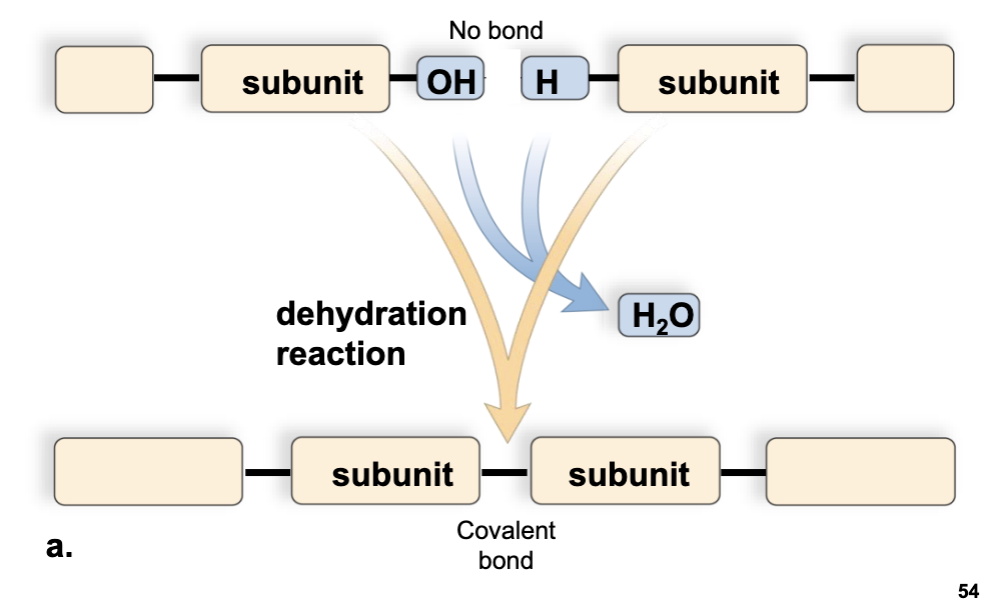
dehydration or condensation reaction
making/breaking down organic molecules
the removal of water that allows subunits to link together into larger molecules
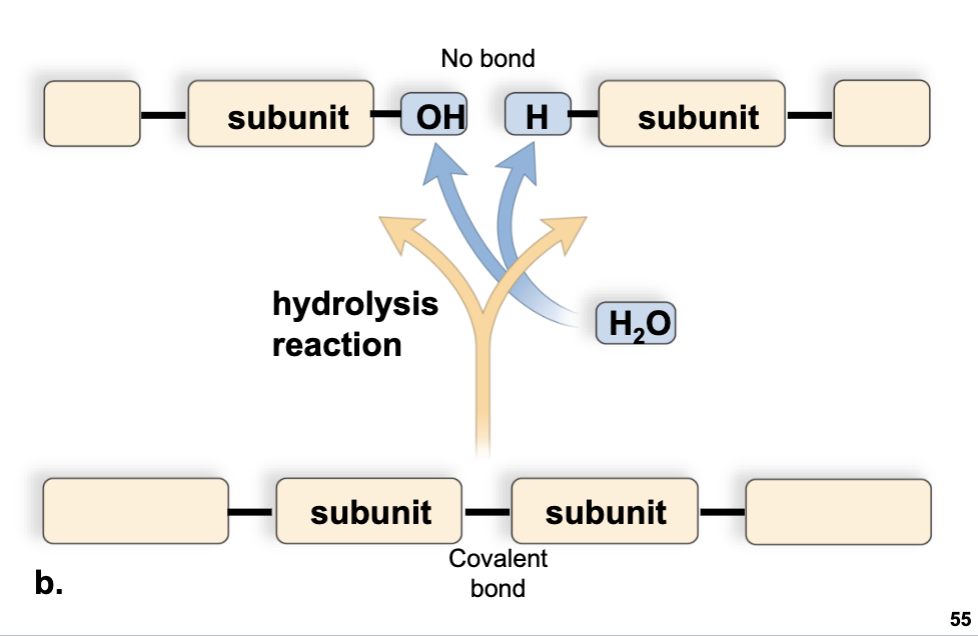
hydration or hydrolysis
making and breaking down organic molecules
the addition of water that breaks larger molecules into their subunits
pH scale
p either stands for power/potential of h = hydrogen
it is unitless
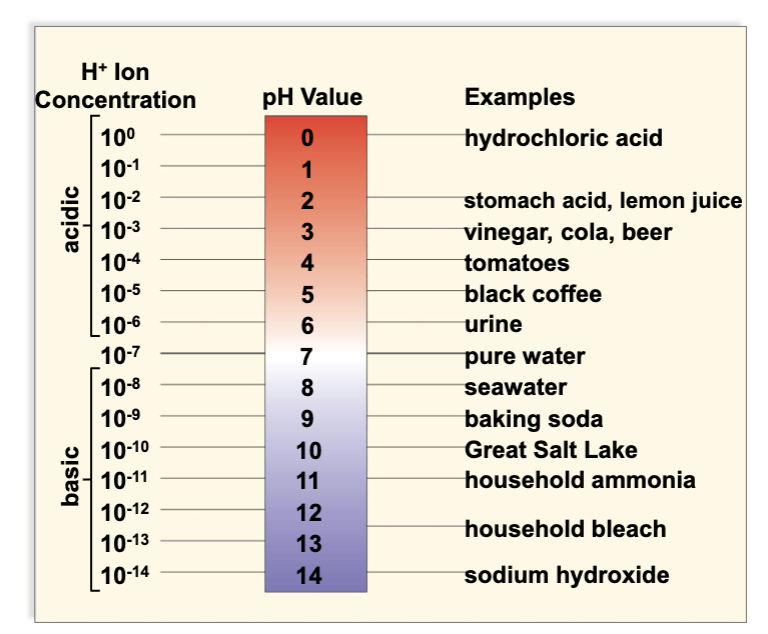
a measure of hydrogen ion (H+) concentration
working scale is between 0 and 14, 7 being neutral
a pH below 7 is acidic and above 7 is basic (vinegar is about 3, a mild acid)
the concentration of hydrogen ions between each whole number changes by a factor of 10 = logarithmic: pH 3 = 10 times more acidic than 4.
acids
substances that dissociate and release hydrogen ions (H+)
ie CH3COOH, acetic acid found in vinegar, dissociates into free H+ and CH3COO-
bases
are substances that take up hydrogen ions (H+) or release hydroxide ions (OH-)
ie NaHCO3, sodium bicarbonate, baking soda, dissociates into Na+ and HCO3
example of acids and bases together
add vinegar to baking soda and the reaction creates CO2, H2O and sodium acetate, + heat and foam
the four organic macro molecules found in living organisms
carbohydrates
lipids
proteins
nucleic acids
carbohydrates
made of subunits called monosaccharides
made of C, H, and O, in which the H and O atoms are in a 2:1 ratio
function as short and long term energy storage
found as simple and complex forms
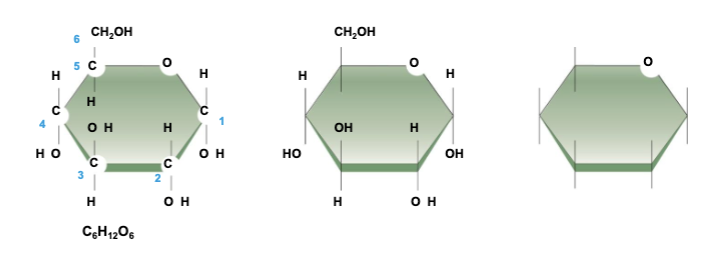
monosaccharide
a simple carbohydrate
1 carbon ring as found in glucose
disaccharide
type of simple carbohydrate
2 carbon rings as found in maltose, created by a dehydration reaction

polysaccharides
type of complex carbohydrate
made of many carbon rings and are energy storage molecules
glycogen
type of complex carbohydrate
is the storage form in animals. up to 60,000 units long
starch
type of complex carbohydrate
is the storage form in plants
lipids
molecules that do not dissolve in water = hydrophobic. will dissolve in non polar solvents
multiple uses in the body
found in cell membranes
found as fats and oils, phospholipids, and steroids
difference between fats and oils
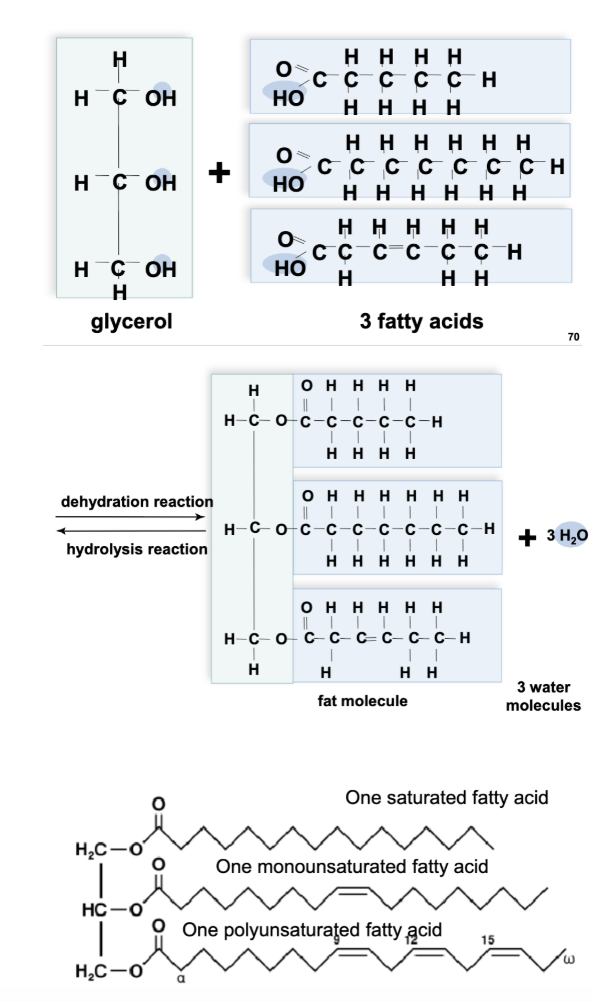
fats
usually animal origin
solid at room temperature
function for long term energy storage, insulation from heat loss, and cushion for organs
oils
usually plan origin
liquid at room temperature
creation of triglycerides
a glycerol molecule and 3 fatty acid tails when combined, become a fat molecule called BLANK, a non polar molecule.
understanding fats when reading a nutrition label
recommendation for total amount of fat for 2,000 cal diet is 65g/day
be sure to check the number of servings, 130g but two servings = 65 per serving (unless you eat both all by yourself. some serving sizes are too small)
a % daily value of 5% or less is low and 20% or more is high
avoid trans fats
understanding the nutrition facts

structure of a phospholipid
the structure is similar to a triglyceride
one fatty acid is replaced by a polar phosphate group
BLANK are the primary components of cellular membranes

steroids
BLANK is a lipid
the structure is four fused carbon rings
some examples are cholesterol and sex hormones, testosterone and estrogen

proteins
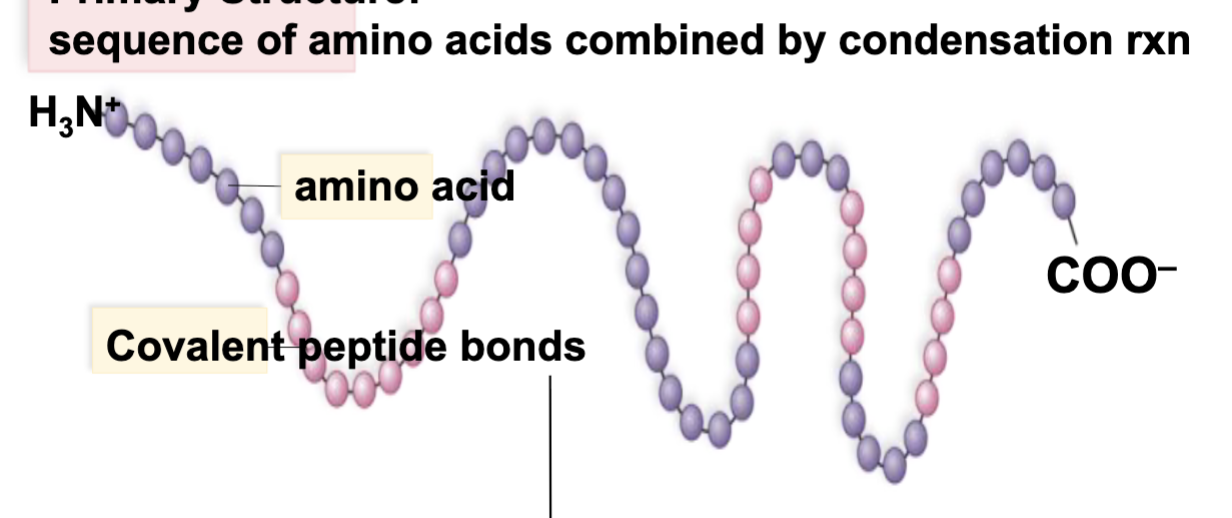
made of subunits called amino acids (AA’s) associated via dehydration reactions into long chains
important for diverse functions in the body, including hormones, enzymes, antibodies and transport
can denature
denature
process of undergoing a change in shape that causes loss of function
3 of 700 known amino acids
valine (val) (nonpolar)
glutamic acid (glu) (ionized, polar)
lysine (lys) (ionized, polar)
but we typically use only 20 different AA’s commonly

the basic structure of an AA
consistent across all AA’s

4 levels of protein organization
primary
secondary
tertiary
quaternary
all proteins have primary, secondary, and tertiary structure, while only few have quaternary structure
primary
the linear order of amino acids
secondary
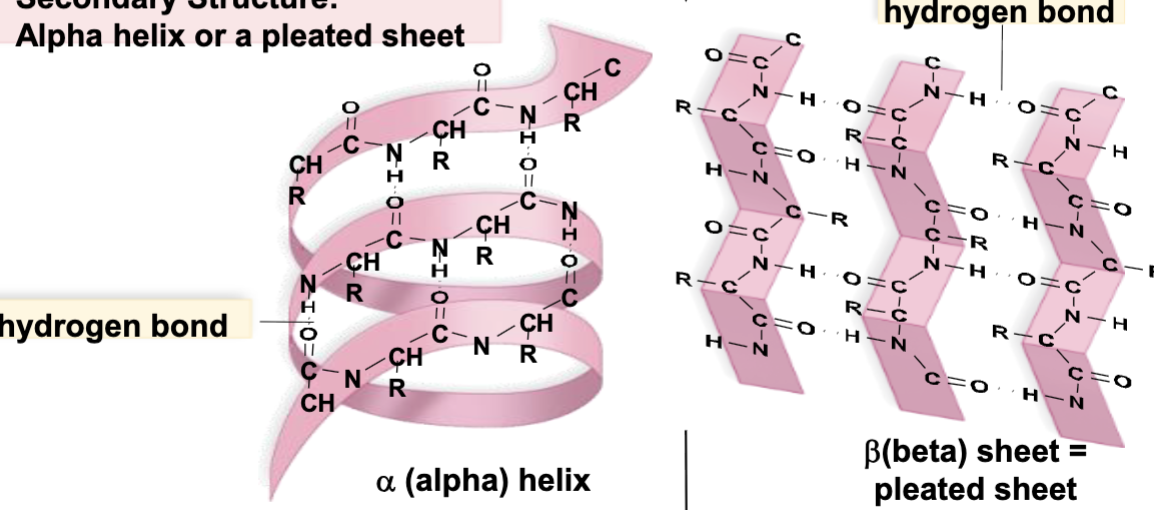
localized folding into pleated sheets and helices
tertiary
the 3d shape of the entire protein in space

quaternary
combination of more than one polypeptide

one major function of proteins
enzyme activity
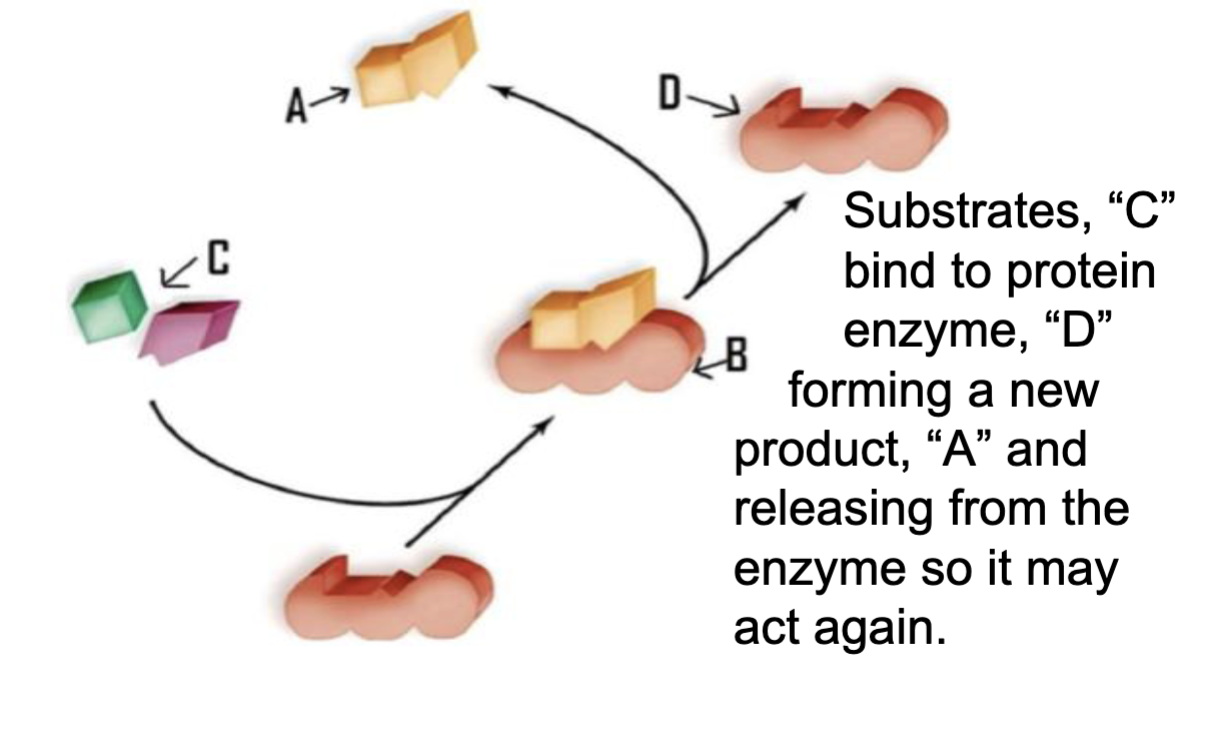
enzymes lower activation energy to facilitate chemical reactions
activation energy is that energy needed push a chemical reaction to completion

enzyme assisted reaction
protein purposes
building blocks for things like hair and nails, muscles
serve as fuel for normal metabolic processes
nucleic acids
made of nucleotide subunits
function in the cell to make proteins
include RNA and DNA
3 parts of a nucleotide

the 5 bases found in nucleotides
adenine (A) and guanine (G) are double ringed purines
cytosine (C), thymine (T), and uracil (U) are single-ringed pyrimidines
in DNA, A pairs with T and G pairs with C
in RNA, A pairs with U and G pairs with C
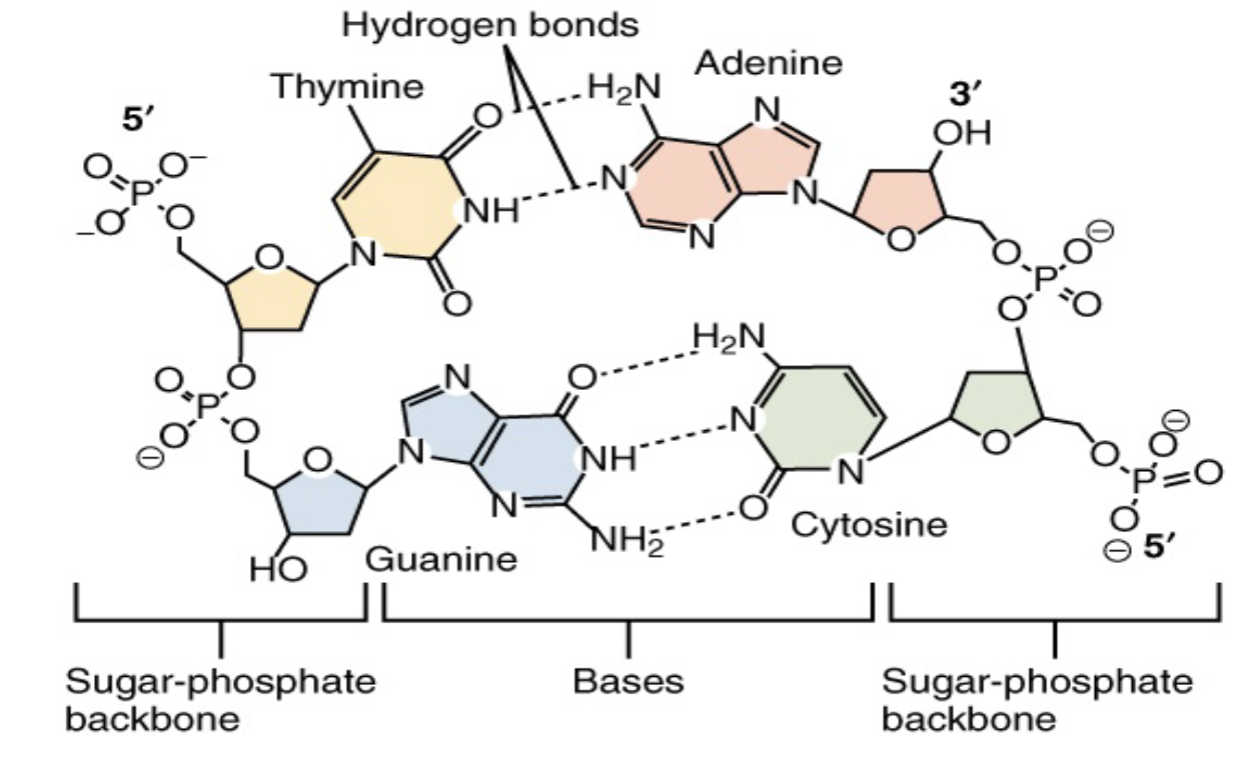
DNA and RNA structural differences
DNA
sugar is deoxyribose
bases include A, T, C, and G
double stranded
RNA
sugar is ribose
bases include A, U, C, and G
single stranded

how nucleotides combine to form DNA
