psych mental health issues in the aging adult
 Call Kai
 Learn
Learn Practice Test
 Spaced Repetition
 Match
Match Flashcards
 Knowt Play
1/16

There's no tags or description
Looks like no tags are added yet.
Name | Mastery | Learn | Test | Matching | Spaced | Call with Kai | Chat |
|---|
No analytics yet
Send a link to your students to track their progress
17 Terms
neurocognitive disorders
neurocognitive disorders involve a celine in one or more areas of cognition, such as eecutive function, learning and memory, judgement or social cognition that represents a significant changes from an individual’s previous level of functioning
know this

know this
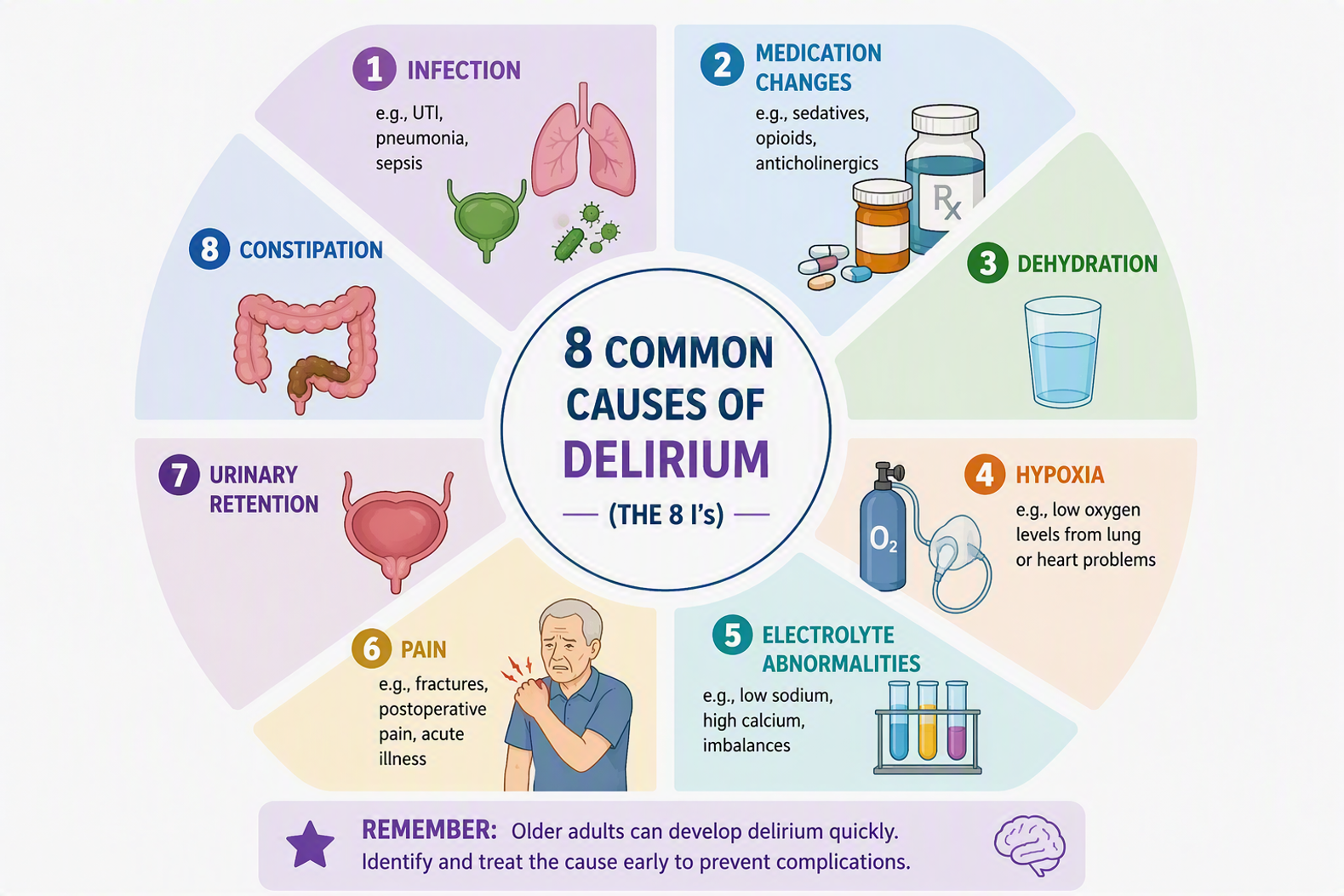
what is delirium
acute onset
fluctuating course
impaired attention
altered level of consciousness
usually reversible
medical emergency
what is dementia
insidious onset
progressive decline
memory impairment
LOC not altered
usually irreversible
chronic condition
types of dementia

neurocognitive disorders - pharmacologic treatment
cholinesterase inhibitors: donepeil (aricept), rivastigmine (eelon), and galantamine (razadyne)
side f include: N/V, anoreia and weight loss
NMDA receptor antagonist - Memantine (Namenda)
side f include: dizziness, headache, constipation
antipsychotics may be considers
antidepressants when depression and aniety are present
For othery types of dementia (other than Alzheimers disease)
target cause or symptoms
Antidepressants, antipsychotics (lewy body)
statins, anticoagulants, aspirin (vascular disorders)
Alzheimers: stage 1: no cognitive impairment
no mmory problems or cognitive deficits, independet in all activities
Alzheimers: stage 2: very mild cognitive decline
ocasionally forgets names. words, or where items are places, independent in daily activities
Alzheimers: stage 3: mild cognitive decline
difficulty finding words, remembering names, concentrating; may struggle with comple tasks such as finances or work responsibilities
Alzheimers: stage 4: moerate cognitive decline
forgets recent events, reduces short term memory, difficutly with calculationsl needs help with emdication management and meal planning
Alzheimers: stage 5: moderately severe cognitive decline
significant memory loss and confusion about time and place; requires asssitance with choosing clothing anf some daily activities
Alzheimers: stage 6: severe cognitive decline
difficulty recognizing familiar people, incr. confusion, behavioral symptoms may occur; req. assistance with dressing, bathing, toileting, eating
Alzheimers: stage 7: very severe cognitive decline
limited or absent verbal communications, inability to recognize lovved ones dependants for all ADLs, may lose ability to walk, sit, or swallow
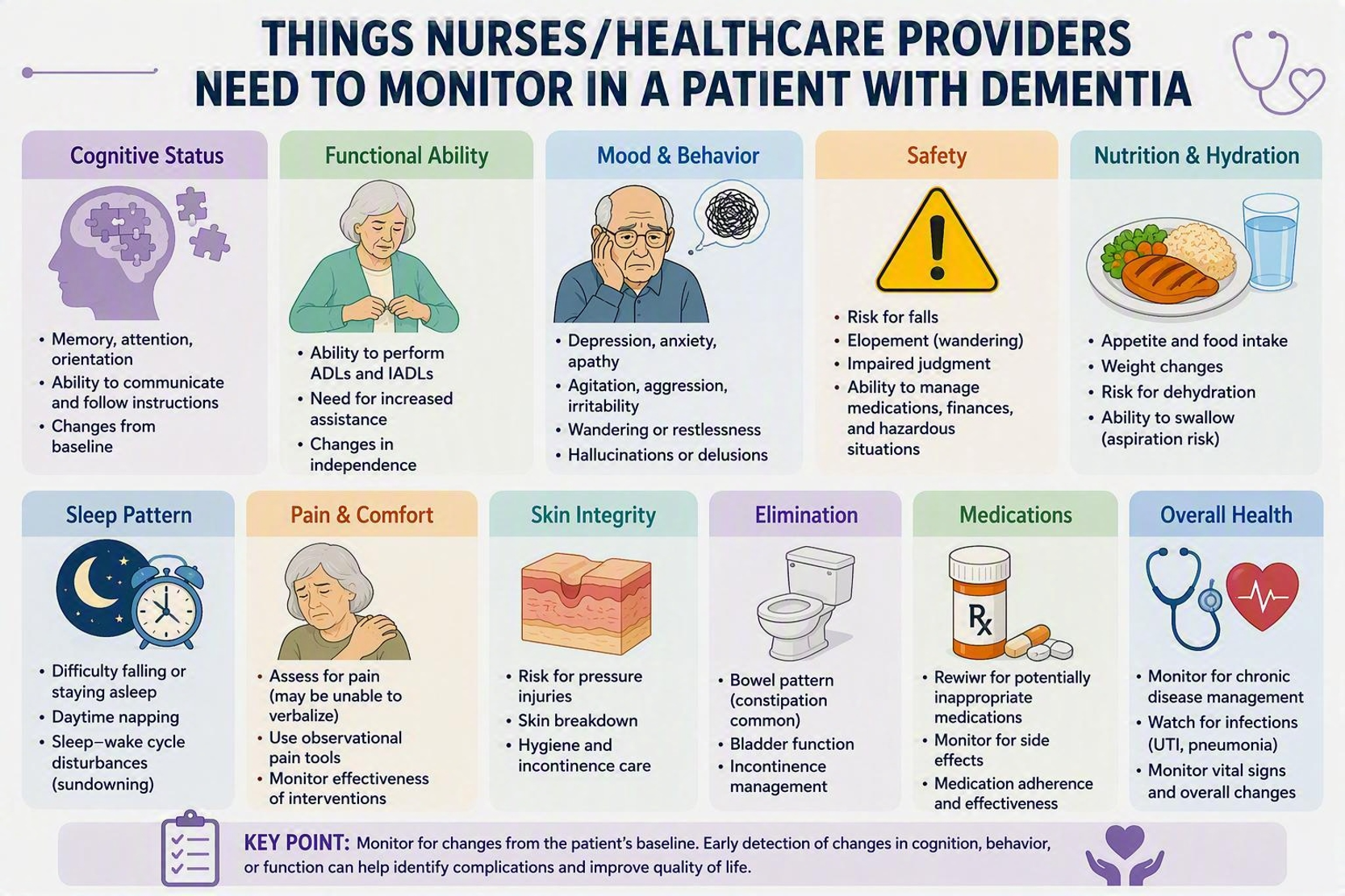
nusing care for clients with dementia
use a pt. centered approach
maintain a structured and predictable approach
prioritize safety
communicate using simple lanugae and one-step instructions
encourage independence while providing necessary assitance
involve family in planning care
ALWAYS treat pt with dignity and respect
know this
neurocogntive disroders - family education
progression of the illness and what to epect
way s to ensure patient safety (fall prevention, elopement risk, medication safety, kitchen, stove, water, and household hazards)
strategies for aiding with ADLs
nutritional information
managing difficult behaviors
support services (home health care, respite care, etc)
encourage caregiver support groups