Lecture 10: Reproductive System
 Call Kai
 Learn
Learn Practice Test
 Spaced Repetition
 Match
Match Flashcards
 Knowt Play
1/15

There's no tags or description
Looks like no tags are added yet.
Name | Mastery | Learn | Test | Matching | Spaced | Call with Kai | Chat |
|---|
No analytics yet
Send a link to your students to track their progress
16 Terms
what are the 3 types of asexual reproduction
Budding (mitosis): new individuals form as outgrowths
Fission (mitosis): individual splits into species that grow into new individuals (one adult turns into two babies)
Parthenogenesis: the development of offspring from unfertilized eggs (aka. Female is able to reproduce without male sperm)
Define anisogamy
Some individuals are producing large haploid gamete, and other individuals are producing small haploid gametes
Ex. sperm is smaller than an egg
whats the difference between gonochores and hermaphrodites
gonochores: Species where Separate sexes exist. One individual is producing eggs, other individual is producing sperm
hermaphrodites: Species where one individual produces eggs and sperm
what are the two types of hermaphrodites
Simultaneous hermaphrodites: individual has both male (testes) and female (ovaries) gonads. Potential for self fertilization, but its rare
Sequential hermaphrodites: individual produces eggs/sperm at different life stages (social circumstances)
a.Protogynous: female first and male later, will die as a maleb.Protandrous: male first and female later, will die as a female
Define external fertilization
Occurs when gametes are released into the environment (water)
Define internal fertilization
Occurs when sperm is released into the female reproductive tract
What are gonads
Primary reproductive organs such as ovaries and testes
Define spermatogenesis
One diploid germ cell produces 4 haploid sperm. Basic meiosis. Occurs in seminiferous tubules
what is the process of ejaculations. what structures are passed through
Epididymis
Vas deferens
Glands
Ejaculator Duct
Urethra
Center of the penis
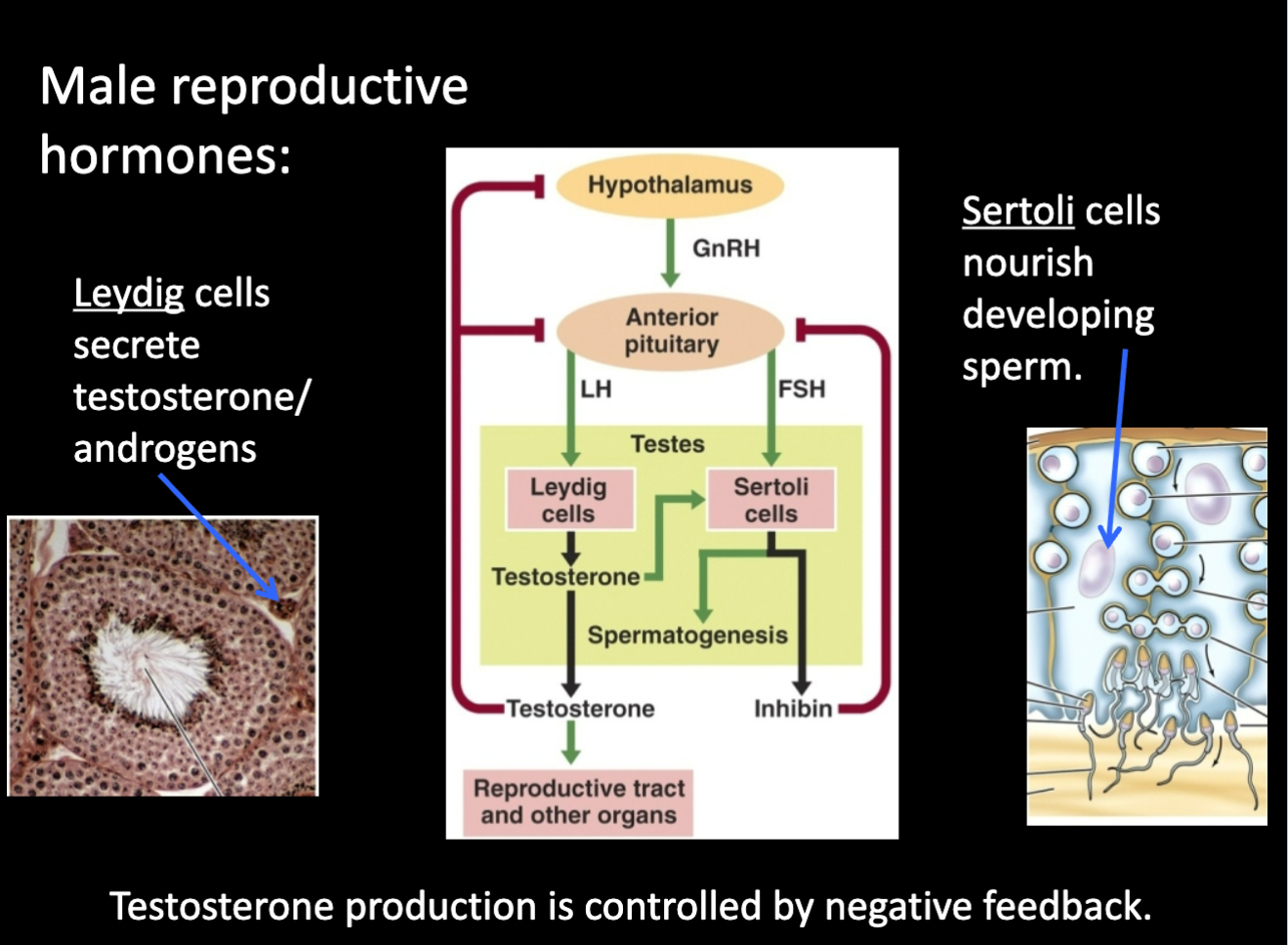
draw cascade for male reproductive hormones
what is the process of egg from ovary to cervix/vaginal opening
Release eggs from ovaries
Fimbria sweeps egg to fallopian tube
—> If this doesnt happen, ectopic pregnancy occursGoes to fallopian tube (or oviduct)
—>fertilzation occurs here in fallopian tube
—>Sperm must swim from vagina to fallopian tubeGo to uterus
—>If fertilized, implants in endometrium (fertilized)
—> If not, unfertilized egg will pass through cervix, then the vagina, and then deposited as period
Define oogenesis
One diplotic germ cell produces 1 haploid egg
Duplicate DNA during mitosis
First meiotic division (in ovary)
One daughter cell gets most of stuff chromosomes and other stuff
Other daughter only gets chromosomes (small and called first polar body)
Second meiotic division (after release/fertilization)
Big daughter cell create another polar body (second polar body)
There are 3 things (two polar bodies, and one big cell)
Polar bodies disappear, big daughter cell is left. This is haploid egg
diff between oogenesis and spermatogenesis
Main diff between sperm version: sperm version produces 4 sperms and egg version produces 1 egg
Define follicle
Is it just tissue surrounding developing egg thats made of thecal and granulosa cells
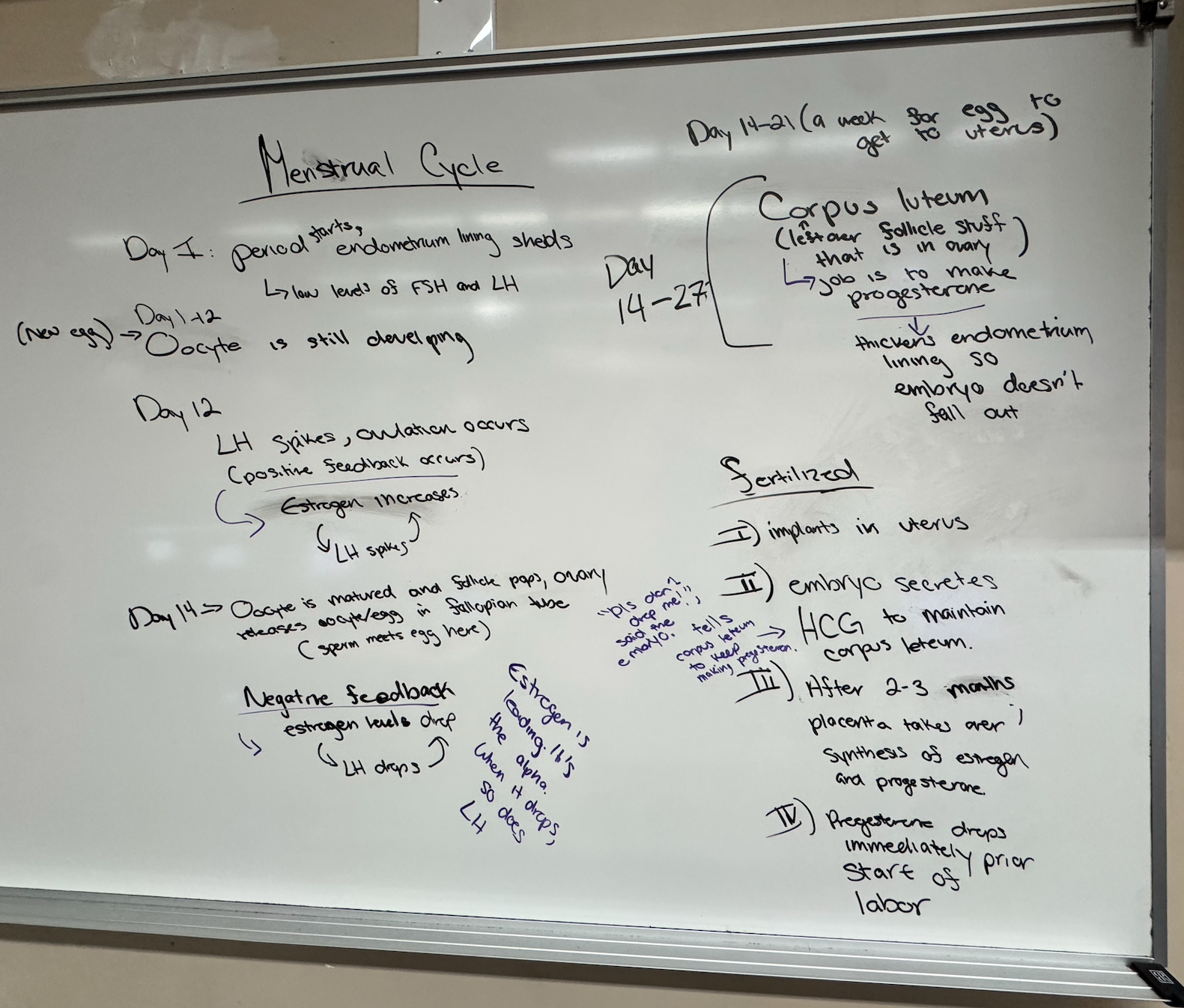
draw diagram for female menstrual cycle
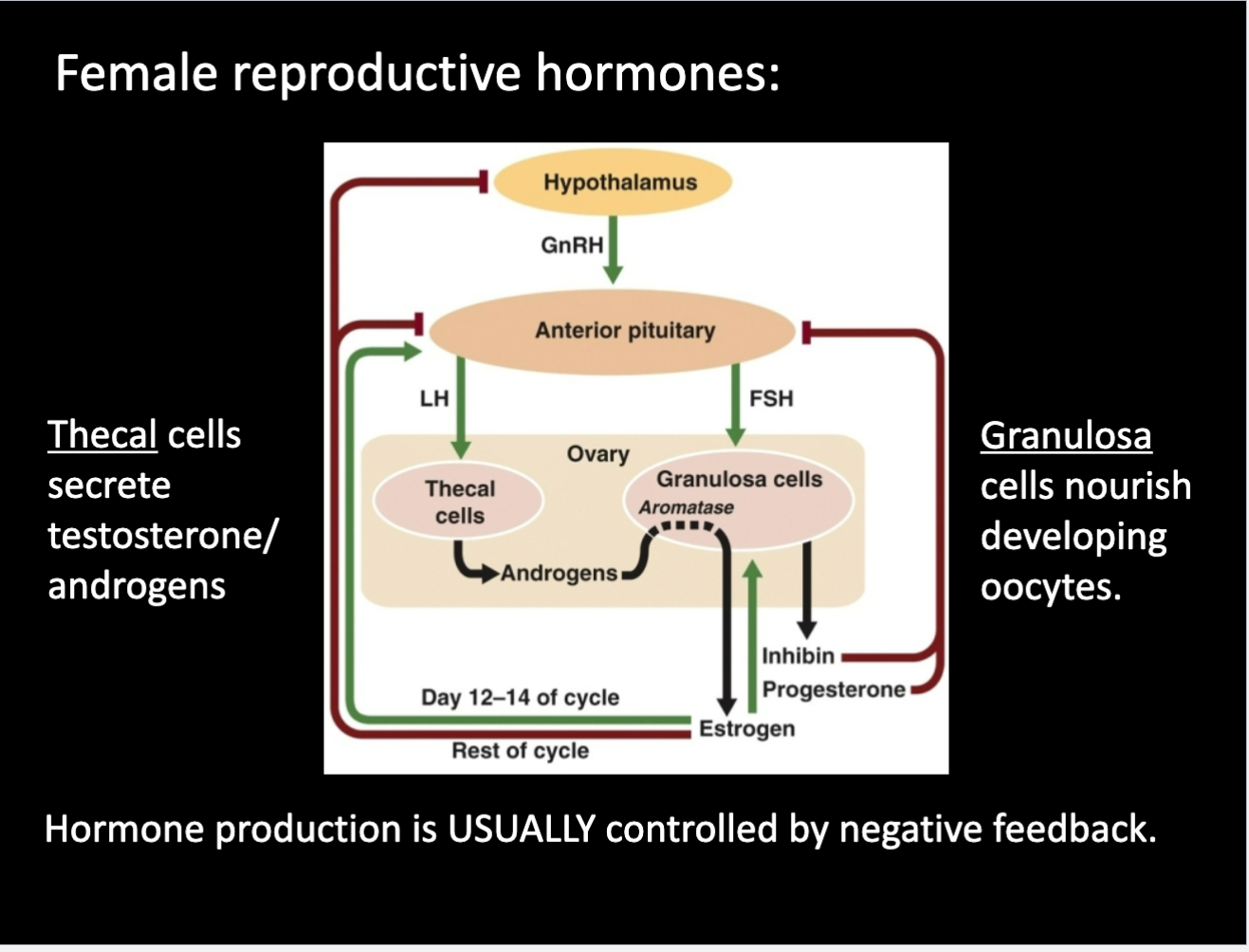
draw diagram for female hormone cascade