Chapter 1 - Honors Chemistry - Mrs. Knox
 Call Kai
 Learn
Learn Practice Test
 Spaced Repetition
 Match
Match Flashcards
 Knowt Play
1/38

There's no tags or description
Looks like no tags are added yet.
Name | Mastery | Learn | Test | Matching | Spaced | Call with Kai | Chat |
|---|
No analytics yet
Send a link to your students to track their progress
39 Terms

Solid

Liquid
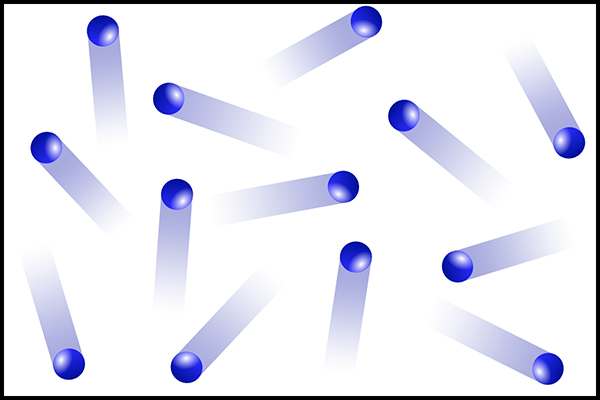
Gas
Heat or energy is released
Ex) Explosions, Hand warmers
Exothermic
Heat or energy is absorbed
Ex) Baking bread, ice pack
_____ has both mass and volume
Matter
Separates into Pieces or Changes Phase
Physical Means of Separation
A physical means of separation that separates solids from liquids or gas
Filtration
A physical means of separation that heats liquids into gas
Evaporation
A physical means of separation that separates mixtures into chemical components (used for separating pigments)
Chromatography
A physical means of separation that uses magnetic fields to separate magnetic substances from a mixture
Magnets
A physical means of separation that heats a liquid into a vapor, and turns it back into a liquid to separate solids and liquids
Distillation
A physical means of separation that uses a machine to spin mixtures/solutions aggressively to separate liquids or gases with different densities
Centrifuge
A physical means of separation that is done by the hand of the scientist/experimenter
By Hand
A chemical means of separation that runs electricity through a substance to break its bonds
Electrolysis
A chemical means of separation that creates a chemical reaction where bonds are broken
Adding Chemicals
A solution of 2 or more substances that each keep their own chemical identity
Mixture

A mixture that is not uniform throughout
Ex) Chicken Noodle Soup
Heterogeneous Mixture

A mixture that is uniform throughout (Can be separated by physical means into Pure Substances)
Ex) Gatorade
Homogeneous Mixture
A form of matter that cannot be separated physically, and has a constant composition
Pure Substances
A Pure Substance that cannot be separated chemically (One type of atom)
Ex) Au
Element
A Pure Substance that can be separated by chemical means (2 or more elements chemically bonded)
Ex) CO2
Compounds
Ex)
Water Evaporating
Tearing Paper
Molding Clay
Physical Changes
Ex)
Rust
Cooking Eggs
Burning Wood
Chemical Changes
Ex)
Heat/Light is absorbed or released
Odor
Bubble (gas produced)
Color Change
Precipitate (Solid formed from 2 solutions) is formed
5 Evidences of a Chemical Change
Something that can be measured without changing its chemical makeup
Ex) Height, Color, Weight, Melting Point, Magnetic
Physical Properties
How a substance behaves when it is mixed with other matter
Ex) Flammability, Reactivity, Toxicity
Chemical Properties
Different structural forms of an element
atoms are arranged differently, with different chemical/physical properties
Ex) Carbon
Allotrope
Atoms that are unstable alone, and must form molecules in pairs to become stable
Diatomic Molecules
Diatomic Molecule: H2
Hydrogen
Diatomic Molecule: N2
Nitrogen
Diatomic Molecule: O2
Oxygen
Diatomic Molecule: F2
Flourine
Diatomic Molecule: Cl2
Chlorine
Diatomic Molecule: Br2
Bromine
Diatomic Molecule: I2
Iodine
pH below 7
Tastes sour
Burns
Neutralizes bases
Acids
pH above 7
Tastes bitter
Feels slippery
Denatures (unravels) proteins
Bases
Compounds that have Carbon as the backbone
Organic Compounds