topic 9 - osmosis + diffusion
 Studied by 0 people
 Call Kai
 Learn
Learn Practice Test
 Spaced Repetition
 Match
Match Flashcards
 Knowt Play
1/46

There's no tags or description
Looks like no tags are added yet.
Name | Mastery | Learn | Test | Matching | Spaced |
|---|
No study sessions yet.
47 Terms
why does selective permeability happen in cell membranes?
due to the amphipathic nature of the bilayer & specificity of transport proteins
what are some things that can pass through easily?
1. hydrocarbons (lipids)
2. nonpolar steroids; ex. testosterone, estradiol
3. small, uncharged, nonpolar things; ex. CO₂, O₂
what are some things that cannot pass through easily?
1. large, charged, polar molecules; ex. sugars
2. ions
what do sugars require to get through the cell membrane?
they require a transport protein
passive transport
requires no additional energy (ATP) for transportation
active transport
requires E (ATP)
diffusion
a type of passive transport in cells in which molecules move from areas where there are more of them to areas where there are fewer of them.
it is a slow process, and it is spontaneous
what do all molecules have and then what do they do?
thermal (kinetic E) and they spread out into open areas
do the molecules move randomly or directionally?
molecules independently move randomly & bounce off one another; however, together, they move directionally
rule of diffusion
in the absence of other forces, a substance will diffuse from where it is more concentrated to where it is less concentrated. the substance moves down its concentration gradient (the gradient drives diffusion)
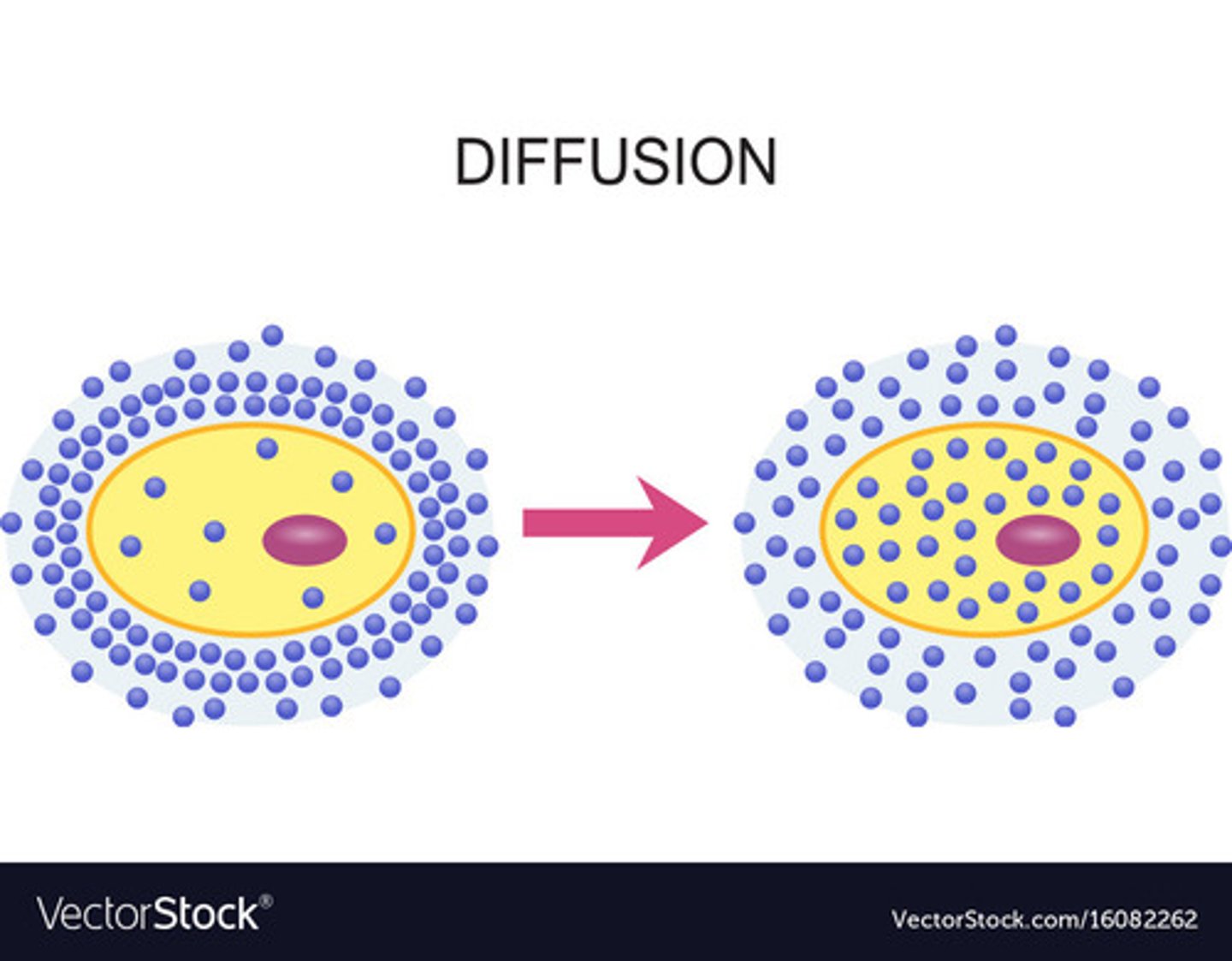
Concentration Gradient
A difference in the concentration of a substance across a distance. requires two "places" - one with a high concentration & one with a low concentration
spontaneous
(of a process) requiring no energy
what are things that affect the rate of diffusion?
1. permeability of membrane
2. concentration difference
3. temperature
osmosis
still diffusion, just specific to water
solute
A substance that is dissolved in a solution.
solvent
the substance in which the solute dissolves
solution
A homogeneous mixture of two or more substances
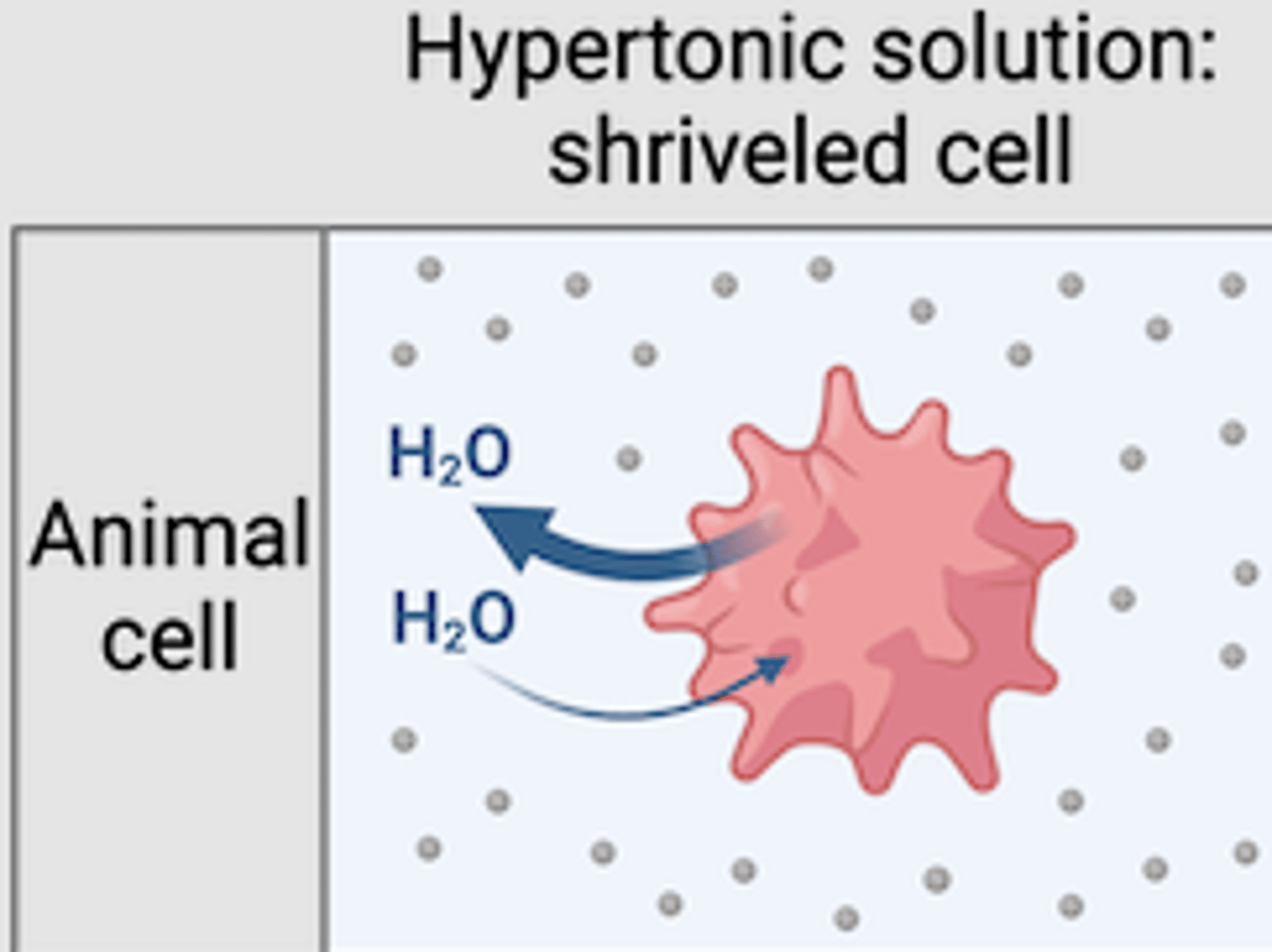
hypertonic
having a higher concentration of solute than; "more solute"
hypotonic
having a lower concentration of solute than; "less solute"
hyper/hypotonic "to"
hyper/hypotonic is a relative comparison comparing 2 solutions, so we have to use "to" after the word
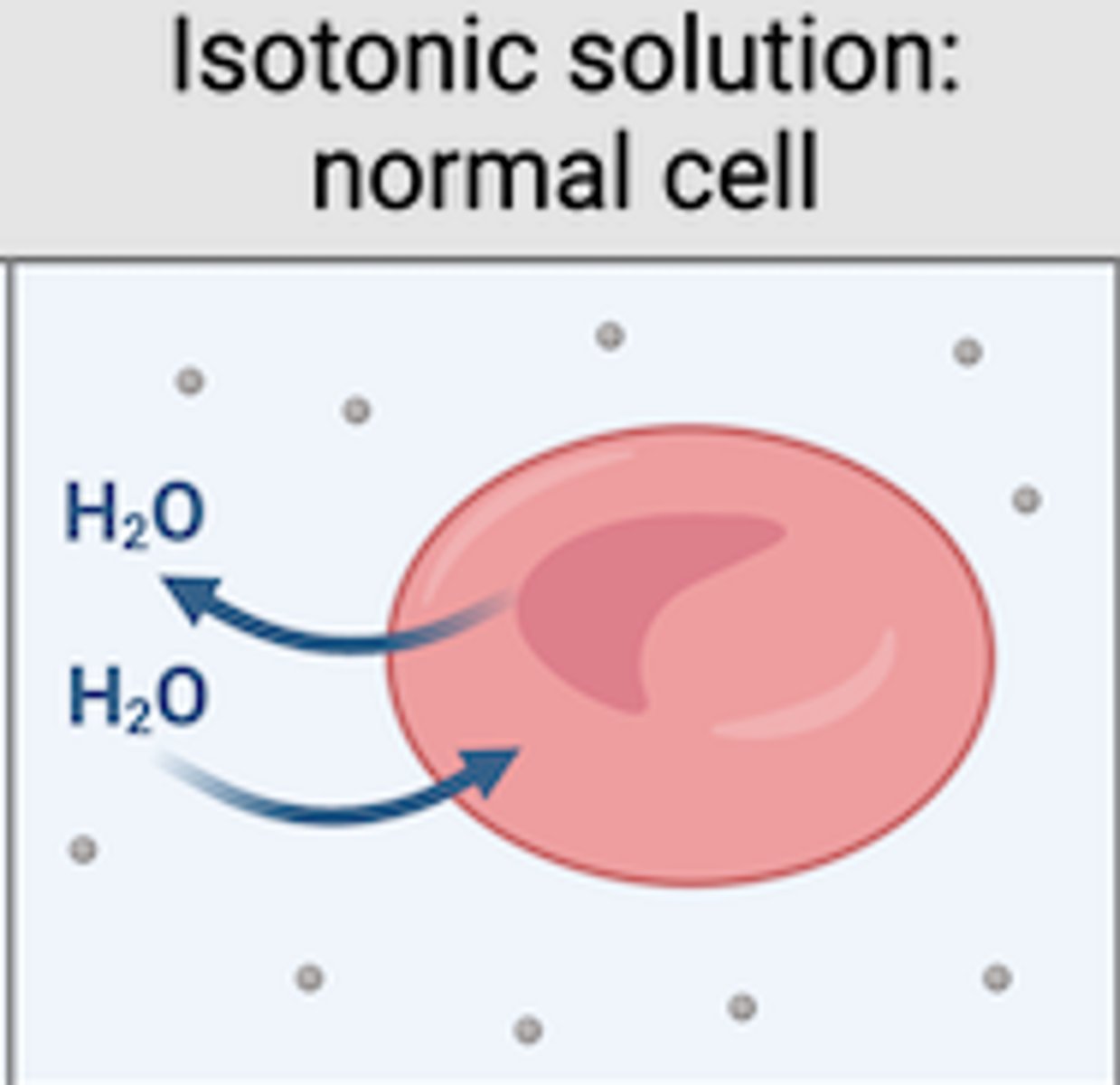
isotonic
when 2 solutions have the same tonicity (molar concentration). the solutions do not have to be the same solute. for ex. a solution with 0.1 M NaCl and a solution with 0.1 M glucose have the same tonicity.
tonicity
the ability of a solution to make water move in or out of a cell by osmosis
what happens if a membrane is impermeable to solutes?
if solutes can't move, the water will. water has to move through aquaporins
aquaporins
transport channel proteins that move water in/out of the cell
Ψ = Ψs + Ψp
water potential equations where:
Ψ = water potential
Ψs = solute potential
Ψp = pressure potential
Ψs = -iCRT
solute potential equations where:
i = ionization constant
C = concentration (the thing that changes)
R = pressure constant
T = temperature
what does distilled water have that is separate?
Ψs = 0 MPa
MPa stands for megapascals (a unit)
surroundings hypertonic to animal cell
the cell loses water so it shrivels up & dies
surroundings hypotonic to animal cell
the cell gains water leading to it bursting (lysis)
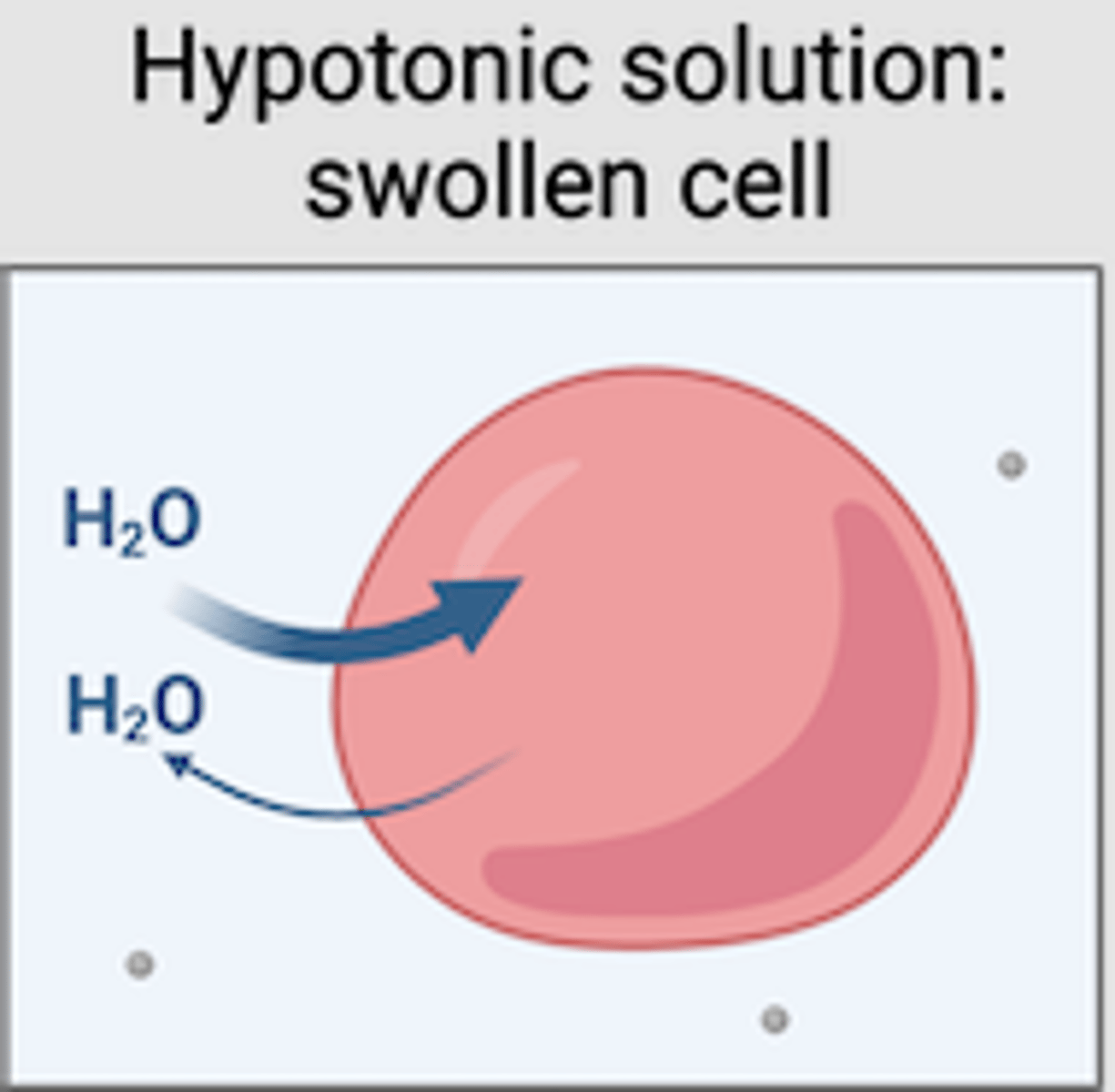
lysis
the disintegration of a cell by rupture of the cell wall or membrane
surroundings isotonic to animal cell
no net movement of water; ideal
surroundings hypertonic to cell w/ cell wall
plasmolysis will occur; the cell membrane will go away due to shriveling up & dying but a cell wall is left behind
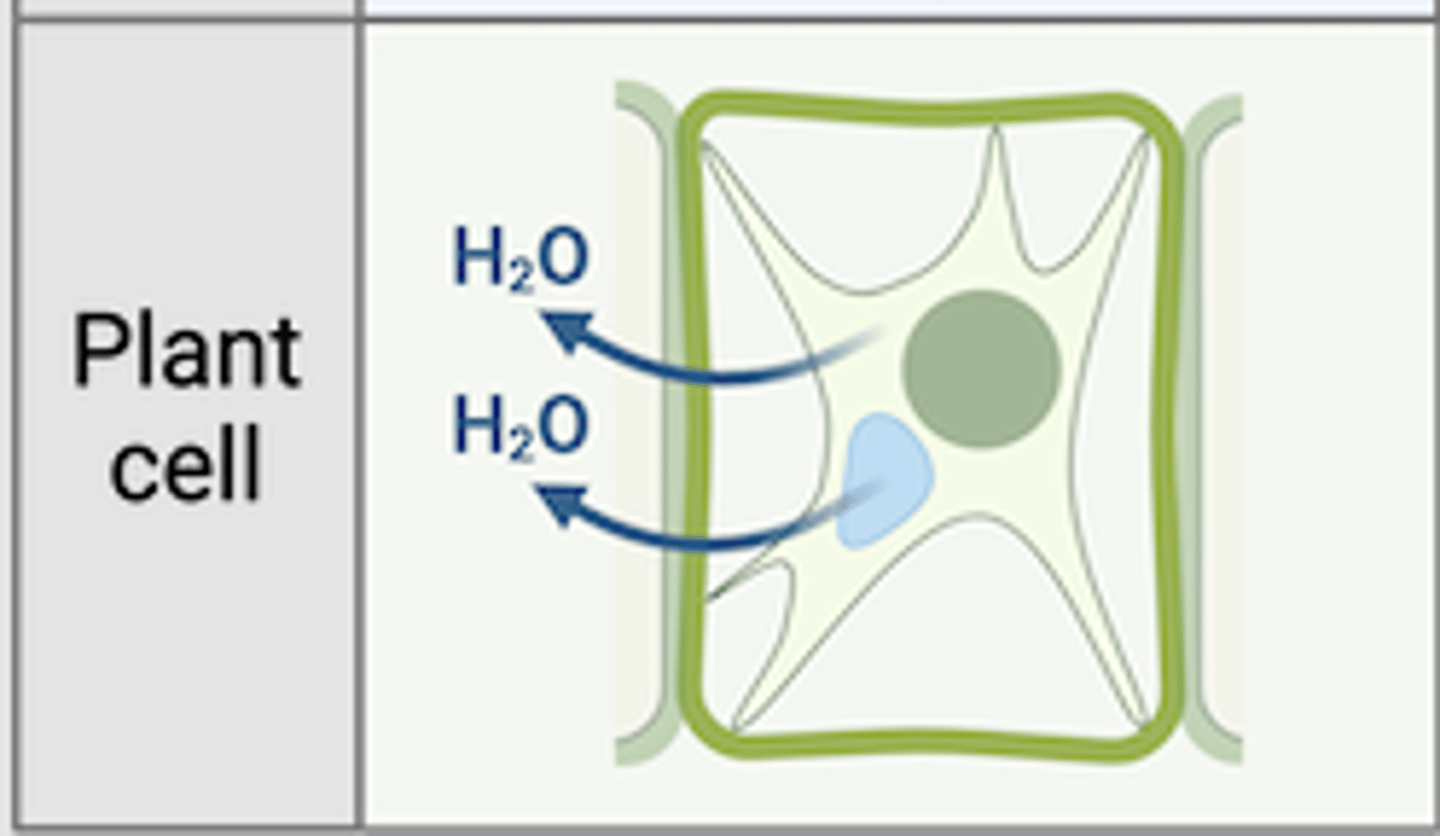
plasmolysis
contraction of the protoplast of a plant cell as a result of loss of water from the cell
surroundings hypotonic to cell w/ cell wall
cell becomes turgid which is ideal b/c the cell wall exerts turgor pressure
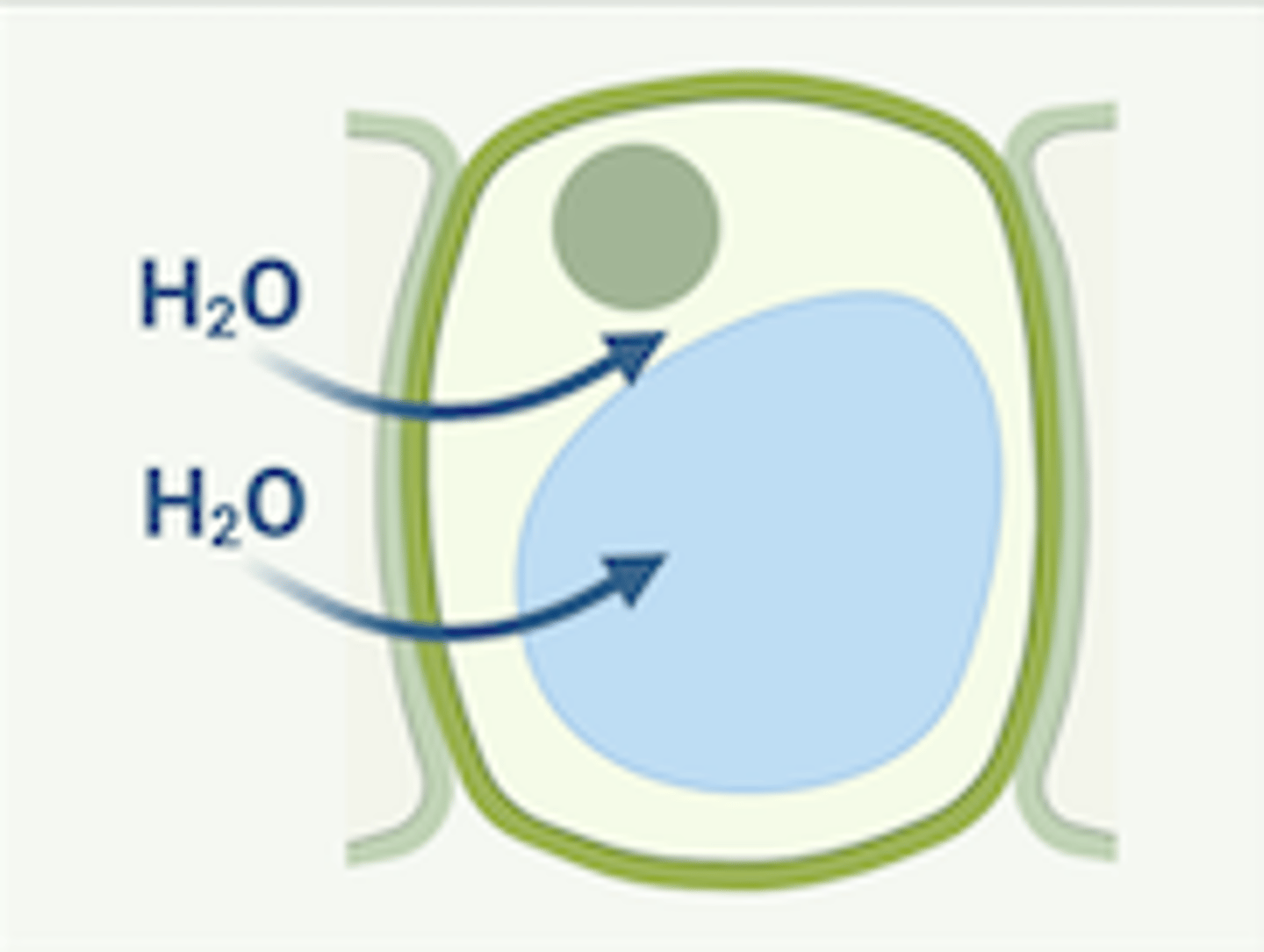
turgor pressure
the force within the cell that pushes the plasma membrane against the cell wall (+Ψp - positive pressure)
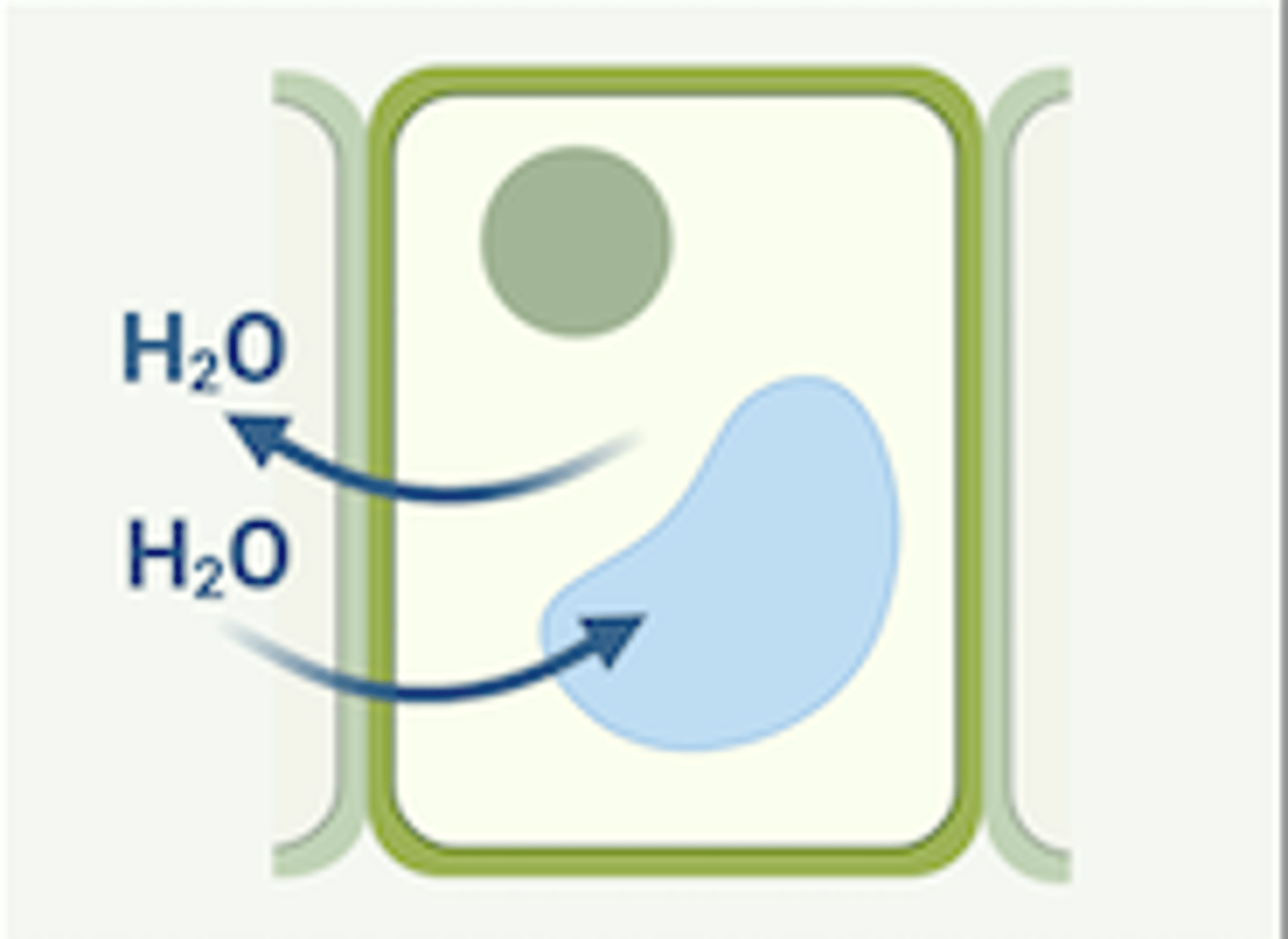
surroundings isotonic to cell w/ cell wall
cell will be flaccid (flimsy); if all cells are like this, a plant will wilt
what are transport proteins similar to?
enzymes
why are transport proteins similar to enzymes?
1. they can be saturated
2. specific for a molecule
3. can become inhibited
what does it mean to be saturated?
to have a limited rate of transport
what does it mean if something is inhibited?
a shape change will prevent it from working
which is quicker: facilitated or regular diffusion?
facilitated diffusion; it's much quicker than regular diffusion
facilitated diffusion
diffusion of polar molecules
still diffusion
when polar molecules move down their concentration gradient; ex. water, glucose
where does facilitation come from?
transmembrane proteins, specifically carrier proteins and channel proteins. both types of proteins are specific though, they carry only 1 thing.
how does facilitation come from carrier proteins?
the substances to be transported binds to the carrier protein. this causes the carrier to change its shape & pull the substance to the other side. this could also be used in active transport.
how does facilitation come from channel proteins?
channel proteins provide a hydrophilic passage for molecules to sink into. they could be gifted, for example,
aquaporins for osmosis. these proteins are more likely to be involved in facilitated diffusion.
which type of protein (carrier or channel) is more likely to be involved in facilitated diffusion?
channel proteins