Pulm Phys: Gas Exchange and Acid-Base Regulation
 Call Kai
 Learn
Learn Practice Test
 Spaced Repetition
 Match
Match Flashcards
 Knowt Play
1/35

There's no tags or description
Looks like no tags are added yet.
Name | Mastery | Learn | Test | Matching | Spaced | Call with Kai | Chat |
|---|
No analytics yet
Send a link to your students to track their progress
36 Terms
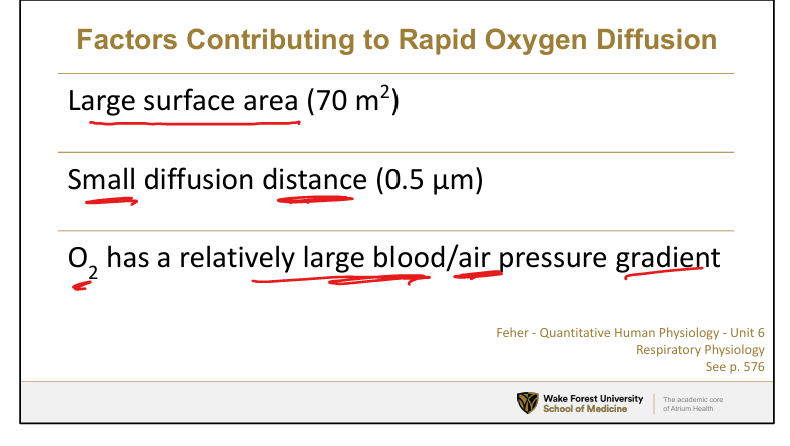
What three factors make oxygen diffusion very efficient?
Large surface area, small diffusion distance (~0.5 µm), large pressure gradient
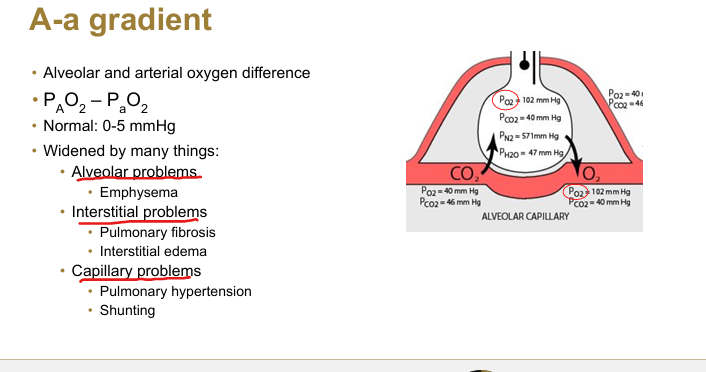
What is the A–a gradient?
PAO2 – PaO2
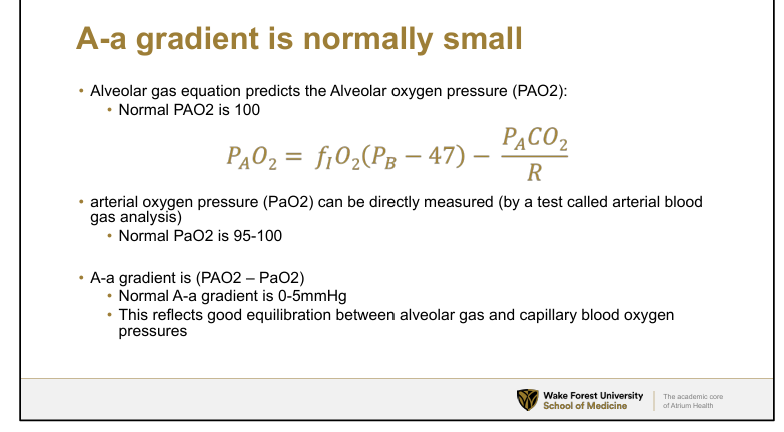
What equation predicts alveolar oxygen pressure?
Alveolar gas equation: PAO2 = FiO2(PB – 47) – (PaCO2 / R)
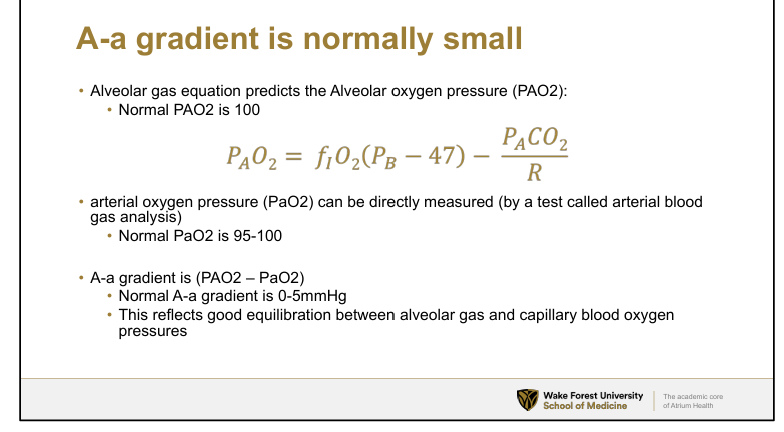
What conditions widen the A–a gradient?
Emphysema, pulmonary fibrosis, interstitial edema, pulmonary hypertension, shunt
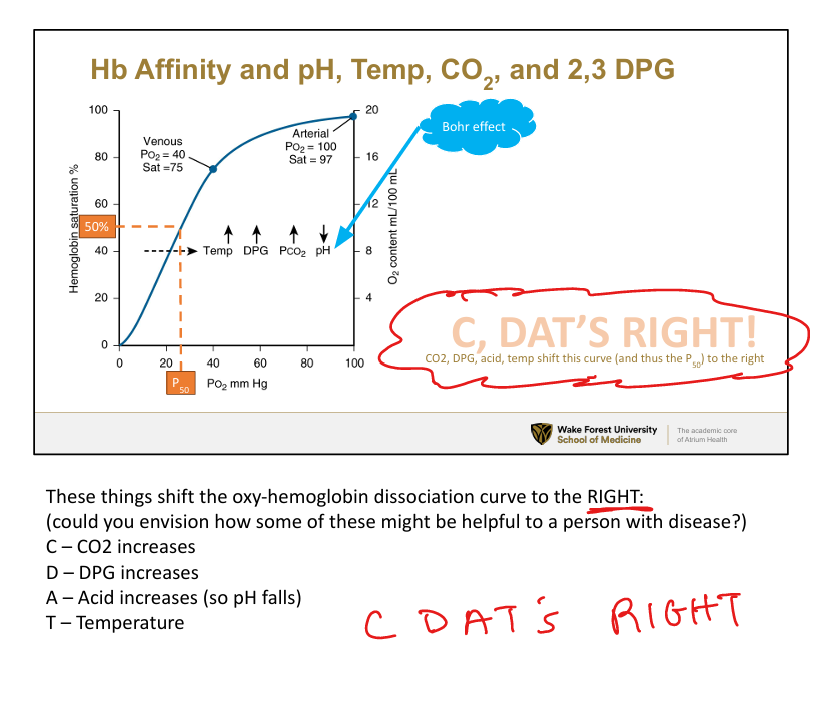
What shifts the oxyhemoglobin dissociation curve to the right?
Increased CO2, increased 2,3‑DPG, increased H+ (acidosis), increased temperature
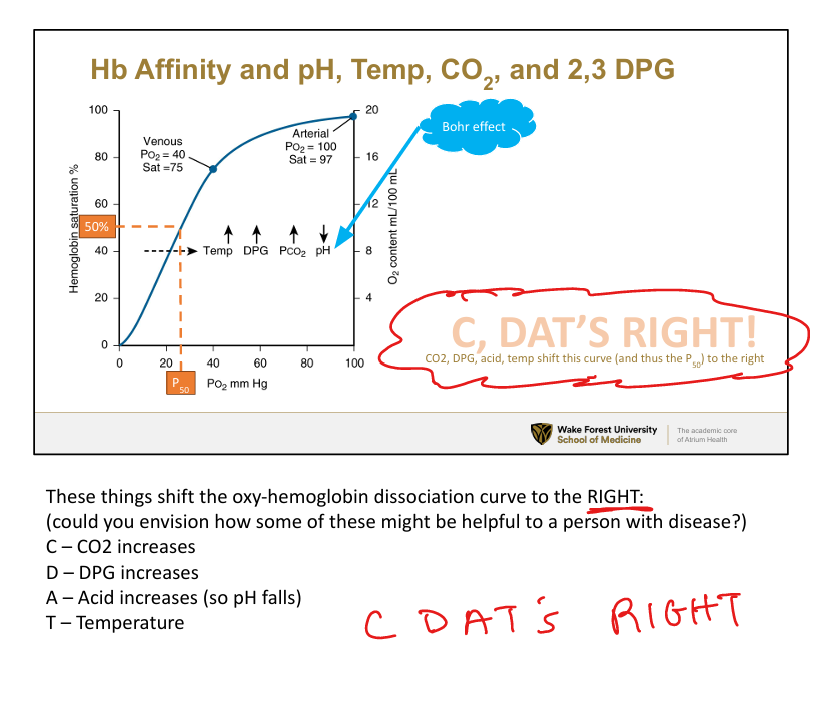
What is the mnemonic for right shift factors?
C‑DAT’S RIGHT (CO2, DPG, Acid, Temp)
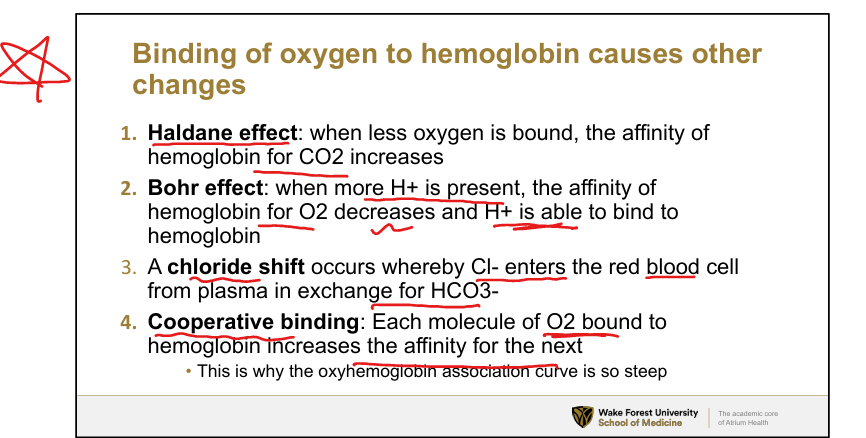
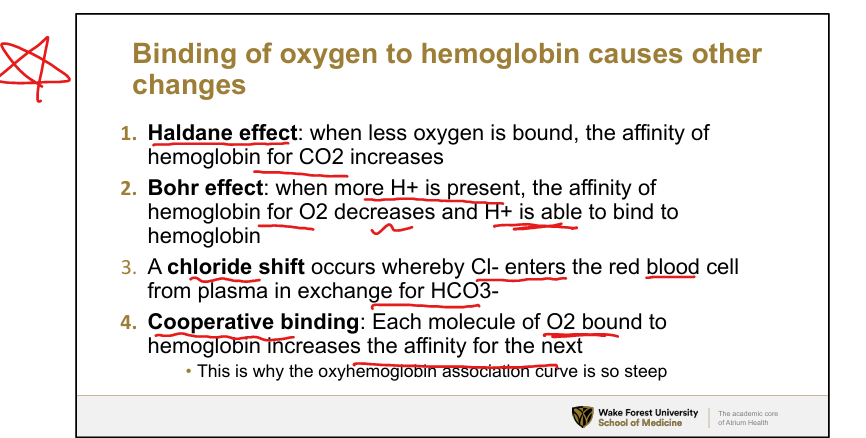
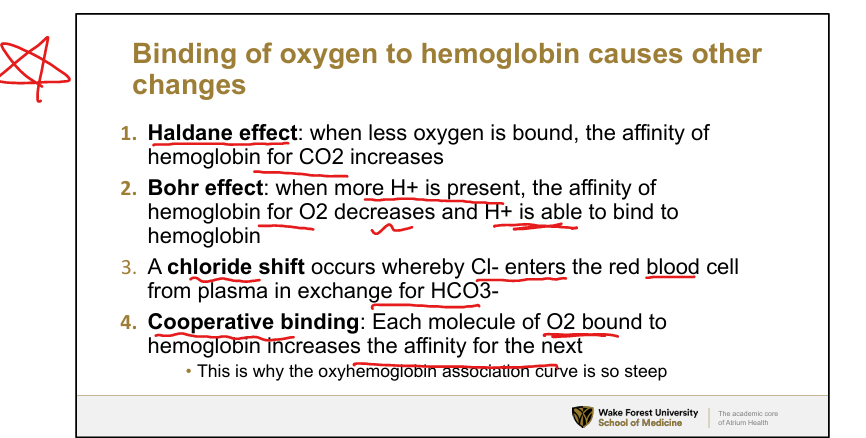
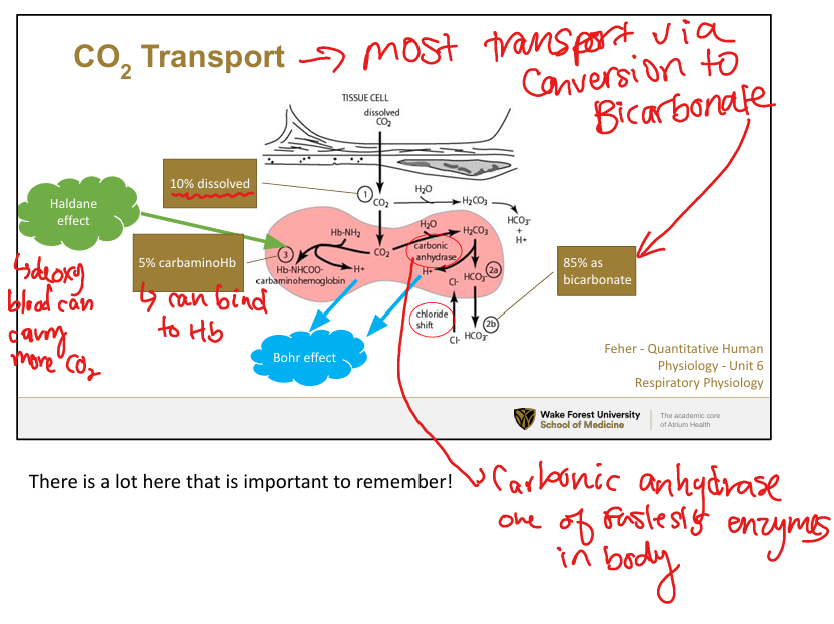
What is the Haldane effect?
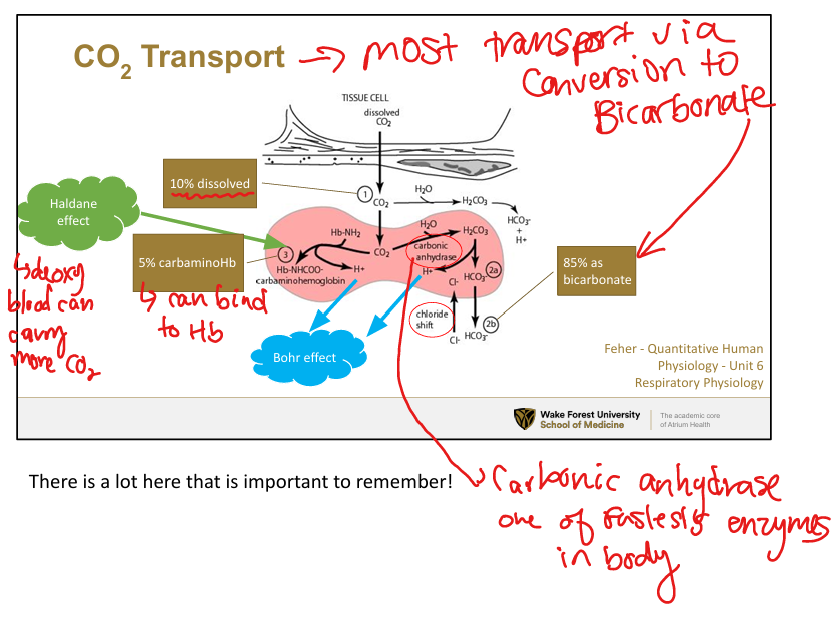
Deoxygenated hemoglobin has increased affinity for CO2, enhancing CO2 loading in tissues (CO2 loves a dane)
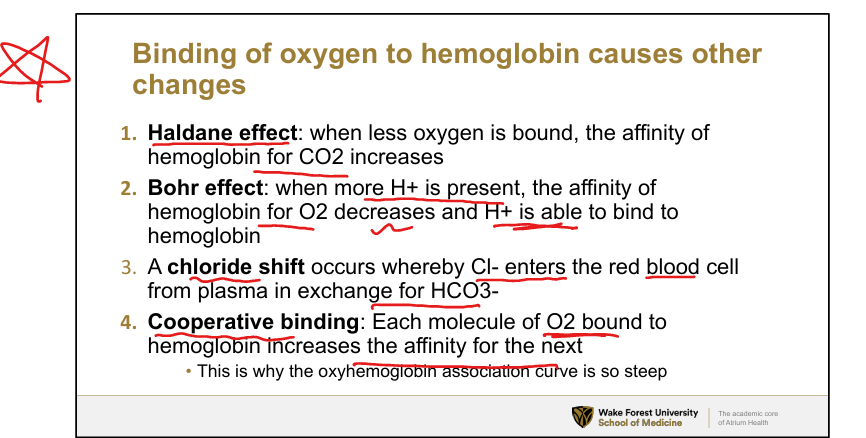
What is the Bohr effect?
Increased H+ decreases Hb affinity for O2, promoting O2 unloading in tissues (Weird h for H+ and O2)
What is the chloride shift?
Cl‑ enters RBC as HCO3‑ leaves to maintain electroneutrality
What is cooperative binding?
Each bound O2 increases Hb affinity for the next O2 molecule
What are the three forms of CO2 transport?
85% bicarbonate, 10% dissolved, 5% carbaminohemoglobin
What enzyme catalyzes CO2 hydration to carbonic acid?
Carbonic anhydrase
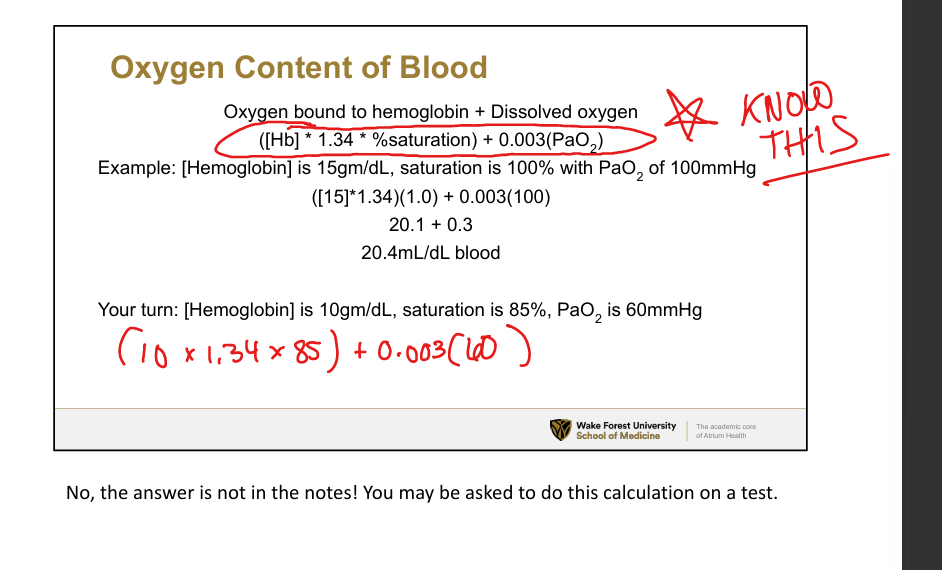
What is the formula for oxygen content of blood?
([Hb] × 1.34 × % saturation) + 0.003(PaO2)
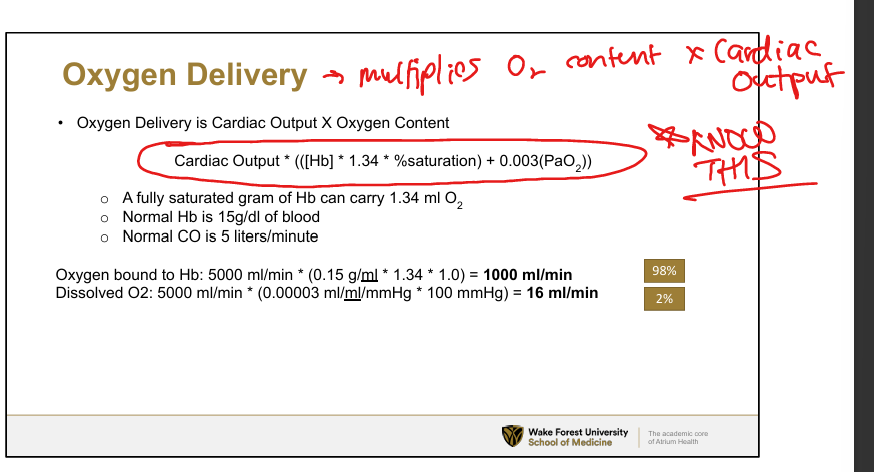
What is the formula for oxygen delivery?
Cardiac output × oxygen content
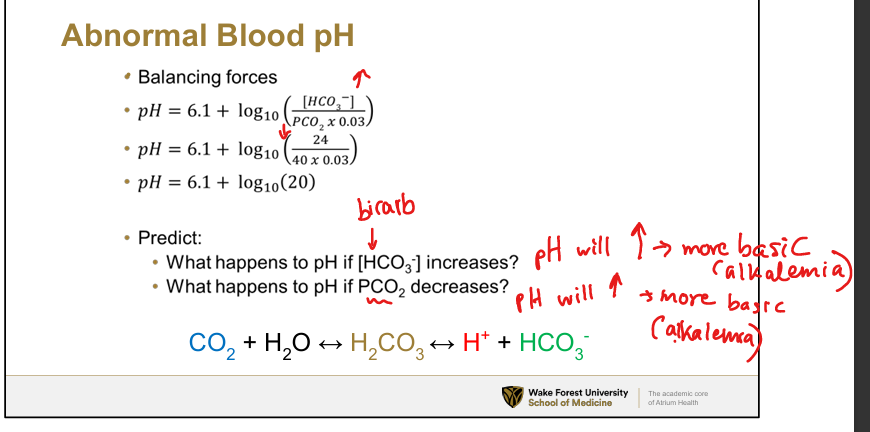
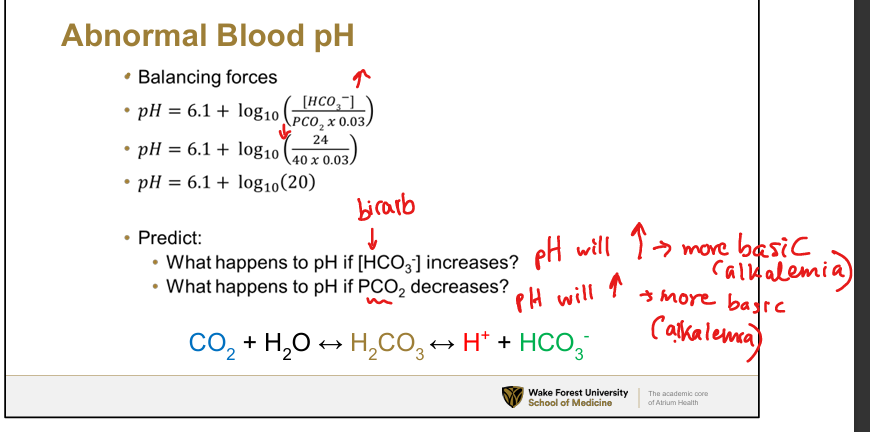
What is normal blood pH?
7.40 (range 7.35–7.45)
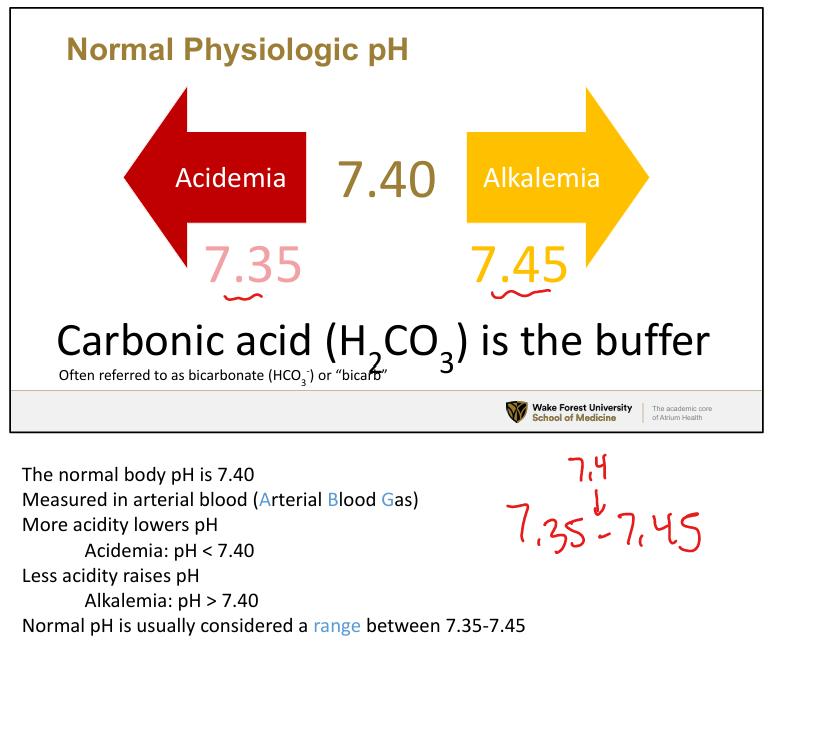
What is acidemia?
pH < 7.40
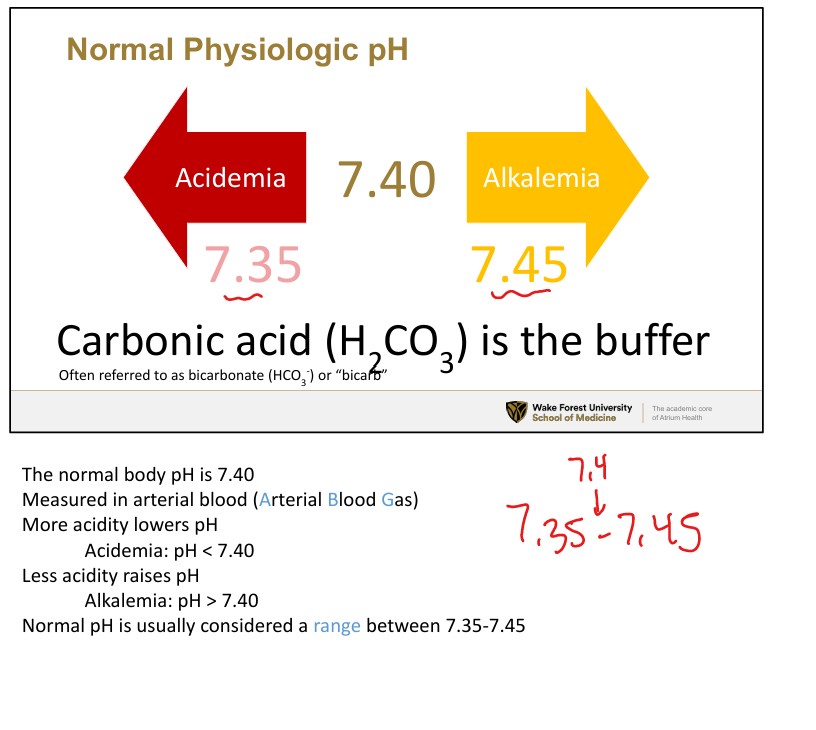
What is alkalemia?
pH > 7.40
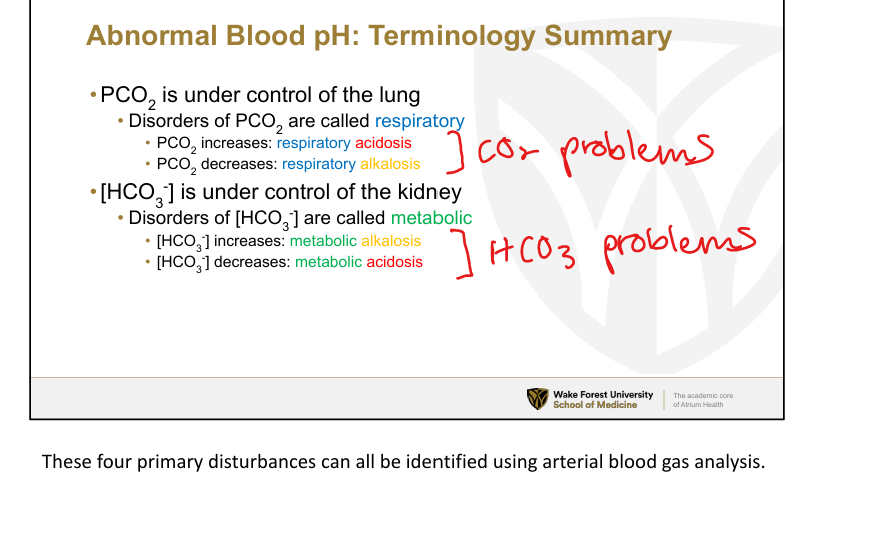
Which organ regulates PCO2?
Lungs
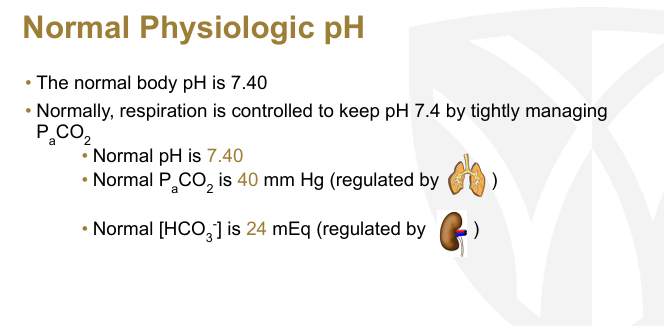
Which organ regulates bicarbonate?
Kidneys
What is respiratory acidosis?
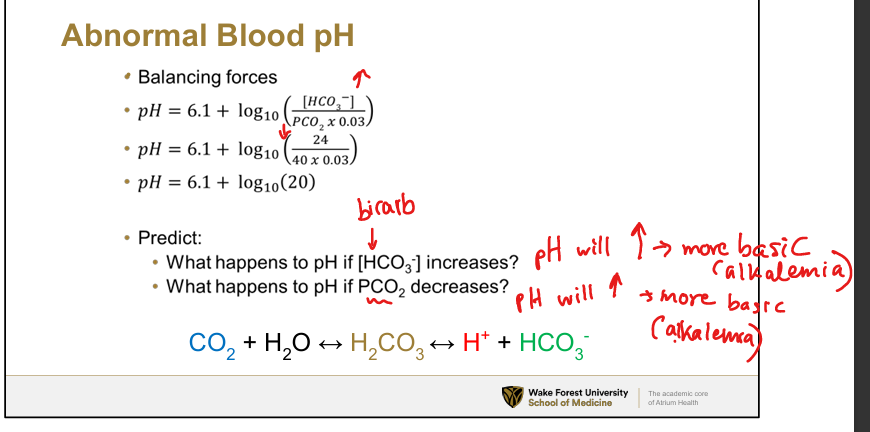
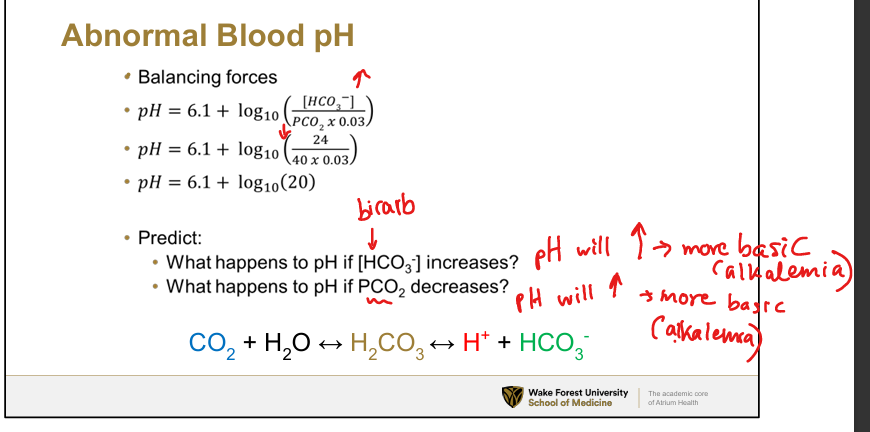
Increased PCO2 → decreased pH
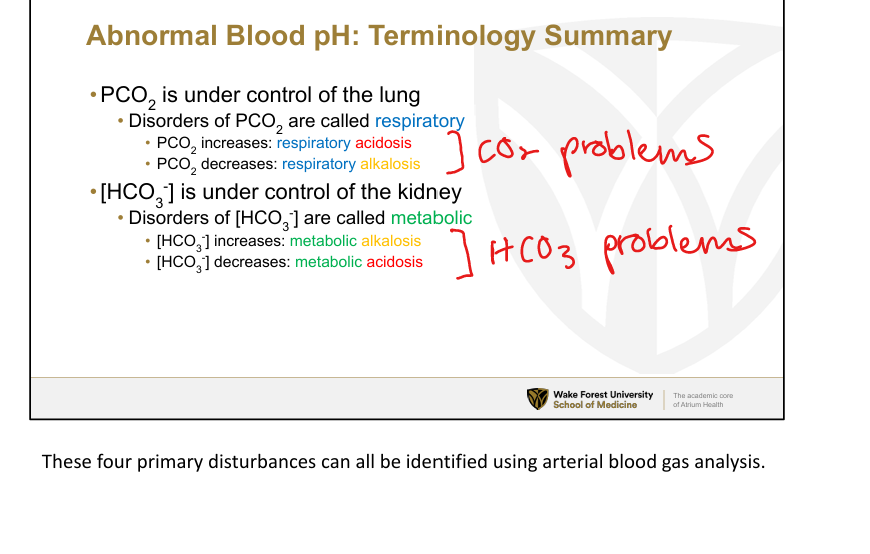
What is respiratory alkalosis?
Decreased PCO2 → increased pH
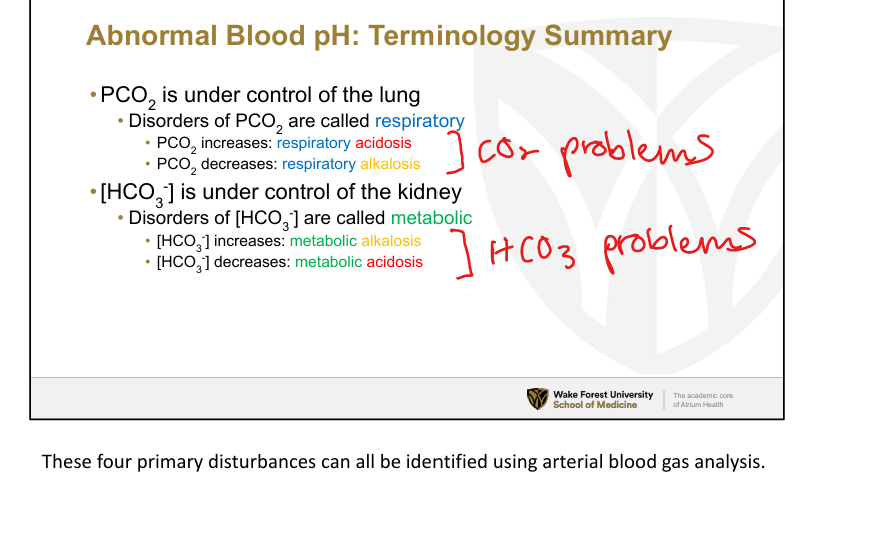
What is metabolic acidosis?
Decreased HCO3‑ → decreased pH
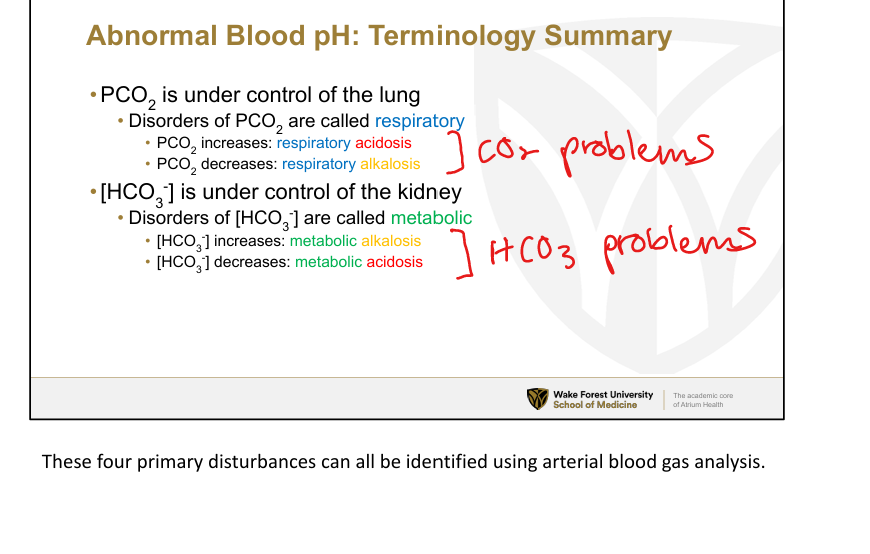
What is metabolic alkalosis?
Increased HCO3‑ → increased pH
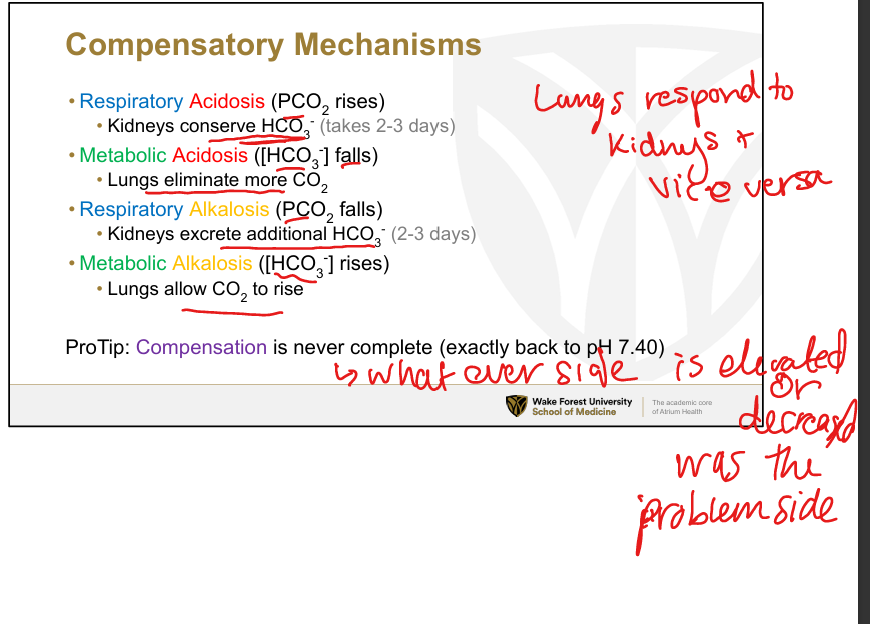
How does the body compensate for respiratory acidosis?
Kidneys retain HCO3‑ (takes 2–3 days)
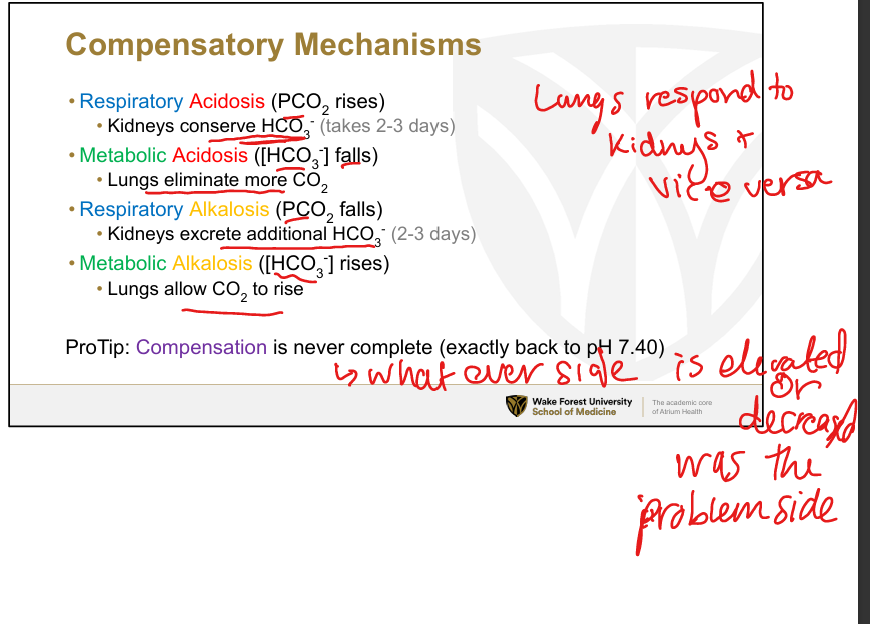
How does the body compensate for respiratory alkalosis?
Kidneys excrete HCO3‑ (takes 2–3 days)
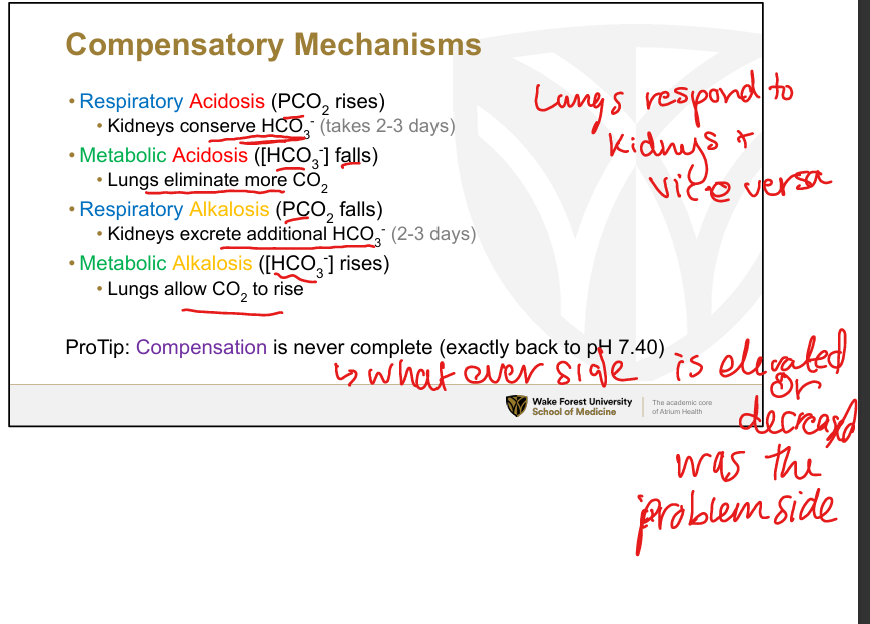
How does the body compensate for metabolic acidosis?
Lungs increase ventilation → decrease PCO2
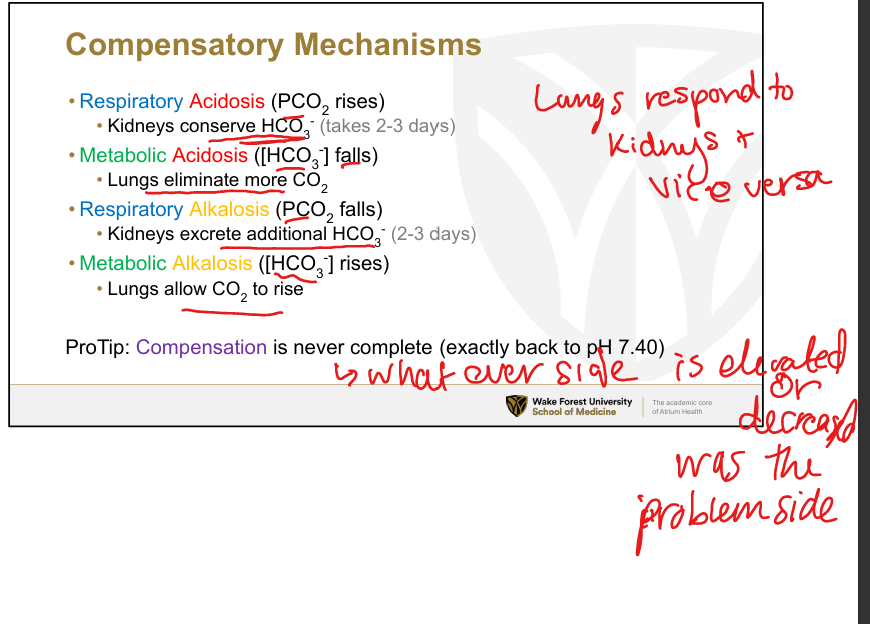
How does the body compensate for metabolic alkalosis?
Lungs allow PCO2 to rise (hypoventilation) (inc in CO2=inc in H+)
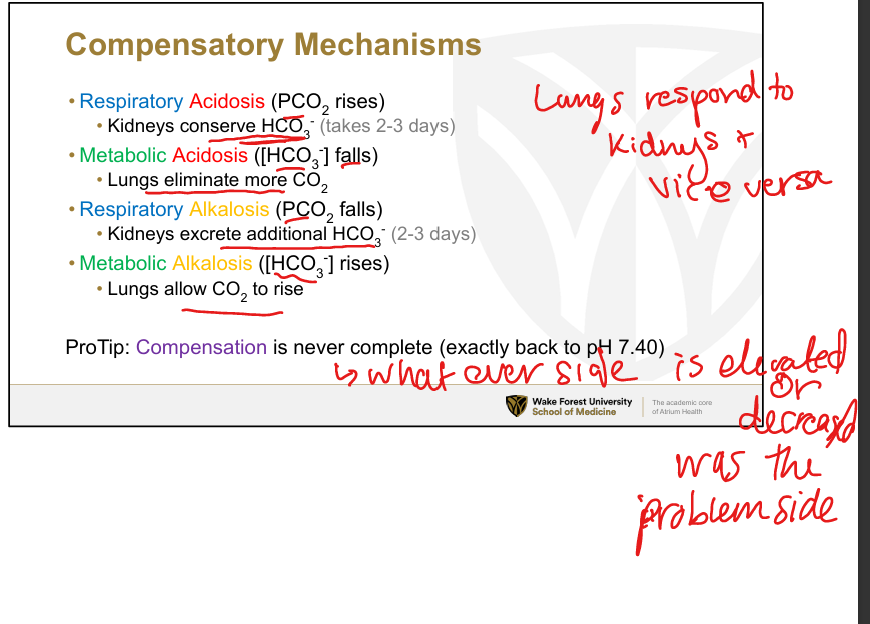
Is compensation ever complete?
No, pH never returns fully to 7.40
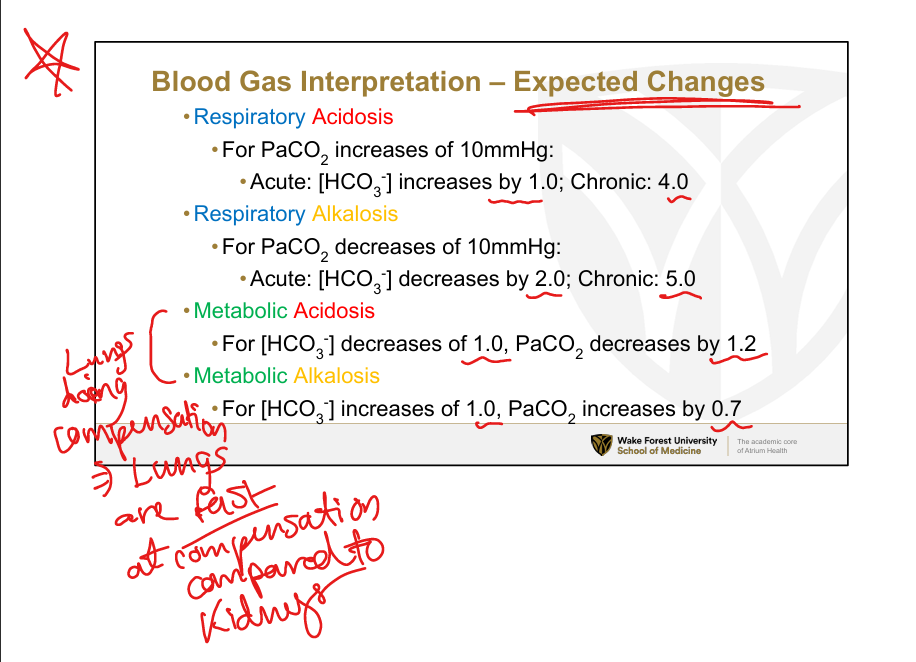
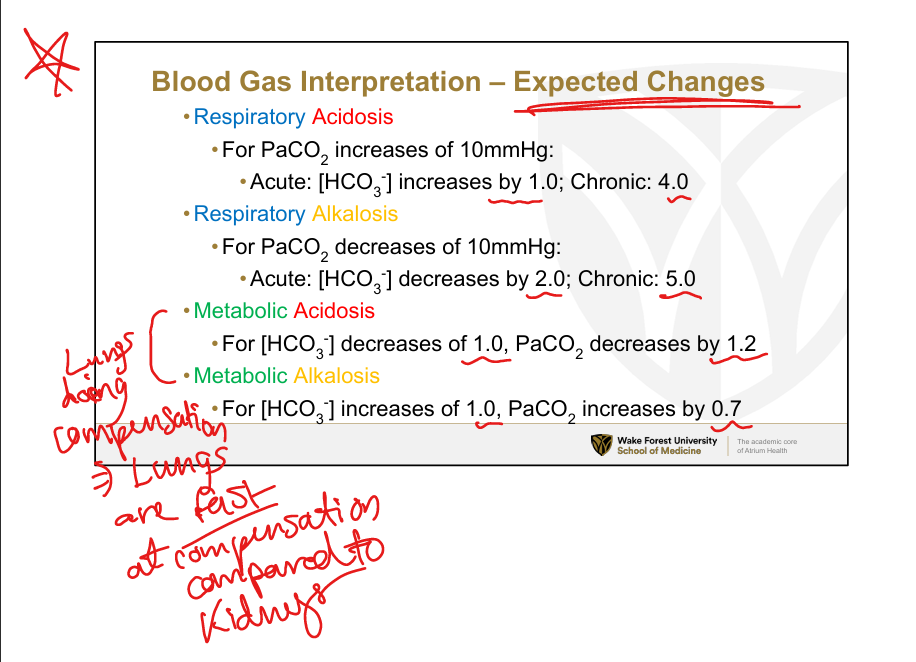
What is the expected acute change in HCO3‑ for respiratory acidosis?
+1 mEq/L per +10 mmHg PaCO2
What is the expected chronic change in HCO3‑ for respiratory acidosis?
+4 mEq/L per +10 mmHg PaCO2
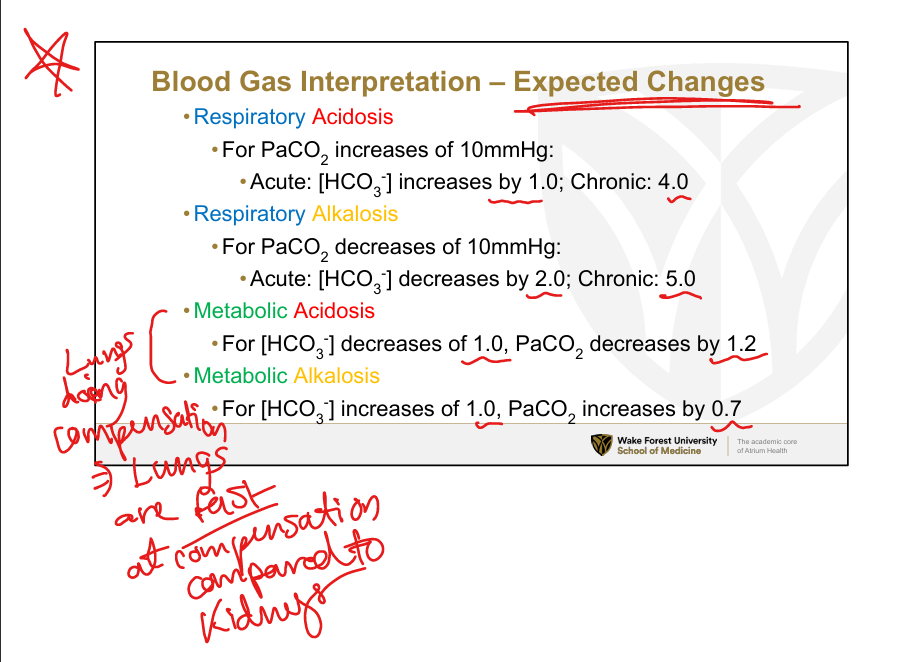
What is the expected acute change in HCO3‑ for respiratory alkalosis?
−2 mEq/L per −10 mmHg PaCO2
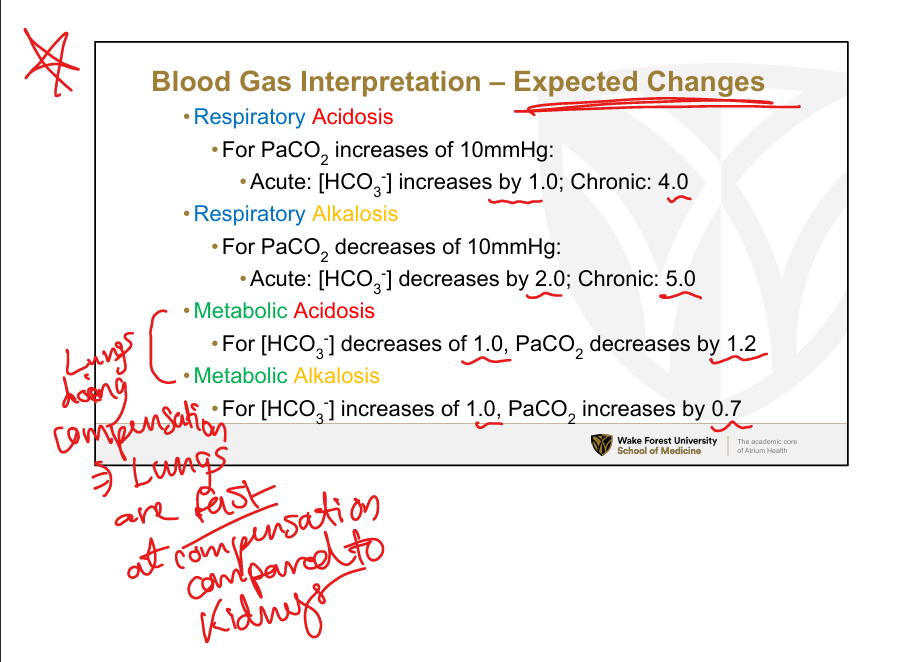
What is the expected chronic change in HCO3‑ for respiratory alkalosis?
−5 mEq/L per −10 mmHg PaCO2
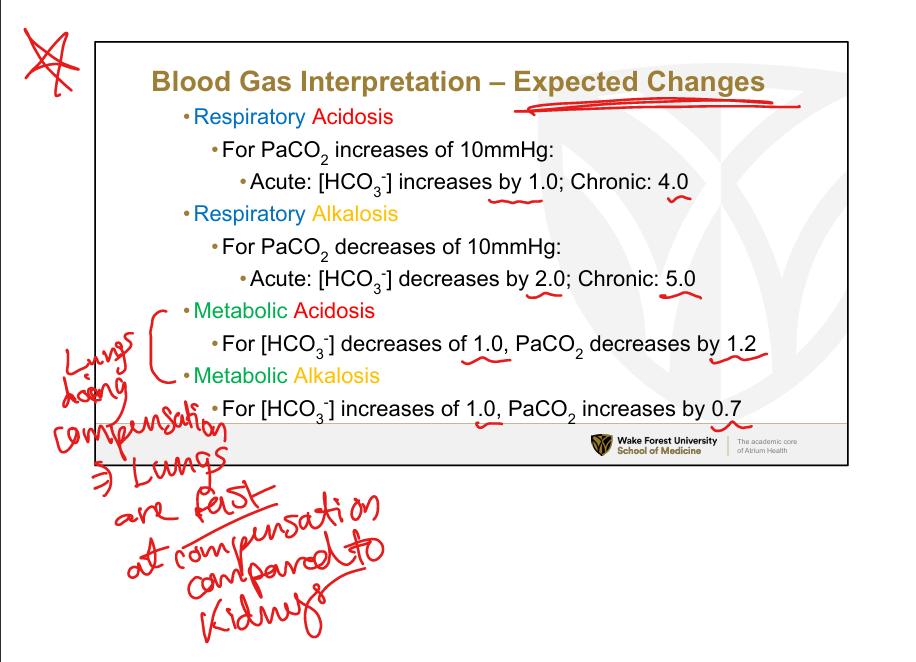
What is the expected PCO2 change in metabolic acidosis?
PCO2 decreases by 1.2 mmHg per 1 mEq/L drop in HCO3‑
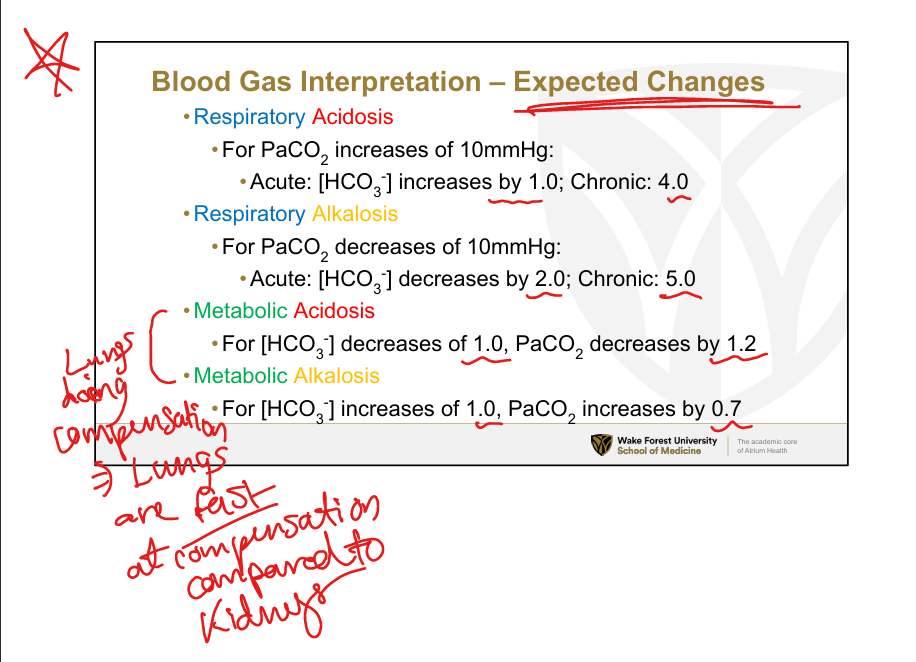
What is the expected PCO2 change in metabolic alkalosis?
PCO2 increases by 0.7 mmHg per 1 mEq/L rise in HCO3‑
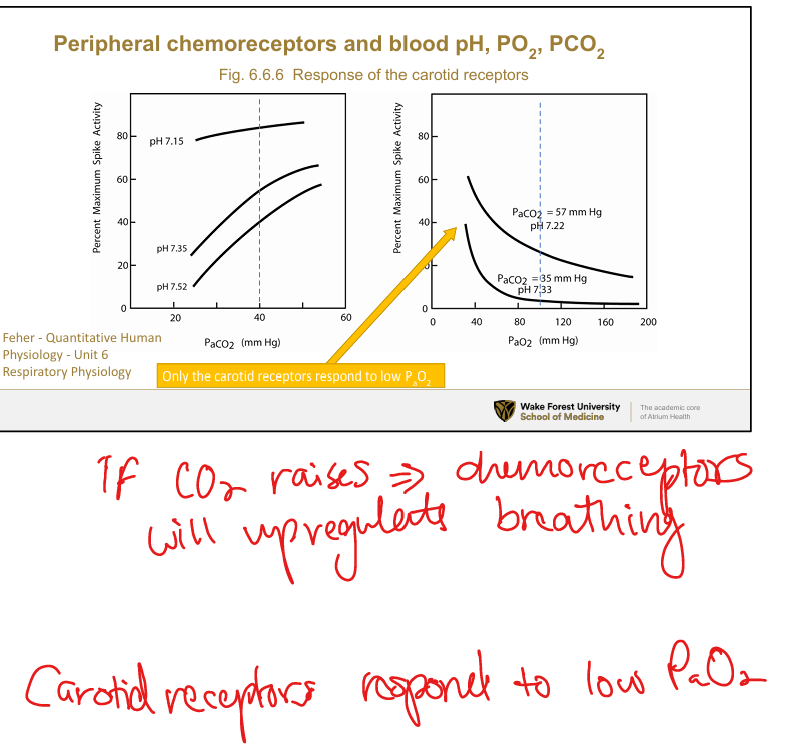
What stimulates peripheral chemoreceptors?
Increased PaCO2, low pH, and (carotid bodies only) low PaO2
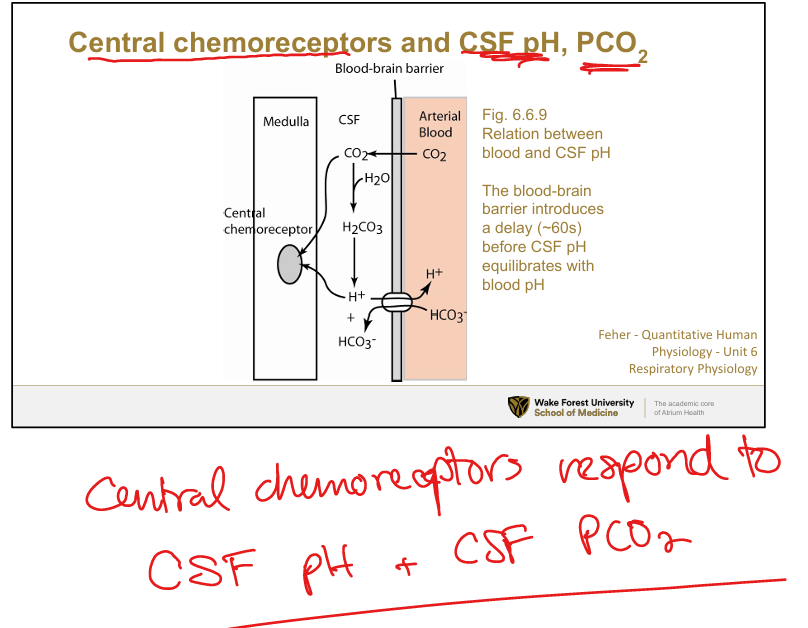
What stimulates central chemoreceptors?
Increased PCO2 or decreased CSF pH